
Reviewed · BUDAPEST COMMUNIST HISTORY TOURS
Communism in Budapest: Private Tour with House of Terror Museum
Budapest’s political past comes into sharp focus on this private walk, which links the 1956 uprising, Communist rule, and the Nazi occupation to places you can still see today. The route ends at the House of Terror Museum, where your guide provides admission and you continue through the exhibits at your own pace.
I like the private format, since your guide can shape the conversation around your questions rather than deliver a fixed speech to a large group. I also like the route’s mix of serious memorials and odd details, from the Hungarian Parliament to the statue of Columbo on Falk Miksa Street.
The main drawback is the price: at $180 per person, this is a costly three-hour walk, especially if you are booking for several people. You also need to be comfortable walking through central Budapest, and the museum portion is largely independent after your guide leaves.
Key points to know before booking
- A private look at the 1956 uprising: Begin at Bem József Memorial Square, a key gathering place during Hungary’s revolt against Soviet rule.
- A street-level view of Communist life: Discuss everyday life, retro bars, butcher shops, monuments, and public memory as you walk through central Budapest.
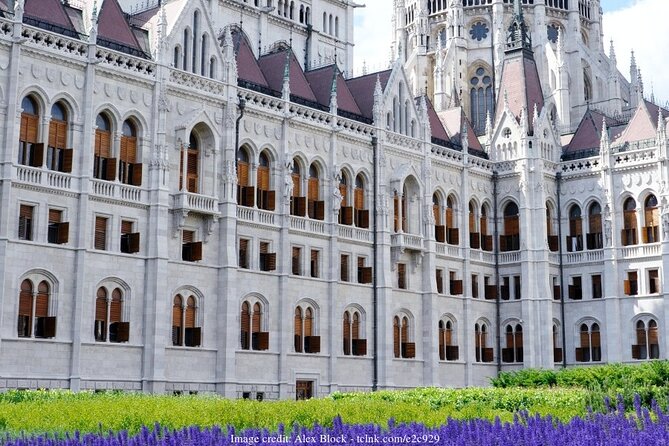
- Parliament without the interior visit: See the Neo-Gothic building from outside and learn how Hungarian politics changed over time.
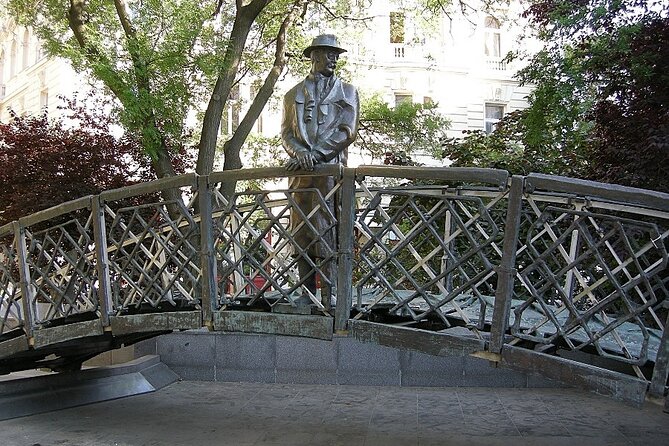
- A curious Columbo stop: Falk Miksa Street includes a statue of the fictional detective, an amusing contrast to the tour’s heavier subject.
- House of Terror admission included: Finish at Andrássy út 60, receive your ticket, and explore the museum at your own pace.
- Private means personal: Only your group takes part, with no shared coach or general admission crowd attached to the walking route.
Why this Budapest history walk works
This experience is not a broad city tour. It focuses on the political forces that shaped modern Hungary: fascism, the Nazi occupation, Soviet control, the 1956 revolution, and the move toward democracy.
That focus gives the walk a clear purpose. Instead of simply passing Parliament or a memorial, you get an explanation of why those places matter. I like this kind of tour for a first visit to Budapest because it helps you read the city beyond its fine façades and grand river views.
The route also avoids making every stop solemn. Falk Miksa Street brings in Columbo, the scruffy fictional detective played by Peter Falk, whose statue looks out of place among the galleries and old buildings. That odd detail gives the walk a human pause before the route returns to questions of power, fear, and public memory.
The guide is the most important part of the experience. The tour is built around conversation, so a guide who can explain the subject in clear language will make a major difference. Vera is one named guide associated with the experience, and her tour extended beyond three hours, with time for a careful museum visit. If Vera is assigned to your group, you can expect a guide who has received strong praise for explaining Budapest’s past in an engaging way.
More communist-era tours in Budapest:
- Budapest: Communist History Tour with House of Terror Option
★ 4.8 · 182 reviews - Communism in Hungary with a Historian
★ 5.0 · 70 reviews - Budapest: 3-Hour Walking Tour About Communism (Small Group)
★ 4.7 · 70 reviews
Bem József Memorial Square and the 1956 uprising
The tour starts at Bem József Memorial Square in Buda, at Bem József tér 2. The meeting point is not a random central plaza. It is tied directly to the 1956 uprising, when Hungarian students and supporters gathered to protest Soviet rule.
The square is linked with a huge demonstration of roughly 200,000 people. That number helps you grasp the scale of the movement, but the guide’s explanation is what gives the place meaning. Here, you begin with the public act of protest before moving into the wider story of how Hungary came under fascist and Communist control.
This first stop lasts about 30 minutes and has no separate admission charge. It is a useful opening because the tour begins with Hungarian resistance rather than with a long political lecture. You stand in a real civic space and learn how a protest became part of the country’s national memory.
You should arrive ready to walk and listen. The tour does not provide hotel pickup, and no transport is included between stops. Public transportation is nearby, but you need to make your own way to the square.
Falk Miksa Street, Columbo, and Communist-era Budapest
From Bem Square, the route continues through central Budapest. The walk includes retro bars, butcher shops, monuments, and statues that help frame the discussion of life under Communist rule.
This is one of the most useful parts for anyone who wants more than a sequence of famous buildings. Political systems affect ordinary shopping, eating, social life, and public space. A stop outside a butcher shop or a look at a retro bar can lead to a discussion of what daily life felt like under a state-controlled system.
The details are deliberately varied. You may be thinking about Soviet influence one moment and looking at a statue of Columbo the next. The Columbo statue is an unlikely sight, but that is exactly why it works. Falk Miksa Street is also known for art galleries, though the provided tour details focus on the statue and the street’s place in the route rather than on gallery visits.
This section takes about an hour. Since it is a walking tour, the pace should leave room for questions and photographs, but you should still wear comfortable shoes. The route includes city streets rather than a private vehicle, and the activity recommends a moderate level of physical fitness.
Liberty Square and the public memory of power
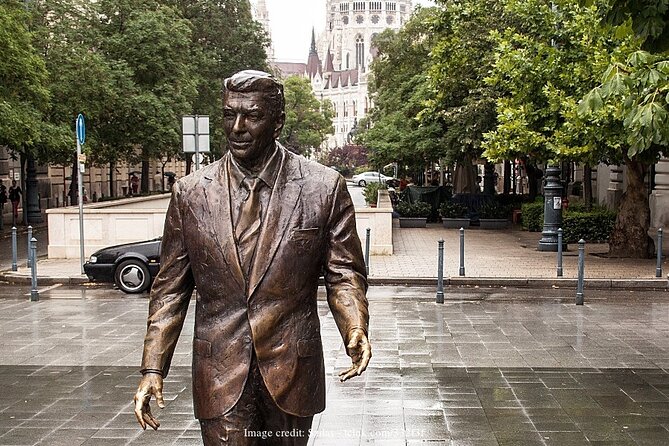
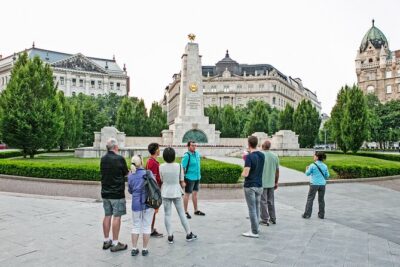
The walk includes Liberty Square and its monuments, including the statue of Ronald Reagan. This is a particularly useful setting for discussing how different countries and political groups remember the same century.
Public statues are never just decoration. They tell you which people a city chooses to honor, what events it wants to recall, and how political ideas are presented in open space. A guide can connect the square’s monuments with the larger story of Hungary’s changing alliances and political identity.
The appeal here is the contrast between the formal language of monuments and the casual life of the surrounding city. You are not looking at history behind glass alone. You are seeing it placed among streets, businesses, and daily routines.
The tour description does not promise entry into every monument or building along the route. Treat Liberty Square as an outdoor discussion and photo stop, not as a series of interior visits. That distinction matters if you are comparing this walk with a museum-heavy history program.
More museums and exhibitions in Budapest:
- Budapest: Cat Museum Budapest Entry Ticket
★ 4.4 · 2,210 reviews - Budapest: Light Art Museum – Immersive New Media Experience
★ 3.9 · 1,269 reviews - Budapest: Budapest Retro Interactive Museum Ticket
★ 4.4 · 373 reviews - Star Wars story Museum Ticket Pass
★ 5.0 · 249 reviews
Parliament from Kossuth Lajos Square
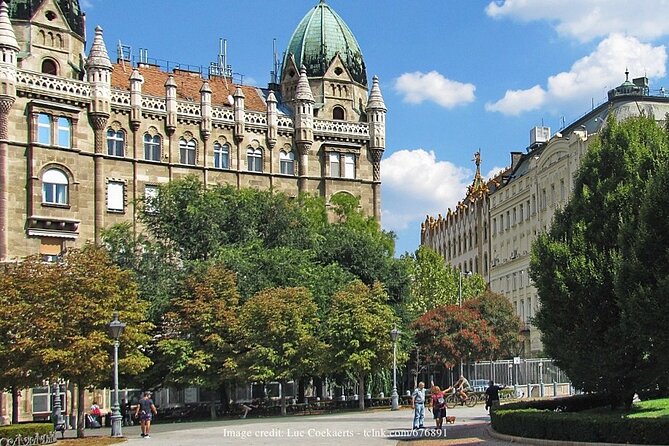
The next major stop is the Hungarian Parliament Visitor Centre area, where you view the Parliament building from outside. The building’s Neo-Gothic design is one of Budapest’s most recognizable sights, but this tour uses it as a doorway into politics rather than as a simple photo opportunity.
Your guide explains the background of Hungarian politics from earlier centuries through the 21st century. That makes the stop a bridge between the country’s older political institutions and the modern period covered by the rest of the walk.
You have about 15 minutes here, and admission to the Parliament building is not included. This is important: you are not buying a guided interior tour of Parliament. You are seeing the exterior and discussing its political setting.
That short stop can still be worthwhile. Parliament gives the tour visual scale, while the earlier squares and streets give it human scale. You get the grand national building, then the public protests, memorials, shops, and statues that show how politics reaches ordinary life.
If entering Parliament is a priority, you will need a separate ticket or visit. This experience does not cover that.
The House of Terror at Andrássy út 60
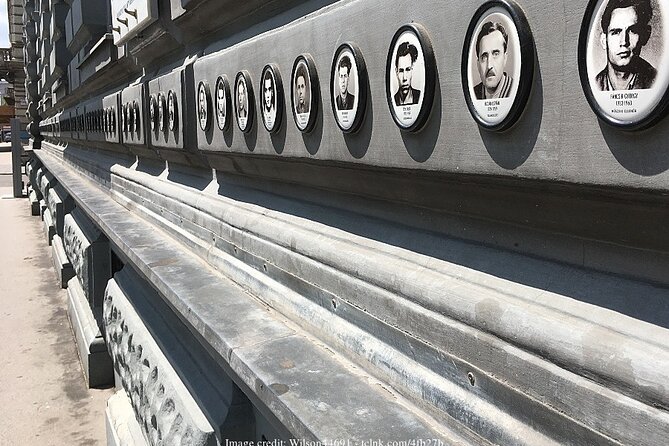
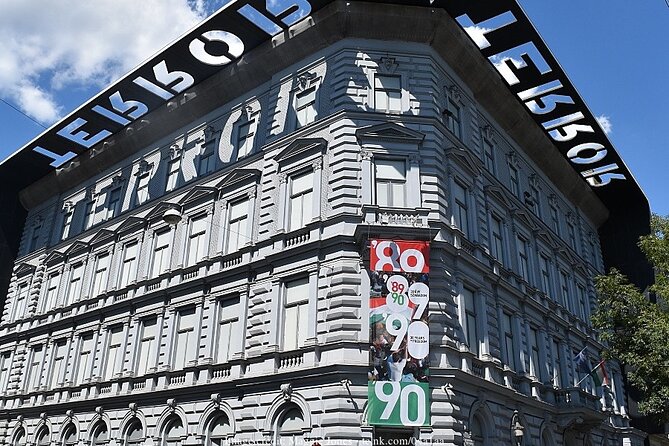
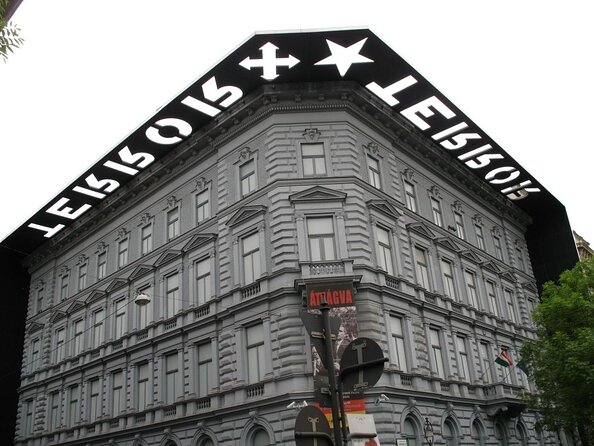
The tour ends at the House of Terror Museum, located at Andrássy út 60. Admission is included, which is a practical benefit because the museum is the most substantial indoor element of the experience.
The museum is a memorial to people detained, tortured, and killed inside the building. Its exhibits cover both the fascist and Communist regimes of 20th-century Hungary, making it a natural final stop after the outdoor discussion of occupation, Soviet rule, and resistance.
The listed museum portion is about 30 minutes, but the structure of the visit deserves close attention. Your guide provides the entrance tickets, then you visit the museum at your own leisure. In other words, do not expect the guide to remain with you for a full guided museum tour.
That arrangement has advantages. You can spend more time with displays that matter to you and move at a pace that suits your group. It also means the experience may feel less unified at the end. The guide builds the political framework outside, but your museum visit is independent.
The House of Terror deals with imprisonment, violence, and death. It is not a light attraction, and you should allow yourself time to process what you see. The short stated duration may be enough for a quick visit, but the actual time you need will depend on how closely you read and view the exhibits. A longer tour with guide Vera extended beyond three hours, so the advertised schedule should be treated as an approximate plan rather than a strict stopwatch.
What the private format adds
A private group changes the feel of a history tour. You are not sharing every stop with strangers, and you can ask for more explanation when a topic is unfamiliar. If your group includes people with different levels of interest, you can also guide the conversation toward the subjects that matter most to you.
This is especially helpful with modern political history. Hungary’s 20th-century story includes several changes of power and competing memories. You may want to ask about the 1956 uprising, the Nazi occupation, Soviet influence, or the transition to democracy. A private guide can spend more time on one subject than a standard group tour normally allows.
The format also gives you time for photographs. The inclusions specifically allow plenty of time to take pictures of favorite places. That does not turn the tour into a photography walk, but you will not be expected to rush past every square.
The tradeoff is cost. At $180 per person, the price is easier to justify for a small private group that values direct conversation and a tailored pace. For a couple, family, or group of friends splitting the benefit of a private guide, the experience may feel more reasonable. For a solo visitor, the same price is harder to defend unless this subject is a top priority.
Timing, meeting point, and walking demands
The tour lasts about three hours and begins at Bem József tér 2. It finishes at the House of Terror Museum on Andrássy út. There is no hotel pickup, hotel drop-off, or transportation during the route, so you need to plan your arrival and your onward journey.
The meeting point is near public transportation. Still, check your route before leaving, especially if you have a timed reservation later in the day. Because the tour ends with a museum visit at your own pace, your finish time may vary if you choose to stay longer than the suggested 30 minutes.
A moderate level of fitness is recommended. You will be walking through central Budapest, stopping outdoors, and moving between several areas. Bring comfortable shoes and dress for the weather, since much of the political context is delivered in public squares and along streets.
The mobile ticket is useful for keeping the booking details close at hand. Free cancellation is available if you cancel at least 24 hours before the local start time. Changes or cancellations inside that window are not accepted for a refund.
Is $180 per person a fair price?
The price is high for a three-hour walking experience, so the value depends on what you want from Budapest. You are paying for a private guide, a focused subject, flexibility for your own group, and House of Terror admission.
You are not paying for meals, transportation, hotel service, a Parliament interior visit, or a fully guided museum tour. Those exclusions make the cost harder to overlook if you mainly want sightseeing and photographs.
I would consider it good value for a small group that wants to understand Hungary’s political past without joining a large public tour. It is less attractive if you already plan to visit the House of Terror independently and only want a short introduction to Parliament.
The strongest value comes from the connection between the stops. Bem Square introduces the uprising, the central streets show public memory and ordinary life, Parliament places politics on a national scale, and the museum brings the story into a building tied to repression. If you only want a list of famous Budapest landmarks, a cheaper city walk may suit you better.
Who should book this experience?
I would recommend this tour to adults and older teenagers with a serious interest in modern European politics, memorials, and the way cities remember difficult events. It also suits a private family group or a few friends who prefer to ask questions freely.
It is a good choice early in a Budapest visit if you want context for later sightseeing. After the tour, Parliament, Liberty Square, and other political monuments will make more sense.
You may want to skip it if you prefer light sightseeing, dislike emotionally heavy museums, or have difficulty walking for several hours. You should also look elsewhere if your main goal is to tour the inside of Parliament, since that is not included.
Should you book the Communism in Budapest tour?
Book it if you want a focused, private explanation of Hungary’s political past and like the idea of ending at the House of Terror. The route offers more than major landmarks: it connects a protest square, ordinary streets, public statues, Parliament, and a memorial museum.
Think carefully about the price and the museum arrangement. You receive admission, but you explore the House of Terror on your own after the guide provides the ticket. If that sounds right, this is a thoughtful way to spend three hours in Budapest. If you need a fully guided museum visit or a Parliament interior tour, you will need to arrange those separately.
FAQ
How long does the Communism in Budapest tour last?
The tour lasts approximately three hours. The timing can vary, especially if you spend extra time at the House of Terror Museum.
Where does the tour begin?
The tour begins at Bem József Memorial Square, Bem József tér 2, 1027 Budapest, Hungary.
Where does the tour finish?
The tour finishes at the House of Terror Museum at Andrássy út 60, 1062 Budapest. After receiving your entrance ticket, you visit the museum at your own leisure.
Is the House of Terror Museum ticket included?
Yes. Entrance to the House of Terror Museum is included in the experience.
Is admission to the Hungarian Parliament included?
No. The Parliament stop is an exterior visit near the visitor centre, and admission is not included.
Is transportation provided during the tour?
No. Hotel pickup, hotel drop-off, and transportation throughout the tour are not included. The experience takes place as a walking tour and begins near public transportation.
Can I cancel for a full refund?
Yes, if you cancel at least 24 hours before the experience start time. Cancellations or changes made less than 24 hours before the start time are not accepted for a refund.
Just added around Budapest
- Budapest: Private Walking Tour with a Local Guide★ 3.6 · 6 reviews
- Budapest: Danube River Views Bike Ride★ 4.8 · 23 reviews
- Budapest: City Bike Tour with Coffee Stop★ 5.0 · 37 reviews
- Budapest: Vacation Photographer to collect great memories★ 5.0 · 49 reviews
- Walk to recent and aged spiritual sanctuaries near Budapest★ 5.0 · 5 reviews
- From Budapest: Guided Tour of Eger with Wine Tasting★ 4.5 · 6 reviews
- Audio visual multi-sensory chefs journey dinner experience★ 5.0 · 3 reviews
- Budapest: 3-Hour Trabant Sightseeing Tour★ 4.7 · 28 reviews
Budapest Communist History Tours, compared.
Communist History Tour with House of Terror Option
Read our review →
3-Hour Walking Tour About Communism (Small Group)
Read our review →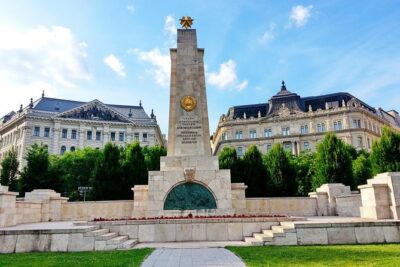
Lives of Hungarians Under Communist and Capitalist system
Read our review →
Private Budapest Hammer & Sickle Communist Times Tour
Read our review →
Browse the lists this tour appears in