
Reviewed · MUSEUMS
Budapest: Budapest Retro Interactive Museum Ticket
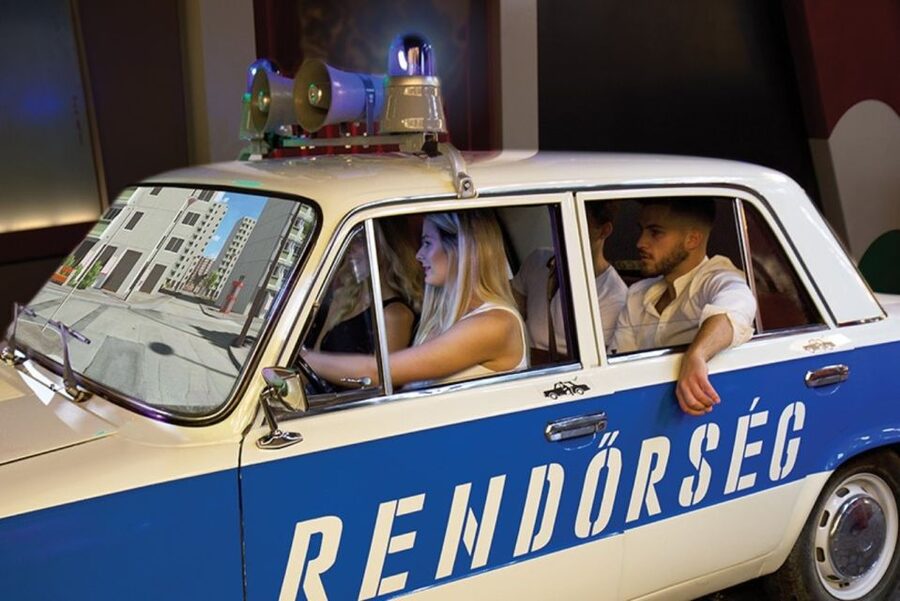
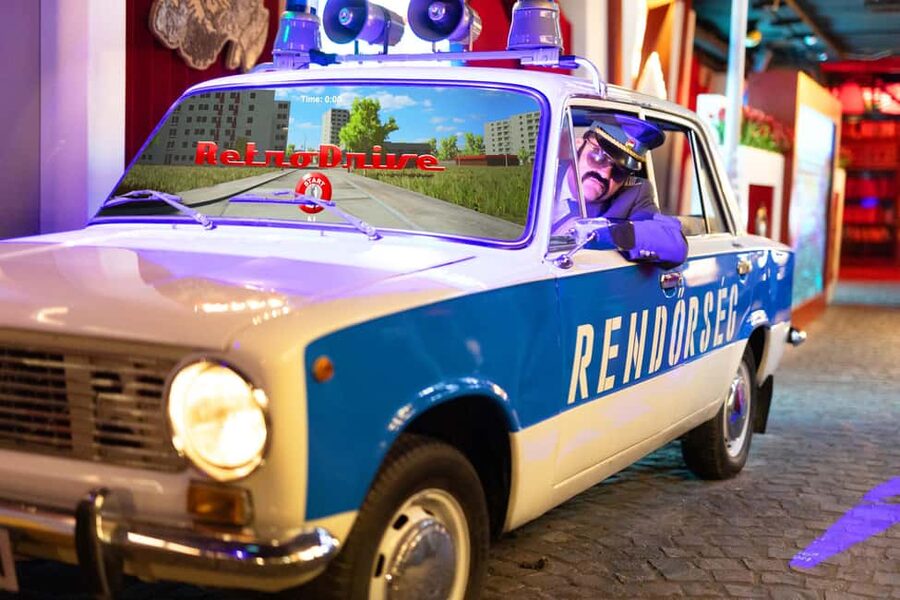
Budapest Retro Erlebnispark turns communist-era Hungary into a hands-on museum rather than a roomful of dusty labels. You can sit in a LADA police car, act as a television newscaster, listen to old cabaret jokes in phone booths, and play music on a 1971 jukebox.
I like the mix of everyday objects and playful exhibits, which gives you a glimpse of ordinary life behind the Iron Curtain. I also like the bistro, where a Debreceni sausage, Bambi, Márka cherry drink, or Kőbányai beer adds a tasty final note.
The main drawback is that some displays are not in English, so a few exhibits can be hard to understand without help. It is also a fairly compact museum, and most people will finish in one to two hours.
Key points to know before you go
- Three floors of communist-era Hungary: The museum covers daily life, media, transport, popular culture, and the years before the change of regime.
- Hands-on exhibits: Sit in a LADA police car, try a news studio, use phone booths, and play a 1971 jukebox.
- Retro food and drinks: The bistro sells Debreceni sausage, punch mignon, Bambi, Márka cherry, and Kőbányai beer.
- Good for families: The visual displays and activities give children something to do while adults take in the historical details.
- Plan on one to two hours: It is not a full-day museum, but it makes a useful indoor stop in central Budapest.
- Check the price for your date: The listed price is about $15 per person, but it can change depending on the day of the week.
A playful look at life before 1989
This museum works best when you treat it as a time capsule with buttons, props, vehicles, and food. It covers the decades before Hungary’s change of regime, but it does not present that period only through political history. Instead, you see the small details that shaped daily life: television, sweets, household products, cars, jokes, music, and official media.
That approach makes the visit easy to enter. You do not need a detailed knowledge of Hungarian communism to enjoy the exhibits. I like that the museum gives you objects you can recognize at once, such as a police car or jukebox, then places them in a period that may be unfamiliar.
The tone is playful, but the subject is not entirely light. Life behind the Iron Curtain included state-controlled news, limited consumer choice, and a strong official presence in public life. The museum lets you notice those themes without turning the whole visit into a solemn political lecture.
You should expect a self-guided visit rather than a traditional walking tour. A guide may be available in some situations, but the ticket itself is admission to the museum, and the exhibits provide the structure. Since some information is not in English, you may understand the broad idea of a display more easily than every historical detail.
More museums and exhibitions in Budapest:
- Budapest: Cat Museum Budapest Entry Ticket
★ 4.4 · 2,210 reviews - Budapest: Light Art Museum – Immersive New Media Experience
★ 3.9 · 1,269 reviews - Star Wars story Museum Ticket Pass
★ 5.0 · 249 reviews
The three-story route through communist Hungary
The museum is arranged over three floors, giving the visit a natural progression. You can move through at your own pace and stop longer at the exhibits that catch your eye.
The lower and central areas focus on the objects and images of the period. This is where the museum’s visual approach helps. Instead of asking you to read long panels, it places you close to the things people saw, used, listened to, and ate.
One of the clearest attractions is the LADA police car from the 1980s. You can climb inside and imagine the practical, boxy world of official transport during the period. It is a popular stop, especially for families and anyone interested in classic cars.
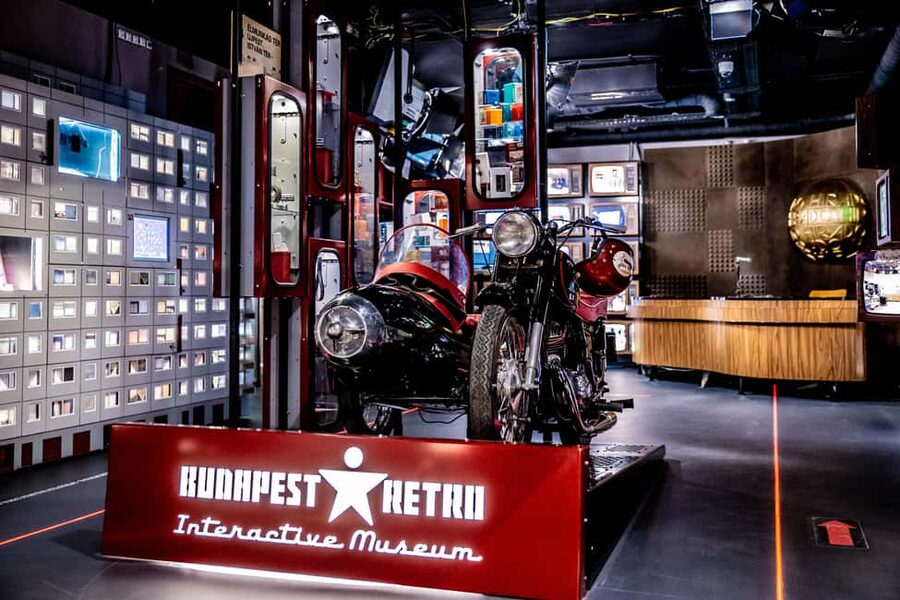
The museum also includes classic motorcycles and other vehicles. These displays give the visit some mechanical interest, even if you are not focused on political history. If you enjoy old cars, allow extra time here, since the vehicles are among the most memorable parts of the collection.
The exhibits are designed to encourage participation. You may find yourself pressing controls, stepping into staged settings, or trying objects that would normally sit behind glass. That makes the museum more engaging than a display of posters and photographs alone.
Take a turn in the television studio
One of the more unusual activities is the contemporary Híradó news studio. You can try being a newscaster, which gives you a direct feel for the polished, official presentation associated with state television.
This exhibit is valuable because television mattered greatly in communist-era Hungary. News was not simply a neutral window onto events, and the studio setting helps show how official information reached homes.
It is also one of the easiest activities for children to understand. Even if they do not know the political background, they can step into the studio and play a role. Adults may get more out of the contrast between the cheerful performance of news and the controlled nature of the system behind it.
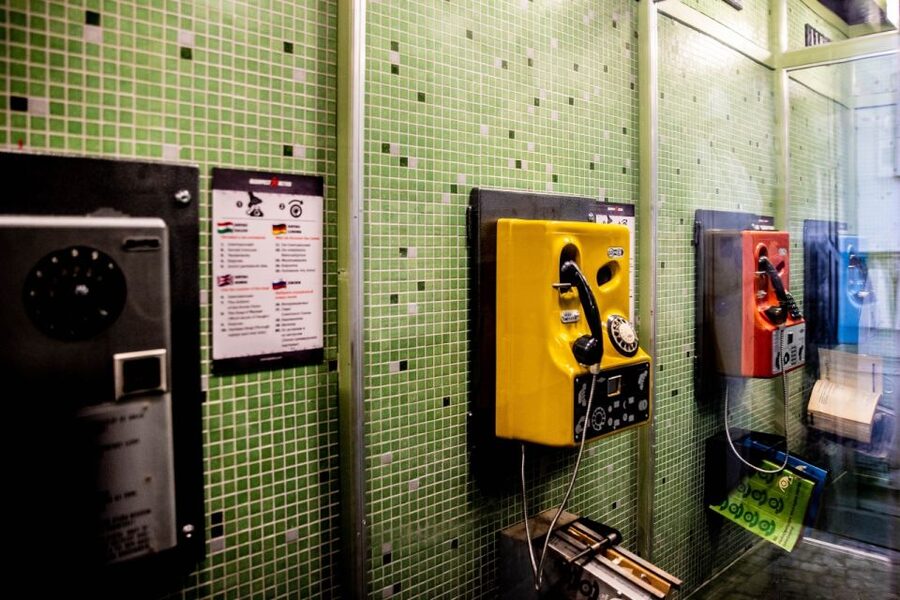
The museum includes other media-related displays as well. Phone booths let you listen to jokes or cabaret from the period. These booths offer a glimpse of popular entertainment, and they break up the more object-based exhibits with something you hear rather than merely see.
Space travel, sweets, and the details people remember
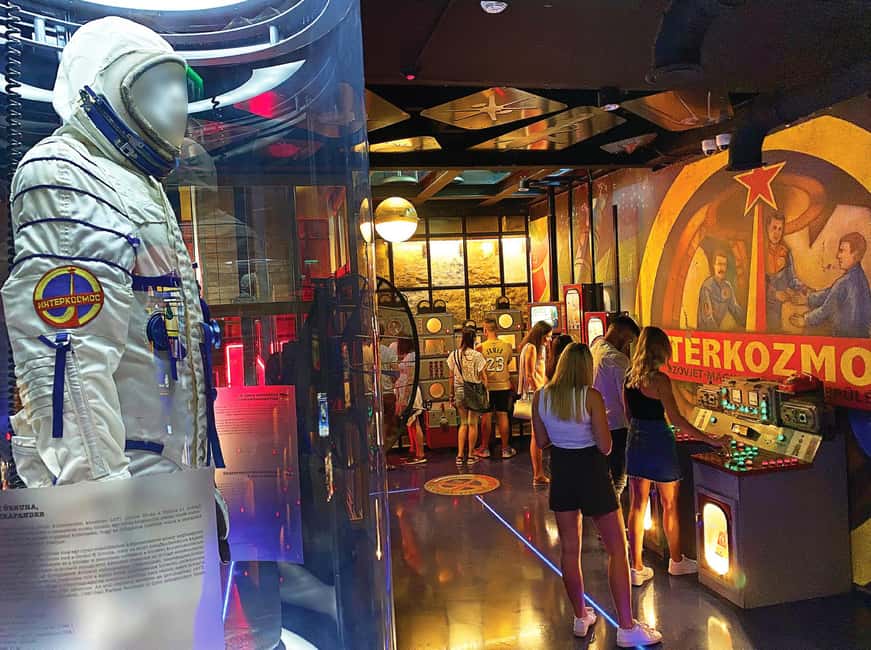
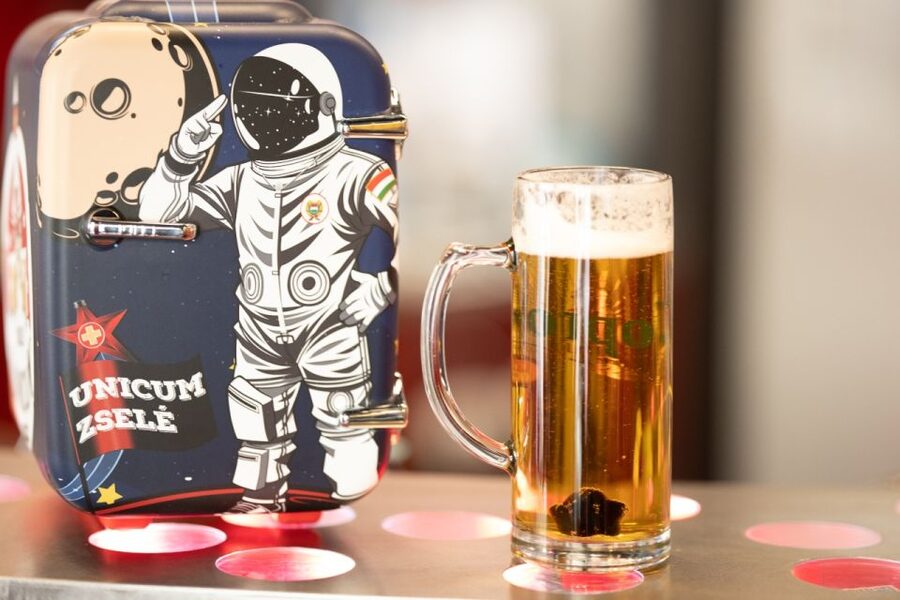
The museum gives attention to Hungarian astronaut Bertalan Farkas, including what he took with him into space. The display connects a national achievement with the ordinary, sometimes surprising objects associated with it.
You can also learn about a type of alcoholic jelly linked with Farkas’s space mission. It is an odd detail, but that is precisely why it sticks in your mind. This is one of the museum’s strengths: it often explains an era through curious personal details rather than only through large political events.
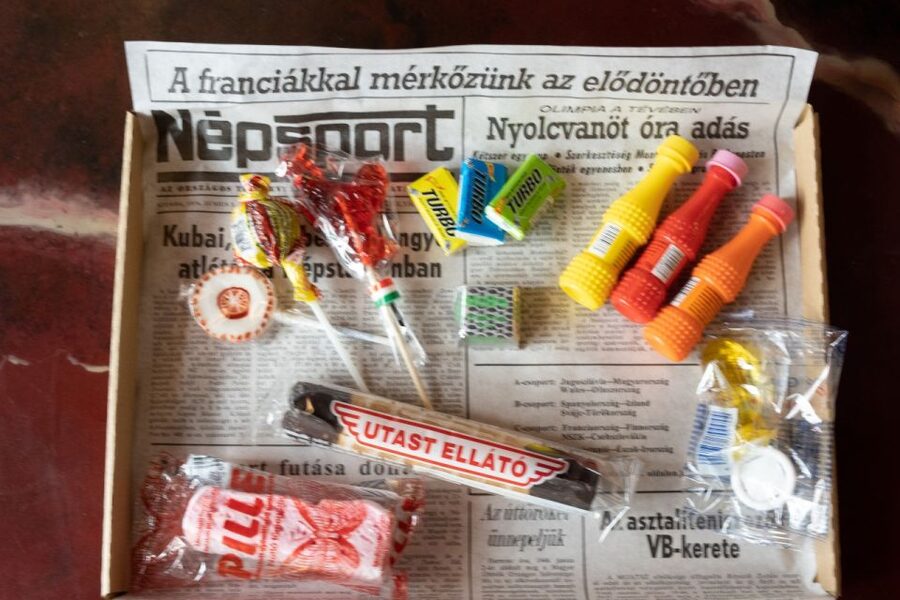
The food displays and product references work in much the same way. Limo powder, for example, is presented as a product that people remembered even though no one actually put it in water. Bambi, a brightly remembered summer drink, represents the limited but distinctive soft-drink culture of the period.
Turbo chewing gum and the rooster lollipop add another layer of childhood nostalgia. You might know none of these products before arriving, but their packaging and presentation help show how small treats could become powerful memories.
The museum even offers the chance to make a retro card with your own photograph. This costs extra, so it is not part of the admission ticket, but it can be a fun souvenir if you want something more personal than a standard postcard.
A handful more Budapest trips to weigh up
- Budapest: Széchenyi Spa Day Ticket with Optional Upgrades
★ 4.3 · 23,911 reviews - Budapest: Parliament Building Entry Ticket and Audio Guide
★ 4.5 · 3,844 reviews - Budapest: Full-Day Gellért Spa Ticket
★ 4.2 · 3,340 reviews - Budapest: Cinema Mystica Entry Ticket
★ 4.3 · 3,103 reviews
The 1971 jukebox and the sound of the era
The 1971 jukebox is one of the museum’s simplest pleasures. You can play music rather than just look at an old machine, and that small action makes the period feel closer.
Music gives you a different way to understand the past. A political display may tell you what authorities wanted people to hear, while a jukebox suggests how people spent leisure time and enjoyed popular culture.
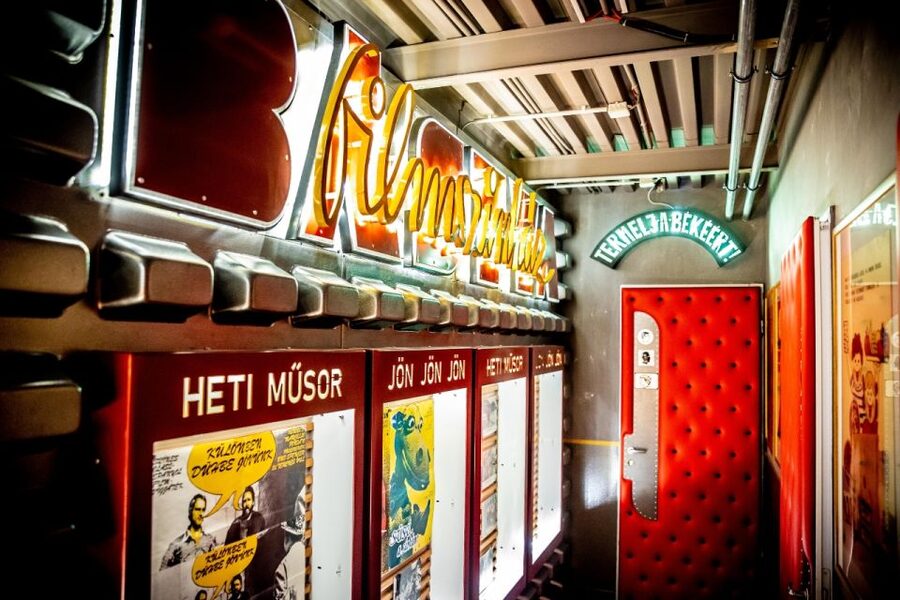
The cabaret and joke phone booths add to that sense of everyday life. Humor can be a useful historical clue, especially in a society where direct criticism might be risky. The museum does not require you to study this point in detail, but the listening stations give you a taste of how entertainment and satire fitted into the period.
Because the museum is interactive, it can become crowded around the most popular displays. If a group is using the jukebox, news studio, or LADA car, you may need to wait briefly before trying it yourself.
Finish at the Retro Bistro
The Retro Bistro is not included in the ticket, but it adds real value to the visit. Food and drink here are part of the museum experience, not just a convenient café stop.
You can order a fried Debreceni sausage, a punch mignon, Márka cherry, or Kőbányai beer. The punch mignon is described as very sweet, so it is best approached as a period-style treat rather than a refined dessert.
Bambi is another notable choice. It was a classic summer drink, and trying it gives you a direct connection to one of the museum’s most recognizable food references. You can also find other retro drinks and dishes, so the bistro is worth considering if you want to extend the visit.
I like the bistro because it turns nostalgia into something physical. You are not only looking at old labels or hearing about former products. You can taste a few of them. That makes the museum more memorable, particularly for anyone who grew up with similar foods.
Food and drinks cost extra, so keep that in mind when judging the total price. You can visit the museum without ordering anything, but the bistro is a good option if you have time and want a small meal or drink afterward.
How much time should you allow?
The suggested visit lasts one to two hours. That is about right for most people, especially if you stop for a few interactive exhibits and spend some time with the vehicles.
You can finish more quickly if you move through the displays without trying everything. On the other hand, children may need longer because they will want turns in the LADA car, the news studio, the phone booths, and other hands-on areas.
This is not a major museum that fills an entire afternoon. I would pair it with another downtown activity rather than build your whole day around it. Its compact size is a benefit if you want an easy indoor stop between larger Budapest sights.
Crowding can affect the timing. On a busy visit, you may need to wait for certain interactive stations, so two hours gives you more breathing room than trying to rush through in sixty minutes.
Is the $15 ticket good value?
At about $15 per person, the admission is reasonable if you enjoy interactive museums, vintage vehicles, or 20th-century European history. You are paying for more than a collection of objects because several displays let you participate.
The value is strongest for families and mixed-age groups. Children can use the activities, while adults can focus on the social and political setting. People with a personal connection to Hungary or the former Eastern Bloc may find the everyday products and entertainment especially meaningful.
The value is less clear if you want a large, text-heavy museum with extensive English explanations. Some visitors find that the language gap makes parts of the exhibition difficult to follow. If every display label must be fully understandable in English, this may not be the best choice.
Prices can vary by day of the week, so check the cost for your chosen date before booking. Food, drinks, and the personalized retro card are additional purchases.
Who will enjoy this museum most?
I would recommend Budapest Retro Erlebnispark to several types of visitors:
- Families looking for a museum with things children can touch and try.
- Anyone interested in classic cars, motorcycles, or old consumer products.
- Visitors who want context for Hungary before and after the change of regime.
- People who enjoy food memories, vintage packaging, music, and popular culture.
- Anyone seeking a shorter indoor activity in central Budapest.
It may not suit you if you prefer a large art museum, a formal guided history tour, or a fully English-language exhibition. The experience is strongest when you are happy to explore visually and accept that some details may require interpretation.
The museum is downtown and begins at the Budapest Retro Élményközpont ticket counter. Present your voucher there, then finish back at the same meeting point. No transportation is included or needed as part of the activity.
For planning, note that the museum closes on January 1 and December 24, 25, and 26. Seniors aged 65 and over who buy a senior ticket receive a free coffee every Wednesday.
My verdict on Budapest Retro Erlebnispark
Book this museum if you want a short, lively look at communist-era Hungary through cars, food, music, television, and everyday objects. The LADA police car, interactive media displays, and retro bistro give the visit a character that a standard historical exhibition may lack.
I would skip it if you need detailed English explanations at every stop or want enough material for a full day. For most people, though, it is a useful one to two-hour addition to a Budapest itinerary, especially on a hot or changeable day when you want an indoor activity.
The best plan is to visit with an open mind, try the hands-on exhibits, and finish with a retro drink or snack. At this museum, the small details, from Bambi to a 1971 jukebox, often tell the clearest story.
FAQ
How long does a visit to Budapest Retro Erlebnispark take?
The suggested duration is one to two hours. You may need closer to two hours if you want to try the interactive displays and allow time around the busiest exhibits.
What is included in the ticket?
The ticket includes admission to Budapest Retro Erlebnispark. Food, drinks, and the personalized retro card are not included.
Can I buy food and drinks at the museum?
Yes. The Retro Bistro sells retro dishes and drinks, including fried Debreceni sausage, punch mignon, Bambi, Márka cherry, and Kőbányai beer. These purchases cost extra.
Is the museum suitable for children?
Yes. The museum includes interactive activities such as a LADA police car, a television news studio, phone booths, and a jukebox. These features can give children a more active way to engage with the displays.
Is everything available in English?
No. Some parts of the exhibition are not in English, so you may find certain displays difficult to understand in full.
When is the museum closed?
The museum is closed on January 1 and December 24, 25, and 26. It also offers senior guests aged 65 and over a free coffee every Wednesday when they purchase a senior ticket.
Just added around Budapest
- Budapest: Danube River Views Bike Ride★ 4.8 · 23 reviews
- Budapest: City Bike Tour with Coffee Stop★ 5.0 · 37 reviews
- Budapest: Private Walking Tour with a Local Guide★ 3.6 · 6 reviews
- Budapest: Vacation Photographer to collect great memories★ 5.0 · 49 reviews
- Walk to recent and aged spiritual sanctuaries near Budapest★ 5.0 · 5 reviews
- From Budapest: Guided Tour of Eger with Wine Tasting★ 4.5 · 6 reviews
- Audio visual multi-sensory chefs journey dinner experience★ 5.0 · 3 reviews
- Budapest: 3-Hour Trabant Sightseeing Tour★ 4.7 · 28 reviews
Museums, compared.
Light Art Museum – Immersive New Media Experience
Read our review →

Budapest Card: Free Public Transport, Spa & Museums with Delivery
Read our review →
Budapest Dohany Synagogue & Hungarian Jewish Museum & free extras
Read our review →
Travelling Galaxy Star Wars Interactive Exhibition
Read our review →
Skip the Line: Budapest Pinball Museum Admission Ticket
Read our review →Browse the lists this tour appears in