
Reviewed · BUDAPEST COMMUNIST HISTORY TOURS
Budapest: Memento Park Ticket
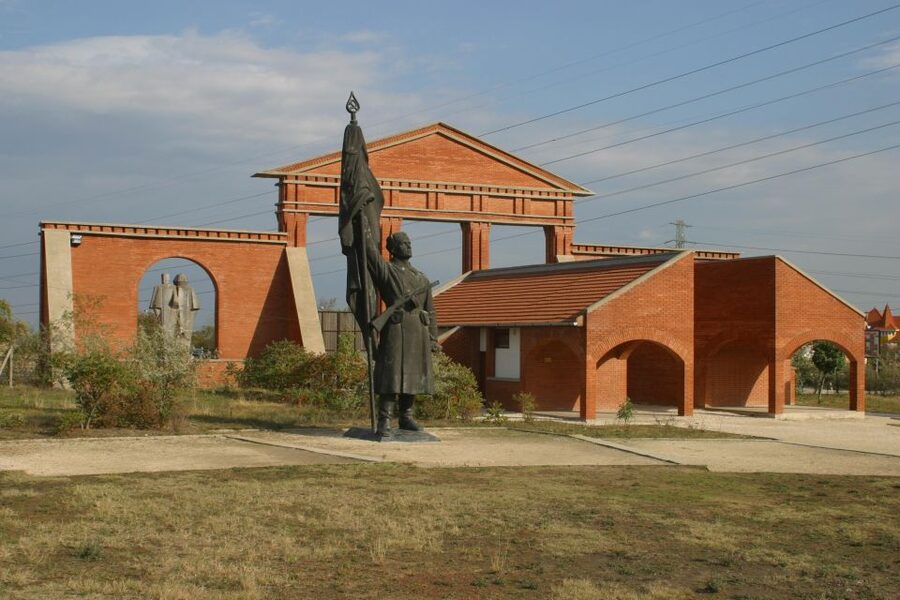
Budapest’s Memento Park gathers the city’s rejected communist monuments in one open-air site. You’ll see giant figures of Lenin, Soviet soldiers, labor leaders, and allegorical symbols of liberation, then consider why these statues were removed from public squares after the political change. I especially like the Stalin’s Grandstand replica and the chance to watch The Life of an Agent, which adds useful context beyond the statues.
I also like that the visit is not solemn from start to finish. The original Trabant car makes a fine photo stop, and posing beside Lenin or a Red Army soldier gives the park a lighter edge. The main drawbacks are that transportation is not included, the paths are gravel, and you should not expect a guided tour or a full café lunch stop.
Key points to know before you go
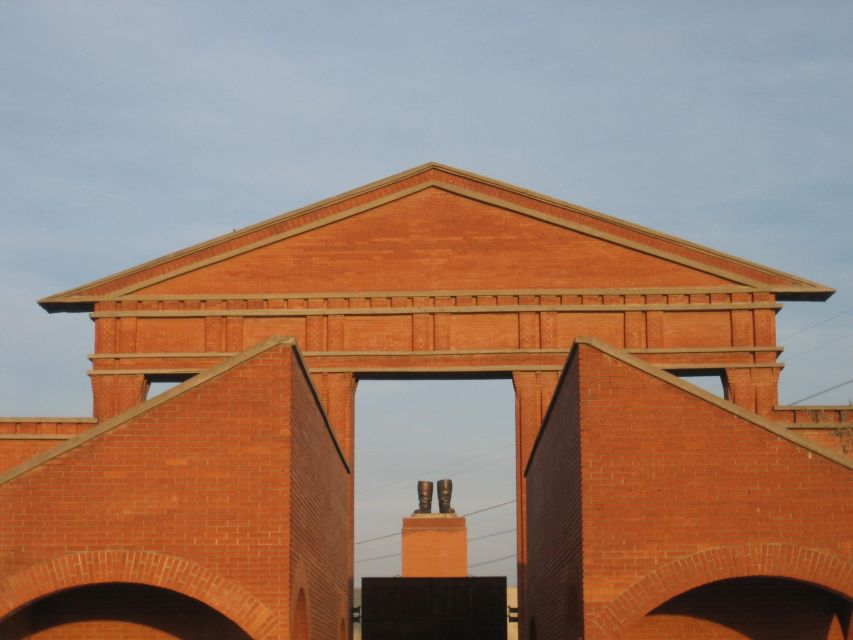
- Stalin’s Grandstand recreates the platform used for Socialist holiday parades and gives you an immediate sense of the old political theater.
- The statues came from Budapest’s streets after the end of the communist era, turning the park into a record of a vanished public landscape.
- The Most Cheerful Barrack includes a photo exhibition and the film The Life of an Agent about Hungary’s former political secret service.
- Stalin’s Boots includes a storage showroom and art exhibition, with more material beyond the main outdoor path.
- The original Trabant is one of the easiest places to get a playful souvenir photo.
- The $10 ticket is admission only, so you arrange your own transport and explore without a guide.
Why Memento Park matters
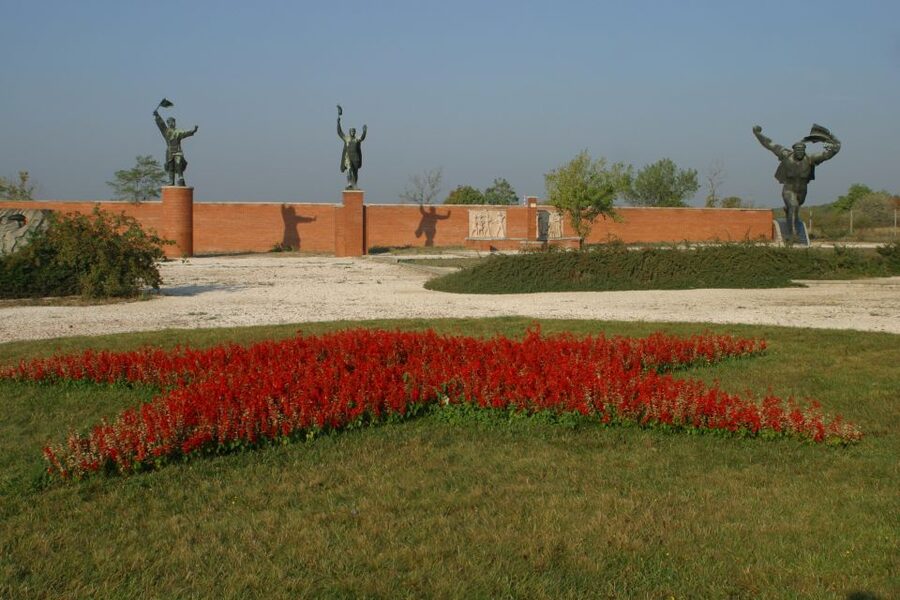
Memento Park is not simply a collection of large statues. It is a carefully chosen reminder of how public art can serve a government, shape civic space, and then become politically unwanted almost overnight.
At the end of Hungary’s communist period, statues connected with Socialist rule were removed from Budapest’s streets. Instead of destroying every piece, the city placed many of the most emblematic examples here. That choice gives you a useful way to look at them: these monuments are no longer telling you what to believe. They are objects to examine.
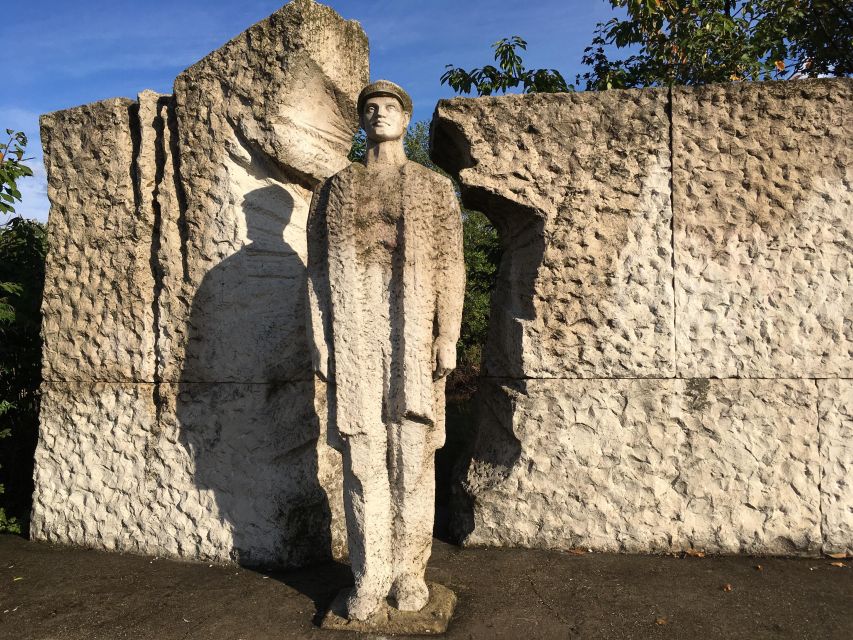
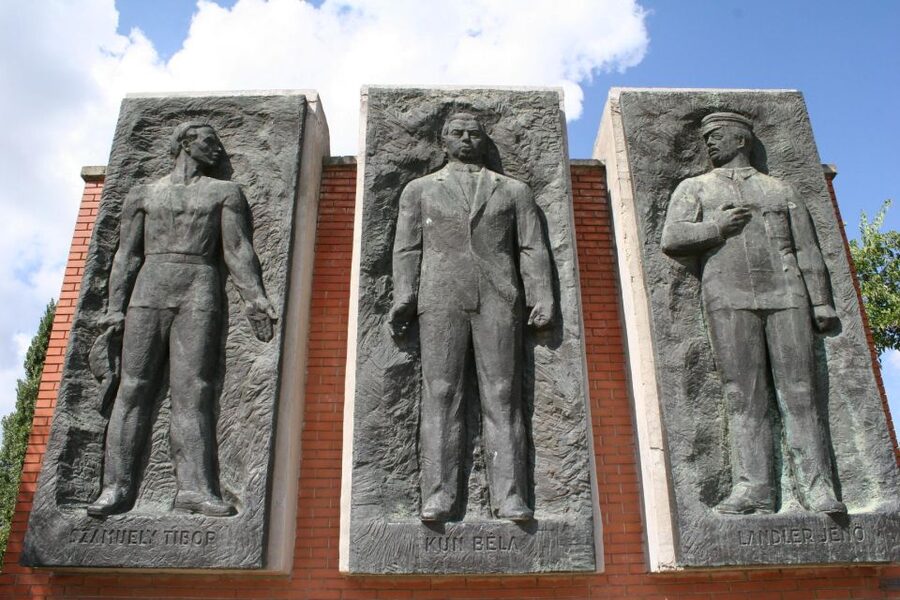
The scale is part of the point. Monumental figures were designed to make the state seem powerful and permanent. A labor leader carved in stone or a Red Army soldier raised high above ordinary people was not meant to feel small or private. At Memento Park, you can look closely at that message without the original political setting around it.
I find the park most rewarding when you give yourself time to ask simple questions. Who was this monument meant to honor? Who was expected to see it? What does the statue communicate through its size, pose, and placement? You do not need a specialist background to get something from the visit.
More communist-era tours in Budapest:
- Budapest: Communist History Tour with House of Terror Option
★ 4.8 · 182 reviews - Communism in Hungary with a Historian
★ 5.0 · 70 reviews - Budapest: 3-Hour Walking Tour About Communism (Small Group)
★ 4.7 · 70 reviews
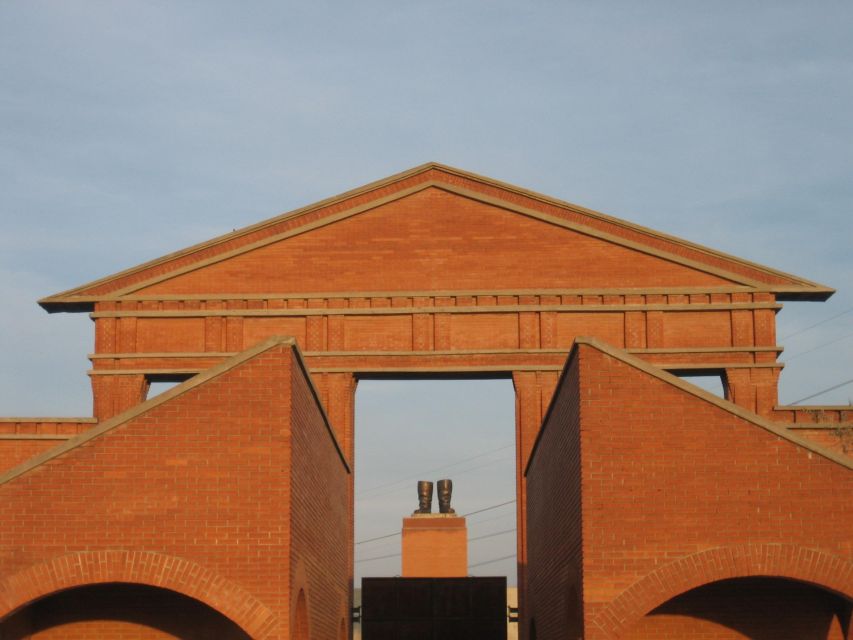
Entering beneath Stalin’s Grandstand
The arrival area introduces the park with a replica of Stalin’s enormous grandstand. The original platform stood in the former Parade Square, where Socialist holidays were celebrated by party and state leaders.
This is a strong beginning because it shows the connection between statues and ceremony. The monuments were not isolated decorations. They were part of public events, official speeches, marches, and carefully staged displays of authority.
The grandstand also helps you picture how a political system used architecture and spectacle. A platform for leaders, a square filled with organized crowds, and monumental sculpture all worked together. You can see why Memento Park feels different from an ordinary sculpture garden.
Take a moment here before rushing toward the figures. The replica gives the statues a setting, even if only a symbolic one. It also offers more statues, exhibitions, and views as you continue through the site.
Reading the outdoor monuments
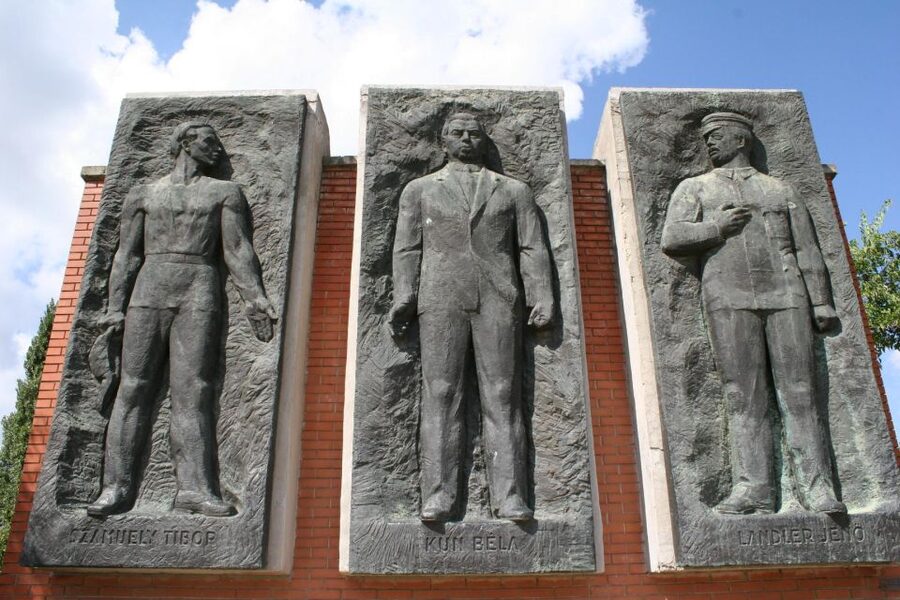
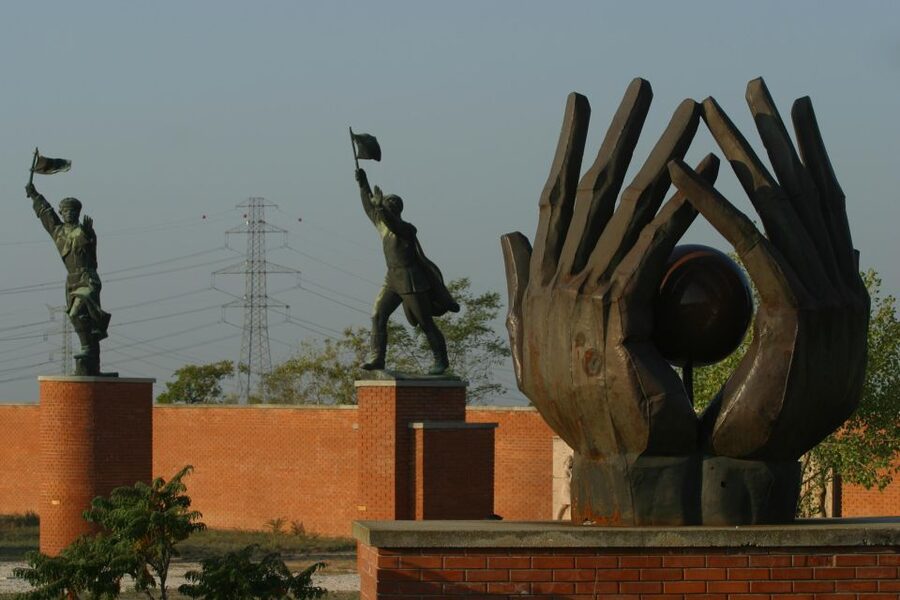
The central part of the visit is a walk among the huge Socialist propaganda monuments. You will encounter allegorical monuments of liberation, statues linked to the labor movement, and soldiers of the Soviet Red Army.
The outdoor displays reward slow looking. At first, many pieces may seem alike because of their size and political style. Then details begin to separate them: gestures, uniforms, raised arms, group formations, and the way a figure is posed to face an imagined crowd.
You can also take photos here, including playful selfies beside Lenin and Soviet soldiers. That may feel odd at first, but the park itself allows room for that reaction. These works no longer dominate Budapest’s public spaces. Their meaning has shifted, and the mix of serious historical reflection with ordinary tourist photography is part of the experience.
Still, I would avoid treating the park as only a backdrop for photographs. The most interesting moments come when you look past the scale and think about the message each statue once carried. The photo opportunities are enjoyable, but they work best alongside the historical material.
There is no guided tour included, so your pace is your own. That suits people who like to stop, read, photograph, and move on without following a group. If you want detailed explanations for every monument, you may find the independent format less satisfying.
The Most Cheerful Barrack and the secret-service film
The Most Cheerful Barrack contains a photo exhibition and a showing of The Life of an Agent. Despite its unusual name, this is the part of the visit that gives the statues a more human and political frame.
The film focuses on the former political secret service. That matters because the outdoor monuments show official public messaging, while the documentary points toward the less visible side of political control. Together, the two parts help you see both the public image of the system and the pressure that could exist behind it.
I recommend making time for the film rather than treating it as an optional extra. The statues are memorable, but a documentary can help explain why the era cannot be understood only through parade scenes and heroic figures. You get a closer look at the machinery of the state and the role played by agents.
The photo exhibition adds another layer. It gives you visual material to place beside the statues, grandstand, and ceremonial setting. If you are visiting with children or teenagers, this indoor section may also provide a pause from walking outside, though the subject matter is historical and political rather than entertainment-focused.
The supplied material does not name a guide or promise a live presentation. You should therefore plan on watching and reading independently, not receiving a personal explanation from a staff member.
A handful more Budapest trips to weigh up
- Budapest: Széchenyi Spa Day Ticket with Optional Upgrades
★ 4.3 · 23,911 reviews - Budapest: Parliament Building Entry Ticket and Audio Guide
★ 4.5 · 3,844 reviews - Budapest: Full-Day Gellért Spa Ticket
★ 4.2 · 3,340 reviews - Budapest: Cinema Mystica Entry Ticket
★ 4.3 · 3,103 reviews
Stalin’s Boots and the indoor exhibits
The Stalin’s Boots area includes a storage showroom and an art exhibition. The name refers to the famous remaining boots associated with the removal of Stalin’s statue, and the display adds another memorable chapter to the park’s story.
This section is useful because it shows that public monuments are not always removed cleanly or forgotten at once. Parts, fragments, and related objects can preserve the evidence of a political moment. A storage showroom also changes your view of the park: you are not seeing only the polished monuments selected for an outdoor setting, but material connected with the afterlife of those objects.
The art exhibition gives you another way to approach the period. You may find it more reflective than the large outdoor sculptures, since art can suggest mood and personal response rather than only official slogans.
Allow time for both indoor areas if you want the full visit. The outdoor statues are the obvious draw, but the film, photo material, storage display, and art exhibition make the ticket more worthwhile. They turn a quick photo stop into a history-focused outing.
The Trabant photo stop
The original Trabant is one of the park’s most approachable details. You can sit in the car and take photos, making it an easy break from the heavier political material.
The Trabant became one of the best-known cars associated with everyday life in the Eastern Bloc. The provided experience information identifies it as one of the most popular photo points at the park, and it is easy to understand why. Unlike a towering statue, the car gives you something familiar and human-sized to interact with.
I like this small touch because it keeps the visit from becoming too austere. Memento Park deals with dictatorship, propaganda, and state power, but it also connects with ordinary objects from the period. A car can communicate daily life more directly than a monumental figure.
The car is included with admission, along with the exhibitions and movie show. You do not pay a separate fee for the photo opportunity.
What the $10 ticket gives you
At about $10 per person, the ticket is reasonably priced if you use the full range of what is included. You receive admission to the park, the outdoor monuments, the photo exhibition and movie show in The Most Cheerful Barrack, the storage showroom and art exhibition under Stalin’s Boots, and access to the original Trabant.
The value depends on your interests. If you only want ten minutes beside a few statues, the ticket may feel less worthwhile. If you watch the film, examine the exhibitions, and give the outdoor monuments proper attention, it becomes a fuller cultural visit.
The ticket is valid for one day, so you do not need to rush through multiple timed stops. Starting times and availability should be checked when you book. Transportation is not part of the price, and there is no guided tour included, so compare the $10 admission with the total cost and effort of reaching the park.
A café lunch is not part of the experience. Plan your food around the visit rather than assuming you will have a full meal on site. This is especially useful if you are building the park into a longer day outside central Budapest.
Getting to the entrance
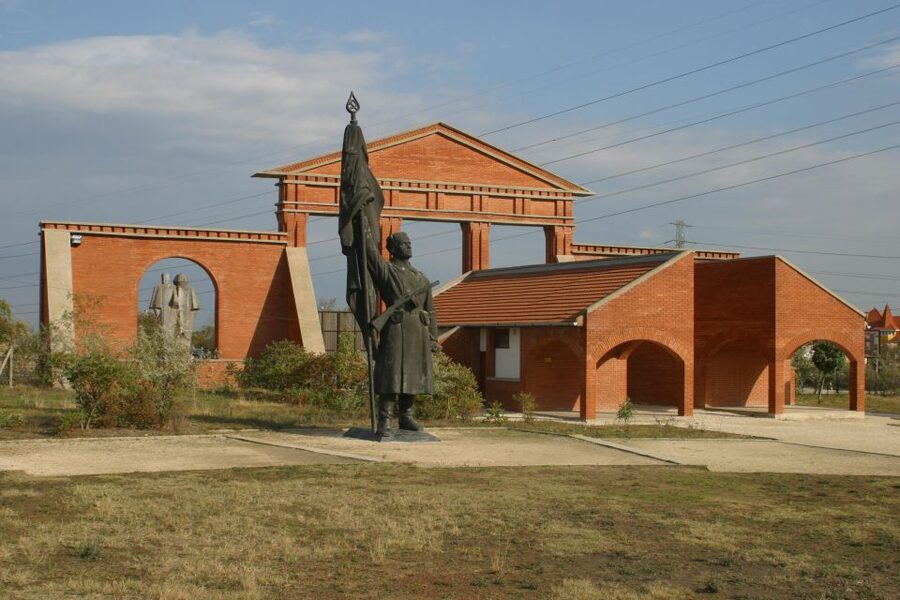
The meeting point is the Memento Park entrance at the corner of Balatoni út and Szabadkai utca, 1223 Magyarország. You present your voucher there.
Since transport is excluded, check your route on the day you go. Roadworks can change bus service, and the 101E and 150 buses have been reported not to stop near the park during road closures. That means old directions may not be enough. Confirm the current stop and route before leaving, especially if your visit depends on public transportation.
This is not a central Budapest stop that you simply fold into a walk between major sights. Treat the journey as part of the planning. A little checking beforehand can prevent a frustrating arrival at the wrong stop.
The park is a better choice when you can give it a calm block of time rather than squeeze it between tightly timed attractions. The ticket itself is valid for one day, but the supplied information does not set a fixed visit length.
Who will enjoy this visit most
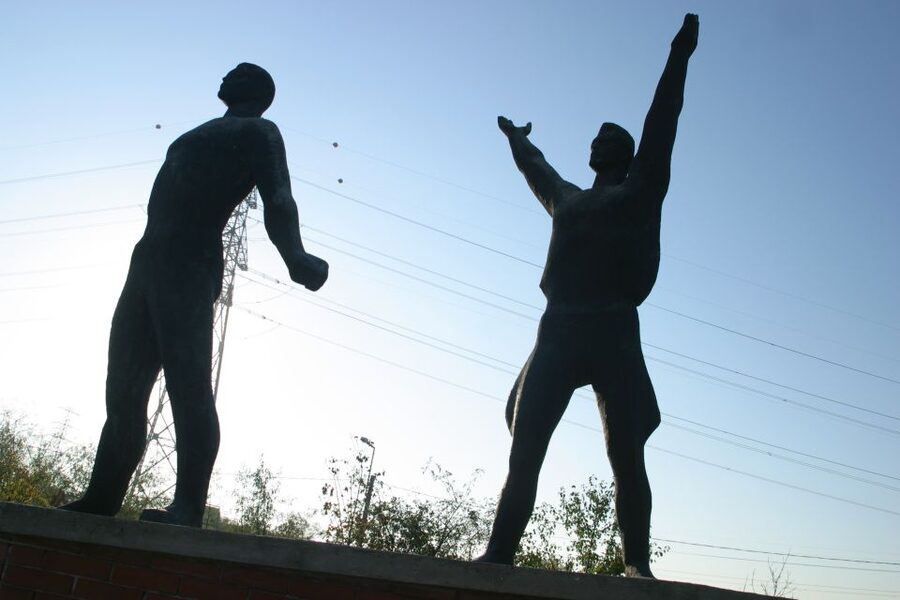
I would recommend Memento Park to you if you enjoy modern European history, political art, unusual museums, or places that preserve difficult public memories. It also suits photographers who want something beyond Budapest’s usual architectural views.
The park works well for independent visitors because there is no required group schedule. You can study a statue for a few minutes, watch the film, take photos, and move on at your own pace.
Families can find approachable elements in the Trabant and the oversized figures, though the subject is serious. Young visitors may need some explanation about propaganda, dictatorship, and the role of the secret service. The film and displays are most useful when someone helps connect them to the broader story.
You may want to skip it if your main goal is a classic Budapest sightseeing day in the city center. The park is specific in subject and presentation. It is not a general attraction with many unrelated activities.
Wheelchair users should take extra care before booking. The paths are covered with gravel and may not be suitable for wheelchair use. The experience is also not guided, so visitors who need special on-site assistance should confirm whether the conditions meet their needs before going.
How to get more from the statues
Before you arrive, think of three questions: What did this monument promote? Who was its intended audience? Why was it moved?
Those questions keep the visit from becoming a simple hunt for the largest statue. They also help you connect the grandstand, the outdoor figures, the secret-service documentary, and Stalin’s Boots.
Use the film as a companion to the monuments. The statues show the public face of the system. The documentary adds information about control and surveillance. The indoor material helps explain what happened to the symbols when the political era ended.
Leave room for the lighter moments. Sit in the Trabant, take a photo with Lenin, and enjoy the strange contrast between a playful snapshot and the serious history surrounding it. You can respect the subject without treating the whole park as a solemn ceremony.
Should you book Memento Park?
Book this ticket if you want a focused look at Hungary’s Socialist era and are willing to travel beyond central Budapest. The strongest parts are the huge propaganda statues, Stalin’s Grandstand, The Life of an Agent, Stalin’s Boots, and the original Trabant.
The $10 price is fair when you use the exhibitions and film as well as the outdoor displays. I would plan your route carefully, allow time for the full site, and bring realistic expectations about gravel paths, independent exploration, and the lack of included transport or guiding.
Skip it if you want a quick central-city attraction or a conventional museum with a personal guide. For anyone curious about how political power appears in public art, though, Memento Park offers a rare and memorable visit.
FAQ
Where is Memento Park located?
Memento Park is at the entrance on the corner of Balatoni út and Szabadkai utca, 1223 Magyarország.
How much does admission cost?
The listed price is $10 per person.
What does the ticket include?
Admission includes entry to Memento Park, the photo exhibition and movie show in The Most Cheerful Barrack, the storage showroom and art exhibition under Stalin’s Boots, and access to an original Trabant car for photos.
Is transportation included?
No. You must arrange your own transportation to the park.
Is a guided tour included?
No. The ticket provides admission, but a guided tour is not included.
What film can I watch at the park?
You can watch The Life of an Agent, a documentary about the former political secret service.
Is Memento Park suitable for wheelchair users?
The gravel paths may not be suitable for wheelchair users, and the experience is listed as unsuitable for wheelchair users.
Just added around Budapest
- Budapest: Danube River Views Bike Ride★ 4.8 · 23 reviews
- Budapest: City Bike Tour with Coffee Stop★ 5.0 · 37 reviews
- Budapest: Private Walking Tour with a Local Guide★ 3.6 · 6 reviews
- Budapest: Vacation Photographer to collect great memories★ 5.0 · 49 reviews
- Walk to recent and aged spiritual sanctuaries near Budapest★ 5.0 · 5 reviews
- From Budapest: Guided Tour of Eger with Wine Tasting★ 4.5 · 6 reviews
- Audio visual multi-sensory chefs journey dinner experience★ 5.0 · 3 reviews
- Budapest: 3-Hour Trabant Sightseeing Tour★ 4.7 · 28 reviews
Budapest Communist History Tours, compared.
Communist History Tour with House of Terror Option
Read our review →
3-Hour Walking Tour About Communism (Small Group)
Read our review →
Lives of Hungarians Under Communist and Capitalist system
Read our review →
Private Budapest Hammer & Sickle Communist Times Tour
Read our review →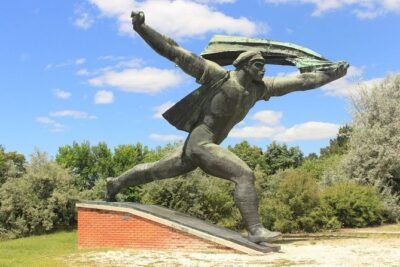
Browse the lists this tour appears in