
Reviewed · BUDAPEST COMMUNIST HISTORY TOURS
Communism in Hungary with a Historian
Budapest’s communist past is easiest to understand when you connect political events with ordinary life. This three-hour walk does that well, moving from Elizabeth Square and St. Stephen’s Basilica to Freedom Square and Parliament, then ending at the old Bambi Café on the Buda side. Guides such as Judit, Raymond, Gábor, Greg, and András use family stories to explain national events.
I like the small group limit of 10, which gives you room to ask questions instead of standing at the back of a crowd. I also like the mix of outdoor monuments, metro travel, a look at a bunker from outside, and coffee at a Communist-era café. The main drawback is that much of the tour takes place outdoors, and the basilica and Parliament are viewed from outside rather than visited inside.
Key points to know before booking
- Personal stories make the politics easier to grasp: Guides may explain national events through family experiences of nationalization, forced housing changes, church pressure, and fear of informing.
- Freedom Square is the main history lesson: You’ll see statues, memorials, embassies, and a visible section of a bunker tied to Hungary’s difficult 20th century.
- The tour crosses both sides of the Danube: You begin in Pest, use the metro with tickets included, and usually finish at Bambi Café in Buda.
- The group is capped at 10 people: This is a useful size for questions and conversation, especially on a subject that can become complicated quickly.
- Coffee is part of the experience: The usual ending is Bambi Café, opened in 1961 and still associated with the era being discussed.
- Plan for weather: On cold or wet days, the ending may shift to central Pest instead of Buda.
Why this tour adds meaning to Budapest’s monuments
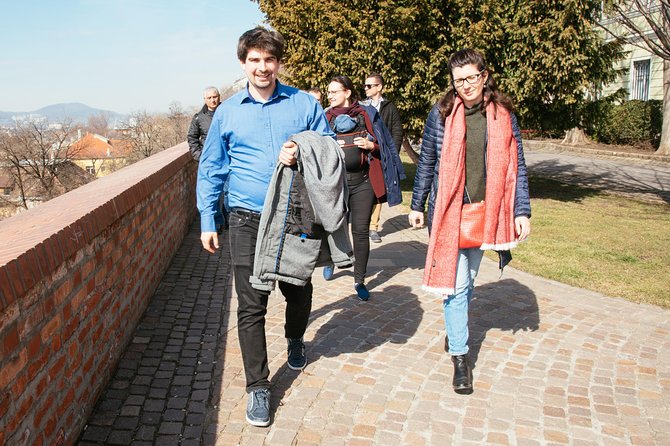
Budapest gives you plenty of grand buildings and handsome squares, but the Communist period is not always obvious at first glance. A statue, embassy, church, or public square can look like part of the city’s normal scenery. A good guide shows you how each place carries another layer of political memory.
That is the strength of this tour. It does not treat Communism as a detached chapter in a textbook. You hear how the system affected work, housing, religion, family businesses, education, and everyday trust. The most useful explanations connect the big events to questions you can picture: Who owned a factory? Who was allowed to live in an apartment? What happened when a church resisted? Why did people worry that a neighbor might report them?
The guides bring different backgrounds and personalities. Judit is praised for warm, engaging storytelling and for answering questions carefully. Raymond has shared a particularly striking family account involving a nationalized business, a grandfather forced to work in his own factory, and relatives required to give up apartments. Gábor, also known as Gabriel in some contexts, is described as patient and balanced, even in poor weather.
Greg, András, Virág, Peter, Daniel, and other guides have also led this experience. That means the tone may vary slightly depending on the day, but the central approach remains clear: explain the political system through places and lived experience.
More communist-era tours in Budapest:
- Budapest: Communist History Tour with House of Terror Option
★ 4.8 · 182 reviews - Budapest: 3-Hour Walking Tour About Communism (Small Group)
★ 4.7 · 70 reviews - Budapest Hammer & Sickle Communist Times Tour
★ 4.5 · 68 reviews
Elizabeth Square and the memory of Stalin Square
The meeting point is outside the Kempinski Hotel Corvinus Budapest at Elizabeth Square, a central and easy-to-find location at Erzsébet tér 7-8. The tour begins at 2:00 pm, and the first stop lasts about 15 minutes.
Elizabeth Square is useful as an opening because it introduces the way political power can rename and reshape public space. The tour discusses its former connection with Stalin-era Hungary, along with monuments and stories tied to the period. This is not simply a place to take a quick photograph before moving on. You begin by considering how a government uses a central square to project authority.
The stop is short, so do not expect a long architectural lecture. Its purpose is to give you a frame for the rest of the afternoon. The guide sets out the political background, then the route moves toward the religious and civic sites where those policies affected daily life.
St. Stephen’s Basilica and religious life under Communism
The next stop is St. Stephen’s Basilica, or Szent István Bazilika. You see the church from outside and spend about 15 minutes discussing religious life during the Communist period.
This part matters because the story is not only about statues, secret police, and political leaders. Churches remained important to many Hungarian families, yet religious institutions had to operate under heavy state pressure. The guide explains that tension and may add personal family stories, which help turn an abstract policy into something more human.
There is no admission ticket included here because the stop is an exterior visit. If you want to see the basilica’s interior, plan that separately at another time. I see this as a reasonable tradeoff for a history walk, since the tour is focused on Communism and not on the church’s art and architecture.
You should also be ready for a range of views. The better guides do not present the period as a simple good-versus-bad tale. They explain how people adapted, what freedoms were limited, and how institutions tried to survive. That balance was one of the strongest features praised in the feedback about Gábor and other guides.
Freedom Square, memorials, embassies, and a bunker
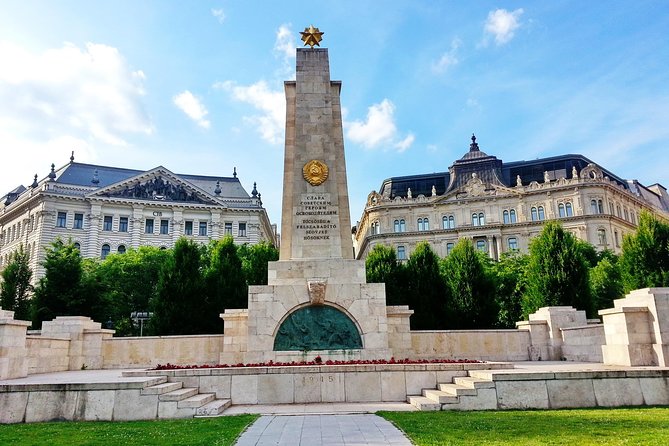
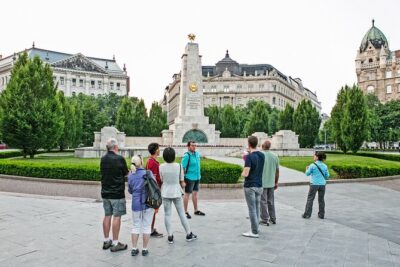
Allow about 45 minutes for Szabadság tér, or Freedom Square. This is the longest stop and the heart of the outdoor sightseeing portion.
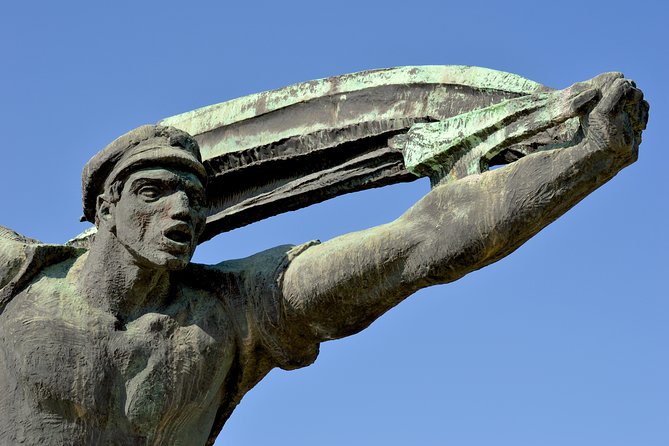
Here you look at remnants of the Communist era through memorials, statues, nearby embassies, and part of a bunker visible from outside. The square works especially well with a guide because the objects do not always explain themselves. Without context, you might walk past them as ordinary city features. With context, they become evidence of occupation, political messaging, national trauma, and changing public memory.
The guide may also discuss the old train terminal and other Cold War-related places along the route. The exact balance can depend on the guide and the day, but the experience is built around seeing physical traces rather than only hearing dates.
This is where comfortable shoes matter. The tour is a walking experience, and you will spend time standing outdoors while the guide explains the sites. Wear layers in cooler months and bring rain protection if the forecast is unsettled. A cold, wet afternoon does not make the history less interesting, but it can make a 45-minute outdoor stop feel much longer.
Freedom Square also gives you a chance to ask questions about memory and politics. A personal example can lead naturally into a broader discussion of why some monuments remain, why others are moved, and how a city lives with difficult reminders. If you enjoy history that is tied to physical places, this will probably be your most rewarding stop.
Same city, a completely different sort of day:
- Budapest: City Highlights Cruise with Welcome Drink
★ 4.6 · 35,610 reviews - Budapest: Unlimited Prosecco, Beer and Aperol Spritz Cruise
★ 4.8 · 25,310 reviews - Budapest: Széchenyi Spa Day Ticket with Optional Upgrades
★ 4.3 · 23,911 reviews - Budapest: Nighttime or Daytime Sightseeing Cruise
★ 4.2 · 21,062 reviews
Parliament and Bloody Thursday in 1956
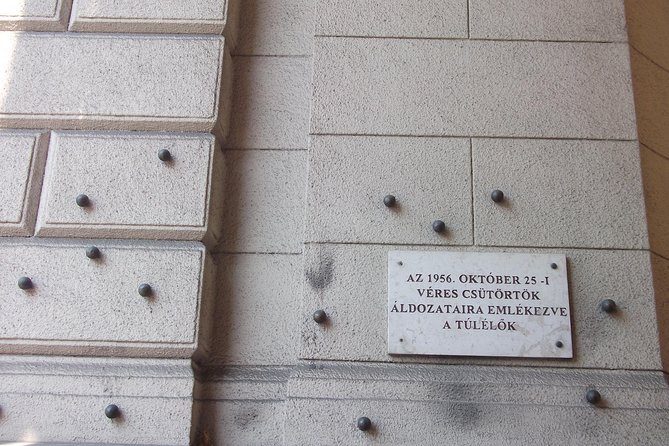
The route continues toward the Hungarian Parliament Building, where the guide discusses one of the most painful episodes of the 1956 revolution, known as Bloody Thursday. The focus is Kossuth Square, directly in front of Parliament, where the event took place.
You view Parliament from outside, and the stop lasts about 15 minutes. This is not a full Parliament tour, so do not book it expecting interior rooms or a long architectural visit. Instead, the building provides the setting for a crucial political story, one that helps explain the courage, fear, and violence surrounding the uprising.
This is also an example of why a history guide can add value to a standard city walk. Parliament is one of Budapest’s most photographed buildings. The tour asks you to look beyond its Gothic Revival appearance and consider what happened in the square around it. The result is a more serious, grounded view of a familiar landmark.
The guide may also place 1956 in the wider story of Hungary’s interwar years, the Second World War, and the postwar Communist system. That broader background is useful because the revolution did not appear from nowhere. If you have already studied Hungarian history, you can use this section to test your understanding and ask more specific questions.
Riding the metro and ending at Bambi Café
Metro tickets are included, and the underground ride helps the tour cover both Pest and Buda without wasting time on a long walk between districts. It also gives the afternoon a natural change of pace. After several outdoor stops, getting onto public transport feels practical rather than decorative.
The usual ending is Bambi Café at Frankel Leó út 2-4 on the Buda side, close to Margaret Bridge and the city center. The café opened in 1961 and has retained much of its old character. It is a fitting final stop because you are not merely hearing about the period. You are sitting in a place connected to it.
Coffee is included, giving you time to sit down and continue the conversation. Some guides use this final stop to discuss what you have seen and how it relates to present-day politics. That informal finish is one of the tour’s best ideas. The walking portion supplies the setting, while the café gives you time to sort through the stories.
On colder or wet days, the tour often ends in central Pest near the starting area instead. This is worth remembering if you are arranging dinner, a museum visit, or a river cruise afterward. The exact final location may change for comfort and weather.
What the $59.13 price gets you
At $59.13 per person, this is not the cheapest way to walk through central Budapest. It is also more than a basic landmark stroll. The price includes roughly three hours with a specialist guide, a group capped at 10, metro tickets, and coffee at the usual café ending.
The value depends on what you want from a tour. If you only need directions and a list of dates, you can explore these central areas on your own for far less. If you want help interpreting memorials, understanding 1956, and connecting government policy with family life, the cost is easier to justify.
The small group is important here. Communism, religion, nationalization, and political fear can raise sensitive questions. A group of 10 allows the guide to respond in detail and lets you hear the experiences of others without the noise of a large crowd.
I would consider this a good use of an afternoon for someone who has already seen the main sights and wants a stronger sense of modern Hungarian history. It is also a smart choice early in your stay, since the stories may change how you see other monuments and public spaces afterward.
Who will get the most from this afternoon
You should book this tour if you enjoy political history, 20th-century Europe, or stories about how ordinary people lived under restrictive systems. It suits curious adults, students, and anyone who prefers a serious walking tour to a quick checklist of attractions.
It is also useful if you have visited Budapest before. One past visitor described seeing a side of the city that had not been apparent on three earlier trips. That makes sense: the route revisits familiar central areas but gives them a different purpose.
You may want to choose another experience if you mainly want interiors, art, or grand architecture. St. Stephen’s Basilica and Parliament are outside stops, and the tour spends more time explaining events than entering buildings.
The tour is offered in English. Most people can take part, and service animals are allowed. Since the walk includes outdoor standing and movement between stops, think about your footwear and the forecast before booking.
Booking timing, cancellation, and practical details
The experience is often booked about 23 days ahead, so I would reserve early if your Budapest dates are fixed. Confirmation is sent when you book, and the starting time is 2:00 pm.
Free cancellation is available up to 24 hours before the start time for a full refund. Changes or cancellations made inside that 24-hour window are not accepted or refunded, with cut-off times based on local time.
I would leave a little flexibility after the tour because the ending can be at Bambi Café in Buda or, in poor weather, back in central Pest. The meeting point is central, and the route is near public transportation.
Should you book Communism in Hungary with a Historian?
Book it if you want Budapest’s 20th-century story told through real places and family experiences. The best part is not any single monument. It is the connection between Elizabeth Square, Freedom Square, Parliament, and the private stories of people who lived through nationalization, state pressure, limited freedom, and political fear.
The $59.13 price makes the most sense for you if you value a small group, patient answers, and a guide who can put Hungary’s Communist period into wider context. Choose a warmer, drier day if possible, and remember that the tour is mainly outdoors.
Skip it if your priority is entering Parliament or the basilica, or if you prefer a light sightseeing walk. For anyone seeking a thoughtful look at how Communism shaped Hungarian life, this is one of the more useful history-focused afternoons in Budapest.
FAQ
Where does the tour begin?
It begins at Kempinski Hotel Corvinus Budapest, Erzsébet tér 7-8, 1051 Budapest, at 2:00 pm.
Where does the tour usually end?
It usually ends at Bambi Café, Frankel Leó út 2-4, 1027 Budapest, on the Buda side near Margaret Bridge. In cold or wet weather, it may end in central Pest near the starting area.
How long does the experience last?
The tour lasts approximately three hours.
Is transportation included?
Yes. Metro tickets are included, and the route uses the metro to connect parts of Buda and Pest.
Is coffee included?
Yes. The tour includes coffee at the Communist-style café ending, usually Bambi Café.
How large is the group?
The tour has a maximum of 10 people.
Is free cancellation available?
Yes. You can cancel up to 24 hours before the start time for a full refund. Cancellations or changes made less than 24 hours before the experience are not accepted.
Just added around Budapest
- Budapest: Danube River Views Bike Ride★ 4.8 · 23 reviews
- Budapest: City Bike Tour with Coffee Stop★ 5.0 · 37 reviews
- Budapest: Private Walking Tour with a Local Guide★ 3.6 · 6 reviews
- Budapest: Vacation Photographer to collect great memories★ 5.0 · 49 reviews
- Walk to recent and aged spiritual sanctuaries near Budapest★ 5.0 · 5 reviews
- From Budapest: Guided Tour of Eger with Wine Tasting★ 4.5 · 6 reviews
- Audio visual multi-sensory chefs journey dinner experience★ 5.0 · 3 reviews
- Budapest: 3-Hour Trabant Sightseeing Tour★ 4.7 · 28 reviews
Budapest Communist History Tours, compared.
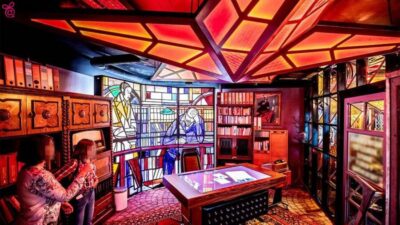
Communist History Tour with House of Terror Option
Read our review →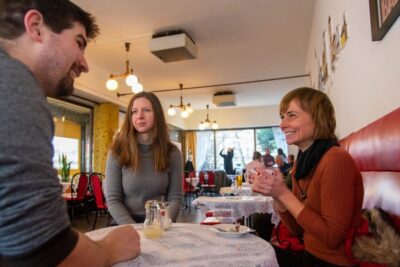
3-Hour Walking Tour About Communism (Small Group)
Read our review →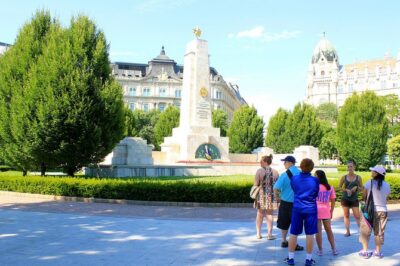
Lives of Hungarians Under Communist and Capitalist system
Read our review →
Private Budapest Hammer & Sickle Communist Times Tour
Read our review →
Browse the lists this tour appears in