
Reviewed · BUDAPEST COMMUNIST HISTORY TOURS
Communist History Evening Walking Tour of Budapest
Budapest’s communist past is easiest to grasp outdoors, where grand streets, memorials, government buildings, and old monuments still show the marks of political change. This two-hour evening walk connects everyday city scenes with the fall of Hungary’s communist system, including the 1956 uprising and the way the era still affects life today.
I like the route’s clear beginning and end, from Blaha Lujza tér to Parliament Square, and I like that it focuses on stories rather than museum displays. Guides such as Victoria bring in religion, football, protest, exile, and present-day Hungary. The main drawback is that you must walk about 3 kilometers, and some explanations may take place on noisy or crowded streets.
Key points to know before you book
- Start at Blaha Lujza tér: The walk begins at 6:00 pm in central Budapest and finishes beside Parliament.
- Follow Andrassy Avenue: Former monuments and changing public spaces help explain how communist rule reshaped the city.
- Connect politics with personal stories: The Basilica stop includes the church under communism and football star Ferenc Puskás’s flight from the system.
- See the sites of protest: Liberty Square and Parliament Square provide the strongest links to resistance and the 1956 uprising.
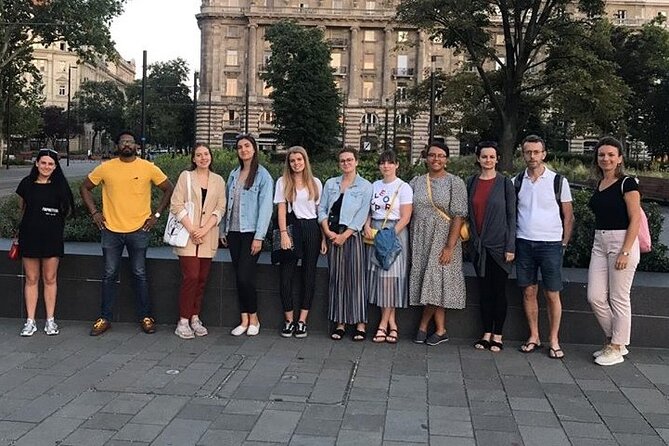
- Small-group format: A maximum of 15 people allows more room for questions than a large coach tour.
- Bring comfortable shoes: The walk covers about 3 kilometers, with no vehicle transfer.
Why Budapest’s communist story works best on foot
A museum can show you photographs, uniforms, and official documents. This walk adds the places where power was enforced and challenged. You move through streets that once carried different names, saw political gatherings, or held monuments with meanings that shifted after the Second World War and again after the end of communism.
The route covers about 22 locations and monuments across Budapest’s central districts. Some are beautiful, especially around St. Stephen’s Basilica, Liberty Square, and Parliament. Others are ordinary city corners. That is part of the point: political history did not happen only in grand halls. It unfolded along streets, near offices, at memorials, and in public squares.
An evening start at 6:00 pm gives the tour a useful rhythm. You can spend the earlier part of the day visiting Budapest’s museums or the Castle District, then meet in the city center for a walk as the day cools. Since the route finishes at Parliament Square, you also end near the Kossuth Lajos tér red metro station and tram 2.
The English-language format is useful if you want more than dates and slogans. Victoria, one of the named guides, is a university history professor according to the tour information. Her style is described as clear, humorous, and very good at linking historical events to present-day life. Guide quality can vary by date, but the experience is built around a personal guide rather than an audio recording.
More communist-era tours in Budapest:
- Budapest: Communist History Tour with House of Terror Option
★ 4.8 · 182 reviews - Communism in Hungary with a Historian
★ 5.0 · 70 reviews - Budapest: 3-Hour Walking Tour About Communism (Small Group)
★ 4.7 · 70 reviews
Starting at Blaha Lujza tér and heading down Andrassy Avenue
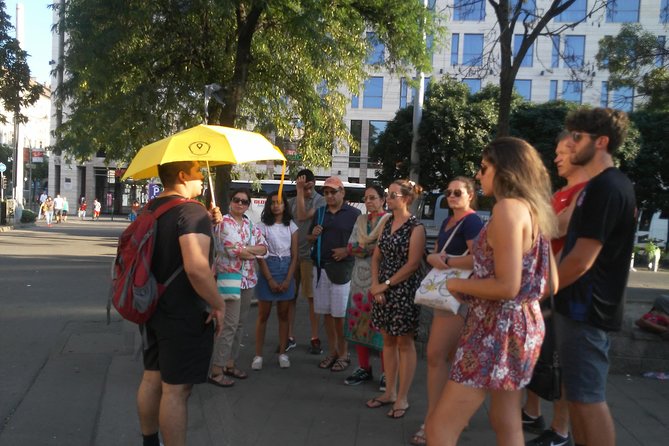
The meeting point is Blaha Lujza tér, at Budapest 1085, with a 6:00 pm departure. Arrive with enough time to find the guide and settle into the group. The walk is designed for up to 15 people, which should make it easier to hear explanations and ask questions.
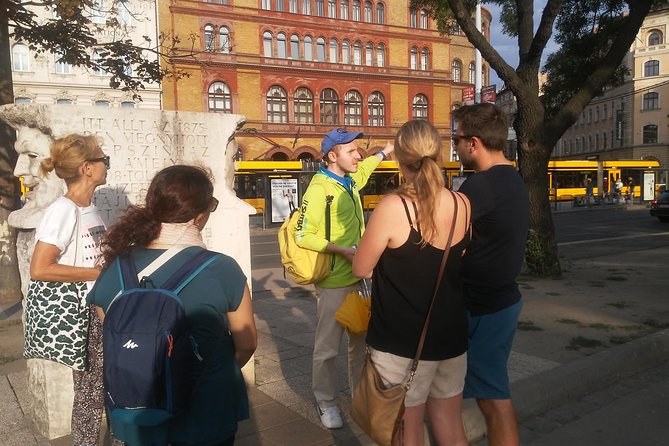
From here, the group heads along Andrassy Avenue. This is one of Budapest’s best-known avenues, but on this tour you are not simply admiring its architecture. The guide explains how the area and its monuments changed under different political systems.
That approach gives the walk useful context. A monument is never just a piece of stone in a city with Hungary’s political past. It can honor one group, be removed by another government, or acquire a new meaning after regime change. As you walk, pay attention to what has been preserved, what has disappeared, and what has been given a new interpretation.
This opening section also helps you get your bearings. Instead of starting with a long lecture, you move through the city while the guide builds the story. The result should suit you if you understand places better when you see them in sequence.
The route is not a sightseeing loop that returns to its starting point. It moves steadily toward Parliament. That makes it practical if you have an evening reservation nearby, though less convenient if you need to return to the Blaha Lujza tér area immediately afterward.
St. Stephen’s Basilica and the pressure on religion
The first named stop is St. Stephen’s Basilica, or Szent István Bazilika. You spend about 10 minutes here, and admission is free. The building itself is one of the more striking parts of the route, but the focus is not a standard church visit.
The guide explains how communism affected the Hungarian church and religious life. That matters because communist governments often tried to reduce the public power of religious institutions, and Hungary was no exception. The stop helps you see the political system not only through laws and state buildings, but through its effect on faith, public identity, and institutions that existed before communism.
The Basilica stop also brings in Ferenc Puskás, Hungary’s famous football player. You learn how he fled the communist system and was later buried at the church. It is an effective human story because Puskás is tied to national pride, sport, exile, and the complicated relationship between a famous individual and the state.
I like this stop because it avoids treating political history as a string of government decisions. You get a personal case that shows how the system could affect a public figure’s freedom and future. If football interests you, the story adds an extra hook. If it does not, the wider point remains clear: leaving communist Hungary could carry serious personal and political weight.
The limitation is time. Ten minutes is enough for a focused explanation outside the Basilica, but not for a full church visit. The tour does not include an admission ticket because the stop is free, and the emphasis is on the historical setting rather than an interior tour.
Liberty Square and the memory of political violence
Liberty Square is the next major stop, with about 15 minutes devoted to it. This is one of the strongest parts of the walk for anyone interested in communist Budapest because the square brings finance, public protest, war memory, and political control into the same space.
The square once held the Stock Exchange, which was closed at the beginning of the communist period. That detail gives you a direct way to understand the shift from a market-oriented system to one controlled by the state. The guide also discusses bloody protests that took place here.
Expect this part to be thought provoking rather than scenic in the usual tourist sense. Liberty Square contains attractive buildings and open public space, but the real value is learning what happened there and how different groups have remembered those events.
A good guide can help you read the square as a record of competing memories. Monuments and memorials are not neutral decorations. They can honor victims, support a national story, or provoke arguments about responsibility. The tour’s broader theme is how Hungarians resisted communism and how the sacrifices made during that struggle helped remove the system.
The practical issue is sound and positioning. One person specifically pointed out that explanations can be harder to follow when the group is near a fountain, a smelly corner, or a busy thoroughfare. That is a minor weakness, but it is worth knowing. You may need to stand close to the guide and ask for a point to be repeated if street noise interrupts.
More tours after dark in Budapest:
- Budapest: 1-Hour Evening Sightseeing Cruise with Drink
★ 4.5 · 8,330 reviews - Budapest By Night Sightseeing Cruise
★ 4.1 · 5,835 reviews - Budapest: Evening Cruise including Drinks and Live Music
★ 4.1 · 5,512 reviews - Budapest: Buda Castle District Vampires and Myths Night Tour
★ 4.6 · 3,830 reviews
Parliament Square and the 1956 uprising
The final named stop is the Hungarian Parliament Building, where you spend about 15 minutes. The tour ends at Kossuth Lajos tér, Parliament Square, at 1-3 Kossuth Lajos tér, 1055 Budapest.
This is the emotional center of the walk. The square was the site of the 1956 uprising against the ruling Communist Party, and considerable blood was shed there. The guide explains the events and the Hungarian resistance, giving you a physical location for one of the country’s most important modern turning points.
Parliament is also a fitting place to finish because the building represents national government, while the square recalls people challenging the political system that claimed to govern them. After two hours of walking through changed monuments, religious restrictions, economic control, and protest, you arrive at the place where the conflict became especially stark.
The stop lasts about 15 minutes, so do not expect a full lecture on every part of the 1956 revolution. The aim is to place the uprising in the city and connect it to the larger story of Hungary’s path to freedom.
The ending is convenient. Kossuth Lajos tér is close to the red metro station and tram 2, making it easy to continue your evening. You may also want to linger in the square after the guide leaves, though the tour itself finishes there rather than continuing inside Parliament.
What the guide adds to the experience
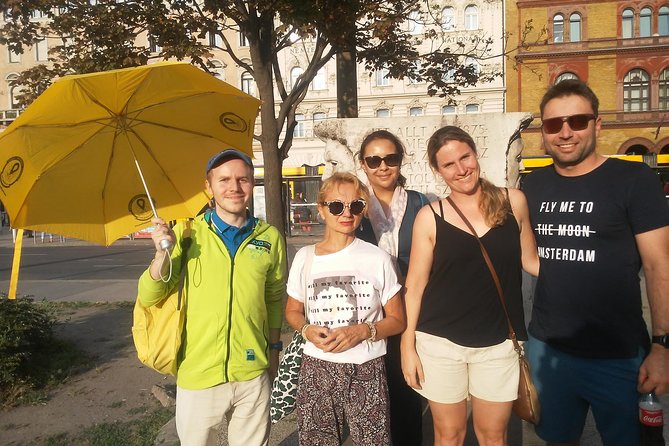
The guide is the heart of this tour. The strongest praise goes to Victoria, who is described as an actual university history professor with excellent English, clear speech, humor, and a lively teaching style. She also brings in what it is like to live in Budapest today, which helps keep the communist period connected to modern life.
That present-day link is important. You are not only learning when communist rule began or when the 1956 uprising happened. You are hearing how earlier systems still shape Hungarian society, politics, culture, and personal memory.
The guide also takes questions. That is useful because communist history often raises issues that are not easy to cover in a fixed script. You might want to ask about daily life, religion, the role of sport, how people resisted, or why certain monuments remain in public spaces.
Still, a walking tour cannot cover everything. If you want a more focused look at secret police methods, interrogation, imprisonment, and state terror, add the House of Terror Museum to your Budapest plans. One tour participant specifically suggested it as a useful follow-up for anyone especially interested in the communist period.
Group size, walking effort, and the evening schedule
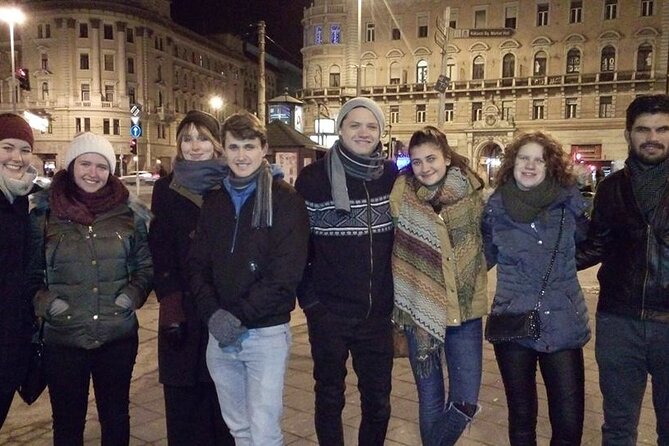
The group is limited to 15 people. That is small enough for a more personal feel and much easier to manage than a large city walk. You should have a better chance of hearing the guide and asking questions, although the street setting can still create noise.
You need to walk or wheel yourself for about 3 kilometers. The route is in an urban setting, so comfortable shoes are sensible. Bottled water is provided, which is a small but useful touch, especially if you have already spent the day sightseeing.
The tour is offered in English. Most people can participate, and service animals are allowed. It is near public transportation at both ends, which makes the start and finish fairly simple to reach.
Weather matters. The experience requires good weather, and poor conditions can lead to a different date or a full refund. You can cancel for a full refund up to 24 hours before the start time. Changes or cancellations inside that window are not accepted, so keep the weather and your evening plans in mind.
Is $36.01 a fair price?
At $36.01 per person, this is not the cheapest way to walk around Budapest, but the price is reasonable if you want a focused history lesson with a guide. You are paying for about two hours of explanation, a route through roughly 22 historically relevant locations and monuments, bottled water, and a group capped at 15 people.
The value depends on your interests. If you already know a great deal about Hungarian communism, you may prefer to explore independently or spend the money on museum admission. If the subject is new to you, the guide’s ability to connect places and events can save you hours of reading and help you notice details you would otherwise pass.
The tour does not include food, alcoholic drinks, parking, or admission to paid attractions. That is not a major issue because the main stops are viewed from public spaces and require no admission ticket. Still, do not book it expecting a meal, a museum entrance, or an interior Parliament visit.
The small group adds real value. You are not being carried past the city in a bus while a guide rushes through a script. You walk through the streets, stop at key sites, and have room to ask questions.
Who should book this Budapest walk?
I would choose this tour if you want modern Hungarian history explained through actual city locations. It is a strong match for history students, people interested in former communist countries, and anyone who wants to understand why Budapest’s monuments and public squares can carry competing meanings.
It also suits repeat visitors. On a first visit, you may want to focus on the Danube, the Castle, thermal baths, and the major churches. On a return visit, this walk offers a different way to see central Budapest and gives familiar streets a sharper political context.
Families with older children or teenagers may find the stories of protest, exile, football, and resistance easier to follow than a formal museum display. The walking distance and the historical subject may not suit very young children.
I would be less likely to book it if you want a relaxed architectural stroll or a tour centered on interiors. Street noise, exposed meeting spots, and the serious subject matter are part of the experience. You should also allow extra time if you want to stop at the House of Terror Museum separately.
Should you book the Communist History Evening Walking Tour?
Book it if you want to understand how communism changed Budapest and how Hungarians resisted it, not just see the city’s famous buildings. The route has a clear finish at Parliament, the small group keeps the experience personal, and guides such as Victoria bring strong academic and local perspective.
Skip it if you dislike walking, want a broad overview of all Budapest history, or expect entry into the Basilica or Parliament. For the right audience, $36.01 is a fair price for a thoughtful evening route that turns ordinary streets and public squares into a readable part of Hungary’s modern story.
FAQ
Where does the Communist History Evening Walking Tour begin?
It begins at Blaha Lujza tér in Budapest, Hungary.
What time does the tour start?
The tour starts at 6:00 pm.
Where does the tour finish?
It finishes at Parliament Square, at Kossuth Lajos tér 1-3. The end is close to Kossuth red line metro station and tram 2.
How long is the walking tour?
The tour lasts approximately two hours, and you need to walk or wheel yourself about 3 kilometers.
What language is the tour offered in?
The tour is offered in English.
What is included in the price?
Bottled water is included. Alcoholic drinks, parking fees, landing and facility fees, and scuba equipment are not included.
Can I cancel for a full refund?
Yes. You can cancel at least 24 hours before the start time for a full refund. Poor weather or failure to meet the minimum group size may also result in a different date or a full refund.
More history tours in Budapest
- Budapest: Historic Cruise with Welcome Drink
★ 4.7 · 6,512 reviews - Budapest Historical Sightseeing – Free Walking Tour
★ 5.0 · 1,302 reviews - Buda Castle District Dark History, Legends and Vampire Night Tour
★ 4.5 · 1,240 reviews - BloodThirsty Hungary: Walking tour & Dark Historical Stories
★ 4.9 · 633 reviews
More walking tours in Budapest
- Budapest: Buda Castle Walk with Saint Stephen’s Hall
★ 4.5 · 3,012 reviews - Big Bus Budapest Hop-On Hop-Off Bus and Walking Tour
★ 3.5 · 2,206 reviews - Budapest: Buda Castle District Walking Tour
★ 4.6 · 2,108 reviews - Budapest City Landmarks Walking Tour in 2 Hours
★ 5.0 · 2,048 reviews
Just added around Budapest
- Budapest: Danube River Views Bike Ride★ 4.8 · 23 reviews
- Budapest: City Bike Tour with Coffee Stop★ 5.0 · 37 reviews
- Budapest: Private Walking Tour with a Local Guide★ 3.6 · 6 reviews
- Walk to recent and aged spiritual sanctuaries near Budapest★ 5.0 · 5 reviews
- From Budapest: Guided Tour of Eger with Wine Tasting★ 4.5 · 6 reviews
- Budapest: Vacation Photographer to collect great memories★ 5.0 · 49 reviews
- Audio visual multi-sensory chefs journey dinner experience★ 5.0 · 3 reviews
- Budapest: 3-Hour Trabant Sightseeing Tour★ 4.7 · 28 reviews
Budapest Communist History Tours, compared.
Communist History Tour with House of Terror Option
Read our review →
3-Hour Walking Tour About Communism (Small Group)
Read our review →
Lives of Hungarians Under Communist and Capitalist system
Read our review →
Private Budapest Hammer & Sickle Communist Times Tour
Read our review →
Browse the lists this tour appears in