
Reviewed · BUDAPEST HOP-ON HOP-OFF BUS TOURS
Big Bus Budapest Hop-On Hop-Off Bus and Walking Tour
Budapest is spread across two very different sides of the Danube, and this bus tour gives you a quick way to connect them. You can ride past Parliament, cross the Chain Bridge, reach Heroes’ Square, and circle Castle Hill without wearing out your shoes. I especially like the wide choice of stops and the chance to use the pass for several days, not just one circuit.
I also like the 16-language audio guide, plus the walking tour and river option. The pass can help you get your bearings on a first visit, especially if you want to see a lot before choosing where to spend more time. The main caution is service consistency: buses can be crowded, stop announcements and audio may be unclear, and the current Danube offering needs checking because the advertised inclusions have changed.
Quick points before you book
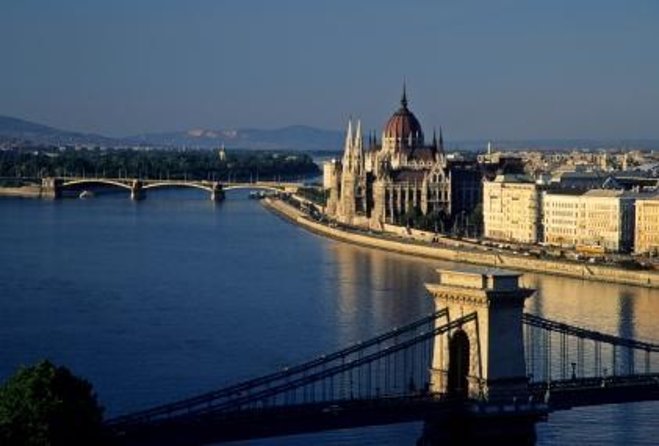
- Two sides of Budapest in one ticket: The routes link Pest’s grand avenues and museums with Buda’s Castle Hill and riverfront views.
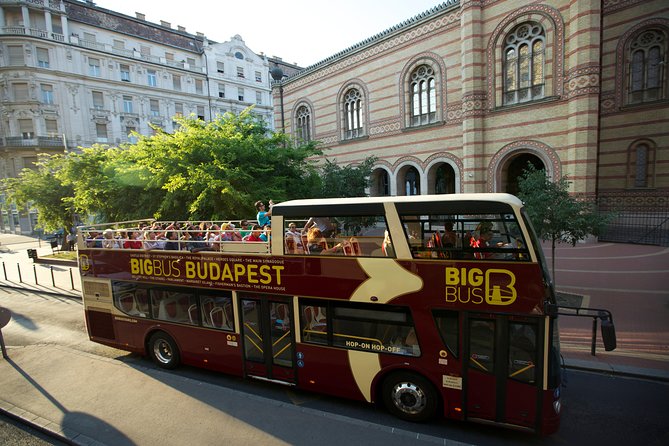
- Twenty-seven stops: You can get off near Parliament, the Basilica, the synagogue, Heroes’ Square, Gellért Bath, and the Castle Garden Bazaar.
- A useful first-day overview: I would use the bus early in your stay to see where the main sights are before planning your return visits.
- Audio quality can vary: The 16-language choice is useful, but some buses have had audio that cuts out, starts late, or does not match the sights.
- Check the cruise terms: The package information refers to a Danube cruise option, while the included details specify 30 percent off. Confirm exactly what your ticket provides before purchase.
- Allow for Budapest traffic: Delays, bus changes, full vehicles, and route interruptions can make this a poor substitute for the city’s regular public transport.
What this Budapest bus tour is really good for
At $42.13 per person, this is not the cheapest way to move around Budapest. It makes the most sense as a sightseeing tool, not as a simple transport pass. You are paying for the elevated views, recorded commentary, route planning, and the freedom to get on and off at major sights.
The pass lasts for one, two, or three consecutive days, which gives you room to spread things out. A one-day ticket can work well if you ride the full route first, then get off at two or three places. A two-day pass gives you a calmer pace. A three-day pass only makes good value if you plan to ride often and use the included extras.
The basic loop takes you through central Pest, across the Danube, around Buda, and back toward the main Pest sights. One detailed account suggests allowing about two hours for a complete round trip, though traffic and route changes can affect that. The stated sightseeing ride itself is about 1 hour 40 minutes, so I would not build a tight appointment around the timetable.
You can also use the bus to get a quick sense of Budapest’s layout. Pest is flatter and more urban, with the Parliament, Basilica, Opera, synagogue, cafés, and shopping streets. Buda feels hillier and more scenic, with Castle Hill, the riverfront, and views back toward the Parliament. Seeing both in one ride helps you decide where to return on foot.
More hop-on hop-off bus tickets in Budapest:
- Budapest: City Sightseeing Hop-On Hop-Off Bus Tour & Extras
★ 4.1 · 4,337 reviews - Budapest: Big Bus Hop-On Hop-Off Tour & Danube River Cruise
★ 4.2 · 3,794 reviews - Budapest: Floating Bus Tour by Land and Water
★ 4.3 · 3,342 reviews
Starting near St. Stephen’s Basilica and the Chain Bridge
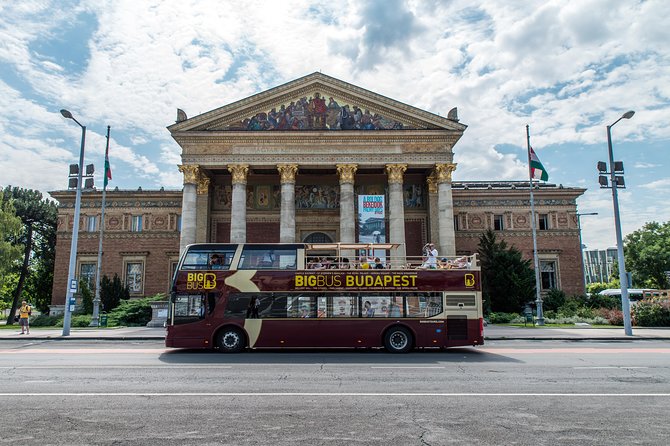
The main redemption point is listed at Bajcsy-Zsilinszky út 17, near the center of Pest. Other useful starting points include St. Stephen’s Basilica, the Chain Bridge, József Attila Street, and several city-center locations. The stops can be hard to spot because signage is not always obvious, so I would use the operator’s app map and stop finder rather than rely on a red bus being visible from a distance.
St. Stephen’s Basilica is one of the easiest central stops to use. From here, you are close to the Basilica itself, the Danube, and the streets leading toward the Parliament. It is a practical place to start if you want a quick orientation before walking through central Pest.
The Chain Bridge stop is valuable because the bridge connects the Pest and Buda sides and gives you an immediate sense of the city’s geography. From here, you can walk toward the Castle Garden Bazaar or use the bus to continue toward Castle Hill. The bridge area can be busy, and the bus may not arrive exactly when expected, so allow extra time.
The József Attila Street stop and nearby Anker Lane place you close to the center of Pest. These are useful for reaching the Basilica, the riverfront, and the streets around Deák Ferenc tér. The route is especially handy here because you can cover several central sights without repeatedly checking a transit map.
The Jewish Quarter, Opera, and Andrássy Avenue
The Dohány Street Synagogue stop brings you to one of Budapest’s most important religious and cultural sites. The synagogue is not simply a quick photo stop. If you plan to go inside, allow separate time for that visit, as the hop-on hop-off ticket only gets you to the area.
From the synagogue, the route continues toward Anker Lane, Andrássy Avenue, the Hungarian State Opera, and Liszt Ferenc Square. This is one of the better stretches for seeing Budapest’s grand urban design from the upper deck. Andrássy Avenue leads toward Heroes’ Square and carries much of the city’s formal character.
The Opera stop is convenient if you want to explore the avenue on foot. Liszt Ferenc Square is useful for a break, though the tour information does not promise reserved seating or a meal. I would treat these stops as starting points for your own walk rather than assume the bus will deliver you directly to every entrance.
The recorded narration is meant to explain the sights as you pass. In the best case, it gives you enough background to decide what deserves a closer look. In the less successful case, it starts in the middle of a sentence or describes one building while the bus is already passing another. I would keep the app or a simple list of sights open so you know what you are seeing even if the commentary fails.
Heroes’ Square, Keleti, and the New York Café
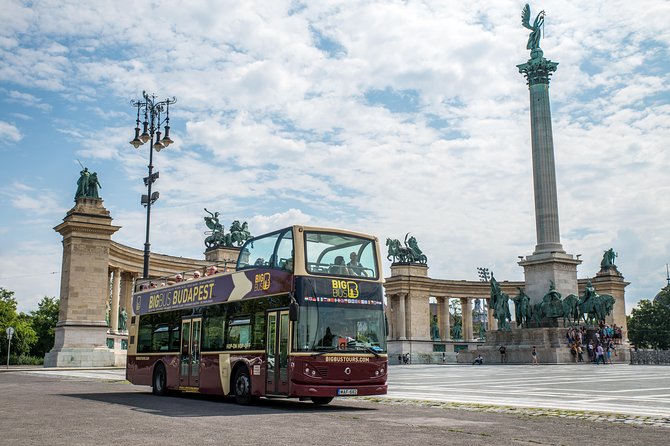
Heroes’ Square is one of the route’s strongest stops. It gives you access to the monumental square, the surrounding museums, and the end of Andrássy Avenue. This is a good place to hop off for photographs and a walk through the nearby city park area, though the tour details do not include admission to any museum or attraction.
The route then reaches Budapest-Keleti railway station and Puskás Ferenc Stadium. These stops are less essential for a short sightseeing day, but they show a different side of the city beyond the central postcard sights. Keleti is a major transport landmark, while the stadium stop may be of interest if you are following Budapest’s sports scene.
The New York Café stop offers another recognizable Budapest landmark. The café is famous for its ornate interior, but you should treat the bus stop as a location, not as a guaranteed café reservation. If you want to visit, plan for possible waiting time and keep track of the next bus.
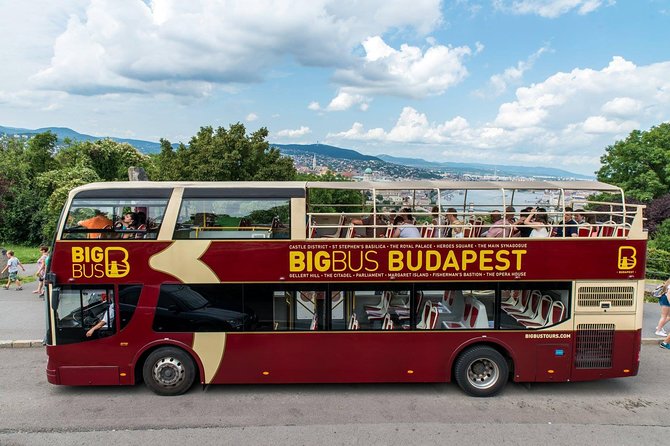
This part of the route can also expose one of the pass’s weaknesses. If the bus is full, the upper deck may not give you a clear view, and the low roof or overhead railings can be awkward. Sit carefully, especially when climbing the stairs or moving along the upper level.
More walking tours in Budapest:
- Budapest: Buda Castle Walk with Saint Stephen’s Hall
★ 4.5 · 3,012 reviews - Budapest: Buda Castle District Walking Tour
★ 4.6 · 2,108 reviews - Budapest City Landmarks Walking Tour in 2 Hours
★ 5.0 · 2,048 reviews - 3-Hour Orientation Walking Tour of Buda and Pest
★ 4.8 · 1,834 reviews
Váci Street, the market area, and Gellért Bath
Váci Street is the main pedestrian shopping street in central Pest. It is useful as a reference point, though I would not make it the main reason to buy the bus ticket. The area is easy to combine with a walk toward the river, the Great Market Hall, or Fővám Square.
Fővám Square and Kálvin Square extend the route into another practical part of central Pest. Fővám Square is the stop to consider for the market area and riverfront. Kálvin Square connects with museums, cafés, and public transport, though the sightseeing bus may not be the fastest way to continue from there.
The Gellért Thermal Bath stop is on the Buda side and is one of the more useful stops for a planned visit. Budapest’s bath culture is a major part of the city experience, and Gellért gives you a chance to pair sightseeing with a soak. Admission is not included, so plan that as a separate expense and activity.
The bus crossing to Buda is valuable because it saves you from planning each connection between Pest and the hillier western side. Still, regular public transport may be faster if you are trying to reach one specific place at a certain hour. I would use the sightseeing bus for views and orientation, then switch to ordinary city transport when timing matters.
Castle Garden Bazaar, the Funicular, and Batthyány Square
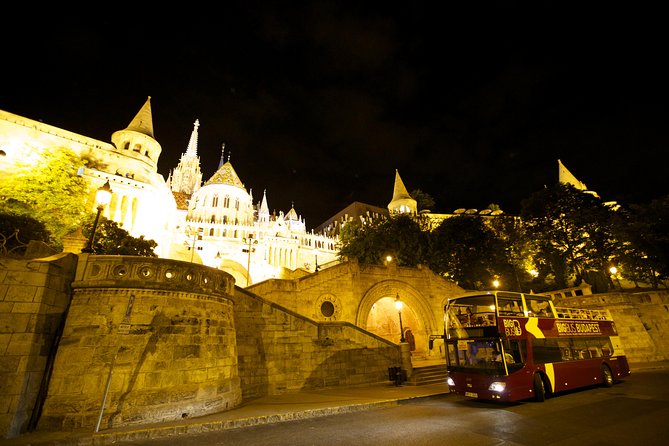
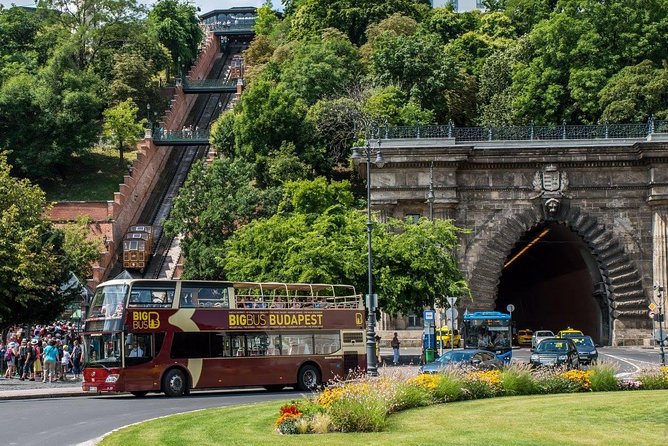
The Castle Garden Bazaar stop is near the lower approach to Buda Castle. It is a scenic area with river views and access toward Castle Hill. The route then continues to the Budapest Castle Hill Funicular stop, which is the natural choice if you want to reach the upper castle area.
The funicular itself is not included in the bus ticket. The stop simply puts you near it. That distinction matters because it is easy to assume every attraction named on a route is part of the package.
Castle Hill is one of the best places to use the hop-off feature. You can spend time walking around the historic district, then return to the bus when you are ready. The tour does not include a castle guide or entrance ticket, so you will need to plan your own visit once you get off.
Batthyány Square is across the river and offers some of the most recognizable views back toward Parliament. This is an especially good stop for photographs because the Parliament building is seen from the Buda side across the Danube. The view is best treated as a short stop or walking destination rather than a rushed bus-window sight.
Traffic can be a real factor around the river crossings and central streets. One bus may be delayed behind a tram or other traffic, and a route may be interrupted. Keep your pass, phone, and a backup route ready if you are heading to a timed tour.
Parliament, Nyugati, and the return through Pest
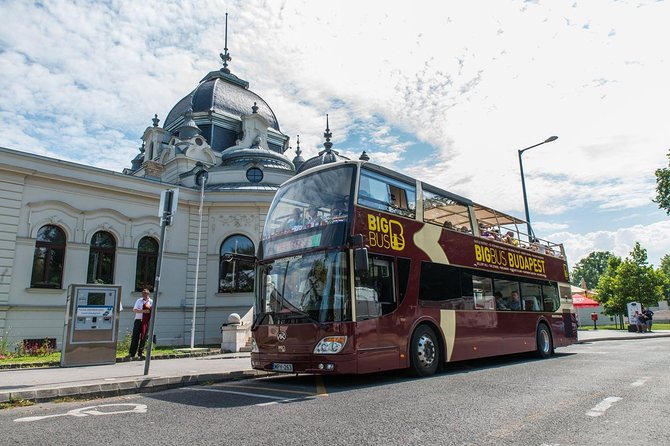
The Parliament stop is one of the most important on the route. The building is impressive from the outside, and the riverfront setting gives you several angles for photos. If you want to take an official interior tour, that is separate from this experience and requires its own planning.
Nyugati Railway Station is another useful stop. It places you near a major transport hub and central Pest streets. The route then returns toward the Basilica and continues through Petőfi Square, Fővám Square, Kálvin Square, Astoria, Bajcsy-Zsilinszky Way, and Nyugati again.
Petőfi Square is handy for the Danube promenade and central river views. Astoria offers access to the Jewish Quarter and nearby streets. Bajcsy-Zsilinszky Way is close to the Basilica and central hotels, which may make it a convenient place to end the ride.
The route is generally one-directional. That is an important practical point. You may need to ride most of the loop to reach a stop that looks close on the map, so do not assume the bus works like a taxi. For a short connection, walk or use public transport instead.
Audio commentary and the reality of the ride
The audio guide is available in 16 languages, which is a genuine benefit for an international audience. It gives structure to the ride and can help you identify buildings that would otherwise pass by too quickly.
The quality is not guaranteed from bus to bus. Audio has been reported to cut off in the middle of sentences, lose synchronization with the route, or become difficult to understand when live announcements overlap. I would bring headphones if the system uses them, and I would not depend on the narration for the only explanation of an important sight.
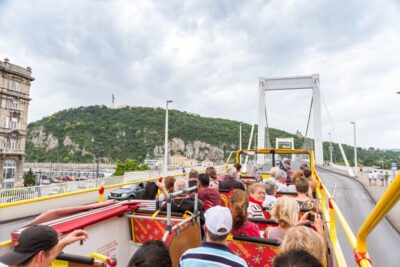
The buses also vary in comfort. On cold or wet days, some upper-level sections may feel exposed. Rain can leave seats wet, and plastic side panels may reduce the clear view. In winter, an open-sided bus can be very uncomfortable, so the enclosed lower level is the safer choice.
The upper deck gives you the best view when the weather is kind, but the roof can be low. Several people have bumped their heads on the metal railing while moving upstairs. Take the stairs slowly and choose your seat before the bus begins moving.
Full buses are another possibility, especially at popular central stops. If you cannot see well or your audio connection does not work, get off and try the next bus if the schedule allows. This is one reason a two-day ticket can be easier than trying to force every sight into one crowded circuit.
Walking tour and Danube cruise details
The one-hour guided walking tour is included in the package information. The supplied details do not give a guide’s name, meeting time, route, or maximum group size, so you should confirm those points before setting your day around it. Treat the walking tour as an added orientation activity rather than a substitute for a private city guide.
The Danube cruise requires closer attention. The tour description presents a cruise option, while the inclusion details specify 30 percent off a Danube River Cruise. A recent booking account also indicates that the former one-hour included cruise may no longer be part of the standard deal from 2026 onward.
That conflict is important. Check the exact terms attached to your booking date and ticket before you pay. If the cruise is discounted rather than free, add the extra cost to your budget.
A river ride can be a fine way to see Parliament, the bridges, Castle Hill, and the riverfront from another angle. But weather and boat conditions matter. Fogged or misted windows can ruin the view, and the cruise may not include spoken commentary. I would choose a clear period of the day and confirm whether narration is provided.
Price, timing, and who gets the best value
At $42.13 per person, I see the strongest value for a first-time visitor who wants a broad look at Budapest without planning each tram and metro connection. It is also helpful for anyone who finds Castle Hill, Heroes’ Square, Parliament, and Gellért Bath difficult to combine on foot.
I would choose the one-day option if you have limited time and want an overview. Ride a full circuit early, note the places you want to revisit, then hop off at one or two major stops. A two-day pass is better for a slower schedule. A three-day pass needs regular use to make financial sense.
The ticket does not include hotel pickup or drop-off. You need to reach a listed stop yourself, and the main redemption point is at Bajcsy-Zsilinszky út 17. Confirmation is provided at booking, and free cancellation is available up to 24 hours before the experience begins. Changes or cancellations inside that window are not accepted.
For ordinary movement around Budapest, public transport may be quicker and more frequent. One detailed experience found the regular system cleaner, quieter, and more practical for repeated trips. That is a useful comparison: buy this for the sightseeing route and commentary, not because it is automatically the city’s best transport option.
Should you book the Big Bus Budapest tour?
I would book it if this is your first visit, you want to see both Buda and Pest quickly, and you value a simple sightseeing loop over perfect timing. The route covers the major landmarks, the pass can last up to three days, and the bus is a good way to get your bearings fast.
I would be cautious if you are visiting in very cold or wet weather, need dependable transport, or expect polished audio on every bus. I would also verify the Danube cruise terms before booking, since the current package wording is not fully consistent.
My practical choice would be a one-day pass, an early full loop, and a short list of planned stops such as Heroes’ Square, Parliament, Castle Hill, and Gellért Bath. Use Budapest’s regular public transport for the rest of your stay. That approach gives you the sightseeing value without making the bus responsible for every journey.
FAQ
How long does the Budapest hop-on hop-off pass last?
You can choose a pass valid for one, two, or three consecutive days. The sightseeing route itself takes about 1 hour 40 minutes according to the tour details, though a full circuit can take longer with traffic and route conditions.
How many stops are included?
The route lists 27 stops. They include St. Stephen’s Basilica, the Chain Bridge, the Dohány Street Synagogue, Andrássy Avenue, Heroes’ Square, Parliament, Gellért Bath, Castle Hill, Nyugati Railway Station, and other central locations.
Is the audio guide included?
Yes. Audio commentary is included and is available in 16 languages. The quality can vary by bus, so you should use the operator’s app or a map as a backup for identifying stops and sights.
Is a Danube cruise included?
The supplied package details are not fully consistent. The tour description refers to a cruise option, while the included items specify 30 percent off a Danube River Cruise. Confirm the current terms for your ticket before booking.
Is the walking tour included?
Yes. A one-hour guided walking tour is listed as included. The available details do not specify the guide’s name, meeting point, route, or departure time, so confirm those details before planning your day.
Does the tour include hotel pickup?
No. Hotel pickup and drop-off are not included. You need to reach one of the listed stops or the main redemption point at Bajcsy-Zsilinszky út 17.
Just added around Budapest
- Budapest: City Bike Tour with Coffee Stop★ 5.0 · 37 reviews
- Budapest: Private Walking Tour with a Local Guide★ 3.6 · 6 reviews
- Budapest: Danube River Views Bike Ride★ 4.8 · 23 reviews
- Budapest: Vacation Photographer to collect great memories★ 5.0 · 49 reviews
- Walk to recent and aged spiritual sanctuaries near Budapest★ 5.0 · 5 reviews
- From Budapest: Guided Tour of Eger with Wine Tasting★ 4.5 · 6 reviews
- Audio visual multi-sensory chefs journey dinner experience★ 5.0 · 3 reviews
- Budapest: 3-Hour Trabant Sightseeing Tour★ 4.7 · 28 reviews
Budapest Hop-On Hop-Off Bus Tours, compared.
City Sightseeing Hop-On Hop-Off Bus Tour & Extras
Read our review →
Big Bus Hop-On Hop-Off Tour & Danube River Cruise
Read our review →

3-Hour Live-guided Bus Tour and 1-hour River Cruise
Read our review →Browse the lists this tour appears in