
Reviewed · BUDAPEST COMMUNIST HISTORY TOURS
Communist Budapest Private Walking Tour
Budapest’s communist past is easiest to understand when you connect the grand symbols with ordinary streets. This private walk does that well, moving from Parliament and Liberty Square to Bem József Square, a former stadium, and the old secret-police headquarters. The 1956 Revolution gives the tour its emotional center, while socialist statues and housing blocks show how ideology reached daily life.
I like the private historian guide, since you can ask direct questions instead of waiting for a group to catch up. I also like the route’s mix of political landmarks and everyday evidence, including a 1970s housing estate and a coffeehouse with its 1960s interior. The main consideration is cost: at $393.17 per group, this makes best sense when shared by several people, and transport tickets are extra.
Key points to know before you go
- 1956 comes alive at Bem József Square: This is where the first major demonstration of the uprising began.
- Cold War politics meet public monuments: Liberty Square brings together the Soviet Army memorial, Ronald Reagan’s statue, the US Embassy, and an atomic shelter.
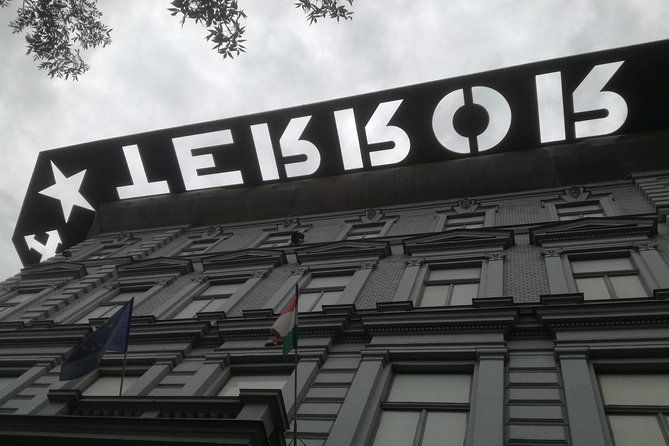
- The route ends at the House of Terror: You finish outside the former secret-service headquarters, with the museum itself not included.
- A historian leads the discussion: Guides such as Andras and Kata bring different personalities and perspectives to the same difficult subject.
- You use Budapest public transport: Metro and tram tickets are not included, though the guide helps you buy them if needed.
- The private format has value for small groups: The price covers the group rather than each person, but published capacity details vary, so confirm the maximum when booking.
Why Communist Budapest is best read on foot
A museum can explain dates and leaders. A walking route shows how power occupied the city.
This tour follows the traces left by Hungary’s communist period from 1949 to 1989. You are not looking only at statues or official buildings. You are also considering parade routes, apartment blocks, memorials, security offices, and places where people gathered to protest.
That matters because Hungary’s version of communism was not identical to the harsher systems farther east. The phrase goulash communism refers to a somewhat more relaxed form of rule, especially in later decades, but daily life still involved shortages, limits on speech, state control, and close attention from the security services.
Your guide’s job is to connect those broad ideas to specific places. A question about a monument can lead to a discussion of propaganda. A housing estate can open up the subject of urban planning and family life. Bem Square can turn a city walk into a careful look at how an uprising began.
I would choose this experience early in a Budapest visit if modern Hungarian history interests you. It gives you a useful frame for later sightseeing, especially at the House of Terror, the Parliament area, and other memorials around the city.
More communist-era tours in Budapest:
- Budapest: Communist History Tour with House of Terror Option
★ 4.8 · 182 reviews - Communism in Hungary with a Historian
★ 5.0 · 70 reviews - Budapest: 3-Hour Walking Tour About Communism (Small Group)
★ 4.7 · 70 reviews
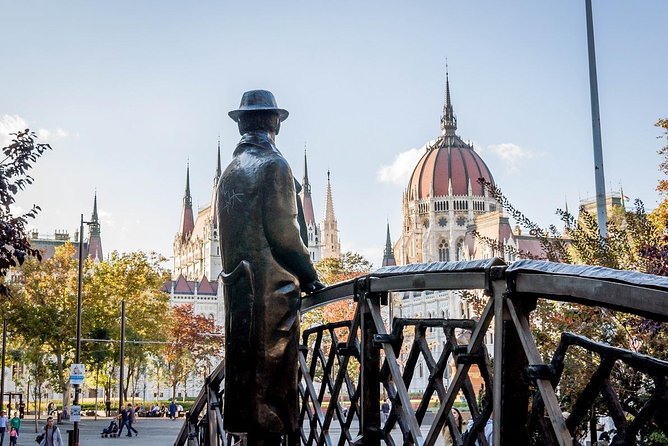
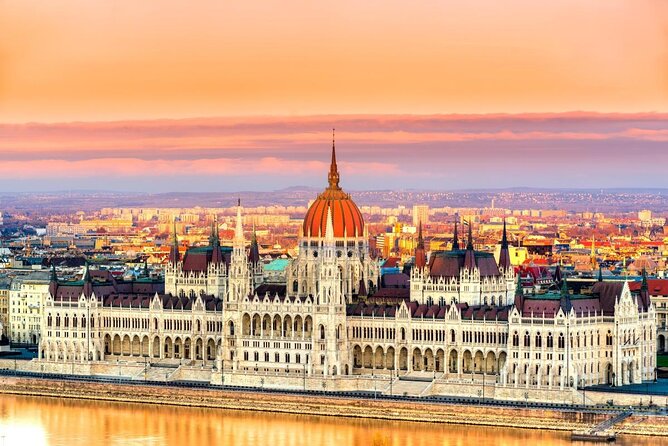
Starting near Parliament and Kossuth Square
The route begins at your central hotel or flat if you arrange pickup. Otherwise, the default meeting point is at Frankel Leó út 2-4, and you should meet the guide 15 minutes before the start.
You travel by metro to Kossuth Square, in front of the Hungarian Parliament Building. The transport is part of the teaching, not just a way to reach the first stop. Your guide leads the group through Budapest’s public transport system and helps buy the needed tickets if you do not already have a pass.
At Parliament, the focus is on monuments linked to the 1956 Revolution. This is a useful opening because the uprising was not an abstract political dispute. It involved public demonstrations, demands for change, and a direct challenge to Soviet influence and Hungary’s communist government.
The stop lasts about 25 minutes. Admission to the outdoor sites is free, so you are paying for the guide’s time and interpretation rather than a ticket. Expect discussion rather than a formal entry into Parliament.
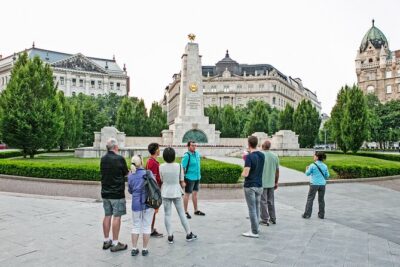
The route then continues toward Liberty Square. Here, the story widens from Hungarian politics to the Cold War. You see the monument to the Soviet Army, the US Embassy, the Ronald Reagan statue, and an atomic shelter. Put together, these sites show how the square became a place where competing ideas about power, freedom, and security were displayed in public.
I find this section especially useful for visitors who know the Cold War mainly through Western European landmarks. Hungary’s position between Soviet control and Western influence becomes easier to grasp when you are standing among these symbols.
Liberty Square and Budapest’s Cold War argument
Liberty Square can look like a normal central city space at first. The tour asks you to read it as a political stage.
The Soviet Army monument recalls the force that shaped Hungary’s postwar political order. The US Embassy points to the Western presence, while Reagan’s statue honors the American president for his role in helping bring down the Iron Curtain. The atomic shelter adds a more practical reminder of Cold War fear. Political conflict was not only about speeches and flags. It also meant preparing for a disaster that many people believed could happen.
The tour does not treat the square as a simple good-versus-bad story. That is one of its strengths. A local historian can explain why the same city contains memorials to Soviet power, American support, and Hungarian resistance.
You will want comfortable shoes here, though the route is not described as a strenuous hike. The tour lasts about three hours and uses metro, tram, and walking sections. Because several sites are spread across Budapest, the pace includes transfers rather than continuous walking.
Bem József Square and the first public spark of 1956
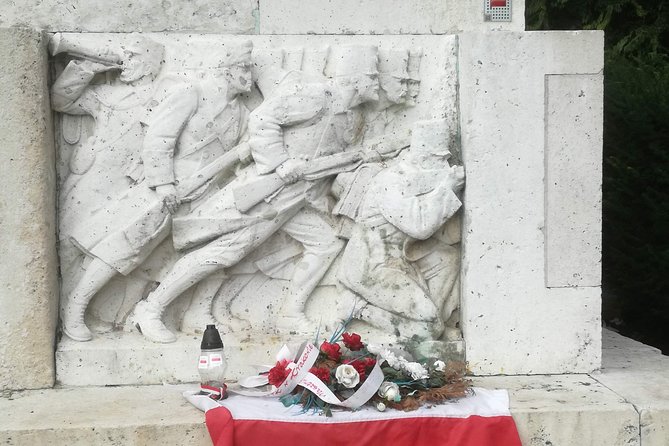
Bem József Square is one of the most important stops. The first major demonstration of the 1956 uprising began here, making the square more than a scenic riverside address.
Your guide explains how the demonstration grew and why this location mattered. The value of the stop lies in the connection between a physical place and a moment when public frustration became open rebellion.
The square also has a café that kept its original 1960s interior. That small detail helps balance the political story. You are not looking only at national leaders and military events. You are also considering how ordinary public spaces changed, or sometimes failed to change, during the communist decades.
The visit lasts about 25 minutes. There is no admission charge listed for the outdoor stop, though any personal café purchase would be your responsibility.
If you have a particular interest in 1956, tell the guide at the start. Andras, one of the guides associated with the experience, has been praised for adjusting the tour to match a group’s interests. That flexibility is a real advantage of booking privately.
More walking tours in Budapest:
- Budapest: Buda Castle Walk with Saint Stephen’s Hall
★ 4.5 · 3,012 reviews - Big Bus Budapest Hop-On Hop-Off Bus and Walking Tour
★ 3.5 · 2,206 reviews - Budapest: Buda Castle District Walking Tour
★ 4.6 · 2,108 reviews - Budapest City Landmarks Walking Tour in 2 Hours
★ 5.0 · 2,048 reviews
Socialist realism at the former People’s Stadium
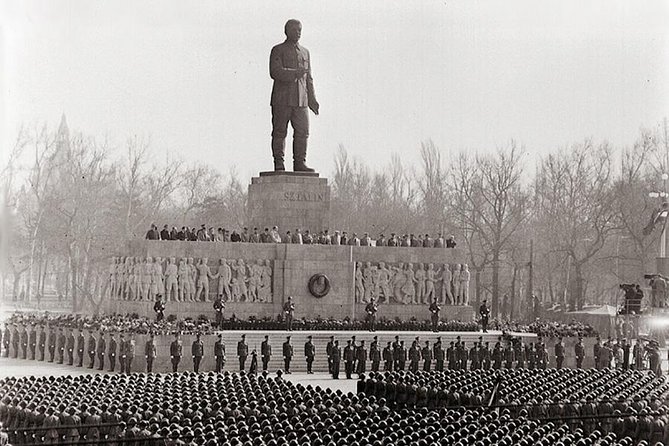
The route includes a stop at the former People’s Stadium, now Puskás Soccer Stadium. Classic socialist realist statues remain here, giving you a direct look at the visual language favored by the regime.
Socialist realism was not decoration for decoration’s sake. Public art was expected to present ideal workers, athletes, soldiers, and citizens. Bodies looked strong, confident, and purposeful. The message was that the state was building a disciplined and successful society.
Your guide can place those statues beside the political events discussed earlier. The same government that shaped public demonstrations also shaped what people saw on their way to a sporting event or parade.
This stop lasts about 20 minutes and is free. It should appeal to anyone interested in architecture, public art, photography, or the way governments use familiar places to promote official ideas.
The practical limitation is that this is an exterior stop. You should not expect a stadium tour or a sports event. The attraction is the remaining socialist-era art and the explanation around it.
Ronald Reagan’s statue and the Iron Curtain
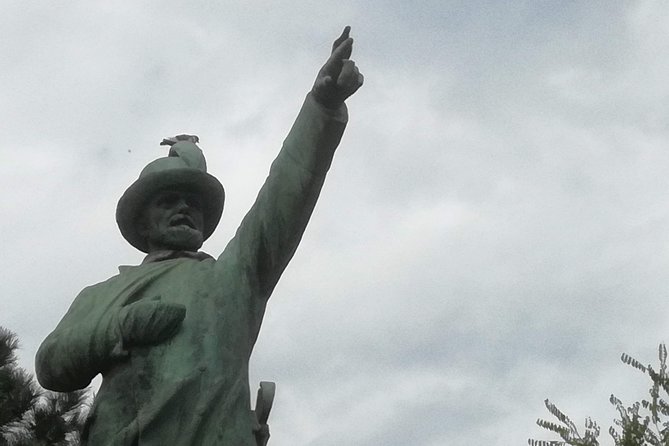
The Ronald Reagan statue receives its own short stop, about 10 minutes. It reflects Hungary’s sense of obligation to Reagan for his efforts to bring down the Iron Curtain.
The statue is interesting because it presents a Western political figure in the middle of a city shaped by Soviet rule. Your guide can explain how Hungarian memory has treated outside support, internal resistance, and the long process that ended communist government in 1989.
This is also a good point to ask about the difference between symbolic memory and historical cause. A monument gives one interpretation of the past. The surrounding tour helps you place it beside Hungarian protest, Soviet pressure, and the decisions made inside the country.
Since the stop is outdoors and free, it adds context without increasing the tour price through another admission fee. Its short length also keeps the route moving.
The 1970s housing estate and everyday life
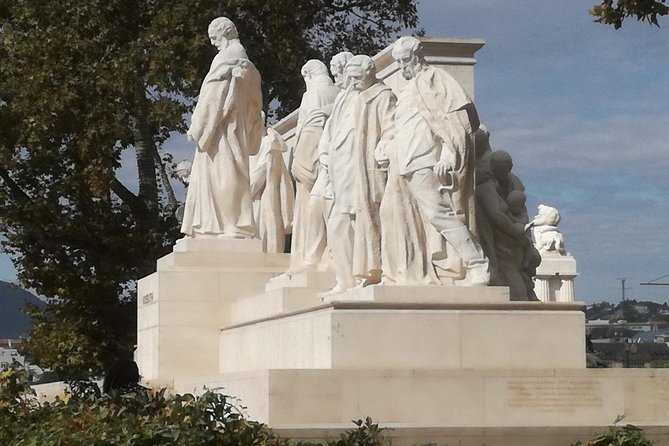
The tour includes a 1970s housing estate, one of the most useful parts for anyone who wants more than political landmarks.
Large apartment blocks can tell you about the state’s attempt to organize housing, transport, work, and family life. They also help explain the practical side of goulash communism. A system might provide modern flats and basic services while still limiting choice and tolerating shortages.
Do not expect the housing estate to look like a preserved museum. That is the point. You see a living part of the city rather than a staged exhibit. The guide’s explanation gives the buildings meaning that you might miss on your own.
This portion can be especially helpful if you are traveling with teenagers or with someone who finds political history too abstract. An apartment block is easy to understand. You can ask how people lived, what they had access to, and how public policy shaped a normal day.
The supplied route details do not assign a separate duration to the housing estate, so the exact amount of time may depend on your guide and your interests. A private format gives you room to ask for more or move on when you have had enough.
Ending at the House of Terror
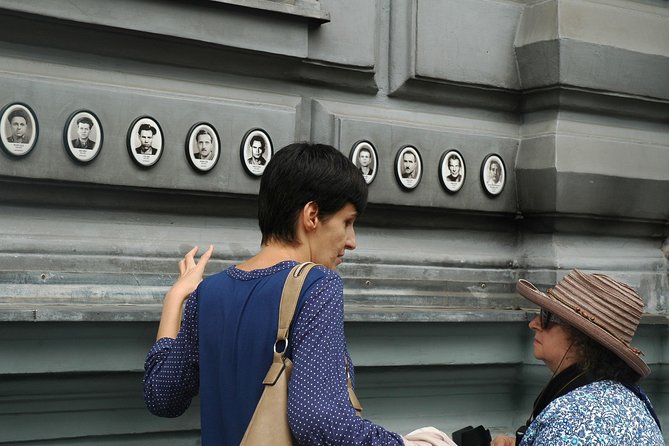
The final point is outside the House of Terror Museum at Andrássy út 60. The building was once the headquarters of Hungary’s communist secret services, and a section of the Berlin Wall sits in front.
This is a powerful ending because it brings the discussion back to state control and personal fear. Earlier stops show public monuments and political symbolism. Here, the subject becomes surveillance, detention, and the machinery used against opponents.
The museum exhibition is not included. That is important when planning your day. If you want to go inside, set aside separate time and purchase admission independently. The tour ends outside, but the location gives you an obvious next step for further study.
I like this arrangement. A guide-led visit and a museum visit do different jobs. The walk gives you the citywide setting and a human explanation. The museum can then provide a more concentrated indoor presentation, if you decide it suits your interests.
What the $393.17 group price really means
The listed price is $393.17 per group, not per person. That can be fair for a family or group of friends, especially if you fill most of the available places. For two people, it is a much bigger spend than a standard group walk.
There is conflicting capacity information in the supplied details. One section says up to 10 people, another says a maximum of 6, and the additional information says a maximum of 8. Confirm the current group limit before booking, particularly if you are organizing a larger party.
The price includes about three hours with a private historian guide. It does not include metro or tram tickets, though the guide helps you buy them if you need them. Outdoor admission is free at the listed stops.
The strongest value comes from conversation. If you want to ask about the 1956 uprising, Reagan, Soviet power, housing, or family life under communism, a private guide can adjust the balance. If you only want quick photographs of monuments, the price may be harder to justify.
Guides, tone, and the private format
The guides are local historians who also present themselves as hosts and storytellers. Andras has been praised for kindness, strong subject knowledge, and adjusting a longer private visit around the group’s interests. Kata has been praised for explaining clearly, bringing a broad world view, and adding humor and grace.
Those details suggest a tour that is serious without being grim from start to finish. That matters with a subject involving dictatorship, shortages, secret police, and revolution. You want honest treatment, but you also need a guide who can keep the discussion clear and human.
The private setup lets you shape the experience. Ask for more time on 1956, more attention to architecture, or a clearer explanation of daily life. You can also tell the guide if you prefer a faster route or more time at the House of Terror exterior.
Published information describes the activity as suitable for most people and near public transportation. Pickup is offered from a central hotel or flat. If you do not send an address or do not want pickup, use the default meeting point instead.
Who should book this Budapest history walk
I would recommend it to you if you:
- Want a serious introduction to Hungary from 1949 to 1989
- Prefer streets, monuments, and buildings to a museum-only visit
- Have a small group that can share the private price
- Enjoy asking detailed questions
- Plan to visit the House of Terror and want useful context first
- Are interested in public art, Cold War politics, or the 1956 Revolution
I would think twice if you want a relaxed sightseeing walk with little political discussion. This is focused history, and some subjects are difficult.
You should also check the group-size limit before paying. The difference between a six-person, eight-person, or ten-person maximum changes the value sharply.
Should you book the Communist Budapest Private Walking Tour?
Book it if Hungary’s communist period is a main reason you came to Budapest, or if you want a historian to connect places that you might otherwise pass without understanding.
The route is strongest at Bem József Square, Liberty Square, the socialist realist statues, and the House of Terror ending. It also earns its price through private discussion, especially with a guide such as Andras or Kata who can adapt the conversation.
Skip it if you mainly want interiors, long museum visits, or a low-cost group activity. The House of Terror admission is separate, transport tickets are extra, and the private price is high for a very small party.
For the right group, this is a thoughtful way to read Budapest’s recent past in the places where it actually happened. Free cancellation is available until 24 hours before the start time, which gives you some flexibility if your plans change.
FAQ
How long does the Communist Budapest Private Walking Tour last?
The tour lasts approximately three hours.
Is hotel pickup available?
Yes. The guide can meet you at a central hotel or flat and lead the group by metro, tram, or on foot.
Where does the tour begin?
The default meeting point is Budapest, Frankel Leó út 2-4, 1027 Hungary. If you arrange pickup, the guide meets you at your central accommodation.
Where does the tour end?
The tour ends outside the House of Terror Museum at Andrássy út 60, 1062 Budapest.
Is admission to the House of Terror included?
No. The tour concludes outside the museum, and entry to the exhibition is not included.
Are metro and tram tickets included?
No. Your guide helps you purchase the required tickets if you do not already have a Budapest transport pass.
Is the tour private?
Yes. It is sold at a group price rather than as an individual ticket. The supplied capacity details vary between 6, 8, and 10 people, so confirm the current limit before booking.
Can I cancel for a full refund?
Yes. You can cancel at least 24 hours before the experience start time for a full refund. Changes or cancellations made less than 24 hours before the start time are not accepted for a refund.
Just added around Budapest
- Budapest: Danube River Views Bike Ride★ 4.8 · 23 reviews
- Budapest: City Bike Tour with Coffee Stop★ 5.0 · 37 reviews
- Budapest: Private Walking Tour with a Local Guide★ 3.6 · 6 reviews
- Budapest: Vacation Photographer to collect great memories★ 5.0 · 49 reviews
- Walk to recent and aged spiritual sanctuaries near Budapest★ 5.0 · 5 reviews
- From Budapest: Guided Tour of Eger with Wine Tasting★ 4.5 · 6 reviews
- Audio visual multi-sensory chefs journey dinner experience★ 5.0 · 3 reviews
- Budapest: 3-Hour Trabant Sightseeing Tour★ 4.7 · 28 reviews
Budapest Communist History Tours, compared.
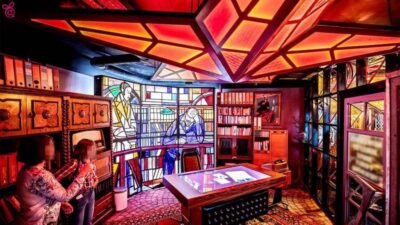
Communist History Tour with House of Terror Option
Read our review →
3-Hour Walking Tour About Communism (Small Group)
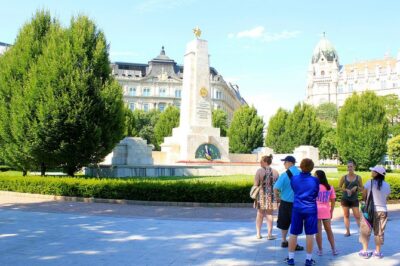
Read our review →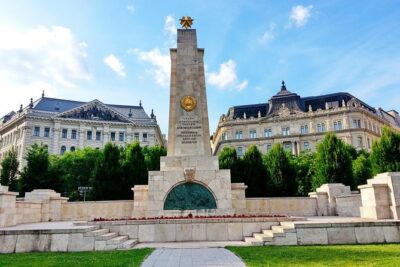
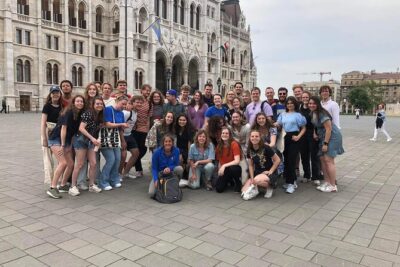
Lives of Hungarians Under Communist and Capitalist system
Read our review →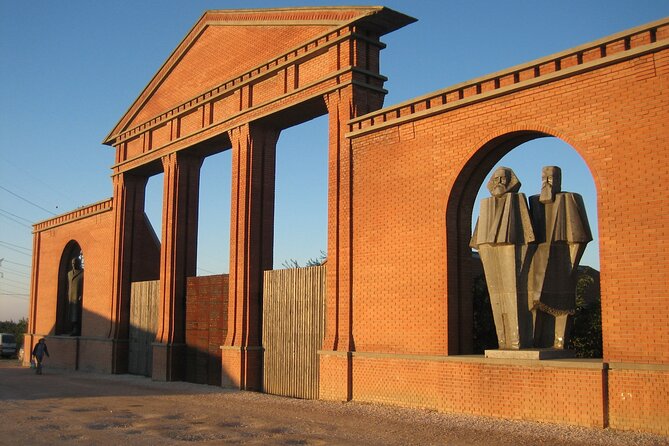
Private Budapest Hammer & Sickle Communist Times Tour
Read our review →
Browse the lists this tour appears in