
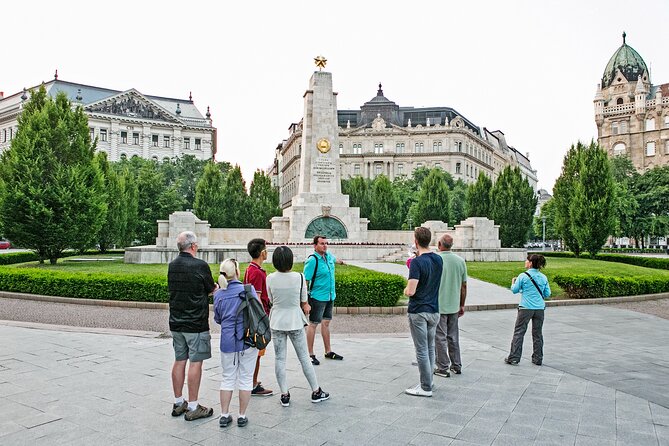
Reviewed · BUDAPEST COMMUNIST HISTORY TOURS
Private Budapest Hammer & Sickle Communist Times Tour
The most striking thing here is the way ordinary Prague streets become political landmarks. National Avenue recalls both Nazi-era student protests and the 1989 Velvet Revolution, while Wenceslas Square carries the memory of Soviet tanks, public speeches, and the Prague Spring. One important warning comes first: the product title says Budapest, but every detail of the route describes Prague. Confirm the city before paying.
I like the private format, which means your own group takes part rather than joining a large crowd. I also like the chance to hear personal memories from guides such as Martina, who lived through Communist rule, and guides who witnessed the Velvet Revolution. The main drawback is that this is a long outdoor walk, with two hours of near-continuous walking over stairs, high curbs, and slippery surfaces.
Key points to know before booking
- Prague, not Budapest: The route, sights, history, and meeting information all point to central Prague.
- A serious 20th-century history walk: The focus is Nazi occupation, World War II, Soviet control, Communism, and the Velvet Revolution.
- Private attention: Only your group participates, with pickup offered and no drop-off included.
- Personal stories can shape the experience: Guides including Honza, Jan, Martina, Mike, Mikel, and Martin have received praise for energy, context, and firsthand insight.
- Expect plenty of outdoor listening: Cold, heat, and rain can affect your comfort, so dress for the forecast.
- Best for adults and older teenagers: The subject matter is not recommended for children under 14.
First, resolve the Budapest and Prague confusion
This experience is labeled Private Budapest Hammer & Sickle Communist Times Tour, yet the entire route is in Prague. It begins in central Prague and includes Bartolomejska Street, National Avenue, Wenceslas Square, Republic Square, the Old Jewish Cemetery, and Letna Park. The historical references are Czech, not Hungarian.
That mismatch is not a small detail. If you are staying in Budapest, this is not a Budapest sightseeing tour based on the information provided. If you are booking in Prague, the route makes sense, but I would still confirm the meeting city and pickup details before the cancellation deadline.
The price is listed at $133.67 per person. Since this is a private activity, the value depends heavily on the size of your group. For two people, that is a fairly serious spend for a three-hour walk. For a family or a small group of friends, the cost can make more sense because you receive the guide’s attention and can ask questions without a large crowd.
More communist-era tours in Budapest:
- Budapest: Communist History Tour with House of Terror Option
★ 4.8 · 182 reviews - Communism in Hungary with a Historian
★ 5.0 · 70 reviews - Budapest: 3-Hour Walking Tour About Communism (Small Group)
★ 4.7 · 70 reviews
A walk through Prague’s darker modern past
This is not a general introduction to Prague. You will not spend the morning moving from one famous medieval building to another. Instead, the guide uses central streets and squares to explain how Prague changed under Nazi occupation, Soviet pressure, and Communist rule.
That focus gives the tour its appeal. The Old Town may look peaceful today, but the route asks you to picture these same streets filled with resistance activity, military force, public demonstrations, state propaganda, and fear. I find that this kind of walking tour works best early in a Prague visit, when you still need help reading the city beyond its Gothic towers and pretty facades.
The tour lasts about three to three and a half hours. The supplied details use both lengths, so plan for the longer figure. A refreshment stop with a beverage is included, but this remains mainly an outdoor walking experience.
Bartolomejska Street and the opening chapter
The route begins around Bartolomejska Street, associated with a former World War II prison later used by secret police to torture prisoners. This is a grim opening, but it sets the tone clearly. You are not getting a cheerful city stroll with a few historical facts added along the way.
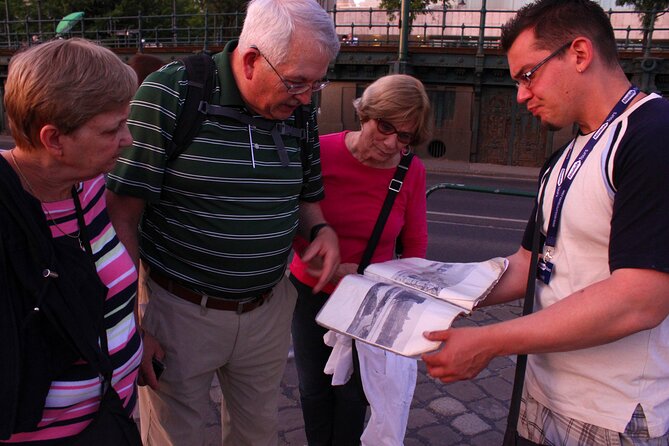
The value of this stop depends on the guide’s storytelling. A good guide can explain how a street used by ordinary people became tied to interrogation, imprisonment, and state control. Several guides have been praised for bringing photographs, articles, and other material on a tablet. That kind of visual aid can help you connect present-day Prague with scenes from the past.
One caution: much of the tour involves standing outside while the guide talks. In cold weather, this can become uncomfortable quickly. One guest specifically found the long periods outdoors difficult, and that is useful advice for anyone visiting Prague in winter.
National Avenue and the memory of protest
National Avenue, or Národní třída, divides Prague’s Old Town and New Town. The tour uses this broad central route to connect two different periods of protest.
In 1939, Czech students protested against Nazi occupation. In 1989, students again gathered against Communist rule, helping set in motion the Velvet Revolution. The same avenue therefore becomes a lesson in how public resistance can take different forms under two dictatorships.
This is one of the strongest parts of the walk because the history is tied to a place you can see and cross on foot. You are not just hearing dates in a museum room. You are standing on a major city thoroughfare and considering what it meant for students to protest there under very different risks.
The route can feel less chronological than some people expect. One guide reportedly moved from topic to topic while following a circle around the inner city. If you prefer a clear timeline from Nazi occupation to Communist takeover to 1989, tell your guide at the start. A private tour gives you a better chance to ask for that structure.
A handful more Budapest trips to weigh up
- Private Budapest TukTuk Tour: Custom Route, Hotel Pickup
★ 5.0 · 1,307 reviews - Budapest Essentials Private Tour Highlights and Hidden Gems
★ 5.0 · 861 reviews - Budapest Private Tuk Tuk Half-Day Tour
★ 5.0 · 606 reviews - Budapest One Way Private Transfer to or from Airport
★ 4.5 · 548 reviews
Wenceslas Square and the Prague Spring
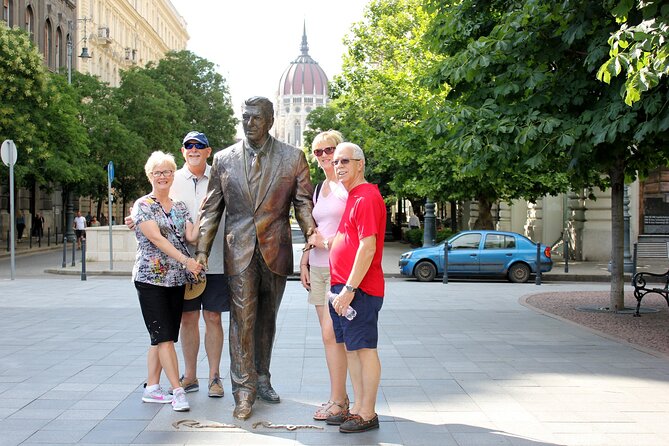
Wenceslas Square is one of the essential stops. It has been a focal point for Czech political life, and the guide uses it to explain both the Prague Spring and the events of 1989.
The Prague Spring began as an attempt to loosen Communist control and create a more open form of socialism. Soviet-led forces crushed that experiment in 1968. In early 1969, the square was also linked to the death of Jan Palach, who set himself on fire in protest against the loss of freedom. The supplied tour details do not promise a dedicated stop for every event, so ask your guide what will be covered.
Here you are asked to imagine Soviet tanks in a place now filled with shops, traffic, and pedestrians. That contrast is the point. Wenceslas Square looks broad and open, but its modern political meaning comes from the crowds who used it to demand change.
The guide’s ability matters greatly here. Strong guides such as Mikel and Mike have been praised for explaining not only what happened, but what daily life and political pressure felt like. One guide had personally lived through the Communist period, giving the stop a more human quality than a simple textbook account.
Republic Square and the Communist takeover
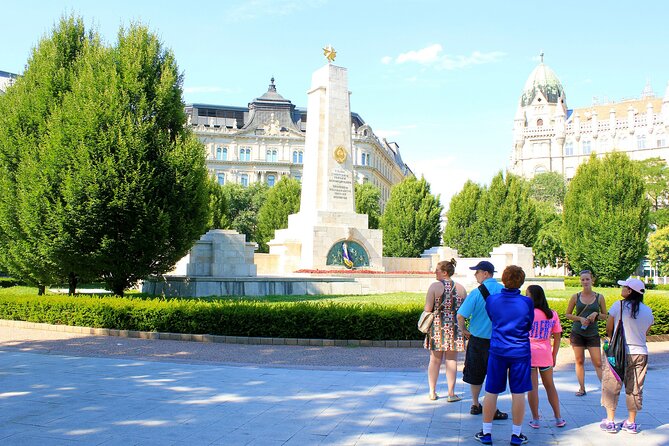
Republic Square, or Náměstí Republiky, carries several layers of political history. It takes its name from the 1918 proclamation of an independent Czechoslovakia. During World War II, the Czech resistance used secret radio stations connected with the Prague Uprising of 1945.
Then the political story turns sharply. Only three years later, the square became associated with the Communist Party. The guide explains how the 1948 takeover brought Czechoslovakia under Communist control and how Klement Gottwald used a balcony nearby to declare the new government.
This is a good example of what the tour does best: it uses one public space to show how national hope, wartime resistance, and political defeat can occupy the same few blocks. You will not need a history degree to follow it, but you should come ready to listen. The subject matter is dense, and the guide may spend considerable time explaining the political background.
Old Town, Einstein, and the Jewish quarter
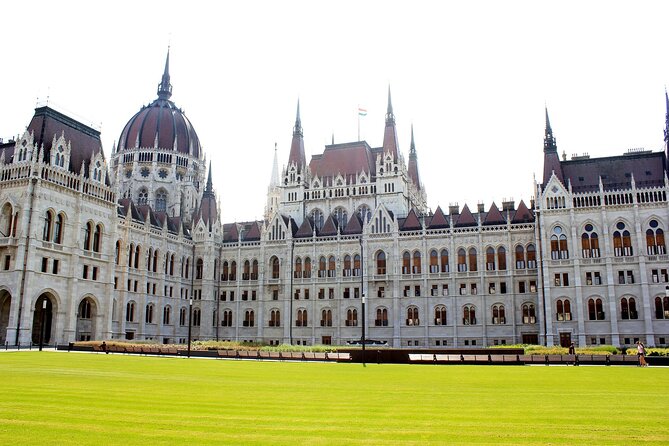
The walk continues into the Old Town, where the familiar streets take on a less familiar role. You will see the balcony linked with Gottwald’s 1948 declaration, then hear about Albert Einstein’s time in Prague while working at Charles University.
The Einstein stop broadens the tour beyond military and political history. It also connects the city with the scientific changes of the early 20th century, including the path from modern physics to the invention of the atomic bomb. This part may feel slightly separate from the main Nazi and Communist theme, but it adds context to the period’s wider intellectual life.
The route also includes the Old Jewish Cemetery and nearby landmarks. The provided details do not specify a museum admission or an extended cemetery visit, so think of this as a guided exterior stop rather than a guaranteed indoor tour. You should not expect a long museum program unless your guide adjusts the route.
One guide reportedly spent too much time at a museum for one group’s preference. That is worth keeping in mind. Since the tour is private, you can politely say if you would rather keep moving and spend more time at the political sites.
Former Nazi, SS, Communist, and KGB buildings
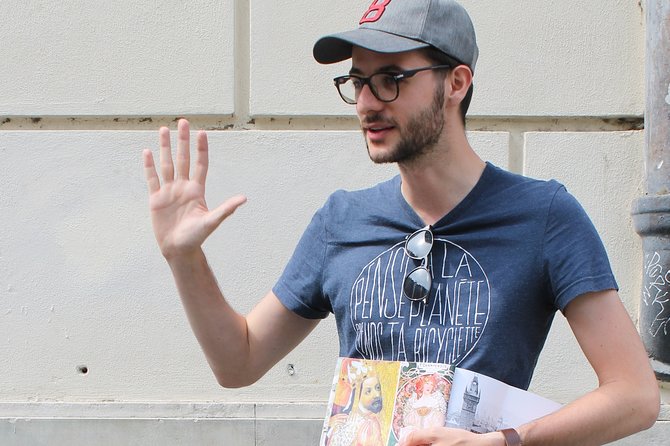
The tour points out former headquarters connected with the Gestapo, Nazi SS, the Communist Party, and the KGB. These buildings are not simply architectural curiosities. They help show how different systems used offices, prisons, surveillance, and official power to control the city.
You will generally view these places from the street. That means the guide’s explanation is more important than the building itself. The best guides bring old photographs or newspaper material to show how the site looked and functioned during the period being discussed.
This is also where the tour’s title makes the most sense. The hammer-and-sickle theme refers to the Communist period, but the route is not limited to Communist symbols. Nazi occupation, resistance, postwar political change, Soviet influence, and the end of Communist rule all form part of the story.
The subject is heavy. I would not choose this walk for young children, and the operator does not recommend it for anyone under 14. Older teenagers with an interest in modern European history can enjoy it, as one family with a 19-year-old did.
Letna Park and the vanished Stalin monument
The final major stop is Letna Park beside the Vltava River. In 1955, Prague became home to the world’s largest statue of Joseph Stalin. The monument was destroyed in 1962, after Stalin’s reputation and political standing collapsed.
That missing statue is more interesting than a surviving monument might be. Its absence shows how quickly public symbols can change when political power shifts. The guide uses the riverside setting to explain the monument’s construction and removal, bringing the tour to a fitting close.
The route then ends in central Prague. Drop-off is not included, so you should be ready to continue on foot or make your own way onward. Pickup is offered, but the supplied details do not explain the exact pickup zone, so confirm that when booking.
The guide can make or break this tour
The strongest part of this experience is the guide. Several guides have received warm praise for their energy, patience, and command of the subject. Honza was described as responsive and able to answer questions. Martina brought personal experience of Communist-era Prague. Mike was praised for explaining what life felt like under both Nazi and Communist rule. Martin even adjusted the route to visit Prague’s public library after learning that a guest was a librarian.
These examples show the benefit of a private tour. You can ask to focus more on World War II, daily life during the Cold War, the Velvet Revolution, or the fall of Communism. One guide adjusted the walk when the group explained its interests.
The quality is not guaranteed to be identical every time. A few experiences were weakened by unclear meeting directions, a guide who seemed surprised by the subject, or English that was difficult to follow. Another guide spent more than an hour talking in one place before the walking portion began, which is particularly uncomfortable on a hot day.
I would send a short message before the tour with your priorities. Ask for a chronological structure if that helps you. Ask how much time will be spent indoors or at a museum. If you want personal stories from the Communist era, say so clearly.
Walking demands, weather, and comfort
The tour includes about two hours of continuous walking, along with stairs, high curbs, and slippery surfaces. You need comfortable shoes and a reasonable level of mobility. This is not a gentle sightseeing loop with frequent seats.
The walk operates in all weather. In summer, bring water and protection from the sun. In cold weather, use layers, gloves, and footwear with a good grip. Since much of the explanation happens outdoors, a warm coat alone may not be enough if you spend long periods standing still.
Most people can participate, but the route is not suitable for people with limited mobility. The private format may allow the guide to adjust the pace, but that should not be mistaken for a step-free route.
Who gets the best value at $133.67?
At $133.67 per person, this tour is not a bargain city orientation. You are paying for a private guide, a focused subject, pickup, a beverage stop, and the ability to shape the conversation around your group.
The price makes the most sense for a small group that already cares about modern European history. If you are splitting the cost among several people, the private arrangement can compare well with several separate tickets and a large group tour. For one or two people, the cost is harder to justify unless the subject is a major reason for your Prague visit.
The 4.4 rating from 47 ratings suggests a generally strong experience, but not a flawless one. The range of guide experiences matters more than the number alone. You may receive an excellent storyteller who uses photographs and personal memories, or a less organized guide who spends too long in one place.
Free cancellation is available up to 24 hours before the start time. Changes or cancellations inside that window are not accepted for a refund, so keep the local cutoff in mind.
Should you book this Prague history walk?
Book it if you want Prague through the lens of Nazi occupation, Communist control, Soviet pressure, and the Velvet Revolution. It is especially useful near the start of your stay, when the stories can help you understand the political meaning behind central Prague’s squares and streets.
Skip it if you want a relaxed introduction to monuments, cafés, and medieval architecture. Also pause before booking if you need an easy route, dislike long outdoor talks, or are actually looking for a Budapest experience.
My practical advice is simple: confirm that the booking is for Prague, ask for a chronological route, and tell the guide which period matters most to you. With a strong guide, this can be one of the most memorable ways to understand modern Czech history. With poor organization or bad weather, the same three hours can feel long.
FAQ
Is this tour in Budapest or Prague?
The supplied route and stops are all in Prague, including Wenceslas Square, National Avenue, Republic Square, the Old Jewish Cemetery, and Letna Park. The title says Budapest, so confirm the destination before booking.
How long does the tour last?
The experience is described as lasting about three to three and a half hours. Plan for the longer estimate.
Is the tour private?
Yes. Only your group participates in the activity.
Is pickup included?
Pickup is offered. Drop-off is not included.
What language does the guide speak?
The tour includes a licensed English-speaking guide.
Is the tour suitable for children?
Because of the subject matter, it is not recommended for children under 14.
Is the route suitable for people with limited mobility?
No. The tour includes about two hours of continuous walking, high curbs, stairs, and slippery surfaces, so it is unsuitable for people with limited mobility.
Just added around Budapest
- Budapest: Danube River Views Bike Ride★ 4.8 · 23 reviews
- Budapest: City Bike Tour with Coffee Stop★ 5.0 · 37 reviews
- Budapest: Private Walking Tour with a Local Guide★ 3.6 · 6 reviews
- Budapest: Vacation Photographer to collect great memories★ 5.0 · 49 reviews
- Walk to recent and aged spiritual sanctuaries near Budapest★ 5.0 · 5 reviews
- From Budapest: Guided Tour of Eger with Wine Tasting★ 4.5 · 6 reviews
- Audio visual multi-sensory chefs journey dinner experience★ 5.0 · 3 reviews
- Budapest: 3-Hour Trabant Sightseeing Tour★ 4.7 · 28 reviews
Budapest Communist History Tours, compared.
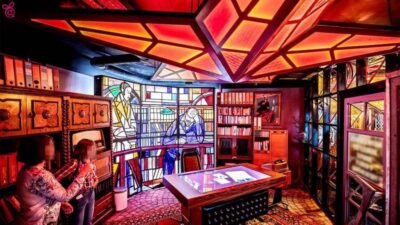
Communist History Tour with House of Terror Option
Read our review →
3-Hour Walking Tour About Communism (Small Group)
Read our review →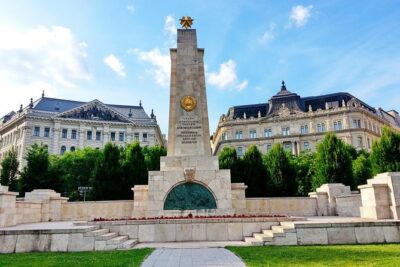
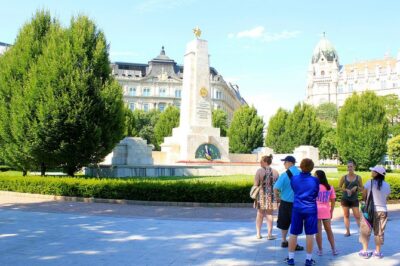
Lives of Hungarians Under Communist and Capitalist system
Read our review →
Browse the lists this tour appears in