
Reviewed · BUDAPEST COMMUNIST HISTORY TOURS
Budapest Hammer & Sickle Communist Times Tour
Budapest’s communist past is easiest to understand when history leaves the textbook and meets you on the street. This 2.5-hour tour connects the 1956 Revolution with Parliament, Liberty Square, Imre Nagy, the Holocaust memorial, and an interactive look at ordinary life behind the Iron Curtain.
I like the way the tour mixes major political events with small details, such as banana queues, passport restrictions, black-market goods, children’s games, and family life. I also like the small group limit of 10, which gives you a better chance to ask questions and hear personal stories from guides such as Anna, George, Laszlo, Tomas, and Rebecca.
The main drawback is that the tour can feel discussion-heavy, with much of the experience focused on explanation rather than grand monuments or interior visits. There is no audio equipment, and street noise can make it hard to hear at times. It is also not recommended for children under 14.
Key points to know before booking
- The 1956 Revolution is the central subject: See the places connected with speeches, protests, shootings, and the Soviet response.
- Everyday life gets equal attention: The Retro Museum uses rooms, objects, photographs, and household items to show how families lived.
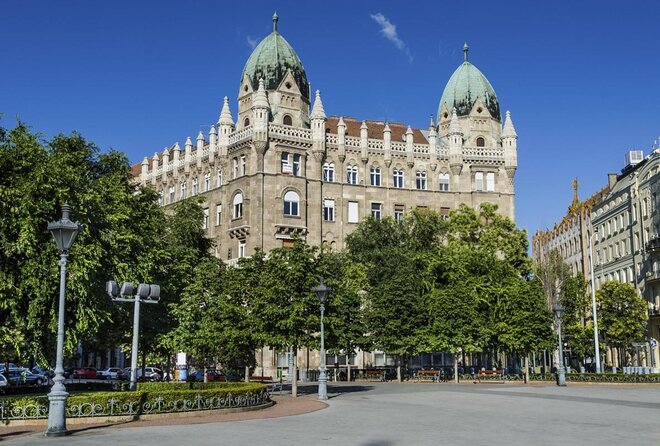
- The route stays in central Pest: It begins near Deak Ferenc Square and ends near Liberty Square.
- Expect a small walking group: The maximum is 10 people, though some departures may be much smaller.
- The tone is historical rather than political: Guides explain events and add family memories without turning the tour into a partisan speech.
- Plan for outdoor conditions: The tour runs in all weather, and no headphones or audio system are provided.
Why Budapest’s communist past makes a good walking tour
Budapest can look elegant and carefree at first glance, with its grand boulevards, cafés, and Danube views. Yet many central streets carry the marks of war, occupation, dictatorship, protest, and political change. This tour helps you notice those layers.
The story begins with Hungary’s role in World War I and World War II, then moves toward the postwar Soviet occupation and the Communist Party’s rise to power. From there, the focus shifts to the 1956 Revolution, when Hungarians challenged the government and Soviet control.
That order matters. Without some background on the two world wars, the political pressure behind 1956 can seem sudden. Your guide explains how Hungary’s borders, government, and national identity were reshaped before reaching the events that still define October 23, Hungary’s national holiday marking the 1956 uprising.
I would take this tour early in a Budapest visit. It gives later sightseeing more meaning, especially around Parliament, Liberty Square, the Basilica, and the Danube memorial.
More communist-era tours in Budapest:
- Budapest: Communist History Tour with House of Terror Option
★ 4.8 · 182 reviews - Communism in Hungary with a Historian
★ 5.0 · 70 reviews - Budapest: 3-Hour Walking Tour About Communism (Small Group)
★ 4.7 · 70 reviews
Starting near Deak Ferenc Square and St. Stephen’s Basilica
The meeting point is the Lutheran Church at Deak Ferenc Square, a central spot with good public transport connections. The tour begins at 3 p.m., so you can spend the morning at the Central Market Hall, Buda Castle, or the Great Synagogue before joining the group.
The first stop is St. Stephen’s Basilica, where the guide explains how Communist rule affected religious life and the operation of different churches. The stop is short, about 15 minutes, and does not include admission to the Basilica.
This is a useful opening because communism did not affect only government offices and political activists. It also shaped worship, church organization, education, and public religious life. You should not expect a church tour here. The value lies in the historical explanation outside the building.
Liberty Square and the Soviet memorial
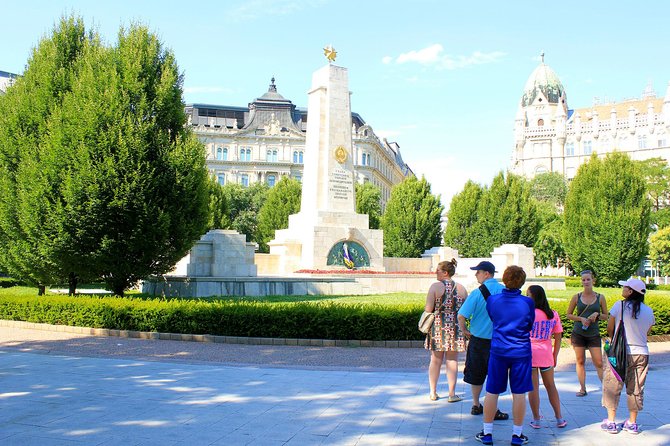
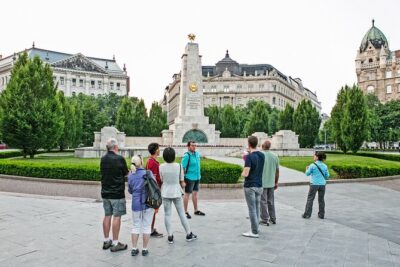
From the Basilica, the route continues toward Szabadsag ter, or Liberty Square. This is one of the most politically charged public spaces in central Budapest, and the Soviet memorial provides a clear entry into the postwar period.
Here, you learn about the end of World War II, the beginning of Soviet occupation, and the way the Communist Party took control of Hungary. The memorial remains a visible reminder of the Soviet role, even as other monuments and political symbols around the square tell a more complicated story.
The stop is free and lasts about 15 minutes. I like this part because it connects international power politics with a very ordinary city square. You are not just hearing about occupation in the abstract. You are standing among the buildings and monuments where the consequences of that occupation were felt.
The square can also be noisy. Since the guide speaks without headphones, stay close and ask the guide to repeat anything you miss.
Parliament and the first days of the 1956 Revolution
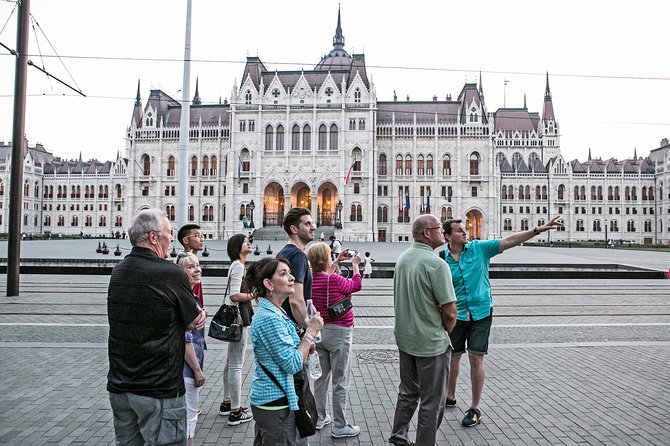
The Hungarian Parliament Building is the tour’s grandest setting, but the focus is not a standard architectural visit. Instead, you stand in the square in front of Parliament and hear how the 1956 Revolution began.
The guide explains the demands that brought people into the streets, the speeches and marches that shaped the early days, and the way the Communist leadership responded. The area is linked to the first shots of the revolution, making the setting especially important.
This stop lasts about 20 minutes. Admission to the Parliament building itself is not included, so do not expect to go inside as part of this experience. The tour is about the square, the events that unfolded there, and the political meaning of the building.
The best guides make this section feel like a chain of human decisions rather than a list of dates. Past participants have singled out guides including George, Bogata, Anna, Celeste, and Laszlo for explaining the subject clearly and answering questions at length. Guide quality can vary by departure, but the small group format helps keep the conversation personal.
Same city, a completely different sort of day:
- Budapest: City Highlights Cruise with Welcome Drink
★ 4.6 · 35,610 reviews - Budapest: Unlimited Prosecco, Beer and Aperol Spritz Cruise
★ 4.8 · 25,310 reviews - Budapest: Széchenyi Spa Day Ticket with Optional Upgrades
★ 4.3 · 23,911 reviews - Budapest: Nighttime or Daytime Sightseeing Cruise
★ 4.2 · 21,062 reviews
The October 25 memorial and the human cost of revolt
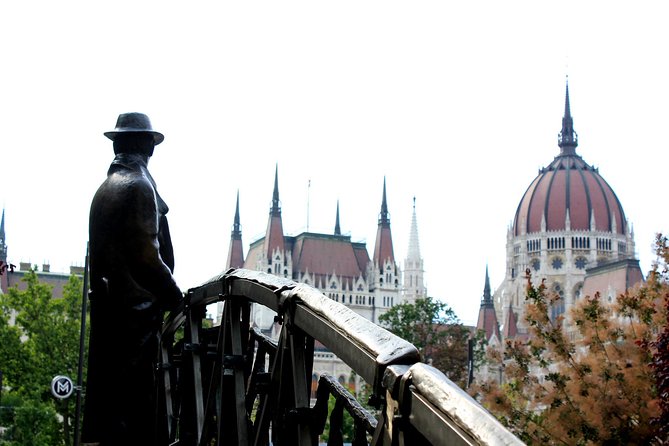
The next stop is the In Memoriam 1956 October 25 Memorial and Exhibition. On the second day of the revolution, military authorities and Soviet tanks fired on a gathering crowd. The memorial presents the event through archive footage and personal recollections.
This is likely to be one of the more emotional points of the afternoon. The tour does not treat the revolution as a clean, heroic story with a simple ending. You learn about public hope, military force, confusion, and the cost paid by people caught in the confrontation.
The exhibition is free and takes about 15 minutes. Since archive material and recollections are central here, listen closely to the guide’s explanation. The memorial may have more impact than a long lecture because it places a specific tragedy within the larger uprising.
Imre Nagy and the road to political change
The statue of Imre Nagy offers another human focus. Nagy was a Communist politician who defied Soviet leaders in Moscow during the 1956 crisis. He was later executed for treason.
The guide also explains his reburial, which became an important moment in Hungary’s change of regime. That detail shows how political memory can shift. A man once condemned by the state could later become a symbol in the movement away from Communist rule.
The stop lasts about 15 minutes and is free. It is not simply a statue visit. You are asked to consider how governments control public memory, and how a country later reclaims people and events that earlier rulers tried to erase or condemn.
The Budapest Retro Museum and life behind the Iron Curtain
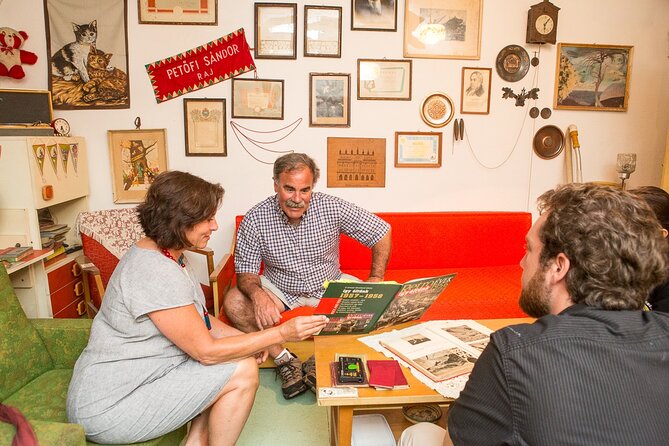
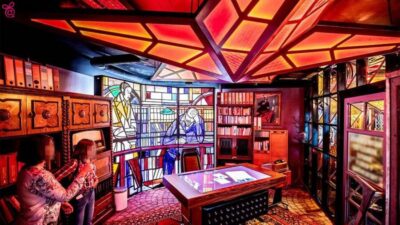
The most unusual part of the experience is the visit to the Budapest Retro Interactive Museum. This section turns political history into daily life.
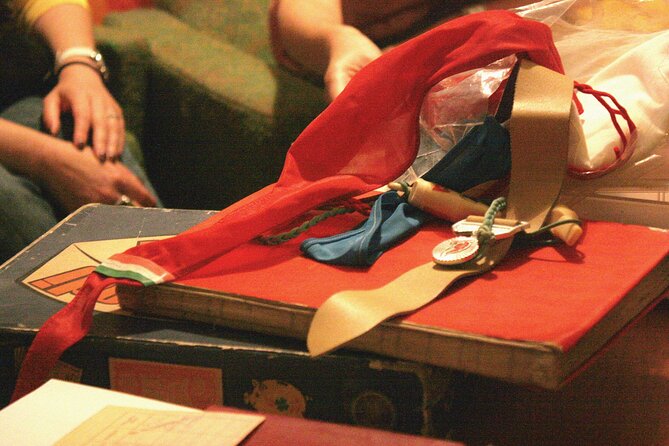
You learn how children were raised, how families arranged their homes, how people travelled, and where they could go. The collection includes objects and displays linked to ordinary routines, with stories about passport applications, black markets, and long queues for scarce goods such as bananas.
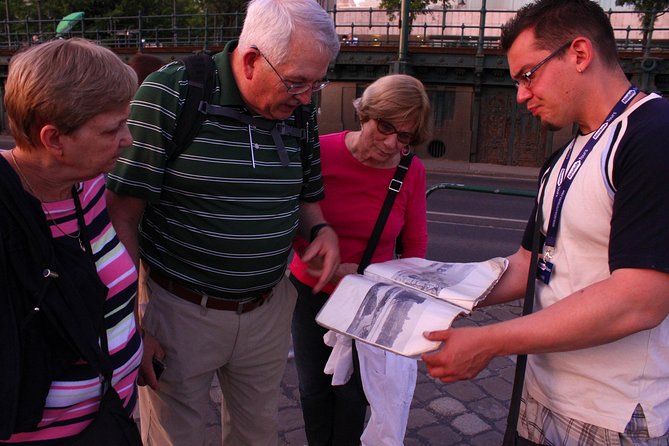
Several guides begin this portion in a recreated Communist-era living room or a basement display area filled with photographs, books, news articles, household items, games, and other period material. The exact presentation may depend on the guide and departure, but the purpose is the same: to show what the system felt like at home, not just in government speeches.
I find this approach more useful than a tour that focuses only on leaders and monuments. A passport delay, a hard-to-find piece of fruit, or a child’s board game can explain a political system in a way that a list of party officials cannot.
You may also hear personal and family stories from the guide. That was a major strength of guides such as Anna, George, Tomas, and Rebecca, whose accounts added warmth and detail to the historical material. The best conversations connect an object in the room with a larger question about freedom, travel, work, or family life.
One caution: allow time for this section. Some visitors find the apartment or museum discussion a little long, especially if they prefer outdoor sightseeing. If you enjoy social history, it may be the strongest part of the tour. If you mainly want monuments, it can feel like the afternoon slows down.
World War I, World War II, and the Shoes on the Danube Bank
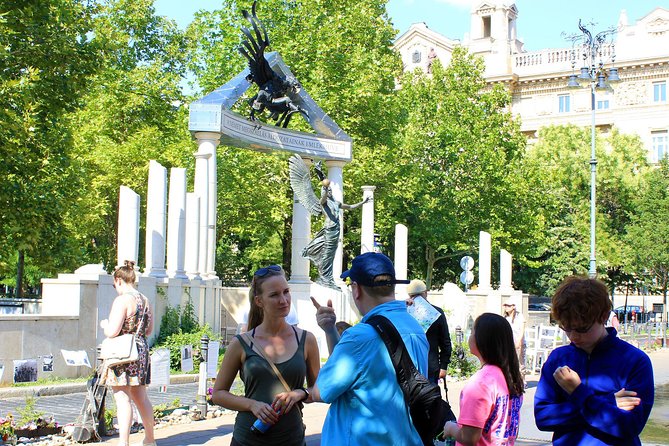
The tour also covers Hungary’s role in both world wars and includes the Shoes on the Danube Bank Holocaust memorial in the broader historical story. The memorial honors Jews who were killed along the river during World War II.
The shoes are simple metal forms placed at the riverbank, and that simplicity is exactly what makes the site so powerful. It is not a large museum or an elaborate structure. It asks you to pause and picture the people represented by the empty shoes.
The supplied schedule gives the main timed stops as the Basilica, Liberty Square, Parliament, the October 25 memorial, and Imre Nagy’s statue. The wider description also includes the Holocaust memorial and the Retro Museum, so the precise order and time at each site can depend on the guide and the day’s route.
This is one reason to treat the tour as a guided historical walk rather than a rigid sightseeing circuit. Ask at the start how the guide plans to handle the museum and Danube memorial.
A small group, personal guides, and the sound issue
The maximum group size is 10 people. That is a real advantage for a subject that depends on questions and discussion. Some departures have had only one, two, or three people, allowing the guide to adjust the pace and focus to the group’s interests.
Guides named in the feedback include Anna, Celeste, Greg, Andrea, Rebecca, Bogata, Tomas, George, and Laszlo. The repeated praise centers on clear English, strong preparation, personal stories, humor, and an ability to answer detailed questions. One guide even helped a participant find the correct subway train afterward.
Still, no tour can guarantee a particular guide. You should book for the route and subject, not for a promised personality.
There are no headphones or audio devices. That keeps the tour simple, but it has a practical downside. Aircraft, helicopters, traffic, and city noise have made it difficult for some people to hear. Stay near the guide, avoid drifting to the back, and speak up when you miss a sentence.
What the $79.65 price includes
The price is $79.65 per person. It includes an English-speaking guide, entry to the Retro Interactive Museum, and coffee, tea, or a soft drink. It does not include hotel pickup, drop-off, or admission to St. Stephen’s Basilica or the Parliament building.
At first glance, this is not a bargain walking tour. You can find free city walks, and a free option may cover some of the same central streets. The difference here is the focused subject, small group limit, museum access, and the time spent explaining everyday life under communism.
The value is strongest if you are curious about modern Hungarian history and willing to listen. It is weaker if you want a quick photo walk or an interior tour of Parliament.
The tour lasts about two and a half hours, though some departures have run closer to three hours. You finish near Liberty Square in central Budapest, so it is easy to continue sightseeing afterward.
Who should book this Budapest history tour?
I would recommend it to adults, history students, political history fans, and anyone who wants to understand Budapest beyond its imperial buildings and thermal baths. It is also a good choice early in your stay, since the explanations make later visits to Parliament, the Danube, and central Pest more meaningful.
The tour is not recommended for children under 14. It also suits people who are comfortable walking outdoors in changing weather and standing while listening.
You should think twice if you dislike political history, long explanations, or emotionally serious memorials. The experience is not built around entertainment alone. Its strongest moments come from careful listening and asking questions.
Should you book the Hammer and Sickle tour?
Book it if you want a thoughtful introduction to Hungary’s 20th-century story, especially the 1956 Revolution and ordinary life behind the Iron Curtain. The combination of street locations, archive material, personal accounts, and the Retro Museum gives the subject more depth than a simple monument walk.
Skip it if your priority is entering Parliament, seeing a long list of landmarks, or finding the cheapest possible city tour. For everyone else, the $79.65 cost can make sense, particularly when you get a small group and a guide who brings family memories and strong historical context to the afternoon.
Cancel at least 24 hours before the 3 p.m. start for a full refund. Dress for the weather, arrive ready to walk, and stay close enough to hear the guide.
FAQ
How long is the Budapest Hammer and Sickle Communist Times Tour?
The tour lasts approximately 2 hours and 30 minutes. Some departures have run for about three hours.
Where does the tour begin?
It begins at the Lutheran Church of Ferenc Deak Square, at Budapest, Deak Ferenc ter 4, 1052 Hungary.
Where does the tour end?
The tour ends near Liberty Square at Budapest, Szabadsag ter 1, 1054 Hungary.
What time does the tour start?
The scheduled start time is 3 p.m.
Is the tour offered in English?
Yes. An English-speaking guide leads the experience.
Is the Retro Interactive Museum included?
Yes. Entry to the Budapest Retro Interactive Museum is included.
Are food and drinks included?
Coffee, tea, or a soft drink is included. A separate meal is not listed as part of the tour.
Is the tour suitable for children?
The tour is not recommended for anyone under age 14. Most older participants can take part.
What happens if the weather is poor?
The tour operates in all weather conditions, so you should dress appropriately.
Can I cancel for a full refund?
Yes. You can cancel at least 24 hours before the experience start time for a full refund. Cancellations or changes made less than 24 hours before the start are not accepted for a refund.
Just added around Budapest
- Budapest: Danube River Views Bike Ride★ 4.8 · 23 reviews
- Budapest: City Bike Tour with Coffee Stop★ 5.0 · 37 reviews
- Budapest: Private Walking Tour with a Local Guide★ 3.6 · 6 reviews
- Budapest: Vacation Photographer to collect great memories★ 5.0 · 49 reviews
- Walk to recent and aged spiritual sanctuaries near Budapest★ 5.0 · 5 reviews
- From Budapest: Guided Tour of Eger with Wine Tasting★ 4.5 · 6 reviews
- Audio visual multi-sensory chefs journey dinner experience★ 5.0 · 3 reviews
- Budapest: 3-Hour Trabant Sightseeing Tour★ 4.7 · 28 reviews
Budapest Communist History Tours, compared.
Communist History Tour with House of Terror Option
Read our review →
3-Hour Walking Tour About Communism (Small Group)
Read our review →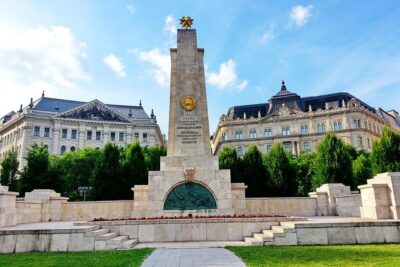
Lives of Hungarians Under Communist and Capitalist system
Read our review →
Private Budapest Hammer & Sickle Communist Times Tour
Read our review →
Browse the lists this tour appears in