
Reviewed · BUDAPEST COMMUNIST HISTORY TOURS
Guided Tour with Admission in Memento Park
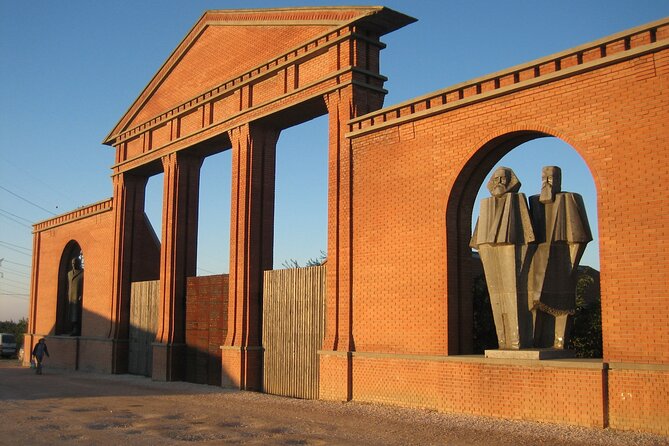
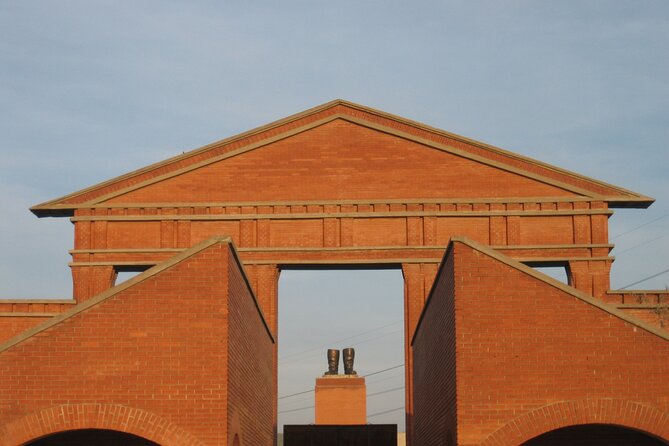
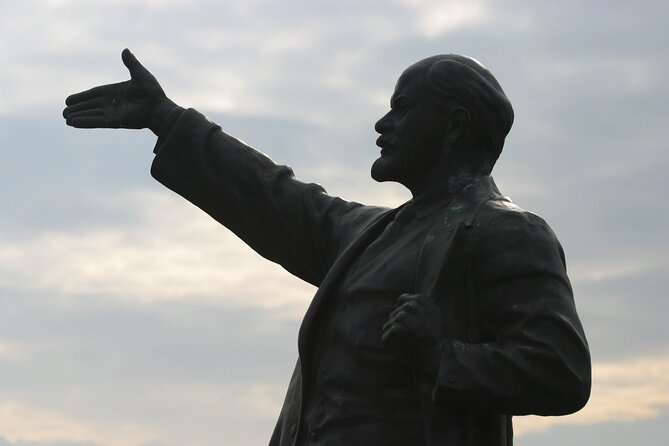
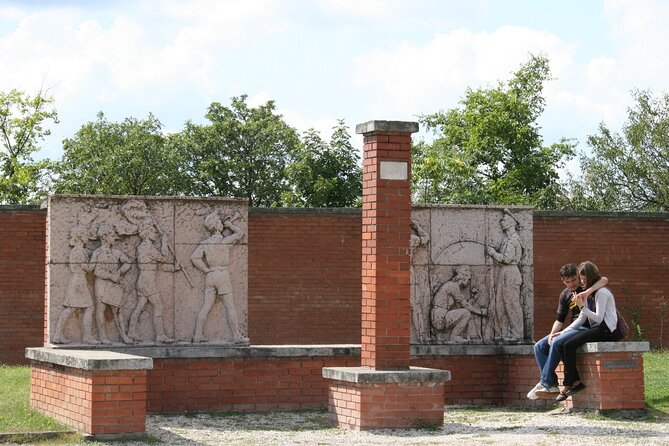
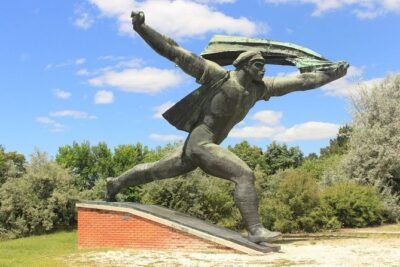
Memento Park is where Budapest put its communist statues after the political system changed. Instead of hiding them, the city gathered them outside the center, creating an open-air lesson in power, propaganda, and memory. A guide makes a major difference here, explaining why each monument mattered and how ordinary Hungarians lived under Soviet influence.
I like the small group limit of 15 and the chance to hear personal stories from guides such as Ilodi, Eszter, Louisa, and Esther. I also like that admission covers more than the sculpture grounds, including the Barrack’s film and photo displays, Stalin’s Grandstand, and the chance to see the famous Trabant. The main consideration is the park’s location outside central Budapest, so you need to allow time to reach the meeting point.
Key points to know before booking
- The guide gives the statues their meaning: Without context, many of the sculptures can look alike. The tour explains their political purpose, symbolism, and place in Hungarian history.
- The visit lasts about 70 minutes: The guide can stay for roughly 20 more minutes for questions, followed by your own time for photos and further exploring.
- Admission is included: You can also see the movie show, photo exhibition, Stalin’s Grandstand, and Trabant without arranging a separate entrance.
- The group is capped at 15 people: That is small enough for questions and a more personal walk.
- You meet at 11:30 am: The start point is Memento Park at Balatoni út and Szabadkai utca, in Budapest’s 1222 district.
- Cancellation is flexible up to 24 hours ahead: Cancel at least a day before the start for a full refund.
Why Memento Park matters
Budapest can sometimes feel like a city of grand imperial buildings, café culture, and river views. Memento Park offers a different side of the city. It deals with the decades when Hungary lived under a communist government closely tied to the Soviet Union.
The park contains statues removed from Budapest’s streets after the political changes of 1989 and 1990. Their new setting changes how you see them. In their original locations, these monuments were meant to command attention and shape public thought. Here, gathered together outside the city center, they can be examined with more distance.
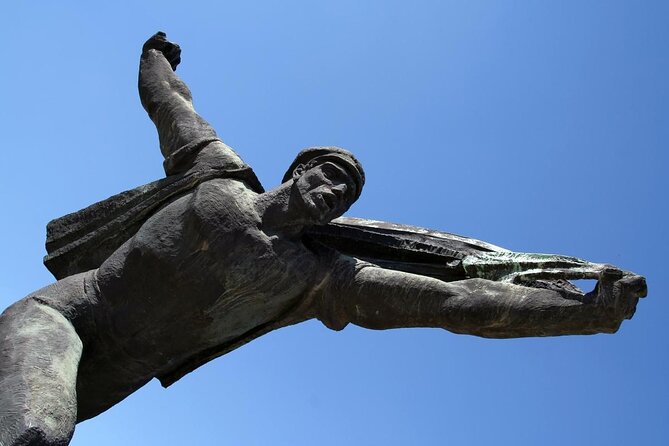
That distance does not make them harmless or dull. Many pieces still feel imposing. Others now look strange, theatrical, or even unintentionally funny. A guide helps you notice those contrasts instead of simply walking past a row of large concrete figures.
I especially value the political context. The park is not just a collection of old statues. It shows how public art can serve a government, how leaders use heroic images to tell an official story, and how later generations decide what to preserve.
More communist-era tours in Budapest:
- Budapest: Communist History Tour with House of Terror Option
★ 4.8 · 182 reviews - Communism in Hungary with a Historian
★ 5.0 · 70 reviews - Budapest: 3-Hour Walking Tour About Communism (Small Group)
★ 4.7 · 70 reviews
Meeting at Memento Park at 11:30 am
The tour begins at Memento Park, at the corner of Balatoni út and Szabadkai utca in Budapest’s 1222 district. The start time is 11:30 am, and the activity finishes back at the same meeting point.
This is not a central Budapest stop, so plan your morning around reaching the park rather than treating it as a quick detour between the Parliament and Castle District. The meeting point is near public transportation, which helps, but the supplied details do not specify a particular route or travel time from your hotel. Check your own route before booking and leave a margin for finding the entrance.
The mobile ticket is useful here. You receive confirmation at booking, then can show the ticket from your phone. You do not need to arrange a second admission purchase once you arrive.
The guided walk through communist-era sculpture
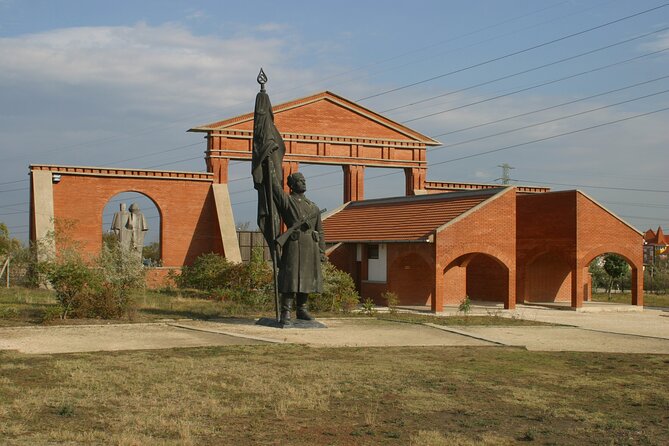
The main guided portion lasts about 70 minutes. That is enough time for a clear introduction to the park and its major works without turning the visit into an all-day history lecture.
Expect the guide to explain the political meaning behind the statues and to connect them with Hungary’s 20th-century story. The strongest part of the visit is the interpretation. Several sculptures can be difficult to understand on appearance alone, particularly if you do not know the symbols of communist propaganda or the events that shaped Hungary during the Soviet period.
The guides bring different strengths. Ilodi is described as using personal experiences and humor to make the material easier to grasp. Eszter has been praised for explaining both the history and the artistic qualities of the statues. Louisa is noted for interpreting pieces that might otherwise be missed, while Esther is associated with useful anecdotes and real-life stories from the period.
Those details matter because the park works on two levels. You see the art, but you also learn how the art was used. A good explanation can turn a broad-shouldered worker, a heroic soldier, or a symbolic gesture into evidence of how the state wanted its citizens to think.
The guide-led format also gives you a chance to ask questions while the subject is fresh. The group limit of 15 should make that easier than a large coach tour. Still, group size is a maximum, not a promise that every departure will contain the same number of people.
Stalin’s Grandstand and the power of spectacle
One of the park’s unusual features is Stalin’s Grandstand. Its name points to the way political leaders used ceremony, crowds, and public display to project authority.
This is not simply another statue to photograph. It helps explain the setting in which communist power was performed. A grandstand gives you a physical sense of official spectacle, even if you know the history already. The guide can connect the structure to the wider story of Stalin-era politics and the way leaders positioned themselves above the public.
The exact detail you take from this stop will depend on the guide and your questions. That is another reason I would choose the guided option rather than entering alone. The structure has more meaning when someone explains what it was for and why it remains in the park.
A handful more Budapest trips to weigh up
- Budapest: Parliament Building Entry Ticket and Audio Guide
★ 4.5 · 3,844 reviews - Budapest: Opera House Guided Tour
★ 4.6 · 1,533 reviews - Budapest Small-Group Guided Tour on MonsteRoller e-Scooter
★ 5.0 · 1,517 reviews - Budapest: Guided Tour of the Parliament Building in Spanish
★ 4.6 · 1,240 reviews
The Barrack exhibits, film, and photo display
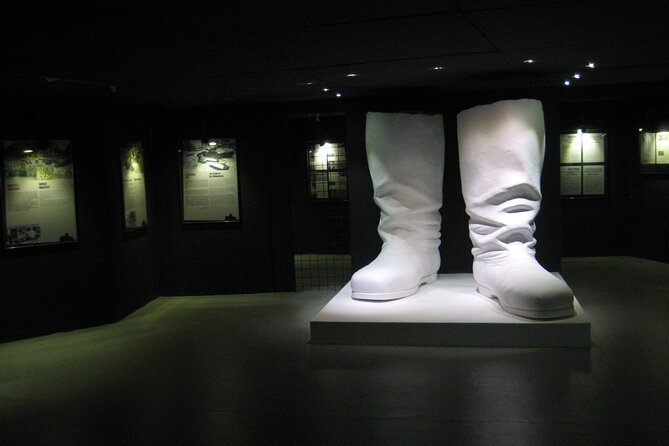
After the outdoor walk, you have time to explore the Barrack. The park includes a movie show and a photo exhibition there, adding material that the statues alone cannot provide.
Photographs can show how public spaces and political ceremonies looked in their original setting. A film can also give the period a human scale, moving the subject beyond monuments and official slogans. The supplied details do not identify the film title, running time, or language arrangements, so you should treat these as included extras rather than plan your schedule around a specific screening.
The Barrack is particularly useful if you want more than a quick outdoor stop. The sculpture grounds give you the bold public symbols. The indoor material can help fill in the background and show how those symbols fit into everyday political life.
You might not need a long time here if your main interest is architecture or photography. If you enjoy modern European history, allow time after the guided portion rather than rushing straight back to central Budapest.
The Trabant, a small car with a large memory
The park also features a Trabant, the boxy car that became closely linked with life behind the Iron Curtain. It is a more ordinary object than the monumental statues, which is exactly why it adds something valuable.
A giant statue tells you how a government wanted to be seen. A Trabant points toward daily life, limited choices, and the material culture of the period. You can photograph it, but its real value is as a contrast to the grand political art around it.
The information provided does not specify whether you can enter the car or only view it, so do not assume it is an interactive exhibit. Treat it as a memorable object to see and photograph during your free time.
Why a guide is worth the extra cost
The price is $30.04 per person, with admission included. That is more than the cost of simply reaching an outdoor sculpture park, but the value rests in the explanation rather than the entrance ticket alone.
I would pay for the guided format if this is your first visit. Many of the statues are imposing, but their meaning is not always obvious. A guide can explain the artistic choices, political messages, and historical background in one organized visit. The personal stories and anecdotes also make the subject less abstract.
The price becomes easier to justify if you use the full visit. Stay for questions, look through the Barrack, see the film and photo exhibition, and spend time with the Grandstand and Trabant. If you only want quick photographs, the guided ticket may feel like more than you need.
The excellent rating and full recommendation record suggest that the format is working well for people who want historical interpretation. Still, I would not book it solely for the number. Book it because you want to understand the statues, not just stand beside them.
How long to allow at the park
The listed duration is approximately one hour to one hour and ten minutes. The base guided portion is about 70 minutes, and the guide can remain available for questions for roughly 20 additional minutes.
The timing needs a little interpretation. Your actual visit may extend beyond the basic advertised length if you stay for questions, photos, the film, and the Barrack display. The tour ends at the meeting point, so you can decide how much extra time to spend before leaving.
I would allow more than the minimum if your schedule permits. The guided walk may give you the main story, but the park’s quieter details are easier to notice when you are not hurrying. If you have a tightly timed afternoon, remember to add your transport time to and from the park.
Who will enjoy this tour most
This visit suits you if you like history, political art, museums, or places that ask difficult questions about the past. It is also a good choice if you want to understand Budapest beyond its famous central sights.
The tour is particularly useful for first-time visitors to Memento Park. A self-guided walk can work, but the sculptures may seem disconnected without an explanation. The guide-led approach gives you a clear sequence and leaves time for questions.
Families with older children and teenagers may find the statues and Trabant more memorable than a standard indoor museum. The subject is serious, though, and the visit works best for people willing to listen to historical context.
The park may be less suitable if you have only a short stay in Budapest and want to remain in the center. It is also not the best fit if you prefer purely decorative sights. The sculptures are political documents, and the atmosphere can be unsettling as well as fascinating.
Most people can participate, and service animals are allowed. The activity is offered in English, so you should be comfortable following a spoken historical explanation in English.
Practical details that affect your choice
The maximum group size is 15, which keeps the format smaller than a standard sightseeing coach. That should help when you want to hear the guide or ask about a particular sculpture.
The tour is offered in English only. Confirmation arrives when you book, and the ticket is mobile, so keep the booking available on your phone.
You can cancel for a full refund if you do so at least 24 hours before the local start time. Cancellations or changes made inside that 24-hour window are not accepted for a refund. That rule gives you some flexibility, but check your plans before the deadline.
The activity is booked, on average, 12 days ahead. That does not guarantee that every date will sell out, but it is a useful reason to reserve early if your Budapest schedule is fixed, especially since the group has a 15-person limit.
Should you book the Memento Park guided tour?
Book this tour if you want the statues to make sense. The guided walk, personal stories, questions, and included Barrack exhibits turn an unusual collection of monuments into a clear lesson about communist Hungary and political art.
I would skip it only if your Budapest visit is extremely short, you dislike historical interpretation, or you want to stay close to the city center. For everyone else, the $30.04 price is reasonable when you use the full visit and value context. Meet at 11:30 am, allow time to reach the park, and plan to stay a little beyond the formal walk if the subject catches your interest.
FAQ
Where does the tour begin?
It begins at Memento Park, at Balatoni út and Szabadkai utca sarok, 1222 Budapest, Hungary.
What time does the tour start?
The scheduled start time is 11:30 am.
Where does the activity finish?
The activity ends back at the Memento Park meeting point.
How long does the tour last?
The advertised duration is approximately one hour to one hour and ten minutes. The main guided portion lasts about 70 minutes, and the guide may remain for roughly 20 minutes of questions afterward.
Is admission to Memento Park included?
Yes. The admission ticket is included in the price.
What language is the tour offered in?
The tour is offered in English.
How many people can join the tour?
The activity has a maximum of 15 participants.
What else can I see after the guided walk?
You can take photos and explore the movie show, photo exhibition in the Barrack, Stalin’s Grandstand, and the Trabant.
Can I cancel for a full refund?
Yes. You can cancel at least 24 hours before the local start time for a full refund. Cancellations or changes made less than 24 hours before the start are not accepted for a refund.
Just added around Budapest
- Budapest: Danube River Views Bike Ride★ 4.8 · 23 reviews
- Budapest: City Bike Tour with Coffee Stop★ 5.0 · 37 reviews
- Budapest: Private Walking Tour with a Local Guide★ 3.6 · 6 reviews
- Budapest: Vacation Photographer to collect great memories★ 5.0 · 49 reviews
- Walk to recent and aged spiritual sanctuaries near Budapest★ 5.0 · 5 reviews
- From Budapest: Guided Tour of Eger with Wine Tasting★ 4.5 · 6 reviews
- Audio visual multi-sensory chefs journey dinner experience★ 5.0 · 3 reviews
- Budapest: 3-Hour Trabant Sightseeing Tour★ 4.7 · 28 reviews
Budapest Communist History Tours, compared.
Communist History Tour with House of Terror Option
Read our review →
3-Hour Walking Tour About Communism (Small Group)
Read our review →
Lives of Hungarians Under Communist and Capitalist system
Read our review →
Private Budapest Hammer & Sickle Communist Times Tour
Read our review →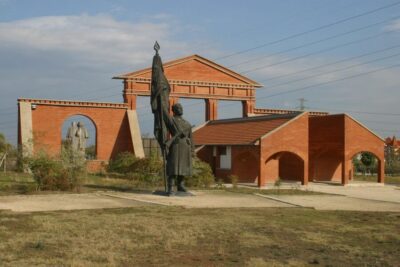
Browse the lists this tour appears in