
Reviewed · BUDAPEST COMMUNIST HISTORY TOURS
Lives of Hungarians Under Communist and Capitalist system
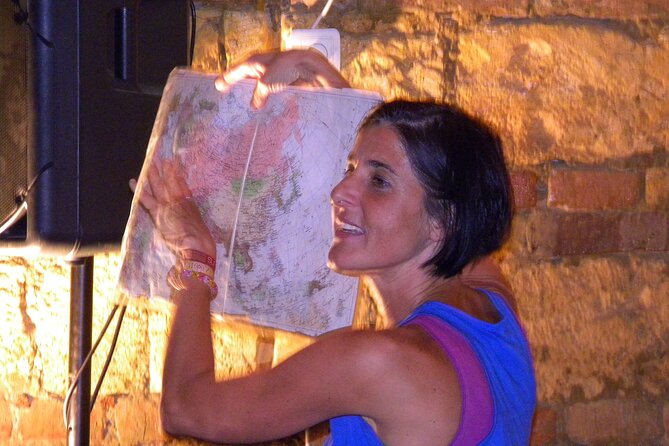
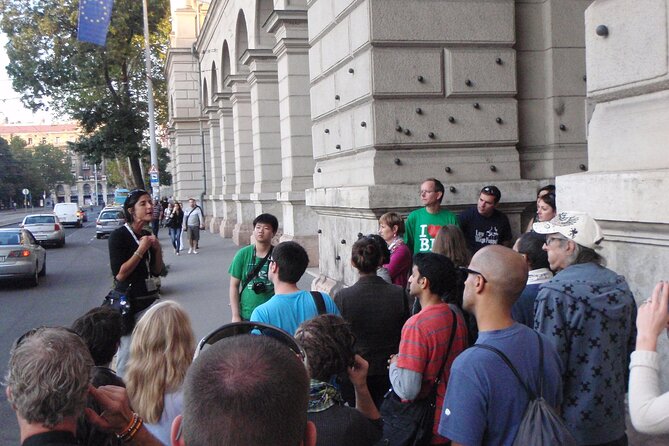
Budapest’s Communist past is easiest to understand through ordinary life: who could travel, how families found housing, what children learned at school, and why some older Hungarians still feel nostalgia for the system. This walking tour puts those questions ahead of grand political speeches, using guides who lived through the era and can explain what it felt like day to day.
I like the personal accounts and the clear route from Budapest Eye to Parliament. I also like the stop at Szabadság tér, where monuments, street art, and a nuclear bunker entrance turn abstract history into things you can actually see. The main consideration is the unusual pricing: your $4.65 payment is a booking fee, while the guide depends on tips, with €10 per person suggested.
Key points to know before booking
- Firsthand Communist-era stories: Guides who lived under the system discuss family life, travel, religion, school, health care, housing, and media.
- A walk from Budapest Eye to Parliament: The route crosses central Budapest and ends near the M2 red metro line.
- A useful look at 1956: The Parliament area includes stories of the uprising, local heroes, and bullet marks on nearby residential buildings.
- The tip is the real cost: The booking payment goes to administration and marketing, not to the guide. A tip of around €10 per person is suggested.
- Small group format: The maximum is 20 people, which should make questions easier than on a large city walk.
- Good for families with teenagers: The personal stories can make a schoolbook subject feel more immediate and easier to discuss.
Why ordinary life is the focus
This is not mainly a parade of Communist leaders, dates, and official slogans. The tour asks practical questions that reveal how a political system reaches into daily routines.
You hear about travel documents, transport, housing, education, health care, religion, sport, the Olympics, newspapers, and propaganda. Those topics help you compare the promises of the Communist system with the limits people faced in real life.
I find this approach useful because it avoids treating history as something locked in a museum. You can understand far more from learning how a family lived, where it could go, and what it was allowed to say than from memorizing a list of political offices.
The post-Communist period is included too. That matters because Hungary’s story did not stop when Communist rule ended. The guide explains why some people look back with nostalgia, even though the system restricted travel, political choice, and public life.
Expect a balanced explanation rather than a simple good-versus-bad story. The stated aim is to show local perspectives, including the reasons behind mixed feelings about the past.
More communist-era tours in Budapest:
- Budapest: Communist History Tour with House of Terror Option
★ 4.8 · 182 reviews - Communism in Hungary with a Historian
★ 5.0 · 70 reviews - Budapest: 3-Hour Walking Tour About Communism (Small Group)
★ 4.7 · 70 reviews
Starting beside Budapest Eye
The meeting point is 20 meters from the Budapest Eye in Erzsébet tér. Start time is 3:30 pm, so you can spend the earlier part of the day elsewhere before joining the walk.
The opening section includes a 15-minute interactive history lesson about Hungarian and Central European Communism. This gives you a basic timeline before the tour moves into personal subjects.
That introduction is especially useful if you know little about Hungary’s 20th-century history. If you already have a strong background, the value will come more from the guide’s lived experience and the local examples that follow.
The route is on foot and uses public urban spaces rather than admission-based attractions. You do not need to budget for entrance tickets at any of the listed stops. The mobile ticket makes arrival simple, but you should still check the exact meeting location near the Ferris wheel rather than waiting at the wheel itself.
Travel documents and Communist-era cars at Fröccsterasz
The next stop, Fröccsterasz, shifts the discussion toward movement. You learn about travel into and out of Hungary, see basic travel documents, and hear about Communist-era car models and other forms of transport.
This is a strong choice of subject because travel restrictions are easy to misunderstand from a modern point of view. A passport is not just a piece of paper here. It becomes evidence of who could cross a border, where people could go, and how much official permission shaped a holiday or family visit.
The car discussion adds a lighter, more visual part to the walk. You hear about the famous vehicle types associated with the period and how transportation fit into daily life.
The stop is short, listed at about 10 minutes. That means you should expect a compact explanation rather than a technical survey of every car model. If transport history interests you most, use this moment to ask a question before the group moves on.
Religion and family life at St. Stephen’s Basilica
At St. Stephen’s Basilica, the subject turns to religion. The guide explains the difficulties faced by different denominations under Communism and how religious life could vary from one family to another.
This is one of the more important stops because official policy and private belief did not always match. A family might keep religious customs at home even when public life made religion harder to practice or discuss.
The basilica gives the subject a clear physical setting, but the tour is not advertised as an interior visit or a church admission experience. The point is the explanation outside and around the site, not a ticketed church tour.
The timing is about 15 minutes. I would listen for the family-level details here, since they help explain how people adapted. Large political systems often looked uniform from outside, while individual households handled pressure in very different ways.
Same city, a completely different sort of day:
- Budapest: City Highlights Cruise with Welcome Drink
★ 4.6 · 35,610 reviews - Budapest: Unlimited Prosecco, Beer and Aperol Spritz Cruise
★ 4.8 · 25,310 reviews - Budapest: Széchenyi Spa Day Ticket with Optional Upgrades
★ 4.3 · 23,911 reviews - Budapest: Nighttime or Daytime Sightseeing Cruise
★ 4.2 · 21,062 reviews
Housing, school, health care, and propaganda in District V
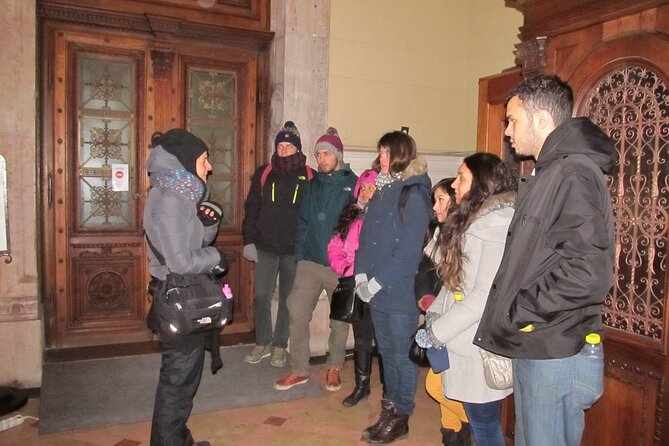
The District V section is the longest part of the route, at about 20 minutes. It covers housing, health care, education, media culture, propaganda, sport, the Olympic Games, and life after Communism.
That list is broad, but the subjects connect. Housing tells you how the state shaped private space. School and media show how ideas reached children and adults. Health care reveals the difference between a system’s public promise and a person’s everyday experience.
Sport and the Olympics add another angle. International competition could serve as both entertainment and national pride, while athletes and sporting success carried political meaning.
The discussion of nostalgia is likely to be one of the most useful parts for anyone trying to understand present-day Hungary. Some people remember security, predictable services, or a simpler social order. Others remember limits, surveillance, restricted choices, and the lack of open political life.
You should not expect one neat answer about whether life was better or worse. The point is to see why memories differ. That balance makes this walk more useful than a simple condemnation of the past.
For families, this section can work well. A parent traveling with teenagers described the personal stories as a way to make a subject studied in school feel real. You may find that the same practical examples, especially school, housing, and travel, give younger visitors something concrete to discuss.
Szabadság tér and the city’s competing memories
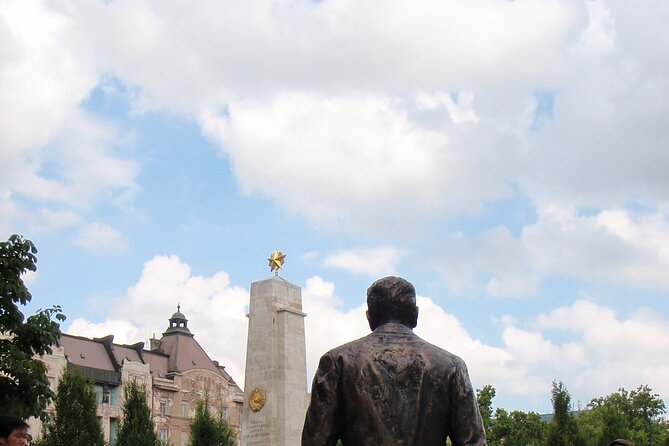
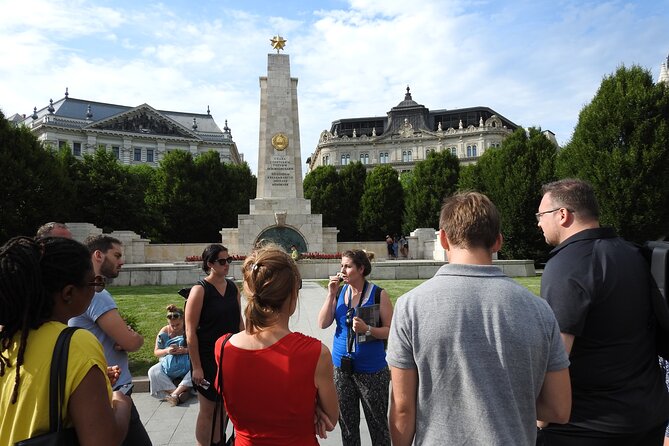
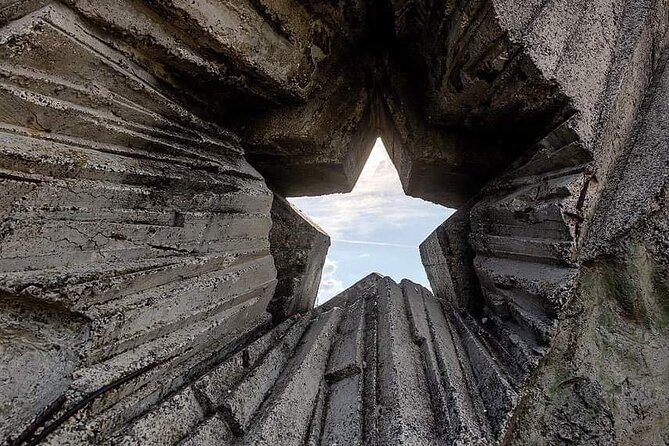
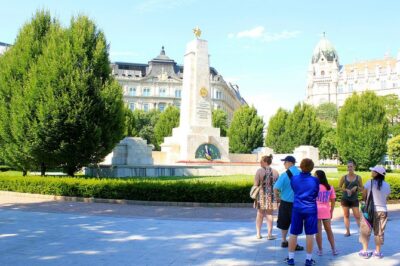
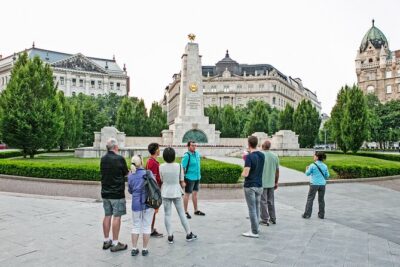
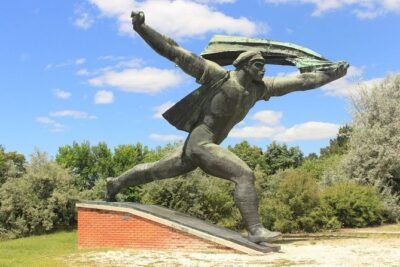
Szabadság tér brings several difficult symbols together. The guide shows two controversial monuments, urban art guerrilla statues, and the emergency exit of the F4 military nuclear bunker.
The square is valuable because it shows how history is argued over in public. Monuments do not merely record the past. They also reflect what a country chooses to honor, explain, soften, or challenge.
The bunker reference adds a Cold War edge. You should not expect a bunker tour or entry into the facility, but seeing the emergency exit helps connect military planning with the ordinary city around it.
Another detail here is the second most guarded building in Budapest, which sheltered a prominent Hungarian person for more than 15 years. The supplied information does not name that person, so you will need to hear the guide’s explanation for the full story.
This stop lasts around 10 minutes. It may feel brief, but the concentration of political symbols makes it one of the most memorable parts of the walk. I would pay close attention to how the guide explains the monuments together, since their meaning comes from the contrast between them.
Parliament and the 1956 uprising
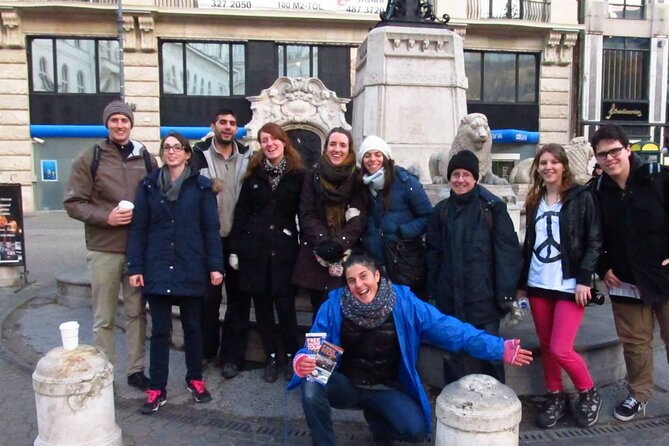
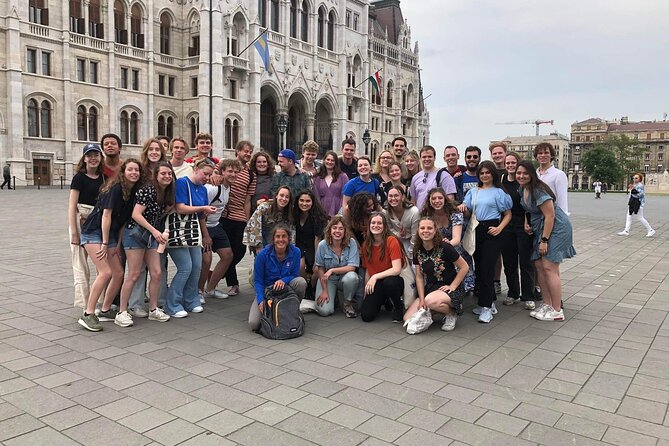
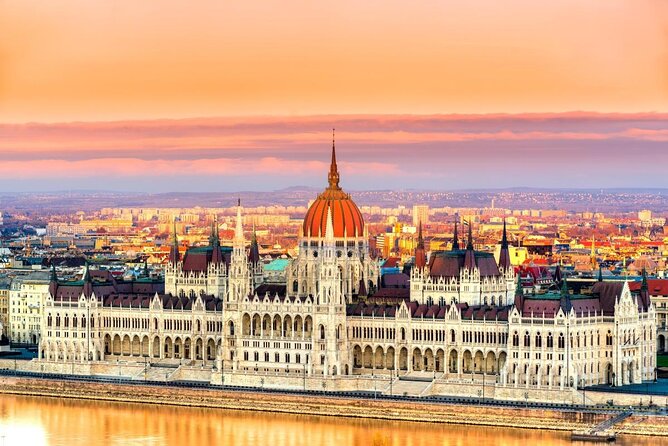
The walk ends at the Hungarian Parliament Building on Kossuth Lajos tér. Here the focus turns to the 1956 uprising, one of the defining events in modern Hungarian history.
You hear about the heroes of 1956, the revolution itself, and what it was like to experience those events as a child. The guide also points out bullet holes on the facades of some residential buildings near Parliament.
Those marks matter because they keep the uprising connected to ordinary homes and streets. Parliament is an imposing political symbol, but the surrounding buildings show that the conflict was also lived by families in their own neighborhoods.
The final section lasts about 15 minutes. It gives the walk a serious ending and ties together the earlier themes of state power, public memory, and personal experience.
The end point is 50 meters from the M2 red metro line. That makes it easy to continue sightseeing or return to your accommodation after the tour. No return transport is provided or needed, since the walk finishes in a central area with public transportation nearby.
What the price really means
The listed price of $4.65 per person is not the full payment to the guide. It is a booking fee used for administration and marketing, and it guarantees your place on the walk.
The guides depend entirely on donations at the end. A tip of €10 per person is suggested, though the amount is your choice.
That makes the tour inexpensive at the point of booking but not truly a $4.65 experience if you plan to compensate the guide fairly. I would budget for the suggested tip when comparing it with fixed-price walking tours.
The tip-based model can work well if you value personal storytelling and want to decide what the experience was worth afterward. It also means you should be clear about the arrangement before booking, especially if you prefer an all-inclusive price.
With a maximum of 20 people, the format is smaller than many free walking tours. That should give you a better chance to hear the guide and ask about subjects such as travel permits, religion, or life in 1956.
Timing, route, and practical fit
The listed duration is approximately 1 hour and 30 minutes. The individual stop times add up to 90 minutes, although the opening description refers to a two-hour itinerary. Because of that difference, allow some flexibility rather than planning a tight connection immediately afterward.
The route is central and passes major landmarks, but it is still a walking tour. Wear shoes you can use comfortably for city streets and arrive close to the 3:30 pm start.
The tour accepts mobile tickets, is near public transportation, and allows service animals. Most people can take part, and the group limit is 20.
Free cancellation is available until 24 hours before the start time. Changes or cancellations made inside that window are not refunded, and cut-off times use local Budapest time.
The tour is not built around museum entry, food, or a long interior visit. If you want a quiet lecture, this moving format may feel quick. If you like connecting places with stories, the route should keep the subject grounded.
Who will get the most from this walk
I would choose this tour if you want to understand Budapest beyond royal buildings and grand avenues. It suits anyone interested in modern European history, family memory, political change, or the difference between official ideals and private life.
It is also a sensible choice for parents with older children and teenagers. The subjects are clear enough for students, while the guide’s own experience can add something a classroom cannot.
You may want a different activity if your main goal is to enter the Parliament building, visit the F4 bunker, or spend a long time at each monument. This experience explains those places from outside. It does not include admission tickets to them.
The tour also works best if you are comfortable with a donation-based format. The low booking payment can be misleading if you do not account for the suggested €10 tip.
Should you book Lives of Hungarians Under Communist and Capitalist system?
Book it if you want a short, serious walk that explains how Communism affected ordinary Hungarians, not just politicians. The strongest parts are the guide’s personal perspective, the practical subjects such as housing and travel, the contested symbols at Szabadság tér, and the 1956 stories near Parliament.
Think twice if you need a fixed final price, a fully indoor activity, or a precise 90-minute schedule. For everyone else, the modest booking fee, central route, small maximum group, and strong focus on lived experience make this a useful addition to a Budapest visit.
FAQ
Where does the tour start?
It starts 20 meters from the Budapest Eye at Erzsébet tér, Budapest 1051, Hungary.
Where does the tour end?
It ends at the Hungarian Parliament Building at Kossuth Lajos tér 1-3, Budapest 1055, Hungary.
What time does the tour start?
The start time is 3:30 pm.
How long does the tour last?
The tour lasts approximately 1 hour and 30 minutes. The opening information also refers to a two-hour itinerary, so allow some extra flexibility.
How much does the tour cost?
The listed booking fee is $4.65 per person. This fee covers administration and marketing and does not contribute to the guide’s earnings.
Is tipping included?
No. Tips are not included, and the guides depend on donations. Most people tip €10 per person, though the amount is your choice.
What topics does the tour cover?
It covers travel, documents, Communist-era cars, religion, housing, health care, education, media, propaganda, sport, the Olympics, post-Communist life, and the 1956 uprising.
How large can the group be?
The tour has a maximum of 20 participants.
Can I cancel the tour for a refund?
Yes. You can cancel up to 24 hours before the start time for a full refund. Cancellations or changes made less than 24 hours before the start time are not refunded.
Just added around Budapest
- Budapest: Danube River Views Bike Ride★ 4.8 · 23 reviews
- Budapest: City Bike Tour with Coffee Stop★ 5.0 · 37 reviews
- Budapest: Private Walking Tour with a Local Guide★ 3.6 · 6 reviews
- From Budapest: Guided Tour of Eger with Wine Tasting★ 4.5 · 6 reviews
- Budapest: Vacation Photographer to collect great memories★ 5.0 · 49 reviews
- Walk to recent and aged spiritual sanctuaries near Budapest★ 5.0 · 5 reviews
- Audio visual multi-sensory chefs journey dinner experience★ 5.0 · 3 reviews
- Budapest: 3-Hour Trabant Sightseeing Tour★ 4.7 · 28 reviews
Budapest Communist History Tours, compared.
Communist History Tour with House of Terror Option
Read our review →
3-Hour Walking Tour About Communism (Small Group)
Read our review →
Private Budapest Hammer & Sickle Communist Times Tour
Read our review →
Browse the lists this tour appears in