
Reviewed · BUDAPEST STREET ART TOURS
Budapest Art Nouveau Walking Tour
Budapest’s Art Nouveau is not shy. Look up and you’ll find curling leaves, colorful porcelain, peacock shapes, and rooflines that seem to ignore the rules. This three-hour walk explains how Hungary turned a European design trend into its own Hungarian Secession style, led by Ödön Lechner, often called Hungary’s Gaudi.
I like the way the tour combines major landmarks with smaller interiors, including a flower shop, bank offices, a coffee house, and the elegant Gresham Palace entrance hall. I also like having an art and architecture historian explain why Zsolnay porcelain and Asian motifs appear so often. The main consideration is the schedule: some interiors close on weekends, and two optional entries cost extra.
Key points to know before booking
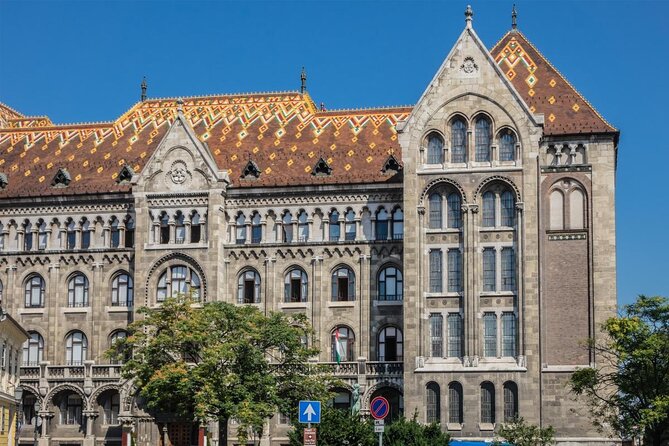
- Ödön Lechner’s Postal Bank: See the flamboyant Hungarian State Treasury, one of Budapest’s clearest examples of Lechner’s national style.
- Gresham Palace interiors: Enter the lobby to study its grand Art Nouveau details, not just its famous exterior.
- Zsolnay ceramics: Learn how colorful porcelain from Pécs became a practical part of Hungarian building design.
- Asian-inspired decoration: Understand why Hungarian architects used eastern motifs and how this fit into wider European Art Nouveau.
- Flexible route: Weekend closures can change the plan, with alternatives such as the Gellért Bath Hotel, Museum of Applied Arts, or Geology Museum.
- Small-group or private format: The tour works best for visitors who want explanation and close attention rather than a quick photo walk.
Why Budapest’s Art Nouveau deserves three hours
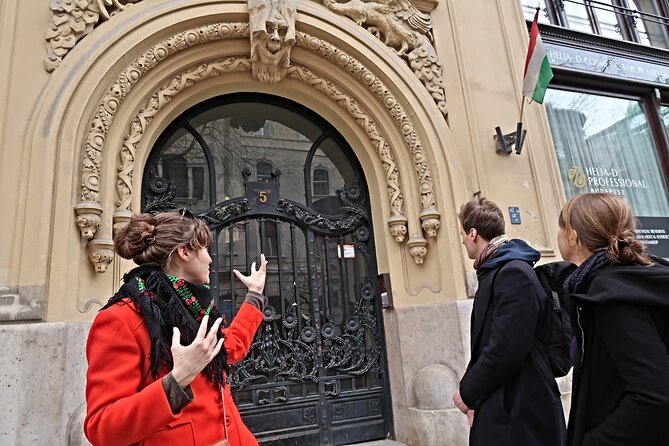
Budapest is often introduced through its Parliament, castle, thermal baths, and grand boulevards. Those sights matter, but the city’s Art Nouveau tells a more specific story. Around the turn of the 20th century, Budapest was wealthy, ambitious, and eager to look modern. Its architects did not simply copy Paris, Vienna, or Brussels. They borrowed from Europe, Hungary’s folk traditions, and imagined links to Asia.
That mix produced Hungarian Secession, the local expression of Art Nouveau. Its buildings can feel playful, even eccentric. Facades may use brightly colored Zsolnay tiles, curving floral patterns, stylized animals, and shapes inspired by eastern decoration. The effect is less restrained than the clean lines of some northern European Art Nouveau buildings.
I find this tour useful because it gives you a visual code to follow. Without guidance, you might notice a colorful roof or a strange geometric doorway and move on. With an art historian beside you, those details become clues. You learn why porcelain was used outdoors, how banks advertised prosperity through design, and why Asian references appeared in a period when Hungary was searching for a distinct national identity.
The pace also suits Budapest. Three hours is long enough to connect several central buildings, but short enough to fit around lunch, a museum visit, or an afternoon at the baths. Since this is a walking tour, you should expect city streets, short transfers, and time spent looking up at facades and down at decorative details.
More street art walks in Budapest:
- Budapest: Street Art and Underground Movements Walking Tour
★ 5.0 · 238 reviews - Alternative Street Art Free Walking Tour of Budapest
★ 4.5 · 53 reviews - Street Art and Alternative Tour in Budapest
★ 5.0 · 52 reviews
Starting near central Budapest
The exact starting point depends on the option you choose. If you prefer a central meeting place instead of hotel or holiday-flat pickup, the meeting point is Madal Café at Alkotmány utca 4.
That flexibility matters because a private tour can be shaped around your day. A small group can also keep the experience more personal than a large city walk. The guide speaks English, and the tour is led by an art historian. One highly praised guide named in the available feedback is Anna, who was described as friendly and very well informed about Budapest’s art and history. Another booking praised the guide’s strong German skills, although English is the listed tour language.
You should wear comfortable shoes. The walk covers several central buildings, and the tour may use tram or metro connections. Public transport tickets are not included, so bring a little extra for those if the route requires them.
Bedő House and the intimate side of Art Nouveau
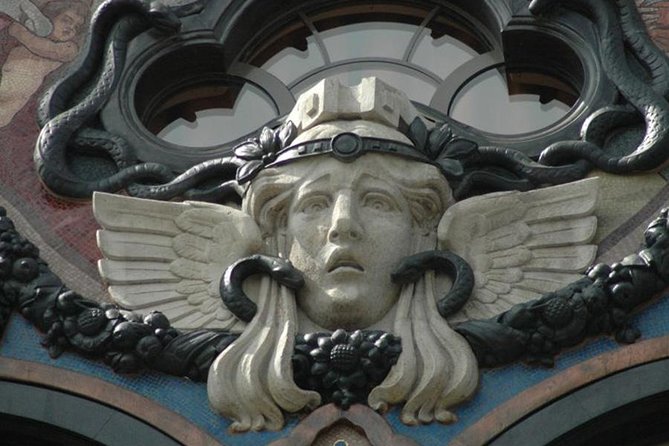
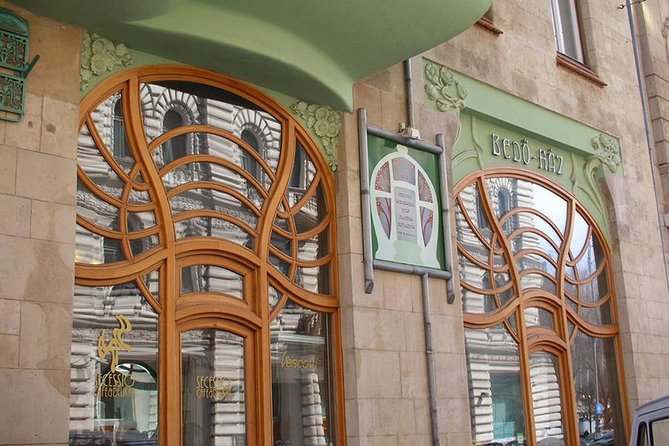
Bedő House offers a useful early stop because it brings the movement down to a more human scale. Budapest’s Art Nouveau is not only about giant palaces and government buildings. Residential and commercial buildings also carried the style into everyday city life.
Here, your guide can point out how decoration works across the facade and how the building relates to the period’s larger design ideas. The value of a stop like this is comparison. After seeing a grand civic building, you can notice how similar shapes, materials, or motifs appear in a smaller setting.
The route may also include a flower shop with its original interior. That kind of stop is easy to overlook on an ordinary walk, yet it shows how Art Nouveau reached into daily business. The movement was not limited to museums. Shop interiors, furniture, glass, metalwork, and signs all formed part of the same visual world.
You might also visit a small Art Nouveau museum and coffee house. This is one of the better features for anyone who wants to understand applied arts rather than architecture alone. Art Nouveau was a total design style. A building’s doors, lamps, furniture, tiles, and printed materials were meant to work together.
The Hungarian State Treasury and Lechner’s bold vision
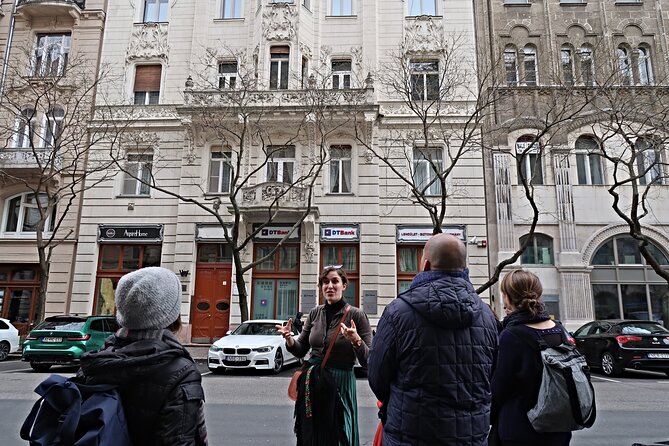
The Hungarian State Treasury, also known as the Palace of the Royal Post, is one of the major reasons to choose this walk. Designed by Ödön Lechner, it is a loud, colorful statement about Hungarian identity and modern design.
Lechner is often called Hungary’s Gaudi, though the comparison has limits. Like Antoni Gaudí, he created buildings with unusual forms and a strong sense of decoration. But Lechner’s work draws on Hungarian patterns and eastern references in a way that gives it a local character.
The building is especially important for its use of Zsolnay porcelain. Made in Pécs, in southern Hungary, Zsolnay ceramics could withstand outdoor conditions while offering intense color and intricate surface decoration. On a building like this, porcelain was not a small finishing touch. It helped turn the facade into a work of applied art.
Your guide will help you separate the different sources of inspiration. Some motifs relate to Hungary’s search for eastern origins. Others reflect Orientalism, a broad European interest in Asian and Middle Eastern styles. That distinction is worth hearing because the decoration is not simply Asian. It belongs to a period when European artists often imagined, borrowed, and reshaped eastern ideas.
The building’s exterior is the main attraction, but the tour also takes advantage of interiors that visitors can enter. Being able to step inside gives you a better sense of how the design continues beyond the street facade.
One practical note: the Hungarian National Bank has fine examples of Zsolnay porcelain, but it cannot be entered on weekends. If your tour falls on a weekend, the route can be adjusted to suit the day and your interests.
More walking tours in Budapest:
- Budapest: Buda Castle Walk with Saint Stephen’s Hall
★ 4.5 · 3,012 reviews - Big Bus Budapest Hop-On Hop-Off Bus and Walking Tour
★ 3.5 · 2,206 reviews - Budapest: Buda Castle District Walking Tour
★ 4.6 · 2,108 reviews - Budapest City Landmarks Walking Tour in 2 Hours
★ 5.0 · 2,048 reviews
Gresham Palace, where Art Nouveau turns grand
Gresham Palace is the tour’s other major architectural stop. Its location near the Danube and the Chain Bridge gives it an impressive setting, but the interior details are what make the visit worthwhile.
The palace represents the wealthy, international side of early 20th-century Budapest. Here, Art Nouveau feels polished and luxurious. Expect elaborate metalwork, decorative glass, patterned surfaces, and flowing forms that show how much money and skill went into a major commercial and residential building.
Fortunately, the entrance hall can be visited, allowing you to study the design from inside rather than relying on a street-level glance. Your guide can explain how the decoration creates a unified effect. Art Nouveau was designed to surround you, not just to provide one attractive facade for photographs.
Gresham Palace is also a helpful contrast to Lechner’s Postal Bank. Lechner’s building is more closely tied to Hungarian national style and colorful ceramic decoration. Gresham Palace speaks more directly to the cosmopolitan side of Budapest, where international business, luxury, and modern urban life were closely linked.
The drawback is that access is limited to the areas open to visitors. You should not expect a full private tour of every room. Still, entering the hall gives you far more than a quick exterior stop, especially when the guide calls out small details you might miss alone.
Rózsavölgyi utca and the beauty of smaller details
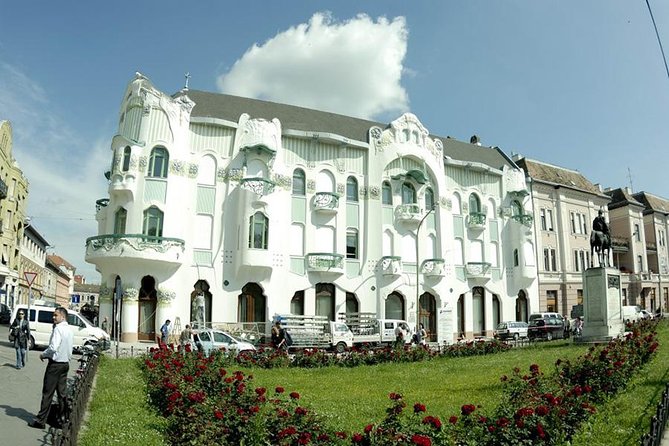
Rózsavölgyi utca adds another layer to the walk. It helps show that Art Nouveau was not confined to famous palaces. Smaller buildings and commercial spaces also used the period’s curves, colors, and decorative symbols.
This is where the tour’s specialist focus pays off. You may notice unusual window frames, tilework, iron details, or ornamental patterns that look decorative but also reveal the building’s purpose and period. The guide can connect these street-level details to the larger ideas introduced at the Postal Bank and Gresham Palace.
The route may include bank offices and a department store, reminders that Art Nouveau was closely tied to modern commerce. Banks wanted to project stability and success. Department stores used elaborate interiors to make shopping feel like a new kind of urban entertainment.
You can also examine ceramics from the Zsolnay factory. Seeing the material up close makes the architecture easier to understand. A tile is not just a colored surface. It is part of the movement’s interest in combining art, industry, and useful materials.
Thonet House and the role of Zsolnay porcelain
Thonet House is another good place to focus on materials. Its facade shows how Zsolnay porcelain could give a building a distinctive skin, almost like a patterned textile wrapped around the structure.
Your guide will likely draw your attention to color, texture, and the way the ceramic pieces fit into the building’s overall design. This is one of the moments when the tour becomes more than a list of buildings. You begin to ask how a material changes the mood of a street and why architects chose it instead of ordinary stone or plaster.
Zsolnay production in Pécs was central to Hungarian Art Nouveau. The factory made ceramics in forms and colors that allowed architects to experiment. For you, the practical takeaway is simple: when you see bright ceramic roof tiles or decorative panels elsewhere in Budapest, you will know to look for the Zsolnay connection.
Paris Passage and urban elegance
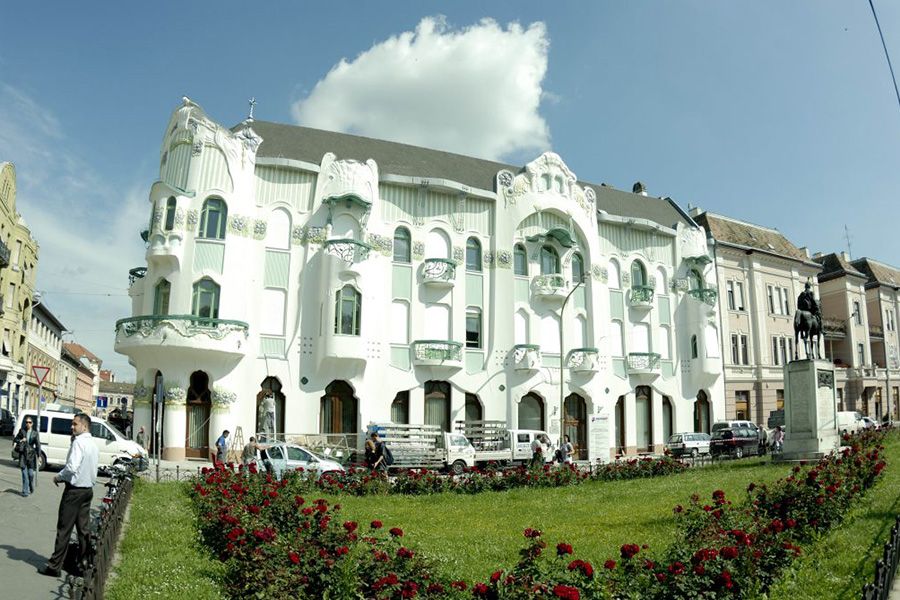
Paris Passage brings the route toward a more commercial and social side of the period. Passages and arcades were important urban spaces, linking shops, offices, and pedestrian routes under one decorative roof.
The stop helps you see how Art Nouveau worked at street level. A grand facade can be admired from across the road, but a passage surrounds you with architecture as you move through it. Look for the relationship between the structure and its details, including entrances, surfaces, lighting, and decorative rhythm.
This is also a useful place to think about Budapest’s Belle Époque energy. The city was developing quickly, and its new buildings expressed confidence. Art Nouveau was not merely a pretty style. It was a way to announce that Budapest belonged among Europe’s modern capitals.
Kazinczy Street Synagogue and a striking final stop
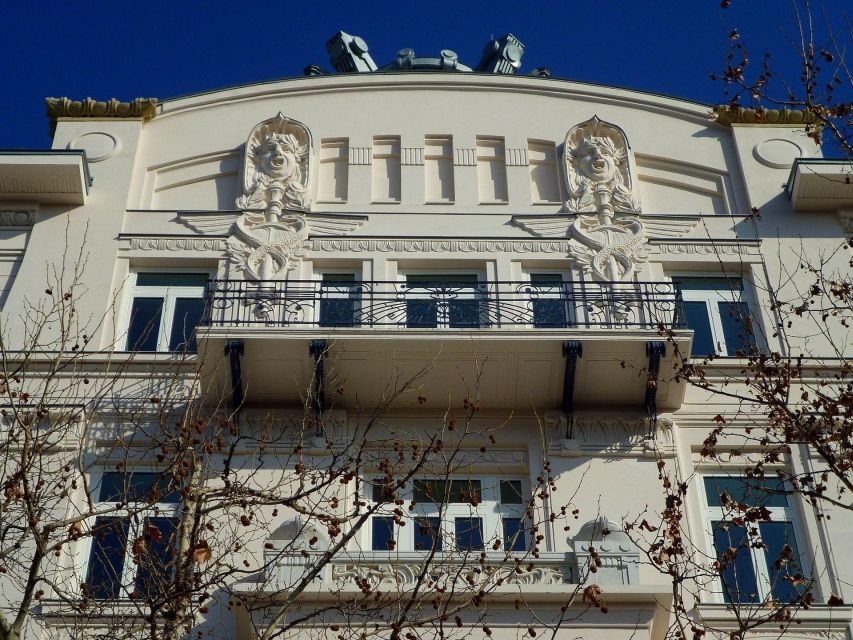
The tour can finish at the Orthodox Synagogue on Kazinczy Street, an especially compelling ending because it combines religious architecture with Art Nouveau decoration. Its interior is described as exquisite, and the visit adds a different cultural setting to the route.
Here, you can see how the style adapted to a synagogue rather than a palace, bank, or shop. That matters. A design movement becomes more interesting when you see it used for different purposes and communities.
The synagogue is closed on Saturdays. If it cannot be visited, the guide can adapt the tour or extend it with another Art Nouveau site. Possible alternatives include the Gellért Bath Hotel, the Museum of Applied Arts, and the Geology Museum.
Entry to the synagogue costs 2,000 HUF per person, about $7, when open and included in the adjusted plan. The House of Hungarian Art Nouveau costs 1,000 HUF, about $3.50, if it is added. These fees are modest, but you should include them in your budget.
What the $123 price includes
At $123 per person, this is not a bargain-priced orientation walk. You are paying for three hours with a specialist guide, plus the chance to see interiors and discuss design in detail.
The price makes more sense if you care about architecture, decorative arts, or Budapest’s cultural history. A general city tour may show you the same central streets, but it is unlikely to explain the difference between Hungarian Secession, wider European Art Nouveau, and the use of Zsolnay ceramics with such focus.
The value also depends on group size. A private or small-group format gives the guide more room to answer questions and adapt the route. If you already know a lot about Art Nouveau, that personal attention may be the main reason to book. If you only want a few attractive buildings for photographs, the cost may feel high.
Admission fees for the House of Hungarian Art Nouveau and Kazinczy Street Synagogue are additional when those sites are used. Tram and metro tickets are also extra. The tour does include the three-hour walk and historian guide.
Who will enjoy this walk most
I would recommend this tour to you if you enjoy buildings as cultural evidence, not just as backdrops. It suits architecture students, design fans, photographers, and anyone who has already seen Budapest’s main sights and wants a more focused theme.
It is also a good choice if you prefer explanation over speed. The guide will give you a way to read facades, interiors, materials, and symbols. That makes the rest of your time in Budapest more rewarding because you can recognize the style on your own.
You may want to skip it if you dislike walking, have little interest in architecture, or want guaranteed access to every listed interior. The route depends on opening days, and some stops may be changed. Saturday is the most important day to avoid if the Orthodox Synagogue is a priority.
Free cancellation is available up to 24 hours before the start time, and you can reserve without paying immediately. Those policies are useful if your Budapest schedule is still moving around.
Should you book the Budapest Art Nouveau Walking Tour?
Book it if you want to understand why Budapest looks different from other Central European capitals. The Postal Bank, Gresham Palace, Thonet House, Zsolnay ceramics, and Kazinczy Street Synagogue create a strong three-hour introduction to the city’s Hungarian Secession style.
The best reason to choose it is the guide. Anna received especially warm praise for her friendliness and knowledge of Budapest’s art and history, and the tour is built around that kind of expert explanation. Just check the day of the week, allow for extra entry fees and transport, and accept that the exact interior stops may change.
For architecture lovers, the $123 price can be worthwhile. For casual sightseers, it is a more specialized purchase. I would choose it early in a Budapest visit, since the details you learn here will sharpen your eye for the rest of the city.
FAQ
How long is the Budapest Art Nouveau Walking Tour?
The tour lasts three hours.
What language is the tour offered in?
The live tour guide speaks English.
Is the tour private or part of a large group?
Private and small-group options are available.
Where does the tour start?
The starting or pickup location depends on the selected option. If you choose a central meeting point instead of hotel or holiday-flat pickup, the group meets at Madal Café, Budapest, Alkotmány u. 4.
Are public transport tickets included?
No. Tram and metro tickets are not included in the tour price.
Can I visit the Orthodox Synagogue on every tour?
No. The Orthodox Synagogue on Kazinczy Street is closed on Saturdays. If it is unavailable, the route can be adapted or extended with other Budapest Art Nouveau sites.
Just added around Budapest
- Budapest: Danube River Views Bike Ride★ 4.8 · 23 reviews
- Budapest: City Bike Tour with Coffee Stop★ 5.0 · 37 reviews
- Budapest: Private Walking Tour with a Local Guide★ 3.6 · 6 reviews
- Budapest: Vacation Photographer to collect great memories★ 5.0 · 49 reviews
- Walk to recent and aged spiritual sanctuaries near Budapest★ 5.0 · 5 reviews
- From Budapest: Guided Tour of Eger with Wine Tasting★ 4.5 · 6 reviews
- Audio visual multi-sensory chefs journey dinner experience★ 5.0 · 3 reviews
- Budapest: 3-Hour Trabant Sightseeing Tour★ 4.7 · 28 reviews
Budapest Street Art Tours, compared.
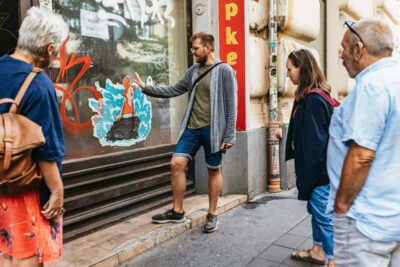
Street Art and Underground Movements Walking Tour
Read our review →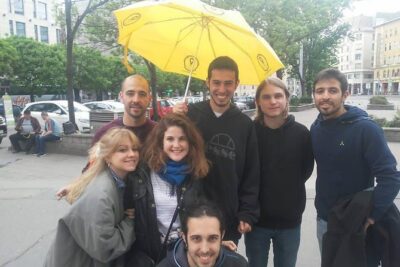
Alternative Street Art Free Walking Tour of Budapest
Read our review →

Art Nouveau Tour in Budapest: 3-Hour Private Tour
Read our review →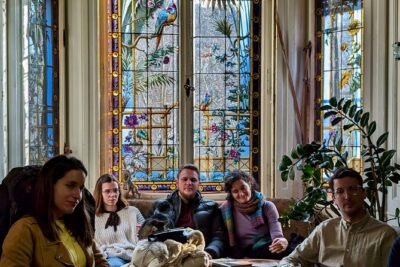
Art Nouveau Treasures of Budapest – Exclusive Private Tour
Read our review →
Browse the lists this tour appears in