
Reviewed · BUDAPEST STREET ART TOURS
Budapest Art Nouveau Walking Tour
Budapest’s Art Nouveau is at its best when you look up. This three-hour walk links ornate facades, ceramic roofs, floral details, and synagogue interiors while explaining how Hungary gave the style its own identity. The highlight is seeing the work of Ödön Lechner, often called the Gaudi of Hungary, in buildings such as the Royal Postal Savings Bank.
I like the historian-led explanation and the way the tour connects architecture with Hungarian design. I also like the small group, which is listed as a maximum of eight people, with the tour summary describing groups of up to six. The main drawback is the price, $126.16 per person, especially since public transport, food, drinks, and possible synagogue admission cost extra.
Key points at a glance
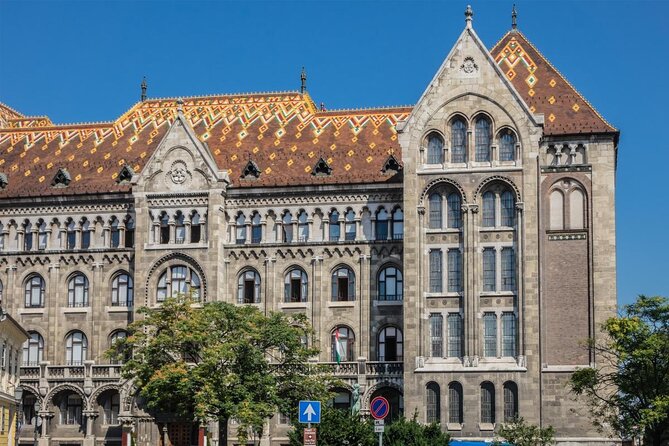
- Ödön Lechner’s Royal Postal Savings Bank: Study the building’s flamboyant facade and the design of its entrance hall.
- Four distinct Art Nouveau stops: The route includes Gresham Palace, the Postal Savings Bank, Thonet House, and Kazinczy Street Synagogue.
- A useful introduction to Hungarian style: You learn about floral forms, ceramics, facade tiles, and the movement’s place in Budapest.
- Small-group format: The tour is offered in English, with morning and afternoon departure choices.
- Some public transport is involved: Bring a valid transport pass or budget for tickets separately.
- A Saturday limitation: The Orthodox synagogue interior is not visited on Saturdays.
Why Budapest Art Nouveau deserves a walking tour
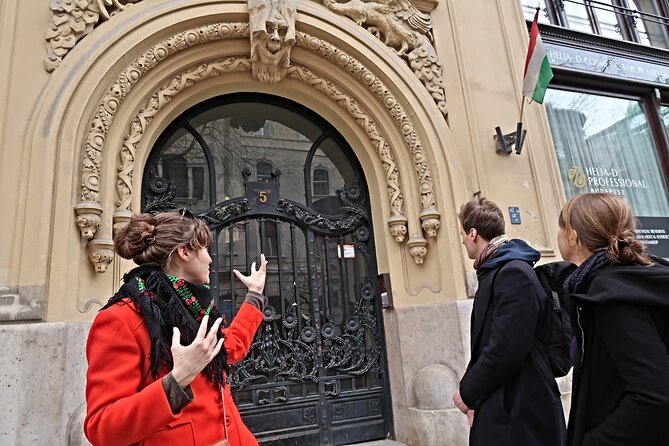
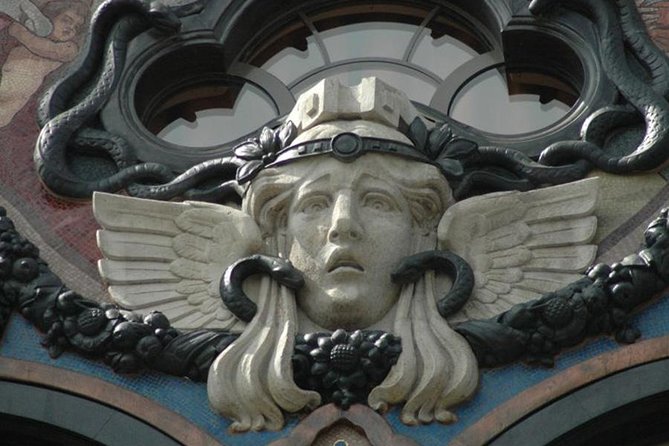
Budapest is often praised for its grand avenues, thermal baths, and nineteenth-century cafes. Yet some of its most distinctive architecture is easy to miss if you only follow the main sightseeing route. Art Nouveau appears in curved lines, plant forms, colorful ceramics, unusual windows, and decorative details that reward a slower look.
This tour gives you a clear way to read those details. Instead of simply photographing pretty buildings, you learn how the movement developed and why Hungarian architects treated it differently from their counterparts elsewhere in Europe.
The Hungarian version of Art Nouveau is especially tied to local materials and folk-inspired forms. Ceramic tiles became an important part of the look, helped by the Zsolnay factory in Pécs. That connection gives the walk more substance than a simple parade of facades. You see how manufacturing, architecture, and national style came together.
I would choose this experience if you already have the basic Budapest sights covered and want to understand the city’s design. It is also a good choice if you enjoy architecture but do not want a highly technical lecture. The route uses real buildings as its classroom, which keeps the subject practical.
More street art walks in Budapest:
- Budapest: Street Art and Underground Movements Walking Tour
★ 5.0 · 238 reviews - Alternative Street Art Free Walking Tour of Budapest
★ 4.5 · 53 reviews - Street Art and Alternative Tour in Budapest
★ 5.0 · 52 reviews
Starting near Alkotmány Street
The tour begins at Madal Cafe Budapest on Alkotmány Street. The meeting point is near public transport, but one review noted that the cafe area was busy and the guide and participant nearly missed each other. I would arrive early, stand where you can be seen, and keep the guide’s contact details handy if they are provided with your booking confirmation.
The opening location places you close to some of central Budapest’s grand government and commercial buildings. From there, the walk moves through the city rather than remaining in one compact architectural district. That makes public transport part of the experience.
The tour is offered in English and has morning or afternoon departure choices. A three-hour duration is long enough to cover several major examples without turning into an all-day commitment. Still, expect a moderate amount of walking. Comfortable shoes matter, and you should allow extra time around the scheduled start in case public transport or city traffic slows the group.
The group-size information deserves attention. The tour is described as a small-group experience limited to six in one part of the details, while the additional information gives a maximum of eight. Either way, this is much more personal than a large coach excursion. Ask the provider to confirm the exact group limit if that point matters to you.
Gresham Palace and the grand opening act
The first stop is Gresham Palace, where you spend about 20 minutes looking at the facade and interior design. The building once contained offices and luxury apartments. Today, it is Budapest’s most luxurious hotel.
That change in use gives the stop an interesting angle. You are not just seeing an attractive historic building. You are looking at a place designed to express wealth, status, and modern city life in the early twentieth century, then later adapted for a very different purpose.
The exterior is the main draw, but the chance to discuss interior details helps you understand how Art Nouveau worked as a complete design language. The style was not limited to a few decorative lines on a facade. Architects and designers thought about entrances, rooms, fittings, and visual flow as parts of one whole.
Admission is listed as free, though access inside a working luxury hotel can depend on current conditions. The tour includes the stop, but you should follow the guide’s instructions rather than assume every hotel area is open for independent wandering.
This is a strong first stop because it gives you a grand example before the walk turns to more unusual Hungarian details. If you enjoy polished architecture and dramatic interiors, Gresham Palace may be one of your favorite parts of the morning or afternoon.
The Royal Postal Savings Bank and Ödön Lechner
The Royal Postal Savings Bank is the tour’s most important architectural stop. It was designed by Ödön Lechner, Hungary’s best-known Art Nouveau architect. The tour also presents him as the Gaudi of Hungary, a useful shorthand for his unusual forms and strong personal style.
You spend about 20 minutes examining the building and discussing the entrance hall. The exterior is flamboyant, making it an easy place to see how Lechner moved away from plain historical imitation. Its decorative shapes and colorful surfaces give the building a lively character, but the guide’s explanation is what helps you understand why those choices matter.
Lechner looked for a Hungarian architectural language rather than simply copying French, Belgian, or Austrian Art Nouveau. The result combines modern design ideas with local decorative references. You do not need an architecture degree to follow the discussion. The point is to notice how shapes, materials, and national identity meet in one building.
The entrance hall is particularly useful because it brings the subject down to human scale. Facades can be overwhelming when seen from the pavement. Interior details show how the same ideas worked around doors, walls, and public spaces.
If you have only a passing interest in architecture, this is probably where the tour earns much of its value. You get a name, a major building, and a framework for spotting related details later in the walk.
More walking tours in Budapest:
- Budapest: Buda Castle Walk with Saint Stephen’s Hall
★ 4.5 · 3,012 reviews - Big Bus Budapest Hop-On Hop-Off Bus and Walking Tour
★ 3.5 · 2,206 reviews - Budapest: Buda Castle District Walking Tour
★ 4.6 · 2,108 reviews - Budapest City Landmarks Walking Tour in 2 Hours
★ 5.0 · 2,048 reviews
Thonet House and the importance of ceramic tiles
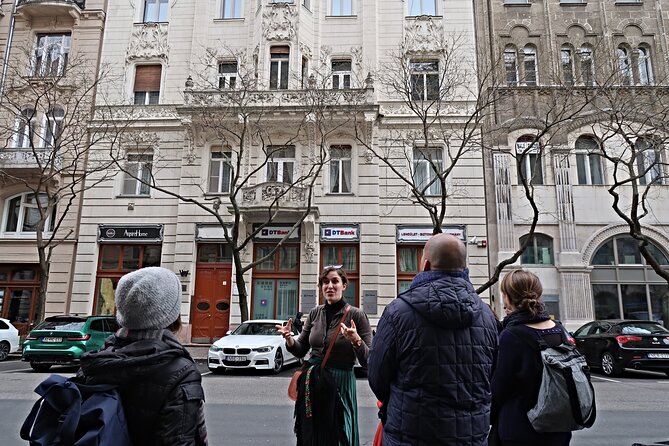
At Thonet House, the focus shifts to facade tiles. You spend around 20 minutes considering the material that helped make Hungarian Art Nouveau so recognizable.
The tiles are linked to the Zsolnay porcelain and ceramics factory in Pécs, a city in southern Hungary. This is a useful part of the tour because it shows that architecture depends on more than the architect’s sketch. New materials and manufacturing methods can change what a building looks like and what designers are able to attempt.
Ceramic tiles also work well in Budapest’s changing light. They add color and texture to surfaces that might otherwise appear flat. The guide can point out how these materials contribute to the building’s identity, rather than treating them as decoration added at the end.
Thonet House is valuable as a comparison stop. Gresham Palace gives you grandeur, and the Postal Savings Bank introduces Lechner’s bold approach. Thonet House lets you focus on the surface itself: how a facade is assembled, how tiles affect the eye, and why Hungarian Art Nouveau became known for this treatment.
You will likely spend much of this stop outside, so weather matters. There is no indication that food or drinks are included, and the tour does not supply them. Carry water, especially for an afternoon departure or a warm day.
Kazinczy Street Synagogue and a different Art Nouveau setting
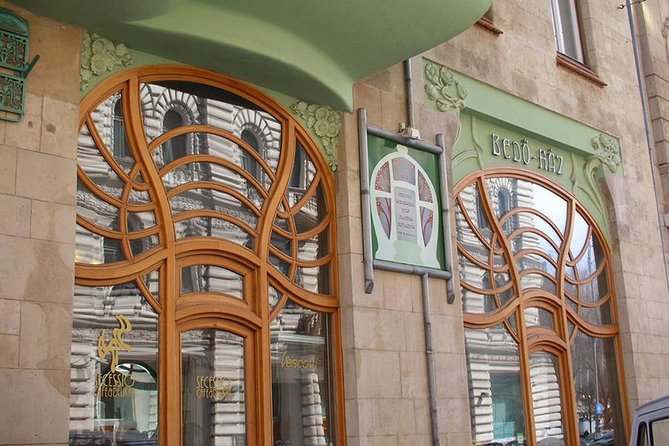
The final stop is the Orthodox Kazinczy Street Synagogue at Kazinczy Street 29 to 31. It is decorated in Art Nouveau style and offers a very different setting from a palace, bank, or apartment building.
The tour ends here after about 25 minutes. Except on Saturdays, the group visits the synagogue’s interior, though an additional admission cost may apply if the site is open on the day of the tour. Saturday participants should expect to see the building from outside rather than count on an interior visit.
This stop broadens the story of Budapest’s Art Nouveau. The style was not reserved for wealthy commercial buildings. It could also shape religious spaces, where decoration, light, pattern, and symbolism had a different purpose.
The synagogue is also a practical endpoint. The walk does not return you to the starting cafe, so plan your next move from the Jewish Quarter. The end point puts you near more of central Budapest’s sights, but your onward plans are your own responsibility.
The possible admission charge is worth checking before you book. The tour price does not include it, and the wording allows for the site being closed or unavailable on a particular day. If the synagogue interior is essential to you, confirm the expected access in advance.
What the guide adds to the buildings
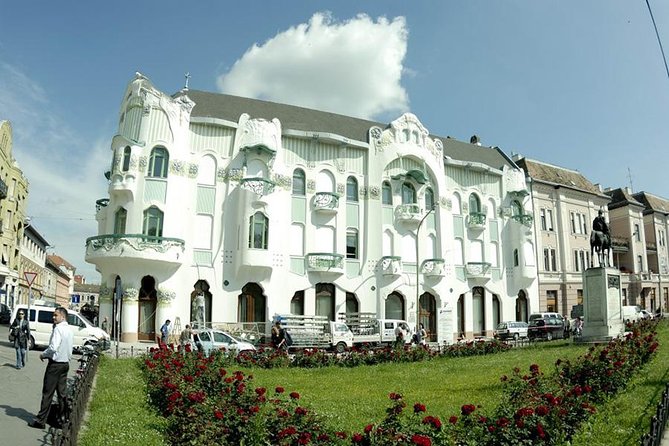
The guide is described as a historian, and that matters here. Art Nouveau can be reduced to a list of curves, flowers, and bright tiles. A strong guide gives those forms a reason and places them in Budapest’s wider architectural story.
The tour covers the history of the movement, its design elements, and its role in shaping the city. It also leaves room for questions. One review praised the guide’s willingness to take the group toward places of particular interest, suggesting some flexibility within the planned route.
That flexibility is a plus for anyone who wants more than a fixed speech. You might be able to ask about a facade, a particular architect, or another nearby building that catches your eye. The exact amount of flexibility will depend on the group and the schedule, so do not expect the whole route to change.
The guide’s role is also important because several stops involve buildings that are not museum exhibits. Gresham Palace is a hotel, the Postal Savings Bank is an active building, and the synagogue may have access limits. A local historian can help you see what is appropriate to view and explain details that are easy to miss from the street.
Price, group size, and overall value
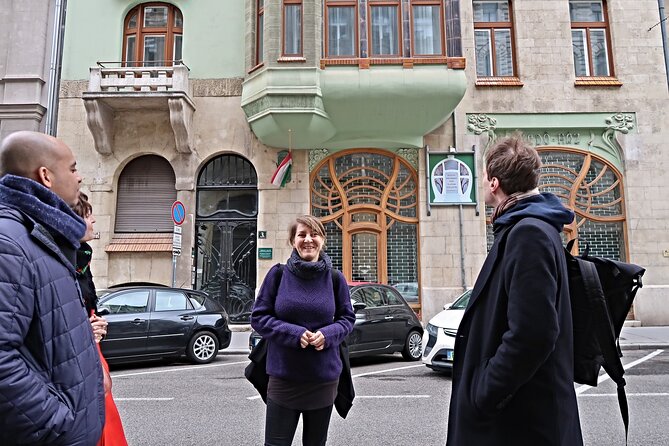
At $126.16 per person, this is an expensive three-hour walking tour. You are paying for a specialist guide, a small group, and a focused subject rather than for entrance tickets or included transport.
The value makes the most sense if you care about architecture and want context. A standard city walk may point out attractive buildings, but this experience follows one movement and explains how Hungarian Art Nouveau developed. That focus can save you from spending hours searching for the right buildings on your own.
The price is harder to justify if you mainly want general sightseeing. The tour includes no food or drinks, public transportation passes are not included, and synagogue admission may cost extra. You also finish at a different location from where you began.
Group size improves the value. A maximum of six or eight people means you should have a better chance to hear the guide, ask questions, and examine details without being pushed to the back of a crowd. The exact limit should be confirmed because the supplied details give both figures.
Free cancellation is available if you cancel at least 24 hours before the local start time. Changes or cancellations made later do not qualify for a refund, so keep that deadline in mind when arranging your Budapest schedule.
Who should book this walk?
I would recommend it most strongly to:
- People who enjoy architecture, design, and city history
- Repeat visitors who have already seen Budapest’s main landmarks
- First-time visitors who prefer a focused walk to a broad overview
- Couples or small groups willing to pay more for personal attention
- Anyone curious about Ödön Lechner and Zsolnay ceramics
It is less suitable if you want a fully indoor activity, dislike moderate walking, or need every expense included in one price. The synagogue visit is not guaranteed on Saturdays, and public transport costs are separate.
Most participants can take part, according to the supplied information. Still, you should be comfortable walking between stops and using some public transport. Ask the provider directly if you have a specific mobility concern, since the available details do not describe step-free access or the exact transport arrangements.
Practical advice for a better experience
Wear comfortable shoes and bring water. The route lasts about three hours, with roughly 20 to 25 minutes at each named stop, plus walking and transport between them.
Arrive early at Madal Cafe. The meeting point can be busy, and a few extra minutes could prevent a rushed start. Morning and afternoon departures let you fit the walk around other Budapest plans, but choose the time that gives you the best light and weather for outdoor viewing.
Bring money or a valid pass for public transport. The tour uses some public transportation, but transport passes are not included. Also budget for possible admission to Kazinczy Street Synagogue.
If you are visiting on Saturday, treat the synagogue as an exterior stop. On other days, an interior visit is generally part of the plan except when the site is unavailable. Because access can vary, check the status before setting your expectations.
The tour has a 4.9 rating from 17 reviews, with 100 percent recommending it. The strongest praise centers on the guide’s command of history and architecture, the beauty of the buildings, and the quality of the stories attached to them. Those are the parts to value when deciding if the cost is right for you.
Should you book the Budapest Art Nouveau Walking Tour?
Book it if you want Budapest to make more sense through its buildings. The Royal Postal Savings Bank, Thonet House, Gresham Palace, and Kazinczy Street Synagogue give you four different ways to see the city’s Art Nouveau character, while the historian guide supplies the connections.
Skip it if you want a cheap overview, a no-walking outing, or a tour with transport and admission included. For architecture fans, design-minded visitors, and anyone eager to understand Ödön Lechner’s place in Budapest, the focused subject and small group make this a strong choice despite the high price.
FAQ
How long does the Budapest Art Nouveau Walking Tour last?
The tour lasts approximately three hours.
What language is the tour offered in?
The tour is offered in English.
Where does the tour begin?
The meeting point is Madal Cafe Budapest, Alkotmány u. 4, 1054 Budapest, Hungary.
Where does the tour end?
The tour ends at the Budapest Orthodox Synagogue at Kazinczy u. 29 to 31, 1075 Budapest.
What buildings are visited?
The route includes Gresham Palace, the Royal Postal Savings Bank, Thonet House, and the Orthodox Kazinczy Street Synagogue.
Is admission to the attractions included?
Admission is listed as free for Gresham Palace, the Royal Postal Savings Bank, and Thonet House. Possible admission to the Orthodox Synagogue on Kazinczy Street is not included.
Are public transportation costs included?
No. The tour uses some public transportation, but transport passes are at your own expense.
Does the tour visit the synagogue interior on Saturdays?
No. The synagogue interior is visited except on Saturdays, subject to the site being open on the day of the tour.
Can I cancel for a full refund?
Yes. You can cancel at least 24 hours before the local start time for a full refund. Cancellations or changes made less than 24 hours before the start are not accepted for a refund.
Just added around Budapest
- Budapest: Private Walking Tour with a Local Guide★ 3.6 · 6 reviews
- Budapest: Danube River Views Bike Ride★ 4.8 · 23 reviews
- Budapest: City Bike Tour with Coffee Stop★ 5.0 · 37 reviews
- Budapest: Vacation Photographer to collect great memories★ 5.0 · 49 reviews
- Walk to recent and aged spiritual sanctuaries near Budapest★ 5.0 · 5 reviews
- From Budapest: Guided Tour of Eger with Wine Tasting★ 4.5 · 6 reviews
- Audio visual multi-sensory chefs journey dinner experience★ 5.0 · 3 reviews
- Budapest: 3-Hour Trabant Sightseeing Tour★ 4.7 · 28 reviews
Budapest Street Art Tours, compared.
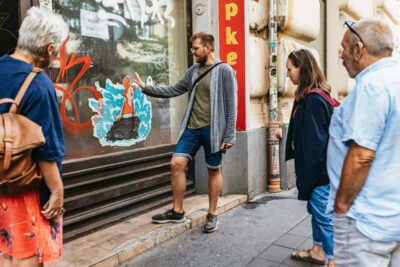
Street Art and Underground Movements Walking Tour
Read our review →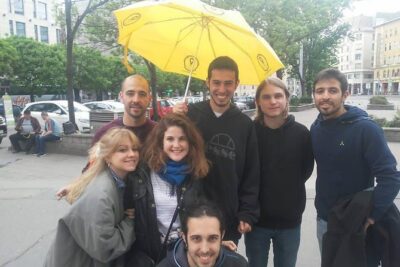
Alternative Street Art Free Walking Tour of Budapest
Read our review →

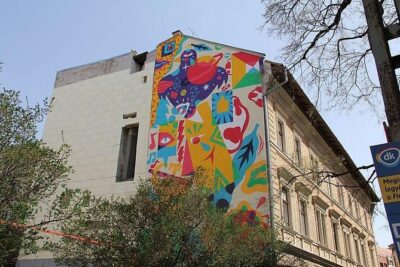
Art Nouveau Tour in Budapest: 3-Hour Private Tour
Read our review →
Art Nouveau Treasures of Budapest – Exclusive Private Tour
Read our review →
Budapest Vibe: Ruin Bars, Street Art and Culture Tour
Read our review →Browse the lists this tour appears in