
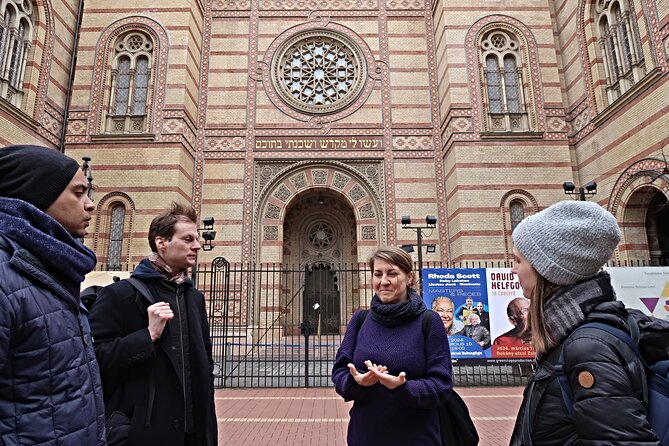
Reviewed · BUDAPEST JEWISH QUARTER TOURS
A Journey through Jewish Budapest – Walking Tour
Budapest’s Jewish quarter is not just a cluster of grand synagogues. It is a place where different Jewish traditions lived side by side, where modern Zionism found an early voice, and where the city’s wartime story still demands quiet attention. This three-hour walking tour connects those threads with a historian at your side.
I like two things right away. First, the route covers more than the famous Dohány Synagogue, adding the Kazinczy and Rumbach synagogues, a ghetto wall memorial, and the Shoes on the Danube. Second, the guides bring serious academic backgrounds, with professors, doctoral students, historians, journalists, art critics, and published authors leading the walks. The main consideration is cost: the tour is $123 per person, and the Dohány Synagogue admission fee of 14,500 Hungarian forints is extra.
Key points to know before booking
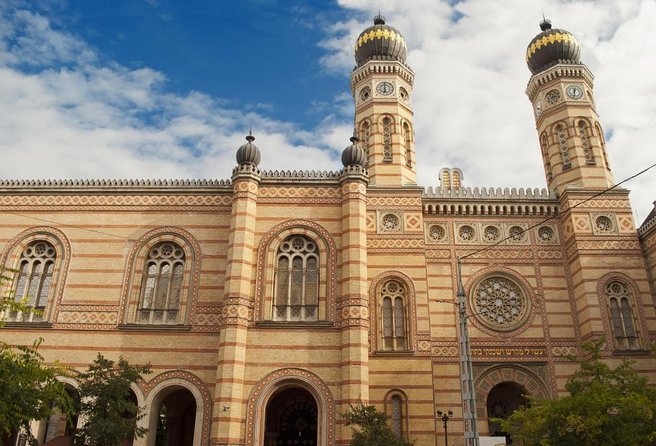
- Dohány Synagogue anchors the route: You explore its Moorish Revival design, Temple of Heroes, Jewish Museum, and Memorial Park with specialist guidance.
- The tour explains several Jewish traditions: Kazinczy represents Orthodox life, while Rumbach helps explain the Status Quo Ante movement.
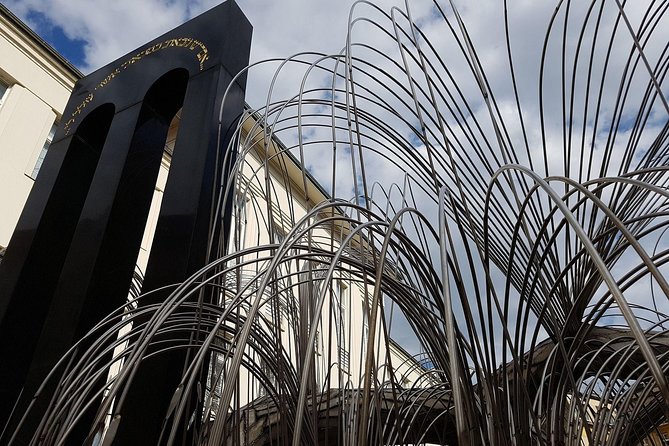
- The Ghetto Wall Memorial adds a physical reminder: The 2014 memorial helps connect the elegant streets with the confined wartime district.
- The final stop is deliberately reflective: At the Shoes on the Danube Bank, you pause to remember those murdered there.
- Guiding is the main strength: Orsolya and Endres are among the guides praised for thoughtful, detailed instruction.
- Plan for a modest dress code: Dohány Synagogue asks visitors to cover their shoulders and knees.
Starting near Dohány Street and Theodor Herzl’s birthplace
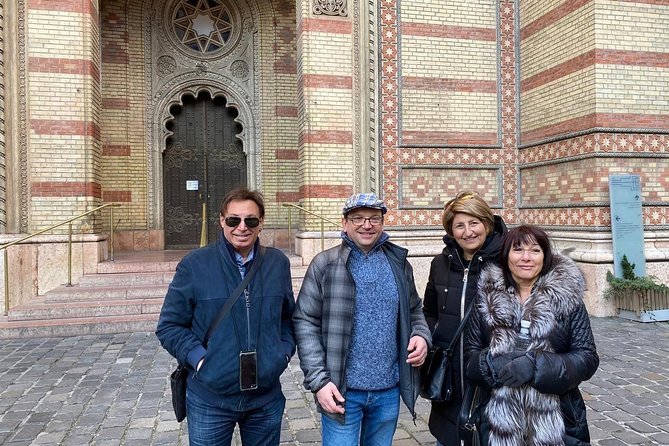
The meeting point is Kamara Café at Dohány utca 1/A, close to the synagogue complex. Depending on the option you choose, the walk may begin at another nearby point, so check the exact starting details when booking.
The first historical marker is the square where Theodor Herzl, the father of modern Zionism, was born. That is a smart place to begin. It gives you a human entry into the story before the tour moves toward architecture and wartime events.
I like this opening because it frames Budapest as a center of Jewish political, religious, and cultural life long before WWII. The tour focuses especially on the period before the war, when roughly a quarter of Budapest’s population was Jewish. That figure helps you picture a city in which Jewish life was not a small side note, but part of the city’s public character.
Your guide also introduces the idea that there was no single Jewish experience in Budapest. Religious practice, communal life, and political outlook varied. That theme becomes clearer as you visit synagogues linked to different streams of Judaism.
More Jewish Quarter tours in Budapest:
- Budapest Jewish Heritage Memorial Walking Tour & Synagogue Entry
★ 5.0 · 568 reviews - Budapest: Jewish Heritage Guided Tour with Synagogue Ticket
★ 4.8 · 533 reviews - Jewish Quarter of Budapest Walking Tour
★ 4.7 · 369 reviews
Inside the Dohány Street Synagogue complex
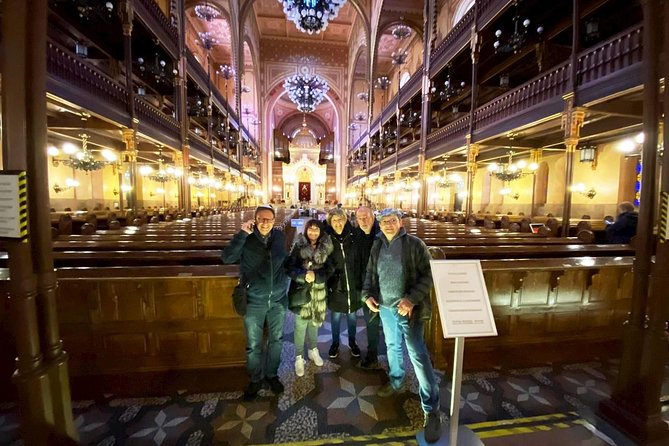
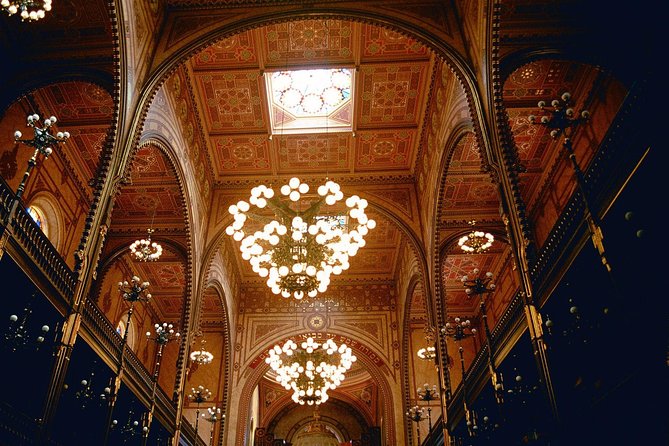
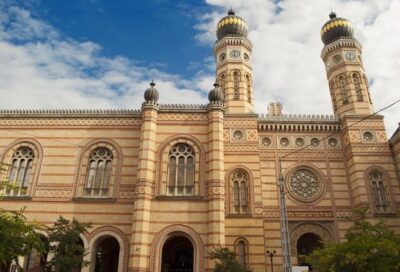
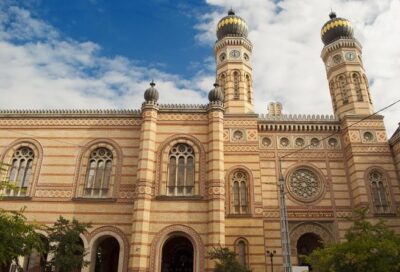
Dohány Street Synagogue is the grand centerpiece. It is described as the largest Jewish house of worship in Europe, and its scale and Moorish Revival decoration make it one of Budapest’s most striking religious buildings.
The ticket is not included in the tour price. Admission costs 14,500 Hungarian forints per person, so add that amount to the advertised $123 when working out your real budget. For many people, the extra fee will feel worthwhile because the synagogue complex includes several separate points of interest rather than just the main prayer space.
A Jewish Studies scholar assists with the visit, giving the building more context than you would get from simply walking through on your own. You can expect attention to the synagogue’s design, its role in Budapest’s Jewish community, and the way the complex carries both religious and historical meaning.
The Temple of Heroes is part of the visit. It honors Jewish soldiers who served in World War I and helps broaden the story beyond persecution alone. The Jewish Museum adds another layer, while the Memorial Park brings the wartime period into sharper focus.
Allow yourself time to take in the details. The lavish interior can easily draw your eye away from the guide, but the value of this stop lies in listening as well as looking. The architecture tells you about the confidence and public presence of Budapest’s Jewish community. The museum and memorial areas show how that life was later damaged and nearly destroyed.
One practical point matters here: visitors are asked to cover their shoulders and knees. Dress with that requirement in mind, especially during warm weather. You do not want a clothing issue to interrupt the most substantial indoor portion of the walk.
The 2014 Ghetto Wall Memorial
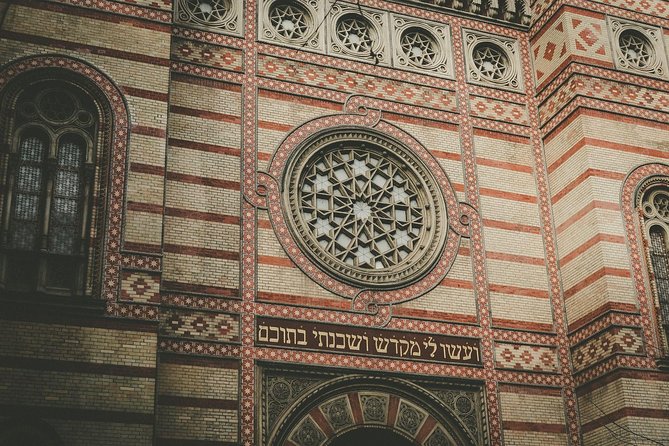
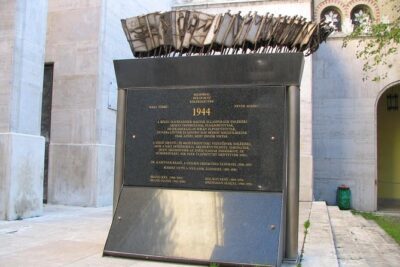
From the synagogue complex, the route continues to the neighboring Ghetto Wall Memorial. Erected in 2014, it marks the former ghetto area with a physical reminder of the boundaries that once confined Jewish residents.
This stop works because it changes the scale of the story. Inside Dohány, you encounter a major institution and a large communal world. At the wall, the experience becomes more immediate and spatial. Your guide can help you understand how the surrounding streets related to the wartime ghetto and why the remains of a wall matter in a neighborhood that has changed so much.
The memorial is not presented as a stand-alone attraction. It fits into the walk’s larger purpose: to show how everyday Jewish life, religious divisions, urban geography, and wartime violence all connect. I find that approach more useful than treating each memorial as an isolated photo stop.
Kazinczy Street and the Orthodox tradition
The walk then passes a luxurious mikve, or Jewish ritual bath, and continues to the exterior of the Art Nouveau Orthodox synagogue on Kazinczy Street. The itinerary describes the mikve as luxurious, which gives you a sense of the care and resources once invested in communal religious life.
The Kazinczy stop is especially useful if you are new to the differences among Jewish traditions. The guide explains the Orthodox community and places it alongside the other forms of Jewish practice found in Budapest. You see how the city’s Jewish population included distinct groups with their own institutions and customs.
Only the exterior of the Kazinczy synagogue is specified, so do not assume you will receive an interior visit there. Even from the street, the Art Nouveau facade adds a welcome change from Dohány’s grander Moorish Revival style. I like the contrast because it makes the city’s religious diversity visible through architecture.
The walking pace also matters. This is a history tour on foot, not a coach excursion with long rides between sights. The route links nearby sites through streets where the past and present occupy the same blocks. Wear comfortable shoes and be ready to stay with the group while listening outdoors.
More walking tours in Budapest:
- Budapest: Buda Castle Walk with Saint Stephen’s Hall
★ 4.5 · 3,012 reviews - Big Bus Budapest Hop-On Hop-Off Bus and Walking Tour
★ 3.5 · 2,206 reviews - Budapest: Buda Castle District Walking Tour
★ 4.6 · 2,108 reviews - Budapest City Landmarks Walking Tour in 2 Hours
★ 5.0 · 2,048 reviews
Rumbach Street and the Status Quo Ante movement
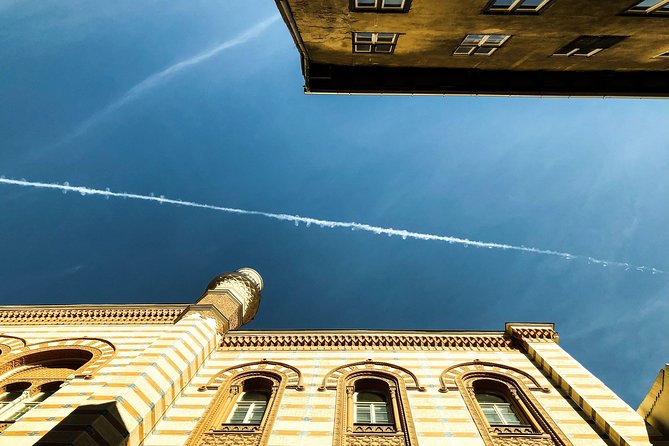
Rumbach Street Synagogue brings another Jewish tradition into view. The guide explains the Status Quo Ante stream of Judaism while you observe the impressive facade.
This is one of the tour’s strongest educational features. Many visitors know Dohány, but fewer arrive with a clear sense of how Budapest’s Jewish communities differed. By including Dohány, Kazinczy, and Rumbach, the walk gives you a more accurate picture than a single-synagogue visit can provide.
The wording of the itinerary identifies the Rumbach stop as an exterior visit, so the main focus here is the facade and the historical explanation. That is worth knowing if you are hoping to enter every synagogue on the route. The additional Dohány admission is the only ticket specifically listed, and the other synagogue visits should not be assumed to include interior access.
I would pay close attention to the guide at this point. The architectural details are appealing, but the reason this stop matters is the explanation of community structure. It helps you understand Budapest’s Jewish past as a set of different institutions and loyalties, not one uniform block.
Walking to the Shoes on the Danube Bank
The route ends at the Shoes on the Danube Bank memorial. The small metal shoes along the river remember Jewish people who were killed there during the Holocaust.
This is a quiet ending, and it should be. The tour does not finish with another grand building or a busy shopping street. Instead, you have time to reflect on the lives lost and on the scale of the human damage behind the historical dates.
The memorial also gives the tour a wider geographic reach. Most of the walk concerns the Jewish quarter and its institutions, while the Danube brings you to a place of direct murder. The change in setting helps connect community life with the violence that ended so much of it.
You may find this final stop emotionally difficult. That is part of its purpose, but it is also a reason to choose this tour only if you want serious historical content rather than a light neighborhood stroll. The guide’s role is important here. A thoughtful guide can provide context without turning the memorial into a rushed lecture or a photo opportunity.
The tour also considers the renewal of Budapest’s Jewish community today. The route does not leave the story frozen in the past, though the focus remains firmly historical.
What the guides add to the experience
The advertised guide pool includes professors, doctoral students, historians, journalists, art critics, and published authors. That range suggests a tour built around interpretation rather than a memorized list of dates.
Specific guides praised by name include Orsolya and Endres. Orsolya is described as thoughtful and thorough, and she checked with a private group before moving on to the next part of the visit. That kind of pacing is useful when a topic calls for time and quiet discussion.
Endres led a highly detailed visit to the Great Synagogue and the surrounding area. He also helped a group honor Holocaust victims by cleaning several Stolpersteine, or stumbling stones, and supplied the needed materials. This activity is not listed as a standard part of the tour, so you should not expect it automatically. Still, it shows the sort of personal historical engagement a guide may bring when a group has a specific request.
One couple had the guide to themselves and found the experience welcoming and well organized. Small groups can make a real difference on a walk like this. You can ask about religious differences, Budapest’s wartime history, or a particular building without trying to speak over a large crowd.
The exact guide is not guaranteed, and private or small-group formats are available. If personal discussion matters to you, select the option that best suits your group and confirm the arrangements.
Is $123 a fair price?
At $123 per person for three hours, this is not a budget walk. You also need to add the 14,500 Hungarian forint Dohány Synagogue ticket. That makes the total notably higher than a basic city orientation tour.
The value comes from the guide and the structure. You are not simply paying to walk past five addresses. You receive a historian-led explanation of Budapest’s Jewish communities, a specialist-supported visit to the Dohány complex, and a route that links religious life with the ghetto and Holocaust memorials.
I would consider the price reasonable for visitors who want serious instruction and a private or small-group setting. It is less suitable if you only want to see synagogue exteriors or collect quick photographs. A self-guided visit will cost less, but it will not provide the same ready explanation of the Status Quo Ante, Orthodox, and other Jewish experiences in Budapest.
The high rating of 4.9 from 26 reviews supports the idea that the guide quality is consistent enough to be a major reason to book. Still, a high score does not remove the need to match the tour to your interests. The subject is demanding, and the price is easier to justify if you plan to listen closely and ask questions.
Timing, clothing, and who should book
The tour lasts three hours and is conducted in English. Check available starting times before booking, especially if you want to fit it around other Budapest sights.
Wear comfortable shoes. The route includes several stops across the Jewish quarter and ends at the Danube, so you will be on foot for the full experience. At Dohány Synagogue, cover your shoulders and knees.
I would recommend this tour to:
- First-time visitors who want context for Budapest’s Jewish quarter
- History-minded visitors interested in Jewish life before WWII
- People who prefer small groups and direct conversation
- Visitors who want to understand the differences among Budapest’s Jewish communities
- Anyone seeking a serious memorial experience at the Shoes on the Danube
I would choose something else if you want a short, casual architecture walk, dislike emotionally difficult subjects, or do not want to pay a separate synagogue admission fee.
Free cancellation is available up to 24 hours before the tour, and you can reserve now and pay later. Those options are useful if your Budapest schedule is still shifting, but the main booking decision should be about content, not flexibility.
Should you book A Journey through Jewish Budapest?
Book it if you want the Jewish quarter explained by a historian rather than viewed as a collection of pretty facades. The strongest parts are the specialist guidance at Dohány, the comparison of different Jewish traditions, and the thoughtful finish at the Shoes on the Danube.
The price is high once you add admission, and the walk covers painful history. For the right visitor, though, the combination of architecture, religious context, memorials, and personal discussion gives you a far better understanding of Budapest than a quick synagogue visit can provide. Choose a small-group or private option if you value questions and conversation, and arrive dressed for synagogue entry.
FAQ
How long does the walking tour last?
The tour lasts three hours.
What language is the tour conducted in?
The live tour guide speaks English.
Is the Dohány Synagogue admission included?
No. Admission to the Dohány Synagogue costs 14,500 Hungarian forints per person and is not included in the tour price.
Where does the tour meet?
The listed meeting point is Kamara Café at Dohány utca 1/A. The exact starting location can depend on the option selected.
Which major sites are included?
The route includes the Dohány Street Synagogue complex, Kazinczy Street Synagogue, the Ghetto Wall Memorial, Rumbach Street Synagogue, and the Shoes on the Danube Bank memorial. It also begins near the birthplace of Theodor Herzl.
Is this a private tour or a group tour?
Private and small-group options are available.
What should I wear for the synagogue visit?
Visitors to the Dohány Synagogue are asked to cover their shoulders and knees.
Just added around Budapest
- Budapest: Private Walking Tour with a Local Guide★ 3.6 · 6 reviews
- Budapest: Danube River Views Bike Ride★ 4.8 · 23 reviews
- Budapest: City Bike Tour with Coffee Stop★ 5.0 · 37 reviews
- Budapest: Vacation Photographer to collect great memories★ 5.0 · 49 reviews
- Walk to recent and aged spiritual sanctuaries near Budapest★ 5.0 · 5 reviews
- From Budapest: Guided Tour of Eger with Wine Tasting★ 4.5 · 6 reviews
- Audio visual multi-sensory chefs journey dinner experience★ 5.0 · 3 reviews
- Budapest: 3-Hour Trabant Sightseeing Tour★ 4.7 · 28 reviews
Budapest Jewish Quarter Tours, compared.
Budapest Jewish Heritage Memorial Walking Tour & Synagogue Entry
Read our review →
Jewish Heritage Guided Tour with Synagogue Ticket
Read our review →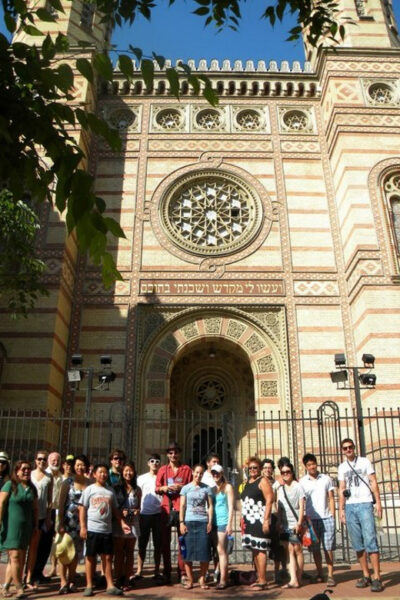
Past and Present of Budapest Jewish District Tour
Read our review →
Budapest Dohany Synagogue & Hungarian Jewish Museum & free extras
Read our review →
Jewish History Guided Walking Tour with Historian
Read our review →Browse the lists this tour appears in