
Reviewed · BUDAPEST JEWISH QUARTER TOURS
Past and Present of Budapest Jewish District Tour
Budapest’s Jewish District is more than a string of handsome synagogues. It is a place where the city’s Golden Age, the Holocaust, postwar survival, modern nightlife, and street art all meet within a few blocks. This walking tour follows that story from Erzsébet tér to Szimpla Kert, with stops at three important synagogues and the last visible piece of the ghetto wall.
I like two things here. First, the route gives you a clear timeline, from Jewish life in the Belle Époque to the destruction of the Second World War and the district’s present-day revival. Second, guides such as Gary, Eszter, Edith, Dora, and Edi have been praised for making a large, difficult subject understandable in less than two hours. The main drawback is simple: you do not enter any synagogue, and the tour includes plenty of standing while the guide speaks.
Key points to know before you book
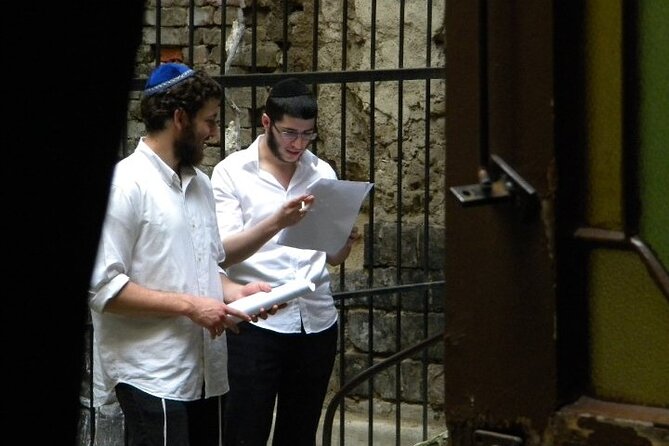
- Three synagogues from the outside: See the Great Synagogue, Rumbach Street Synagogue, and Kazinczy Street Synagogue without paying their separate admission fees.
- A serious but useful history lesson: The tour covers Jewish life, the Neologue and Orthodox movements, Zionism, the Holocaust, the ghetto, and postwar Budapest.
- A route through modern District VII: Gozsdu Udvar, murals, urban art, and Szimpla Kert show how the old Jewish Quarter functions today.
- A donation-based format: The booking fee is listed at $3.63 per person, while guide tips are separate and voluntary.
- A compact first look: The walk takes about 1 hour 45 minutes and ends at Szimpla Kert, a handy place to continue exploring.
- Comfortable shoes matter: You walk between several stops and spend much of the tour standing outdoors.
Why this Jewish District walk is worth your time
The tour’s strongest feature is its structure. Budapest Jewish history can feel scattered if you explore alone. One building points to the city’s prosperous late-19th-century years, another recalls wartime persecution, and a nearby ruin bar represents the district’s modern identity. This route connects those pieces.
You begin at Erzsébet tér, near the Budapest Ferris Wheel, then move into District VII. The guide sets out the main themes before the walk starts: the Jewish community’s place in Hungarian society, the Belle Époque, the Second World War, and the district as it exists now.
That outline matters. You are not simply being shown attractive façades. You are given a way to read them.
The tour is also a practical introduction to Budapest. It finishes near Szimpla Kert, and along the way you get your bearings around Deák Ferenc Square, the Great Synagogue, Rumbach Street, Kazinczy Street, and Gozsdu Udvar. If this is your first day in the city, the route can help you decide which places deserve a longer visit.
The tone is serious. The story includes exclusion, persecution, deportation, survival, and the murder of Hungarian Jews during the Holocaust. Yet the walk also discusses Jewish culture, religious movements, famous Jewish people, present-day communities, food, architecture, and local life. You get a history lesson, but not one that treats the district as a museum frozen in 1944.
More Jewish Quarter tours in Budapest:
- Budapest Jewish Heritage Memorial Walking Tour & Synagogue Entry
★ 5.0 · 568 reviews - Budapest: Jewish Heritage Guided Tour with Synagogue Ticket
★ 4.8 · 533 reviews - Jewish Quarter of Budapest Walking Tour
★ 4.7 · 369 reviews
Erzsébet tér begins the story in the Belle Époque
Meet your guide at the Ferris Wheel in Erzsébet tér. This is a central, easy-to-find starting point, close to public transportation and the busy Deák Ferenc Square area.
The opening section introduces the Jewish people of Hungary and sets the period of focus. The guide explains how the community developed during Budapest’s Golden Age, when the city was expanding, building grand institutions, and becoming one of Europe’s major urban centers.
This first stop lasts about 10 minutes. Do not expect a long lecture here. It functions as the map for everything that follows. A guide such as Gary or Eszter may add context and answer questions, but the value of the stop is mainly that you know what to watch for as you walk.
I like this beginning because it prevents the tour from starting with only tragedy. Jewish life in Budapest was not defined solely by the Holocaust. The earlier story includes work, family, religion, culture, and participation in the city’s growth.
Deák Ferenc Square reveals exclusion and rescue
At Deák Ferenc Square, the tour shifts to two very different subjects: the old restrictions placed on Jewish residents and the rescue efforts that saved lives during the Holocaust.
You learn about the medieval city wall and how Jewish people were excluded from trading within the city limits. That detail gives the history a physical setting. The wall was not just an old piece of masonry. It marked who could enter, work, and take part in the city’s commercial life.
The guide also discusses Gaudiopolis, or the City of Joy, and the Schutzpass documents that helped save thousands of Jewish lives. The stop lasts about 15 minutes.
This is one of the most useful sections for understanding how Budapest’s Jewish story changed over time. The city’s Jewish community faced discrimination long before the Nazi occupation, but people also worked to protect one another when the danger became extreme. The tour does not reduce the period to a single simple story.
Because much of the explanation takes place outdoors, you should be ready to stand and listen. One past participant specifically described the walk as fascinating but noted that standing is part of the experience. If you have trouble standing for long periods, this is worth considering before booking.
The Great Synagogue is a major stop, but there is no entry

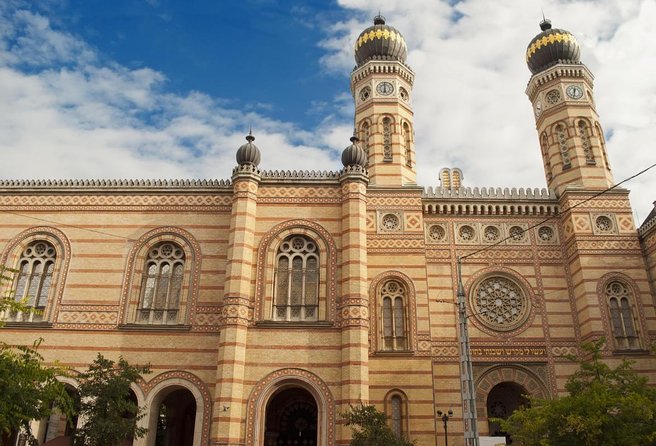
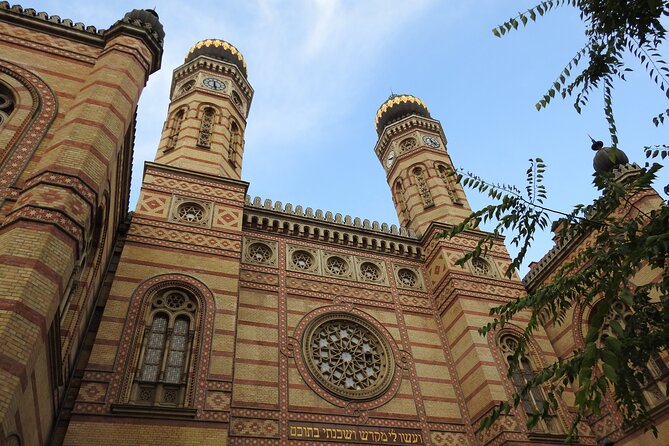
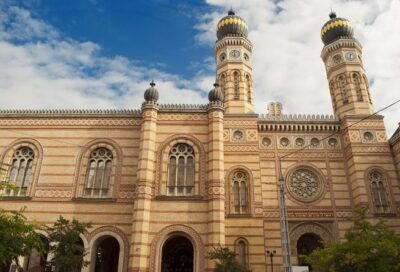
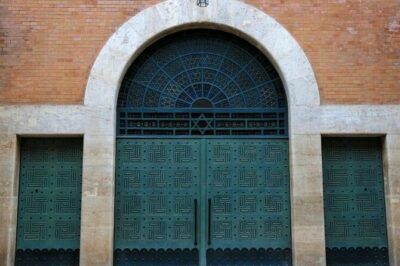
The Great, or Central, Synagogue on Dohány Street is the visual centerpiece of the route. It is the largest synagogue in Europe, and the tour uses it to explain Budapest’s Jewish religious divisions and political currents.
You hear about the Neologue and Orthodox movements, as well as Zionism. These are not minor side notes. They help explain why Jewish communities did not all worship, organize, or view modern Jewish identity in the same way.
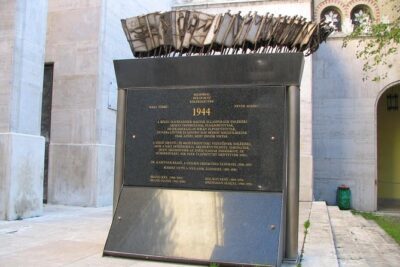
The tour spends around 20 minutes here. You see the Memorial Courtyard and the cemetery from outside, but you do not enter the synagogue.
This limitation needs to be clear. If you want the interior, you will need to plan a separate visit and pay the admission fee. One reason this walking tour stays inexpensive is that it focuses on exterior interpretation rather than building admissions.
That can be good value if your aim is orientation. You see the key sites, learn how they fit into Budapest’s Jewish story, and avoid spending the first part of your visit inside a single complex. It is not the right choice if the interior architecture, memorials, and museum displays are your main reason for coming.
The Great Synagogue stop also sets up an important distinction: the Jewish District is not one uniform religious neighborhood. Neologue, Orthodox, and other Jewish traditions shaped different institutions and customs. The guide explains these differences at a level suitable for a first visit.
Same city, a completely different sort of day:
- Budapest: City Highlights Cruise with Welcome Drink
★ 4.6 · 35,610 reviews - Budapest: Unlimited Prosecco, Beer and Aperol Spritz Cruise
★ 4.8 · 25,310 reviews - Budapest: Széchenyi Spa Day Ticket with Optional Upgrades
★ 4.3 · 23,911 reviews - Budapest: Nighttime or Daytime Sightseeing Cruise
★ 4.2 · 21,062 reviews
Rumbach Street adds architecture and a second religious tradition
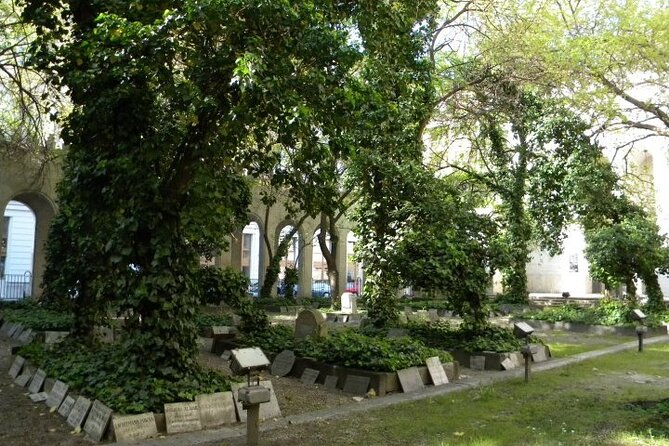
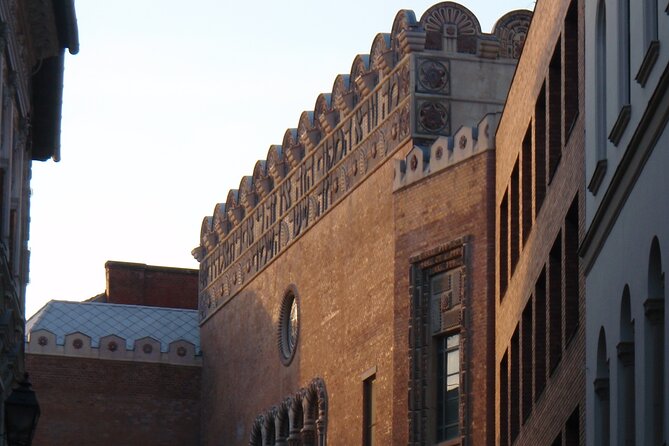
The next stop is Rumbach Street Synagogue, a beautifully restored building known for its interior murals and design. Again, the tour does not enter.
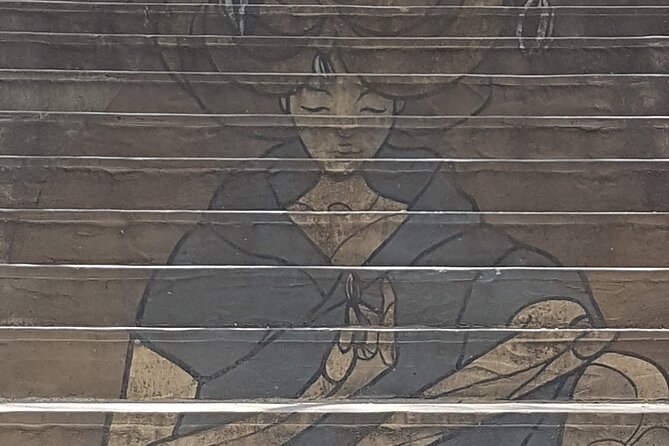
From the street, the guide discusses the building and its place in the district. The route also uses this area to point out urban art and murals. That combination is useful because it puts old religious buildings beside the visual language of present-day District VII.
The stop lasts approximately 15 minutes. You should think of it as an architectural and historical explanation, not an interior visit.
Some walking tours rush past Rumbach Street because the Great Synagogue gets most of the attention. This itinerary gives it proper space. You see that the district’s religious life was represented by several institutions, not one grand landmark.
If you are especially interested in synagogue interiors, make a note to return later. The tour can help you decide which building you want to visit, but it does not replace that visit.
Gozsdu Udvar connects the old quarter with modern Budapest
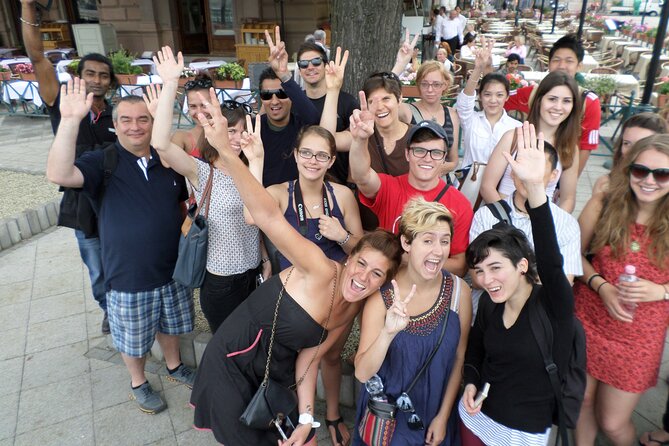
Gozsdu Udvar is where the tour’s past-and-present theme becomes most obvious. The passage now combines food, entertainment, culture, markets, and nightlife. It is a very different setting from the memorial spaces nearby, yet it is part of the same changing neighborhood.
The guide discusses what the passage was like in the past and how it functions now. You also see the last piece of the ghetto wall.
That small surviving fragment carries more weight than its size suggests. The wall is easy to overlook when the surrounding area is full of restaurants and shops. A guide gives the fragment a place in the larger story, helping you understand how the wartime ghetto occupied ordinary city streets.
This stop takes about 15 minutes. It also gives you a good reason to return on your own. Gozsdu Udvar is a place you can explore after the tour, perhaps for food or a look at its market activity. The walk does not turn into a meal outing, so plan separately if you want to eat here.
Kazinczy Street explains Orthodox life and Jewish customs
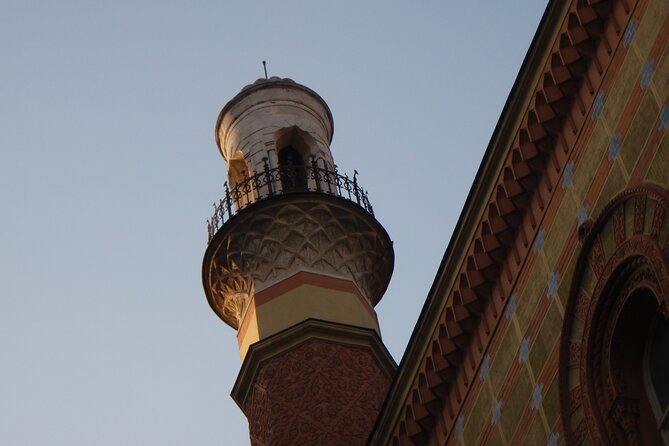
At Kazinczy Street Synagogue, the group stops outside the building associated with the Orthodox community. The guide explains that the community includes about 50 to 60 families, then discusses kosher food, the Jewish ritual bath, and other customs.
This is one of the tour’s most useful cultural stops because it moves beyond buildings and wartime history. You learn how religious practice shaped daily life and how Jewish communities in Budapest continue to function.
Again, there is no entry. The outdoor explanation lasts about 15 minutes. If you expected a synagogue tour, this is another point where the experience may disappoint. The description makes the lack of interior access clear, but you should still read it carefully when comparing options.
I like the way this stop rounds out the discussion of the three synagogues. The Great Synagogue introduces the Neologue movement, Rumbach Street adds another major institution and architectural layer, and Kazinczy Street brings in Orthodox practice and present-day community life.
Szimpla Kert finishes with art, nightlife, and orientation
The route ends at Szimpla Kert, one of Budapest’s best-known ruin bars. There is no entry fee, and the guide gives a final orientation inside or around the venue, including more murals and urban art along the way.
This ending could seem strange after a solemn discussion of the Holocaust. In fact, it makes the tour’s main point clear. The Jewish District is not only a memorial zone. It is also a working neighborhood, an entertainment area, and a place where old buildings have taken on new uses.
You may see pop-up exhibitions and street art connected to the district’s modern character. The guide can also point you toward further places to explore.
Ending at Szimpla Kert is practical. You can stay for a drink, continue looking around District VII, or use the location as a starting point for more nightlife. If you prefer a quiet end after a serious tour, you may want to leave the area rather than linger.
The full walk takes about 1 hour 45 minutes. The individual times add up to roughly the same length, with the actual pace depending on the group and the guide.
Guides and the style of the experience
The guide can vary. Names associated with strong tours include Gary, Eszter, Esther, Edith, Dora, Edi, Judith, Christine, Andy, Jude, and David.
The most praised qualities are clear explanations, strong English, patience with questions, and passion for the subject. Edi was especially noted for speaking clearly and keeping a comfortable pace for a group that included older people. Other guides, including Gary, Eszter, Dora, and Edith, were praised for combining historical detail with a friendly manner.
There is some variation in delivery, as you would expect with a rotating guide team. One account described the history as too general and asked for more local stories or visual aids. Another raised concerns about a fast pace and difficulty following a strong accent. The operator rejected that account and stated that guides should not leave people behind or pressure anyone for money.
My advice is practical: stay near the guide, ask questions early, and say something if the pace becomes uncomfortable. A group can include up to 25 people, so standing close enough to hear matters.
The tour is offered in English. Most people can take part, and service animals are allowed. The route is near public transportation, but you should wear walking shoes and plan for outdoor standing.
What the $3.63 price really means
The listed cost is about $3.63 per person, but this is a donation-based walking tour. The booking fee covers administration and does not go to the guide. At the end, you may tip the guide, and the amount is your choice.
That makes the tour potentially excellent value. For the price of a small snack, you get nearly two hours of organized history, neighborhood orientation, and access to a guide who can explain the sites as you walk between them.
Still, you should understand what you are buying. You are not paying for synagogue admission, a private guide, transportation, food, or a museum visit. The value rests mainly in the guide’s presentation and the route.
If you want an inexpensive introduction before deciding which synagogue or museum to visit, I think the price works well. If you prefer a guaranteed private experience with more personal stories and flexible pacing, a paid private guide may suit you better.
Tips are not compulsory. The tour’s donation model depends on voluntary contributions, so you can decide what the experience was worth to you.
Who should book this walk
I would choose this tour if you want a focused introduction to Jewish Budapest and have about two hours available. It suits first-time visitors, people interested in Jewish culture and history, and anyone who wants to understand why District VII looks the way it does today.
It is also a good early-trip activity. You finish near Szimpla Kert, with the main streets and landmarks already familiar. The route may inspire later visits to a synagogue, a museum, memorial sites, or the district’s small details, including stumbling stones and urban art.
I would be cautious if you mainly want to enter the synagogues. None of the three synagogue stops includes interior admission. I would also think twice if you dislike standing outdoors or find spoken English difficult to follow when the guide has a strong accent.
The subject is heavy, too. This is not a light sightseeing stroll. It can be moving and upsetting, especially when the guide discusses the destruction of Hungary’s Jewish population and the dangers faced by the community. That seriousness is part of the tour’s purpose, but it is best to know it in advance.
Should you book the Past and Present of Budapest Jewish District Tour?
Yes, if you want a low-cost, well-organized introduction to Budapest’s Jewish Quarter, and you are happy to see the synagogues from outside. The route covers a lot in 1 hour 45 minutes, and the best guides bring clear history, local orientation, and a human tone to the walk.
Book it early in your stay if you can. Use it to decide which buildings and memorials deserve a separate visit. Bring comfortable shoes, stay close to the guide, and budget for a voluntary tip if the tour earns one.
Skip it if synagogue interiors are your priority. In that case, plan direct visits with time for admission, rather than treating this exterior walk as a substitute.
FAQ
How long does the Past and Present of Budapest Jewish District Tour last?
The tour lasts approximately 1 hour 45 minutes.
Where does the tour begin?
It begins at the Budapest Ferris Wheel in Erzsébet tér, Budapest 1051, Hungary.
Where does the tour end?
The tour ends at Szimpla Kert on Kazinczy utca 14, Budapest 1075. Szimpla Kert is a ruin bar, and there is no entry fee.
Does the tour enter the synagogues?
No. The tour visits the Great or Central Synagogue, Rumbach Street Synagogue, and Kazinczy Street Synagogue from outside. At the Great Synagogue, you see the Memorial Courtyard and cemetery from outside.
Is the tour offered in English?
Yes. The tour is offered in English.
How much does the tour cost?
The listed price is $3.63 per person. This is a booking fee for administration and does not contribute to the guide’s earnings. Guide tips are separate and voluntary.
How many people can join the tour?
The tour can have a maximum of 25 people.
Is the tour suitable for most people?
Most people can participate. The tour is near public transportation, and service animals are allowed. You should expect to walk between stops and stand while listening.
Can I cancel the booking?
Yes. You can cancel up to 24 hours before the experience begins for a full refund. Cancellations or changes made less than 24 hours before the start time are not accepted for a refund.
Just added around Budapest
- Budapest: Danube River Views Bike Ride★ 4.8 · 23 reviews
- Budapest: City Bike Tour with Coffee Stop★ 5.0 · 37 reviews
- Budapest: Private Walking Tour with a Local Guide★ 3.6 · 6 reviews
- Budapest: Vacation Photographer to collect great memories★ 5.0 · 49 reviews
- Walk to recent and aged spiritual sanctuaries near Budapest★ 5.0 · 5 reviews
- From Budapest: Guided Tour of Eger with Wine Tasting★ 4.5 · 6 reviews
- Audio visual multi-sensory chefs journey dinner experience★ 5.0 · 3 reviews
- Budapest: 3-Hour Trabant Sightseeing Tour★ 4.7 · 28 reviews
Budapest Jewish Quarter Tours, compared.
Budapest Jewish Heritage Memorial Walking Tour & Synagogue Entry
Read our review →
Jewish Heritage Guided Tour with Synagogue Ticket
Read our review →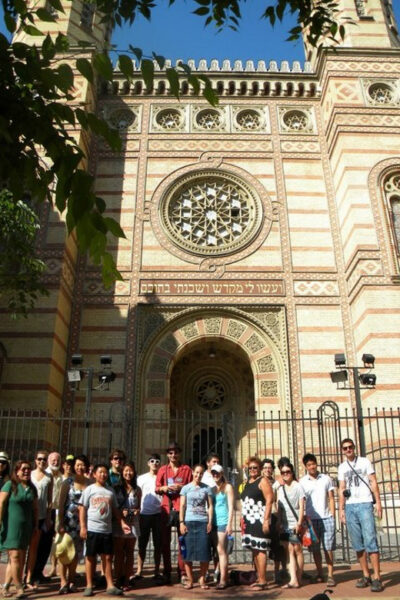
Budapest Dohany Synagogue & Hungarian Jewish Museum & free extras
Read our review →
Jewish History Guided Walking Tour with Historian
Read our review →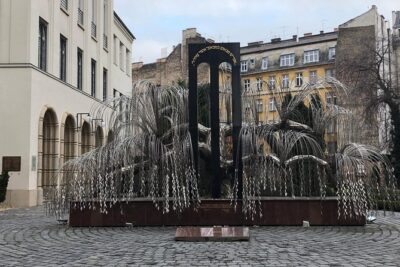
Budapest Dohany, Heroes’, Rumbach synagogues & Jewish Ghetto Tour
Read our review →Browse the lists this tour appears in