
Reviewed · BUDAPEST JEWISH QUARTER TOURS
Budapest City Walk in Jewish Quarter
Budapest’s Jewish Quarter packs an extraordinary amount into a small patch of Pest. In four hours, you can move from the grand Dohány Street Synagogue to quiet prayer houses, Holocaust memorials, old apartment courtyards, and the last surviving piece of the WWII ghetto wall. Timea Tarjani, a history teacher and granddaughter of Holocaust survivors, is one possible guide.
I like the flexible private format, which lets you linger at a synagogue or skip a stop that does not fit your interests. I also like the personal connection guides such as Timea bring to the walk, including stories about Jewish life in Budapest today, not only the tragedies of the past.
The main drawback is cost. At $356.90 per group of up to six, this is good value for a small family or group, but expensive for one or two people. Synagogue admissions and food cost extra, and four hours on foot calls for comfortable shoes.
Key points at a glance
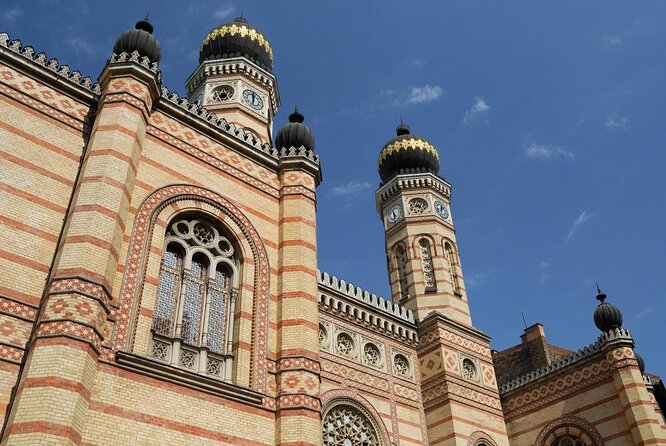
- See the synagogue triangle: Compare the Dohány Street, Rumbach, and Kazinczy synagogues, each with a different scale and character.
- Go beyond the famous sights: The route can include the Vasvári Street Synagogue, a mikveh, stumbling stones, the last ghetto wall, and less-visited memorials.
- Learn about Budapest during WWII: The Raoul Wallenberg Memorial Garden, Emmanuel tree, Carl Lutz Memorial, Shoes Monument, and ghetto sites give the history a human scale.
- Meet present-day Jewish Budapest: Local cafés, shops, eateries, courtyards, galleries, and ruin bars show how the quarter is used now.
- Set your own pace: Hotel pickup, a private guide, and a flexible route make this especially useful for families and people with a specific heritage interest.
Why this compact Pest neighborhood matters
Budapest’s seventh district is easy to reach and simple to explore on foot, but it is not a simple place. The streets hold centuries of Jewish life, the physical scars of Nazi persecution, postwar neglect, modern renewal, and a busy nightlife scene.
That mix can feel confusing without context. A guide helps you read what is in front of you: a synagogue hidden behind an ordinary street, a memorial set into the pavement, a restored façade beside a worn residential building, or a ruin bar operating in a former courtyard.
The focus is not just on dates and names. You get a picture of how Jewish communities lived in Budapest before WWII, what happened during the Holocaust and ghetto period, and how Jewish life continues today. That last part matters. The quarter is not presented only as a memorial district. It is also a lived-in neighborhood with shops, cafés, religious spaces, and community activity.
The private format gives you room to ask direct questions. Families working through a personal connection to Hungary can take their time. Teens can ask about modern Budapest and ruin bars. Those interested in architecture can steer the route toward apartment blocks, courtyards, and synagogue design.
More Jewish Quarter tours in Budapest:
- Budapest Jewish Heritage Memorial Walking Tour & Synagogue Entry
★ 5.0 · 568 reviews - Budapest: Jewish Heritage Guided Tour with Synagogue Ticket
★ 4.8 · 533 reviews - Jewish Quarter of Budapest Walking Tour
★ 4.7 · 369 reviews
Starting at your hotel and finding your bearings
Pickup is offered in your hotel lobby or outside a rented apartment. That is a useful touch in Budapest, especially if you are staying somewhere in Pest and want to begin without figuring out a meeting point.
The walk lasts about four hours. The exact route can change, so you should tell the guide what matters most before setting out. You can ask for more time at one site, leave out another, or request a restaurant stop afterward.
The tour is described as private for your group, with a maximum of 10 people listed in the additional information. The price is specifically given for up to six people, so confirm the group-size and pricing details when booking if your party is larger.
A moderate amount of walking is involved. Breaks are possible, but this is not a seated sightseeing tour. Wear shoes suited to city pavement, and bring water, especially in warm weather. Synagogues may require modest dress and head covering. You can bring your own hat or scarf, or use the pieces provided at the synagogues.
The synagogue triangle: Dohány, Rumbach, and Kazinczy
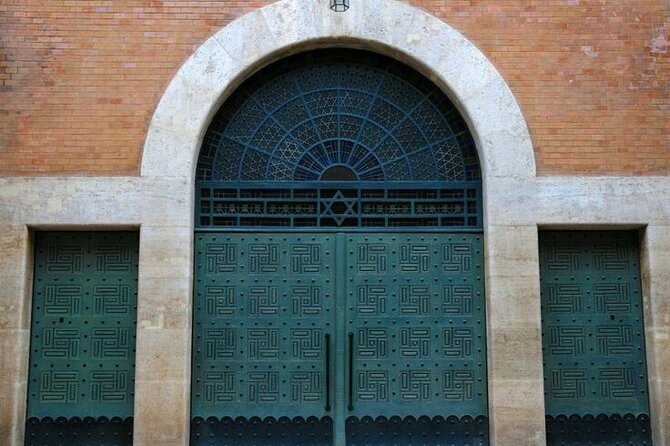
The three main synagogues form the backbone of many versions of this walk. Seeing more than one is worthwhile because they are not interchangeable stops.
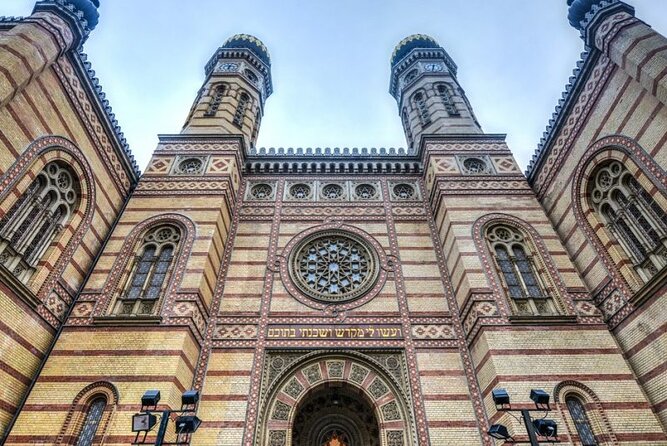
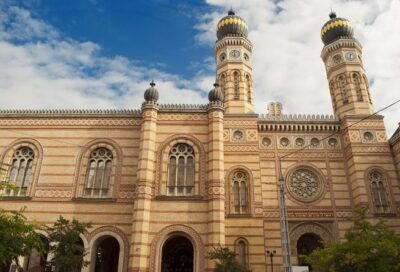
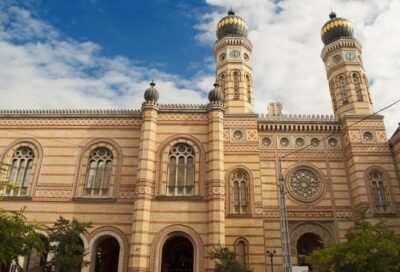
The Dohány Street Synagogue is the grandest and most widely known. It is also described as the second-largest non-Orthodox synagogue in the world. Its scale helps explain the size and importance of Budapest’s Jewish community before WWII, though a large building alone cannot tell the whole story.
The Rumbach Street Synagogue offers a different experience. Its design and history add another layer to the quarter, and it helps you see that Jewish Budapest was not one uniform community. The Kazinczy Street Synagogue brings yet another perspective, tied to Orthodox Jewish life in the district.
You may be able to visit all three, though entrance fees are not included. The stated maximum additional admission cost is €46 per person, and discounts may apply for families and seniors. You can also choose to enter only one synagogue. That choice makes sense if you want to keep costs down or would rather spend more time outdoors.
The tour is stronger when the guide explains the buildings in relation to one another. You are not simply collecting three interiors. You are seeing different traditions, periods, and uses within a very small area.
Memorials that make WWII history personal
The WWII portion of the walk is serious, and rightly so. The guide’s job is to explain what happened without turning the quarter into a string of grim photo stops.
The Raoul Wallenberg Memorial Garden includes the Emmanuel tree, a moving memorial with names connected to Holocaust victims. The garden offers a quiet pause after the scale of the synagogues and the noise of the surrounding streets.
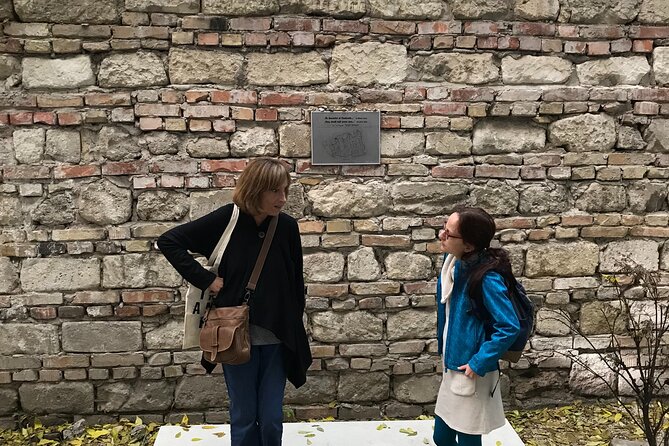
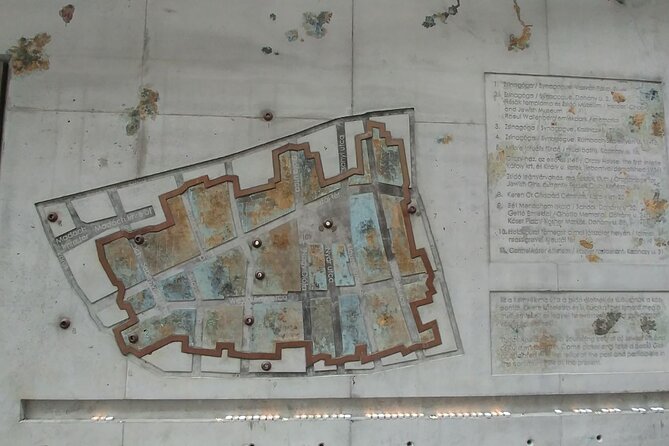
The Carl Lutz Memorial adds another account of rescue and resistance. The stumbling stones, set into sidewalks, mark individual victims and make the history impossible to keep at a comfortable distance. You may also visit the last remaining section of the WWII ghetto wall, a place that is easy to miss without someone who knows where to look.
The Shoes Monument on the Danube is outside the core of the seventh district, but it may be included depending on the route. Its location by the river links the Jewish Quarter to one of Budapest’s most painful memorial sites.
One especially useful feature is access to less obvious places. A guide may have keys or permission for areas that are not open as ordinary walk-in sights, including parts of the former ghetto wall. This is a good reason to take a guided walk instead of simply following a map between the major synagogues.
More walking tours in Budapest:
- Budapest: Buda Castle Walk with Saint Stephen’s Hall
★ 4.5 · 3,012 reviews - Big Bus Budapest Hop-On Hop-Off Bus and Walking Tour
★ 3.5 · 2,206 reviews - Budapest: Buda Castle District Walking Tour
★ 4.6 · 2,108 reviews - Budapest City Landmarks Walking Tour in 2 Hours
★ 5.0 · 2,048 reviews
The Jewish Museum, archives, and smaller prayer spaces
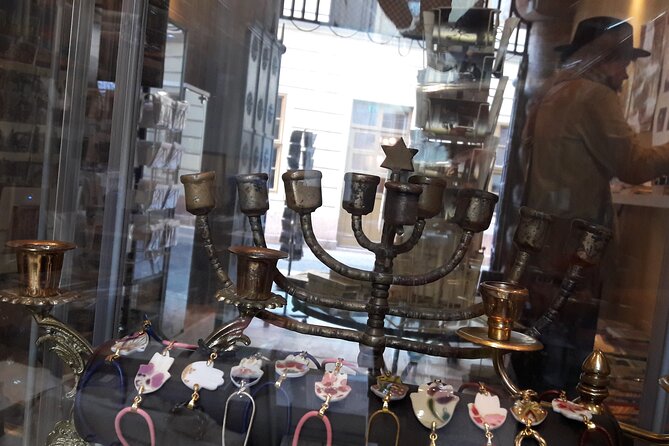
The Budapest Jewish Museum and Jewish Archives provide more formal historical context. They can help you understand religious objects, community life, and the record of Jewish Budapest beyond the architecture outside.
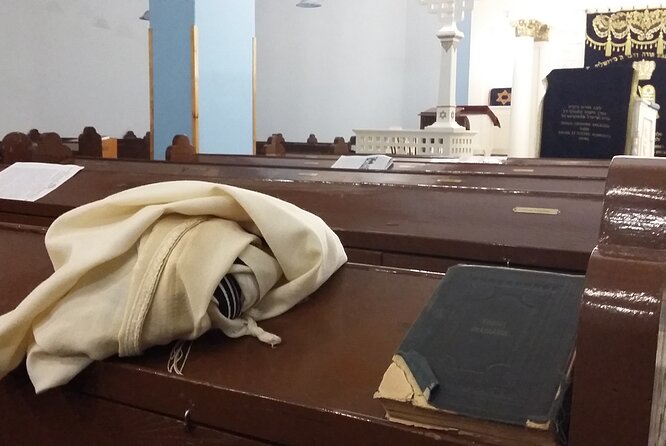
The route may also include smaller prayer houses and the Vasvári Street Synagogue. These places are important because they show a different scale from the grand Dohány building. You begin to see how religious life fit into the neighborhood’s streets and courtyards.
The Kazinczy Street mikveh is another distinctive stop. It connects the quarter to living religious practice rather than only to history and memorials. Since the exact itinerary is flexible, ask your guide which religious sites will be open during your visit and which require an entrance fee.
Timea Tarjani has been praised for explaining both Jewish and Hungarian history, and for connecting the past with Jewish life in Budapest today. Her background as a history teacher and her family connection to Holocaust survivors may be especially meaningful if you want a personal, carefully handled discussion.
Courtyards, cafés, and everyday Budapest
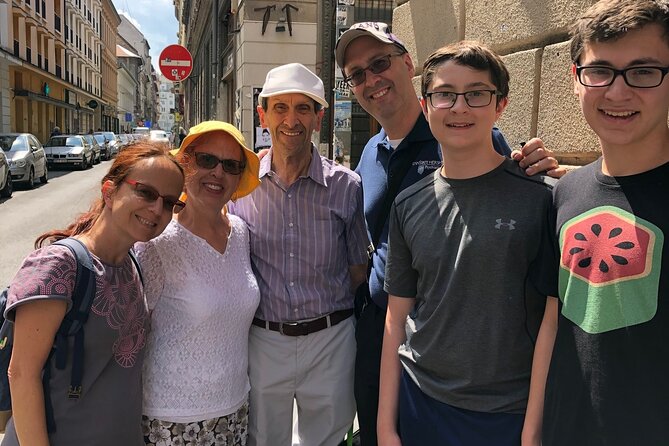
The Jewish Quarter is not only a place of worship and remembrance. It is also one of Budapest’s most social districts.
The guide may take you through courtyards such as Gozsdu Courtyard, along with small shops, eateries, confectioneries, art galleries, cafés, and festival spaces. These stops show you how local life occupies the same streets that carry such heavy historical weight.
You might visit the Kazinczy area to see the mikveh and then move a short distance to a café or food shop. That change of mood is not a distraction. It helps you understand the quarter as a present-day neighborhood rather than a museum frozen in 1944.
The ruin bars, especially Szimpla, are another recognizable part of the district. They can be noisy and crowded at popular times, so you may prefer a quick look rather than a long stop. Still, seeing one with a guide gives you context for the unusual courtyards and reused buildings.
The tour includes help with restaurant recommendations and table bookings if needed. Kosher meals and snacks can also be arranged. Food and drinks are not included, and you should make clear dietary or religious requirements when booking.
A guide-led walk that can feel personal
The strongest part of this experience is the guide. A good Jewish Quarter walk needs more than dates, building names, and a route traced on a phone. It needs care, accuracy, and the ability to answer questions without reducing difficult subjects to a lecture.
Timea Tarjani is repeatedly identified as a warm, engaging guide who combines Jewish history, Hungarian history, and personal family stories. She has also been described as an active member of Budapest’s Jewish community. That gives the discussion a present-day point of view.
The walk can feel conversational. You can ask about Jewish life under communism, the Holocaust, current community life, Hungarian identity, or the architecture around you. One family even received help arranging COVID tests and dealing with dehydration during an extended day together. That kind of extra care is not something you should assume is guaranteed, but it shows how personal the guiding style can become.
Other named guide references include Tarjani and Timi, likely variations of the same guide’s name. The provider may assign someone else, so check the guide arrangement if having Timea specifically is important to you.
The English-language service is intended for visitors who want a full explanation rather than a short orientation. The supplied feedback gives the English quality high marks, and families with teenagers have found the guide able to keep younger members involved.
Price, entrance fees, and overall value
The listed price is $356.90 per group of up to six. Split six ways, that is roughly $59.50 per person before synagogue admissions and food. For a family or group of friends, the math is reasonable for a four-hour private walk with hotel pickup, a licensed local guide, and a route shaped around your interests.
For one or two people, the price is harder to justify. A shared group tour may cost less, though it will not offer the same control over timing or conversation. If you have a strong family connection to Budapest, need kosher planning, or want access to less obvious sites, the private format may be worth the extra cost.
Entrance fees can add as much as €46 per person, although you can choose to enter one synagogue and discounts may be available. Ask for a clear estimate before the walk so the final cost does not surprise you.
The included hotel drop-off or restaurant drop-off adds convenience, but the real value is the guide’s time and flexibility. You are paying for interpretation and access, not just transportation between sights.
Who should book this four-hour walk
I would choose this tour if you have Jewish ancestry, are studying Budapest’s WWII history, or want a serious look at the city beyond its major landmarks. It also suits families who want one guide for different ages and interests.
It is a good match for you if you prefer conversation to a fixed script. You can spend longer at the Emmanuel tree, focus on synagogue architecture, ask about present-day Jewish life, or request more local food and café suggestions.
You may want another option if you dislike walking, want a quick overview, or are mainly interested in nightlife. The quarter’s ruin bars and cafés are included as part of a much wider story, not as the central purpose of the experience.
The subject matter can be emotional. Go in ready for frank discussion of persecution, deportation, and loss. The guides aim to make the walk informative and human, but this is not light sightseeing.
Practical details before you reserve
The experience is offered in English and runs daily according to the booking information, though the listed opening line specifies Monday from 9 a.m. to 2 p.m. Confirm the time available for your date.
You receive confirmation at booking, and free cancellation is available up to 24 hours before the start time. Changes or cancellations inside that period are not refundable.
Service animals are allowed, and the route is near public transportation. A moderate level of fitness is expected, though you can request breaks. The mobile ticket is useful, but your most important preparation is comfortable footwear and clothing suitable for synagogue visits.
Should you book it?
Book this walk if you want Budapest’s Jewish Quarter explained as a living neighborhood shaped by faith, family, persecution, survival, and renewal. The combination of major synagogues, memorials, ghetto remains, local courtyards, and present-day Jewish life gives you a fuller picture than a quick stop at Dohány Street Synagogue.
For a group of four to six, the price can make sense. For a couple, it is a splurge, but the flexible route and personal attention may justify it if this history matters to you. Ask who will guide your walk, how many synagogue interiors are planned, and what entrance fees you should expect.
FAQ
Where does the Budapest Jewish Quarter walk begin?
Pickup is offered in the lobby of your hotel or in front of your accommodation, including a rented flat.
How long does the experience last?
The walk lasts approximately four hours.
Is the tour offered in English?
Yes. The experience is offered in English.
How much does the private tour cost?
The listed price is $356.90 per group of up to six people.
Are synagogue entrance fees included?
No. Entrance fees are extra. The maximum additional cost listed is €46 per person, with possible family and senior discounts.
Can I visit only one synagogue?
Yes. You can choose to visit one synagogue rather than entering several.
What sights may be included?
Possible stops include the Dohány Street, Rumbach, and Kazinczy synagogues, the Vasvári Street Synagogue, the Budapest Jewish Museum, Jewish Archives exhibitions, the Raoul Wallenberg Memorial Garden, the Emmanuel tree, the Carl Lutz Memorial, stumbling stones, the former ghetto wall, and the Shoes Monument.
Is hotel drop-off available?
Yes. Hotel drop-off is included, and restaurant drop-off for lunch or dinner can also be arranged.
Can the guide help with kosher food?
Yes. Kosher meals and snacks can be arranged if required. Food and drinks are not included in the tour price.
Is the walk physically demanding?
A moderate amount of walking is involved. You can ask for a break, and a moderate level of physical fitness is recommended.
What should I wear to the synagogues?
Be prepared with your own hat or cap and scarf if you do not want to use the coverings provided by the synagogues.
What is the cancellation policy?
You can cancel up to 24 hours before the start time for a full refund. Cancellations or changes made less than 24 hours before the experience are not accepted for a refund.
Just added around Budapest
- Budapest: Danube River Views Bike Ride★ 4.8 · 23 reviews
- Budapest: City Bike Tour with Coffee Stop★ 5.0 · 37 reviews
- Budapest: Private Walking Tour with a Local Guide★ 3.6 · 6 reviews
- From Budapest: Guided Tour of Eger with Wine Tasting★ 4.5 · 6 reviews
- Budapest: Vacation Photographer to collect great memories★ 5.0 · 49 reviews
- Walk to recent and aged spiritual sanctuaries near Budapest★ 5.0 · 5 reviews
- Audio visual multi-sensory chefs journey dinner experience★ 5.0 · 3 reviews
- Budapest: 3-Hour Trabant Sightseeing Tour★ 4.7 · 28 reviews
Budapest Jewish Quarter Tours, compared.
Budapest Jewish Heritage Memorial Walking Tour & Synagogue Entry
Read our review →
Jewish Heritage Guided Tour with Synagogue Ticket
Read our review →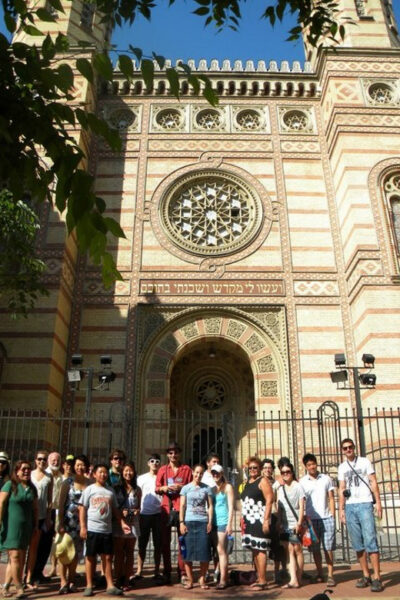
Past and Present of Budapest Jewish District Tour
Read our review →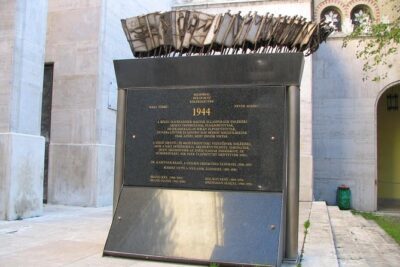
Budapest Dohany Synagogue & Hungarian Jewish Museum & free extras
Read our review →
Jewish History Guided Walking Tour with Historian
Read our review →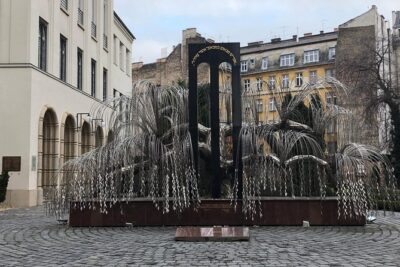
Budapest Dohany, Heroes’, Rumbach synagogues & Jewish Ghetto Tour
Read our review →Browse the lists this tour appears in