
Reviewed · BUDAPEST STREET ART TOURS
Alternative Street Art Free Walking Tour of Budapest
Budapest’s Jewish Quarter street art tells stories that a standard sightseeing walk often misses. This roughly 1-hour-40-minute tour links murals, graffiti, commissioned pieces, Hungarian history, and the rise of the ruin-bar scene, with guides such as Victoria, Peter, and Alexandria leading the way.
I like the small maximum of 15 people, which gives you a better chance to ask questions. I also like the price: at about $3.62, this is a pay-what-you-feel-style walk with a booking fee and tip, not a costly art excursion. The main consideration is that meeting details need a careful check, since the information lists both Rákóczi tér and Blaha Lujza Tér.
Why this walk deserves a place in your Budapest plans
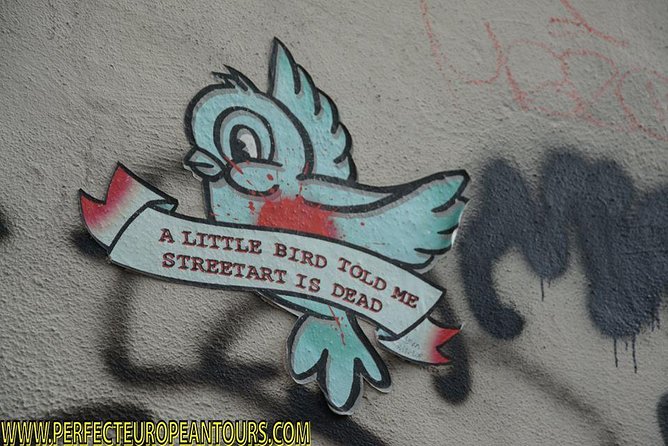
- Street art with social context: You see local pieces, larger commissioned murals, and graffiti while learning what they say about Budapest today.
- A walk through the Jewish Quarter: The route connects art with the district’s past, present-day youth culture, and post-communist changes.
- Guides who add more than directions: Victoria is praised for linking art to Hungarian history, while Peter and Alexandria bring a lighter, accessible style.
- A small group limit: With no more than 15 people, the walk should feel more personal than a large city tour.
- A ruin-bar finish: The route ends at or near Szimpla Kert, with attention also given to the wider ruin-bar scene.
- A remarkably low outlay: You pay the small booking charge, then decide what to tip based on the experience.
Budapest’s street art is a history lesson in disguise
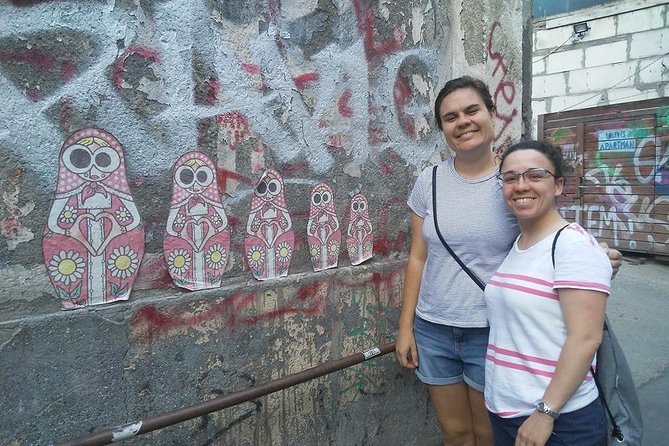
I like this tour because it treats street art as more than a backdrop for holiday photographs. The pieces become clues to the city’s politics, social changes, local identity, and changing Jewish Quarter.
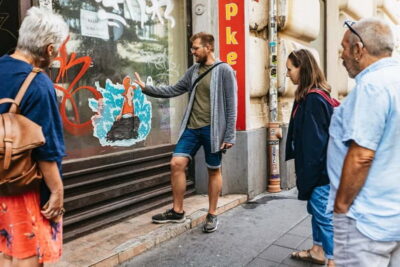
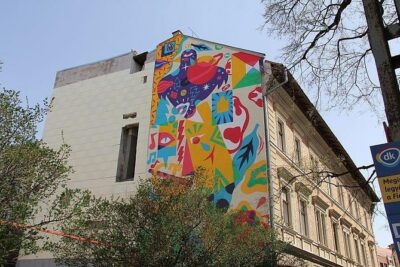
You can expect a mix of small works, graffiti, and large commissioned murals. That range matters. A polished wall painting funded by a business can say something different from a quick, unofficial mark, and the guides help place both within the city’s current culture.
Victoria receives especially strong praise for her historical explanations and direct speaking style. Her approach appears suited to you if you want facts without a stiff lecture. One particularly useful feature is the connection between local art and wider Hungarian history, including the country’s experience after communism and the changes brought by the pandemic.
The tour also seems to avoid treating Budapest as a museum frozen in time. You get older stories, current social questions, and everyday life in Hungary in the same walk. That makes it a good choice for someone who has already seen the major sights and wants a different angle on the city.
More street art walks in Budapest:
- Budapest: Street Art and Underground Movements Walking Tour
★ 5.0 · 238 reviews - Street Art and Alternative Tour in Budapest
★ 5.0 · 52 reviews - Budapest: Alternative Street Art & Jewish Tour
★ 4.8 · 49 reviews
Walking through the Jewish Quarter
The historic Jewish neighborhood is the heart of the experience. You are not simply taken from one mural to another. The route uses the district to explain why this part of Budapest became associated with alternative culture, young people, street art, and ruin bars.
That background gives the art more meaning. A wall painting can reflect a community’s memory, a political idea, a local business interest, or a wish to brighten a neglected space. You will hear about the relationship between public art and the social changes around it.
The area also rewards close attention. Several people who took the walk found pieces they would have missed while exploring on their own. That is one of the strongest reasons to book a guide here. Budapest’s street art is spread across ordinary streets, side walls, and less obvious corners, so a guide can help you notice what your eyes might otherwise skip.
The tour is also useful if you are not an art specialist. You do not need to know the difference between every style of graffiti and mural painting. The explanations cover the general role of urban art, local artists, commissioned projects, and the political and social ideas behind the work.
What guides such as Victoria, Peter, and Alexandria bring

The experience depends heavily on the guide, and the names attached to the tour give you a helpful sense of its character.
Victoria is the guide mentioned most often in the supplied material. She has lived in Hungary for more than 25 years and originally comes from England. Her long connection with the country lets her explain both local life and the outside perspective many visitors bring.
Her style appears especially strong for people who enjoy context. She connects the murals to Hungarian history, present-day culture, and the story of the Jewish Quarter. She also gives practical advice about ruin bars, and on at least one occasion continued to a bar after the walk because she was heading that way.
Peter is described as bringing fun facts and an easy manner. If you prefer a lighter walk with plenty of stories, his approach may suit you well. Alexandria is praised for showing both corporate commissioned art and graffiti, while also explaining what Budapest and Hungarian society have experienced.
The provider is Perfect European Tours, which also runs other free walking tours in Budapest. The supplied information identifies the usual maximum as 15 people, though one past description refers to a larger limit. I would rely on the current booking details and expect a small group rather than assuming a private walk.
Reading the art instead of just photographing it
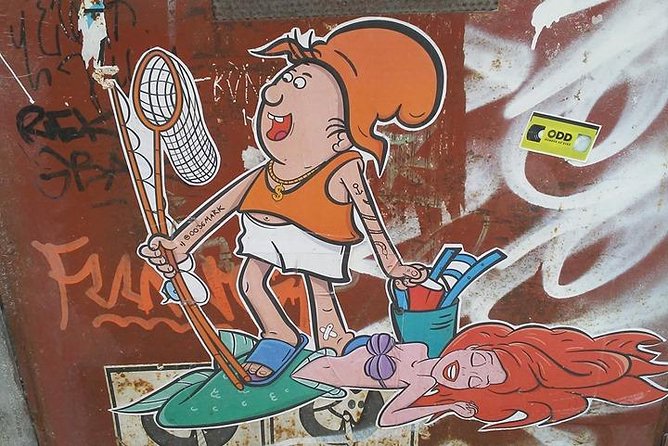
The strongest part of the tour is the interpretation. You may see a wall painting on your own, but you are unlikely to know why it was created, how it fits the neighborhood, or what local attitudes it reflects.
The guides discuss a mixture of local artists, commissioned murals, and other urban work. This prevents the route from becoming a simple hunt for the most colorful walls. You are given a way to think about ownership, public space, politics, memory, and youth culture.
I also like that the tour does not appear to limit itself to attractive or Instagram-friendly pieces. The aim is to explain what the art says about ordinary life in Budapest. That gives the walk a more serious purpose without making it heavy.
If your main goal is a long list of famous works, you may find the format less satisfying than an art-focused museum visit. The exact pieces can change as outdoor art is painted over, removed, or altered. The value here is the guide’s reading of the district, not a guaranteed checklist of permanent artworks.
More walking tours in Budapest:
- Budapest: Buda Castle Walk with Saint Stephen’s Hall
★ 4.5 · 3,012 reviews - Big Bus Budapest Hop-On Hop-Off Bus and Walking Tour
★ 3.5 · 2,206 reviews - Budapest: Buda Castle District Walking Tour
★ 4.6 · 2,108 reviews - Budapest City Landmarks Walking Tour in 2 Hours
★ 5.0 · 2,048 reviews
Ending at a Budapest ruin bar
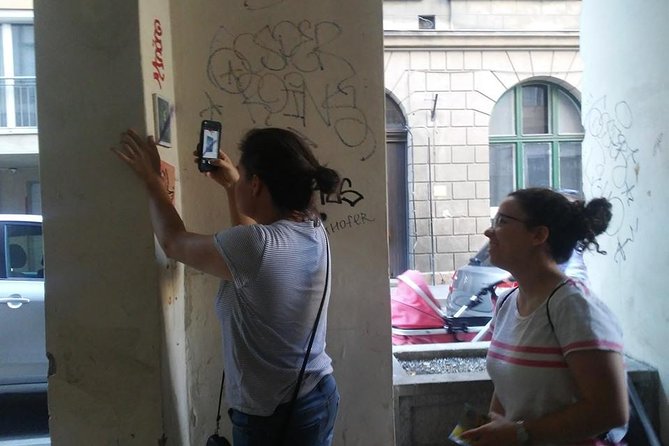
The walk finishes at Szimpla Kert, Budapest’s best-known ruin bar, or in the nearby ruin-bar area according to the meeting information. This is a fitting end because the Jewish Quarter’s street art and alternative nightlife are closely tied in the tour’s story.
Szimpla Kert is described as a grassroots community ruin bar. The experience includes a little background on the ruin bars, and you may have a chance to stay for a drink after the tour. The guide may also point out other bars worth trying.
This ending adds practical value. You can finish the art walk, keep talking about the neighborhood, and decide if you want to explore the bar on your own. It also means the tour closes in a lively part of Budapest rather than leaving you beside a standard transport stop.
There is one detail to watch. The supplied endpoint is listed as Auróra u. 11, while Szimpla Kert is separately identified as the finish. Since these details do not line up perfectly, check the final meeting and end instructions before setting your evening plans.
The price is excellent, with one important catch
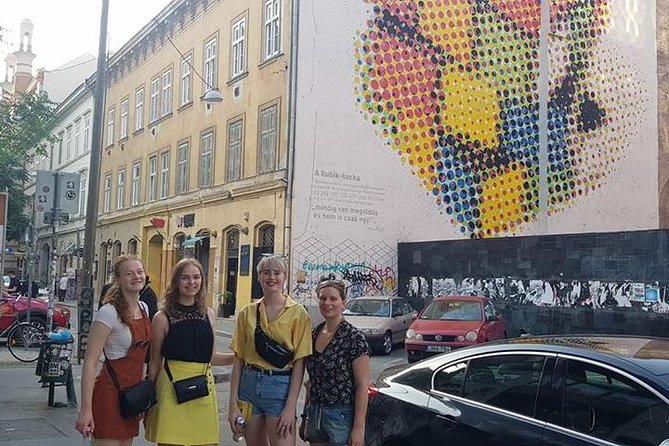
The listed price is about $3.62 per person. That is an unusually low cost for nearly two hours with a professional guide, especially in central Budapest.
The format is essentially a free walking tour with a booking charge and tip. You should budget for a tip in addition to the listed price. The low entry cost makes it easy to try the tour even if you are unsure how interested you are in street art.
I see this as a strong value for three kinds of visitors:
- You want a low-cost introduction to Budapest’s alternative culture.
- You enjoy history but have already seen the classic monuments.
- You want a guided walk before choosing which ruin bar or neighborhood to revisit.
The price does not cover parking or public toilet use. Most people will not need to think about parking if they arrive by public transport, and the meeting area is near public transportation. Still, carry a little local cash or another payment method for personal costs and your guide’s tip.
Timing, group size, and meeting-point advice
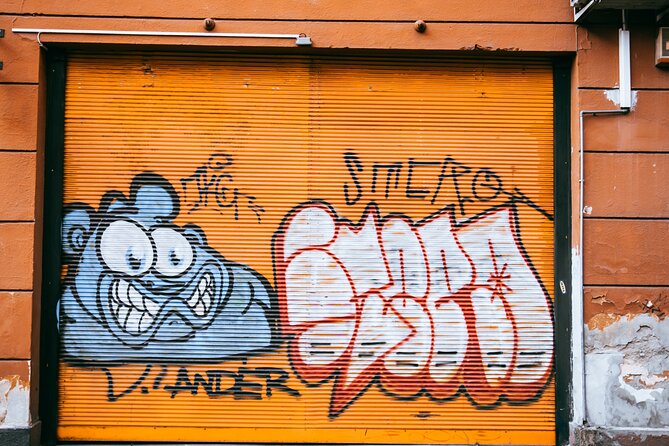
The duration is about 1 hour and 40 minutes. That is long enough for a real neighborhood walk, but short enough to fit around a museum visit, meal, or evening plan.
The group maximum is 15 people. I consider that a useful limit for street art because you need to gather around walls and hear explanations in ordinary city streets. A smaller group also gives you more room to ask about a particular mural or local custom.
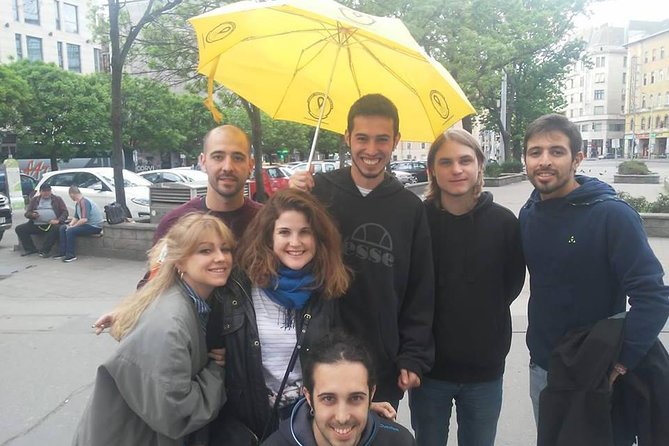
The meeting information needs your attention. One part directs you to Rákóczi tér in Budapest 1084, while another says to look for a guide with a yellow umbrella at Blaha Lujza Tér. These are not the same place, so do not simply choose one based on memory. Check the confirmation you receive at booking and follow the current instructions.
The tour is offered in English. Confirmation is provided when you book, and the experience is near public transportation. Service animals are allowed, and most people can take part. As with any walking tour, you should expect to be on your feet for the full route, though the supplied details do not specify the walking distance or seating.
Who will get the most from this experience?
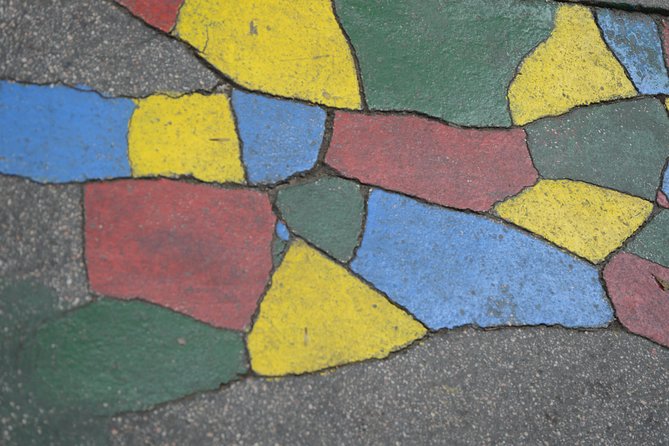
This is a good match if you want Budapest beyond the Parliament Building, castle district, and grand boulevards. It gives you a way into the city’s modern identity through public art and a neighborhood that has changed greatly over time.
It also suits adults and older children who enjoy social history, design, photography, or urban culture. You do not need formal art training. The guide’s explanations are the main attraction, and the art provides an engaging way to discuss difficult subjects.
It may be less suitable if you want a quiet, highly structured art lecture or a tour devoted only to famous murals. The route is also weather dependent. If poor weather causes cancellation, you are offered another date or a full refund.
The small group size helps, but the tour still takes place in active city streets. You should be comfortable walking at a normal sightseeing pace and listening outdoors. If you prefer museums, indoor galleries, or a shorter route, this may not be your best first choice.
What makes the experience different from a standard city walk?
A standard Budapest walk usually focuses on major buildings, national history, and famous viewpoints. This one concentrates on how people use streets, walls, bars, and public spaces today.
That difference is valuable. You see the Jewish Quarter as a living neighborhood rather than only a historic site. The art becomes a starting point for discussions about Hungarian society, political memory, youth culture, and the aftereffects of communism.
I also like the balance between planned content and local tips. The guide may explain several ruin bars, suggest places to try afterward, and point out work you would have missed alone. Those details help you continue exploring after the official route ends.
The most praised aspect is the blend of art and history. You are not asked to choose between the two. The art gives the history a local, visual form, while the history explains why the neighborhood looks and feels as it does.
Cancellation and final booking advice
You can cancel up to 24 hours before the start time for a full refund. Changes or cancellations made less than 24 hours before the start time are not accepted for a refund, and the cut-off follows local time.
The tour requires good weather and a minimum number of participants. If the provider cancels for either reason, you are offered another date or experience, or a full refund.
I would confirm three details before leaving your accommodation: the exact starting point, the guide’s meeting marker, and the final location. The yellow umbrella is a useful identification clue, but the written locations should take priority in your booking confirmation.
Should you book the Alternative Street Art Free Walking Tour?
Book it if you want an inexpensive, English-language introduction to Budapest’s Jewish Quarter that mixes public art and serious history. The low price, small group limit, strong guide feedback, and ruin-bar finish make it one of the more useful ways to spend 100 minutes in the district.
I would choose it over a standard sightseeing walk if you have already seen the main landmarks or want to understand modern Budapest. I would skip it only if you are looking for an indoor art experience, a guaranteed list of famous works, or a route with no meeting-point uncertainty.
For most curious visitors, the value is clear: you get a guided look at the city’s walls, social changes, and nightlife culture for very little money. Just verify the starting instructions, carry something for a tip, and leave room in your schedule for a drink at the end.
FAQ
How long does the Alternative Street Art Free Walking Tour last?
The tour lasts approximately 1 hour and 40 minutes.
How much does the tour cost?
The listed price is about $3.62 per person. The tour is described as complimentary apart from the booking fee and tip.
What language is the tour offered in?
The tour is offered in English.
Where does the tour start?
The meeting information lists Rákóczi tér, Budapest 1084, Hungary. Another instruction says to meet the guide with a yellow umbrella at Blaha Lujza Tér, so check your booking confirmation for the current location.
How will I recognize the guide?
The guide is identified by a yellow umbrella according to the meeting instructions.
Where does the tour finish?
The tour is described as finishing at Szimpla Kert, the famous ruin bar. The supplied endpoint also lists Auróra u. 11, so confirm the final location before booking another activity afterward.
What area does the walk explore?
The route explores Budapest’s historic Jewish neighborhood and its street art, urban culture, and ruin-bar scene.
How many people can join the tour?
The tour has a maximum of 15 participants.
Is the tour suitable for most people?
Yes. The additional information says most people can participate, and service animals are allowed.
What happens if the weather is poor?
If poor weather causes the tour to be canceled, you are offered a different date or a full refund.
Just added around Budapest
- Budapest: Private Walking Tour with a Local Guide★ 3.6 · 6 reviews
- Budapest: Danube River Views Bike Ride★ 4.8 · 23 reviews
- Budapest: City Bike Tour with Coffee Stop★ 5.0 · 37 reviews
- Budapest: Vacation Photographer to collect great memories★ 5.0 · 49 reviews
- Walk to recent and aged spiritual sanctuaries near Budapest★ 5.0 · 5 reviews
- From Budapest: Guided Tour of Eger with Wine Tasting★ 4.5 · 6 reviews
- Audio visual multi-sensory chefs journey dinner experience★ 5.0 · 3 reviews
- Budapest: 3-Hour Trabant Sightseeing Tour★ 4.7 · 28 reviews
Budapest Street Art Tours, compared.
Street Art and Underground Movements Walking Tour
Read our review →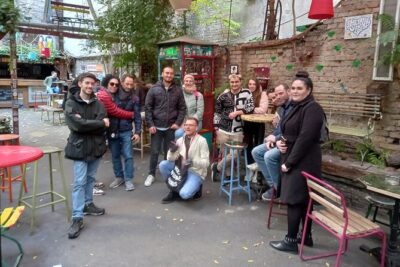

Art Nouveau Tour in Budapest: 3-Hour Private Tour
Read our review →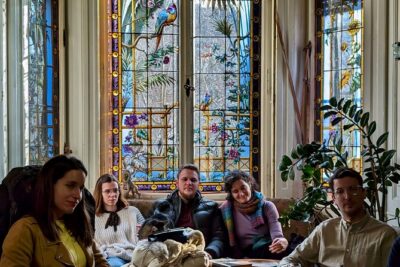
Art Nouveau Treasures of Budapest – Exclusive Private Tour
Read our review →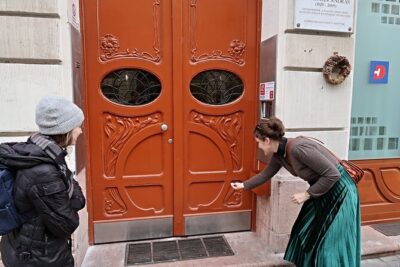
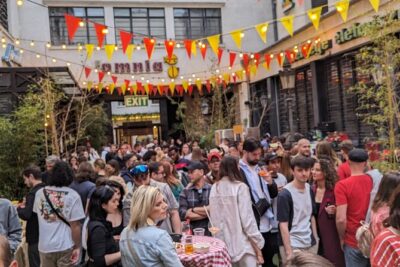
Budapest Vibe: Ruin Bars, Street Art and Culture Tour
Read our review →Browse the lists this tour appears in