
Reviewed · BUDAPEST JEWISH QUARTER TOURS
A Journey through Jewish Budapest – Private Walking Tour
Budapest’s Jewish quarter is not just a collection of handsome synagogues. It is a place where religious life, working-class neighborhoods, wartime persecution, and today’s city all meet within a few blocks. This private three-hour walk gives you a guide’s full attention as you move from the grand Dohány Street Synagogue to the sober Shoes on the Danube memorial.
I like the personal format, especially if you want to ask direct questions about Jewish religious traditions or Hungarian history. I also like the flexible pickup arrangement: your guide can meet you at a central hotel or flat and use walking, the metro, or the tram as needed. The main consideration is cost. At $396.52 for up to 10 people, it can be fair for a full group, but a couple or small party will pay much more per person, before synagogue admission.
Key points to know before booking
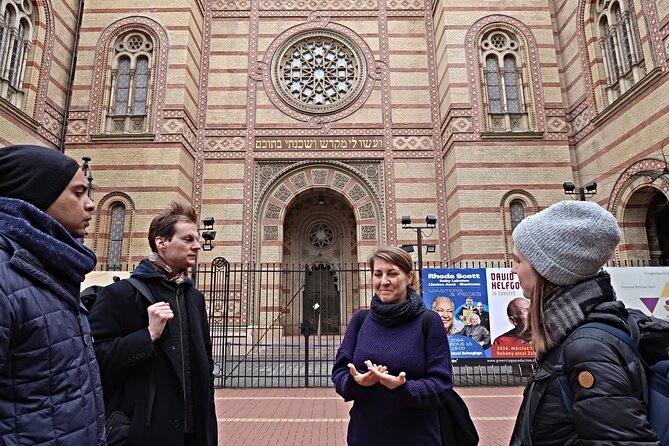
- Three major synagogues: See the Dohány, Kazinczy, and Rumbach synagogues, with interiors visited when open and admission paid separately.
- A private historian: The guide works only with your party, so you can ask questions and adjust the pace around your interests.
- A serious wartime history: The route ends at the Shoes on the Danube memorial, honoring Jews murdered during World War II.
- Pickup is practical: Your guide can meet you at a central hotel or flat and provide public transport tickets if you do not have a pass.
- Good for families: Guides such as Andrew have kept teenagers and pre-teens engaged while explaining difficult subjects.
- Dress for synagogue visits: Shoulders and knees should be covered, and comfortable shoes are important.
Why this private Jewish Budapest walk is different
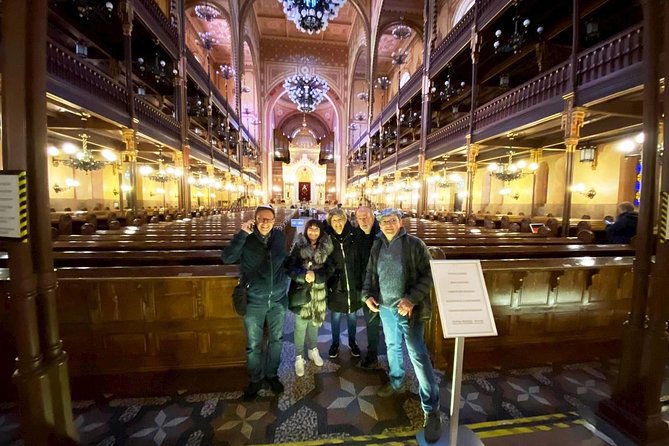
Budapest’s Jewish heritage is spread across several districts and periods. A casual stroll through District VII can show you cafes, bars, and restored buildings, but it will not always explain what stood there before the war or how different Jewish communities worshipped.
This tour gives you a historian guide for your own group. That matters because Jewish Budapest is not one simple story. The synagogues represent different religious traditions, and the streets carry memories of both ordinary neighborhood life and the Holocaust.
You can ask for more detail about religious practice, architecture, the former ghetto, or the modern Jewish community. The guide is also able to adapt the walk to your group’s pace. That is useful when traveling with children or when one person in your group has a strong interest in family history.
The tour lasts about three hours. Morning departures begin at 10 a.m. year round, while afternoon departures are available in certain seasons. You can choose a departure time when booking, but it is worth checking the exact schedule before you commit to other plans.
More Jewish Quarter tours in Budapest:
- Budapest Jewish Heritage Memorial Walking Tour & Synagogue Entry
★ 5.0 · 568 reviews - Budapest: Jewish Heritage Guided Tour with Synagogue Ticket
★ 4.8 · 533 reviews - Jewish Quarter of Budapest Walking Tour
★ 4.7 · 369 reviews
Starting at Dohány Street Synagogue
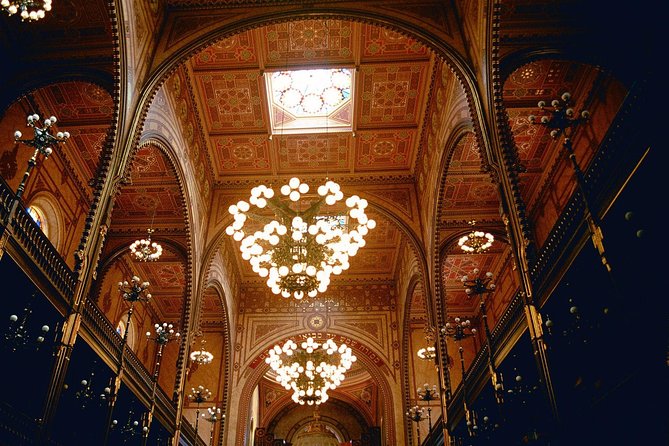
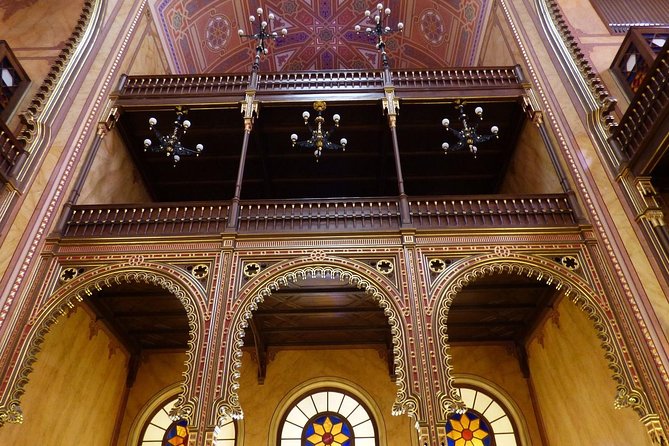
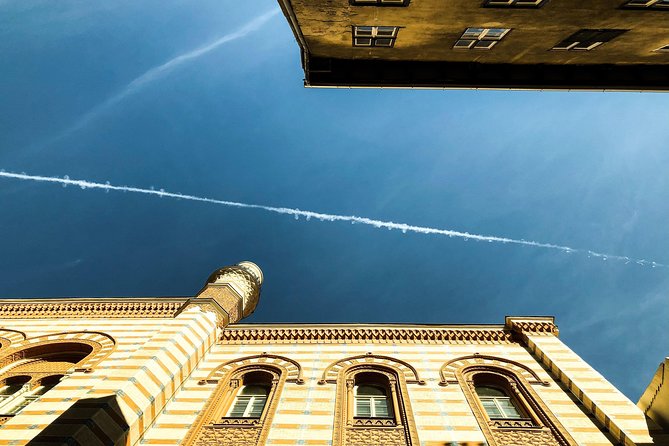
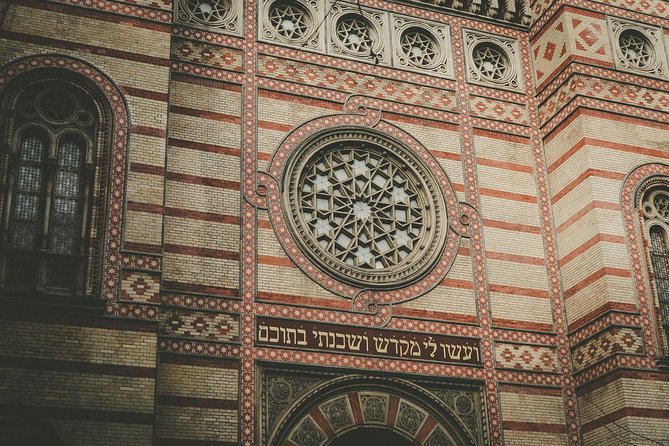
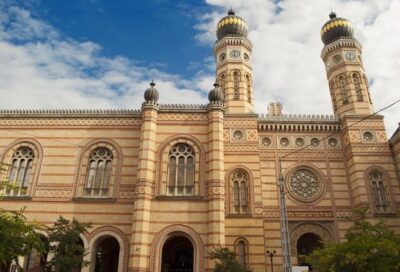
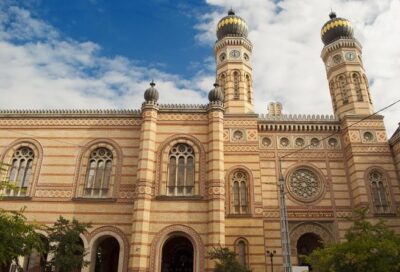
The Dohány Street Synagogue is the natural place to begin. Its scale can surprise you. It is the largest synagogue in Europe and the second-largest in the world, with a grand Moorish Revival design that looks unlike most churches or civic buildings in Budapest.
You spend about 30 minutes at the complex. That time includes more than the main prayer hall. The Temple of Heroes, the Jewish Museum, and the Memorial Park are all part of the visit, giving you several ways to understand the site.
The synagogue’s architecture is a major attraction, but the guide adds the context that the building alone cannot provide. You can ask about the community that worshipped here, the different Jewish traditions found in Budapest, and the effect of World War II on the district.
Admission is not included. Plan for that extra cost before booking, and check opening conditions if visiting the interior is important to you. The tour can still discuss the complex and its role in Jewish Budapest, but the full experience depends on access.
Because this stop is emotionally and historically weighty, families should decide how much detail suits their children. One guide, Andrew, was praised for keeping two teenagers and a pre-teen engaged during the walk. That suggests the format can work well for families, especially when you tell the guide in advance what your children can handle.
Kazinczy Street and the former ghetto
From Dohány, the walk continues toward Kazinczy Street. This part of the route brings you closer to the everyday streets of the old Jewish quarter, rather than keeping you inside major monuments.
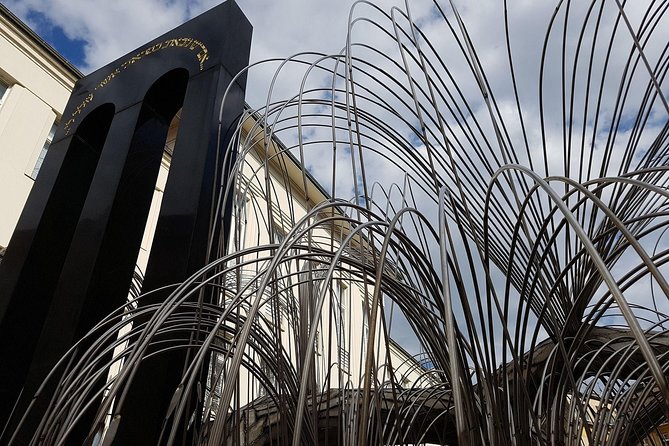
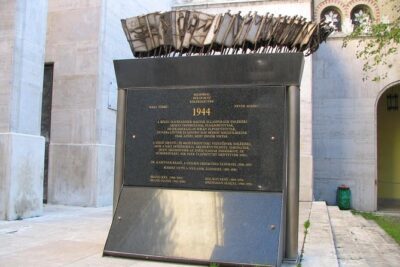
You pass the Ghetto Wall Memorial, erected in 2014, and see the exterior of the Art Nouveau Orthodox synagogue on Kazinczy Street. When it is open to the public, the tour visits the interior. Admission is separate.
The synagogue is important because it represents Orthodox Jewish life, giving you a useful contrast with the Dohány complex. The guide can help explain how different Jewish communities in Budapest organized their religious life and why several synagogue traditions developed within the same city.
You also pass a luxurious mikve, or Jewish ritual bath. This is a detail many independent visitors could easily miss. A mikve is not simply another historic room. It reflects Jewish religious practice and the role of ritual purity in communal life.
The surrounding streets were historically Jewish working-class neighborhoods. Walking here helps connect the religious buildings with the people who lived and worked nearby. The district has changed greatly, so a guide is especially useful in separating old Jewish landmarks from later additions and modern businesses.
Allow about 35 minutes for this section. If you want to see the interior, keep in mind that synagogue opening hours can affect the route. The guide cannot guarantee access when a building is closed.
Rumbach Street and the Status Quo Ante tradition
The Rumbach Street Synagogue provides a third architectural and religious viewpoint. You spend about 25 minutes learning about the Status Quo Ante stream of Judaism while observing the synagogue’s impressive facade.
The exterior alone makes this a worthwhile stop, but the inside is available when open to the public. Admission is not included, so budget for another ticket if you want to enter.
This stop works best when you are interested in differences within Jewish religious life. Rather than treating all Jewish institutions as the same, the tour places Dohány, Kazinczy, and Rumbach within their distinct traditions.
The three synagogues also create a clear rhythm for the walk. Dohány gives you the large ceremonial complex, Kazinczy connects you with Orthodox practice and the former ghetto, and Rumbach introduces the Status Quo Ante community. In a short tour, that comparison gives the history more shape.
You should not expect a long interior visit at each synagogue. The published timing is approximate, and access depends on opening conditions. If religious architecture is your main reason for booking, ask about current entry arrangements before the tour date.
More walking tours in Budapest:
- Budapest: Buda Castle Walk with Saint Stephen’s Hall
★ 4.5 · 3,012 reviews - Big Bus Budapest Hop-On Hop-Off Bus and Walking Tour
★ 3.5 · 2,206 reviews - Budapest: Buda Castle District Walking Tour
★ 4.6 · 2,108 reviews - Budapest City Landmarks Walking Tour in 2 Hours
★ 5.0 · 2,048 reviews
Ending at the Shoes on the Danube
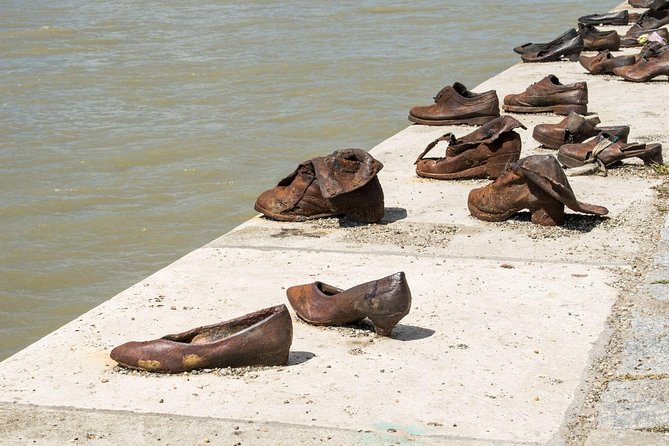
The tour concludes at the Shoes on the Danube Bank, a memorial erected in 2005. The bronze shoes represent Jewish people who were forced to remove their shoes before being shot at the riverbank by Fascist militia during World War II.
This is a quiet and direct memorial. The shoes are ordinary objects, which makes the scene especially difficult to take in. The riverfront setting also links the memorial to the geography of the city, rather than placing the history behind museum walls.
The stop lasts about 20 minutes and admission is free. Your guide can explain the event and help place it within the history of Budapest’s Jewish population during the war.
The tour ends here, rather than returning you to your hotel. That is useful if you plan to continue along the Danube, visit nearby sights, or make your own way to lunch. It also means you should not schedule a pickup or a faraway appointment immediately afterward without allowing extra time.
What the private format is worth
The advertised price is $396.52 for a group of up to 10 people. For a large family or group of friends, the price works out much better than it does for two people. Ten people would pay about $40 each before admission fees, while two people would pay close to $198 each.
That group pricing is the central value question. You are paying for a private historian rather than joining a larger scheduled walk. Your guide can answer personal questions, slow down for photographs, or spend more time on the subjects your group cares about.
Pickup adds practical value. Your guide can meet you at a central hotel or flat, then lead you by foot, metro, or tram. If you do not have a transport pass, tickets are provided. You will need to send your address when requested, or meet at Cafe Synago Kavehaz at Dohány utca 1/A about 10 minutes before the start.
The price does not include food, drinks, or admission to the Dohány, Rumbach, and Kazinczy synagogues. That makes the final cost higher than the headline figure. Still, for a group that wants a focused Jewish Budapest experience without arranging several separate visits, the private setup can be sensible.
The guides and the human side of the tour
The most important part of this experience is the guide. The tour is led by a historian, and the people who have guided it include Andrew, Oshi, and Kata. Oshi is described as a graduate in Jewish Studies, while Kata was praised for making the history of the Jewish quarter clear to a group of ten.
You should not assume that one named guide will lead every departure. Guide assignments can change, but these examples show the level of subject training offered by the company. When booking, you can mention if your group wants special attention to religion, family history, architecture, or the Holocaust.
A private guide can also make difficult material easier to discuss. The route includes persecution and mass murder, so a good conversation needs care and context. You are not simply moving from building to building. You are asking what these places meant to the people who used them and what happened to the community that built them.
Families may find this format more useful than a large group tour. Andrew was able to keep two teen and pre-teen boys interested, and the group later followed his recommendation for a Jewish restaurant. That restaurant suggestion is not part of the tour, but it shows how a private guide may help you continue the experience after the walk.
Walking, clothing, and timing advice
You need comfortable shoes. The tour requires a moderate amount of walking, and the route uses public transport or foot travel depending on the pickup point and the location of the sites.
Wear clothing that covers your shoulders and knees if you plan to enter the Dohány and Kazinczy synagogues. This is an easy detail to overlook, especially in warm weather. Dressing appropriately saves you from having to change plans or miss an interior visit.
The route is offered in English and includes a mobile ticket. Most people can take part, but the walking requirement makes the experience less suitable if your group has difficulty standing or walking for several hours.
Morning tours begin at 10 a.m. year round. Afternoon departures are offered in certain seasons, so check the available time rather than assuming a late departure will always be possible.
The tour is normally booked about 11 days ahead. That is a useful planning guide, not a guarantee. If you are visiting during a busy period or need a particular departure time, booking earlier gives you more room to arrange your day.
Who should book this experience
I would choose this tour if Jewish Budapest is a major reason for your visit, or if you want more than a quick look at the synagogue facades. It suits families, groups of friends, and anyone who prefers asking questions rather than listening to a fixed script.
It is also a strong choice for people who want the history explained in relation to the streets. The former ghetto, working-class neighborhoods, synagogue traditions, and river memorial make more sense when one guide connects them.
The tour may be less suitable if you want a low-cost introduction to Budapest, dislike walking, or plan to spend a long time inside each synagogue. Admission is extra, interior access depends on opening hours, and the private price is difficult to justify for a very small group unless the subject matters greatly to you.
You can cancel for a full refund up to 24 hours before the start time. Cancellations or changes made less than 24 hours before the start are not refunded or accepted.
Should you book A Journey through Jewish Budapest?
Book it if you want a serious, personal look at Budapest’s Jewish heritage and can fill much of the group capacity. The combination of three synagogue traditions, the former ghetto, and the Shoes on the Danube memorial gives you a clear three-hour route through both religious life and wartime history.
The strongest reason to choose it is the guide. People such as Andrew, Oshi, and Kata have brought Jewish Studies training, clear explanations, and a family-friendly touch to the walk. Ask for the subjects that matter most to you, dress properly for synagogue visits, and budget for the admission fees.
For a couple, the price requires more thought. For a group of six to ten, the private format offers much better value and a level of attention that a large group tour cannot match.
FAQ
How long is the Jewish Budapest walking tour?
The tour lasts approximately three hours.
What time does the tour start?
Morning departures begin at 10 a.m. year round. Afternoon departures are available in certain seasons, depending on the schedule selected when booking.
Is hotel pickup included?
Yes. The guide can meet you at a central hotel or flat. If you do not provide an address or do not want pickup, meet at Cafe Synago Kavehaz at Dohány utca 1/A about 10 minutes before the start.
Is this a private tour?
Yes. Only your group participates, with a maximum of 10 people.
Are synagogue admission tickets included?
No. Admission to the Dohány, Rumbach Street, and Kazinczy Street synagogues is not included.
Is public transportation included?
Your guide can lead you by metro, tram, or on foot. Transport tickets are provided if you do not already have a pass.
What should I wear?
Wear comfortable shoes and clothing that covers your shoulders and knees for visits to the Dohány and Kazinczy synagogues.
Can I cancel for a full refund?
Yes. You can cancel at least 24 hours before the experience starts for a full refund. Changes or cancellations made less than 24 hours before the start are not accepted or refunded.
Just added around Budapest
- Budapest: Danube River Views Bike Ride★ 4.8 · 23 reviews
- Budapest: City Bike Tour with Coffee Stop★ 5.0 · 37 reviews
- Budapest: Private Walking Tour with a Local Guide★ 3.6 · 6 reviews
- Budapest: Vacation Photographer to collect great memories★ 5.0 · 49 reviews
- Walk to recent and aged spiritual sanctuaries near Budapest★ 5.0 · 5 reviews
- From Budapest: Guided Tour of Eger with Wine Tasting★ 4.5 · 6 reviews
- Audio visual multi-sensory chefs journey dinner experience★ 5.0 · 3 reviews
- Budapest: 3-Hour Trabant Sightseeing Tour★ 4.7 · 28 reviews
Budapest Jewish Quarter Tours, compared.
Budapest Jewish Heritage Memorial Walking Tour & Synagogue Entry
Read our review →
Jewish Heritage Guided Tour with Synagogue Ticket
Read our review →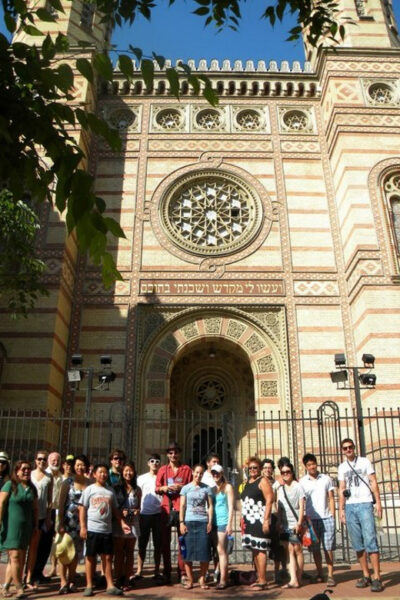
Past and Present of Budapest Jewish District Tour
Read our review →
Budapest Dohany Synagogue & Hungarian Jewish Museum & free extras
Read our review →
Jewish History Guided Walking Tour with Historian
Read our review →Browse the lists this tour appears in