
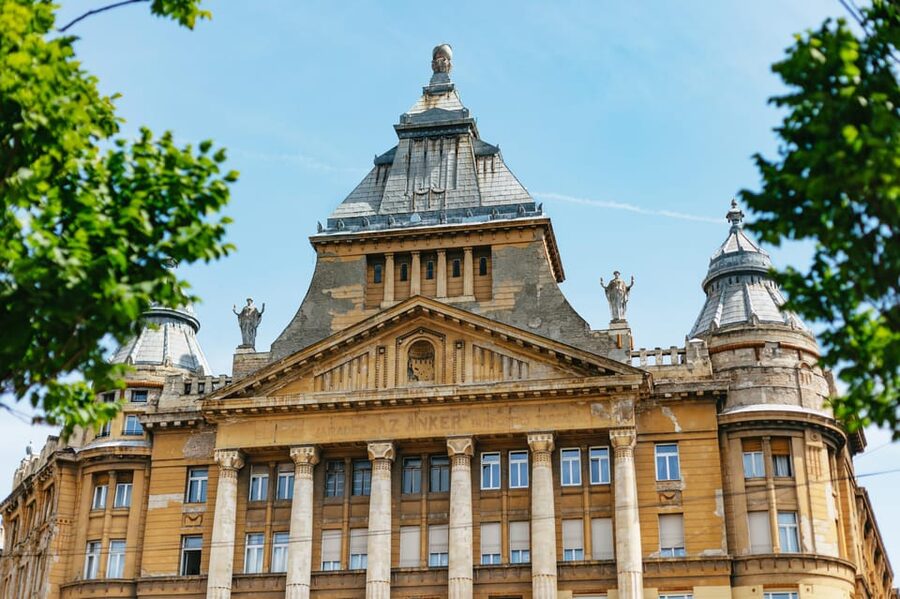
Reviewed · BUDAPEST JEWISH QUARTER TOURS
Budapest: Jewish History Guided Walking Tour with Historian
Budapest’s Jewish Quarter is not just a collection of grand synagogues and lively nightlife. It is a place where centuries of Jewish life, wartime persecution, rescue, memory, street art, kosher food, and ruin pubs sit close together. This walking tour gives you that full picture, with a historian guide leading the way through the 7th district.
I like the small groups of up to 10, which make it easier to hear the guide and ask questions. I also like the honest scope: you see the three main synagogues from the outside, then spend your time hearing the stories behind them rather than rushing through formal interiors.
The main drawback is clear: synagogue admission is not included. You also spend about 2.5 hours on foot, and the subject includes painful chapters of Hungarian history. That is part of the tour’s value, but it calls for attention rather than a breezy sightseeing mood.
Key points at a glance
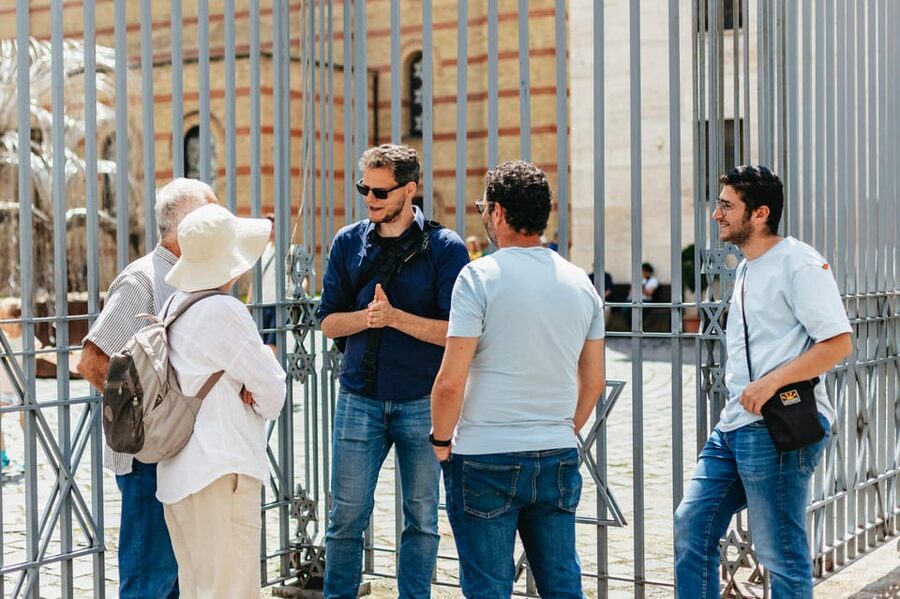
- Three major synagogue exteriors: See the Dohány Street, Rumbach Street, and Kazinczy Street synagogues from the outside.
- A serious look at wartime Budapest: Hear about the former ghetto and the people who helped save Jewish lives in 1944 and 1945.
- Historian-led storytelling: Guides such as Noémi, Gábor, András, Barbara, and Daniel have been praised for clear explanations, humor, and strong command of Hungarian history.
- Coffee and flódni: Take a 15-minute cafe break for coffee or a soft drink and a slice of traditional Jewish cake.
- Modern Jewish Quarter included: See Gozsdu Passage, street art, kosher businesses, nightlife, and ruin-pub areas.
- Easy central meeting point: Meet beside the Kempinski Hotel Corvinus, facing the Ferris wheel on Erzsébet Square.
Why the Jewish Quarter needs a guided walk
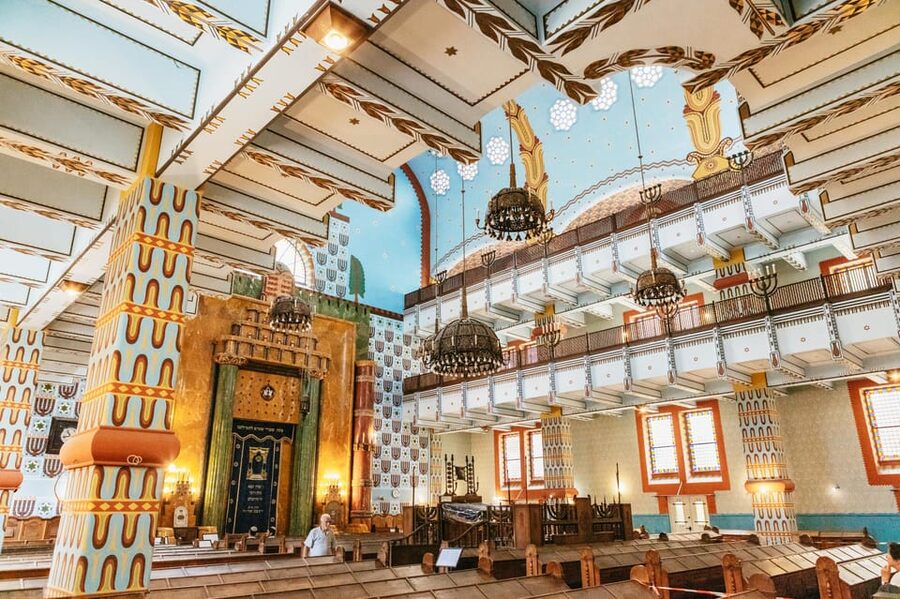
The 7th district can look like a party zone if you see it only through its bars, restaurants, and late-night crowds. A guide helps you read the streets differently. Behind the bright signs and renovated facades is the former Jewish Quarter, a district shaped by more than 200 years of Jewish life and by the violence of the Second World War.
I find the historical range especially useful. The tour does not begin and end in 1944. You hear about Jewish life in Hungary over the centuries, changing restrictions, migration, pressure to convert, and the place of Jewish communities within the wider story of Hungary. That background matters because the wartime story did not happen in isolation.
The guides also connect the past with present-day Budapest. You may hear about Jewish community life today, kosher shops and restaurants, the district’s changing streets, and the mix of memorials, nightlife, and new businesses. This gives you more than a list of tragic events. It helps you understand why this neighborhood still matters.
More Jewish Quarter tours in Budapest:
- Budapest Jewish Heritage Memorial Walking Tour & Synagogue Entry
★ 5.0 · 568 reviews - Budapest: Jewish Heritage Guided Tour with Synagogue Ticket
★ 4.8 · 533 reviews - Jewish Quarter of Budapest Walking Tour
★ 4.7 · 369 reviews
Starting beside the Ferris wheel on Erzsébet Square
The meeting point is in front of the Kempinski Hotel Corvinus Budapest, facing the Ferris wheel on Erzsébet Square. This is a practical place to meet because Deák Ferenc tér is one of Budapest’s main transport hubs. You can reach it by the M1, M2, or M3 metro lines, as well as several buses and trams.
Give yourself a few minutes to locate the guide. In a central square, the Ferris wheel is the useful landmark, not the hotel entrance alone. Once the group gathers, expect an English-language walking tour led by a historian guide.
The group is limited to 10 people. That size is large enough for a social outing but small enough for questions. It also helps when the guide stops on a busy street or outside a synagogue and needs everyone close enough to hear.
The first part sets Hungary’s Jewish story in context
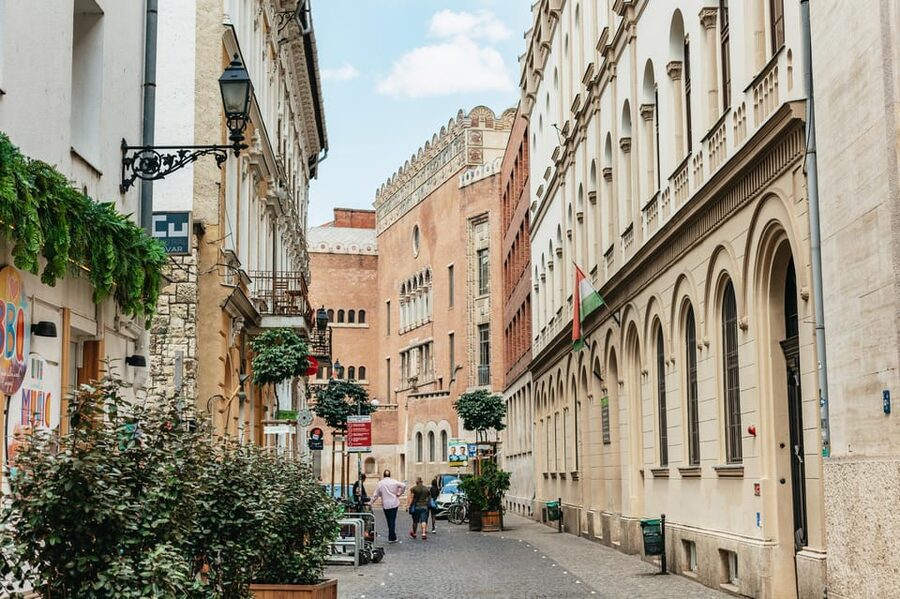
A strong part of this experience is the opening history lesson. One guide used a tablet to show how Hungary’s borders and political position changed over time, then explained how those shifts affected Jewish communities. That kind of visual introduction can be helpful if you know little about Hungarian history.
You will hear about restrictions placed on Jewish people and the pressures that encouraged conversion or pushed families to move. The details give context to the community’s growth and movement through Hungary and nearby regions.
The history is not softened. The tour addresses discrimination, political change, collaboration, persecution, and the destruction of Jewish life during the war. At the same time, it also covers endurance, community life, and the people who acted to protect others. Guides such as Noémi, Gábor, András, and Barbara have been praised for presenting difficult material clearly and with feeling, without turning it into a simple good-versus-bad story.
Dohány Street Synagogue: grand scale, limited access
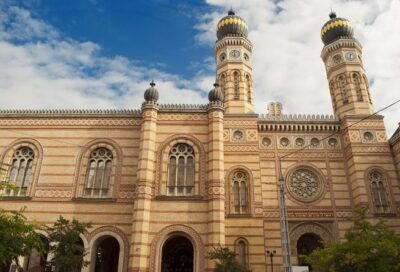
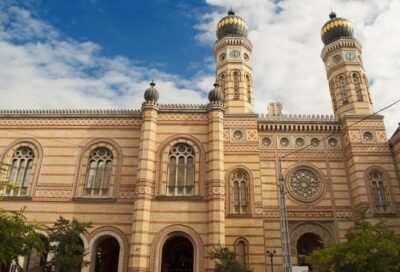
The Dohány Street Synagogue is one of the tour’s major visual stops. You will admire its exterior and learn why it is such an important part of Budapest’s Jewish identity. It is also described as the largest synagogue in Europe, giving the building a scale that is hard to miss even from the pavement.
The important practical point is that this walking tour does not include synagogue entry. You will not receive an interior visit to Dohány Street as part of the $63 price. If you want to see the inside, you need to arrange a separate admission or visit.
That limitation is not necessarily a weakness. The tour has a lot to cover, and stopping outside lets the guide explain the building alongside the surrounding streets, memorials, and former ghetto area. Still, if grand interiors are your main reason for visiting, include a separate synagogue visit in your Budapest plans.
More walking tours in Budapest:
- Budapest: Buda Castle Walk with Saint Stephen’s Hall
★ 4.5 · 3,012 reviews - Big Bus Budapest Hop-On Hop-Off Bus and Walking Tour
★ 3.5 · 2,206 reviews - Budapest: Buda Castle District Walking Tour
★ 4.6 · 2,108 reviews - Budapest City Landmarks Walking Tour in 2 Hours
★ 5.0 · 2,048 reviews
Rumbach and Kazinczy show different sides of the district
The walk also takes you past the exterior of the Rumbach Street Synagogue, built in 1872 by Viennese architect Otto Wagner. Its design gives the guide a chance to explain another strand of Budapest’s Jewish architectural and religious story.
The Kazinczy Street Orthodox Synagogue adds a different point of view. Seeing the three buildings together helps you understand that Budapest’s Jewish community was not one uniform group. The synagogues reflect different traditions and institutions within Jewish life.
The official format keeps these visits outside only. One account of a tour mentioned seeing the Rumbach synagogue in a way that caused some confusion about entry, so I would not book this experience expecting interior access. Treat the three exteriors as historical markers, then make separate plans if you want to go inside.
Walking through the former ghetto
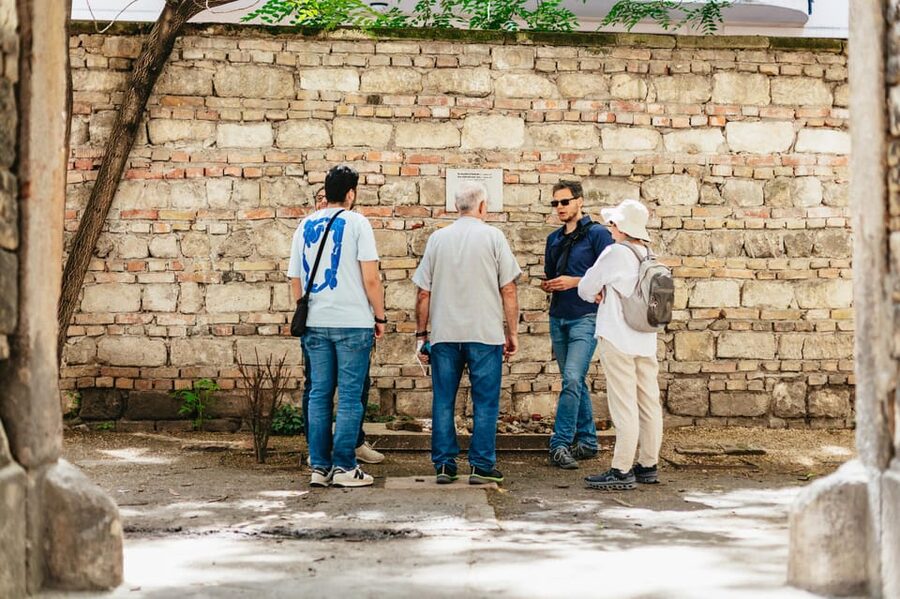
The former ghetto area is where the tour’s history becomes especially tangible. You walk streets that now hold synagogues, monuments, kosher businesses, cafes, and ordinary city life. The guide points out a remaining section of the original ghetto wall and explains how short the ghetto’s existence was, despite the enormous suffering connected with it.
That contrast can be unsettling. The area is not preserved as a museum quarter in every direction. Modern Budapest continues around the memorials and historic buildings. A guide helps you notice what a casual walk would miss, including small architectural details and the location of sites tied to Jewish life and wartime events.
The pace is generally steady rather than hurried. One visitor described it as a comfortable walk with accommodations for individual needs, while another noted that it is still a lot of walking, especially on a hot day. Wear practical shoes, carry water in warm weather, and dress for the forecast. The tour runs in all weather.
Raoul Wallenberg, Carl Lutz, and the rescuers
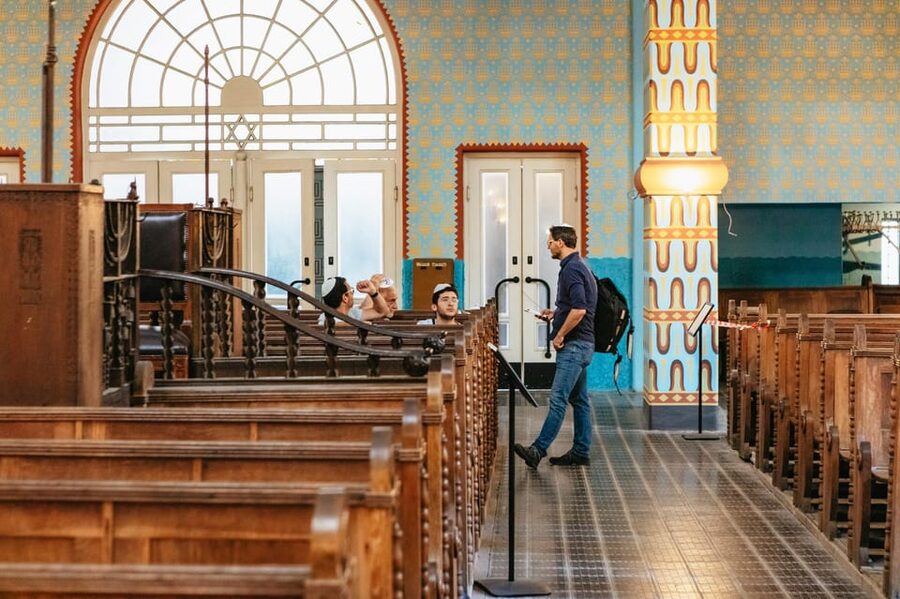
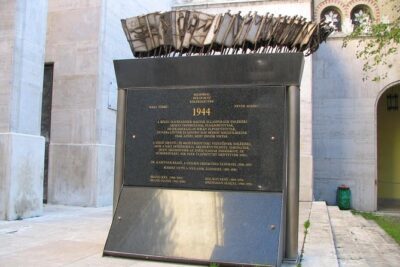
The tour gives proper attention to the people who helped save Jewish lives in the winter of 1944 and 1945. At memorials connected with Raoul Wallenberg and Carl Lutz, you hear how individual action mattered during a period of mass persecution.
Both men received the title Righteous Among the Nations. Their stories add a necessary human scale to the wider history. Instead of hearing only about governments, laws, and armies, you also learn about people who used their positions and courage to protect others.
This section can be emotionally heavy. The subject is presented as part of the wider history of Budapest, not as a sentimental break from it. Guides have been praised for not glossing over Hungary’s role in the treatment of Jewish people, while also explaining the acts of rescue and solidarity that took place.
Gozsdu Passage and the modern 7th district
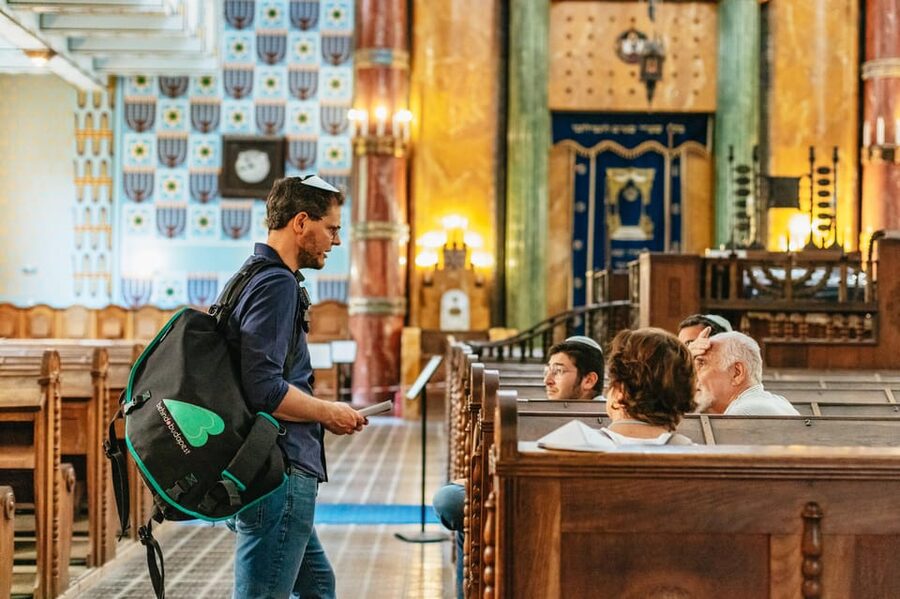
The walk passes through Gozsdu Passage, one of the livelier parts of the district. Here, the tour shifts from memorials and synagogues to the present-day neighborhood, with its restaurants, shops, street art, and nightlife.
You will also receive local tips about ruin pubs and the district after dark. That is useful if you plan to return later, although the tour is not a pub crawl. The guide’s job is to show how the area changed and how historic streets now serve a new social life.
The street-art element adds visual variety. After several serious historical stops, colorful murals and urban artwork remind you that the Jewish Quarter is not frozen in the past. The modern scene can also create an uneasy contrast with the memorials nearby, and that tension is part of understanding the district today.
The flódni break adds a local taste
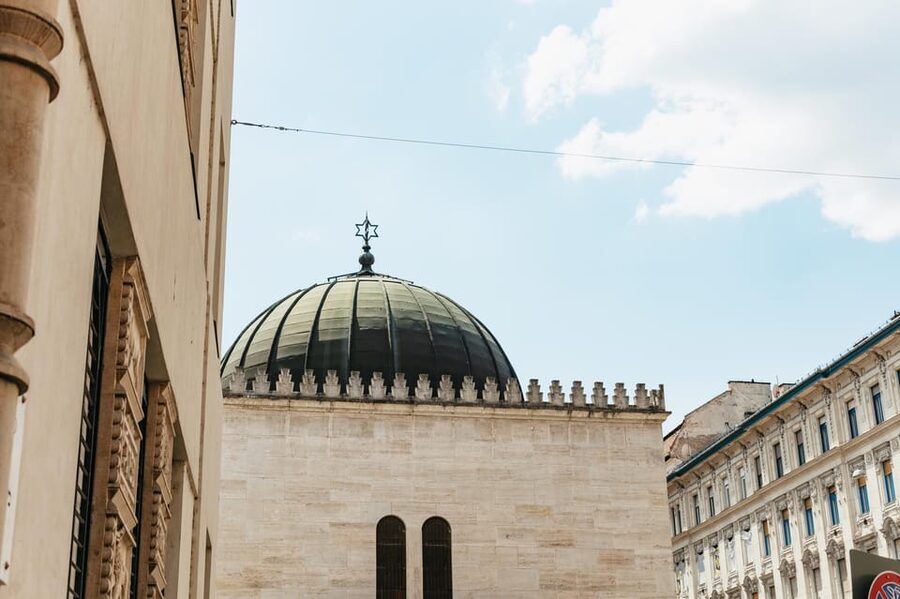
Near the end, you stop at a local cafe for about 15 minutes. The included refreshment is a coffee or soft drink with flódni, a Jewish Hungarian cake.
This is a small part of the tour, but it works well. Food gives you a way to connect Jewish culture with everyday life, rather than treating the community only through monuments and suffering. The break also gives your feet a rest and creates a natural moment for questions.
Do not expect a full meal. The cake and drink are a modest refreshment, not a substitute for lunch. If you need a substantial meal afterward, the guide can point you toward the area’s restaurants and kosher options.
How the guides shape the experience
The guide makes a large difference on a history walk. This tour uses different English-speaking guides, including Noémi, Gábor, András, Barbara, Daniel, Judit, Maggie, and others. Their styles vary, but the strongest pattern is clear: the tour works best when the guide connects dates and buildings with stories.
Gábor has been praised for humor, warmth, and the ability to handle questions. Noémi has been singled out for her passion, clear communication, and care with a difficult subject. András has been described as engaging and good at combining Hungarian history with the Jewish Quarter. Daniel has been praised for storytelling, while Barbara has added family experience to the history.
You should expect room for questions, though the available time is limited. A 2.5-hour walk can cover a lot, but it cannot explain every period or building in detail. If you want a highly academic lecture or an exhaustive family-history investigation, this is not that. It is a focused city walk with historical depth and local context.
Is $63 a fair price?
At $63 per person, this is not the cheapest way to walk around Budapest. The price includes a historian guide, a small-group walking tour, and coffee or a soft drink with flódni. It does not include entry to any synagogue.
I think the value depends on what you want from the visit. If you only want exterior photographs, you can see much of the district on your own. If you want to understand why the buildings, memorials, and streets matter, the guide is the main purchase. The small group also gives you a better chance to hear the explanation and ask questions than a large coach tour.
The price feels more justified for visitors who are new to Hungarian history or who want an honest account of the Jewish Quarter. It is less attractive if you already know the district well or mainly want interior synagogue visits. In that case, compare the cost with a self-guided walk plus separate admission to the buildings you most want to enter.
Who should book this walk?
I would choose this tour early in a Budapest stay if you want historical bearings. It introduces the 7th district, gives you local nightlife pointers, and helps you recognize important sites when you return on your own.
It suits:
- First-time visitors who want more than postcard sights
- People interested in Jewish history and Hungarian history
- Families with older children who can manage a serious subject and a long walk
- Visitors who prefer small groups and time for questions
- Anyone who wants a local guide rather than a self-guided route
You should think twice if you dislike walking, want a light entertainment tour, or expect to enter all three synagogues. The material includes persecution and wartime suffering, so it deserves a respectful frame of mind.
Practical details before you go
The tour lasts 2.5 hours, with roughly 2 hours and 15 minutes devoted to the walking portion and about 15 minutes for coffee and cake. Start times vary, so check availability when booking.
Meet at the Kempinski Hotel Corvinus, facing the Ferris wheel on Erzsébet Square. Deák Ferenc tér is the nearest useful transport stop, served by the M1, M2, and M3 metro lines plus buses and trams.
Wear shoes suited to city walking and dress for rain, heat, or cold. The tour runs in all weather. The group is capped at 10, and the live guide speaks English.
Free cancellation is available up to 24 hours before the tour for a full refund. You can also reserve and pay later, which helps if your Budapest schedule is still changing.
Should you book the Budapest Jewish History Walking Tour?
Yes, if you want the Jewish Quarter explained rather than simply photographed. The best parts are the honest historical account, the small group, the stories of Wallenberg and Lutz, and the way the walk connects memorials with present-day Budapest.
Book it with realistic expectations. You will see the three major synagogues from outside, not tour their interiors. You will walk a fair distance, cover painful history, and spend only 15 minutes on the cafe stop. For many visitors, that balance makes the tour worthwhile: serious history, clear local guidance, a taste of flódni, and a better sense of what the 7th district means today.
FAQ
How long is the Jewish history walking tour?
The tour lasts 2.5 hours. About 2 hours and 15 minutes are spent on the guided walk, followed by about 15 minutes for coffee and dessert.
What is included in the price?
The price includes the historian guide, the walking tour, and a Jewish cake called flódni with coffee or a soft drink at a local cafe.
Are synagogue entrance tickets included?
No. The tour visits the Dohány Street, Rumbach Street, and Kazinczy Street synagogues from the outside only. Entry to the synagogues is not included.
Which language is the tour conducted in?
The live tour guide speaks English.
Where does the tour meet?
Meet in front of the Kempinski Hotel Corvinus Budapest, facing the Ferris wheel on Erzsébet Square.
How can I reach the meeting point?
You can reach the area by the M1, M2, or M3 metro lines, as well as several buses and trams. Get off at Deák Ferenc tér.
Does the tour operate in bad weather?
Yes. The tour starts in all weather conditions, so dress appropriately for the forecast.
Can I cancel the tour for a refund?
Yes. You can cancel up to 24 hours in advance for a full refund. You can also reserve now and pay later.
More history tours in Budapest
- Budapest: Historic Cruise with Welcome Drink
★ 4.7 · 6,512 reviews - Budapest Historical Sightseeing – Free Walking Tour
★ 5.0 · 1,302 reviews - Buda Castle District Dark History, Legends and Vampire Night Tour
★ 4.5 · 1,240 reviews - BloodThirsty Hungary: Walking tour & Dark Historical Stories
★ 4.9 · 633 reviews
Just added around Budapest
- Budapest: Danube River Views Bike Ride★ 4.8 · 23 reviews
- Budapest: City Bike Tour with Coffee Stop★ 5.0 · 37 reviews
- Budapest: Private Walking Tour with a Local Guide★ 3.6 · 6 reviews
- Budapest: Vacation Photographer to collect great memories★ 5.0 · 49 reviews
- Walk to recent and aged spiritual sanctuaries near Budapest★ 5.0 · 5 reviews
- From Budapest: Guided Tour of Eger with Wine Tasting★ 4.5 · 6 reviews
- Audio visual multi-sensory chefs journey dinner experience★ 5.0 · 3 reviews
- Budapest: 3-Hour Trabant Sightseeing Tour★ 4.7 · 28 reviews
Budapest Jewish Quarter Tours, compared.
Budapest Jewish Heritage Memorial Walking Tour & Synagogue Entry
Read our review →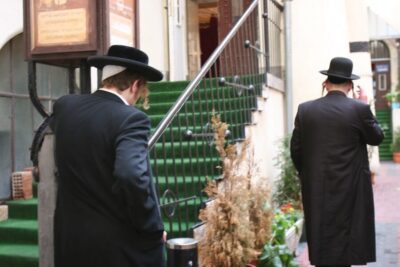
Jewish Heritage Guided Tour with Synagogue Ticket
Read our review →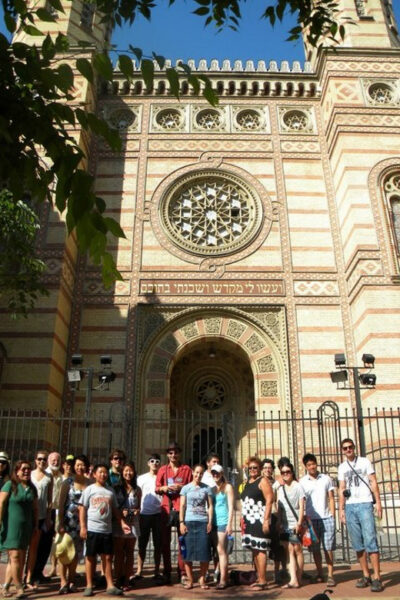
Past and Present of Budapest Jewish District Tour
Read our review →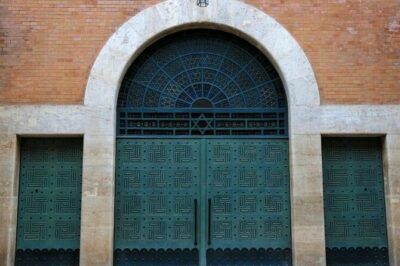
Budapest Dohany Synagogue & Hungarian Jewish Museum & free extras
Read our review →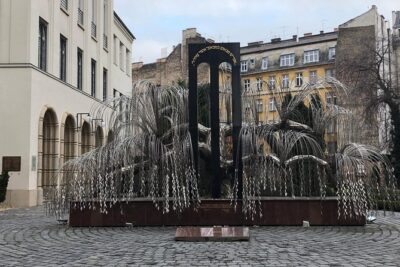
Budapest Dohany, Heroes’, Rumbach synagogues & Jewish Ghetto Tour
Read our review →Browse the lists this tour appears in