
Reviewed · BUDAPEST JEWISH QUARTER TOURS
Budapest: Jewish District Private Walking Tour
Budapest’s Jewish Quarter packs centuries of Jewish life, memorials, grand synagogues, food stalls, ruin bars, and striking murals into a compact central district. This private walk connects those pieces in a way that gives you both the solemn history and the neighborhood’s modern edge.
I like the three-synagogue route, especially the contrast between restored Rumbach Street, immense Dohány Street, and Art Nouveau Kazinczy Street. I also like the private format, since guides such as Eszter, Emi, Andras, and Gary have been praised for answering questions, adapting the walk, and sometimes continuing beyond the three-hour mark.
The main catch is cost control: the $229 group price covers up to 20 people, but entrance tickets, food, and drinks cost extra. Synagogue interiors are optional, and closures on Friday afternoons, Saturdays, and Jewish high holidays can change the shape of the tour.
Key points at a glance
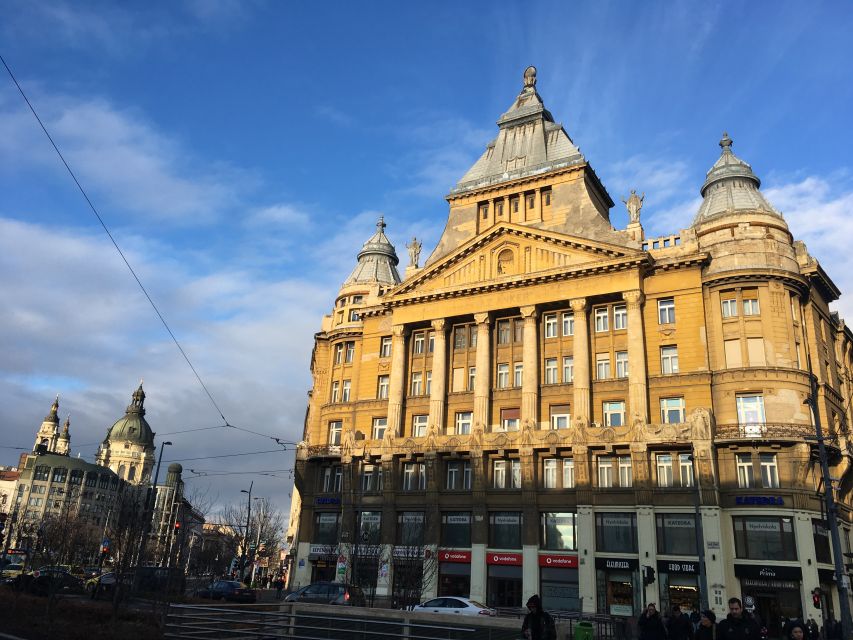
- Three distinct synagogues: Compare the restored Rumbach Street building, Europe’s largest synagogue on Dohány Street, and Kazinczy Street’s Art Nouveau Orthodox synagogue.
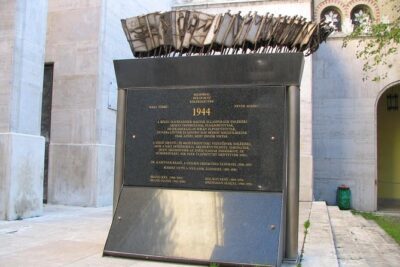
- A serious memorial stop: See the Raoul Wallenberg Memorial Garden and its Tree of Life monument beside the Hungarian Jewish Museum.
- History with a modern street view: Gozsdu Court, murals, street art, food, and bars show how the district functions today.
- A private English-speaking guide: Your guide meets you at your hotel or another agreed location, with the route shaped around your interests.
- A taste of Budapest nightlife: Finish at Szimpla Kert, one of the original ruin bars, with drinks purchased separately.
- Plan synagogue visits carefully: Interiors are optional, tickets are extra, and religious closures affect access.
Why this Jewish Quarter walk works
The Jewish Quarter is easy to treat as a nightlife zone. Gozsdu Court and Szimpla Kert draw crowds for food and drinks, while colorful murals cover walls along the streets. Yet the district also contains places connected to Jewish worship, wartime persecution, postwar survival, and present-day community life.
This tour puts those layers side by side. You might begin with an ornate synagogue, pause at a memorial garden, then turn a corner toward street art or a food court. That change of mood is not a distraction. It helps you see that the quarter is a living part of Budapest, not an open-air museum frozen in the past.
A private guide is useful here because the subject can become complicated quickly. You can ask how the synagogues differ, what happened to Jewish life in Budapest, or why the district now has such a strong bar and art scene. The guides named in the feedback, including Eszter, Emi, Andras, and Gary, received strong praise for clear explanations, warmth, flexibility, and sensitivity.
The three-hour length is enough for a serious introduction, though not enough for a slow visit at every stop. If you want long interior visits, extensive museum time, and a full food crawl, you will need to keep the pace brisk or accept that some stops receive only a short look.
More Jewish Quarter tours in Budapest:
- Budapest Jewish Heritage Memorial Walking Tour & Synagogue Entry
★ 5.0 · 568 reviews - Budapest: Jewish Heritage Guided Tour with Synagogue Ticket
★ 4.8 · 533 reviews - Jewish Quarter of Budapest Walking Tour
★ 4.7 · 369 reviews
Rumbach Street Synagogue begins the story
The first synagogue stop is on Rumbach Street. The building has recently been restored, and its appearance is described as exceptionally beautiful. That restoration gives you a chance to see how much care can go into bringing a historic religious building back into use and public view.
Your guide can set the building in the wider story of Jewish Budapest before the route moves to the larger Dohány Street complex. The value of starting here is scale. Rumbach offers a more intimate setting than the enormous synagogue nearby, so you can begin by noticing architectural details rather than simply confronting a vast interior.
The interior visit is optional and requires a separate ticket. Do not assume the ticket is included in the $229 price. The tour information also says you can skip the ticket line, but you still need to pay the entrance fee if you choose to go inside.
Dohány Street and the Hungarian Jewish Museum
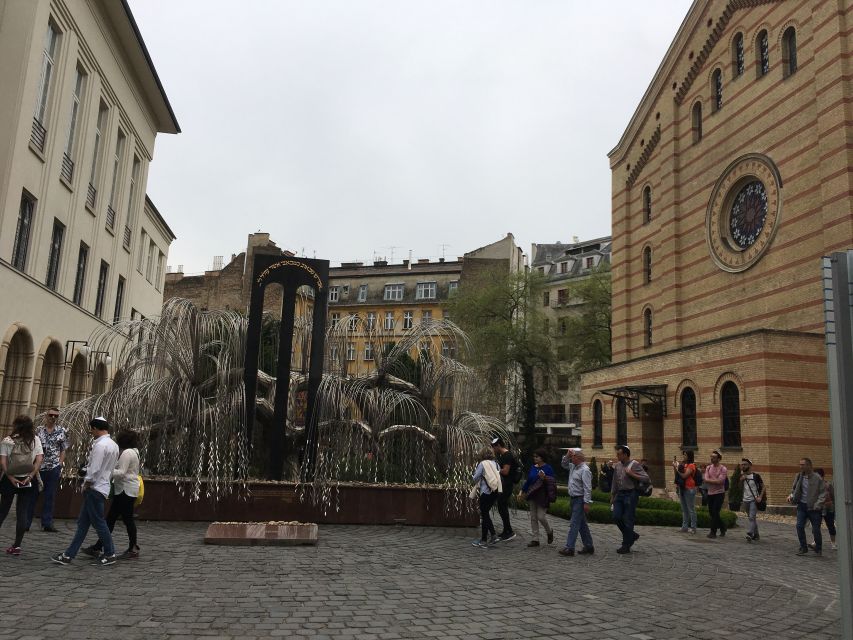
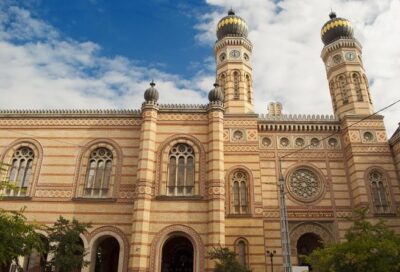
Dohány Street Synagogue is the route’s major landmark. It is described as the largest synagogue in Europe, and its size gives the visit real weight. Even before your guide explains the building, you can expect a very different experience from the smaller Rumbach synagogue.
The visit is not only about architecture. Your guide uses the synagogue and the Hungarian Jewish Museum to explain Jewish life in Budapest across time, including both earlier community life and the painful events that reshaped it. This is where the tour moves beyond pretty buildings and gives the district its human context.
Allow yourself to listen closely here. A three-hour walk can tempt you to rush from one photo stop to the next, but the museum and synagogue provide the background needed to understand the rest of the route. The guide’s role matters most at this point, since the meaning of the buildings cannot be read from their facades alone.
The museum entrance is also outside the tour price. If you want to see the interiors, confirm the ticket arrangements when booking and tell the guide what matters most to you. A private tour gives you some room to make that choice, but the total cost will rise when admission fees are added.
The Tree of Life and the Raoul Wallenberg Memorial Garden
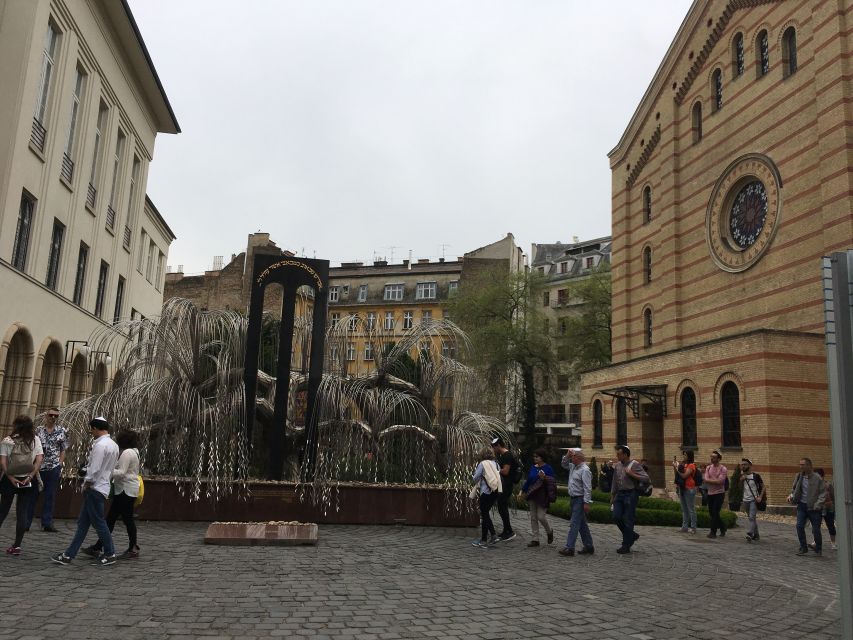
The route continues to the Raoul Wallenberg Memorial Garden, home to the Tree of Life monument. This is one of the tour’s most important pauses because it gives the historical discussion a physical place for reflection.
The Tree of Life is shaped like an inverted willow tree, with names connected to Hungarian Jewish victims written on its leaves. The supplied tour information specifically highlights the monument, so plan on taking time to see it rather than treating the garden as a quick passage between buildings.
This stop also changes the rhythm. Synagogues ask you to look upward at architecture and interiors. A memorial garden asks you to slow down and consider individual loss. A sensitive guide can help you understand why this setting matters without turning the visit into a lecture that ignores the place itself.
The walk is best suited to visitors willing to give the serious sections their proper attention. You will also see bars, food stalls, and murals later, but the memorial is not simply another sightseeing item to check off.
More walking tours in Budapest:
- Budapest: Buda Castle Walk with Saint Stephen’s Hall
★ 4.5 · 3,012 reviews - Big Bus Budapest Hop-On Hop-Off Bus and Walking Tour
★ 3.5 · 2,206 reviews - Budapest: Buda Castle District Walking Tour
★ 4.6 · 2,108 reviews - Budapest City Landmarks Walking Tour in 2 Hours
★ 5.0 · 2,048 reviews
Kazinczy Street reveals an Orthodox tradition
Kazinczy Street Synagogue is the final synagogue stop and brings a different architectural and religious perspective. Its Art Nouveau design is a key reason to include it, and you can choose to explore the inside as well as the exterior.
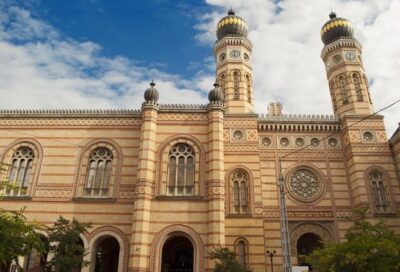
The contrast among the three synagogues is one of the strongest reasons to book this route. Rumbach shows careful restoration, Dohány provides grand scale, and Kazinczy adds the decorative curves and details associated with Art Nouveau. The route also presents different strands of Jewish life rather than treating the community as one uniform story.
The interior visit remains optional and carries an extra cost. If you are mainly interested in architecture, this may be the stop where you most want to go inside. If your priority is street life and murals, you might prefer to keep moving and use the time for the later part of the walk.
Ask your guide how much time remains before entering. That is one advantage of a private group. You can make an informed choice instead of following a fixed schedule designed for a large public tour.
Gozsdu Court brings food and daily life into view
Gozsdu Court shifts the tour from religious buildings and memorials to the Jewish Quarter’s food and beverage scene. The passage is known as a district for eating and drinking, so it gives you a practical look at how people use this part of Budapest today.
Food and drinks are not included. You can try something here if the timing suits your group, but any purchase is on your own budget. Since the tour is only three hours, you may get a taste of the area rather than a full meal.
I like this part of the route because it keeps the tour from becoming too solemn. A neighborhood is not defined only by its painful past. Cafes, food counters, bars, and people meeting friends show the district as it functions now.
Still, the contrast may feel abrupt if you expect a purely historical walk. The guide needs to handle the transition carefully, explaining how the area’s current identity relates to its past without suggesting that nightlife replaces the community and memory that came before it.
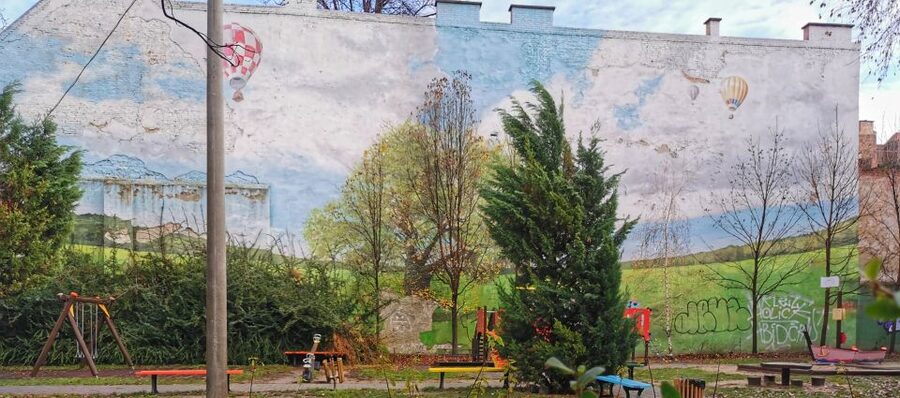
Murals and street art add a modern layer
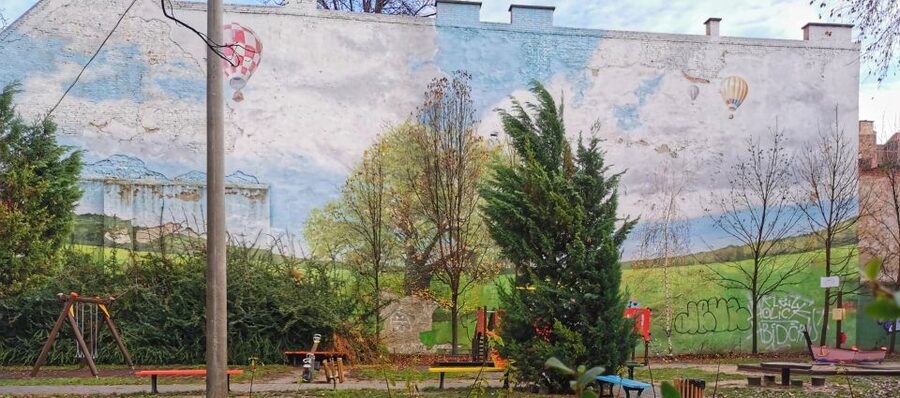
Street art appears throughout the walk, particularly as you move through the more bohemian side of the quarter. You will see famous murals and underground street art mixed into the streets around the synagogues, food spots, and bars.
These works give you a different way to read Budapest. A mural may comment on local identity, public memory, or city life, while a synagogue communicates through architecture and ritual. The tour lets you compare those forms of expression as you walk.
Do not expect a dedicated street-art workshop. The main purpose is to show how the art fits into the neighborhood. Your guide can point out notable works and explain their place in the district, but the itinerary gives equal weight to Jewish heritage and present-day street culture.
For photographers, this portion adds variety. You can move from stonework and restored interiors to painted walls and busy courtyards within a short distance. Keep your attention on the surroundings, though, since the district’s streets can be lively and the guide’s commentary is part of the value.
Szimpla Kert finishes with a drink
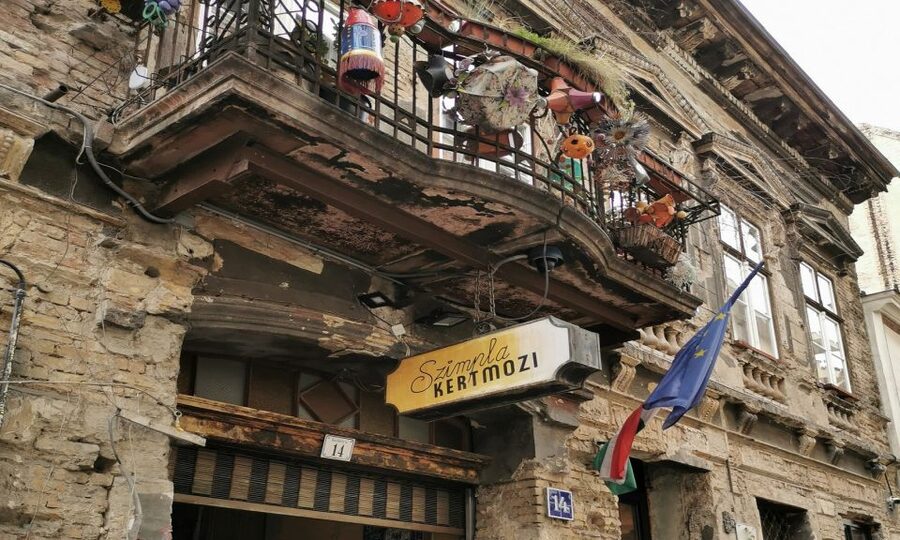
The final stop is Szimpla Kert, one of Budapest’s original ruin bars. The bar occupies a bohemian space and is a useful example of the neighborhood’s newer identity. You can try drinks here, but they are not included in the tour price.
This is a relaxed way to finish a walk that includes difficult history. You can ask follow-up questions, compare the different parts of the quarter, or simply take in the unusual setting. The stop is not a formal tasting, so do not book this expecting included samples or a guided bar crawl.
Szimpla Kert can also be a useful reference point for exploring later on your own. If you enjoy the atmosphere, you already have a place to return to after the tour. If bars are not your interest, tell your guide in advance and ask how the final part of the walk can be adjusted.
What $229 means for your group
The price is $229 for a private group of up to 20 people. For a full group, that works out to about $11.45 per person before admission fees. For two people, the same booking works out to $114.50 each, so the value depends heavily on group size.
A large family or class can get good value from the arrangement. You have one guide for your group, hotel pickup, and the freedom to ask questions without sharing the walk with strangers. A class used this format and found the tour interactive, with detailed answers from Eszter.
For a couple or small group, the price is harder to justify if you are comparing it with a standard group walk. The private format becomes more worthwhile if you care about Jewish history, want to set the pace, need pickup at a specific location, or prefer a guide who can adjust the discussion to your interests.
Remember to add synagogue and museum admission, plus any food or drinks at Gozsdu Court or Szimpla Kert. The total can be noticeably higher than the headline price, especially if several people choose every interior visit.
Timing, clothing, and access
The tour lasts three hours and offers starting times based on availability. Your guide meets you in your hotel lobby or at another location you request in advance, which saves you the trouble of finding a meeting point in central Budapest.
The synagogues are closed on Friday afternoons, Saturdays, and Jewish high holidays. This is the most important scheduling detail. Check the date carefully if the synagogue interiors are a main reason for booking, because the walking route may still operate while the interior visits cannot.
Wear clothing suitable for synagogue visits. Sleeveless shirts are not allowed, and large bags or luggage are also prohibited. Leave heavy luggage at your accommodation rather than trying to bring it along.
Wheelchair assistance may be possible, but you need to contact the provider in advance. Do not wait until the day of the tour to raise the question, since the route includes several buildings and interior access may require planning.
The tour is offered in English with a live guide. The private format also means you can explain your pace and interests before you start. Guides have been praised for being friendly, flexible, and clear, but the specific guide assigned to you may vary.
Who should book this walk?
I would recommend it to anyone who wants more than a quick photograph outside Dohány Street Synagogue. It suits first-time visitors who want a guided introduction to Jewish Budapest and people who value the ability to ask direct questions.
It is particularly useful for:
- Families or school groups that need an interactive private guide
- Visitors interested in architecture and religious history
- People who want to connect memorials with present-day neighborhood life
- Small groups that prefer a flexible route and hotel pickup
- Curious food and nightlife fans who also want historical context
You may want a different experience if your main goal is a long museum visit, a full food tour, or an evening centered on ruin bars. The tour touches all these subjects, but history and synagogue visits remain its core.
Should you book the Jewish District Private Walking Tour?
Book it if you want a serious, personal introduction to Budapest’s Jewish Quarter, with enough modern street life to keep the walk varied. The strongest parts are the three contrasting synagogues, the Tree of Life memorial, and the chance to ask a guide detailed questions in a private setting.
Before paying, confirm the day, the guide’s meeting point, and which interior visits you want. Budget for tickets separately, dress appropriately for the synagogues, and avoid Friday afternoons, Saturdays, and Jewish high holidays if going inside matters to you.
For a large group, the $229 price can be sensible. For only two people, it is a premium choice, but the private pace and guide access may make it worthwhile if this history is high on your Budapest list.
FAQ
How long does the Jewish District Private Walking Tour last?
The tour lasts three hours. Starting times depend on availability.
What is included in the price?
The price includes a private English-speaking guide and pickup at your hotel or another location agreed in advance.
Are synagogue entrance tickets included?
No. Entrance tickets are not included. Interior synagogue visits are optional and require separate payment.
Which synagogues are included?
The route includes Rumbach Street Synagogue, Dohány Street Synagogue, and Kazinczy Street Orthodox Synagogue.
Does the tour include food or drinks?
No. Food and drinks at Gozsdu Court or Szimpla Kert are not included in the tour price.
Is this a private tour?
Yes. It is a private group experience for up to 20 people.
When are the synagogues closed?
The synagogues are closed on Friday afternoons, Saturdays, and Jewish high holidays.
What should I avoid bringing or wearing?
Large bags and luggage are not allowed. Sleeveless shirts are also not allowed. Contact the provider in advance if you need wheelchair assistance.
Just added around Budapest
- Budapest: Danube River Views Bike Ride★ 4.8 · 23 reviews
- Budapest: City Bike Tour with Coffee Stop★ 5.0 · 37 reviews
- Budapest: Private Walking Tour with a Local Guide★ 3.6 · 6 reviews
- Budapest: Vacation Photographer to collect great memories★ 5.0 · 49 reviews
- Walk to recent and aged spiritual sanctuaries near Budapest★ 5.0 · 5 reviews
- From Budapest: Guided Tour of Eger with Wine Tasting★ 4.5 · 6 reviews
- Audio visual multi-sensory chefs journey dinner experience★ 5.0 · 3 reviews
- Budapest: 3-Hour Trabant Sightseeing Tour★ 4.7 · 28 reviews
Budapest Jewish Quarter Tours, compared.
Budapest Jewish Heritage Memorial Walking Tour & Synagogue Entry
Read our review →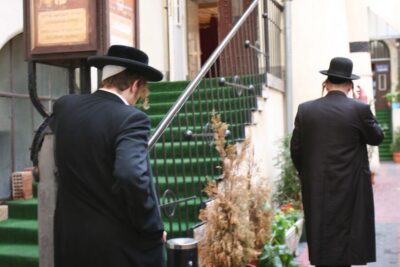
Jewish Heritage Guided Tour with Synagogue Ticket
Read our review →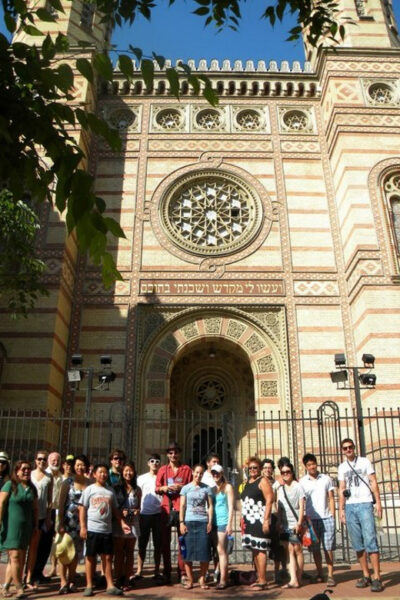
Past and Present of Budapest Jewish District Tour
Read our review →
Budapest Dohany Synagogue & Hungarian Jewish Museum & free extras
Read our review →
Jewish History Guided Walking Tour with Historian
Read our review →Browse the lists this tour appears in