
Reviewed · BUDAPEST COOKING CLASSES
Budapest: Hungarian Cooking Class and Market Walk
Budapest’s Central Market Hall is only the starting point here. You’ll taste paprika, sausages, cheeses, pickled foods, and Hungarian spirits before walking to an apartment kitchen to prepare a family recipe with your guide and fellow cooks. George, Marcell, Emese, and Kinga are among the hosts who lead the experience.
I like the way this combines a market visit with a proper meal, rather than leaving you with a few samples and a shopping list. I also like the choice of dishes, from chicken paprikash and beef goulash to mushroom paprikas or lecsó for vegetarians and vegans. The main consideration is alcohol: wine and pálinka are included, so guests who do not drink should mention that when booking and check what alternatives are available.
Key Points to Know
- Central Market Hall first: Meet by the main entrance near the yellow tram stop, then explore Budapest’s famous indoor market with tastings.
- Family recipes: Prepare a Hungarian main course in an apartment kitchen, with recipes passed down through the host’s family.
- More than a cooking lesson: The four-hour outing blends food, history, local customs, and conversation with a shared meal.
- Several dish choices: Pick chicken paprikash, beef goulash, mushroom paprikas, lecsó, or another option confirmed with the host.
- Food and drink included: Expect cold cuts, cheeses, meats, wine, pálinka, snacks, and a small souvenir.
- Plan dietary needs early: Vegetarian, vegan, and halal arrangements are possible, but restrictions and preferences should be sent ahead.
Starting at Central Market Hall by the Yellow Tram
The meeting point is outside the main entrance of Budapest’s Central Market Hall, on the side of the yellow tram stop. Look for a guide carrying a brown market basket. That is a useful detail in a busy city, especially if you arrive just before the start time.
The market is one of Budapest’s best places to get a quick introduction to Hungarian food. Instead of walking through on your own and guessing what everything is, you have an English-speaking guide to explain what you are seeing and offer samples. The focus is not just on shopping. You’ll hear about Hungarian culture and food traditions while tasting local products.
The market visit is short enough to leave room for cooking, but it gives the class a useful foundation. You may taste sausages, salami, cheeses, pickled vegetables, and other local specialties. Paprika receives particular attention, including the different smoky, sweet, and spicy flavors that shape so many Hungarian dishes.
I especially like this pairing of activities. The market shows you the ingredients in their everyday setting, then the kitchen shows you how those ingredients work together. That makes the meal easier to understand than a standard restaurant stop.
The meeting point is also practical for a Budapest sightseeing day. You do not need to arrange a separate transfer to the first stop, and the activity finishes back at the same meeting point. The information provided does not give an exact market route or apartment address, so allow enough time to find the main entrance and the yellow tram side.
More market hall visits in Budapest:
- Budapest Cooking Class & Market Tour with Local Guide & Wines
★ 5.0 · 553 reviews - Budapest: Hungarian Cuisine in the Market Hall (german)
★ 4.8 · 146 reviews - Hungarian Cooking and optional Local Market Tour
★ 4.5 · 98 reviews
Tasting Hungarian Food Before Cooking
After meeting your guide, you walk through the market and stop for samples. These tastings are a key part of the outing because they introduce flavors you may not otherwise order on your first visit to Hungary.
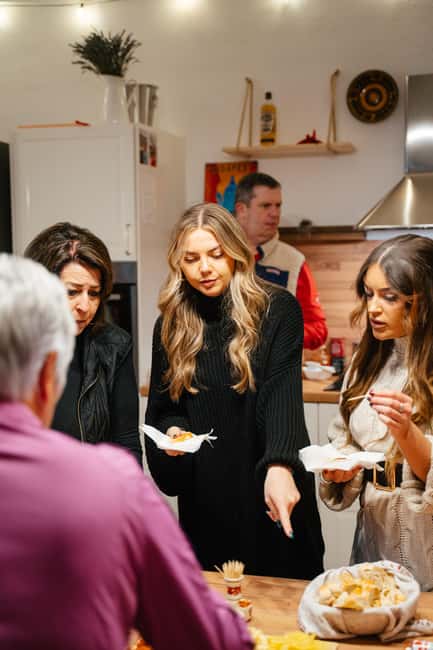
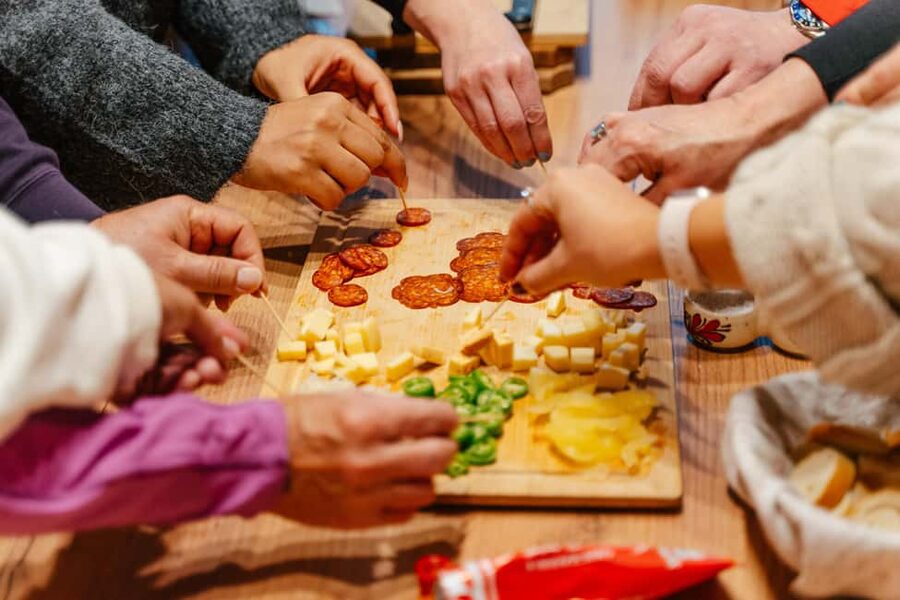
You can expect Hungarian cold cuts, meats, cheeses, dips, and other small bites at the apartment as well. This means the cooking class does not begin with an empty stomach or a long wait for lunch. You’ll have something to eat while the group settles in and the ingredients are prepared.
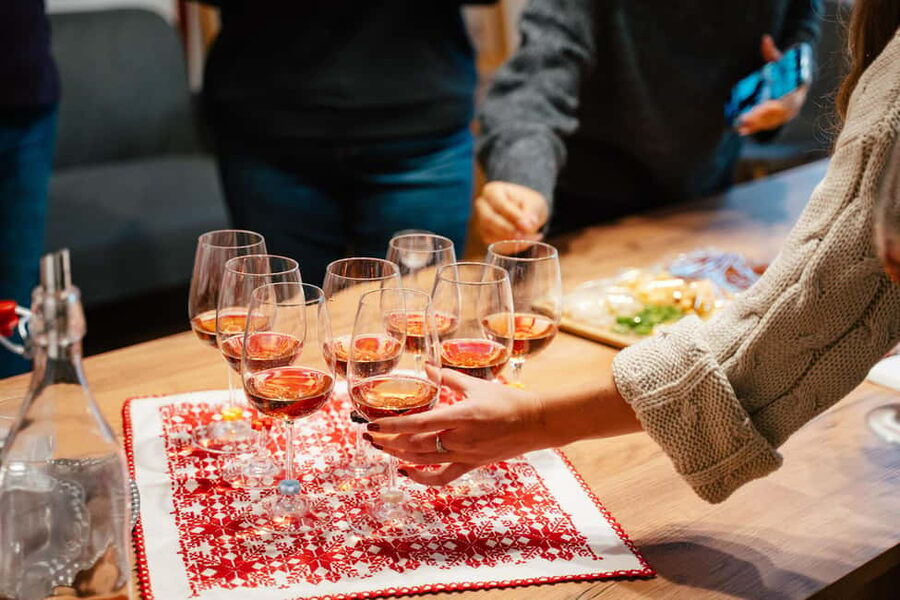
Wine and Hungarian spirits are included, including pálinka. Pálinka is a strong fruit spirit, and tasting it in a social setting gives the drink some cultural context. Still, you should not feel obliged to drink every item offered. If you prefer to avoid alcohol, tell the host before the activity so your expectations are clear.
The market portion also gives you a chance to ask practical food questions. You can learn what paprika to buy, which Hungarian products travel well, and what local foods make sensible souvenirs. One host has also been praised for pointing out places to buy souvenirs, which can be useful if you want something more thoughtful than a standard magnet.
Cooking Chicken Paprikash, Goulash, or a Vegetarian Dish
The main event takes place in a nearby apartment. This is not a formal culinary school with rows of workstations. It is a communal cooking experience built around shared preparation, conversation, and family recipes.
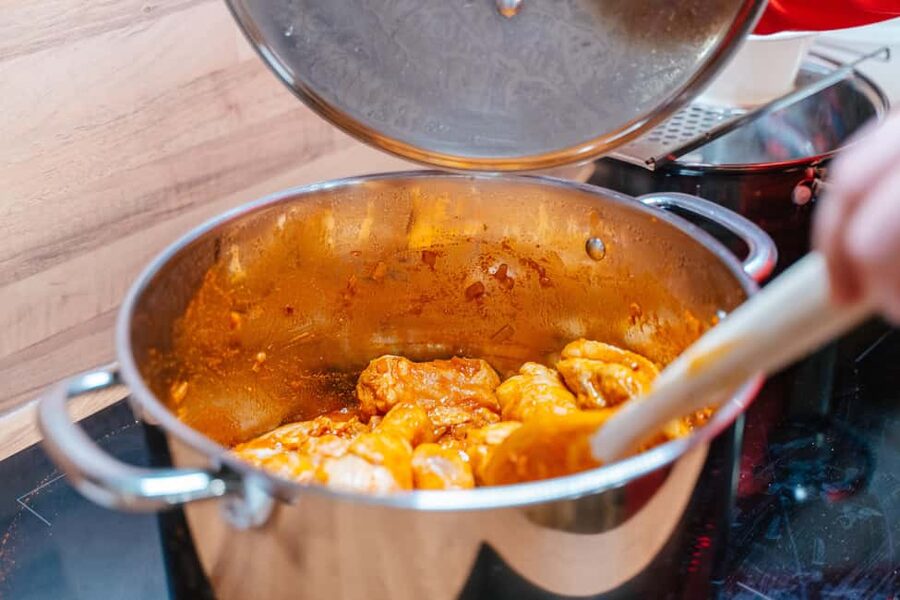
You choose a main dish for your party. Chicken paprikash is the obvious first-timer choice: it is strongly associated with Hungarian home cooking, uses paprika as a central flavor, and is approachable enough to recreate at home. The class may also prepare dumplings or another accompaniment, depending on the arrangement made with the host.
Beef goulash stew offers a heartier option. It is a traditional dish with the slow, comforting character many people expect from Hungarian cooking. Since the class lasts four hours, ask the host how the timing works for the version being prepared. The supplied details describe the dish as a family recipe, but they do not specify the full cooking method or how long the beef is cooked.
Vegetarians and vegans have better options here than at many food tours. Mushroom paprikas and lecsó are listed as suitable choices, and the cooking format makes it easier to discuss substitutions. Halal ingredients can also be arranged on request. Send dietary restrictions and your preferred meal before the class, rather than waiting until you arrive.
The activity information also refers to stuffed cabbage rolls among the meal choices. Since the listed highlights focus on chicken paprikash, goulash, mushroom paprikas, and lecsó, confirm the current options when you book. The exact menu can depend on the group and the host.
A Kitchen Table Rather Than a Demonstration
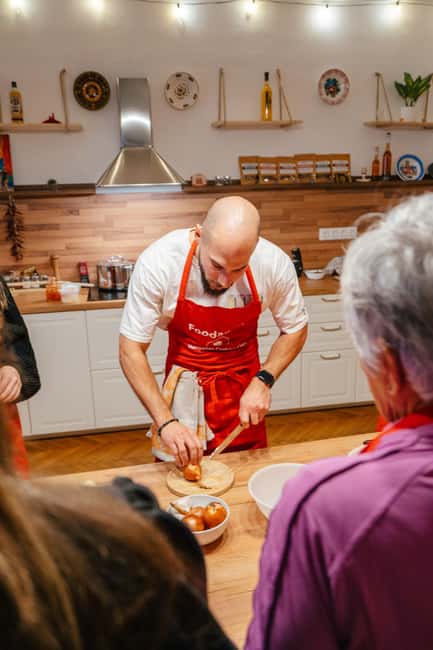
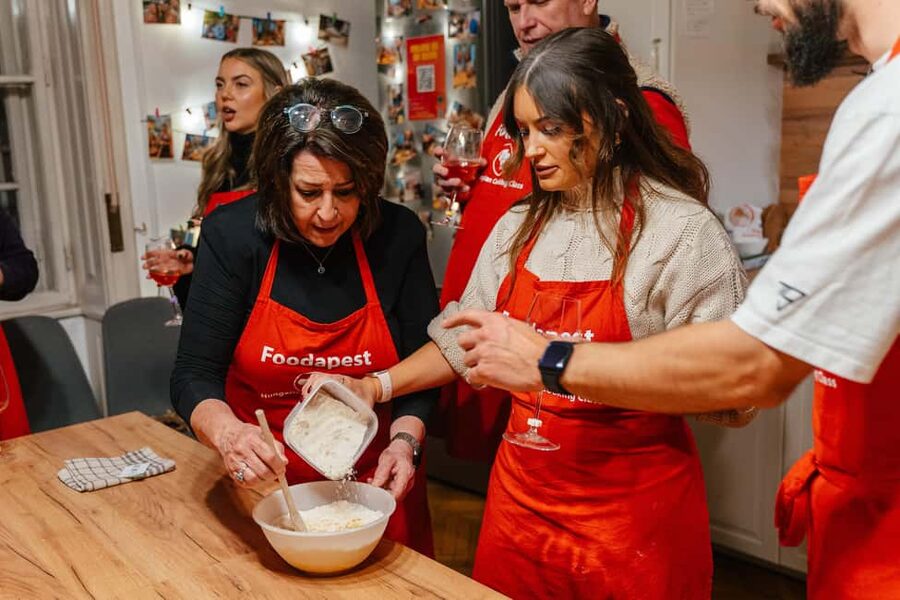
The strongest part of this experience is the shared work. You are not simply watching a chef chop onions while standing at the back of a room. You help prepare the dish, talk with the host, and sit down to eat the finished meal.
That format suits people who want contact with local life without arranging a private home visit on their own. The apartment setting is described as charming and welcoming, with the feeling of being invited to a friend’s home. The hosts draw on recipes from mothers and grandmothers, which gives the food a personal connection rather than treating it as a restaurant formula.
The communal setup also works well for solo visitors. You may be cooking alongside people from other countries, and conversation becomes part of the experience. Families can enjoy it too. Children around the early-teen years have taken part, but parents should consider the four-hour length and the presence of alcohol at the table.
Do not expect professional knife-skills training or a detailed chef certification course. The value is cultural and social as much as technical. You learn enough to make the food at home, but the main goal is understanding Hungarian cooking through the people who grew up with it.
More cooking classes in Budapest:
- Budapest All in One Small Group Walking Tour with Strudel Stop
★ 5.0 · 1,277 reviews - Budapest: Hungarian Chimney Cake Workshop in the City Center
★ 4.8 · 885 reviews - Chimney Cake Workshop Budapest Downtown – Kürtőskalács Class
★ 5.0 · 220 reviews - Premium Hungarian Home Cooking Experience with Chef Marti
★ 5.0 · 169 reviews
What You Actually Eat and Drink
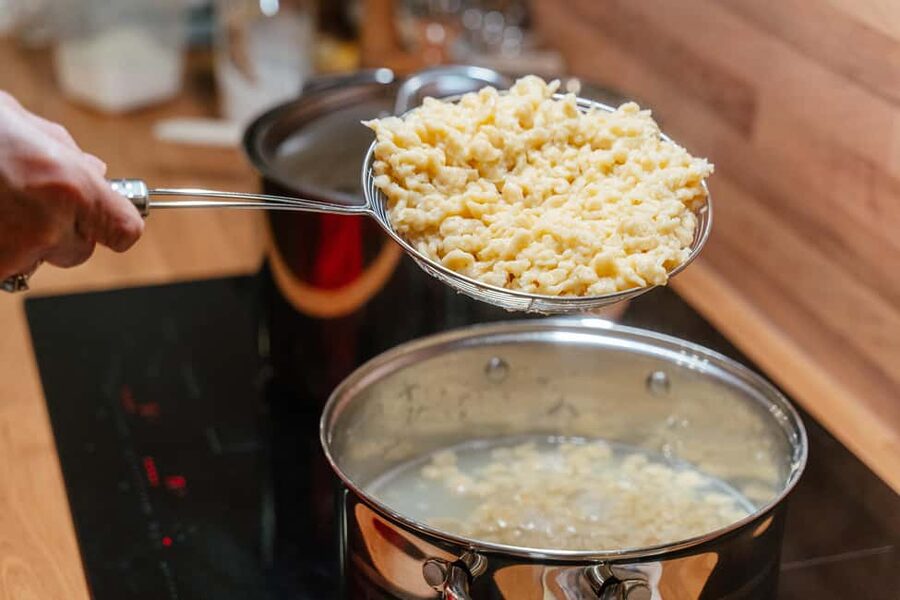
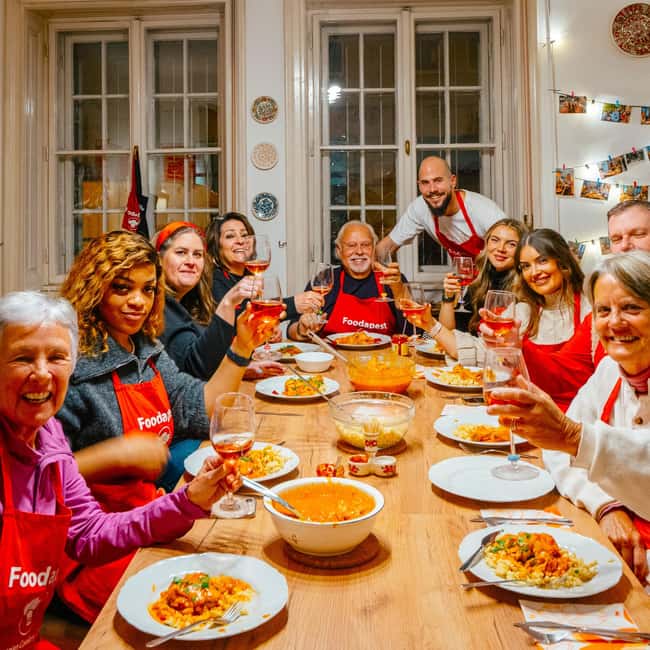
The meal begins with appetizers such as Hungarian sausages, salami, cold cuts, cheeses, and dips. This is helpful because the market walk includes tastings, and the food keeps coming as the cooking gets underway.
The main dish is the payoff. Participants have prepared chicken paprikash, beef goulash, cabbage rolls, and vegetarian dishes, depending on the group’s preference. Some sessions have included two main dishes, such as chicken paprikash with dumplings and cabbage rolls, but you should confirm what your particular booking includes rather than assume you will cook several full recipes.
Wine accompanies the cooking, and pálinka is part of the Hungarian tasting experience. A recipe collection is included, so you leave with a practical reminder of what you made. A surprise souvenir is also included, although the exact item is not specified.
This is a useful arrangement for a $98 price. Four hours of guiding, market tastings, ingredients, appetizers, a cooked meal, wine, spirits, recipes, local recommendations, and a souvenir add up quickly in Budapest. It is not the cheapest way to eat lunch, but it is more than lunch. You are paying for instruction, conversation, and access to a local home-style setting.
The value is best for people who will use the recipes later or who care about food as a way to understand a place. If you only want a quick taste of Hungarian cuisine, a market visit and restaurant meal will cost less and take less time.
The Hosts Make a Big Difference
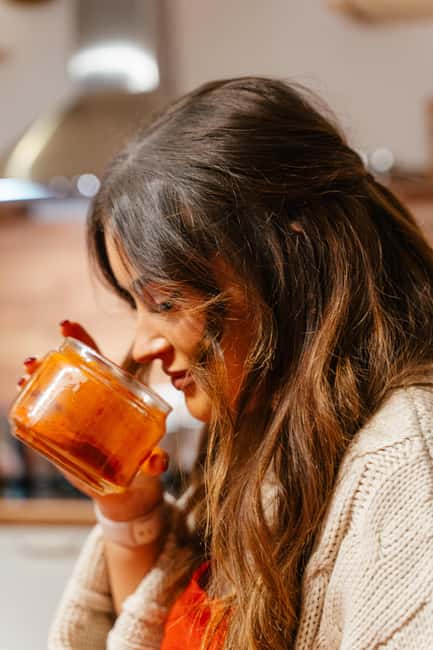
Foodapest uses several hosts, including George, Marcell, Emese, and Kinga. George appears repeatedly as both host and cooking instructor, and he is associated with family recipes, cultural conversation, and a relaxed apartment setting. Marcell has led market walks and cooking sessions, while Emese has guided guests through tastings and local history. Kinga has been praised for keeping the group organized and comfortable.
The host may shape the tone more than the menu. Some sessions lean toward lively conversation and jokes, while others offer more detail about history, education, traditions, and daily life in Hungary. The common thread is an English-language experience built around food and personal interaction.
If you have a particular interest, ask about it during the class. You can discuss paprika, Hungarian spirits, cooking methods, souvenirs, or places to eat during the rest of your stay. The activity includes tips and recommendations for Budapest, which makes it more useful early in your visit than on your final afternoon.
That said, host assignments can change. You should book for the activity itself, not for a guarantee of one particular person unless the booking system specifically confirms that host.
Timing, Comfort, and Practical Details
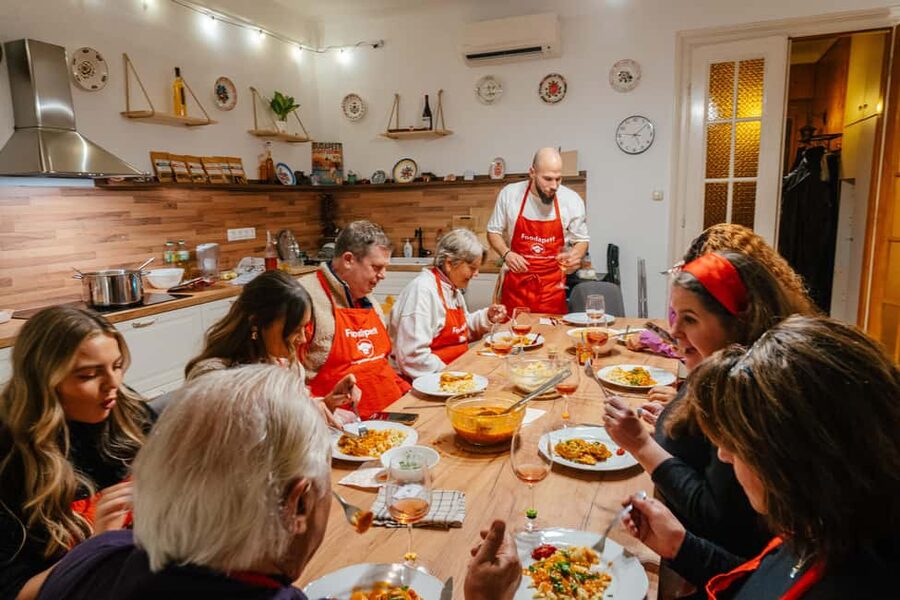
The experience lasts four hours, with starting times shown when you check availability. The activity begins at the market and ends back at the original meeting point. You walk from the market to the apartment, so wear comfortable shoes and avoid bringing more luggage than you can manage easily.
A separate entrance is available to help you skip the regular line at the market. This does not mean the whole activity is private or that every market area will be empty. It simply makes the start more efficient.
The instruction is in English. The group cooks communally, so you should expect some shared preparation rather than a private lesson tailored only to you. That can be a strength if you enjoy meeting people, but it may feel less focused if you want one-on-one instruction.
Cancellations are free up to 24 hours before the start time, and you can reserve now and pay later. Those policies are useful if your Budapest schedule is still shifting. Still, send food restrictions and your meal preference in advance. The choices named in the activity information include chicken paprikash, goulash, and stuffed cabbage rolls, with mushroom paprikas and lecsó also described as vegetarian or vegan options.
Who Will Enjoy Foodapest Most
I would choose this for a first visit to Budapest, especially if you want one activity that combines food, local conversation, and a practical cooking lesson. It also fits solo visitors who like meeting people, couples who want more than a restaurant meal, and families with older children.
It is a good match for food-focused visitors who enjoy tasting before learning. The market walk gives you context, while the apartment meal gives you time to ask questions and relax. The recipe collection makes the experience useful after you return home.
You may want to skip it if you dislike group activities, do not enjoy alcohol-centered social settings, or want advanced culinary training. The class is about family cooking and cultural exchange, not restaurant technique. You should also check the menu in advance if your diet is strict.
Should You Book This Budapest Cooking Class?
Book it if you want to understand Hungarian food from the inside out. The combination of Central Market Hall, guided tastings, family recipes, shared cooking, wine, and a sit-down meal gives you much more than a standard food walk.
The $98 cost is reasonable for the four-hour format and the amount included, especially if you value the meal, recipes, and local advice. I would schedule it early in your Budapest stay so you can use the host’s restaurant and shopping suggestions afterward. Just confirm your dish, dietary needs, and drinking preferences before you go.
FAQ
Where does the Budapest cooking class begin?
It begins outside the main entrance of Budapest’s Central Market Hall, beside the yellow tram stop.
How will I recognize the guide?
The guide will be carrying a brown market basket.
How long does the activity last?
The experience lasts four hours. Starting times depend on availability.
Where does the activity end?
The activity ends back at the original meeting point outside Central Market Hall.
What language is the cooking class in?
The instructor and activity are in English.
Which Hungarian dishes can I prepare?
Options include chicken paprikash, beef goulash, mushroom paprikas, lecsó, and, depending on the arrangement, stuffed cabbage rolls. Confirm the current choices before booking.
Can vegetarians or vegans take part?
Yes. Mushroom paprikas and lecsó are listed as suitable for vegetarians and vegans.
Can halal ingredients be provided?
Yes. Halal ingredients can be provided when requested in advance.
Are food and drinks included?
Yes. The experience includes market tasters, cold cuts, cheeses, meats, appetizers, local wine, Hungarian spirits, ingredients for the meal, recipes, and a surprise souvenir.
More walking tours in Budapest
- Budapest: Buda Castle Walk with Saint Stephen’s Hall
★ 4.5 · 3,012 reviews - Big Bus Budapest Hop-On Hop-Off Bus and Walking Tour
★ 3.5 · 2,206 reviews - Budapest: Buda Castle District Walking Tour
★ 4.6 · 2,108 reviews - Budapest City Landmarks Walking Tour in 2 Hours
★ 5.0 · 2,048 reviews
Just added around Budapest
- Budapest: Danube River Views Bike Ride★ 4.8 · 23 reviews
- Budapest: City Bike Tour with Coffee Stop★ 5.0 · 37 reviews
- Budapest: Private Walking Tour with a Local Guide★ 3.6 · 6 reviews
- Budapest: Vacation Photographer to collect great memories★ 5.0 · 49 reviews
- Walk to recent and aged spiritual sanctuaries near Budapest★ 5.0 · 5 reviews
- From Budapest: Guided Tour of Eger with Wine Tasting★ 4.5 · 6 reviews
- Audio visual multi-sensory chefs journey dinner experience★ 5.0 · 3 reviews
- Budapest: 3-Hour Trabant Sightseeing Tour★ 4.7 · 28 reviews
Budapest Cooking Classes, compared.

Budapest All in One Small Group Walking Tour with Strudel Stop
Read our review →
Hungarian Chimney Cake Workshop in the City Center
Read our review →
Budapest Cooking Class & Market Tour with Local Guide & Wines
Read our review →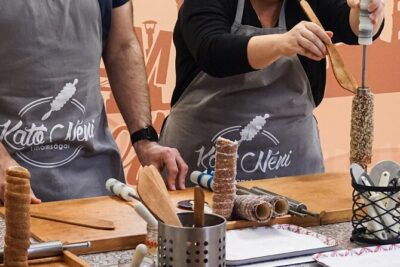
Chimney Cake Workshop Budapest Downtown – Kürtőskalács Class
Read our review →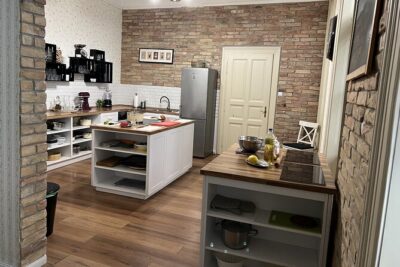
Premium Hungarian Home Cooking Experience with Chef Marti
Read our review →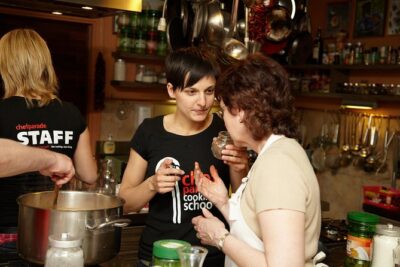
Hungarian Cooking and optional Local Market Tour
Read our review →
Hungarian Strudel Making Class: Stretch & Fill Two Ways
Read our review →
Private Budapest All In One Walking Tour with Strudel Stop
Read our review →Browse the lists this tour appears in