
Reviewed · BUDAPEST WALKING TOURS
Walk and Cook Budapest
Budapest’s past arrives on foot, then lands on your dinner plate. This five-hour experience links Gül Baba’s Tomb, the Parliament, and the Great Synagogue with a hands-on Hungarian cooking session, showing how Ottoman, Jewish, and Austro-Hungarian influences shaped the city’s food.
I like the small group of no more than 10, which gives the walking portion a personal feel and makes kitchen work easier. I also like the full sit-down meal: you do not just watch someone cook, you help prepare dishes such as stuffed peppers, roast goose, or plum dumplings. The main drawback is the fixed format. You spend about 1.5 hours walking before cooking, so this may not suit you if you want a kitchen class with little sightseeing.
Key points at a glance
- Three important Budapest stops: Gül Baba’s Tomb, the Hungarian Parliament Building, and the Great Synagogue.
- History with a practical purpose: The walk explains Ottoman, Jewish, and Austro-Hungarian influences before you cook.
- A proper meal, not just a tasting: Depending on the menu, you may prepare stuffed peppers, roast goose, or Székely goulash, followed by dessert.
- Small-group setting: The maximum is 10 people, useful for questions and hands-on kitchen work.
- English-language experience: The tour is offered in English and ends back at the meeting point.
- Flexible booking terms: You can cancel for a full refund up to 24 hours before the start time.
Budapest’s past comes before the cooking
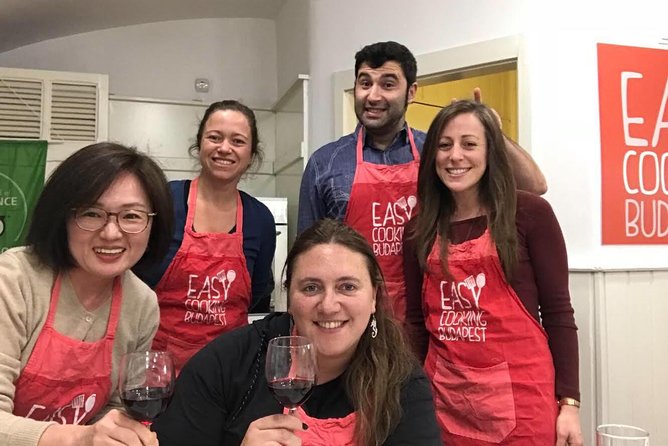
I like the order of this experience. You first get a short guided introduction to Budapest, then use food to make sense of what you have seen. The walk lasts about 1.5 hours, leaving roughly three and a half hours for the kitchen and meal, though the exact pace is not stated.
The tour focuses on several periods that still shape Budapest. You hear about the Ottoman Empire and what it left behind, learn about Jewish life and the damage done during the Second World War, and look at buildings connected with the Austro-Hungarian period. The result is not just a list of dates. You are asked to notice how outside powers and communities affected daily life, architecture, and cooking.
That connection matters. Hungarian food is often presented as a single national tradition, but the menu here points to a more complicated story. The dishes reflect contact with different peoples and cultures, including the Ottoman world and Jewish Budapest. You get a better sense of why Hungarian cooking includes such a broad mix of flavors and methods.
Guides named Kata and Karolina are connected with the experience. If both are involved on your date, you may have the benefit of a two-person guide team, though the available information does not spell out their separate roles. One posted note gives special thanks to Kata and Karolina for guiding the participant and helping create good Budapest memories during the Christmas season.
More walking tours in Budapest:
- Budapest: Buda Castle Walk with Saint Stephen’s Hall
★ 4.5 · 3,012 reviews - Big Bus Budapest Hop-On Hop-Off Bus and Walking Tour
★ 3.5 · 2,206 reviews - Budapest: Buda Castle District Walking Tour
★ 4.6 · 2,108 reviews
Gül Baba’s Tomb and the Ottoman chapter
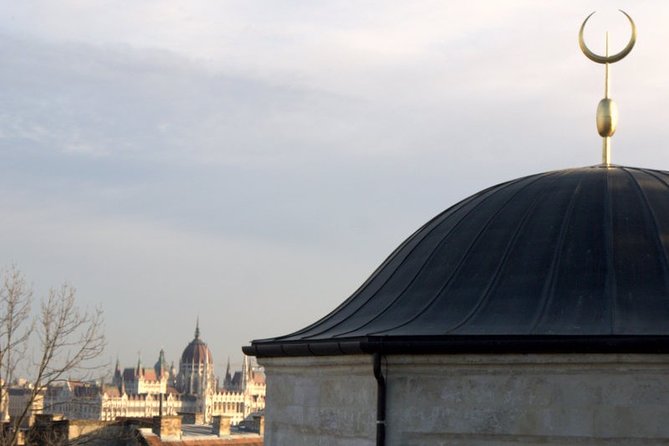
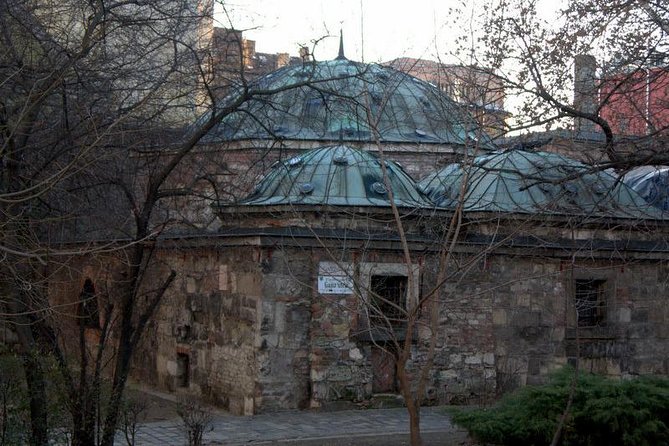
The first listed stop is Gül Baba’s Tomb, also called Gül Baba Türbéje. It gives the tour a less usual opening point. Many first-time city walks concentrate on the Danube, Buda Castle, or the Parliament. Starting here directs your attention to the Ottoman period and the traces it left in Budapest.
The stop works best as a history lesson rather than a long sightseeing visit. The supplied plan does not state how much time you spend inside or around the tomb, and it does not promise entry tickets. You should think of it as one part of a connected walk, not a stand-alone attraction visit.
This is also where the tour’s food theme begins to make sense. You are not simply told that Hungary had contact with the Ottoman Empire. You later see how cultural contact can appear in cooking, ingredients, and methods. That link between a place and a dish gives the history more use than a standard city lecture.
Parliament and the Austro-Hungarian city
The Hungarian Parliament Building is the second listed stop. Even without a promised interior visit, it gives the guide a strong setting for explaining the Austro-Hungarian period and the grand architecture built during it.
You should not book this activity expecting a full Parliament tour. The information provided names the building as a stop, but it does not include an interior admission or a dedicated building tour. Its value here is visual and historical. You see one of Budapest’s defining buildings while learning how the city changed during the Austro-Hungarian era.
This part should appeal to you if you like architecture but do not want to spend an entire day in museums. The walk keeps the focus moving, and the guide can connect the building to the larger story of Budapest. The tradeoff is that a short stop cannot offer the detail of a specialist architecture tour.
The Great Synagogue and Jewish Budapest
The Great Synagogue, or Nagy Zsinagóga, is the third listed stop. It provides the clearest setting for the tour’s discussion of Jewish life in Budapest and the fate of Jewish people during the Second World War.
This subject needs care, and the tour description signals that it will be addressed directly. You learn about what happened to the Jewish community in Budapest during the war, rather than receiving only a light treatment of the city’s food and buildings. That gives the cooking portion a human context. Food traditions are connected to communities, and communities can be damaged, displaced, or lost.
Again, the activity does not promise entry into the synagogue. If seeing the interior is important to you, you should treat this stop as a reason to arrange a separate visit unless your booking details say otherwise. The walk can introduce the site and its place in Budapest, but it is not advertised as a full synagogue tour.
Same city, a completely different sort of day:
- Budapest: City Highlights Cruise with Welcome Drink
★ 4.6 · 35,610 reviews - Budapest: Unlimited Prosecco, Beer and Aperol Spritz Cruise
★ 4.8 · 25,310 reviews - Budapest: Széchenyi Spa Day Ticket with Optional Upgrades
★ 4.3 · 23,911 reviews - Budapest: Nighttime or Daytime Sightseeing Cruise
★ 4.2 · 21,062 reviews
The kitchen session turns history into dinner
After the walking section, you head to a kitchen to cook Hungarian dishes. The strongest feature here is participation. You are not simply handed a meal and told a few facts about it. You take part in preparing food, then sit down for dinner with the group.
A group capped at 10 is especially useful in a cooking class. You have a better chance to follow instructions, ask questions, and take an active role than you would in a large class. It also keeps the meal more social without making the table feel anonymous.
The menu can vary. The listed examples include several different main courses and desserts:
- Töltött paprika, or stuffed peppers, with mákos guba, a poppy-seed dessert.
- Roast goose with onion potatoes and braised cabbage, followed by fánk, a special doughnut.
- Székelygulyás, a goulash-style dish with sauerkraut, followed by szilvásgombóc, or plum dumplings.
These options show a useful range. Stuffed peppers offer a familiar introduction to home-style Hungarian food. Roast goose makes the meal more substantial and traditional in a different way. Székelygulyás brings sauerkraut into the picture, while the desserts add poppy seeds, dough, or fruit.
The exact menu is not assigned in the information provided, so you should not book with the expectation of one specific dish. If you have a strong preference or food restriction, ask before booking. No allergy, vegetarian, or dietary information is supplied, and the tour description does not promise substitutions.
What the full dinner adds to the value
At $131.06 per person, this is not a low-cost city walk. I would judge the price against the combined experience rather than comparing it with a basic sightseeing tour or an ordinary restaurant meal.
You receive about five hours of activity, a guided city walk, a cooking workshop, and a full dinner. The small group also matters. A cooking class with 10 people or fewer can offer more direct instruction than a cheaper, crowded class. You are paying for time, food, teaching, and a more personal format.
The value is strongest if you want your meal to be part of your Budapest experience. You get context for the dishes and a chance to prepare them yourself. If you only want to see the main sights, the price will feel high because the walking section covers three stops in about 1.5 hours. If you already plan to take a city history tour and a separate cooking class, you may also find some overlap.
For me, the best case is a first or second day in Budapest. The walk helps you get your bearings, while the meal gives you an immediate connection to local food. You can then visit other sights later with a better sense of the city’s cultural layers.
Group size, timing, and practical limits
The total duration is approximately five hours, and the activity starts and ends at the meeting point in Budapest. The meeting point is listed simply as Budapest, Hungary, so you should check the exact booking confirmation carefully before setting out.
The tour is near public transportation, which helps because the city portion and kitchen portion may not be in the same place. The information does not state the walking distance, number of stairs, or kitchen layout. If mobility is a concern, contact the operator before booking rather than assuming the route will be easy.
The English-language format makes the experience simple for English speakers. Confirmation arrives within 48 hours, subject to availability. The tour also requires a minimum number of participants, so it can be canceled if that minimum is not met. In that case, you are offered another date or experience, or a full refund.
You can cancel free of charge up to 24 hours before the start time. Changes or cancellations inside that 24-hour window are not accepted for a refund, and the cut-off follows Budapest local time.
Who will enjoy this experience most
I would recommend this tour to you if you like a city visit with a clear theme. You get architecture, difficult history, food, and conversation in one half-day activity.
It is a good match for:
- First-time visitors who want a guided introduction to several sides of Budapest.
- Couples or friends who prefer a shared meal to a standard restaurant booking.
- Solo visitors who want a small group and an easy social setting.
- Home cooks who enjoy learning by doing.
- Anyone curious about how history affects a country’s everyday food.
It may be less suitable if you want a long, detailed visit inside each attraction. The Parliament and Great Synagogue are listed as stops, not guaranteed interior tours. It may also be a poor fit if you dislike group cooking, need a strict dietary plan, or want to spend all five hours focused on food.
The six posted ratings give the experience a current 5 out of 5 score, with a personal note praising Kata and Karolina for a warm guiding experience and good memories of Budapest. That is encouraging, but the sample is small. I would treat it as a sign of strong early satisfaction, not a guarantee that every part will suit every person.
Should you book Walk and Cook Budapest?
Book it if you want the city’s history to lead naturally into a Hungarian meal. The best features are the small group, the unusual mix of Ottoman, Jewish, and Austro-Hungarian themes, and the chance to cook before sitting down to dinner.
Skip it if your priority is entering every major sight, choosing a guaranteed dish, or taking a short cooking class without a walking section. At $131.06, the tour makes sense when you value the full five-hour combination. For the right person, it is a practical way to see part of Budapest, understand the forces that shaped it, and finish with food you helped prepare.
FAQ
Where does Walk and Cook Budapest take place?
The activity takes place in Budapest, Hungary. It begins and ends at the meeting point, and the tour is near public transportation.
How long does the experience last?
The experience lasts approximately five hours. The walking portion lasts about 1.5 hours before you head to the kitchen.
What language is the tour offered in?
The tour is offered in English.
How many people can join the tour?
The maximum group size is 10 people.
Which Budapest sights are included?
The listed stops are Gül Baba’s Tomb, the Hungarian Parliament Building, and the Great Synagogue.
What food might I cook and eat?
Possible dishes include stuffed peppers, roast goose with onion potatoes and braised cabbage, or Székelygulyás with sauerkraut. Possible desserts include mákos guba, fánk, and plum dumplings. The exact menu is not specified.
Can I cancel for a full refund?
Yes. You can cancel at least 24 hours before the experience start time for a full refund. Cancellations or changes made less than 24 hours before the start time are not accepted for a refund.
Just added around Budapest
- Budapest: Danube River Views Bike Ride★ 4.8 · 23 reviews
- Budapest: City Bike Tour with Coffee Stop★ 5.0 · 37 reviews
- Budapest: Private Walking Tour with a Local Guide★ 3.6 · 6 reviews
- Budapest: Vacation Photographer to collect great memories★ 5.0 · 49 reviews
- Walk to recent and aged spiritual sanctuaries near Budapest★ 5.0 · 5 reviews
- From Budapest: Guided Tour of Eger with Wine Tasting★ 4.5 · 6 reviews
- Audio visual multi-sensory chefs journey dinner experience★ 5.0 · 3 reviews
- Budapest: 3-Hour Trabant Sightseeing Tour★ 4.7 · 28 reviews
Budapest Walking Tours, compared.
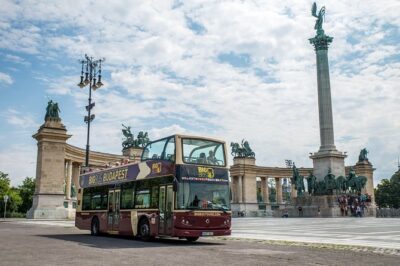
Big Bus Budapest Hop-On Hop-Off Bus and Walking Tour
Read our review →
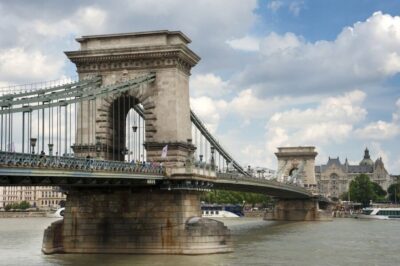
3-Hour Orientation Walking Tour of Buda and Pest
Read our review →
Budapest Historical Sightseeing – Free Walking Tour
Read our review →
Budapest All in One Small Group Walking Tour with Strudel Stop
Read our review →
Buda Castle District Walking Tour with a Historian
Read our review →Browse the lists this tour appears in