
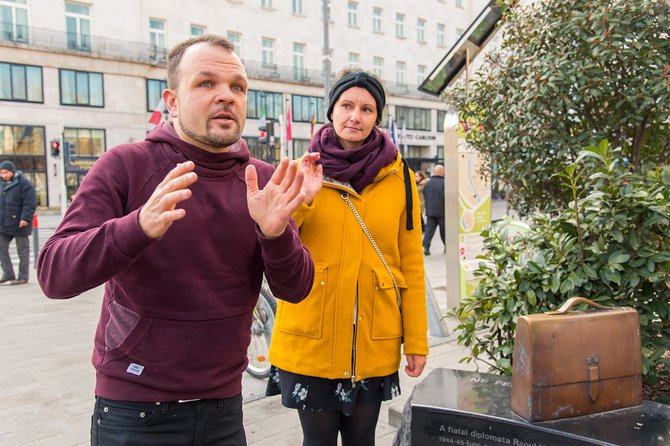
Reviewed · BUDAPEST JEWISH QUARTER TOURS
Jewish Heritage in Hungary with a Historian
Budapest’s Jewish quarter is more than a cluster of handsome synagogues. It is a place where medieval markets, Orthodox tradition, wartime rescue, ruin bars, and modern city life sit within a short walk of one another. This small-group historian tour makes those connections clear, with stops at Raoul Wallenberg’s statue, Szimpla Kert, Gozsdu Udvar, and the district’s major synagogues.
I like two things especially: the guides, including Andrea, Gabor, Barbi, Noemi, and Andras, are praised for patient, clear storytelling, and the tour does not reduce Jewish history to the Holocaust alone. I also like the final flódni tasting, a simple local touch that adds food and culture to the walking route. The main drawback is that the major synagogues are discussed from outside, and entry fees are not included.
Key points at a glance
- A historian leads the walk: Expect careful explanation of Jewish life in Hungary, including both achievements and painful chapters.
- Three important synagogues frame the route: You pass Rumbach Street, Kazinczy Street, and Dohány Street synagogues, but interior admission is not part of the experience.
- The route links past and present: Raoul Wallenberg’s rescue work, the old Jewish quarter, Gozsdu Udvar, and Szimpla Kert all appear in one walk.
- The group stays small: A maximum of 10 people makes it easier to ask questions and keep the conversation personal.
- Flódni is included: You finish with a taste of the traditional Jewish-Hungarian cake at Solinfo Café.
- The price reflects the guide more than admissions: At $64.71 per person, you are paying mainly for a focused 2.5-hour history walk and a small group, not synagogue entry.
Why this Jewish quarter walk works
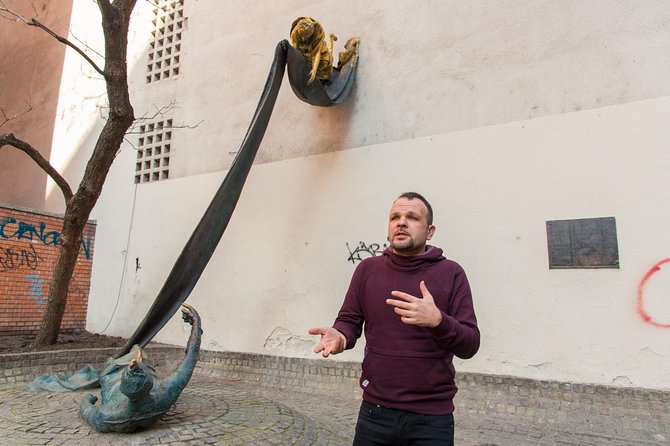
The best way to understand Budapest’s Jewish quarter is to see it as a living neighborhood, not an open-air museum. This tour does that well. You move from Erzsébet tér to the old Jewish district, passing places tied to religion, commerce, rescue, nightlife, and food.
That mix gives the walk a useful shape. You are not simply shown a row of facades and handed dates. You hear how Jewish communities formed, how Budapest changed, how the war destroyed much of that life, and how the district later became one of the city’s most popular evening areas.
I also appreciate the historical range. The strongest guide accounts describe Jewish life over many centuries, from the medieval period through the 1940s and into present-day Hungary. The tour does give serious attention to the Holocaust and wartime persecution, but it also covers religious practice, community life, and the place of Jewish culture in modern Budapest.
This wider frame matters. If you only visit Dohány Street Synagogue, you may see a remarkable building but miss the human story around it. Walking through the streets with a historian helps you understand why these locations matter.
More Jewish Quarter tours in Budapest:
- Budapest Jewish Heritage Memorial Walking Tour & Synagogue Entry
★ 5.0 · 568 reviews - Budapest: Jewish Heritage Guided Tour with Synagogue Ticket
★ 4.8 · 533 reviews - Jewish Quarter of Budapest Walking Tour
★ 4.7 · 369 reviews
Erzsébet tér, where the walk begins
The meeting point is outside the Kempinski Hotel Corvinus Budapest at Erzsébet tér. The tour starts at 10:00 a.m., giving you a useful morning introduction before the district gets busy later in the day.
Erzsébet tér began as a medieval market square and became one of Pest’s main public spaces. That makes it a fitting starting point. Before the route turns toward the Jewish quarter, your guide sets up the larger story of Pest, the commercial side of the city, and the movement of people through this part of Budapest.
The opening 20 minutes are not just filler. They help place the Jewish community within the wider city rather than treating it as something separate from Budapest. You begin with urban history, then move toward the people and institutions that shaped the neighborhood.
The square is also easy to reach by public transport, which is useful if you are fitting the tour into a busy day. Wear comfortable shoes. The route is only about two and a half hours, but it is a walking experience with several outdoor stops.
Raoul Wallenberg and the cost of courage
The stop at Raoul Wallenberg’s statue lasts about 10 minutes. Wallenberg was a Swedish diplomat who helped save Jewish lives in Hungary during the Second World War.
This is one of the route’s most important pauses because it puts individual action beside the larger history of persecution. A guide such as Gabor or Andrea can explain the events without turning the story into a quick heroic anecdote. The best approach is to ask questions here, especially if you want to understand how diplomacy, identity papers, and personal courage fit into Budapest’s wartime story.
The statue also helps break up the architecture-focused part of the walk. You are not only looking at synagogues and streets. You are being asked to think about choices made under extreme pressure and about the people who tried to protect others.
Szimpla Kert, from wartime memory to ruin-bar culture
Szimpla Kert is a surprising stop on a Jewish heritage walk. It is widely described as Budapest’s first ruin bar, and it helped start the city’s famous ruin-bar trend.
You spend about 20 minutes here. The point is not simply to admire a quirky pub in daylight. Szimpla Kert sits in a neighborhood that has seen major changes, and its presence shows how the old Jewish quarter became a center of modern nightlife and alternative culture.
This contrast can be jarring, and that is useful. You may be standing in a popular entertainment venue while hearing about the people and communities who once lived in the surrounding streets. The tour gives you a chance to consider what urban renewal preserves, what it changes, and what may be lost when a historic district becomes a nightlife zone.
Do not expect a full evening at the bar. This is a short cultural stop within a history walk. If you want to return to Szimpla Kert for food or drinks, plan that separately.
More history tours in Budapest:
- Budapest: Historic Cruise with Welcome Drink
★ 4.7 · 6,512 reviews - Budapest Historical Sightseeing – Free Walking Tour
★ 5.0 · 1,302 reviews - Buda Castle District Dark History, Legends and Vampire Night Tour
★ 4.5 · 1,240 reviews - BloodThirsty Hungary: Walking tour & Dark Historical Stories
★ 4.9 · 633 reviews
Gozsdu Udvar and the international face of the quarter
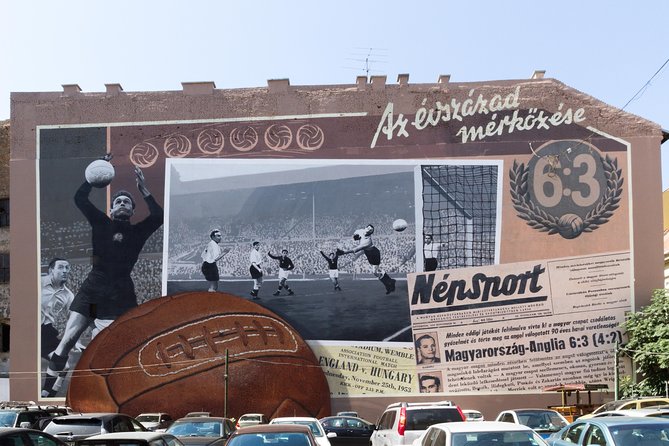
Gozsdu Udvar is another brief stop, lasting about 10 minutes. The passage is now one of Budapest’s most international streets, with a strong mix of restaurants, shops, and nightlife.
Here, the guide helps you see how the district functions today. The quarter is not frozen in the past. It is a place where local life, tourism, food, entertainment, and historic identity overlap, sometimes comfortably and sometimes less so.
This stop works best when you pay attention to the contrast between the route’s historical discussion and the present-day street scene. Gozsdu Udvar shows why the Jewish quarter is popular, but it also raises a practical question: how does a neighborhood remain connected to its past when its public life is increasingly aimed at visitors and evening entertainment?
The answer is not supplied in a neat slogan, which is a strength. Guides are praised for drawing links between historical events and current issues. If that kind of discussion interests you, use this pause to ask how Budapest remembers its Jewish past today.
Kazinczy Street Synagogue and Orthodox Jewish life
At Kazinczy Street Synagogue, the focus turns to the Orthodox Jewish community. The stop lasts about 20 minutes and gives you a chance to understand that Jewish life in Budapest was never one single, uniform tradition.
This distinction is important. Different communities followed different religious practices and built different institutions. Looking at Kazinczy Street alongside the other synagogues helps explain the variety within Budapest’s Jewish population.
Admission to the synagogue is not included. The tour information does not promise an interior visit, so you should think of this as an exterior stop and historical explanation unless your guide tells you otherwise. If entering a synagogue is a major goal for you, check the current admission arrangements separately before booking.
The discussion here can be especially useful for visitors who know the quarter mainly through the large Dohány Street Synagogue. Kazinczy Street gives the route a more specific religious focus and shows why the word Jewish does not describe one simple community.
Rumbach Street and Dohány Street synagogues
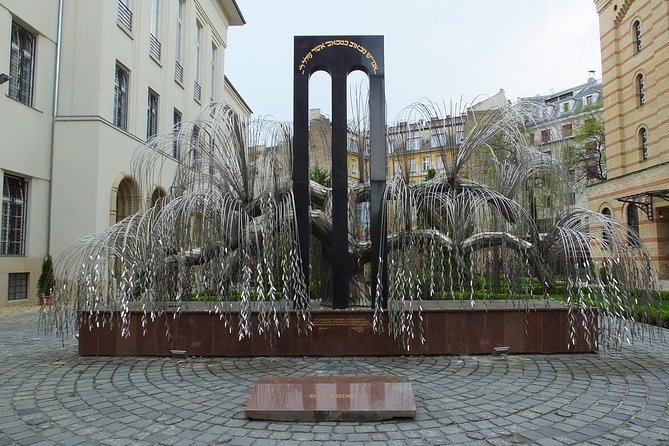
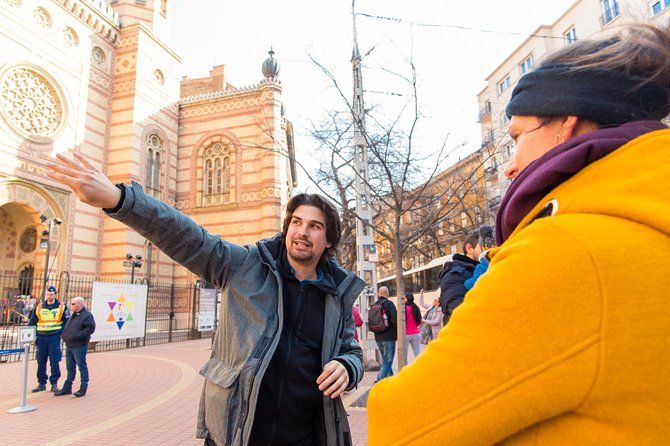
The route also passes Rumbach Street Synagogue and Dohány Street Synagogue. Together with Kazinczy Street, they create the architectural and historical backbone of the walk.
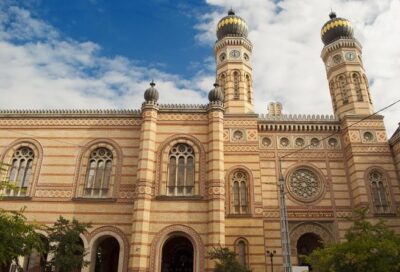
The Great, or Central, Synagogue on Dohány Street is described as Europe’s largest synagogue, with connections to roughly the last 200 years of Hungarian Jewish history. The stop lasts about 45 minutes, making it the longest part of the tour.
You do not visit the Great Synagogue inside. That is the clearest limitation of the experience. The exterior and surrounding grounds can still support a useful explanation, but you will not receive the full interior experience, and the admission ticket is not included.
The same practical point applies to synagogue admission generally. If you want to see the interior of Dohány Street Synagogue, you will need to arrange and pay for that separately. You might choose to do so on another day, when you can take your time, rather than trying to combine a paid entry with this walking schedule.
Still, an exterior-focused visit has value. A historian can explain the buildings in relation to the surrounding streets, communities, and events rather than presenting them as isolated monuments. For many people, that setting is more meaningful than a quick indoor look with limited context.
Rumbach Street Synagogue adds another layer to the story, and passing all three buildings makes the differences between religious communities easier to discuss. You get a clearer sense of the district’s variety than you would from visiting only one site.
Flódni at Solinfo Café
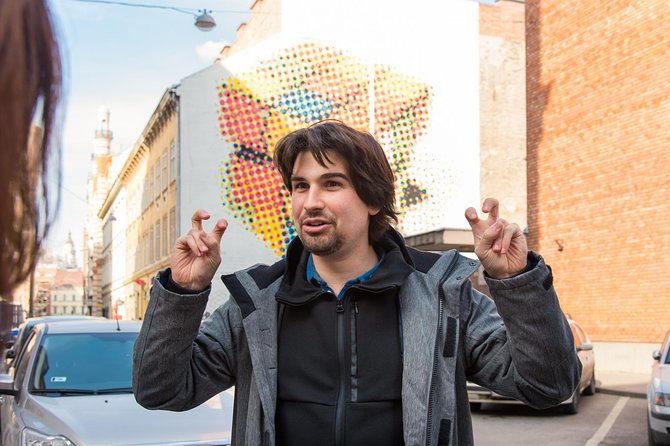
The final stop is Solinfo Café, where the tour includes a taste of flódni. This Jewish-Hungarian cake is a favorite for many people in Hungary, both Jewish and non-Jewish.
The tasting lasts about 20 minutes. It is a small detail, but I like its place at the end of the route. Food gives the history a human scale. After discussing communities, faith, war, and memory, you finish with something connected to everyday culture.
The included tasting also adds a little value to the price. It is not a full meal, and you should not book the tour expecting a food tour. But it gives you a concrete flavor of the local Jewish-Hungarian tradition and a chance to ask final questions in a less formal setting.
Flódni is also a useful reminder that heritage is not only found in monuments. Recipes, celebrations, and familiar foods can carry identity across generations.
What the $64.71 price really covers
At $64.71 per person, this is not the cheapest way to walk around the Jewish quarter. The price makes more sense if you want a historian, a limited group, and a structured explanation rather than a self-guided stroll.
You are paying for approximately two and a half hours with a guide, not for a package of synagogue admissions. The included flódni tasting adds a modest extra, but the main value lies in the interpretation and the chance to ask questions.
A group capped at 10 is a real advantage. The route includes sensitive subjects, and a smaller group makes it easier for the guide to slow down, respond to questions, and adjust the discussion. Several guide accounts praise the patience and clarity of people such as Gabor, Andrea, Barbi, Noemi, and Andras. Their strengths appear to be warmth, careful explanation, and a willingness to address difficult parts of Hungarian history honestly.
I would consider the tour good value if you are new to Budapest, have a serious interest in Jewish history, or want a thoughtful introduction before visiting the synagogues independently. It is less attractive if your main goal is interior access or if you prefer to explore at your own pace without a fixed route.
The fact that it is often booked about 42 days ahead also matters. You do not need to panic, but the small group size can fill before your trip. If the morning schedule and historian-led format suit you, booking early is sensible.
Who should book this walk
I would recommend it to you if you want more than attractive buildings. The route suits people who enjoy asking questions, making connections, and hearing both the admirable and painful parts of a country’s past.
It is also a good choice for first-time visitors who want a clear introduction to the Jewish quarter. You see the major landmarks, learn the basic historical framework, and finish near Dohány Street Synagogue, where you can continue exploring on your own.
Families and older visitors should note that the tour is a walking experience lasting about 2 hours and 30 minutes. Most people can participate, and service animals are allowed. The information provided does not give a detailed accessibility description, so contact the operator if you have specific mobility needs.
I would be more cautious about booking if you need a full synagogue interior tour. The main synagogues are discussed from outside, and admission is not included. In that case, pair this walk with a separate visit to the interiors.
The tour is offered in English. The guide style appears conversational and open to questions, which suits you if you want an interactive morning rather than a memorized speech.
Practical details before you go
Meet at the Kempinski Hotel Corvinus Budapest, Erzsébet tér 7 to 8, at 10:00 a.m. The walk ends outside Dohány Street Synagogue on Wesselényi utca, a convenient location for continuing through the Jewish quarter.
The route is near public transportation, and confirmation is provided when you book. Free cancellation is available if you cancel at least 24 hours before the start time. Changes or cancellations made inside that 24-hour window are not accepted for a refund.
Bring comfortable shoes and come ready to walk outdoors. Since the tour does not include the major synagogue admission fees, keep that separate in your budget if you plan to enter one later.
Should you book Jewish Heritage in Hungary with a Historian?
Book it if you want a small, serious, human-scale introduction to Budapest’s Jewish quarter. The strongest reasons are the historian-led discussion, the broad time span, the thoughtful treatment of difficult history, and the chance to see religious landmarks alongside modern places such as Szimpla Kert and Gozsdu Udvar.
Skip it if you mainly want to enter the synagogues or spend your time exploring independently. The $64.71 price is fair for a two-and-a-half-hour guided walk with up to 10 people, but it is not an admission bundle.
For most visitors who want context before sightseeing, this is a smart morning choice. You leave with more than a list of buildings. You gain a clearer idea of how faith, memory, food, rescue, and modern city life still meet in the same Budapest streets.
FAQ
Where does the tour start?
It starts at the Kempinski Hotel Corvinus Budapest, Budapest, Erzsébet tér 7 to 8, at 10:00 a.m.
Where does the tour end?
The tour ends outside Dohány Street Synagogue at Budapest, Wesselényi utca 1.
How long does the experience last?
The tour lasts approximately 2 hours and 30 minutes.
What language is the tour offered in?
The tour is offered in English.
How many people can join the tour?
The maximum group size is 10 people.
Are synagogue admission tickets included?
No. Admission is not included for Kazinczy Street Synagogue, and the Great Synagogue is not visited inside.
Is the flódni tasting included?
Yes. A taste of flódni at Solinfo Café is included.
Can I cancel for a full refund?
Yes, if you cancel at least 24 hours before the experience’s start time. Cancellations made less than 24 hours before the start time are not refunded.
Just added around Budapest
- Budapest: Private Walking Tour with a Local Guide★ 3.6 · 6 reviews
- Budapest: Danube River Views Bike Ride★ 4.8 · 23 reviews
- Budapest: City Bike Tour with Coffee Stop★ 5.0 · 37 reviews
- Budapest: Vacation Photographer to collect great memories★ 5.0 · 49 reviews
- Walk to recent and aged spiritual sanctuaries near Budapest★ 5.0 · 5 reviews
- From Budapest: Guided Tour of Eger with Wine Tasting★ 4.5 · 6 reviews
- Audio visual multi-sensory chefs journey dinner experience★ 5.0 · 3 reviews
- Budapest: 3-Hour Trabant Sightseeing Tour★ 4.7 · 28 reviews
Budapest Jewish Quarter Tours, compared.
Budapest Jewish Heritage Memorial Walking Tour & Synagogue Entry
Read our review →
Jewish Heritage Guided Tour with Synagogue Ticket
Read our review →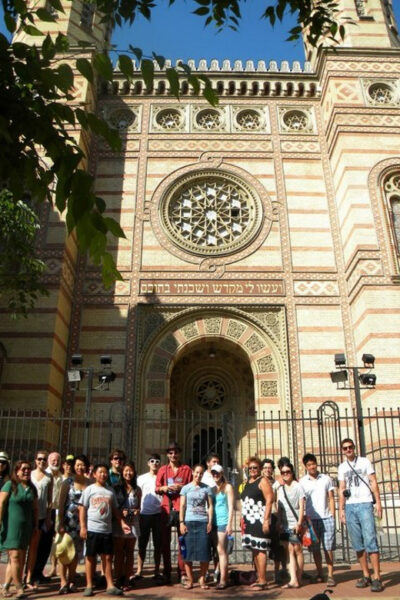
Past and Present of Budapest Jewish District Tour
Read our review →
Budapest Dohany Synagogue & Hungarian Jewish Museum & free extras
Read our review →
Jewish History Guided Walking Tour with Historian
Read our review →Browse the lists this tour appears in