
Reviewed · BUDAPEST WALKING TOURS
Historical and Cultural Walking Tour in Budapest
Budapest’s best feature is the way its story unfolds across two very different halves of the city. This private walking tour links Heroes’ Square, City Park, Andrássy Avenue, Parliament, the Chain Bridge, and Buda Castle, while a guide explains the people and events behind the stone and statues.
I like the chance to shape the day around your interests, and I like the personal attention that comes with a private group. Guide György Rashad Salamon, also named George Rashad in one account, has been praised for making the history clear and for using the subway, bus, and tram when that helps cover more ground.
The main consideration is the pace. Four hours is a lot of time on foot, and the route covers both Buda and Pest. The price is $277.64 per group, which can be good value for a larger party, but less attractive for one or two people. Also, the details mention up to 15 people in one place and a maximum of 10 in another, so confirm the group limit when booking.
Key points to know before you book

- A full Budapest sweep: You see major sights in both Pest and Buda instead of spending the whole morning in one district.
- History with local context: The guide covers Hungarian origins, royal rule, dictatorship, communism, democracy, customs, cuisine, and daily life.
- Private and flexible: The route can be adjusted to suit your interests, and hotel pickup is offered.
- Bath culture included: The walk passes the Széchenyi Baths and explains why thermal water matters so much in Hungary.
- A serious walking day: The route includes City Park, Andrássy Avenue, central Pest, the Chain Bridge, and Buda Castle.
- Transport may be part of the solution: The experience is described as a walking tour, but a guide has also used subway, bus, and tram to show more of Budapest.
Why this route works for a first look at Budapest
I see this as a useful orientation tour, not just a parade of photo stops. Budapest can feel scattered at first, with grand Pest avenues, the Danube, and hilltop Buda all pulling you in different directions. This route gives you a basic map in your head and connects the city’s architecture to its past.
The tour begins at 9:00 a.m. in Deák Ferenc tér, a central meeting point. Hotel pickup is offered, and one account says the guide collected the group at its hotel, so ask about this option when you reserve. The stated endpoint is back at the meeting point.
The private format matters here. You can ask why a statue matters, pause when a building catches your eye, or spend more time on Hungarian politics and less on shopping. That is harder to do on a fixed group outing.
The itinerary is ambitious. You will cover a lot of ground in roughly four hours, and the guide may use public transport to make the route practical. Transportation tickets are not included, so keep money or a suitable ticket option ready if the guide adds a subway, bus, or tram ride.
More walking tours in Budapest:
- Budapest: Buda Castle Walk with Saint Stephen’s Hall
★ 4.5 · 3,012 reviews - Big Bus Budapest Hop-On Hop-Off Bus and Walking Tour
★ 3.5 · 2,206 reviews - Budapest: Buda Castle District Walking Tour
★ 4.6 · 2,108 reviews
Heroes’ Square and the roots of Hungary
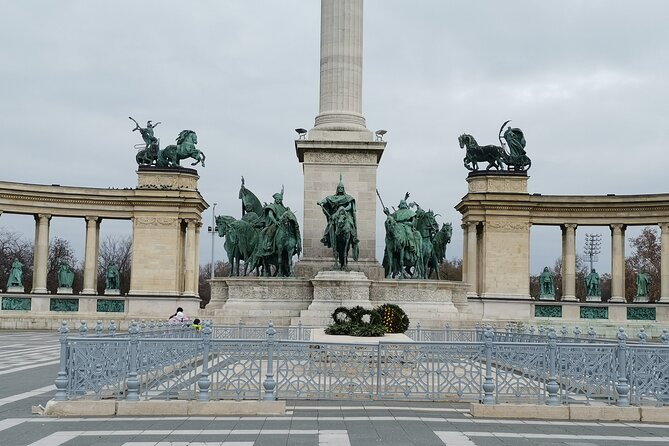
Heroes’ Square is a strong opening because it puts Hungarian history right in front of you. Its large statues honor major figures from the country’s past, and the guide uses the monument to explain the roots of the Hungarian people.
You get about 20 minutes here. That is enough for an introduction and some photographs, but not a long study of every statue. I would listen for the broad story first, then ask about any figure or period that interests you.
The square also sets the tone for the morning. Budapest is not only imperial architecture and river views. Its identity is tied to migration, kings, national memory, and the changing borders and governments of Central Europe. A guide can make those connections far easier to follow than a plaque read in isolation.
City Park, Vajdahunyad Castle, and Széchenyi Baths
From Heroes’ Square, you walk into City Park, described as one of the world’s early public parks created for public relaxation. This is a welcome change from formal monuments. You get trees, open paths, and a sense of how Budapest residents use the city for leisure.
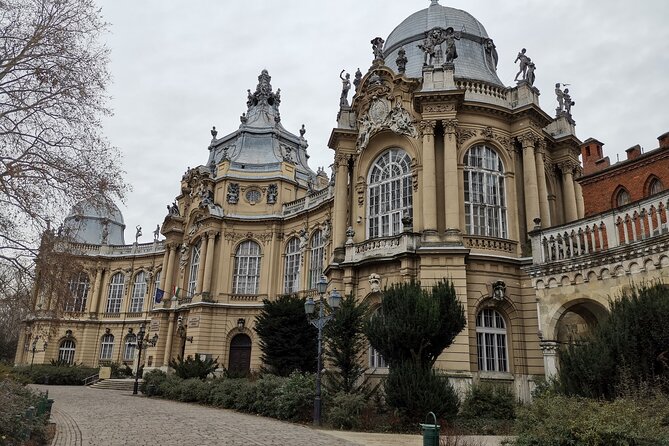
The main stop is Vajdahunyad Castle, with about 45 minutes allotted. Its architecture represents 1,000 years of Hungarian styles, so it is less a single-period fortress than a visual tour through the country’s building traditions. The guide plans to look inside, which gives the stop more substance than a quick exterior photograph.
I like this part because it combines national history with ordinary city life. The park is not only a place for sightseeing. It helps explain why Budapest’s public spaces and baths are such a large part of the local rhythm.
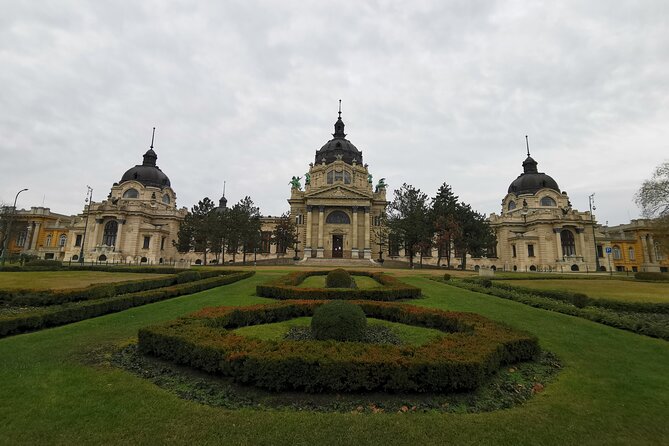
You also pass the famous Széchenyi Baths. The schedule does not include a bathing session, but the guide discusses Hungarian bath culture and the country’s abundant thermal water. If you have been wondering why Budapest is known for historic bathhouses, this is a useful place to ask questions.
Do not expect a quiet, museum-like visit at every stop. City Park offers several attractions, and the amount of time spent inside Vajdahunyad Castle can depend on the pace of your group and the guide’s approach.
Andrássy Avenue and the Hungarian State Opera House
The route then moves along Andrássy Avenue, Budapest’s grand ceremonial boulevard. Neo-Renaissance mansions and townhouses line the avenue, alongside fashionable restaurants, coffee houses, and high-end shops.
You have about 30 minutes to take in the avenue. The value here is not one single monument. It is the view of Budapest as a capital that wanted to project confidence, culture, and European polish.
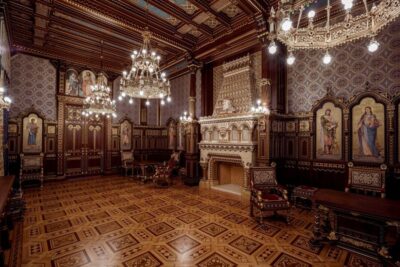
The Hungarian State Opera House receives another 25 minutes. It is described as the most beautiful building on Andrássy Avenue, and the guide shares its story during the visit. This stop should appeal to anyone who enjoys architecture, music, and the way public buildings express national ambition.
The schedule identifies the Opera House as a visit, but it does not promise a performance or a separate behind-the-scenes tour. Think of it as a guided look at an important building rather than an opera evening.
More history tours in Budapest:
- Budapest: Historic Cruise with Welcome Drink
★ 4.7 · 6,512 reviews - Budapest Historical Sightseeing – Free Walking Tour
★ 5.0 · 1,302 reviews - Buda Castle District Dark History, Legends and Vampire Night Tour
★ 4.5 · 1,240 reviews - BloodThirsty Hungary: Walking tour & Dark Historical Stories
★ 4.9 · 633 reviews
St. Stephen’s Basilica and the Holy Right Hand
St. Stephen’s Basilica is the largest church in Budapest and is dedicated to Hungary’s first king, Stephen. The guide points out the Holy Right Hand, the preserved hand of St. Stephen, an important relic in Hungarian history.
The planned visit lasts about 15 minutes. That is a short stop, so you will get an introduction and a look around rather than an extensive religious or architectural tour. Still, the basilica adds a different layer to the morning after the national monuments and royal architecture.
I would use this moment to ask about the relationship between St. Stephen, the foundation of the Hungarian state, and the country’s religious traditions. A brief stop can become much more meaningful when you understand why the relic matters.
Liberty Square, Parliament, and modern Hungarian politics
After the basilica, the route crosses Liberty Square on the way to Parliament. The square contains several notable monuments, and the guide uses them to discuss political life across different periods of Hungarian history.
This is one of the more valuable transitions in the whole tour. You are not simply moving from one attractive building to another. You are moving from religion and monarchy toward the political story of dictatorship, communism, and democracy.
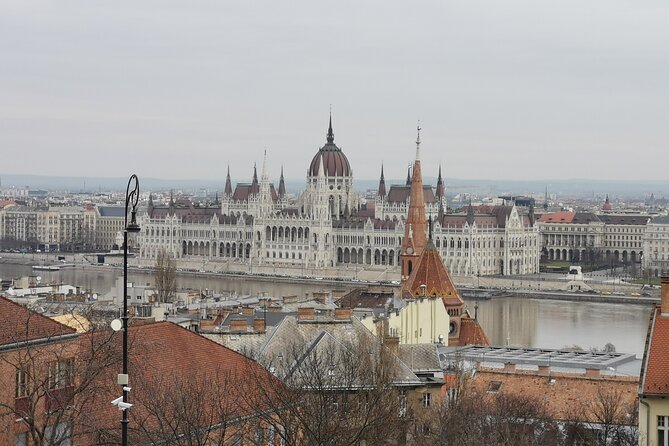
The Hungarian Parliament is the visual high point of the Pest portion. It is presented as one of the world’s most beautiful parliament buildings, and the guide explains the country’s changing political life as you reach it.
The information provided does not promise an interior Parliament tour. You should expect to see the building and hear its story from outside unless a separate entrance has been arranged. That distinction matters if you are specifically hoping to enter the building.
Crossing the Chain Bridge into Buda Castle
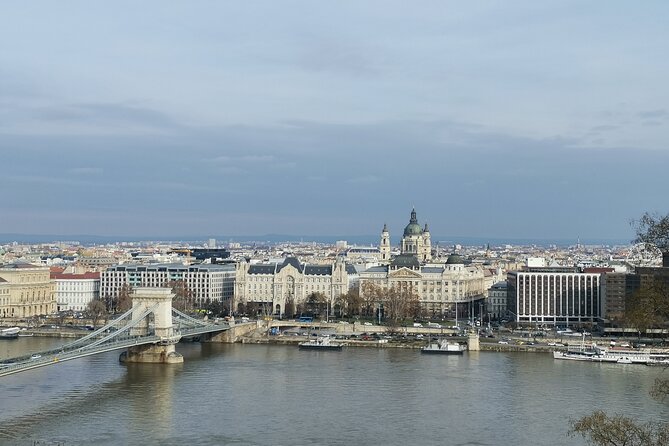
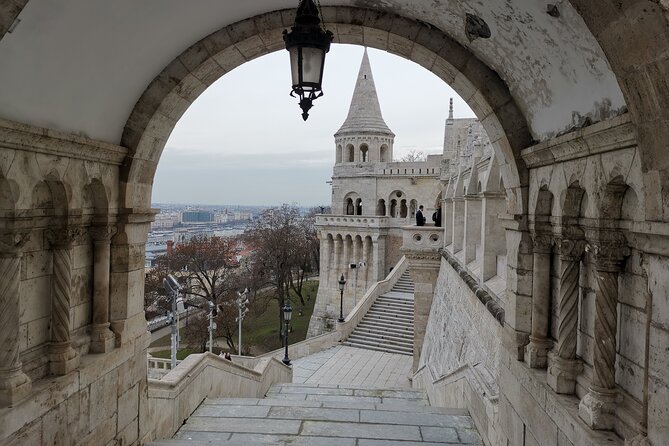
The tour crosses the historic Chain Bridge to reach Buda. This is the point where Budapest’s two halves come together in a literal way. Pest feels broad, urban, and ceremonial, while Buda rises toward the castle district.
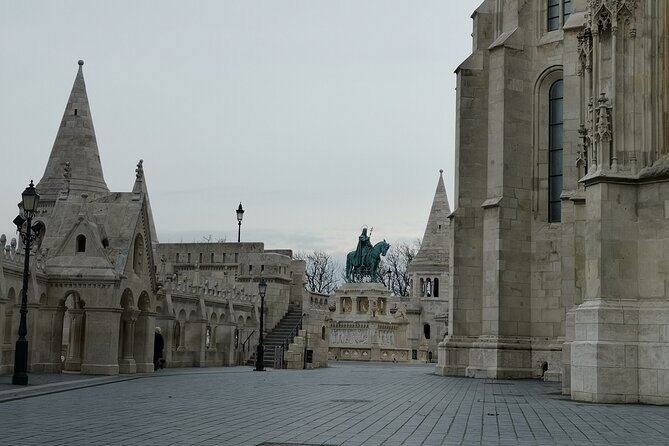
Buda Castle receives about an hour, the longest single stop on the route. It served as the residence of Hungarian kings from the 14th century, so the guide can connect the medieval city to royal power and the later development of Budapest.
The castle district is best appreciated slowly, and an hour gives you more breathing room than the shorter central stops. You can focus on the old royal setting, listen to stories about the kings, and take in the city from the Buda side.
This is also where the walking requirement becomes most important. The experience asks for moderate physical fitness, and the full route includes several districts plus a bridge crossing and time around the castle. Wear comfortable shoes and treat the four-hour schedule as an active morning, not a gentle coffee-and-sightseeing stroll.
What the guide adds to the experience
The strongest reason to book this tour is the guide’s role in connecting places that might otherwise feel unrelated. Heroes’ Square, a thermal bath, a basilica, Parliament, and a royal castle each tell only part of Budapest’s story. The guide ties them to Hungarian customs, food, politics, and everyday life.
The available feedback gives particular credit to György for explaining the history clearly and keeping the day interesting. One detailed account describes seeing much of the city by subway, bus, and tram as well as on foot. That suggests the guide may adapt the transport plan when public transit lets you cover more ground.
The provider is listed as György Rashad Salamon, while one account calls him George Rashad. If having a particular guide matters to you, ask who will lead your date. The tour is sold as a private experience, but the guide assigned to you may depend on availability.
I would also ask what you want most before the walk begins. You can steer the flexible itinerary toward architecture, Hungarian history, politics, baths, food, or daily life. The more specific you are, the more useful the guide’s local knowledge can become.
Is $277.64 good value?
At $277.64 per group, the price is not cheap for a four-hour walk. It includes a professional guide and hotel pickup, but not food, drinks, or transportation tickets.
The calculation changes with group size. For 10 people, the cost works out to about $27.76 each. For 15, it is about $18.51 each, though the tour details also give a maximum of 10, so confirm the actual limit. For two people, the per-person cost is much higher.
You are paying for a private guide, a flexible route, and a broad introduction to both sides of Budapest. That can be worthwhile at the start of a first visit, especially if you want historical context instead of simply collecting photographs.
The value is weaker if you prefer to explore at your own pace, already know Budapest well, or mainly want admission to interiors. The tour does not include meals, drinks, or transport tickets, and the listed stops are presented as free-admission visits. Its main product is the guide’s time and explanation.
Who should book this Budapest walk?
I would recommend it for a first visit, families or friends who want one shared introduction, and anyone who likes asking questions as they go. It also suits people who want to see both Buda and Pest in one morning without working out the route themselves.
It is a good match for history-minded visitors who want more than dates and names. The program reaches from the origins of Hungary to royal rule, religious tradition, thermal culture, dictatorship, communism, and democracy.
You should think twice if you dislike walking, want a slow morning, or need long interior visits at the Opera House, Basilica, Parliament, or Castle. The route is broad by design, so each stop receives a limited amount of time.
The tour is also useful near the beginning of a Budapest stay. After four hours, you will have seen enough of the city to decide where you want to return for a longer visit, perhaps the baths, Castle District, Opera House, or Parliament area.
Practical details that affect your morning
Confirmation is provided when you book, and the meeting point is Deák Ferenc tér at 9:00 a.m. The activity ends back at that meeting point. Hotel pickup is offered, but confirm the exact pickup arrangement rather than assuming it is automatic.
The tour is near public transportation, and the guide may use transit during the route. Tickets are not included, so plan for that extra cost. Food and drinks are also your responsibility.
The information gives both a group size of up to 15 and a maximum of 10 travelers. Since those figures do not match, get the final number confirmed before paying, particularly if you are organizing a larger family or friend group.
Free cancellation is available until 24 hours before the local start time. A cancellation made less than 24 hours before the start, or a change within that period, is not eligible for a refund.
Should you book it?
Book this tour if you want a private guide to make Budapest’s major sights fit into one clear historical story. The broad route, flexible format, hotel pickup option, and guide-led explanations make it a strong first-day choice for an active group.
Skip it if you want a slow, highly specialized visit or plan to spend most of your time inside museums and monuments. Before booking, confirm the group limit, pickup details, and whether your priorities can be built into the route. For a four-hour overview that joins City Park, central Pest, the Chain Bridge, and Buda Castle, the price can make sense when shared among several people.
FAQ
How long does the walking tour last?
The tour lasts approximately four hours.
What time does the tour start?
The stated start time is 9:00 a.m.
Where does the tour begin?
The meeting point is Deák Ferenc tér in Budapest.
Does the tour end at the meeting point?
Yes. The activity ends back at the meeting point.
Is hotel pickup available?
Yes. Hotel pickup is offered, and the experience includes hotel pickup.
How many people can join the tour?
The price is stated as being for a group of up to 15 people, while the additional information gives a maximum of 10 travelers. Confirm the applicable group limit when booking.
What is included in the price?
A professional guide and hotel pickup are included.
Are food, drinks, and transport tickets included?
No. Food, drinks, and transportation tickets are not included.
Can I cancel for a full refund?
Yes, if you cancel at least 24 hours before the local start time. Cancellations or changes made less than 24 hours before the start are not eligible for a refund.
Just added around Budapest
- Budapest: Danube River Views Bike Ride★ 4.8 · 23 reviews
- Budapest: City Bike Tour with Coffee Stop★ 5.0 · 37 reviews
- Budapest: Private Walking Tour with a Local Guide★ 3.6 · 6 reviews
- Walk to recent and aged spiritual sanctuaries near Budapest★ 5.0 · 5 reviews
- From Budapest: Guided Tour of Eger with Wine Tasting★ 4.5 · 6 reviews
- Budapest: Vacation Photographer to collect great memories★ 5.0 · 49 reviews
- Audio visual multi-sensory chefs journey dinner experience★ 5.0 · 3 reviews
- Budapest: 3-Hour Trabant Sightseeing Tour★ 4.7 · 28 reviews
Budapest Walking Tours, compared.
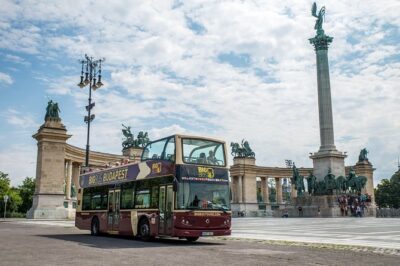
Big Bus Budapest Hop-On Hop-Off Bus and Walking Tour
Read our review →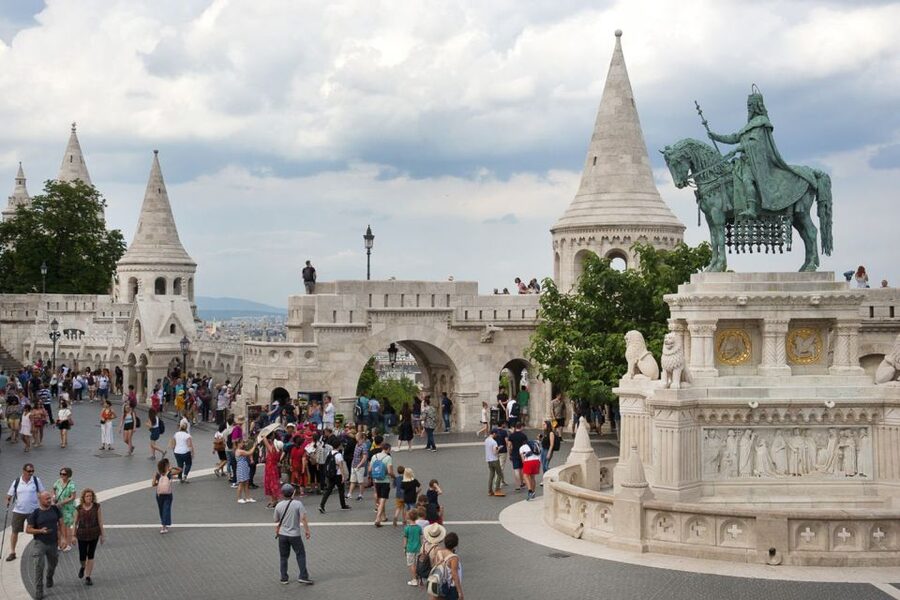
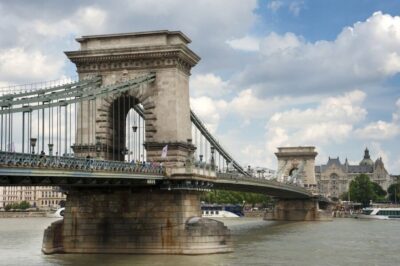
3-Hour Orientation Walking Tour of Buda and Pest
Read our review →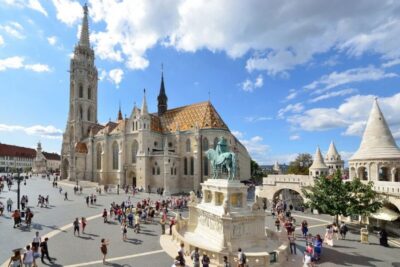
Budapest Historical Sightseeing – Free Walking Tour
Read our review →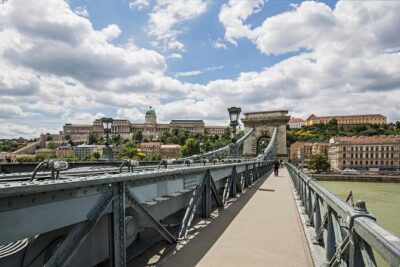
Budapest All in One Small Group Walking Tour with Strudel Stop
Read our review →
Buda Castle District Walking Tour with a Historian
Read our review →Browse the lists this tour appears in