
Reviewed · BUDAPEST WALKING TOURS
Budapest Walking Tour: Explore Top Sights & Hidden Gems
Budapest reveals itself well on foot, and this tour links several very different parts of central Pest in just two hours. You’ll see District VII street art, the famously eccentric Szimpla Kert, Jewish Quarter memorials, a 1970s trade-union building, and St. Stephen’s Basilica.
I like the mix of present-day city life and difficult history. I also like the small maximum of 15 people, which should make it easier to hear your guide and ask questions. The main caution is important: one booking was shifted from morning to afternoon and changed from District VII to District V without advance notice, so confirm the exact route if a particular stop matters to you.
Key points at a glance

- A compact central walk: The tour begins and ends at Szent István tér, beside St. Stephen’s Basilica.
- Street art with a purpose: District VII murals form part of a project that turned walls into an open-air gallery.
- Szimpla Kert without a nightlife commitment: You can learn about Budapest’s famous ruin-bar culture during a short daytime stop.
- A serious memorial stop: Thirty minutes in the Jewish Quarter give the guide room to discuss the community’s past and Holocaust remembrance.
- Small-group format: The group is limited to 15 people, useful on narrow streets and inside busy public spaces.
- A flexible route: Extra stops are kept as a surprise, but route changes should be confirmed before the start.
Why this two-hour Budapest walk works
This is not a grand tour of every famous Budapest sight. It is a short, themed walk through central Pest, with a particular focus on District VII and the Jewish Quarter.
That focus gives the experience a clear identity. You are not simply ticking off monuments. You are moving from murals and nightlife to memorials, architecture, and one of the city’s best-known churches. The contrasts are the point.
The walk is also practical for a first visit. A two-hour route can help you get your bearings without using half a day. Since the tour starts and finishes at Szent István tér, you can continue sightseeing afterward rather than ending in an unfamiliar part of the city.
The price is $36 per person. That is fair if you want a guide to connect the stops and explain what you are seeing. Admission to the listed stops is free, so you are paying mainly for the walking route, interpretation, and convenience. If you prefer to wander alone and read about each place later, the value is less clear.
More walking tours in Budapest:
- Budapest: Buda Castle Walk with Saint Stephen’s Hall
★ 4.5 · 3,012 reviews - Big Bus Budapest Hop-On Hop-Off Bus and Walking Tour
★ 3.5 · 2,206 reviews - Budapest: Buda Castle District Walking Tour
★ 4.6 · 2,108 reviews
District VII murals: Budapest’s walls tell a newer story
The opening stop takes you into District VII, where murals were created through Budapest’s Street Art Project. The goal was to turn otherwise plain walls into an open-air gallery.
You can expect about 20 minutes here. That is enough time for a guide to point out selected works and explain how public art has changed the feel of the neighborhood. The stop is especially useful if you would otherwise walk past the murals without knowing why they are there.
The art also gives the tour an easy starting point. You begin with color, design, and modern city life before moving toward heavier subjects. This change in mood helps you understand that District VII is not just one thing. It is a place where creative projects, nightlife, old buildings, and painful memories sit close together.
Do not expect an art museum in the open air. The itinerary gives this stop a limited amount of time, and the exact murals you see may depend on the guide’s route. If street art is your main reason for booking, ask at the start how much time will be spent on it.
Szimpla Kert: a quick look at ruin-bar culture
The next stop is Szimpla Kert, one of Budapest’s best-known nightlife venues. It began in a run-down building and became a large, playful space filled with mismatched furniture, art, and live events.
The tour allows about 20 minutes here. That is long enough to understand the idea behind the place, but not long enough for a full evening out. Think of it as a guided introduction rather than a bar visit.
This stop explains a major part of modern Budapest’s reputation. The city’s ruin bars use old or neglected buildings in creative ways, giving them new life without making them look polished or formal. The odd furniture and changing art are part of the appeal.
The timing may be a plus. You can see Szimpla Kert as part of a daytime walking route without committing your evening to nightlife. At the same time, a short stop may leave you wanting more time to look around. That is fine if you plan to return on your own.
Because the venue is associated with live events and nightlife, conditions can vary. The experience may feel different depending on the time of day and what is happening there. The tour promises an introduction, not a reserved table or a drink.
The Jewish Quarter and its memorials
The most serious portion of the walk is the 30-minute stop in Budapest’s Jewish Quarter. The route includes statues that honor the Jewish community and commemorate people who died during the Holocaust.
This is where a guide can add real value. Memorials often use symbols, names, or gestures that are easy to miss when you are walking alone. Thirty minutes gives you time to pause, listen, and consider the meaning of the site rather than treating it as another quick photo stop.
I appreciate that the route places this subject beside the neighborhood’s present-day life. District VII is known for restaurants, art, and nightlife, but the area also carries the memory of a community that suffered terribly. Seeing both sides in one walk gives the neighborhood more meaning.
Approach this section with respect. It is not entertainment, and the mood may shift sharply from the playful energy of Szimpla Kert. That change is not a flaw. It is one of the reasons the route can be worthwhile.
If the Jewish Quarter is your main reason for booking, confirm that it is included. One person was told that a morning departure had been canceled, then accepted an afternoon time, only to discover that the route had been changed to District V. District V is a different area, and the change meant missing the Jewish Quarter entirely. The operator acknowledged that the route change should have been explained in advance.
Same city, a completely different sort of day:
- Budapest: City Highlights Cruise with Welcome Drink
★ 4.6 · 35,610 reviews - Budapest: Unlimited Prosecco, Beer and Aperol Spritz Cruise
★ 4.8 · 25,310 reviews - Budapest: Széchenyi Spa Day Ticket with Optional Upgrades
★ 4.3 · 23,911 reviews - Budapest: Nighttime or Daytime Sightseeing Cruise
★ 4.2 · 21,062 reviews
Szakszervezetek Háza and the city’s 1970s architecture
The itinerary includes about 30 minutes at Szakszervezetek Háza, an important central Budapest building constructed in the 1970s. It originally served as a hub for Hungary’s trade unions.
This is a useful change of pace. Many city walks concentrate only on medieval churches, grand nineteenth-century buildings, or old neighborhoods. A 1970s structure tells you something about a different period of Hungary’s past.
The building may be most interesting when your guide places it in context. Its value is not necessarily decorative. It represents an era, a political system, and the role of organized labor in Hungarian public life.
The description does not specify interior access, so plan to view and discuss the building rather than assume you will go inside. If modern architecture or twentieth-century history interests you, this could be one of the more distinctive stops. If you want only Budapest’s traditional sights, it may feel less essential.
That is part of the tour’s character. It does not limit itself to postcard views. It tries to show how the city changed over time, including periods that are less familiar to first-time visitors.
St. Stephen’s Basilica gives the walk a clear anchor
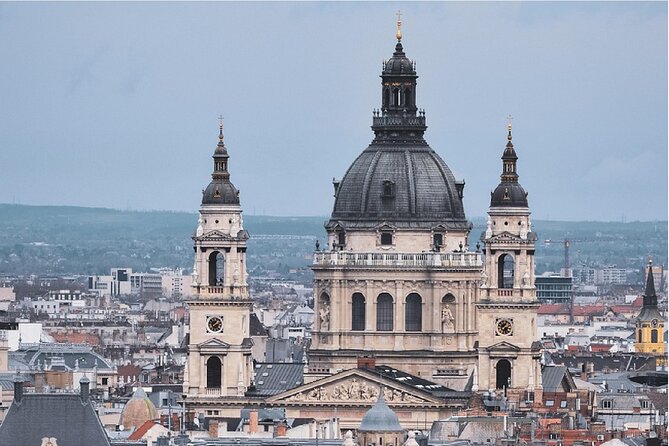
The tour begins at Szent István tér, the square in front of St. Stephen’s Basilica, and includes the basilica as a listed stop near the end. Around 20 minutes is assigned to this part of the route.
The basilica gives you an easy meeting point and a recognizable landmark. It also makes the tour simple to locate if you are using public transportation, since the meeting point is near transit.
Do not assume the price includes a ticket to enter the basilica. The listed stops have no admission charge, and the tour includes the guide and walking experience, but no separate entry is specified. Ask your guide what the visit covers if interior access is important to you.
The final location also makes the end of the tour convenient. Since you return to the meeting point, you can stay in the square, continue through central Pest, or make your way to another part of Budapest.
There are additional stops along the route that are kept as surprises. That can make the walk feel less rigid, though it also means you will not know every detail in advance. If you need a tightly controlled schedule, ask for the route before departure.
What the group size and timing mean for you
The tour lasts about two hours and accepts no more than 15 participants. That is a useful limit for a city walk. A group of this size can move through streets more easily than a large coach group, and you should have a better chance of hearing explanations.
The total time is short enough for most sightseeing plans. You could schedule it early in a trip to learn the city’s layout, or place it between other activities. Since the route returns to its starting point, you do not need to arrange transport back from a distant neighborhood.
You should still allow a little breathing room around the two-hour estimate. Walking tours can run longer when the guide stops to answer questions or when the group moves slowly. The available information describes the duration as approximate.
English is the stated language. A professional guide leads the walk, and one guide named Janet received specific praise for her handling of the tour. The positive impression of her guiding did not erase the route-change problem, which is a useful distinction: the guide can be good while the booking communication is not.
Practical details before you book
The meeting point is Budapest, Szent István tér 1, 1051 Hungary. The activity ends back at that same location.
A mobile ticket is provided, and confirmation arrives at the time of booking. The tour is near public transportation, and service animals are allowed. Most people can participate, though the experience is a walking tour, so comfortable shoes are a sensible choice.
Gratuities are not included. They are optional, so you can decide after the walk whether the guide provided the kind of context and care you wanted.
The cancellation rule is simple but strict near departure. You can receive a full refund if you cancel at least 24 hours before the start time. Changes or cancellations within 24 hours are not accepted for a refund, and cut-off times use Budapest’s local time.
The activity is offered in English. If you need another language, this is not the right choice based on the available information.
The route-change warning matters
The biggest concern is not the walking itself. It is communication.
A morning departure was once changed to an afternoon departure, and the route was also changed from District VII to District V. The person accepted the new time but was not told that the Jewish Quarter had been removed. Since it was the final day in Budapest, there was no chance to arrange another visit.
The operator later apologized and said the itinerary should have been explained in advance. That response is fair, but the practical lesson is yours: if District VII, Szimpla Kert, or the Jewish Quarter is central to your plans, confirm the time and route before the tour begins.
A route adjustment can be reasonable if a guide is trying to make the walk work within the available time. It is not reasonable to leave you guessing about what you paid to see. Keep written confirmation of the promised route and contact the provider promptly if the meeting details change.
Who will get the most from this walk?
I would consider this tour a good match for a first-time visitor who wants a short introduction to central Pest and prefers context over a simple list of sights.
It also suits you if you are curious about modern Budapest. The combination of public art, ruin-bar culture, Holocaust memorials, socialist-era architecture, and a major basilica covers a lot of ground in a small area.
The tour may be less suitable if you want long visits inside monuments, a dedicated Jewish Quarter study tour, or an evening spent at Szimpla Kert. The route touches each subject, but no single stop receives a full half-day treatment.
It can also work well for a solo visitor or a small party. The group cap of 15 gives you a more manageable setting than a large sightseeing group, and the central start and finish make the logistics easy.
Should you book it?
Book this walk if you want a short, varied introduction to District VII and central Pest, with a guide connecting street art, nightlife, Jewish remembrance, modern architecture, and St. Stephen’s Basilica.
At $36, the value is strongest when you want interpretation and a planned route. The free admission at the stops keeps extra costs down, but the tour is not a substitute for spending more time at the Jewish Quarter or Szimpla Kert on your own.
Before you commit, confirm that the advertised time and route are still in place. If those details are secure, this can be a useful first look at several sides of Budapest. If the Jewish Quarter is your priority, treat that confirmation as essential.
FAQ
How long is the Budapest walking tour?
The tour lasts approximately two hours.
What language is the tour offered in?
The tour is offered in English.
Where does the tour begin?
It begins at Budapest, Szent István tér 1, 1051 Hungary, at St. Stephen’s Basilica.
Where does the tour end?
The activity ends back at the meeting point.
What places are included on the route?
The route includes District VII murals, Szimpla Kert, Budapest’s Jewish Quarter, Szakszervezetek Háza, and St. Stephen’s Basilica. There may also be additional surprise stops.
Is admission included?
The listed stops have no admission charge. The tour includes the guided walking experience and professional guide. No separate basilica admission is specified.
How many people can join the tour?
The maximum group size is 15 participants.
Is the tour accessible by public transportation?
Yes. The meeting point is near public transportation.
Are service animals allowed?
Yes, service animals are allowed.
Can I cancel for a full refund?
Yes, if you cancel at least 24 hours before the experience start time. Cancellations or changes made less than 24 hours before the start time are not accepted for a refund.
Are gratuities included?
No. Gratuities are optional and are not included in the price.
Just added around Budapest
- Budapest: Danube River Views Bike Ride★ 4.8 · 23 reviews
- Budapest: City Bike Tour with Coffee Stop★ 5.0 · 37 reviews
- Budapest: Private Walking Tour with a Local Guide★ 3.6 · 6 reviews
- Budapest: Vacation Photographer to collect great memories★ 5.0 · 49 reviews
- Walk to recent and aged spiritual sanctuaries near Budapest★ 5.0 · 5 reviews
- From Budapest: Guided Tour of Eger with Wine Tasting★ 4.5 · 6 reviews
- Audio visual multi-sensory chefs journey dinner experience★ 5.0 · 3 reviews
- Budapest: 3-Hour Trabant Sightseeing Tour★ 4.7 · 28 reviews
Budapest Walking Tours, compared.
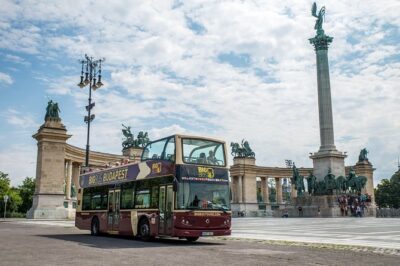
Big Bus Budapest Hop-On Hop-Off Bus and Walking Tour
Read our review →
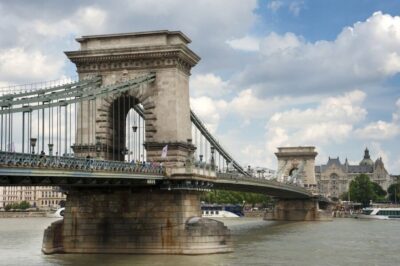
3-Hour Orientation Walking Tour of Buda and Pest
Read our review →
Budapest Historical Sightseeing – Free Walking Tour
Read our review →
Budapest All in One Small Group Walking Tour with Strudel Stop
Read our review →
Buda Castle District Walking Tour with a Historian
Read our review →Browse the lists this tour appears in