
Reviewed · BUDAPEST JEWISH QUARTER TOURS
Budapest Jewish Heritage: Synagogues, Shoes, Secrets & Flódni
Budapest’s Jewish heritage comes into focus through places that are both grand and painfully personal: the Great Synagogue, a small Orthodox house of worship, the Shoes on the Danube, and a surviving piece of the 1944 ghetto wall. The private format lets your guide adjust the conversation, which matters when the subject turns from architecture to persecution and family memory.
I like the contrast between the three synagogue traditions and the final flódni tasting, a small but welcome link between history and living culture. I also like the guides’ conversational approach. Gabriella, Miklós, Edith, Peter, and Kata are all praised for making room for questions and, in some cases, sharing personal Hungarian Jewish connections.
The main drawback is scope. In just 2 hours and 45 minutes, you cover a lot of ground, but entrance tickets are not included, and the tour may not provide the detailed Holocaust case studies some people hope for. If you want every synagogue interior or a long museum visit, plan extra time.
Key points before you book
- Three Jewish traditions in one walk: Compare the grand Neolog Great Synagogue, Moorish Rumbach Street Synagogue, and colorful Orthodox Kazinczy Street Synagogue.
- Personal guides matter: Guides including Gabriella, Miklós, Edith, Peter, and Kata bring different strengths, from teaching and historical context to family stories.
- The wartime sites are handled directly: The route includes the Carl Lutz Memorial, Shoes on the Danube, the former ghetto area, and a surviving ghetto wall.
- Flódni gives the tour a human finish: You end with a traditional Jewish Hungarian pastry rather than one more monument.
- Budget for admission fees: Synagogue entry tickets are not included in the $102.95 price.
- Private means flexible: Only your group participates, making it easier to ask sensitive questions or adjust the discussion.
Why this Jewish Quarter walk works
This is not just a synagogue tour. It connects religious life, Budapest’s urban growth, wartime persecution, rescue efforts, and the survival of Jewish culture after catastrophe.
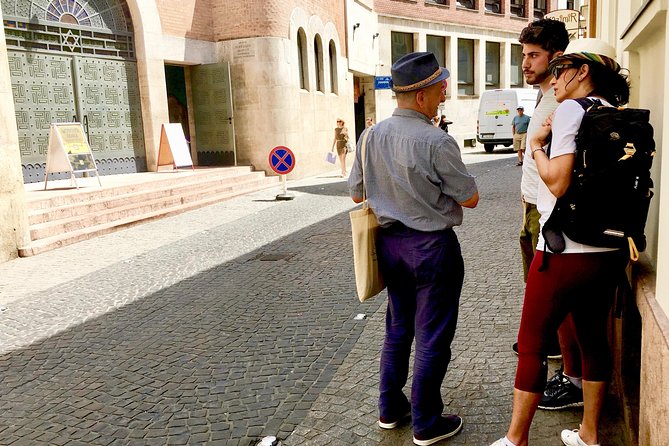
You begin at Herzl Square and Dohány Street, in the heart of Budapest’s Jewish Quarter. The area is now a mix of historic buildings, cafés, nightlife, and modern city life, but your guide helps you picture the neighborhood before and during the Second World War.
That historical framing is one of the tour’s strongest features. The Jewish community was not a side note in Budapest. It helped shape the city’s commercial, artistic, scientific, and civic life. The guide also places Hungarian Jewish history in its own setting rather than treating it as a repeat of events elsewhere in Europe.
The private setup improves the experience. You can ask why Hungarian Jewish communities developed different religious movements, how the wartime ghetto functioned, or how families lived between the two world wars. You are not forced to keep pace with a large group or save every question for the end.
The tour is offered in English and lasts about 2 hours and 45 minutes. Hotel pickup is offered, though the stated meeting point is Dohány u. 1, beside the Great Synagogue. Confirm the pickup arrangement when booking, since public transportation tickets are not included.
More Jewish Quarter tours in Budapest:
- Budapest Jewish Heritage Memorial Walking Tour & Synagogue Entry
★ 5.0 · 568 reviews - Budapest: Jewish Heritage Guided Tour with Synagogue Ticket
★ 4.8 · 533 reviews - Jewish Quarter of Budapest Walking Tour
★ 4.7 · 369 reviews
The Great Synagogue and the story of Hungarian Jewry
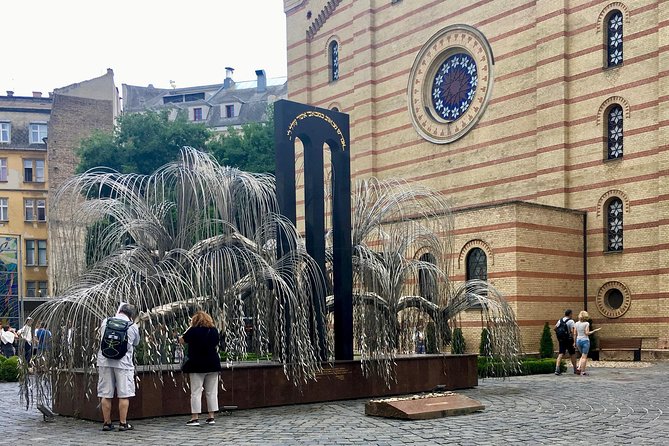
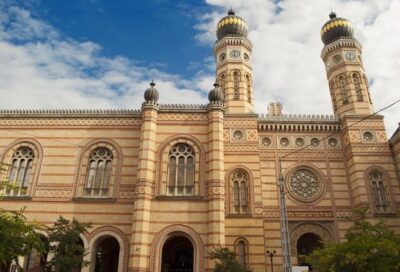
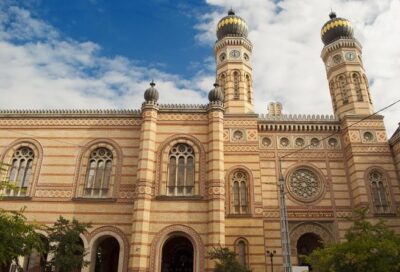
The first major stop is the Dohány Street Synagogue, usually called the Great or Central Synagogue. It is the largest synagogue in Europe, with seating for about 3,000 people, and serves as a center of Neolog Judaism, the Hungarian movement that developed its own balance between tradition and modern civic life.
Your guide explains why the building looks different from the synagogue image many people carry in their heads. Its architecture reflects Budapest’s position between Central European, Jewish, and broader imperial influences. The building is worth seeing for its design, but the real value here is learning what it represented to a large and established community.
The tour also uses the synagogue to introduce the fate of Hungarian Jews during the Second World War. That context matters because many Hungarian Jews were loyal citizens who did not expect their own state to turn against them. The guide can help you understand that painful gap between a community’s place in Hungarian society and its later treatment.
The stop is listed as about 20 minutes, and admission is not included. That short time is enough for an orientation and outside explanation, but you should not assume it includes a full paid visit through every part of the complex. If entering the Great Synagogue is a priority, ask how tickets and timing will work on your date.
The neighborhood also has links to famous Hungarian Jews and people of Hungarian Jewish descent. Names such as Tony Curtis and Estée Lauder come up in the area’s story, along with the larger contribution of Jewish Hungarians to science, arts, business, and cinema.
Rumbach Street and Kazinczy Street: three communities, three styles
The Rumbach Sebestyén Street Synagogue gives you a very different architectural experience. Built in 1872 by Otto Wagner, it served the more moderate Conservative community and uses a Moorish style that feels ornate and unusual beside the other synagogues.
Its interior has undergone a long-needed restoration. The guide points out how its design and community role differ from the Great Synagogue. This is where the tour becomes more than a list of buildings. You begin to see that Budapest’s Jewish population was not one uniform group. Different religious approaches had their own institutions, customs, and architectural language.
The visit is planned for about 15 minutes, and entrance is not included. The building may be open for admission separately, but the tour details do not promise that your fee covers entry. If interior access matters to you, check the current ticket arrangements before setting your expectations.
Next comes Kazinczy Street Synagogue, the city’s Orthodox synagogue. It was built in 1913, with late Art Nouveau touches, bright colors, and ceiling stained glass designed by Miksa Róth.
This stop helps explain the Orthodox branch of Budapest’s Jewish community and gives you another sharp contrast in style. The Great Synagogue feels monumental, Rumbach Street has Moorish elegance, and Kazinczy Street is more colorful and modern in its early twentieth-century design.
The listed stop lasts about 10 minutes, with admission again not included. That makes the three-synagogue comparison especially useful, but it also means you should treat the route as a guided introduction rather than a full architectural inspection of each site.
Carl Lutz and the choices made during the war
The Carl Lutz Memorial shifts the focus from community life to rescue. Lutz, a Swiss diplomat, helped save tens of thousands of Jews in Budapest from persecution and deportation.
The memorial is in the area of the former ghetto, and your guide uses it to explain the difficult choices made by diplomats and others who tried to protect Jewish people. The stop is free and takes about 10 minutes.
This part of the tour is valuable because it avoids reducing wartime history to dates and statistics. The memorial points toward individual action, moral risk, and the fragile protection that paperwork or diplomatic status could sometimes provide.
You should also expect the guide to place rescue efforts beside the larger failure of the Hungarian state to protect its Jewish citizens. That contrast is central to understanding why the period was so traumatic. It also gives the tour a more exact focus than a general city walk that simply labels the quarter as historic.
More history tours in Budapest:
- Budapest: Historic Cruise with Welcome Drink
★ 4.7 · 6,512 reviews - Budapest Historical Sightseeing – Free Walking Tour
★ 5.0 · 1,302 reviews - Buda Castle District Dark History, Legends and Vampire Night Tour
★ 4.5 · 1,240 reviews - BloodThirsty Hungary: Walking tour & Dark Historical Stories
★ 4.9 · 633 reviews
The Shoes on the Danube: a quiet, difficult pause
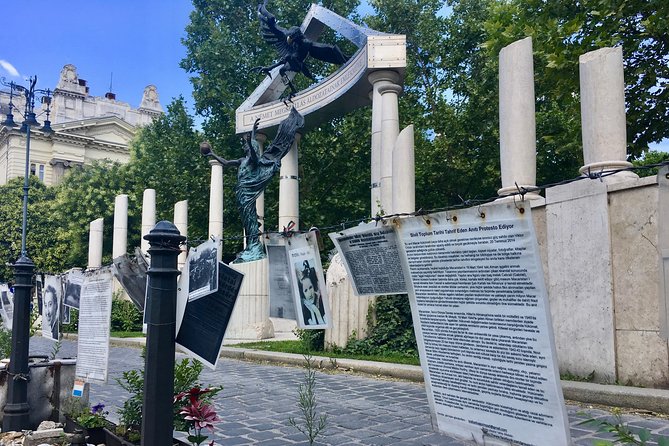
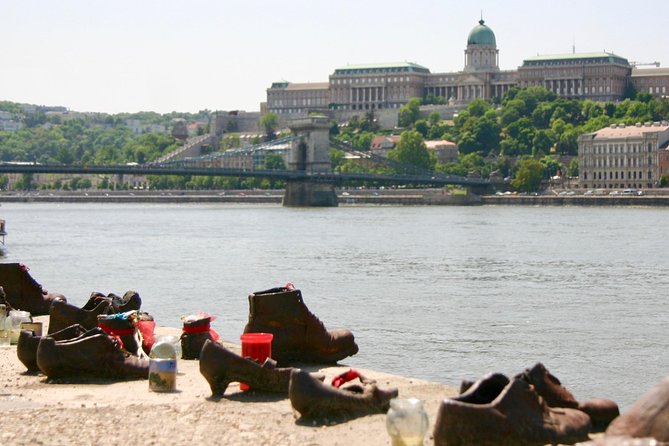
At the Shoes on the Danube Bank, the tone changes. The memorial consists of iron shoes along the river, recalling Jewish victims who were ordered to remove their shoes before being shot at the riverbank during the war. Their bodies were carried away by the Danube.
The memorial was unveiled on April 16, 2005. Your guide gives you time to pay respects, and the listed stop lasts about 10 minutes.
This is one of Budapest’s most direct memorials because it asks you to picture an ordinary object left behind. Shoes are personal, practical, and familiar. They make the crime feel close without relying on a large monument or long inscription.
The stop is included in the tour, unlike the synagogue admissions. It is also one place where you may want to slow down, even though the scheduled time is brief. The site is emotionally heavy, and the private format gives you a better chance to ask questions or remain quiet without worrying about a large group.
The former ghetto and the small synagogue experience
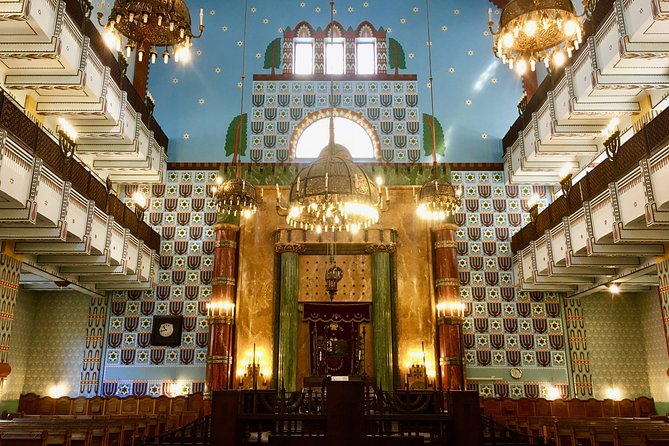
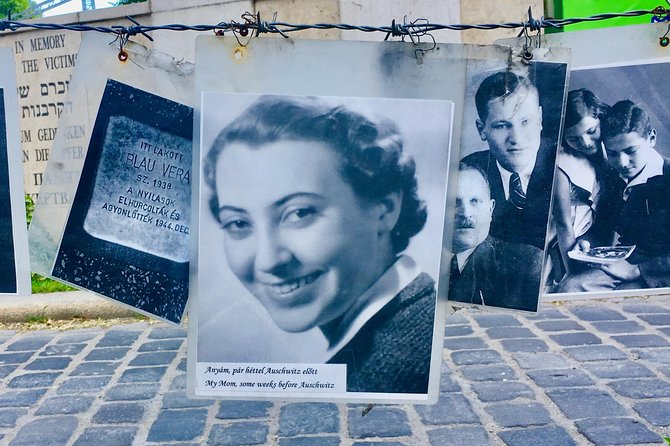
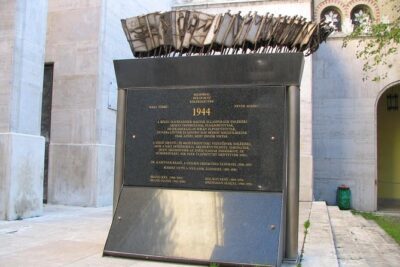
Toward the end of the war, Budapest’s Jewish population was forced into a ghetto. A small section of the ghetto wall still survives in the middle of the city.
Your guide discusses daily life inside the ghetto, the conditions people faced, and what eventually happened to its residents. You also learn how little of the old quarter remains visually intact. The streets today do not always reveal what happened there, so the guide’s stories do important work.
Some versions of the private experience have included a visit to a small house or tenement synagogue and a snack shared in a kitchen setting. The supplied details describe this as a moving look at a poorer synagogue, but the standard route specifically lists the Jewish Quarter and ghetto area rather than promising a house synagogue every time. Ask ahead if that particular visit is important to you.
This is also where the tour’s strengths and limits are clearest. Guides can help you picture families living between the First and Second World Wars, but 2 hours and 45 minutes cannot cover every family story, wartime decision, or postwar chapter. One guide acknowledged that a guest seeking a more detailed account of resistance and Holocaust events might want more depth. That is fair advice.
Flódni at the end: history you can taste
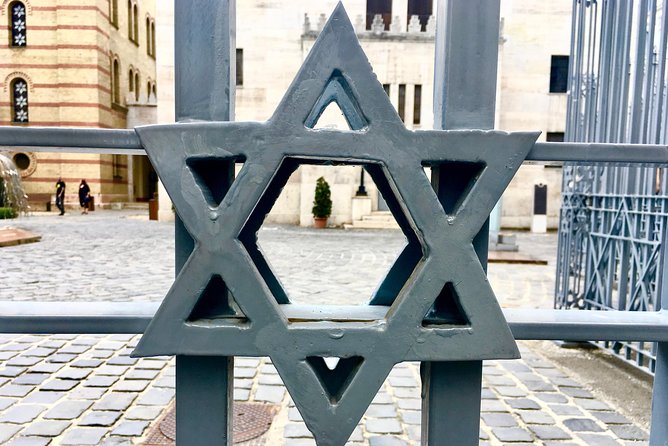
The tour ends on Dohány Street with flódni, a traditional Jewish Hungarian pastry. It is made with layered fillings and is often associated with the Jewish cuisine of Central Europe.
The pastry is more than a sweet bonus. After a serious walk, it brings the discussion back to daily life, family kitchens, and traditions that survived. You are not leaving the Jewish Quarter with only dates and memorials. You also get a small taste of a culture that continues.
The details describe snacks as included, while some individual experiences have ended with coffee or a pastry at a special café. A drink is not guaranteed as part of the stated inclusions, so treat the flódni as the dependable finish and ask your guide about any café stop.
The guides are a major part of the value
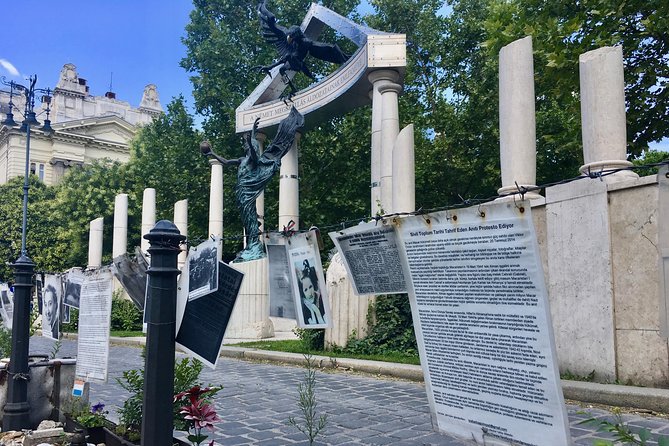
The tour uses genuine Jewish guides and historian guides, but the exact person depends on availability. Names connected with the experience include Gabriella, Miklós, Edith, Peter, Kata, and others.
Gabriella is praised for combining warmth with strong knowledge of Hungarian Jewish history. Miklós is a retired educator whose approach centers on questions, historical context, and conversation. Edith is described as a guide who asks questions that make you think about what you are seeing.
Kata brings a personal Hungarian Jewish connection, including family experiences connected with the Holocaust and Soviet occupation. That kind of first-person family context can make the history feel more immediate, though you should not assume every guide will offer the same personal material.
The best feature here is not simply how many facts a guide can recite. It is the ability to explain why Hungarian Jewish history developed differently from Jewish history in other parts of Europe, and to let you ask what matters to you.
Is $102.95 good value?
At $102.95 per person, this is not a budget sightseeing walk. The price makes the most sense for a private experience, especially if you are traveling with family or friends and want the guide’s attention.
You are paying for a tailored conversation, a historian or Jewish guide, hotel pickup when arranged, the flódni snack, and a route that brings together religious sites and wartime memorials. Group discounts may improve the value for larger parties.
The important catch is that entrance tickets are not included. The Great Synagogue, Rumbach Street Synagogue, and Kazinczy Street Synagogue are listed with admission not included, so your final cost may rise if you enter all three. Public transportation is also not included.
I would choose this over a cheaper large-group walk if the subject is personally important or if you have limited time in Budapest. I would not choose it solely for synagogue interiors, since the schedule is short and ticket arrangements require attention.
Who should book this tour?
You are a good match if you want to connect Budapest’s architecture with Jewish community life and wartime memory. It also suits people with Hungarian or Jewish family ties, as well as anyone who prefers a private guide to a fixed group script.
The tour is appropriate for non-Jewish visitors too. One guide begins by asking why you want to take the tour, which helps set the right level and direction. You can focus on religious differences, family life, architecture, the Holocaust, rescue efforts, or the modern Jewish community.
Most people can participate, and service animals are allowed. You should be comfortable walking between several city sites and discussing difficult historical material. If you need extensive time inside each synagogue, add separate visits before or after the tour.
The tour is generally booked well ahead, with an average booking time of about 61 days. Free cancellation is available until 24 hours before the start time. After that point, the fee is not refunded and changes are not accepted.
Should you book it?
Book this private walk if you want a thoughtful introduction to Budapest’s Jewish Quarter, especially if a personal guide and open discussion matter more to you than a packed museum schedule. The contrast among the three synagogues, the Shoes on the Danube, and the final flódni gives the experience a clear emotional and cultural arc.
Skip it if your main goal is a long, ticketed tour of synagogue interiors or a detailed examination of every Holocaust event. In that case, arrange separate admissions and give yourself more time.
For most visitors with a serious interest in Budapest’s Jewish past, the tour offers strong value through its guide, private format, and carefully connected sites. Just confirm pickup, ask which admissions are planned, and be clear about how much wartime detail you want.
FAQ
How long does the tour last?
The tour lasts approximately 2 hours and 45 minutes.
Where does the tour start?
The stated meeting point is Budapest, Dohány u. 1, 1074 Hungary, near the Great Synagogue and Herzl Square.
Where does the tour finish?
The activity ends back at the meeting point.
Is the tour private?
Yes. Only your group participates in the private activity.
Is hotel pickup available?
Hotel pickup is offered. Confirm the exact arrangement when booking.
Is the tour offered in English?
Yes. The tour is offered in English.
Are synagogue entrance tickets included?
No. Entrance tickets are not included in the tour price.
Is public transportation included?
No. Public transportation tickets are not included.
Is food included?
A traditional Jewish dessert, flódni, is included as a snack at the end of the walk. A drink is not listed as a guaranteed inclusion.
Can I cancel for a full refund?
Yes, if you cancel at least 24 hours before the experience starts. Cancellations made less than 24 hours before the start time are not refunded.
Just added around Budapest
- Budapest: Danube River Views Bike Ride★ 4.8 · 23 reviews
- Budapest: City Bike Tour with Coffee Stop★ 5.0 · 37 reviews
- Budapest: Private Walking Tour with a Local Guide★ 3.6 · 6 reviews
- Budapest: Vacation Photographer to collect great memories★ 5.0 · 49 reviews
- Walk to recent and aged spiritual sanctuaries near Budapest★ 5.0 · 5 reviews
- From Budapest: Guided Tour of Eger with Wine Tasting★ 4.5 · 6 reviews
- Audio visual multi-sensory chefs journey dinner experience★ 5.0 · 3 reviews
- Budapest: 3-Hour Trabant Sightseeing Tour★ 4.7 · 28 reviews
Budapest Jewish Quarter Tours, compared.
Budapest Jewish Heritage Memorial Walking Tour & Synagogue Entry
Read our review →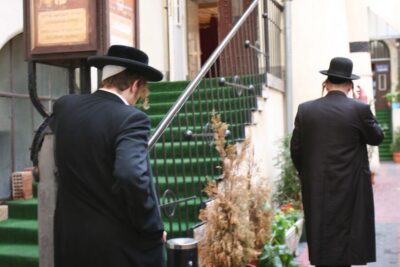
Jewish Heritage Guided Tour with Synagogue Ticket
Read our review →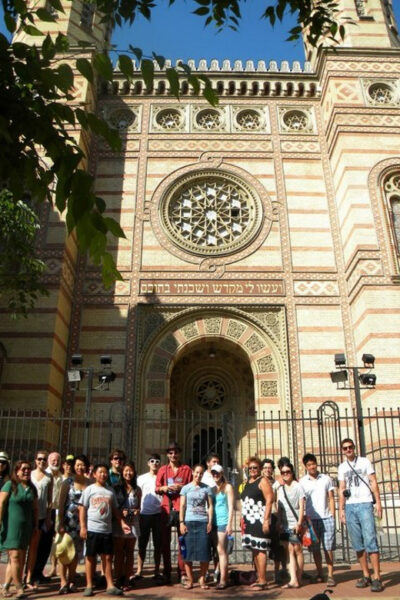
Past and Present of Budapest Jewish District Tour
Read our review →
Budapest Dohany Synagogue & Hungarian Jewish Museum & free extras
Read our review →
Jewish History Guided Walking Tour with Historian
Read our review →Browse the lists this tour appears in