
Reviewed · BUDAPEST FOOD TOURS
Budapest Essential Walk&Food tasting
Budapest Essential Walk and Food Tasting packs a lot into one private outing: grand boulevards, the first underground railway in continental Europe, Parliament, the Danube memorial, and the hilltop views from Fisherman’s Bastion. The clever part is the route. You use Budapest’s metro to connect sights that would otherwise take a great deal of walking.
I like the private format, which lets guide Gabor adjust his pace and explanations to your interests. I also like the simple food stop at the Strudel House, where coffee and poppy-seed strudel add a local flavor without turning the tour into a full restaurant crawl. The main drawback is the amount of ground covered: you see many places from outside, and the schedule may feel brisk if you prefer long visits inside museums or churches.
Key points
- Private tour with Gabor: Your group has the guide’s full attention, and the route can be explained at a personal pace.
- A smart citywide route: Deák Square, Heroes’ Square, City Park, Parliament, Castle Hill, and the Chain Bridge are connected by walking and metro rides.
- Food with a Hungarian accent: Coffee and poppy-seed strudel provide the main tasting stop.
- Strong historic range: The discussion moves from King Stephen and Catholic Hungary to Soviet rule, the American Embassy, the Holocaust-era Danube memorial, and present-day politics.
- Excellent views: Fisherman’s Bastion and the Castle Hill route provide some of Budapest’s best viewpoints.
- Outdoor-heavy experience: Most stops are short and free, so comfortable shoes and suitable weather matter.
A fast introduction to Budapest at Deák Square
The tour begins at the stairs of the Lutheran Church on Deák Ferenc Square, a useful central meeting point served by several public transport lines. This is a good place to start because Budapest’s major districts spread out from here, and the tour quickly gives you a sense of how the city fits together.
You walk toward Elizabeth Square and the Opera House, hearing about the city’s grand architecture from the outside. That approach suits this experience. You get the setting, the stories, and the street views without spending the whole afternoon inside one building.
The Opera area is particularly useful for first-time visitors because it introduces Budapest’s taste for ceremony and grand design. Gabor’s role is important here. He is well informed about European history and also connects Hungarian events to wider political and cultural changes. That broader context helps keep the buildings from becoming a string of names and dates.
Do not expect an Opera House tour or an extended architectural study. This is a moving introduction. If you want interiors, formal museum visits, or a long look at one monument, you will need to make a separate plan.
More food tours in Budapest:
- Budapest: Guided Foodie Walking Tour with Food and Drinks
★ 4.9 · 453 reviews - Budapest Food Tour: Market to Tavern with 14+ Tasters & Wines
★ 5.0 · 434 reviews - Budapest Culinary & Wine Walk
★ 5.0 · 397 reviews
Riding Budapest’s historic underground to Heroes’ Square
One of the most enjoyable parts of the route is the ride on the Millennium Underground. The line is described as Europe’s first underground railway, and using it makes the transfer to City Park part of the sightseeing rather than dead time.
You continue to Heroes’ Square, one of Budapest’s major ceremonial spaces. The monument is tied to Hungarian national identity and the country’s long political story, so this is a place where a guide adds real value. The statues and columns can look impressive without being easy to interpret on your own.
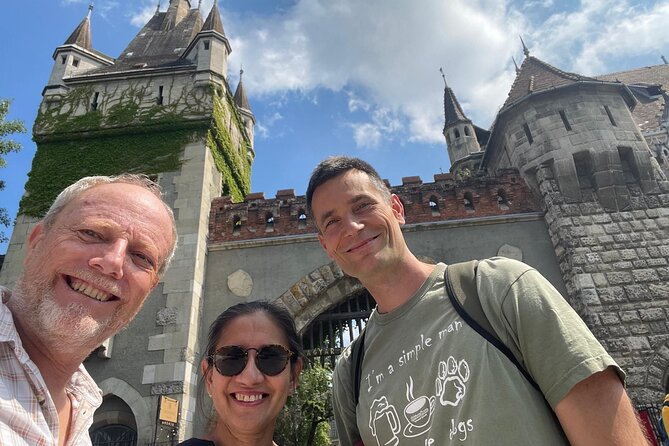
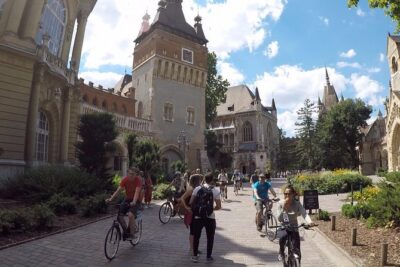
From the square, the walk continues into City Park and to Vajdahunyad Castle. The castle is especially interesting because its architecture draws on several historical styles. Gabor explains how the building’s appearance works, which is more useful than simply hearing that it is old or attractive.
This section takes about 30 minutes, so keep your expectations in check. You will get an informed outdoor visit, not a full castle tour. The benefit is breadth: in a short time, you see one of Budapest’s grand public squares, a major park, and an unusual architectural landmark.
Szechenyi Baths from the outside
The route then moves to the Szechenyi Baths and Pool. Budapest is famous for its thermal bathing culture, and Szechenyi is the city’s most visited bath. The stop focuses on its history and design rather than a bathing session.
If conditions allow, the group may take a look at the outdoor pools through a side entrance. That possibility is worth noting, but it is not the same as having time to use the baths. You should not book this walk expecting a spa visit. Bring swimwear only if you have another bath visit planned, because the tour itself does not provide a bathing block.
This is a useful stop for understanding one of Budapest’s most recognizable traditions. It also gives you a break from the central streets before the group returns downtown by underground railway.
The tour is built around short stops, and this one lasts about 20 minutes. That keeps the day moving, but it also means you will not have much time to study the bath buildings or sit by the pools.
St. Stephen’s Basilica and the story of King Stephen
Back in the center, the route reaches St. Stephen’s Basilica. The talk here covers the birth of Catholic Hungary and King Stephen, the country’s state founder. This is one of the tour’s key historical shifts, moving from national monuments and royal architecture to the religious foundations of the Hungarian state.
The guide also introduces other important figures from Hungarian history, including football star Ferenc Puskás. That detail helps widen the discussion beyond medieval kings and formal politics. Hungary’s identity is not only found in churches and government buildings, and Puskás offers a more modern point of connection.
The visit is listed at about 15 minutes. You should think of it as an exterior explanation and orientation rather than a long basilica visit. If you want to see the interior, climb to the dome, or study the church at leisure, leave time for a return visit.
More walking tours in Budapest:
- Budapest: Buda Castle Walk with Saint Stephen’s Hall
★ 4.5 · 3,012 reviews - Big Bus Budapest Hop-On Hop-Off Bus and Walking Tour
★ 3.5 · 2,206 reviews - Budapest: Buda Castle District Walking Tour
★ 4.6 · 2,108 reviews - Budapest City Landmarks Walking Tour in 2 Hours
★ 5.0 · 2,048 reviews
Coffee and poppy-seed strudel at the Strudel House
The food element arrives at the Strudel House, where you take a short break for coffee and strudel. The poppy-seed version is a particularly good choice if you want to try something closely associated with Central European baking rather than settle for a generic pastry.
This is not a food tour with multiple tastings. It is one well-placed pause inside a history walk. That restraint works for the schedule, since a long meal would make it difficult to cover the distant parts of Budapest included here.
I like the break because it gives you a chair, a snack, and a chance to ask questions. One previous outing with Gabor ran close to six in the evening after bad weather slowed the route, and he even returned the couple to their hotel. That does not guarantee the same arrangement, but it shows the sort of personal flexibility that can matter on a private tour.
The food stop also helps balance the serious subjects that follow. You may soon be discussing war memorials, Soviet rule, and current politics, so a warm drink and pastry arrive at a sensible moment.
Szabadság tér and Budapest’s difficult modern history
After the break, you walk toward the bank district and Szabadság tér, often considered one of Budapest’s most striking squares. The setting is formal and open, but the stories connected to it are far from simple.
The stop includes the last remaining Soviet statue in the city, the American Embassy, and the Memorial of the German Occupation. These sites put several competing memories close together. You hear about political power, occupation, liberation, and the way public monuments shape national arguments.
This is one of the strongest parts of the walk for anyone who wants more than postcard Budapest. The grand buildings are easy to admire, but the square also shows how recent history remains part of daily city life. Gabor’s wide historical background is useful here because the subjects can move quickly across decades and borders.
The visit lasts about 20 minutes. It is enough for a clear explanation and a look around, but not enough for a long independent reading of every plaque. Listen closely and ask questions while you are there.
Parliament and the Shoes on the Danube
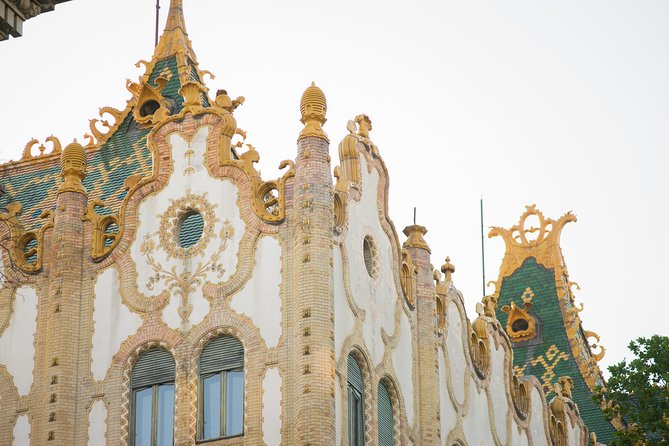
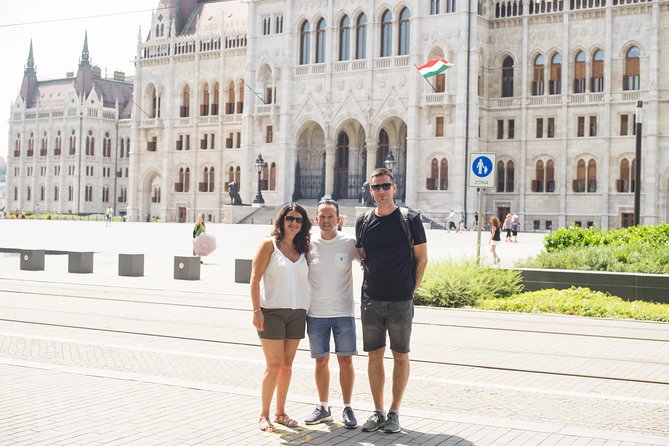
At Kossuth tér, you reach the Hungarian Parliament Building. This is one of the tour’s major visual moments, and the guide discusses its architecture, political role, past events, and current issues.
Parliament is best understood from the outside on this walk. You will have time to take in the scale of the building and its position beside the Danube, while Gabor supplies the background that a photograph cannot provide. The political discussion may be especially useful if you want to understand how Budapest’s grand civic spaces connect to Hungary’s recent debates.
Nearby, you visit Shoes on the Danube Promenade. The memorial is made up of iron shoes along the riverbank, honoring Jewish people who were killed there during the Second World War. It is a small, quiet site, and the short stop can feel more powerful than the larger monuments elsewhere on the route.
Give this part your attention. The memorial asks for reflection rather than a quick photo. It also shows why a guided walk can be valuable: the location is easy to pass, but its meaning is not something you can grasp from a brief glance.
Crossing beneath the Danube to Fisherman’s Bastion
After Parliament, you take Metro 2, the red line, under the Danube toward Castle Hill. This is a practical transfer and a nice change of pace. You have been walking through Pest, and suddenly the route shifts to the elevated Buda side of the city.
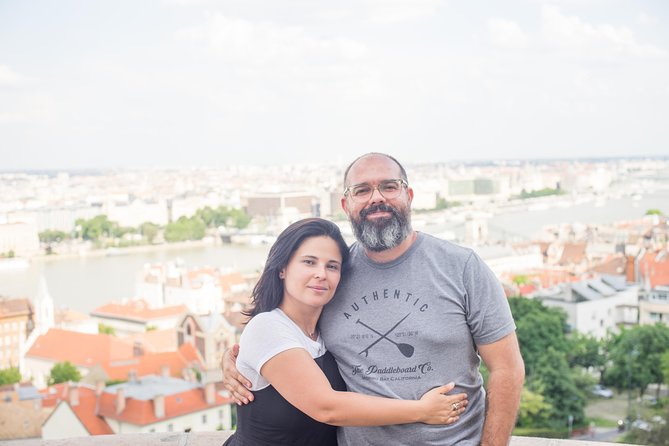
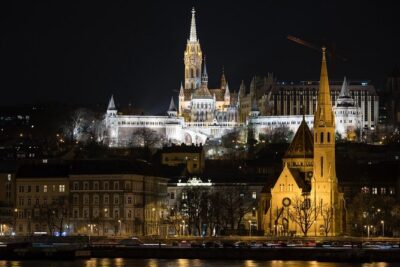
The walk begins at Fisherman’s Bastion, where the lookout terraces provide broad views over the river and Pest. This is the place to bring your camera, but do not let the view distract you from the guide’s explanation of the hill and the surrounding buildings.
The stop lasts about 30 minutes. That gives you time to look out over the city and begin the historical walk toward the Royal Palace area. You will not have a full tour of every Castle District sight, but you get a strong orientation to the area.
The Castle Hill section includes slopes and uneven walking. The tour is suitable for most participants according to the supplied information, but the overall route still calls for comfortable shoes and a reasonable level of walking ability. You are moving through several districts, not simply standing at viewpoints.
Walking down toward the Chain Bridge
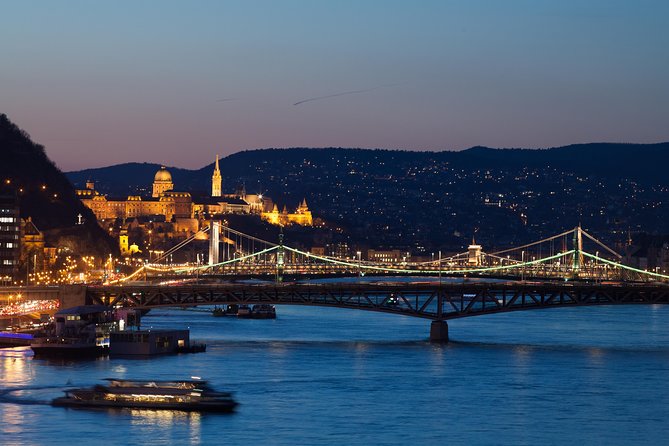
From the Castle area, the route heads downhill along the Funicular toward the Széchenyi Chain Bridge. The bridge is Budapest’s first permanent bridge across the Danube and one of the city’s most familiar symbols.
The guide tells stories about the bridge and its lions, details that make the structure more memorable than a simple crossing. The walk down also gives you a different view of the city from the Castle Hill approach.
There is a small point to clarify before booking. The tour information names the Chain Bridge as the end point, but another description says the walk finishes at Holy Trinity Square near Matthias Church in the Castle District. Those places are not the same, so confirm the final meeting point with Budapest Tour Guy before setting your evening plans.
The posted route takes about 30 minutes here. If the walk finishes in the Castle District, you will be well placed for more Castle Hill sightseeing. If it finishes at the bridge, you will be close to central Pest and the riverfront.
What the $90.11 price gives you
At $90.11 per person, this is not the cheapest way to see Budapest. The value comes from the private format, the guide’s time, the transport between distant sights, and the amount of historical explanation packed into one outing.
You are not paying for entry to major interiors. Every listed stop is free of admission, and the experience is mainly an outdoor walking tour with public transport rides. The food element is modest, consisting of coffee and strudel, so the price makes the most sense if you want personal guiding rather than a long series of paid tastings.
For a couple or small private group, the price can be fair because nobody else sets the pace. Gabor can explain more at Parliament, move faster through a familiar area, or adjust the conversation to your interests. That flexibility is harder to get on a large group walk.
The route also saves planning time. You do not have to work out how to link Deák Square, City Park, Parliament, and Castle Hill on your own. If you were already comfortable planning Budapest’s metro and historic sights, you might prefer a cheaper self-guided day.
Weather, timing, and practical preparation
The tour is scheduled daily from 3:00 PM to 9:00 PM during the stated operating period, with an expected duration of about three to four hours. The start time makes it useful for a first afternoon or evening in Budapest, though the exact pace may affect how much daylight remains at the viewpoints.
This is an outdoor-heavy route, and poor weather can cancel it. You can then choose another date or receive a full refund. Wear shoes suited to walking, and check the forecast before leaving. Rain and wind can make the open spaces at Heroes’ Square, Parliament, and Fisherman’s Bastion less comfortable.
The experience requires a minimum number of participants, though it is sold as a private activity for your own group. Confirmation is sent at booking, service animals are allowed, and the meeting point is near public transportation.
If you have limited mobility, ask for details before booking. The route includes metro stations, outdoor walking, Castle Hill, and a downhill section. The supplied information says most participants can take part, but it does not describe step-free access at every point.
Who should book this private Budapest walk?
I would choose this tour if you want a strong first look at Budapest and prefer a guide who can connect architecture, religion, war, sport, and politics in one conversation. It suits couples, families, and small groups who value personal attention and do not want to spend the day arranging public transport.
It is also a good choice for a short stay. In one outing, you see both Pest and Buda, reach City Park, ride two historic metro routes, taste strudel, and finish near some of Budapest’s best views.
I would be more cautious if your priority is entering buildings. The Opera House, Szechenyi Baths, Basilica, Parliament, and Vajdahunyad Castle are mainly treated from the outside or through short visits. You will need separate tickets and time for interiors.
The same applies if you want a serious food tour. The coffee and poppy-seed strudel are pleasant additions, but the main subject is Budapest itself.
Should you book Budapest Essential Walk and Food Tasting?
Book it if you want a private, history-led introduction with an efficient route and a guide who can handle complicated subjects. Gabor receives especially strong praise for his flexibility, broad historical knowledge, and willingness to continue in difficult weather. One outing even extended well beyond the planned time.
Skip it if you want slow museum visits, a full thermal bath session, or several food tastings. The route is ambitious, and the short stops favor breadth over depth.
For many first visits, that trade-off works well. You get the city’s grand sights, its harder stories, a memorable metro ride, a good pastry, and the chance to ask your own questions. Just confirm the final stop and prepare for several hours outside.
FAQ
How long does Budapest Essential Walk and Food Tasting last?
The experience is expected to last about three to four hours. One recorded outing ran close to 6:00 PM, so the exact finish can vary with pace and conditions.
Where does the tour begin?
The meeting point is at the stairs of the Lutheran Church at Deák Ferenc Square, Deák Ferenc tér 4, 1052 Budapest.
Where does the tour finish?
The listed end point is Széchenyi Chain Bridge. Another description places the finish at Holy Trinity Square near Matthias Church in the Castle District, so confirm the final location with Budapest Tour Guy before booking evening plans.
Is this a private tour?
Yes. Only your group participates in the activity.
What food and drink are included?
The route includes a stop at the Strudel House for coffee and strudel. Poppy-seed strudel is one specific option mentioned.
Can I cancel for a full refund?
Yes, if you cancel at least 24 hours before the local start time. Cancellations made less than 24 hours in advance are not refunded, and changes within that period are not accepted. If bad weather or an insufficient minimum causes cancellation, you are offered another date or a full refund.
Just added around Budapest
- Budapest: Private Walking Tour with a Local Guide★ 3.6 · 6 reviews
- Budapest: Danube River Views Bike Ride★ 4.8 · 23 reviews
- Budapest: City Bike Tour with Coffee Stop★ 5.0 · 37 reviews
- Budapest: Vacation Photographer to collect great memories★ 5.0 · 49 reviews
- Walk to recent and aged spiritual sanctuaries near Budapest★ 5.0 · 5 reviews
- From Budapest: Guided Tour of Eger with Wine Tasting★ 4.5 · 6 reviews
- Audio visual multi-sensory chefs journey dinner experience★ 5.0 · 3 reviews
- Budapest: 3-Hour Trabant Sightseeing Tour★ 4.7 · 28 reviews
Budapest Food Tours, compared.

Guided Foodie Walking Tour with Food and Drinks
Read our review →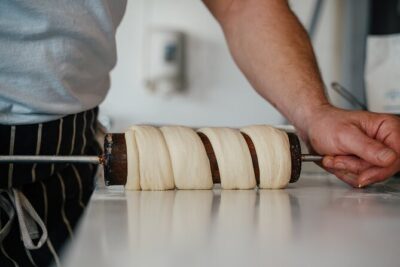
Budapest Food Tour: Market to Tavern with 14+ Tasters & Wines
Read our review →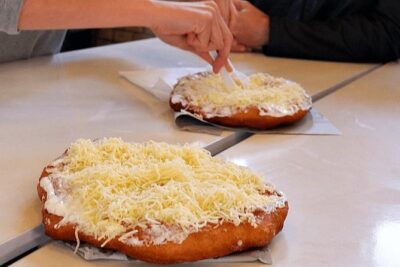

10PM Budapest Danube Cruise with Live Music & Food or Drinks
Read our review →
Budapest Food Tasting Tour with Nelli & her local guides
Read our review →Browse the lists this tour appears in