
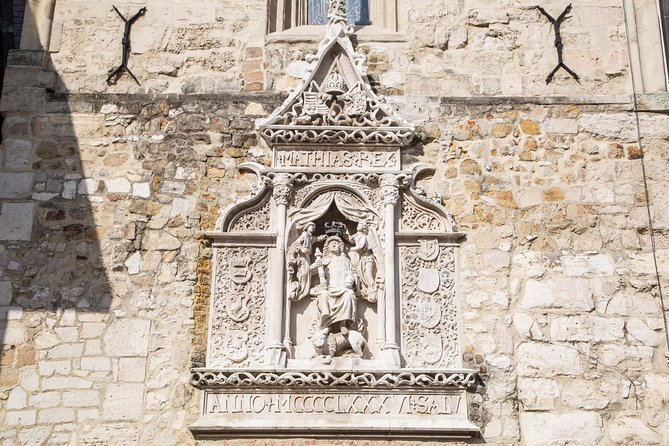
Reviewed · BUDA CASTLE DISTRICT TOURS
Budapest Castle Walk
Buda Castle is more than a grand palace with a fine view. Its cobbled lanes hold medieval ruins, Ottoman traces, Habsburg rebuilding, Jewish history, and scars from the 1945 siege. This tour links those layers as you walk from the Danube-side Castle Garden to Matthias Church and the Fisherman’s Bastion.
I like the small maximum of eight because it gives you room to ask questions, and I like that Matthias Church admission and a coffee or other drink are included. You get more than a quick photo stop, yet the tour remains short enough to fit into a busy Budapest day.
The main drawback is the $125 price, which is high for a three-hour walk. The route also uses cobbled streets and a hillside, and the afternoon start is fixed at 3:00 pm, so it may not suit every schedule.
Key points to know before booking
- The route covers several centuries: You hear about the royal court, Ottoman rule, Habsburg power, Jewish life, and the destruction of World War II.
- Matthias Church is the main indoor visit: Admission is included, while museum entrances are not.
- The best views come late in the walk: Fisherman’s Bastion and other points reveal the Danube and central Budapest.
- The tour begins by the Zero Kilometre Stone: Meet at Clark Ádám tér, near the Royal Palace side of the hill.
- Small-group and private choices are available: The standard small group has two to eight people, with larger group options also offered.
- Allow more than three hours if your schedule is tight: The walk can run longer when there are many questions or no need to hurry.
Why Buda Castle deserves a guided walk
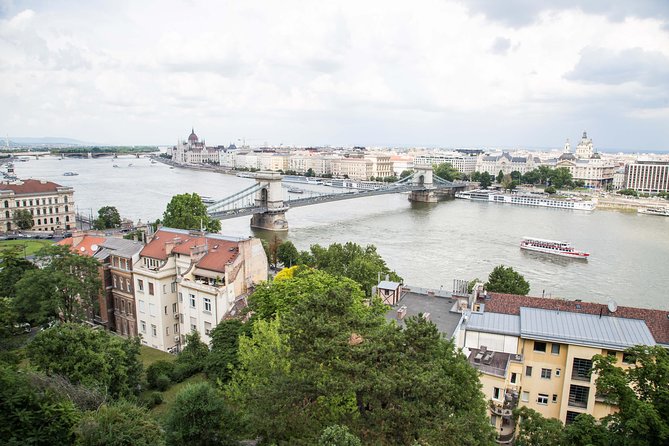
The Castle District can look polished and quiet at first glance, with pale façades, formal squares, and postcard views across the Danube. Yet the ground beneath those streets has seen repeated destruction and rebuilding. A guide helps you read those changes instead of seeing only a handsome collection of old buildings.
Buda’s first royal residence appeared here in the mid-13th century. By the 1300s, the district had become the center of Hungary’s royal court. The area later passed through Ottoman and Habsburg periods, and its population included people from many backgrounds, including a substantial Jewish community.
That long sequence matters. The same street may contain medieval remains beside Baroque buildings, with later reconstruction covering much of what war destroyed. You are not simply looking at one preserved medieval quarter. You are looking at a district repeatedly reshaped by power, religion, fire, war, and rebuilding.
The tour is especially useful if you want the story behind the stones. The Royal Palace, National Széchényi Library, Castle Garden, Matthias Church, and Fisherman’s Bastion all become pieces of one larger account.
More ways up to the Castle District in Budapest:
- Budapest: Buda Castle Cave Tour
★ 4.7 · 5,677 reviews - Budapest: Buda Castle District Vampires and Myths Night Tour
★ 4.6 · 3,830 reviews - Budapest: Buda Castle Walk with Saint Stephen’s Hall
★ 4.5 · 3,012 reviews
Starting at Clark Ádám tér and the Zero Kilometre Stone
The meeting point is the Zero Kilometre Stone at Clark Ádám tér, listed at Budapest 1013. This puts you at the foot of the Castle Hill area, near the Danube and the route toward the royal district. The tour starts at 3:00 pm, so check the time carefully before setting out.
One practical note is worth taking seriously. A past booking problem involved uncertainty about the start time and difficulty reaching the operator from abroad. The listed start time is 3:00 pm, but I would still save the meeting point, provider details, and confirmation on your phone before leaving home. That small bit of preparation can prevent a frustrating beginning.
From the start, expect a climb toward the Castle District and a walk over old paved and cobbled streets. The tour is intended for most people, but comfortable shoes make sense. If you have a firm appointment after the walk, tell the guide at the beginning. The advertised duration is about three hours, but the route can last longer when the group stops for questions.
Fisherman’s Bastion and the first big city views
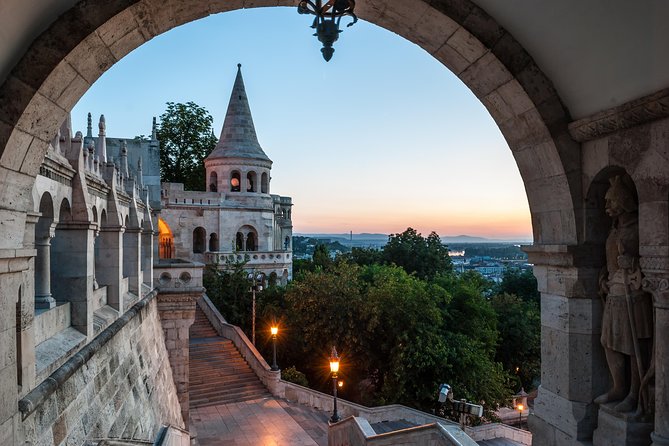
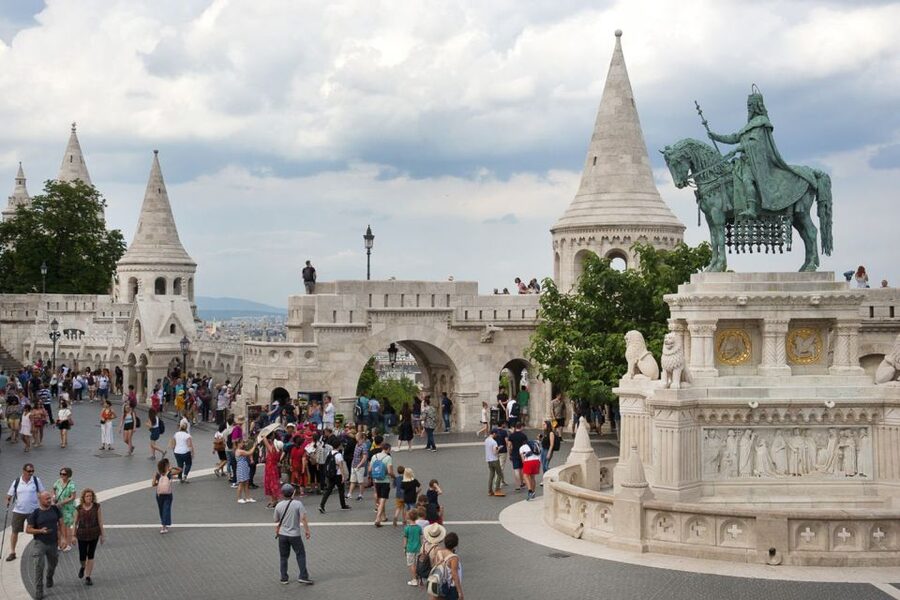
Fisherman’s Bastion is one of the tour’s most photogenic stops, but its value is not limited to pictures. From the hill, you can look across the Danube toward central Budapest and follow the shape of the city from above.
The streets around this point follow the contours of the hill. That layout reflects the defensive and residential role of the district over many centuries. Your guide explains how the area changed from a royal center into a neighborhood shaped by Hungarian rulers, the Habsburg Empire, Jewish residents, and the conflicts of the 20th century.
The stop is scheduled for about 10 minutes, with no separate admission charge. That is enough for an introduction and some photographs, but not a long private visit. If your main goal is extensive time at the bastion, you may want to return on your own after the tour.
The best approach is to listen before reaching for your camera. The views are easy to appreciate without explanation, while the historical setting is much harder to grasp alone.
Matthias Church, from coronations to wartime damage
Matthias Church is the principal included interior visit. Admission is covered, and you spend about 20 minutes learning about the building and its role as a coronation site for Hungarian kings.
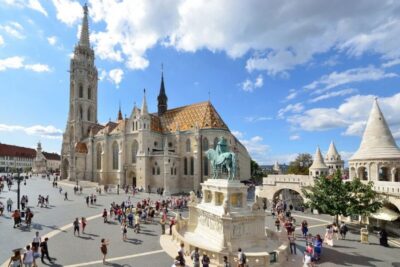
The church’s exterior roof, with its multicolored tiles, is one of the district’s most recognizable details. Inside, the architecture gives the guide a useful way to explain the changing religious and political life of Buda. The building is not presented as an isolated monument. It is tied to the royal court, the city’s shifting rulers, and the damage suffered during wartime.
World War II is a major part of this section. The Siege of Budapest in 1945 brought German and Russian forces into direct conflict on these streets. Much of the Castle District was badly damaged, and later reconstruction left a mixture of original material, restored structures, and rebuilt forms.
That context makes the church visit more meaningful. You see a beautiful building, but you also hear how fragile the district has been. A short guided visit works well here because the details can otherwise blur into a general impression of ornate walls and colorful tiles.
More walking tours in Budapest:
- Big Bus Budapest Hop-On Hop-Off Bus and Walking Tour
★ 3.5 · 2,206 reviews - Budapest: Buda Castle District Walking Tour
★ 4.6 · 2,108 reviews - Budapest City Landmarks Walking Tour in 2 Hours
★ 5.0 · 2,048 reviews - 3-Hour Orientation Walking Tour of Buda and Pest
★ 4.8 · 1,834 reviews
The Royal Palace and National Széchényi Library
The Royal Palace is one of the central sights, though the walk focuses on its history and setting rather than providing a general museum tour. You hear how the arrival of the royal court helped begin a long period of growth and importance for Buda.
The National Széchényi Library forms part of this story. The court created the conditions for a golden age, but the palace and surrounding quarter were destroyed and rebuilt many times. One especially useful point is that the palace visible today does not simply carry an uninterrupted royal past. No royals actually resided in the palace in the way many people assume.
This is also where the tour helps you understand the limits of what you are seeing. The district’s present appearance reflects medieval foundations, Baroque additions, Habsburg-era changes, and large-scale postwar reconstruction. If you expect every façade to be original, you may find the place confusing. If you want to understand how cities rebuild themselves, it becomes much more interesting.
Museum entrances are not included. The tour gives you the outdoor history and the church interior, but you should budget separately if you want to visit museums inside the palace complex.
Jewish Buda, old streets, and places easy to miss
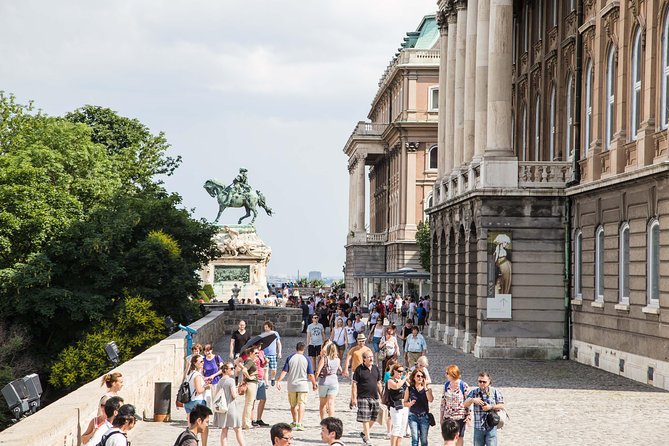
One of the stronger parts of the walk is its attention to the Jewish community that once lived in Buda Castle. You see an old street and synagogue site connected with that community, then hear how Buda became a meeting place for different nationalities during its important 15th-century period.
These traces can be easy to miss because they do not always announce themselves with a major façade or a large public square. A guide can point out the location and explain its place in the district’s social history. This adds needed balance to a tour focused on kings, palaces, and military events.
The Jewish history also reinforces the idea that Buda was a lived-in neighborhood, not just a royal stage set. Along with courtiers and rulers, ordinary residents, merchants, religious communities, and families shaped the area.
You should not expect a separate museum visit devoted to Jewish history. Instead, this material appears as part of the walking route. For many people, that is a useful introduction, though those seeking a longer specialist tour will want more time elsewhere.
Hidden courtyards, gardens, and statues
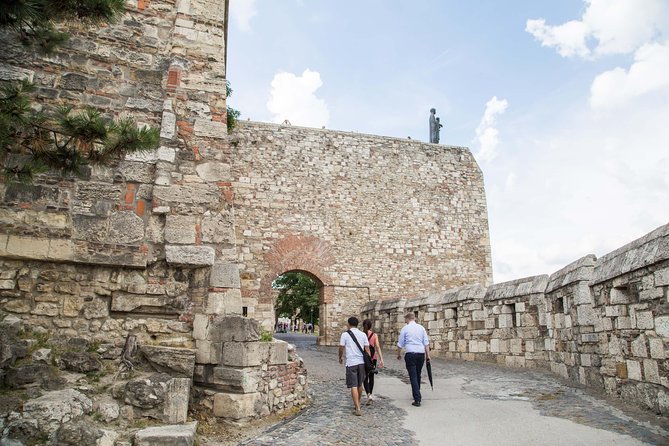
The route includes gardens, courtyards, palaces, and statues that many people pass without understanding. These smaller places give the walk variety. You move beyond the major sights and see how the district fits together at street level.
The Castle District is not only about grand views. Its quieter corners help show how old buildings, public spaces, and layers of reconstruction sit side by side. The guide can also use these spots to explain people and events that do not fit neatly into the story of the Royal Palace.
Because this is a three-hour tour, these discoveries are brief rather than exhaustive. You will not inspect every court or garden in detail. Still, they are useful pauses between the larger landmarks, and they keep the route from becoming a simple march between photo stops.
Castle Garden and the Várkert Bazaar

The walk reaches the restored neo-Renaissance Várkert Bazaar by the Danube. This is a change of mood from the hilltop lanes. The complex connects the Castle District with the river and gives you another way to see how Budapest presents its past in a restored setting.
The nearby Castle Garden adds more context. The district is still home to a few hundred residents, as well as Hungary’s president, so this is not merely a monument zone emptied of daily life. Old buildings continue to serve modern purposes.
The stop is listed at about 10 minutes, with no separate admission charge. That is enough to take in the setting and hear the main points, though anyone drawn to architecture or restoration may wish for longer.
The Danube position is valuable because it changes your view of the Castle Hill. From above, you see the river as part of the city’s grand composition. From the Várkert Bazaar, you feel the physical connection between the riverfront and the royal quarter.
Coffee, questions, and the WWII bunker
A coffee, tea, or another drink is included during the tour. This is a modest feature, but it gives the group a natural pause after several stops and offers time for questions. It also helps break up a walk that can run beyond its advertised three hours.
The WWII section brings the district’s story into sharper focus. You hear about the Siege of Budapest and the street fighting between German and Russian forces in 1945. The tour also visits a WWII bunker, adding a physical reminder to the historical account.
This is not a light, decorative history tour. The story includes destruction, civilian suffering, political change, and the cost of rebuilding. The bunker visit may be one of the most affecting moments, especially after seeing the elegant church and palace surroundings.
Expect the tone to shift here. The route moves from royal ceremony and city views to the brutal reality of modern war. That contrast is one reason a guided walk works better than a quick self-guided circuit.
Group size, private options, and the $125 price
At $125 per person, the tour costs more than a casual public walking tour. The price makes more sense if you value an English-speaking local guide, a small group of no more than eight, church admission, and a drink. You are paying for interpretation and a focused route, not just access to the district.
The small size is important. With two to eight people, you have a better chance to hear clearly, ask questions, and pause at less obvious sites. Larger parties can book a group option with a minimum of eight people. A private option is also available and can be customized.
The value depends on your plans. If you are comfortable reading about Buda Castle and wandering alone, $125 may feel steep. If you have only one afternoon and want the major sights tied together with Jewish, Ottoman, Habsburg, and wartime context, the price is easier to justify.
The overall rating is 4.3 from only three reviews, so I would not treat that number as a firm measure of quality. The small sample tells you very little about consistency. The practical concern about confirming the time and meeting point matters more to your planning than the rating.
Who should book this walk
I would recommend it to you if you want historical context without spending a full day in museums. It suits first-time visitors who want to understand the Castle District, as well as returning visitors who have seen the palace and bastion but missed the Jewish sites, courtyards, and wartime story.
It is also a good match for people who prefer a small group to a large procession. The private option makes sense if you want to shape the emphasis or keep a particular schedule.
You may want another plan if you need a very exact finish time, want extensive museum access, or dislike hills and cobbled streets. The route is short by sightseeing standards, but the terrain and possible extension beyond three hours still matter.
Cancellation is free up to 24 hours before the 3:00 pm start. A minimum of two people applies, and if that minimum is not met, an alternative or full refund is offered.
Should you book the Budapest Castle Walk?
Book this tour if you want Buda Castle explained as a living, repeatedly rebuilt district rather than a collection of pretty buildings. The combination of Matthias Church, Fisherman’s Bastion, the Royal Palace, Jewish heritage, Castle Garden, Várkert Bazaar, and the WWII bunker gives you a broad picture in one afternoon.
Skip it if you mainly want free time for palace museums or if $125 feels too high for a guided walk. Before booking, save the 3:00 pm start time and Clark Ádám tér meeting point, then allow a little flexibility after the three-hour estimate. For a compact, history-led introduction to Buda, it is a thoughtful choice, provided you want interpretation as much as sightseeing.
FAQ
How long is the Budapest Castle Walk?
The tour lasts about three hours. It can run longer if the group has many questions or does not need to hurry.
What time does the tour start?
The listed start time is 3:00 pm.
Where does the tour begin?
The meeting point is the Zero Kilometre Stone at Clark Ádám tér, Budapest 1013, near the Castle District.
Where does the tour end?
The tour ends at Matthias Church, Mátyás Templom, Szentháromság tér 2, Budapest 1014.
Is admission to Matthias Church included?
Yes. Entrance to Matthias Church is included in the tour price.
Is a drink included?
Yes. One coffee, tea, or another drink is included during the walk.
Are museum entrances included?
No. Museum admission is not included.
How many people are in the small group?
The small-group option has a minimum of two people and a maximum of eight.
Is a private tour available?
Yes. A private option is available and can be customized. Larger groups can choose the group option for a minimum of eight people.
Can I cancel for a full refund?
Yes. You can cancel for a full refund up to 24 hours before the experience start time. Changes or cancellations made less than 24 hours before the start are not accepted for a refund.
Just added around Budapest
- Budapest: Danube River Views Bike Ride★ 4.8 · 23 reviews
- Budapest: City Bike Tour with Coffee Stop★ 5.0 · 37 reviews
- Budapest: Private Walking Tour with a Local Guide★ 3.6 · 6 reviews
- Budapest: Vacation Photographer to collect great memories★ 5.0 · 49 reviews
- Walk to recent and aged spiritual sanctuaries near Budapest★ 5.0 · 5 reviews
- From Budapest: Guided Tour of Eger with Wine Tasting★ 4.5 · 6 reviews
- Audio visual multi-sensory chefs journey dinner experience★ 5.0 · 3 reviews
- Budapest: 3-Hour Trabant Sightseeing Tour★ 4.7 · 28 reviews
Buda Castle District Tours, compared.
Buda Castle District Vampires and Myths Night Tour
Read our review →
Buda Castle District Dark History, Legends and Vampire Night Tour
Read our review →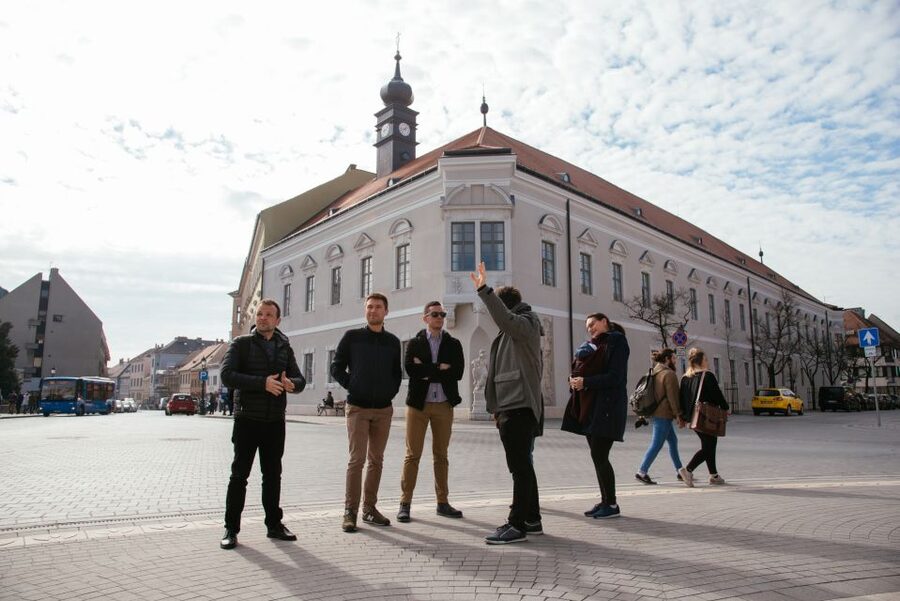
Buda Castle District Walking Tour with a Historian
Read our review →
Browse the lists this tour appears in