
Reviewed · BUDAPEST WALKING TOURS
Budapest Historical Sightseeing – Free Walking Tour
Budapest’s past is not tidy, and that is exactly what makes this walk worthwhile. Over roughly 2½ hours, you move from the National Museum and the old Jewish Quarter to Liberty Square, Parliament, and the Shoes on the Danube. The route gives you Pest-side orientation with plenty of stories about occupation, Communism, Jewish life, architecture, and modern Budapest.
I like the low-cost format, which makes this an easy first-day choice, and I like the mix of famous sights and smaller details such as Unger’s House, the Reagan and Bush statues, and the changing character of the Jewish Quarter. The main drawback is the pace and length: you cover about 3 miles, often on hard streets, and a group of up to 50 can make it harder to hear.
Key points to know before you go
- A strong first-day route: Start on the Pest side and finish near Chain Bridge, close to the city center.
- History with difficult chapters: Expect direct discussion of Hungary’s wartime suffering, Jewish persecution, Communist rule, and the 1948 uprising.
- The guide matters: Guides such as Victoria, Peter, Elizabeth, George, and Sabi have led this route. The quality of the experience depends heavily on who leads your group.
- Very low upfront cost: The advertised price is $3.63 per person, but tips are an important part of the guide’s income.
- Mostly exterior sightseeing: You see major buildings from outside. Museum, church, Parliament, and other interior admission costs are not included.
- Bring practical gear: Wear comfortable shoes and carry water, sunscreen, and weather protection. There is only a short break to buy a drink and use the toilet.
Why this Pest-side walk works so well at the start
Budapest can feel confusing at first because the city is split by the Danube. Buda rises on the western bank, while Pest spreads across the flatter eastern side. This tour stays on Pest, but it gives you views across the river toward Buda Castle, Fisherman’s Bastion, Matthias Church, Gellért Hill, and Margaret Island.
I like that arrangement. You are not rushed through both halves of the city. Instead, you get a usable introduction to the central Pest streets and finish with a clear sense of where the Danube, Parliament, Chain Bridge, and the main squares fit together.
The tour is also useful because it does not treat Budapest as a collection of pretty facades. You hear about the city’s difficult modern story, including the Second World War, the Jewish ghetto, Soviet influence, Communist rule, and the 1948 uprising. You also get local advice about food, transport, customs, and places to visit later.
Several guides receive especially strong praise for clear English, humor, and practical advice. Victoria is described as using photographs and personal family stories to explain Hungary’s past. Peter is praised for answering questions and making history easy to follow. Elizabeth is noted for helping first-time visitors understand how walkable Budapest is, while Sabi has helped people find a 72-hour transit pass.
That said, do not expect the same personality every time. One poor experience described a guide who was late, spoke quickly, and reacted sharply to side conversations. Another concern was the size of a group and the difficulty of hearing in a noisy area. Those points do not cancel out the many positive accounts, but they are useful reminders that a low-cost group tour can be uneven.
More walking tours in Budapest:
- Budapest: Buda Castle Walk with Saint Stephen’s Hall
★ 4.5 · 3,012 reviews - Big Bus Budapest Hop-On Hop-Off Bus and Walking Tour
★ 3.5 · 2,206 reviews - Budapest: Buda Castle District Walking Tour
★ 4.6 · 2,108 reviews
Kálvin tér and the National Museum: a useful opening lesson
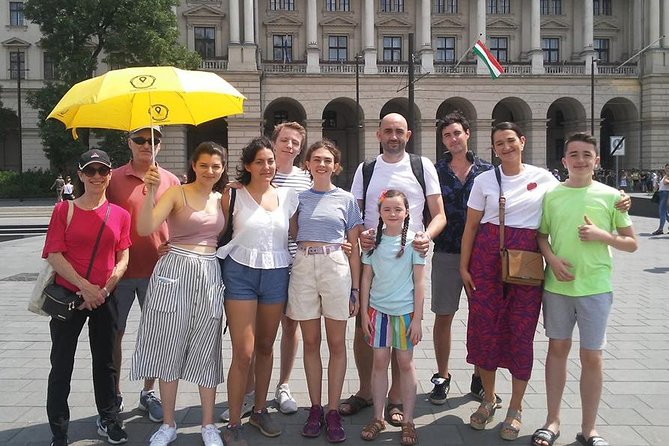
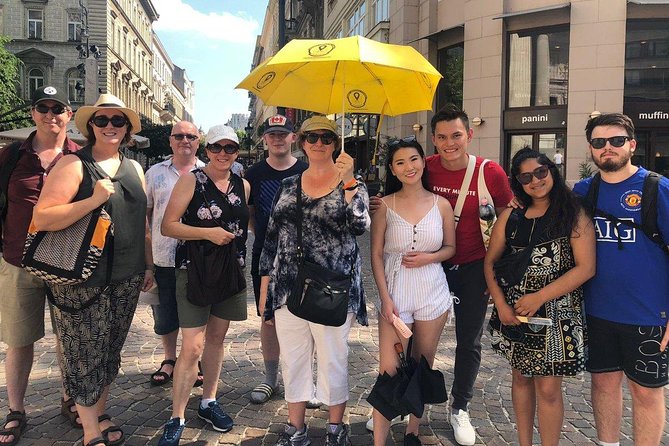
Meet at OTP Bank near Kálvin tér, at Kálvin tér 12 to 13. Look for guides wearing yellow. Kálvin Square has seating and some shelter, which helps if you arrive early or the weather turns unpleasant.
The first substantial stop is the garden of the Hungarian National Museum. You see the statue of the mythical turul bird and hear about the museum’s collections and founder. The guide also introduces the 1948 uprising and the VIII District, an area once known for grand palaces and a more complicated reputation.
This is a smart place to begin because the museum and its surroundings connect national identity with everyday city life. You are outside, so the museum admission fee is not part of the walk. If you want to visit the interior later, save it for another time rather than expecting this tour to take you through the collections.
The opening section is short, so listen for the larger themes. The guide is setting up the political and social background that will return throughout the afternoon.
Unger’s House and the city’s mixed architectural language
From Kálvin tér, the route reaches Unger’s House, a courtyard creation by architect Miklós Ybl. The building combines Byzantine, Gothic, Moorish, Renaissance, and Romantic elements. It is described as a fading palace, which gives the stop a more honest feel than a simple parade of polished monuments.
I enjoy stops like this because they train you to look up and notice Budapest’s odd combinations. The city’s architecture often reflects several periods at once, and Unger’s House gives the guide a compact example to explain that habit.
You spend only about five minutes here, so this is not an architectural lecture. It is a quick visual pause that adds texture to the route. If you prefer long interior visits, you may find the stop too brief. If you like seeing unusual corners without losing the momentum of the walk, it fits well.
From Elizabeth Square to Astoria
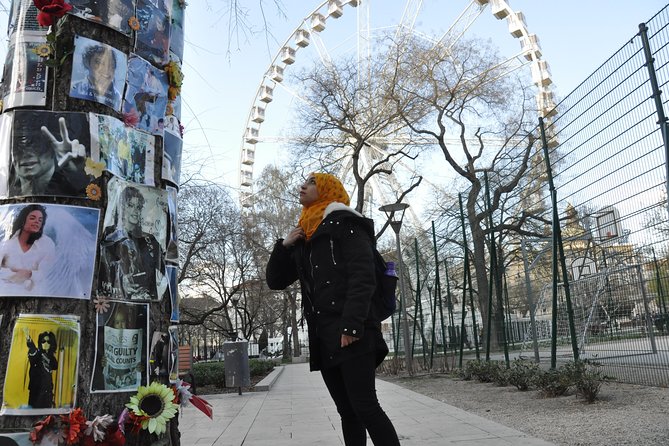
Elizabeth Square brings you into one of central Budapest’s social hubs. You see the Budapest Eye, hear about the square’s past, and get an introduction to nearby bars and nightlife. This is one of the points where the tour shifts from formal history to present-day city life.
That change matters. Budapest is not only museums, memorials, and grand government buildings. Elizabeth Square helps you see where people gather now, and the guide can offer suggestions for the rest of your stay.
The walk then passes the Danubius Hotel Astoria. Its French Empire style gives the group another architectural reference point. The hotel has hosted international stars and film productions, including the Josephine Baker Story, directed by Brian Gibson.
The stop is short, only about two minutes, so you are viewing the building from outside. Treat it as a quick detail on the way to the Jewish Quarter rather than a hotel visit.
More history tours in Budapest:
- Budapest: Historic Cruise with Welcome Drink
★ 4.7 · 6,512 reviews - Buda Castle District Dark History, Legends and Vampire Night Tour
★ 4.5 · 1,240 reviews - BloodThirsty Hungary: Walking tour & Dark Historical Stories
★ 4.9 · 633 reviews - Budapest Jewish Heritage Memorial Walking Tour & Synagogue Entry
★ 5.0 · 568 reviews
The Jewish Quarter, from community to ghetto to nightlife

The route through the Jewish Quarter is one of its most important sections. You learn how the area was home to a strong Jewish community, became a ghetto during the Second World War, and later changed into a district associated with artists, students, independent shops, designers, and bars.
The value here is the connection between the visible neighborhood and the people who lived through its changes. A lively street can still carry painful memories. The guide’s job is to hold both parts together without reducing the area to either nightlife or tragedy.
This is also where guide style matters most. The history is serious, and some guides use a direct or dark sense of humor. That approach works for some people and may feel too blunt for others. You should expect difficult subjects to be treated openly rather than softened.
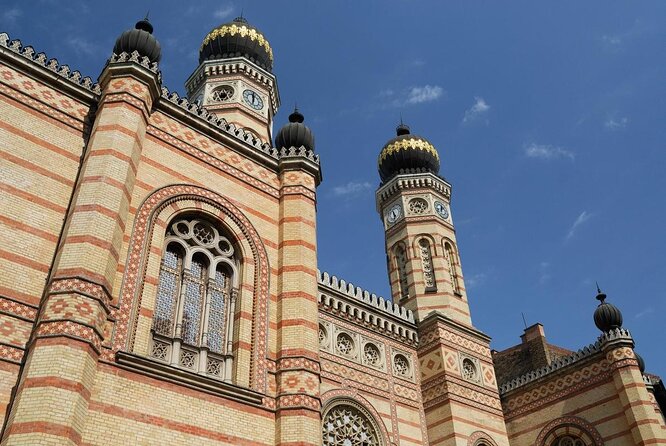
The tour does not provide an interior synagogue visit or a dedicated museum stop. You are walking through the district and hearing its story from the street. For a first visit, that gives you a good framework, but you may want a separate visit if you want more time with Jewish heritage sites.
St. Stephen’s Basilica and the central city
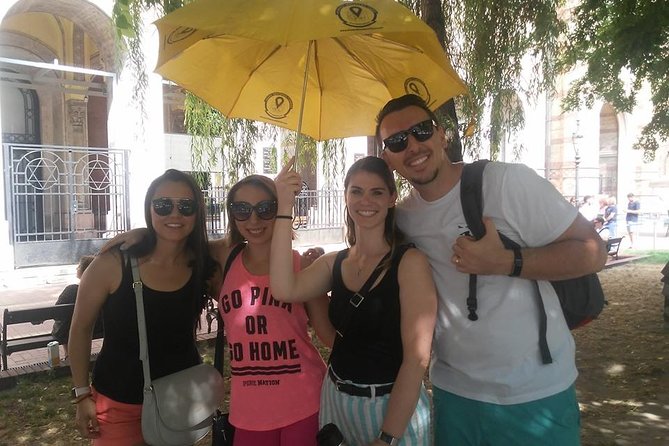
At St. Stephen’s Basilica, you stop outside the church named for Hungary’s first king. The basilica is one of the route’s major landmarks, but the tour does not include an admission ticket.
This is a good point to note the tour’s limits. You get the exterior, the story behind the name, and the guide’s explanation. You do not get time set aside for an interior visit, tower access, or a detailed look at the church’s art.
If the basilica is a priority for you, plan to return independently. The tour’s purpose is to help you place it within the city, not to replace a full visit.
Liberty Square and the politics of public space
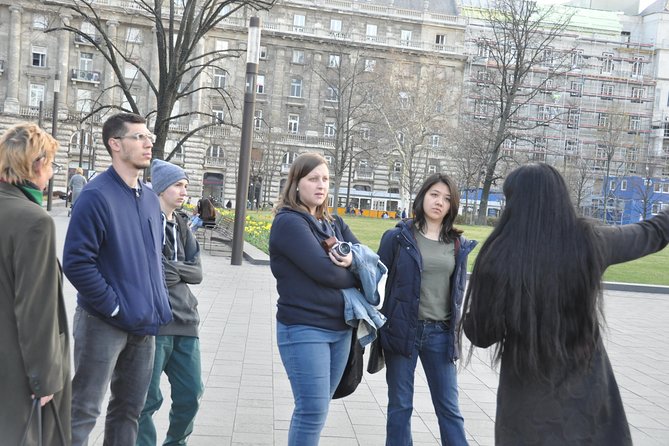
Szabadság tér, or Liberty Square, receives about 15 minutes, making it one of the longer stops. Here you see the Communist memorial and hear about the political meaning of the square.
This is one of the most useful parts of the walk because Budapest’s political past is not confined to a history book. It appears in monuments, statues, public arguments, and the way different periods are remembered side by side.
The tour also discusses Hungary’s Communist past and the country’s long struggle for self-government. The tone can be serious and direct. You should come ready for a version of Budapest that includes fear, loss, political pressure, and national frustration alongside the city’s beauty.
Stock Exchange Palace and the Reagan and Bush statues
The Stock Exchange Palace is introduced as a 50,000-square-meter historic landmark and one of Budapest’s largest privately owned historic buildings. You view it from outside, and admission is not included.
The next quick stop is the Ronald Reagan statue. The guide explains why Reagan appears to be walking away from Parliament and why George H. W. Bush is depicted waiting for him. These statues offer a lighter, more visual way to discuss the end of Communism and Hungary’s relationship with the West.
Because each statue stop lasts only a couple of minutes, do not expect a long political seminar. The benefit is that you get memorable details you can recall later as you explore Liberty Square on your own.
Parliament Square and the Danube view
The Hungarian Parliament Building is the grand finale on the Pest side. You stand outside the neo-Gothic and electric-style building, with the Danube nearby, and hear about important structures around the square.
The surrounding buildings include the former Ministry of Justice, the agricultural museum, and a chocolate museum. The guide helps you read the square as more than a single famous facade.
This is a photography-heavy moment, but try not to let the camera replace the explanation. Parliament’s exterior is easy to admire on your own. The useful part of the tour is understanding the buildings around it and how the square fits into Hungary’s political story.
Again, the tour does not include interior access to Parliament. You are seeing and discussing the building from outside.
The Buda panorama from Fisherman’s Bastion views
From the Pest side of the river, you look across to Fisherman’s Bastion, Buda Castle, Matthias Church, and the Hungarian National Palace. The guide also points out Margaret Island and Gellért Hill from a distance.
This is not a visit to Fisherman’s Bastion itself. You do not cross the river or climb into the Buda Castle District. That distinction matters when you plan your days. The tour gives you orientation and views, while a separate Buda visit is needed for the actual castle area.
Still, this distant view is useful. It lets you see how the two halves of Budapest relate before you decide how much time to spend on the western bank.
Chain Bridge and the Shoes on the Danube
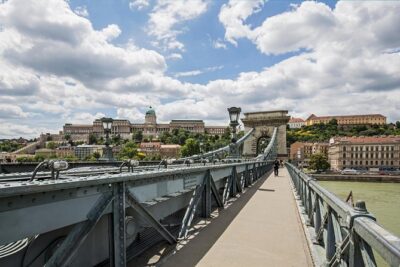
The walk continues to Széchenyi Lánchíd, better known as Chain Bridge. You hear about its construction, history, and reconstruction. The bridge is a natural transition point between the Pest route and the Buda side, even though the tour ends on the Pest side near it.
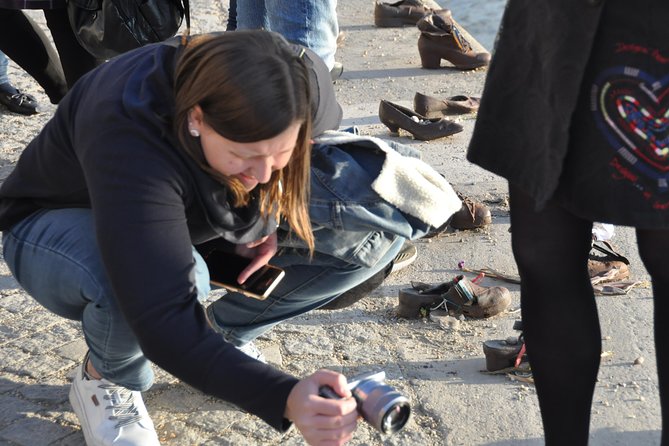
The final memorial is the Shoes on the Danube Bank. Sixty pairs of shoes represent Jewish people who were lined up and shot beside the river during the Holocaust. The design is simple, quiet, and difficult to forget.
This ending gives the tour emotional weight. You have spent the walk moving through architecture, politics, nightlife, and local life. The shoes bring the story back to individual people and a specific place.
The official endpoint is at Id. Antall József rkp. 1, near Chain Bridge. From there, you can walk back toward the starting point or continue into the city center.
Price, tips, group size, and walking effort
At $3.63 per person, the tour is excellent value if you want a broad introduction without committing to an expensive private guide. The low price is not the full cost of the experience, however. Tips are expected and help provide the guide’s income, so bring cash if possible.
A card or machine may not always be available for tipping. One person specifically regretted not having cash, so it is sensible to keep some Hungarian forints ready.
The maximum group size is 50. Some groups are much smaller, and a group of around 25 can work well. In noisy streets, though, a large group makes it harder to hear. Tell the guide promptly if you are struggling rather than waiting until the end.
You should be comfortable walking about 3 miles, with some cobblestones and outdoor stops. Wear supportive shoes. Carry water, sunscreen, and an umbrella, warm jacket, or other weather protection based on the forecast.
There is a short five-minute pause for drinks and the toilet, but no coffee, tea, food, or drink is supplied. Public toilets can cost between 100 and 500 HUF.
The tour is offered in English and is best suited to adults and children over 12, although younger children are welcome. Service animals are allowed, but ordinary dogs are not. Guides cannot carry luggage or equipment, and there is no hearing induction loop.
You receive confirmation when booking. Free cancellation is available up to 24 hours before the start time. Poor weather or failure to reach the minimum group size can lead to a new date, another experience, or a full refund.
Who should book this walk?
I would book it early in a Budapest stay if you want context before exploring alone. It is especially useful for first-time visitors who want help with orientation, transport, food ideas, customs, and the basic shape of Pest.
You should also book it if you enjoy political history and do not mind serious subjects. The route gives you a better understanding of why Budapest’s monuments and public squares can feel so emotionally charged.
I would think twice if you want long visits inside buildings, a quiet private setting, or a tour that crosses into Buda. You may also prefer a private guide if you need a slower pace, have hearing concerns, or dislike the uncertainty of a large group.
Should you book the Budapest Historical Sightseeing Free Walking Tour?
Yes, if you see it as a low-cost orientation walk rather than a complete Budapest sightseeing day. For $3.63 plus a fair tip, you get a long Pest-side route, major landmarks, difficult history, local suggestions, and a useful finish near Chain Bridge.
Book it near the start of your stay, wear good shoes, carry water, and bring cash for the guide. If you want the best chance of hearing every detail, choose a quieter time if available and stay close to the guide. The route will not take you inside the basilica, Parliament, or Buda Castle, but it can help you decide exactly where to return.
FAQ
How long does the Budapest Historical Sightseeing Free Walking Tour last?
The tour lasts approximately 2 hours and 30 minutes.
Where does the tour begin?
It begins at OTP Bank, Budapest, Kálvin tér 12 to 13, 1085 Hungary. Guides wear yellow clothing.
Where does the tour end?
It ends near Chain Bridge at Id. Antall József rkp. 1, 1052 Budapest. From there, you can walk back toward the meeting point or continue into the city center.
How much does the tour cost?
The listed price is $3.63 per person. Tips for the guide are not included and are expected because the tour operates with a minimal fee and tip-based income.
Is the tour offered in English?
Yes. The tour is offered in English with an in-person guide.
Does the tour visit Buda Castle or Fisherman’s Bastion?
No. You view Fisherman’s Bastion, Buda Castle, Matthias Church, Gellért Hill, and other sights across the Danube from the Pest side. The route does not cross into Buda.
Are entrance tickets included?
No. The tour mainly visits outdoor locations. Admission to places such as St. Stephen’s Basilica, the Stock Exchange Palace, Parliament, and the National Museum is not included.
How much walking is involved?
You should be able to walk about 3 miles. Comfortable shoes are recommended, especially because parts of Budapest have cobblestone streets.
Can I cancel the booking?
Yes. You can cancel up to 24 hours before the start time for a full refund. Cancellations or changes made less than 24 hours before the start are not refunded or accepted.
Just added around Budapest
- Budapest: Danube River Views Bike Ride★ 4.8 · 23 reviews
- Budapest: City Bike Tour with Coffee Stop★ 5.0 · 37 reviews
- Budapest: Private Walking Tour with a Local Guide★ 3.6 · 6 reviews
- Budapest: Vacation Photographer to collect great memories★ 5.0 · 49 reviews
- Walk to recent and aged spiritual sanctuaries near Budapest★ 5.0 · 5 reviews
- From Budapest: Guided Tour of Eger with Wine Tasting★ 4.5 · 6 reviews
- Audio visual multi-sensory chefs journey dinner experience★ 5.0 · 3 reviews
- Budapest: 3-Hour Trabant Sightseeing Tour★ 4.7 · 28 reviews
Budapest Walking Tours, compared.
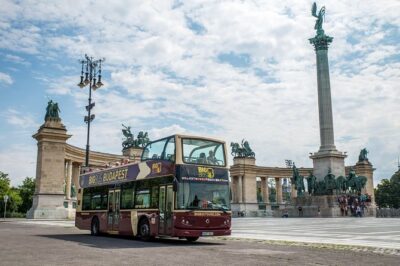
Big Bus Budapest Hop-On Hop-Off Bus and Walking Tour
Read our review →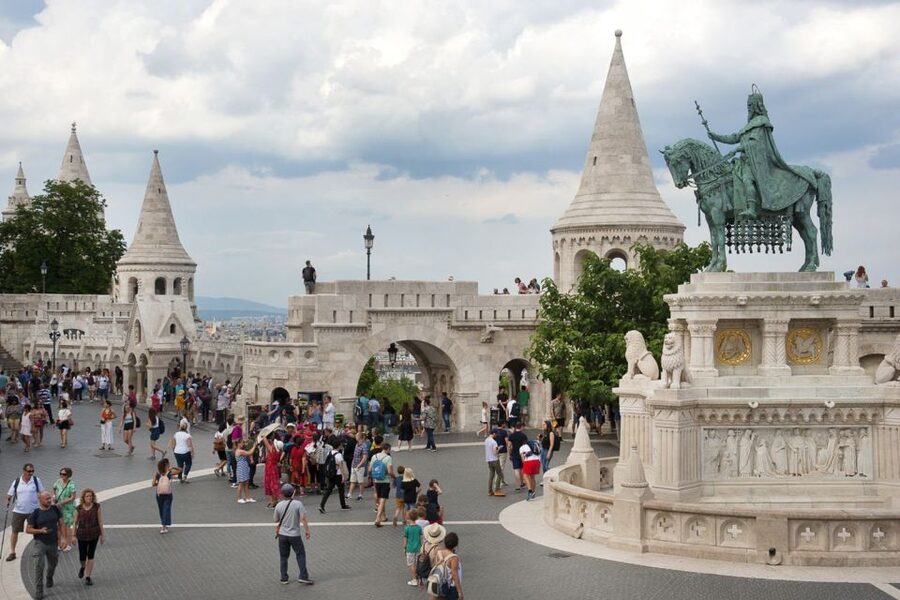
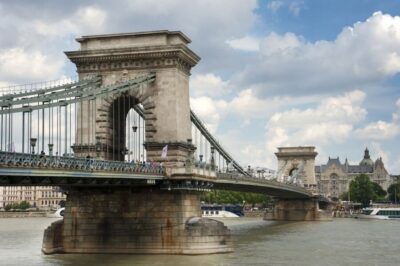
3-Hour Orientation Walking Tour of Buda and Pest
Read our review →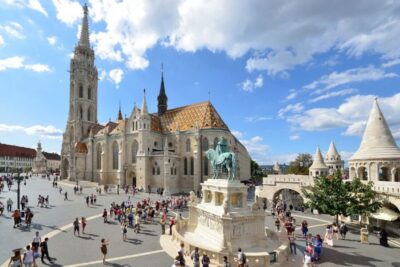
Budapest All in One Small Group Walking Tour with Strudel Stop
Read our review →
Buda Castle District Walking Tour with a Historian
Read our review →
BloodThirsty Hungary: Walking tour & Dark Historical Stories
Read our review →Browse the lists this tour appears in