
Reviewed · BUDAPEST COOKING CLASSES
Budapest All in One Small Group Walking Tour with Strudel Stop
Budapest packs two very different cities into one morning, and this tour connects them neatly. You begin at the Opera House in Pest, ride the metro to Heroes’ Square, pause for Hungarian pastry, then finish above the Danube at Fisherman’s Bastion. The best part is the way public transport helps cover ground without turning the experience into a long march.
I like the small group of no more than 10 and the strong local focus. Guides such as Greg, Esther, Anna, Petra, and Luisa have been praised for clear explanations, warmth, humor, and useful city tips. I also like that the price includes metro or bus tickets and a proper strudel stop, not just a quick photo break.
The main caution is the pace. You cover about 6 kilometers, with roughly three hours of walking, stairs, and short stops. You will see many major sights, but you will not tour the inside of the churches, baths, Parliament, or other buildings. This is an overview, not a slow museum visit.
Key points to know before booking
- Heroes’ Square and Vajdahunyad Castle give you a fast, memorable introduction to Hungary’s national story and architecture.
- The Strudel House stop includes a Hungarian dessert plus coffee, tea, or mineral water, with time to sit and recharge.
- Metro and bus rides are part of the sightseeing, and the guide handles the public transport tickets during the tour.
- The route links Pest and Buda, ending at Matthias Church, Buda Castle, and Fisherman’s Bastion.
- A maximum of 10 people makes it easier to hear the guide and ask questions.
- The tour runs in all weather, so comfortable shoes and suitable clothing matter.
A fast, useful first look at Budapest
At $100.37 per person, this is not the cheapest walking tour in Budapest. It is also more than a simple two-hour orientation stroll. You are paying for three and a half to four hours with an English-speaking guide, transport tickets, a dessert and drink, and a route that reaches both sides of the city.
The value is strongest if this is your first visit. In one morning, you get the basic shape of Budapest: Pest’s grand avenues and government district, the Danube riverfront, and the hilltop Buda Castle District. You also learn how to use the metro and city transport, which can save time later in your trip.
The tour is less useful if you want long interior visits or detailed time at each monument. The itinerary moves briskly, and some stops last only five to ten minutes. Think of it as a well-organized introduction that helps you decide where to return on your own.
More cooking classes in Budapest:
- Budapest: Hungarian Chimney Cake Workshop in the City Center
★ 4.8 · 885 reviews - Budapest Cooking Class & Market Tour with Local Guide & Wines
★ 5.0 · 553 reviews - Chimney Cake Workshop Budapest Downtown – Kürtőskalács Class
★ 5.0 · 220 reviews
Starting beneath the Opera House on Andrássy Avenue
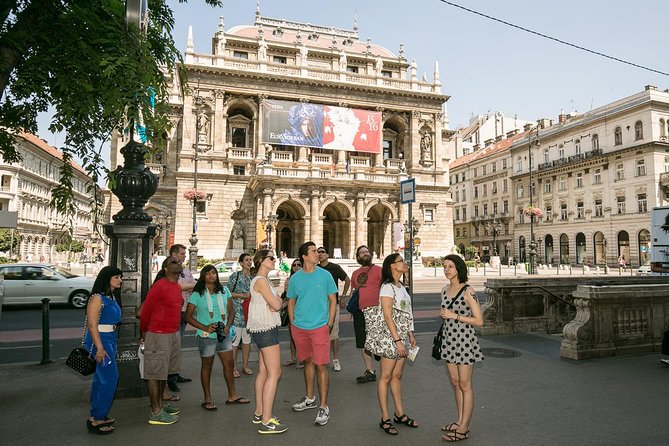
The meeting point is at Andrássy út 22, near the Hungarian State Opera House, with a 9:00 a.m. start. The Opera House itself is the opening story rather than a full interior visit. Your guide sets the scene, then leads you along one of Budapest’s grandest avenues.
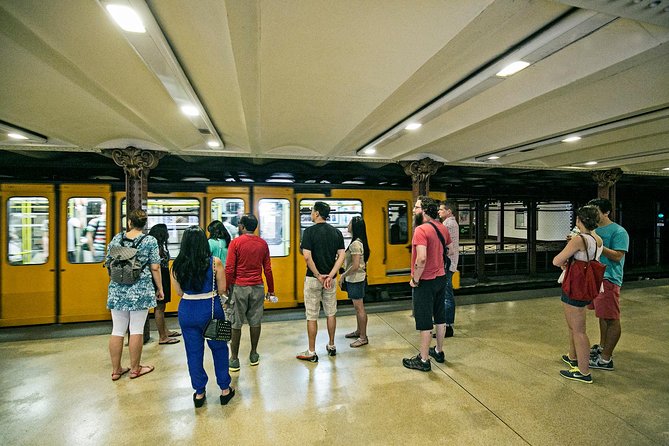
Andrássy Avenue matters because it links central Pest with City Park. Instead of walking the whole length, you use the underground beneath the avenue. That short ride is practical, but it is also part of the local experience. The tour gives you a first look at how easy it is to move around Budapest by public transport.
The guide supplies the transport tickets used during the tour. A single extra public transport ticket is also included for your return downtown, useful if you want to leave the final stop and continue sightseeing in Pest.
Heroes’ Square and City Park
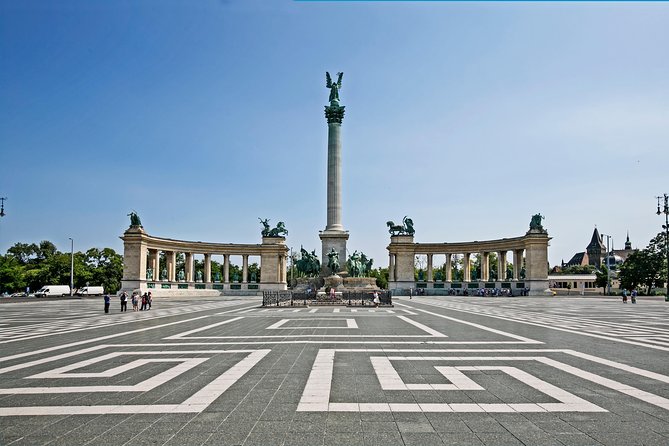
Heroes’ Square is one of the clearest places in Budapest to get a quick lesson in the country’s past. Its monument features figures connected with major periods of Hungarian history, including kings and national leaders. Your guide explains the statues and the meaning of the square instead of leaving you to guess who is who.
Allow about 30 minutes here. That gives you time for photos and a proper explanation, but not an extended study of every statue. The wide open space can also feel exposed in bad weather, so bring a coat, hat, or rain layer when the forecast calls for it.
From the square, you walk into Városliget, or City Park. The park is home to several important sights, and the route uses it as a transition from the formal monument area to Budapest’s leisure district. The park stop itself is short, around 10 minutes, so do not expect a long woodland walk.
Vajdahunyad Castle and Hungarian architecture
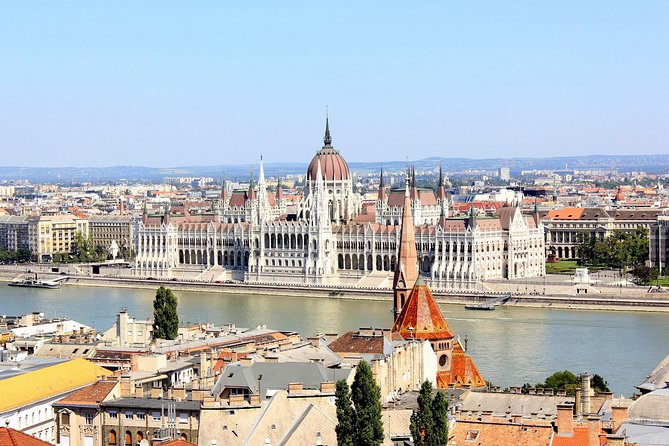
Inside City Park, you reach Vajdahunyad Castle, built in 1896 for the Millennial Exhibition. The exhibition marked 1,000 years since the Hungarian Conquest of the Carpathian Basin, and the castle was designed to display architectural styles associated with Hungary.
The castle is particularly good for showing how Hungarian architecture borrows and adapts ideas from different periods. You walk into the courtyard and hear the story behind the design. This is a photo-friendly stop, but the tour does not include a full museum visit or interior exploration.
That limitation is worth keeping in mind. You get context and the outside view, which is enough for an overview tour, but you may want to return later if you are interested in the building itself.
More walking tours in Budapest:
- Budapest: Buda Castle Walk with Saint Stephen’s Hall
★ 4.5 · 3,012 reviews - Big Bus Budapest Hop-On Hop-Off Bus and Walking Tour
★ 3.5 · 2,206 reviews - Budapest: Buda Castle District Walking Tour
★ 4.6 · 2,108 reviews - Budapest City Landmarks Walking Tour in 2 Hours
★ 5.0 · 2,048 reviews
A look at Széchenyi Spa and Budapest’s bath culture
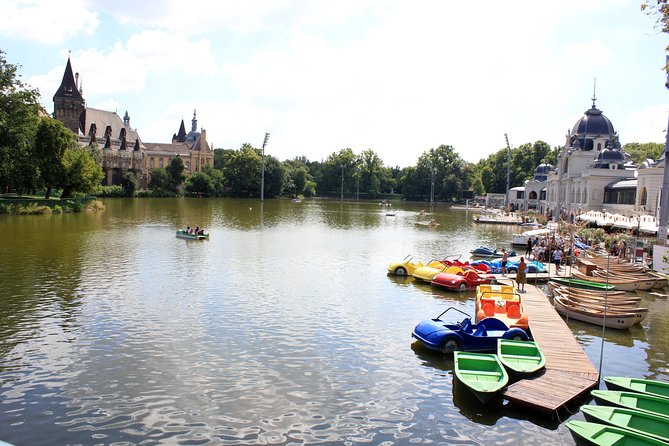
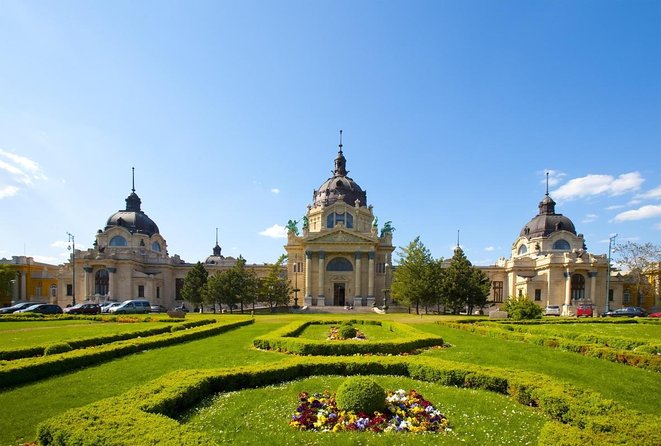
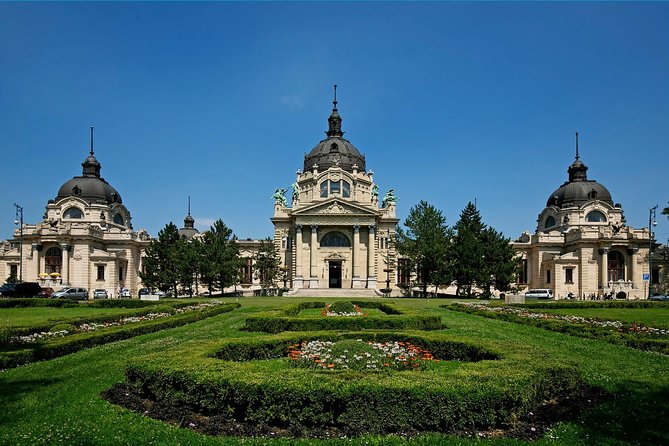
The next major sight is Széchenyi Spa, one of Europe’s largest thermal bath complexes. Budapest is famous for its thermal water and public bathing tradition, so this stop adds a distinctly local element to the tour.
The itinerary calls for a peek at the bath house and an explanation of spa culture. It is not a bathing session, and entry to use the pools is not included. You will not need to pack a swimsuit for this tour, but you should understand that the stop is about seeing and learning, not soaking.
This is one of the places where the short format has both a strength and a weakness. You can learn why the baths matter without spending half a day there. On the other hand, if thermal baths are a main reason for your Budapest visit, you will need to arrange a separate visit.
Returning downtown for St. Stephen’s Basilica
After City Park, the group takes public transport back toward central Budapest. The route brings you to St. Stephen’s Basilica, a major neo-classical church and one of the city’s two tallest buildings.
Your guide explains the church and its place in the city. The tour does not include an interior visit, so you will mainly see the building from outside and hear its story. That makes the stop fairly brief, but the basilica is close to other central sights and helps you understand the scale of Pest’s grand civic center.
This is a good time to ask your guide for practical advice about returning later. Guides including Greg, Esther, Anna, Petra, and Luisa have been praised for giving recommendations beyond the basic facts, and a small group makes those questions easier.
The Strudel House break
The food stop is more than a snack grabbed while walking. You sit in a downtown Hungarian cafe, generally known as the Strudel House, and receive a strudel with coffee, tea, or mineral water. Some group arrangements include shared plates of sweet and savory varieties, though the exact serving format may vary.
I like this pause because it breaks up the walking at the right point. You have already seen City Park and central Pest, and you can rest before the Danube and the climb into Buda. The stop also gives you a small taste of Hungarian food without taking up an entire meal.
Do not book this tour if you want a full cooking lesson or a long food tour. The strudel is an included dessert stop, not the central purpose of the experience. Still, it adds real character and gives the morning a comfortable rhythm.
A few people may prefer to skip the pastry and spend more time at a monument. That is a fair tradeoff, but most of the route involves standing and walking, so the chance to sit is useful.
Szabadság tér and the story of modern Hungary
After the cafe, the route moves through Szabadság tér, or Liberty Square. Here you see the Soviet Memorial and hear about the communist period. This part of the tour adds modern political context to the older stories told at Heroes’ Square and Vajdahunyad Castle.
The stop lasts about 10 minutes. It is a short visit, but the square is important because it brings Hungary’s 20th-century experience into the route. You also learn about the Parliament building and current politics in Hungary.
The political discussion is one reason a good guide matters. Guides such as Greg and Esther have received especially strong praise for making complicated history understandable and for answering follow-up questions. Since there is no audio equipment or headset system, you need to stay near the guide, particularly if the square is busy or windy.
Parliament views and the Danube Promenade
The Danube section gives you a chance to slow down and take in the city from the riverbank. You see the panorama toward Gellért Hill and the Citadel, with the river dividing Pest from Buda.
The tour includes views of Parliament, but not an interior visit. You also walk along the Danube Promenade and stop for photographs. The riverbank is one of the best places on the route for understanding how Budapest fits together, with flat Pest on one side and hillier Buda on the other.
The river stop is listed at about 10 minutes, so keep your camera ready. If you like taking many photographs, you may feel rushed. The benefit is that the guide keeps the group moving and leaves you with a clear sense of the city’s layout.
Chain Bridge and the crossing toward Buda
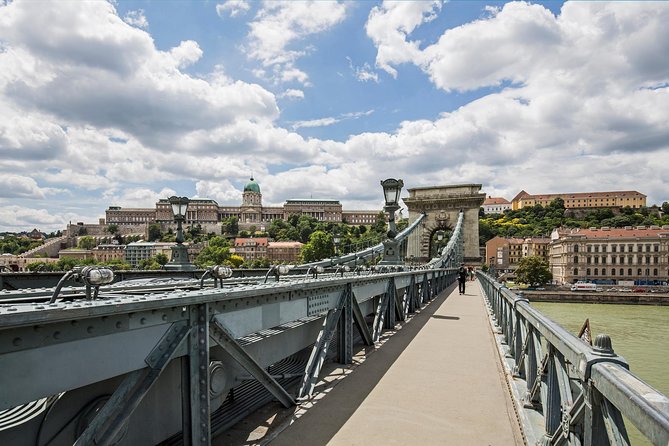
A short walk brings you to Széchenyi Chain Bridge. The bridge has long been one of Budapest’s defining links between Buda and Pest, and your guide explains its history during the five-minute stop.
This is a quick photo point rather than a full bridge walk. You will see the structure and hear why it matters, but the tour then continues toward the Buda Castle District. If you want a quiet crossing or detailed architectural photos, return later on your own.
The route’s use of public transport makes this broader itinerary possible. Without the metro and buses, the group would spend much more of the morning simply getting between districts.
Matthias Church, Buda Castle, and Fisherman’s Bastion
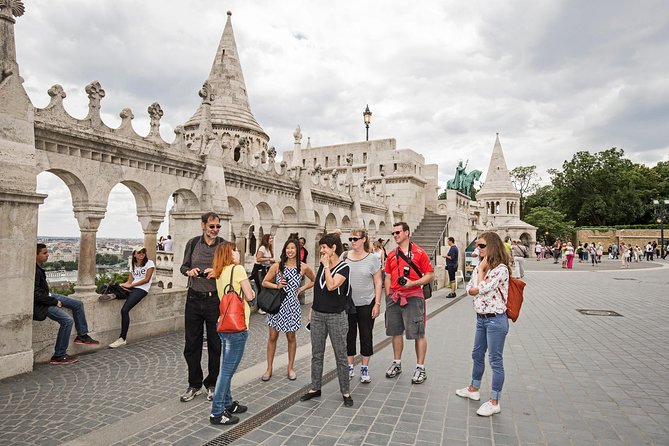
The final section is uphill and includes stairs, so this is where comfortable shoes matter most. In the Buda Castle District, you hear about Matthias Church, including its coronations and its conversion into Buda’s principal mosque during Ottoman rule.
The church stop is short, about five minutes, and admission is not included. You see the exterior and learn the main story, but you do not enter as part of the tour. The same principle applies to Buda Castle, where the group takes a short walk through the district rather than touring the interior.
The payoff is Fisherman’s Bastion. Its arcades provide broad views over Budapest, and the lower viewing areas are free. Admission is needed only for the upper terrace. The tour ends here, on the Buda side, near Matthias Church and Fisherman’s Bastion.
This ending works well. You finish with one of the city’s strongest viewpoints, and you can continue exploring Buda Castle District afterward without needing to retrace the route.
Pace, group size, and physical effort
The tour lasts approximately three and a half to four hours and includes about 6 kilometers, or 4 miles, of walking. Short stops make the distance manageable for anyone with moderate physical fitness, but this is still an active morning.
You will walk on city streets, pause outdoors, use public transport, and handle some stairs or uphill sections in Buda. The route runs in all weather, so dress for the forecast and wear shoes you can comfortably use for several hours.
The maximum group size is 10. That is small enough for the guide to keep the group together and answer questions, while still giving the tour a social feel. Since no headphones or audio equipment are used, standing close is important.
The guides are one of the tour’s strongest features. Greg, whose Hungarian name is Gergely, has been praised for his humor, energy, and passion for Budapest. Esther, also written as Ezster in some feedback, is described as organized, warm, and clear. Anna, Petra, Luisa, Andi, Monika, and Balint have also been singled out for personal attention, strong explanations, and useful local advice.
Your exact guide is not guaranteed, but the pattern is clear: the experience depends heavily on the person leading it. That is normal for a small-group walking tour, and it is also why the format can feel more personal than a large coach excursion.
Who should book it
I would choose this tour early in a Budapest visit. It gives you a useful map of the city, introduces the metro, covers both Buda and Pest, and points out places where you may want to spend more time later.
It suits first-time visitors, couples, families with older children, and anyone who wants history explained without spending hours inside museums. It is also a good fit if you enjoy mixing walking with local transport rather than following a fixed bus route.
I would choose something else if your priority is bathing at Széchenyi Spa, touring Parliament, entering every church, or taking long pauses for photography. Those experiences need separate time.
The cancellation policy is straightforward: you can cancel for a full refund up to 24 hours before the 9:00 a.m. start, based on local time. Pick-up and drop-off are not included, and gratuity is optional.
Should you book the Budapest All in One tour?
Book it if you want a strong first orientation, a small group, a local English-speaking guide, and a route that reaches the major sights on both sides of the Danube. The included transport and strudel make the $100.37 price easier to justify, especially when you value an efficient morning over independent planning.
Skip it if you prefer slow sightseeing, interior access, or a tour built around food or thermal baths. For most first-time visitors who want the city explained clearly and a few good ideas for the rest of their stay, this is a practical and enjoyable choice.
FAQ
Where does the tour begin?
The tour begins at Budapest, Andrássy út 22, 1061 Hungary, near the Hungarian State Opera House.
What time does the tour start?
The tour starts at 9:00 a.m.
Where does the tour end?
The tour ends on the Buda side at Matthias Church and Fisherman’s Bastion.
How long does the tour last?
The experience lasts approximately three and a half to four hours.
How much walking is involved?
You should expect about 6 kilometers, or 4 miles, of walking over roughly three hours, along with short stops and public transport rides.
Are public transport tickets included?
Yes. Public transport tickets used during the tour are included, along with one complimentary single ticket for returning downtown.
Is the strudel stop included?
Yes. The price includes a strudel and coffee, tea, or mineral water at the Strudel House.
Does the tour include entry to the churches, baths, or other buildings?
No. Interior visits to churches and buildings are not included. Fisherman’s Bastion is free from the arcades, while entry is required for its upper terrace.
Just added around Budapest
- Budapest: Danube River Views Bike Ride★ 4.8 · 23 reviews
- Budapest: City Bike Tour with Coffee Stop★ 5.0 · 37 reviews
- Budapest: Private Walking Tour with a Local Guide★ 3.6 · 6 reviews
- Budapest: Vacation Photographer to collect great memories★ 5.0 · 49 reviews
- Walk to recent and aged spiritual sanctuaries near Budapest★ 5.0 · 5 reviews
- From Budapest: Guided Tour of Eger with Wine Tasting★ 4.5 · 6 reviews
- Audio visual multi-sensory chefs journey dinner experience★ 5.0 · 3 reviews
- Budapest: 3-Hour Trabant Sightseeing Tour★ 4.7 · 28 reviews
Budapest Cooking Classes, compared.

Hungarian Chimney Cake Workshop in the City Center
Read our review →
Budapest Cooking Class & Market Tour with Local Guide & Wines
Read our review →
Chimney Cake Workshop Budapest Downtown – Kürtőskalács Class
Read our review →
Premium Hungarian Home Cooking Experience with Chef Marti
Read our review →
Hungarian Cooking and optional Local Market Tour
Read our review →

Hungarian Strudel Making Class: Stretch & Fill Two Ways
Read our review →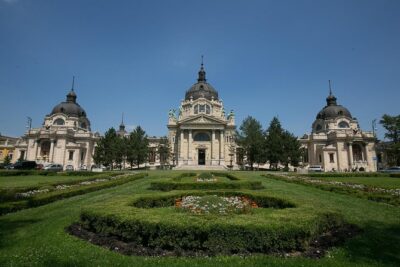
Private Budapest All In One Walking Tour with Strudel Stop
Read our review →Browse the lists this tour appears in