
Reviewed · BUDA CASTLE DISTRICT TOURS
Budapest Castle District Walking Tour
Budapest’s Castle District is best understood on foot, and this tour takes you from the Danube-side meeting point up to royal palaces, church towers, old homes, lookout terraces, and wartime ruins. The route also brings in less obvious stories, including the medieval Jewish prayer house, Ottoman Buda, Nazi defenses, and the underground world beneath Castle Hill.
I like the local guides, who bring different strengths to the walk. Dora and Rita are praised for mixing humor with history, Gary for keeping the story lively, and Sophia for clear explanations and patient pacing. I also like the range of stops, from Fisherman’s Bastion and Buda Castle to small public statues and the National Archives.
The main caution is physical: you will climb stairs and tackle about 10 minutes of uphill walking. Fisherman’s Bastion can be crowded, and the two-hour schedule may leave only a short time for castle photographs. The experience is donation-based, so the low booking price is not the full cost.
Key points to know before you book
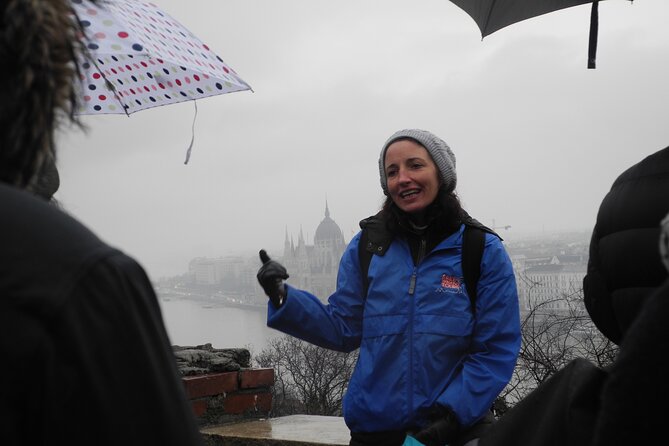
- The climb begins at Batthyány Square: Meet at the metro exit in the park, then prepare for an uphill walk toward Castle Hill.
- You see much more than the palace: The route includes Matthias Church, Fisherman’s Bastion, the medieval Jewish prayer house, the National Archives, and several unusual public artworks.
- The church and museums are outside visits: You do not enter Matthias Church or the Hospital in the Rock Nuclear Bunker Museum.
- Guides shape the experience: Dora, Rita, Gary, Sophia, Zsófia, Andy, Judit, and others have led this walk, with styles ranging from witty and animated to calm and highly detailed.
- Budget price, tip-based model: You pay about $3.62 per person when booking, then decide what to donate to the guide.
- Allow more time after the finish: The tour ends at Prince Eugene of Savoy’s statue, about a 30-minute walk from the starting point.
Starting at Batthyány Square beside the Danube
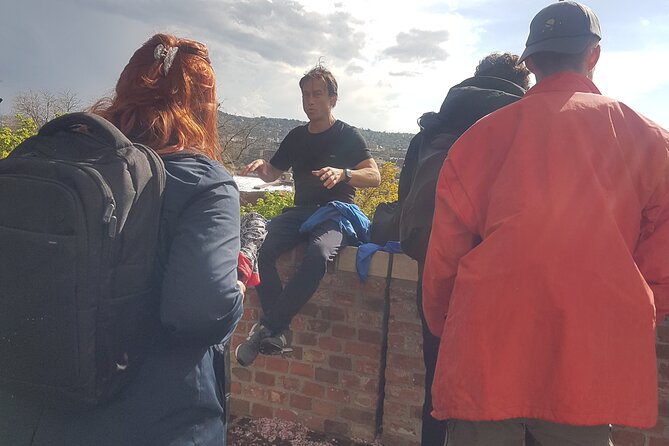
The meeting point is Batthyány tér 1, at the metro exit in the park. This is an important detail because the square has several nearby transit points, and arriving at the wrong exit could delay you. The guide introduces the route here before leading the group uphill.
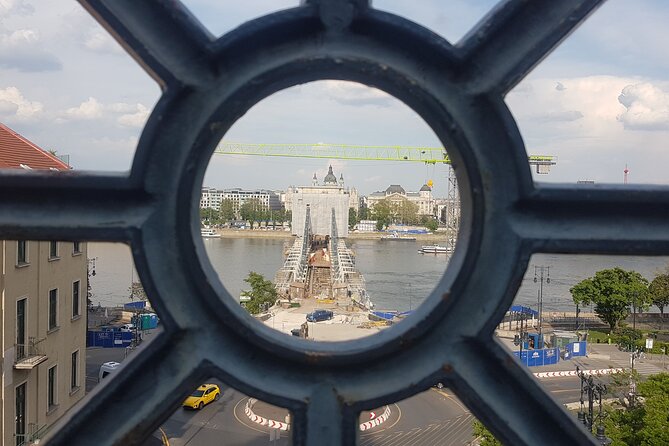
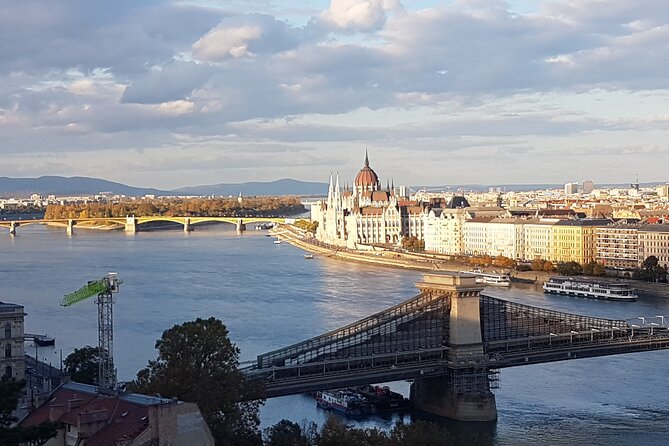
The opening view across the Danube helps you get your bearings. From the Buda side, you can look toward Pest and understand the basic shape of the city before climbing to the old royal quarter. The walk then shifts from riverfront Budapest to the fortified hilltop district.
The uphill section takes about 10 minutes, but the full route includes more steps and slopes later. I would not treat this as a flat stroll. Wear shoes with a firm sole, carry water, and avoid arriving hungry, especially in hot or cold weather. One participant had a medical problem near the end after cold, lack of food, and low blood pressure, so pacing yourself matters.
The tour can include up to 30 people. That is a reasonable size for a city walk, though the guide’s voice and your position in the group can affect how easily you hear. A guide with a strong voice, such as Balázs was praised for having, makes a real difference in busy spots.
More ways up to the Castle District in Budapest:
- Budapest: Buda Castle Cave Tour
★ 4.7 · 5,677 reviews - Budapest: Buda Castle District Vampires and Myths Night Tour
★ 4.6 · 3,830 reviews - Budapest: Buda Castle Walk with Saint Stephen’s Hall
★ 4.5 · 3,012 reviews
Matthias Church and 800 years of upheaval
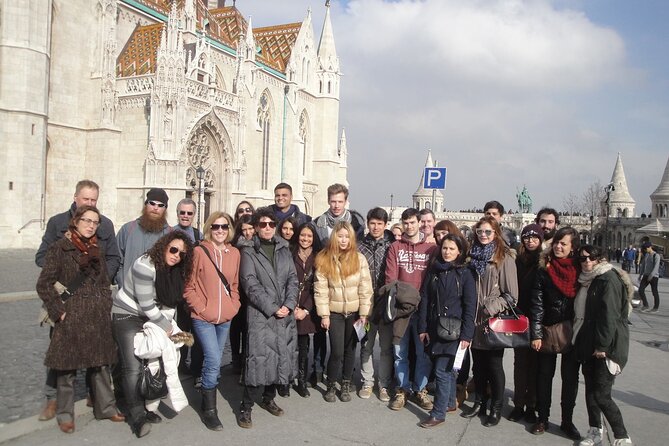
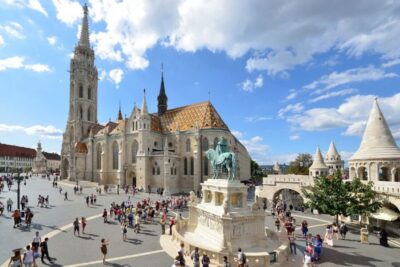
Matthias Church is one of the district’s chief landmarks, but this tour does not go inside. Instead, you get about 15 minutes of exterior explanation and historical context.
That approach works well if you already plan to visit the church separately. The guide focuses on the long sequence of wars, occupations, and rebuilding that shaped Castle Hill. You hear about German, Jewish, and Hungarian residents and how daily life changed as political control shifted.
This is one of the strongest parts of the walk because the guide connects grand buildings to ordinary people. The district was not only a royal setting. It was also a place where communities lived, worked, worshiped, and endured repeated destruction.
The amount of detail depends on your guide. Judit, for example, has included history, street art, and politics, while Odea has added a few Hungarian words to the storytelling. The best guides give you enough background to understand what you are seeing without turning every stop into a lecture.
Fisherman’s Bastion and the famous Pest view
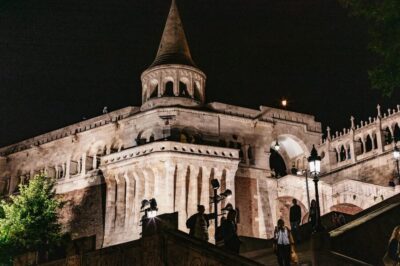
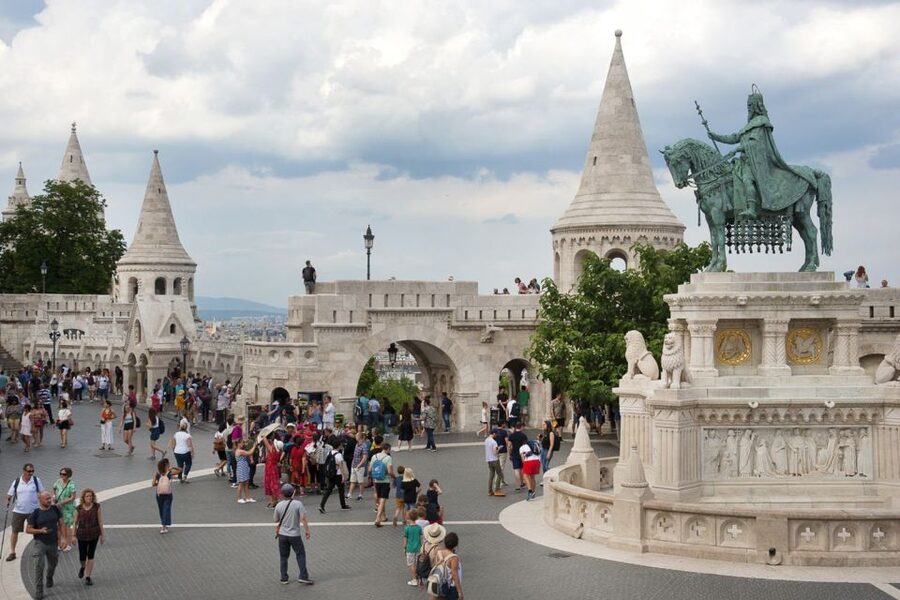
The stop at Fisherman’s Bastion lasts about 10 minutes. You will hear the story behind the white terraces, the connection to Walt Disney, and a useful explanation of the crosses with one, two, or three horizontal bars.
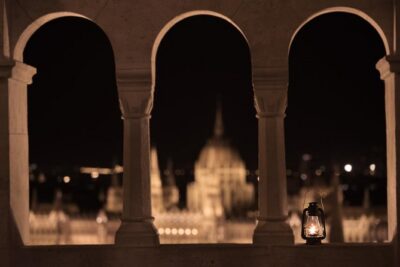
The practical payoff is the view. From Castle Hill, you can look over the Danube toward Pest and the city’s major landmarks. The guide also points out how to enjoy a free viewpoint, which helps you avoid paying for every possible terrace or lookout.
There is a catch. Fisherman’s Bastion is one of the most visited parts of Castle Hill, and crowds can make it hard to pause, hear every word, or frame a clean photograph. On a hot day, the open terraces offer little relief. On a cold, windy day, the same stop can feel punishing.
Your guide may keep the group moving rather than waiting for long photo sessions. One useful criticism of the tour is that the castle portion can feel rushed because so many sites are packed into two hours. If photographs matter most to you, plan to return after the tour.
The medieval Jewish prayer house and old Buda homes
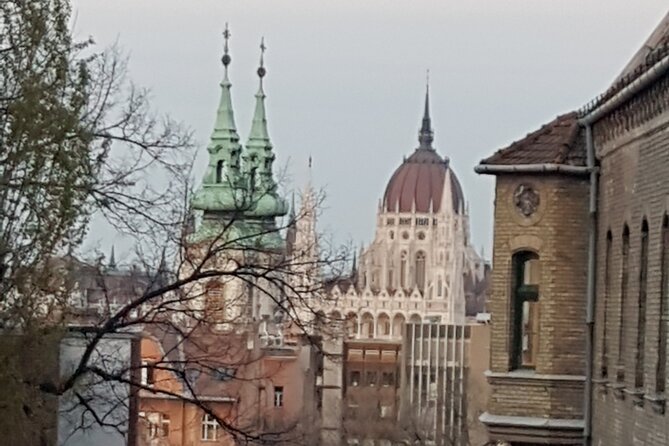
The medieval Jewish prayer house is a smaller stop, but it gives the route welcome balance. You also see the baroque residential buildings around it, where the district feels more like an old neighborhood than a ceremonial palace quarter.
This is the kind of place that benefits from a guide. Without context, you might pass it without recognizing its importance. The guide explains the Jewish presence in medieval Buda and points out how the surrounding homes reflect later periods of rebuilding.
I like this section because it prevents the walk from becoming a simple parade of royal monuments. It adds social and religious history to the route and shows how different layers of the city sit close together.
More walking tours in Budapest:
- Big Bus Budapest Hop-On Hop-Off Bus and Walking Tour
★ 3.5 · 2,206 reviews - Budapest: Buda Castle District Walking Tour
★ 4.6 · 2,108 reviews - Budapest City Landmarks Walking Tour in 2 Hours
★ 5.0 · 2,048 reviews - 3-Hour Orientation Walking Tour of Buda and Pest
★ 4.8 · 1,834 reviews
The National Archives, wartime damage, and Gül Baba
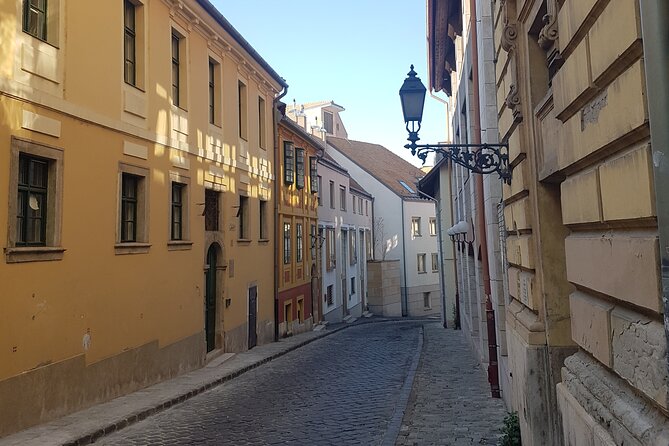
At the National Archives of Hungary, the guide turns to the destruction of the Second World War. You learn about the massive damage to the Castle District and where the Nazi stronghold was located.
The stop also widens the story beyond wartime. The guide points out where wealthy Hungarians lived and explains the connection to Gül Baba, the Ottoman Turkish monk and soldier whose site of pilgrimage is associated with Buda.
This stretch is especially useful for anyone trying to understand why the district can look old yet feel heavily rebuilt. Castle Hill has suffered repeated damage, so what you see is not a single untouched medieval quarter. It is a place repeatedly repaired, altered, and reinterpreted.
The guide’s delivery matters here. Andy has been praised for clear, detailed explanations, though one tour participant found his style too dry on a sweltering day. That is a fair reminder that a guide’s personality can shape the same route in very different ways.
Underground Castle Hill and the Hospital in the Rock
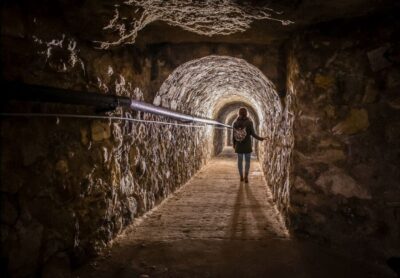
The tour introduces the underground side of the hill near the Hospital in the Rock Nuclear Bunker Museum. You do not enter the museum, but you learn about the labyrinths, underground defenses, and the role of the caves over the centuries.
This is one of the more unusual subjects on the walk. Most first-time visitors focus on palaces and church roofs, while the caves explain how the hill worked as a defensive stronghold. The underground spaces also connect the medieval past with the wartime history already discussed.
The guide may also point out some of Budapest’s more amusing public statues and explain the huszár, the light cavalry fighter associated with Hungarian military tradition. These lighter details help break up the heavier material about war, occupation, and destruction.
Expect to stop for around 15 minutes. The guide may look for shade or pause so the group can catch its breath. That is useful because the route is not only a history walk. It is a steady physical outing with stairs, uphill sections, and uneven pacing between landmarks.
Buda Castle and the royal heart of the district
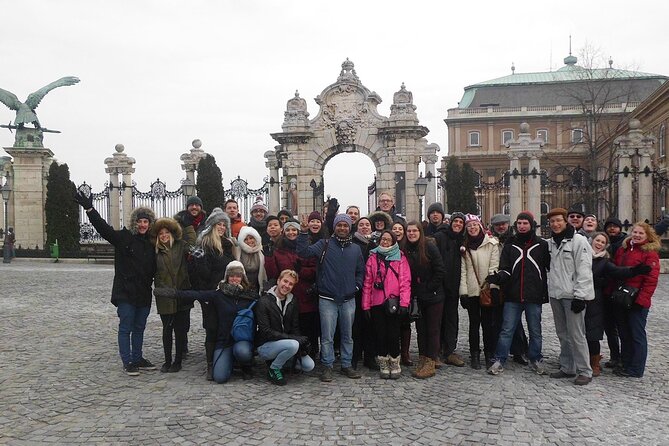
The Buda Castle stop lasts about 20 minutes, making it the longest single pause on the route. You see the large former residence of Hungarian kings and hear how war damage led to repeated rebuilding.
The guide also explains the mythical Hungarian bird associated with the country and points out where the president’s and prime minister’s offices are located. This gives the palace area a modern political role as well as its royal past.
The building is massive, so 20 minutes is enough for an orientation but not for a full visit. You should think of this tour as an introduction to the castle grounds, not a replacement for entering museums or spending an afternoon exploring the palace complex.
That distinction matters when deciding how to schedule your day. If you want interior exhibits, art collections, or a slow look at the palace courtyards, return on your own. The guided walk gives you the framework first, which can make a later visit more meaningful.
The final panorama at Prince Eugene’s statue
The walk ends at the equestrian statue of Prince Eugene of Savoy, on a terrace facing the Pest side of the Danube. This is a strong finish because it brings together the city views, the royal setting, and the stories you have heard along the way.
The guide may use the final stop for questions about Castle Hill landmarks and Hungarian life. Practical information is also shared here, so keep your questions ready rather than rushing away when the formal route ends.
The finish point is not close to the start. Allow about 30 minutes to walk back to Batthyány Square. That is not a problem if you plan to continue through the Castle District, but it matters if you have a train, restaurant booking, or another timed activity immediately afterward.
What the $3.62 price really means
The booking price is unusually low because this follows a tip-based free walking tour model. The listed charge is a booking and administration fee, not the guide’s pay. You are expected to decide on a donation at the end.
That can be excellent value if you want a broad introduction to Buda without committing to an expensive private tour. In two hours, you cover a large section of the district and get access to a local guide who can answer questions.
Still, do not treat the $3.62 as the final cost. Bring enough cash or another way to leave a tip that reflects the length, quality, and group size of your tour. If the guide keeps the group together, explains difficult history clearly, and helps you navigate the climb, the donation is a key part of the arrangement.
Guide style, pace, and group comfort
The guide lineup changes, so you cannot book a particular personality from the information provided. Guides named in guest feedback include Dora, Rita, Gary, Sophia, Zsófia, Andy, Judit, Endre, Gabor, Emma, Valeria, Odea, and others.
The strongest pattern is clear storytelling with time for questions. Dora and Rita are associated with warmth and humor, Gary with a relaxed but lively pace, and Sophia with patience and calm assistance. Endre has been praised for adding information during rest breaks, while Valeria made time for people to catch their breath on the stairs.
There are occasional tradeoffs. One guide spoke too quickly for a participant to catch everything, while another was seen as less engaging on a hot day. You should expect a live, human tour rather than a scripted audio guide. That means the experience can be excellent, good, or simply adequate depending on the person leading it.
Who should book this Castle District walk?
I would choose this tour for a first full day in Budapest, especially if you want to understand the Buda side before exploring on your own. It suits curious visitors who like history, views, local stories, and a guide who can answer questions in real time.
It is also a good fit for families with older children and teenagers. The mix of kings, wartime tunnels, unusual statues, politics, street details, and Hungarian words gives the walk more variety than a long lecture about royal architecture.
I would think twice if you have serious mobility limits, need a wheelchair-accessible route, or dislike stairs. The route is not wheelchair accessible and requires moderate physical fitness. You should also reconsider it during extreme heat, strong cold, or poor weather, since the activity depends on suitable conditions.
Free cancellation is available up to 24 hours before the start time for a full refund. Changes made later are not accepted, and poor weather may lead to a new date or a full refund.
Should you book it?
Book this walking tour if you want a low-cost, well-packed introduction to Castle Hill and can handle stairs, crowds, and a fairly brisk schedule. I especially like it for the way it joins famous sights with the medieval Jewish prayer house, Ottoman connections, wartime ruins, public art, and the underground history of the hill.
Do not book it expecting long interior visits or relaxed photography at every landmark. The church and museums are viewed from outside, and Buda Castle may feel rushed. For most first-time visitors who want the story behind the sights, the price and coverage make it a sensible starting point.
FAQ
Where does the Budapest Castle District walking tour begin?
It begins at Batthyány tér 1 in Budapest, at the Batthyány Square metro exit in the park.
Where does the tour end?
The tour ends at the Statue of Prince Eugene of Savoy in Budapest.
How far is the end from the meeting point?
The conclusion point is about a 30-minute walk from the starting point.
How long does the tour last?
The tour lasts approximately two hours.
Is the tour offered in English?
Yes. The tour is offered in English and uses a mobile ticket.
Do you enter Matthias Church?
No. Matthias Church is visited from the outside, with historical commentary from the guide.
Do you enter the Hospital in the Rock Nuclear Bunker Museum?
No. The tour introduces the underground Castle Hill area and the museum from outside, but museum admission is not included.
Is the tour suitable for people with limited mobility?
The tour requires moderate physical fitness, includes a 10-minute uphill walk and many stairs, and is not wheelchair accessible.
What happens if the weather is poor?
The experience requires good weather. If it is canceled because of poor weather, you can be offered another date or a full refund.
Just added around Budapest
- Budapest: Danube River Views Bike Ride★ 4.8 · 23 reviews
- Budapest: City Bike Tour with Coffee Stop★ 5.0 · 37 reviews
- Budapest: Private Walking Tour with a Local Guide★ 3.6 · 6 reviews
- Budapest: Vacation Photographer to collect great memories★ 5.0 · 49 reviews
- Walk to recent and aged spiritual sanctuaries near Budapest★ 5.0 · 5 reviews
- From Budapest: Guided Tour of Eger with Wine Tasting★ 4.5 · 6 reviews
- Audio visual multi-sensory chefs journey dinner experience★ 5.0 · 3 reviews
- Budapest: 3-Hour Trabant Sightseeing Tour★ 4.7 · 28 reviews
Buda Castle District Tours, compared.
Buda Castle District Vampires and Myths Night Tour
Read our review →
Buda Castle District Dark History, Legends and Vampire Night Tour
Read our review →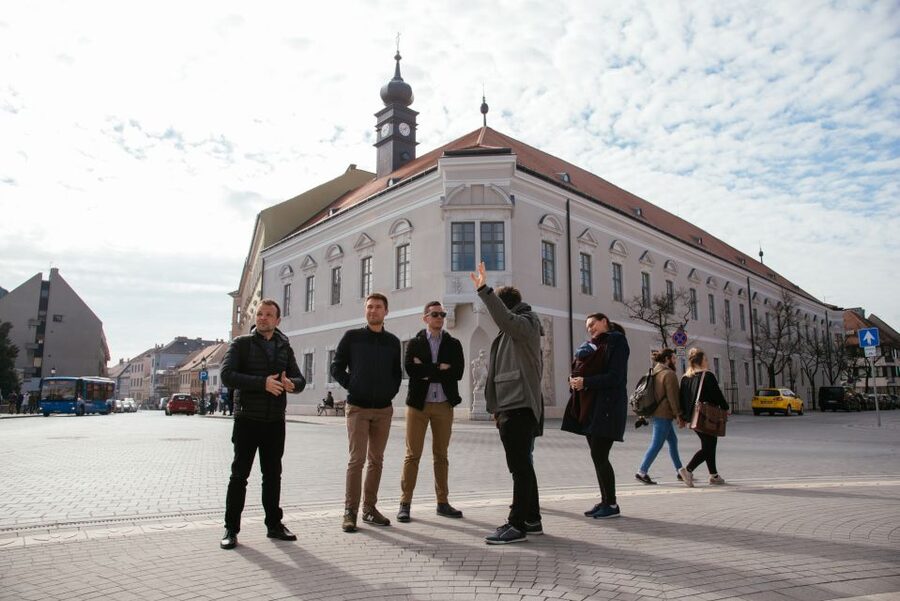
Buda Castle District Walking Tour with a Historian
Read our review →
Browse the lists this tour appears in