
Reviewed · BUDAPEST STREET ART TOURS
Art Nouveau Treasures of Budapest – Exclusive Private Tour
Budapest’s Art Nouveau is easy to miss if you only follow the usual sights. This private tour brings the style into focus, from Ödön Lechner’s folk-inspired roof tiles to a Miksa Róth stained-glass window inside a private apartment. I like the personal scale: your group of up to five walks with an art historian rather than trailing behind a large crowd. I also like that the tour includes interiors that are not obvious public attractions, including a café and residential building tied to the period.
The main drawback is that this is not a museum visit with a fixed collection and a long list of indoor entries. Much of the tour takes place outdoors, and you use public transportation if needed. If you want three solid hours of design discussion, tell the guide in advance, since the route may include a short refreshment break and can be adjusted.
Key points to know before you book
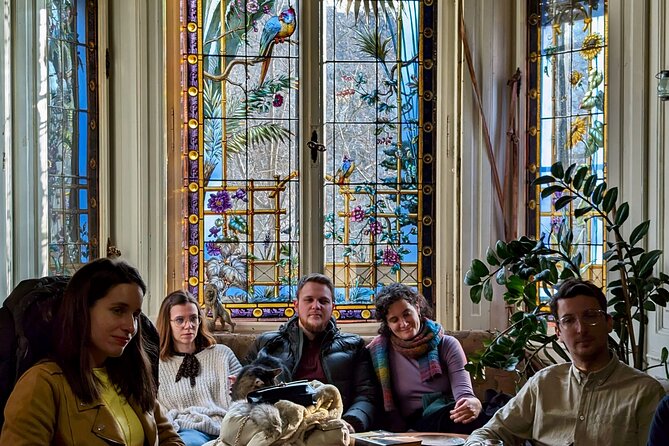
- Miklós leads a private art-focused walk: Expect art, architecture, and Budapest history explained by a guide with a strong personal interest in the city.
- Miksa Róth is the star of the finale: The tour ends in a century-old private apartment with an original stained-glass window by one of Hungary’s leading glass artists.
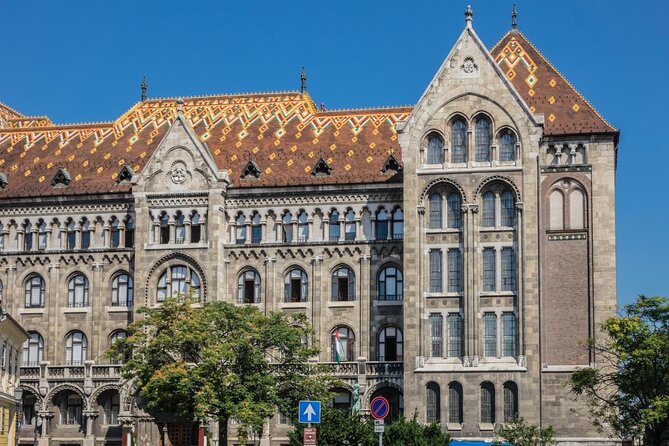
- Ödön Lechner’s tile work gets proper attention: The Postal Savings Bank is a vivid example of Hungarian Secession, with colorful tiles and folk motifs.
- You see both exteriors and selected interiors: Gellért Bath, public buildings, lobbies, restaurants, and residential spaces help show how the style worked in daily life.
- The route is private and adjustable: Hotel pickup and a custom start time are available, and minor route changes may be made to suit the group.
- Plan for walking and transit: Transportation is not included, and the tour is designed for walking with public transportation as needed.
Why Budapest Art Nouveau deserves a dedicated walk

Budapest is often sold through its Parliament, castle, thermal baths, and grand boulevards. Those sights matter, but the city’s Art Nouveau story is just as revealing. Here, the movement is often called Secession, a Central European version of Art Nouveau that favored sweeping lines, inventive decoration, and a break from older academic styles.
Hungarian architects added a local twist. Instead of copying French flowers or Belgian curves, they often drew on folk patterns, ceramics, plants, birds, and traditional Hungarian forms. That is why a building by Ödön Lechner can look both modern and unmistakably local.
I like this tour because it teaches you how to read those details. A decorated façade becomes more than a pretty background. You begin to notice the roofline, tile colors, window glass, stairwell, and the way a building presents itself to the street.
The private format helps here. You can ask why a certain motif appears, stop when a detail catches your eye, or request more design discussion instead of rushing toward the next address. The tour is offered in English, and the guide is an art historian.
More street art walks in Budapest:
- Budapest: Street Art and Underground Movements Walking Tour
★ 5.0 · 238 reviews - Alternative Street Art Free Walking Tour of Budapest
★ 4.5 · 53 reviews - Street Art and Alternative Tour in Budapest
★ 5.0 · 52 reviews
Starting at Central Market Hall
The advertised starting point is Budapest’s Central Market Hall, near the Danube on the Pest side. You can also arrange a meeting at your Budapest hotel or agree on another central point.
The market is a practical place to begin because it gives you a sense of the city’s scale and energy before the tour turns toward architecture. The first scheduled segment is about 20 minutes, and admission to the market is not included. The outline also says the tour finishes in a private apartment, so treat Central Market Hall as the starting area rather than the finale.
You should confirm the exact meeting point and route before the day of the tour. The supplied schedule has a few duplicated or loosely labeled stops, so the guide may adjust the order. That flexibility is useful, but it also means you should not expect a rigid, timed museum itinerary.
Crossing the Danube toward Gellért Hill
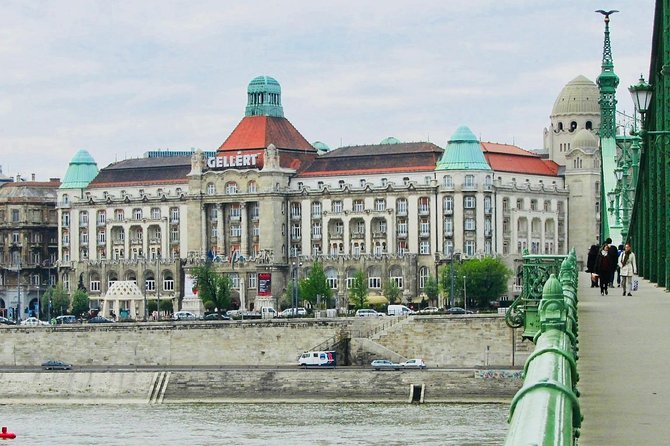
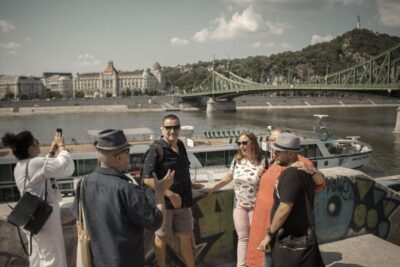
One of the pleasures of the route is movement through the city. You cross one of Budapest’s beautiful bridges toward the foot of Gellért Hill, with views along the Danube and toward the Hungarian Royal Palace.
The walk is not only a way to get from one building to another. It connects the two halves of Budapest and puts the architecture in its proper setting. You see how grand public buildings, river views, hills, and bridges work together.
The tour does not include private transportation. You walk and may use public transportation, so wear shoes you can manage for a few hours. Public transportation tickets are not included. If you have limited mobility or prefer very little walking, ask about the route before booking.
Gellért Bath, where architecture meets daily life
The Gellért Thermal Bath and Swimming Pool receives about 20 minutes. The historic bath and hotel on the western bank of the Danube are presented as a functioning work of art, with strong Secessionist character.
This stop is useful because it shows Art Nouveau beyond a façade. Thermal baths in Budapest are working public spaces, not just decorative monuments. Here, the design serves a real purpose: people come to bathe, rest, and spend time in a setting shaped by architecture.
The information provided says admission is free for this tour, but that does not necessarily mean you receive a bathing entry or access to every area. Expect an architectural look rather than a spa session. If you want to use the pools, check the bath’s separate admission rules and allow extra time outside the tour.
A handful more Budapest trips to weigh up
- Private Budapest TukTuk Tour: Custom Route, Hotel Pickup
★ 5.0 · 1,307 reviews - Budapest Essentials Private Tour Highlights and Hidden Gems
★ 5.0 · 861 reviews - Budapest Private Tuk Tuk Half-Day Tour
★ 5.0 · 606 reviews - Budapest One Way Private Transfer to or from Airport
★ 4.5 · 548 reviews
The first stone bridge and the Royal Palace view
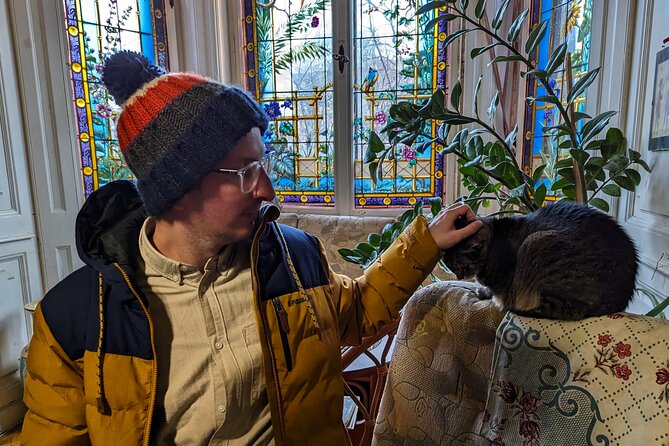
On the way to the next part of the route, you cross Budapest’s first stone bridge, with a scenic view of the Royal Palace. This section adds context to the architecture stops.
It also gives you a chance to pause. A private tour can feel like a string of addresses if the guide moves too quickly. Here, the bridge and river views offer a natural break and help you understand why Budapest’s most important buildings were placed where they are.
The route is not limited to Art Nouveau façades. The guide also discusses the history of the city when it helps explain the buildings. One past participant specifically preferred design details to longer general-history digressions, so I would make your preference clear at the start. Ask for more on ornament, materials, and the Secession movement if that is your main interest.
Ödön Lechner’s Postal Savings Bank
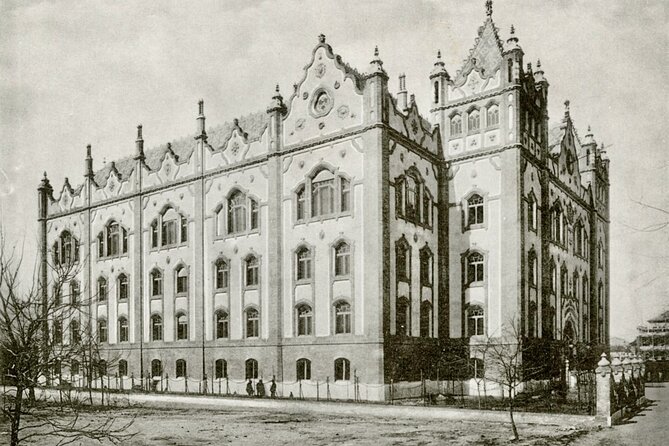
The Postal Savings Bank on Hold Street is the architectural centerpiece of the tour. Designed by Ödön Lechner in 1901, it is known for colorful tiles and folk motifs.
This is the kind of building that rewards a slow look. The roof and façade use decoration as part of the building’s identity, not as an afterthought. Lechner’s work is important because it helped create a distinctly Hungarian form of Secession. You are not simply seeing an imported style. You are seeing an architect search for a national language through modern design.
The stop is listed at about 20 minutes, with no admission charge. That is enough time for an exterior explanation and photographs, but not a full architectural study. If you are passionate about Lechner, ask the guide to spend the full available time here and explain how the tiles and folk forms fit into the wider movement.
The itinerary also lists a stop labeled Nemzeti Bank before the Postal Savings Bank. The two entries may reflect a route adjustment or a labeling error, so confirm the day’s exact sequence. The important point is the chance to see Lechner’s Secessionist work on Hold Street.
Gutenberg Square and the Miksa Róth connection
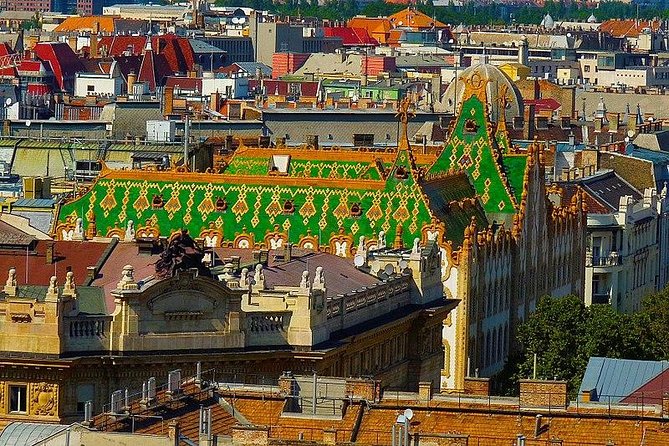
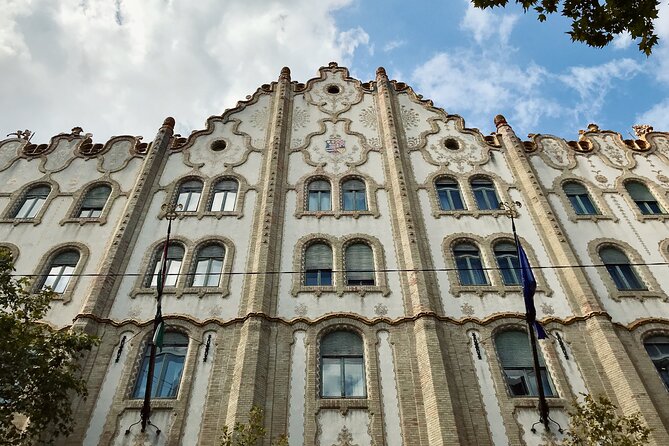
Gutenberg Square brings the tour into the Palace Quarter of District 8. The stop focuses on an Art Deco historic building and a magnificent stairway with leaded glass connected to Miksa Róth.
The wording around this stop is brief, but the idea is clear: you are looking beyond street façades and into the details of an older building. Stairways, lobbies, and windows often show how Art Nouveau entered ordinary urban life. A grand public building may get the attention, but a stairwell can reveal the same artistic ideas on a more intimate scale.
The scheduled time is about 15 minutes. That is a short visit, so you may want to ask what access is available on the day. The guide has insider knowledge of some lobbies, restaurants, and interiors, but access can depend on the building and current conditions.
The private apartment and a real Miksa Róth window
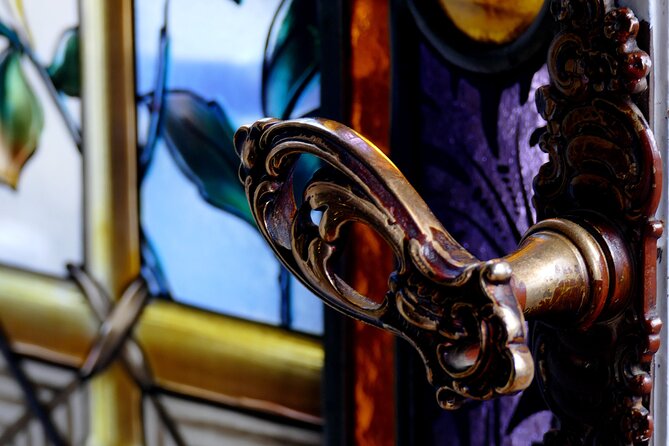
The tour’s most unusual feature comes at the end. You visit a century-old private apartment and see an original stained-glass window by Miksa Róth.
Róth was a major Hungarian stained-glass artist, and his work can be found in important public buildings, including the Parliament. Many of those interiors are not freely open for detailed viewing. This apartment offers a smaller, more personal setting.
I appreciate the contrast. After large façades, bridges, and public buildings, you finish with a piece of art in a residential space. It shows how the period’s decorative ideals reached beyond monuments and into private homes.
This is also the part that makes the tour different from a standard architecture walk. You are not promised a public museum collection. You are being invited into a private setting to see a particular work. Please treat that access with care and follow the guide’s instructions about photography and movement inside the apartment.
The wording says the tour finishes there, in the Rákóczi tér area, and describes the apartment as the final stop. Since the meeting information also lists Rákóczi tér as the end point, check the exact address and exit plan with the provider.
What the guide adds to the experience
Miklós is the named guide associated with the tour. He is described as a professional art historian and a passionate Budapest guide. His role is important because the buildings are spread across the city and do not always explain themselves.
A good guide can point out the difference between Art Nouveau, Secession, and later Art Deco without turning the walk into a lecture. You should expect discussion of design, materials, city development, and the artists behind the work. Past feedback also singled out his articulate, personable style and his ability to connect architecture with the wider story of Budapest.
The tour can include access to interiors that require local knowledge. That may include a lobby, restaurant, or office area in addition to the private apartment. These details should be treated as possibilities rather than guaranteed entries, since the outline allows for route changes and minor alterations.
If your priority is art rather than general sightseeing, say so early. Ask for more time on Lechner, Róth, tile work, leaded glass, and the design principles of the period. If you want a broader introduction to Budapest, the guide can also connect the buildings to the city’s political and cultural changes.
How the timing and price work
The tour lasts about two and a half to three hours and costs $261.67 per group of up to five people. For a full group, that is a reasonable price for a private specialist walk, especially when you divide the cost among several people.
For one or two people, the value depends on your interest. If Art Nouveau is a major reason you came to Budapest, the private access and specialized guidance may justify the price. If you mainly want a general city orientation, a regular group walking tour will likely cover more famous sights for less money.
The start time can be customized on request. Hotel pickup is also available, or you can meet at Central Market Hall or another agreed central point. Food and drinks are not included, though the route may include a short refreshment break. One café connected with the tour is decorated with period furnishings, which can add to the sense of the era, but you should budget separately for anything you order.
The tour is often booked well ahead, with an average booking lead time of 63 days. That does not guarantee every date sells out, but it is a useful reason to reserve early if you have fixed plans in Budapest.
Who will enjoy this tour most
I would choose this experience if you:
- Seek Art Nouveau and Secessionist architecture rather than only major landmarks.
- Want a private guide who can adjust the discussion to your interests.
- Care about interiors, stained glass, tiles, and decorative details.
- Prefer a small group of up to five people.
- Are comfortable walking and using public transportation.
- Value access to a private apartment and less obvious architectural spaces.
I would think twice if you want a bus tour, a museum-style collection, or a fully indoor activity. The route depends on walking, some stops are brief, and public transportation tickets are extra. The itinerary can change, so it is best for someone who values the subject more than a perfectly fixed sequence.
Free cancellation is available up to 24 hours before the start time. Changes or cancellations made inside that period are not refunded, so keep the local cut-off time in mind.
Should you book the Art Nouveau Treasures tour?
Book it if Budapest’s architecture is high on your list, especially if you already know you like Art Nouveau, Hungarian Secession, or stained glass. The strongest reasons are the private format, Miklós’s art-history focus, Lechner’s Postal Savings Bank, and the chance to see a Miksa Róth window in a private apartment.
Skip it if you want a broad first look at Budapest or dislike walking between stops. The tour’s strength is concentration, not quantity. It gives you a sharper eye for a small but important part of the city, and it may change how you see Budapest’s buildings for the rest of your stay.
FAQ
How long is the Art Nouveau Treasures of Budapest tour?
The experience lasts approximately two and a half to three hours.
How much does the private tour cost?
The listed price is $261.67 per group, for up to five people.
Is the tour offered in English?
Yes. The tour is offered in English.
Who can join the private tour?
Only your group participates, with a maximum of five people.
Where does the tour start?
The listed starting point is Central Market Hall in Budapest, though you can also arrange pickup from your Budapest hotel or agree on another central meeting point.
Where does the tour end?
The tour ends in the Rákóczi tér area, at a century-old private apartment where you can see a stained-glass window by Miksa Róth.
Is public transportation included?
No. The tour is designed for walking with public transportation as needed, but public transportation tickets are not included.
Is food included?
No. Food and drinks are not included unless specifically stated. A refreshment break may be included in the route, so plan to pay separately for anything you order.
Is admission included at the listed stops?
Admission is not included at Central Market Hall. The Gellért Bath and the listed public architectural stops are shown without an admission charge for the tour.
Can I cancel for a full refund?
Yes. You must cancel at least 24 hours before the experience starts for a full refund. Cancellations or changes made less than 24 hours before the start time are not refunded.
Just added around Budapest
- Budapest: Private Walking Tour with a Local Guide★ 3.6 · 6 reviews
- Budapest: Danube River Views Bike Ride★ 4.8 · 23 reviews
- Budapest: City Bike Tour with Coffee Stop★ 5.0 · 37 reviews
- Budapest: Vacation Photographer to collect great memories★ 5.0 · 49 reviews
- Walk to recent and aged spiritual sanctuaries near Budapest★ 5.0 · 5 reviews
- From Budapest: Guided Tour of Eger with Wine Tasting★ 4.5 · 6 reviews
- Audio visual multi-sensory chefs journey dinner experience★ 5.0 · 3 reviews
- Budapest: 3-Hour Trabant Sightseeing Tour★ 4.7 · 28 reviews
Budapest Street Art Tours, compared.
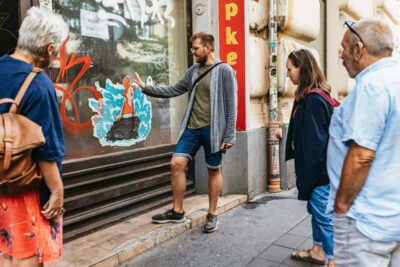
Street Art and Underground Movements Walking Tour
Read our review →
Alternative Street Art Free Walking Tour of Budapest
Read our review →

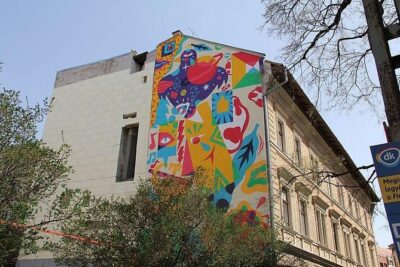
Art Nouveau Tour in Budapest: 3-Hour Private Tour
Read our review →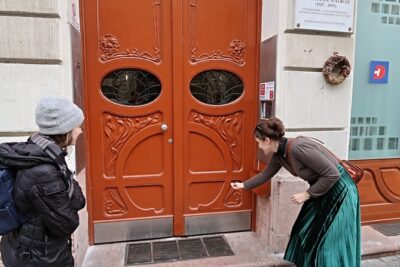
Budapest Vibe: Ruin Bars, Street Art and Culture Tour
Read our review →Browse the lists this tour appears in