

Reviewed · BUDAPEST WALKING TOURS
Budapest: 3-Hour Walking Tour of Pest with a Historian
Budapest’s Pest side becomes far more interesting when someone explains what you are seeing. This three-hour walk connects the Danube Promenade, grand squares, St. Stephen’s Basilica, Andrássy Avenue, the Opera House, and Heroes’ Square into one clear story about Hungary. The small group, capped at 10, gives you room to ask about politics, food, daily life, and the country’s often complicated past.
I like the way the tour mixes major sights with local explanation, rather than treating Pest as a string of photo stops. I also like that the basilica ticket and subway fares are included, so the route feels practical as well as informative. The main consideration is pace: three hours covers a lot, and this is a walking tour with only limited time at each place.
Key points at a glance
- A historian leads the walk: Guides such as Judit, Greg, Barbara, Andrea, Monica, and Raymond bring both academic context and personal memories of Hungary.
- St. Stephen’s Basilica is visited inside: Your admission is included, giving you time to see Budapest’s largest church beyond its exterior.
- The Millennium Underground is part of the route: You ride the oldest underground railway on the European continent.
- Heroes’ Square compresses 1,000 years of history: The guide explains the figures and events represented by the monument.
- The route joins Pest’s grandest sights: Expect the Danube Promenade, Gresham Palace, the Academy of Sciences, Zrínyi Street, the Opera House, and Andrássy Avenue.
- Questions are welcome: The guide can discuss Hungarian history, current life, politics, local food, and the differences between Pest and Buda.
Why Pest makes a smart first walking tour
Budapest is really two historic cities divided by the Danube. Buda rises on the western bank, while Pest spreads across the flatter eastern side. This experience stays on the Pest side, which makes it useful if you want a focused introduction rather than a rushed attempt to cover the whole city.
You begin in the central city near Erzsébet Square, a convenient location close to the Ferris wheel and Deák Ferenc tér. The square is served by the M1, M2, and M3 subway lines, along with several buses and trams, so getting there is simple from much of central Budapest.
I especially like the guide’s promise to explain not just what buildings are, but how Pest differs from Buda in outlook and daily life. That sort of comparison helps you understand why Budapest feels like a city with two distinct personalities.
The English-speaking guides bring different strengths. Judit has been praised for connecting history with present-day Hungary and for sharing personal perspectives. Greg has a gift for organizing complicated events into a clear story. Andrea has been noted for making the city’s streets feel alive, while Monica has added color through memories of growing up in Hungary. Your assigned guide may be someone else, but the format encourages conversation rather than a memorized speech.
More walking tours in Budapest:
- Budapest: Buda Castle Walk with Saint Stephen’s Hall
★ 4.5 · 3,012 reviews - Big Bus Budapest Hop-On Hop-Off Bus and Walking Tour
★ 3.5 · 2,206 reviews - Budapest: Buda Castle District Walking Tour
★ 4.6 · 2,108 reviews
From the Danube Promenade to Gresham Palace
The opening section introduces Pest through some of its most recognizable central sights. Along the Danube Promenade, you get a sense of the city’s relationship with the river and the grand architecture facing it.
The route also includes Gresham Palace, an Art Nouveau landmark with elaborate details, and the Hungarian Academy of Sciences. These stops matter because they show two sides of Budapest at once: the decorative confidence of the late nineteenth and early twentieth centuries, and the country’s long investment in learning and public institutions.
You then reach Zrínyi Street, a cobbled route leading toward St. Stephen’s Basilica. This change in surface and scale gives the walk a pleasant rhythm. One minute you are looking at large civic buildings, and the next you are moving through a more intimate central street.
Do not expect a long architectural lecture at every stop. The value comes from the way the guide links the buildings to Hungary’s wider story, including the Austro-Hungarian period, the world wars, communist rule, and modern life. If you are curious, ask questions as you go. The guides are specifically encouraged to discuss topics beyond the standard sightseeing script.
Inside St. Stephen’s Basilica

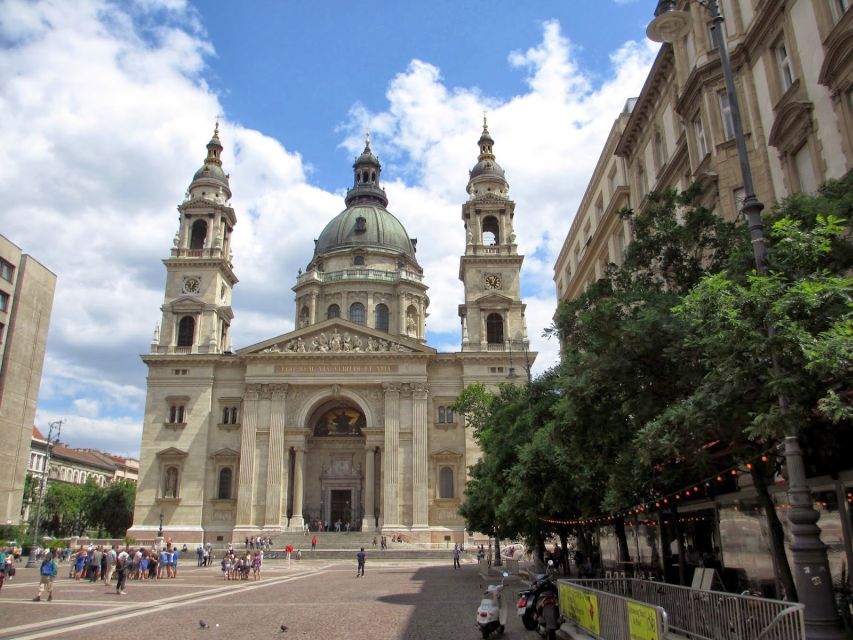
St. Stephen’s Basilica is the tour’s clearest interior visit, and your entrance is included in the $57 price. That matters because many city walks only pause outside churches, leaving you to arrange and pay for entry later.
The basilica is Budapest’s largest church, and the guide explains its place in the city rather than treating it as a quick backdrop for photographs. You should allow yourself a moment to take in the scale and decoration. The visit also gives the walking tour a change of pace after the outdoor streets.
This is one of the strongest parts of the experience for first-time visitors. You see a major landmark, hear why it matters, and avoid spending time working out the admission details yourself. Still, the exact amount of time inside can vary with the group and the guide’s pacing. If church interiors are your main interest, ask early so you can make the most of the stop.
Andrássy Avenue and the Opera House
From the basilica area, the route continues toward Andrássy Avenue, one of Budapest’s grand ceremonial roads and a UNESCO World Heritage site. The avenue is important not only for its buildings, but also for what it says about the city’s ambitions during its great period of growth.
The Hungarian State Opera is another major stop. You may not enter the Opera House on this walk, but seeing it as part of the avenue helps you understand the scale and polish of central Pest. The guide can explain how the street, its institutions, and its architecture fit into Hungary’s cultural story.
I like this section because you are not simply being taken from one isolated landmark to another. The avenue provides a connecting thread. You can see how urban planning, public culture, and national pride were expressed in the same part of the city.
The walk can feel especially useful after you have spent time wandering Budapest on your own. A guide points out relationships that are easy to miss when you only follow a map. You also get practical suggestions for what to see and where to eat, which several guides have offered during the walk.
Same city, a completely different sort of day:
- Budapest: City Highlights Cruise with Welcome Drink
★ 4.6 · 35,610 reviews - Budapest: Unlimited Prosecco, Beer and Aperol Spritz Cruise
★ 4.8 · 25,310 reviews - Budapest: Széchenyi Spa Day Ticket with Optional Upgrades
★ 4.3 · 23,911 reviews - Budapest: Nighttime or Daytime Sightseeing Cruise
★ 4.2 · 21,062 reviews
Riding the Millennium Underground
The Millennium Underground adds a welcome bit of public transport to an otherwise walking-heavy itinerary. Your subway ticket is included, and you ride the line described as the oldest underground railway on the European continent.
This is not just a way to save your feet. The railway belongs to the story of Budapest’s expansion and modern city life. It also lets the tour cover more ground in three hours without turning the entire experience into a long march.
You should expect a short subway ride rather than a full public transport lesson. The point is to use the system as part of the historical route, then continue exploring on foot. If you have never used Budapest’s subway, this also gives you a small introduction to getting around the city.
Because the tour includes public transport, keep your ticket and belongings easy to manage. The supplied information does not specify the exact number of subway rides, only that ticket or tickets are included.
Heroes’ Square and 1,000 years of Hungary
Heroes’ Square is the tour’s big history stop. Its monuments represent important figures from around 1,000 years of Hungarian history, so it can feel like a lot to absorb in one visit.
That is where the historian makes a real difference. Without explanation, the statues and columns can seem like an impressive but confusing collection of names. With context, you can understand how Hungary presents its past, which people are celebrated, and how national identity has changed over time.
The guide also places the square within the broader story of Hungary, from the Austro-Hungarian Empire through World War II and the communist era. These subjects are not simple, and the best part of the tour is the opportunity to ask follow-up questions instead of accepting a polished one-minute explanation.
If you enjoy history, this may be the most valuable stop. If you prefer a relaxed architecture walk with little political discussion, tell your guide that early. The tour is designed for open questions, and the tone can adapt to the interests of a small group.
A personal guide makes the difference
The strongest feature here is not one building. It is the quality of the conversation. Guides have been described as warm, energetic, and willing to explain both history and present-day Hungary.
Judit, in particular, has led several tours connected with Pest and communist-era Budapest. She has answered questions about Hungarian history and politics, shared current perspectives, and even added tastings of two popular sweets on one occasion. That food detail is not a guaranteed part of every departure, but it shows how the experience can become more personal when the group is small.
Greg has been praised for making complex history easy to follow and for keeping the pace comfortable. One departure had only one participant, allowing the route and discussion to be adjusted. You should not assume you will have a private tour, but a maximum of 10 people is still much more manageable than a large coach group.
The human element also makes the tour useful for questions that guidebooks often handle poorly. You can ask what daily life is like now, how Pest and Buda differ, or how Hungarians view major periods in their past. The guide’s answer will naturally reflect that person’s experience, so treat it as a local viewpoint rather than the only possible interpretation.
Pace, group size, and practical comfort
Three hours is a good length for a first city walk. It is long enough to cover central Pest and reach Heroes’ Square, but short enough to fit into a busy Budapest itinerary.
The tradeoff is that you will not have unlimited time at each sight. This is a broad introduction, not a museum-style examination of every building. If you want a quiet visit inside the basilica or extended time at Heroes’ Square, plan to return later on your own.
The maximum group size is 10. That is small enough for questions and personal contact, yet the experience may still feel like a shared tour rather than a private guide. The available information does not provide a precise walking distance or accessibility details, so ask the operator if you have mobility concerns.
Wear comfortable shoes and check the weather before you leave. Much of the experience takes place outdoors, even though the basilica and subway provide breaks from the street. Bad weather does not necessarily ruin the tour, but it can make a three-hour walk less pleasant.
The meeting point is in front of Kempinski Hotel Corvinus Budapest, facing the Ferris wheel on Erzsébet Square. The address is Erzsébet tér 7, 1051. Arrive with enough time to locate the hotel and guide, especially if you are unfamiliar with the square.
Is $57 a fair price?
At $57 per person, this is not the cheapest way to walk around Pest. You are paying for a historian-led route, a small group, entrance to St. Stephen’s Basilica, and subway tickets.
I think the price makes sense if you want context and efficient orientation during your first day or two in Budapest. The guide can cover several major areas in three hours, explain the background, and give practical suggestions for the rest of your stay. The value is strongest if you would otherwise pay separately for church admission and public transport while trying to piece the route together yourself.
The price is less compelling if you mainly want a self-guided stroll or prefer to spend a long time inside one landmark. You can see many of the exterior sights independently, and a free map will take you along Andrássy Avenue. What you cannot easily recreate is the live discussion and the connection between Hungarian history, city design, and current life.
Flexible booking also helps. You can cancel up to 24 hours before the tour for a full refund, and you can reserve now while paying later. Check the available starting times before booking, since the departure schedule is not fixed in the information provided.
Who should book this Pest walk?
I would choose this tour if you are visiting Budapest for the first time, have limited time, or want a clear introduction before exploring alone. It is also a strong choice for anyone who wants to ask questions about Hungary rather than simply take photographs.
History-minded visitors should get a lot from Heroes’ Square, the basilica, and the discussion of the Austro-Hungarian, wartime, and communist periods. Food-curious visitors may also appreciate the guide’s suggestions for places to eat, though food tastings are not promised as a standard feature.
I would hesitate if you dislike walking, want a private itinerary guaranteed, or prefer a slow tour focused on only two or three buildings. The route covers a wide slice of Pest, so its strength is range and explanation rather than extended time at one site.
Should you book it?
Book this tour if you want to get your bearings quickly while learning how Pest fits into Hungary’s past and present. The included basilica entry, subway ride, and small group add real value, while the guides bring a personal touch that a printed guide cannot match.
Choose another option if you want Buda included, a private tour, or a narrow focus on art and architecture. For most first visits, though, this is a smart three-hour introduction to Budapest’s eastern side, especially when you arrive with questions and an interest in more than surface-level sightseeing.
FAQ
How long is the Budapest Pest walking tour?
The tour lasts three hours.
What language is the tour offered in?
The live tour guide speaks English.
How many people can join the group?
The group is limited to 10 participants.
What is included in the tour price?
The price includes a historian guide, the walking tour, entrance to St. Stephen’s Basilica, and subway ticket or tickets.
Is entry to St. Stephen’s Basilica included?
Yes. The entrance ticket to St. Stephen’s Basilica is included.
Does the tour use Budapest public transport?
Yes. The route includes a ride on the Millennium Underground, and subway ticket or tickets are included.
Where does the tour meet?
The meeting point is in front of Kempinski Hotel Corvinus Budapest, facing the Ferris wheel on Erzsébet Square. The address is Erzsébet tér 7, 1051.
Can I cancel the booking?
Yes. You can cancel up to 24 hours in advance for a full refund. You can also reserve now and pay later.
More 3-Hour Experiences in Budapest
- 3-Hour Orientation Walking Tour of Buda and Pest
★ 4.8 · 1,834 reviews - Budapest: 3-Hour Grand City Tour and Castle Walk
★ 4.3 · 1,437 reviews - Budapest: 3-Hour Live Guided Sightseeing Tour
★ 4.4 · 1,041 reviews - 3 Hours Budapest Segway Grand City Tour Buda, Margaret and Pest
★ 5.0 · 255 reviews
Just added around Budapest
- Budapest: Danube River Views Bike Ride★ 4.8 · 23 reviews
- Budapest: City Bike Tour with Coffee Stop★ 5.0 · 37 reviews
- Budapest: Private Walking Tour with a Local Guide★ 3.6 · 6 reviews
- Budapest: Vacation Photographer to collect great memories★ 5.0 · 49 reviews
- Walk to recent and aged spiritual sanctuaries near Budapest★ 5.0 · 5 reviews
- From Budapest: Guided Tour of Eger with Wine Tasting★ 4.5 · 6 reviews
- Audio visual multi-sensory chefs journey dinner experience★ 5.0 · 3 reviews
- Budapest: 3-Hour Trabant Sightseeing Tour★ 4.7 · 28 reviews
Budapest Walking Tours, compared.

Big Bus Budapest Hop-On Hop-Off Bus and Walking Tour
Read our review →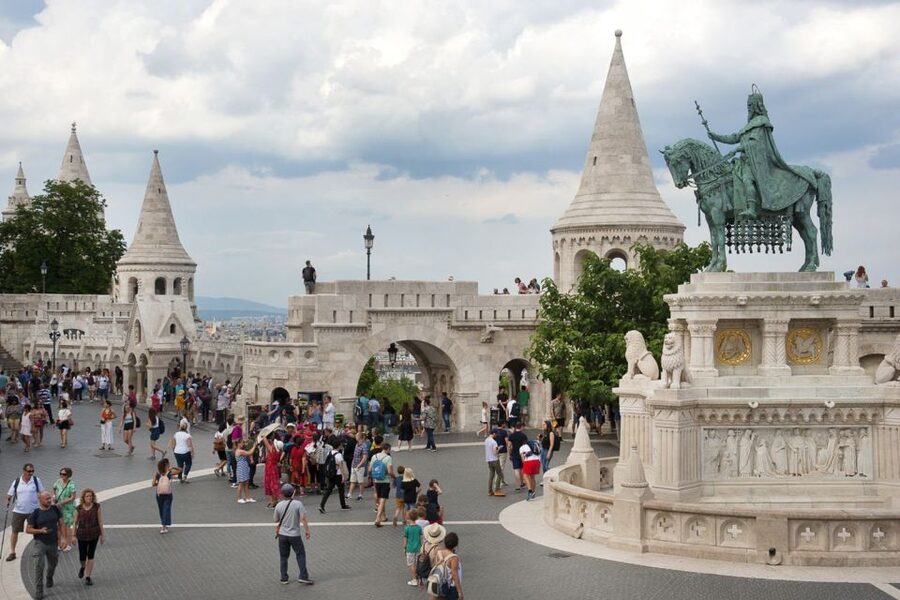
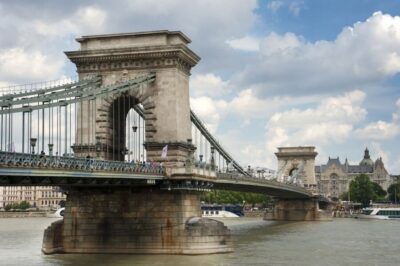
3-Hour Orientation Walking Tour of Buda and Pest
Read our review →
Budapest Historical Sightseeing – Free Walking Tour
Read our review →
Budapest All in One Small Group Walking Tour with Strudel Stop
Read our review →
Buda Castle District Walking Tour with a Historian
Read our review →Browse the lists this tour appears in