
Reviewed · BUDAPEST JEWISH QUARTER TOURS
Jewish Heritage / Full tour
Budapest’s Jewish story comes into sharp focus on this private three-hour tour. You move from the Shoes on the Danube, a small memorial with enormous emotional weight, to the controversial German Occupation Memorial and then into the Dohány Street synagogue complex. Guide Edith leads in English and brings both historical facts and current Jewish life into the conversation.
I like the route for two reasons: it connects several important sights instead of treating the Jewish District as a collection of isolated monuments, and it gives you a private guide who can adjust the pace and answer questions. Edith is described as prepared and available, which matters on a subject that often needs explanation. The main consideration is cost: at $48 per person, you still pay separately for synagogue admission and public transport.
Key points at a glance
- The Shoes on the Danube comes first: A brief stop here sets the emotional tone for the entire tour.
- Edith guides a private group: You receive English-language guidance rather than joining a large shared tour.
- The route links central Budapest: Deák tér or Kossuth Lajos tér, the riverbank, the German Occupation Memorial, and the Jewish District all fit into three hours.
- Dohány Street offers the longest visit: Plan on about 90 minutes inside the synagogue complex, including the Memorial Garden, Tree of Life, Heroes’ Temple, cemetery, and Jewish Museum.
- The tour addresses present-day questions: The German Occupation Memorial opens discussion about how Hungary remembers the war and how the Jewish community relates to that memory.
- Dress carefully: Shorts, short skirts, and sleeveless shirts are not allowed.
Why this route works for understanding Jewish Budapest
Many city tours mention Budapest’s Jewish District only in passing. This one gives the subject its full weight, beginning at a memorial along the Danube and ending at the city’s central Jewish complex.
That sequence is useful. You first encounter the murder of Hungarian Jews during the final years of the Second World War. You then confront an ongoing argument about responsibility and memory. Finally, you enter a place of worship, remembrance, education, and community life.
I like that the tour does not stop at old buildings. The description specifically includes current Jewish life, which helps you see the district as more than a museum quarter. Its streets also contain street art, restaurants, nightlife, and ordinary city activity. Those details matter because Jewish Budapest is both a historical subject and a living part of the city.
The tour is private, so you can ask direct questions without waiting for a large group to catch up. That is especially valuable here. The facts are important, but the way those facts connect to Hungarian memory and present-day identity requires room for conversation.
More Jewish Quarter tours in Budapest:
- Budapest Jewish Heritage Memorial Walking Tour & Synagogue Entry
★ 5.0 · 568 reviews - Budapest: Jewish Heritage Guided Tour with Synagogue Ticket
★ 4.8 · 533 reviews - Jewish Quarter of Budapest Walking Tour
★ 4.7 · 369 reviews
Starting near Deák tér or Kossuth Lajos tér
You can arrange pickup at two central points: near the Lutheran church at Deák tér or at Kossuth Lajos tér. Pickup from a central hotel may also be possible by agreement.
These meeting areas are practical because they put you near major central Budapest routes. Confirm the exact meeting point and time when you book, especially if you are staying outside the center.
The tour lasts three hours, but the timing is fairly structured. You use public transport for two short sections, each listed at about 10 minutes, then walk between the riverfront and the German Occupation Memorial. The route is not a long walking marathon, but you should be comfortable walking for roughly 30 minutes between the major outdoor stops.
Your transit tickets are not included. That is a small but important cost to remember when comparing the $48 price with other guided experiences. The private format and licensed guide add value, but the total amount will be higher than the advertised per-person price once tickets and synagogue admission are added.
The Shoes on the Danube, a quiet place with heavy meaning
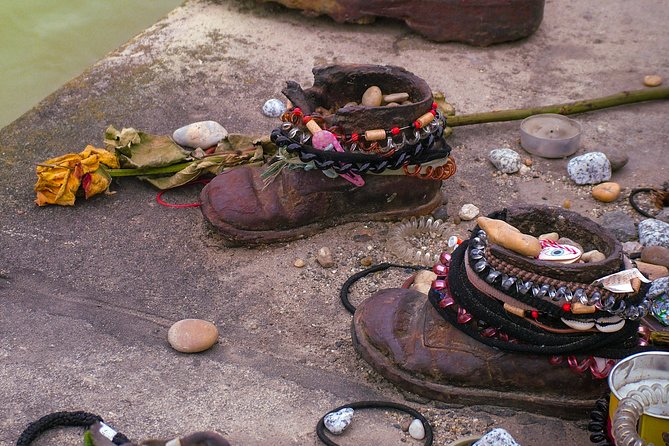
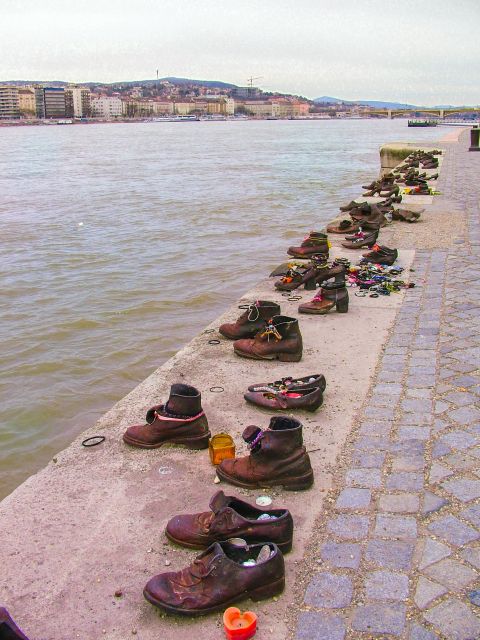
The first major stop is the Shoes on the Danube Bank. You have about 15 minutes here, described as a photo stop, though this is not a place that feels like a quick sightseeing checkbox.
The memorial recalls the terror of the last years of the war, when Jewish people were forced to remove their shoes at the river before being killed. The empty shoes point to the people who were taken away, while the river behind them makes the setting especially stark.
I would use this stop to listen before taking photographs. The memorial is simple, but its force comes from that simplicity. There is no large building or long display to absorb your attention. The shoes, the water, and the embankment do the work.
Fifteen minutes is enough for an introduction and quiet reflection, though you may wish the schedule allowed more time. The emotional subject also means this part may feel difficult, particularly for children. The tour is not suitable for children under six, and families with older children should consider how they want to discuss the material.
Walking toward the German Occupation Memorial
After the riverbank, you continue on foot for around 30 minutes. This section links the memorials physically and gives you time to move from the river into central Budapest.
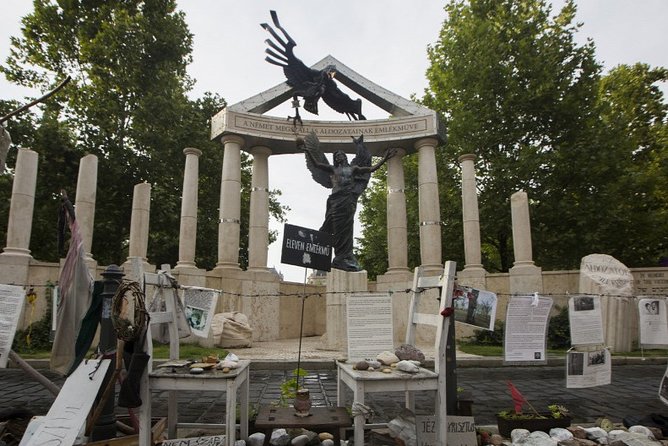
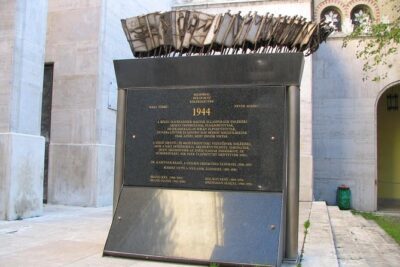
The next stop is the Memorial for Victims of the German Occupation, known in Hungarian as A német megszállás áldozatainak emlékműve. You have approximately 15 minutes here for explanation and photographs.
This monument is one of the most debated sights in Budapest. Its interpretation of Hungary’s wartime role has caused strong disagreement, particularly over how responsibility is presented. The tour uses the memorial to explain the current situation of the Jewish community, not simply to point out an unusual piece of public art.
That makes this stop one of the tour’s most useful features. You are not asked to treat the monument as a neutral summary of history. Instead, you can see how a memorial can shape public memory, leave out difficult questions, or invite competing interpretations.
The stop is short, so Edith’s guidance matters. A private group gives you a better chance to ask what the monument communicates, why it is controversial, and how it relates to the experience of Hungarian Jews. Do not expect a museum visit here. It is an outdoor explanation and photo stop, with the real value coming from context.
More history tours in Budapest:
- Budapest: Historic Cruise with Welcome Drink
★ 4.7 · 6,512 reviews - Budapest Historical Sightseeing – Free Walking Tour
★ 5.0 · 1,302 reviews - Buda Castle District Dark History, Legends and Vampire Night Tour
★ 4.5 · 1,240 reviews - BloodThirsty Hungary: Walking tour & Dark Historical Stories
★ 4.9 · 633 reviews
Entering the Dohány Street synagogue complex
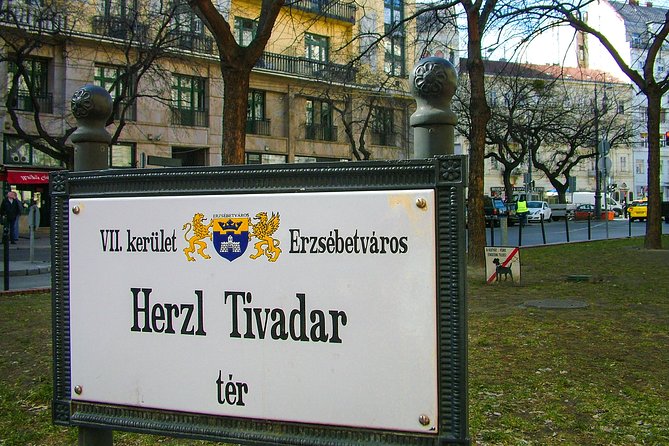
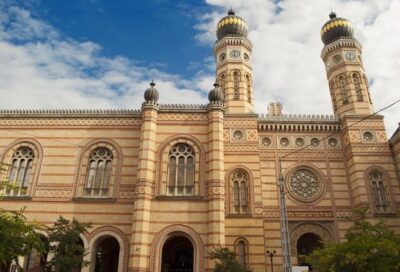
The final and longest stop is Dohány Street Synagogue, where you spend about 90 minutes. Admission is not included, although skip-the-ticket-line access is listed as part of the activity. Check the current entry arrangements and dress rules before you go.
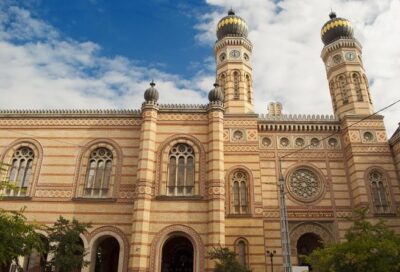
Dohány Street Synagogue is described as the second-largest synagogue in the world. Its scale alone changes the tone of the tour. After two outdoor memorials, you enter a complex that combines worship, remembrance, burial, and cultural education.
The complex sits at the edge of the former ghetto. That location gives the visit a direct link to the wartime history discussed earlier, while the buildings and grounds show the long-standing importance of Jewish life in Budapest.
You visit several parts of the complex:
- The synagogue: The main building is the central focus of the guided visit.
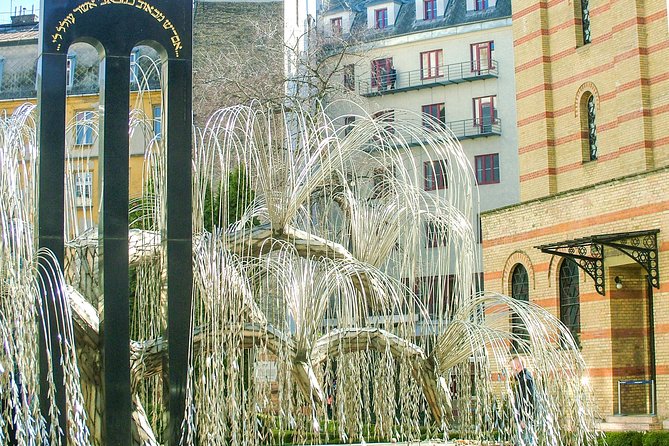
- The Memorial Garden: This area includes the famous Tree of Life.
- The Tree of Life: Its metal leaves commemorate victims of the Holocaust.
- Heroes’ Temple: This is part of the memorial and religious complex.
- The cemetery: The grounds include a Jewish cemetery, a sobering reminder of the district’s wartime history.
- The Jewish Museum: It was built on the site where Theodor Herzl’s birthplace once stood.
The 90-minute visit allows Edith to connect the individual sites instead of rushing you from one photo point to the next. The Jewish Museum adds another layer by linking the physical site to Theodor Herzl, a major figure in modern Jewish history.
You should allow the synagogue visit your full attention. This is not simply a grand interior added to a city walk. It is where the tour’s themes come together: religious life, the former ghetto, wartime loss, Jewish identity, and the continuing presence of the community.
What Edith adds to the experience
A guide makes a major difference on this subject, and Edith is the person leading the tour. The available feedback gives her full marks, with particular praise for being prepared and available. Another comment describes the experience as interesting and unforgettable even in rainy weather.
That tells you something practical about the guiding style. Edith appears to offer structure without shutting down questions. On a private tour, that can be more useful than a long rehearsed speech, especially when you want to pause at the memorials or spend more time on the parts that interest you.
The tour is offered in English only. If English is comfortable for you, the private format should make it easier to ask about sensitive points without feeling self-conscious. If you prefer a large group with a fixed script and less personal discussion, this may not be your ideal format.
The route also depends on public transport. Edith guides you through those sections, but you need to buy the tickets yourself. Keep the pace practical and wear shoes suitable for a city walk.
The Jewish District after the official tour
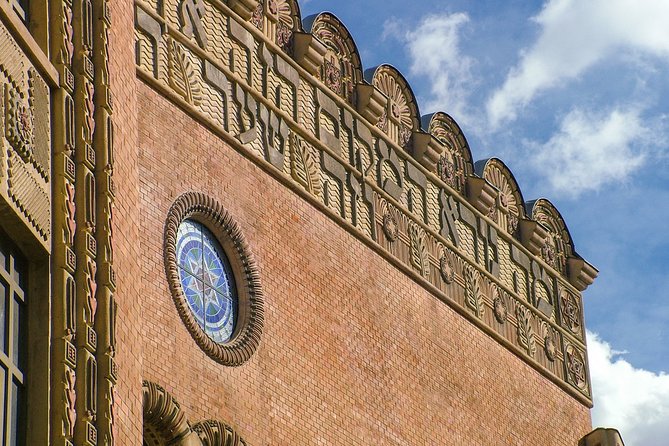
The tour finishes at Dohány Street Synagogue, which is a useful ending point. You remain in the Jewish District, close to places where you can continue exploring on your own.
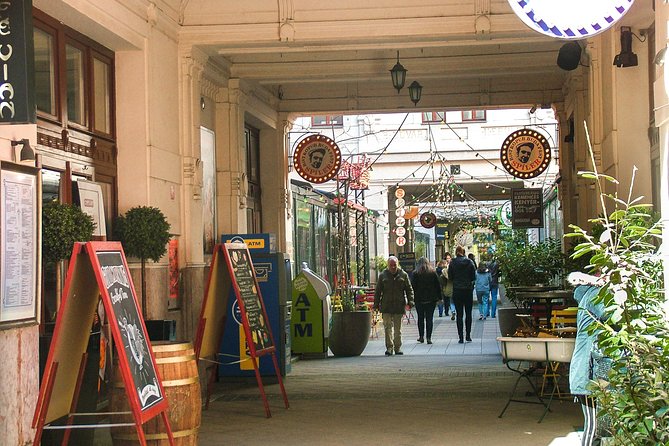
The district has UNESCO heritage status, but it is not frozen in the past. You will also find street art and nightlife, along with many options for lunch. That contrast is worth noticing. The same area can hold a synagogue complex, a memorial garden, modern street art, restaurants, and evening entertainment within a short walk.
I would plan lunch after the tour rather than before it. The schedule finishes at the synagogue, and the district gives you plenty of choices. Since no specific restaurant is included, you can choose based on your appetite and budget once the guided portion ends.
This is also a good reason to book the tour earlier in your Budapest stay. You can use the guide’s introduction to the district as a starting point, then return later for a slower look at the streets, galleries, food, and nightlife.
Is $48 a fair price?
At $48 per person, the tour offers a private licensed guide for three hours, hotel pickup in central Budapest by agreement, and guiding inside the Dohány Street complex. For a solo visitor or couple, that can be a reasonable price if you want personal attention and a serious discussion rather than a general city walk.
The value is less clear if you are traveling with a large family or group. The price is per person, and synagogue admission and transport tickets are extra. Compare the final total with a shared tour before booking.
The strongest part of the value is the route. You are not paying only for entry to one building. The tour links the Shoes on the Danube, the German Occupation Memorial, and Dohány Street, then explains how they relate to each other. That connection is difficult to get from independent sightseeing alone.
The skip-the-ticket-line benefit may also save time at the synagogue, though you should still confirm how admission is handled. The experience is best for someone who values interpretation and conversation, not simply the lowest possible price.
Practical details that affect your day
Book with the dress code in mind. Shorts, short skirts, and sleeveless shirts are not allowed. Choose respectful clothing before you leave your hotel, since you do not want to lose time finding something suitable before entering the synagogue complex.
The tour is not suitable for children under six. The memorial stops address murder, wartime terror, and the destruction of Jewish communities, so older children and teenagers should be prepared for serious material.
The tour includes English-language guiding only. It is a private group, and pickup from a central hotel may be arranged in advance. Public transport is used during the route, but tickets are not included.
You can cancel up to 24 hours before the start for a full refund, and you can reserve now and pay later. These policies are useful if your Budapest plans are still moving around.
Weather may affect the outdoor portions. One full-mark account describes the tour as worthwhile despite rain, but the riverbank and walking sections will be more comfortable with suitable clothing and shoes.
Who should book this tour?
I would recommend it to you if you want a focused introduction to Jewish Budapest and prefer a private guide to a large group. It suits adults, older children, history-minded visitors, and anyone who wants to understand why some Budapest memorials remain politically sensitive.
It is also a strong choice if Dohány Street Synagogue is already on your list. The outdoor memorials give the synagogue visit more context, while the synagogue complex gives the earlier stops a wider frame.
I would think twice if you want a light sightseeing outing, dislike difficult wartime subjects, or are trying to keep every extra cost out of your budget. The tour is serious, and the advertised price does not cover admission or transport tickets.
For the right visitor, the best feature is the combination of places and personal guiding. Edith’s preparation and willingness to answer questions are especially valuable here. You leave not only with photographs of major sights, but with a clearer sense of how Budapest remembers its Jewish past and lives with that past today.
FAQ
How long does the Jewish Heritage tour last?
The tour lasts three hours. Starting times vary, so check availability when booking.
Where does the tour start?
Pickup is available at two central locations, the Lutheran church at Deák tér or Kossuth Lajos tér. Pickup from a central hotel may also be arranged by agreement.
Where does the tour finish?
The tour finishes at Dohány Street Synagogue.
Is synagogue admission included?
No. The entrance ticket to the synagogue is not included, although skip-the-ticket-line access is listed as part of the activity.
Are public transport tickets included?
No. You pay for the transportation tickets separately.
What should I wear?
Shorts, short skirts, and sleeveless shirts are not allowed. Wear clothing suitable for entry to the synagogue complex.
Just added around Budapest
- Budapest: Danube River Views Bike Ride★ 4.8 · 23 reviews
- Budapest: City Bike Tour with Coffee Stop★ 5.0 · 37 reviews
- Budapest: Private Walking Tour with a Local Guide★ 3.6 · 6 reviews
- Budapest: Vacation Photographer to collect great memories★ 5.0 · 49 reviews
- Walk to recent and aged spiritual sanctuaries near Budapest★ 5.0 · 5 reviews
- From Budapest: Guided Tour of Eger with Wine Tasting★ 4.5 · 6 reviews
- Audio visual multi-sensory chefs journey dinner experience★ 5.0 · 3 reviews
- Budapest: 3-Hour Trabant Sightseeing Tour★ 4.7 · 28 reviews
Budapest Jewish Quarter Tours, compared.
Budapest Jewish Heritage Memorial Walking Tour & Synagogue Entry
Read our review →
Jewish Heritage Guided Tour with Synagogue Ticket
Read our review →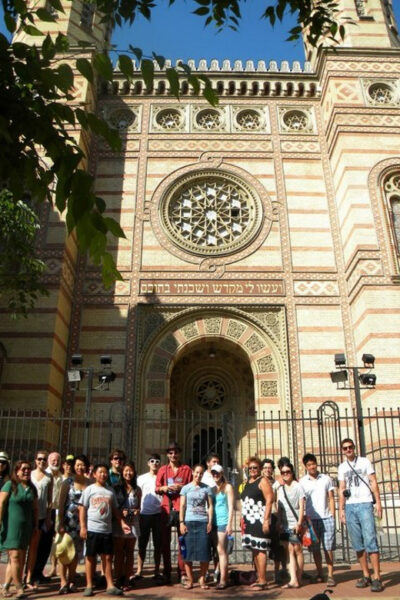
Past and Present of Budapest Jewish District Tour
Read our review →
Budapest Dohany Synagogue & Hungarian Jewish Museum & free extras
Read our review →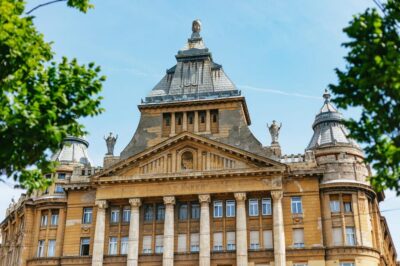
Jewish History Guided Walking Tour with Historian
Read our review →Browse the lists this tour appears in