
Reviewed · BUDAPEST WALKING TOURS
Budapest: Inner City Walking Tour in German
Budapest’s inner city comes into focus on this two-hour walk through Pest, linking grand architecture with the harder stories behind it. You move from Elizabeth Park and Budapest Eye to St Stephen’s Basilica, Liberty Square, and Kossuth Square beside Parliament.
I like the route’s clear sense of progress, and I like that it does not stop at pretty facades. The tour also covers Nazi occupation, Communist rule, and the 1956 revolution. The main consideration is time: two hours gives you a useful first look, but not a slow visit inside every landmark.
- Budapest Eye and Elizabeth Park: Begin in a central green space beside Europe’s largest Ferris wheel.
- St Stephen’s Basilica: See the huge dome and colonnade, one of Pest’s key landmarks.
- Mr. Safe statue: Add a small, playful detail to a route filled with monumental buildings.
- Liberty Square: Connect Budapest’s open public space with the city’s difficult 20th-century past.
- Kossuth Square and Parliament: Finish beside Hungary’s grandest political building.
- German-speaking private guide: Ask questions freely and shape the conversation around your interests.
A smart first walk through central Pest
If you have just arrived in Budapest, this tour gives you a useful mental map without asking you to cross the whole city. The route stays in the inner city of Pest, the flatter eastern side of Budapest, and finishes near the Danube and the Hungarian Parliament.
That location matters. You are not spending your limited tour time on transport between distant sights. Instead, the walk ties several major stops together on foot, so the city’s streets, squares, monuments, and changing architectural styles become part of the experience.
The pace should suit you if you want orientation rather than an exhaustive city tour. A professional German-speaking guide leads the way, and the private-group format gives you room to ask questions or request more detail on subjects that interest you.
Recent bookings have included guides named Zsóka and Uschi. The strongest qualities associated with this guiding team are a personal approach, clear explanations, useful answers to questions, and the ability to make a short tour feel full without turning it into a lecture.
Starting at Elizabeth Park and Budapest Eye
The meeting point is in front of Molnar’s Kürtöskalacs, a cafe and pastry shop. That is a practical place to begin, since the tour starts at Elizabeth Park, one of the central gathering spots in Pest.
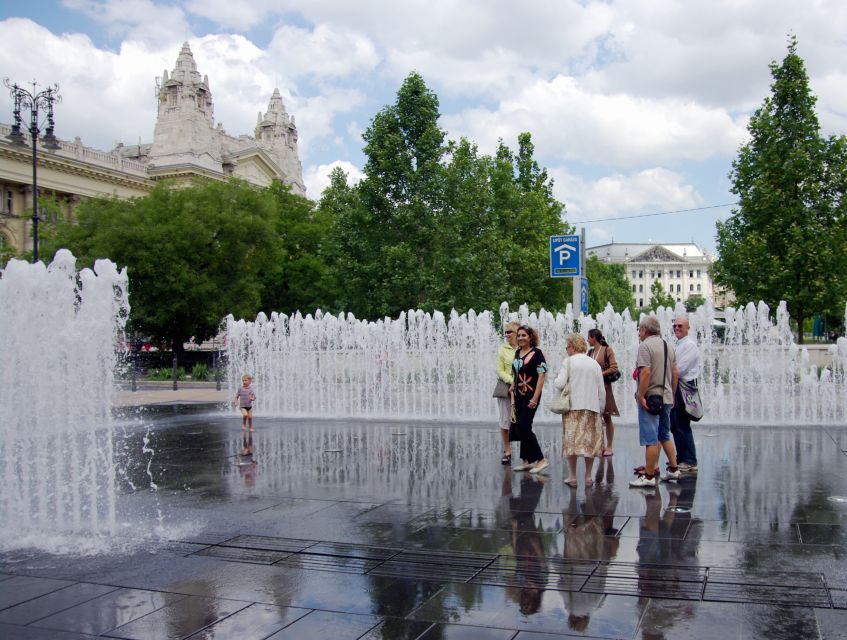
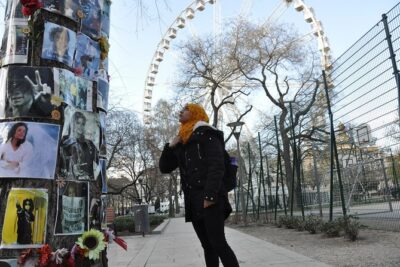
You will see Budapest Eye, the city’s largest Ferris wheel and one of the most obvious modern features in this part of town. It gives the opening scene a light touch before the route moves toward grand churches, public squares, and national monuments.
Elizabeth Park also helps you notice Budapest’s mix of old and new. A Ferris wheel, a pastry shop, open park space, and 19th-century buildings all sit within the same short walk. Your guide can use this beginning to explain how central Pest functions today, before the tour turns to its major historic landmarks.
The park itself is not the main event, so do not expect a long stop here. Think of it as a comfortable starting point and a simple way to get your bearings.
More walking tours in Budapest:
- Budapest: Buda Castle Walk with Saint Stephen’s Hall
★ 4.5 · 3,012 reviews - Big Bus Budapest Hop-On Hop-Off Bus and Walking Tour
★ 3.5 · 2,206 reviews - Budapest: Buda Castle District Walking Tour
★ 4.6 · 2,108 reviews
St Stephen’s Basilica and the grand scale of Pest
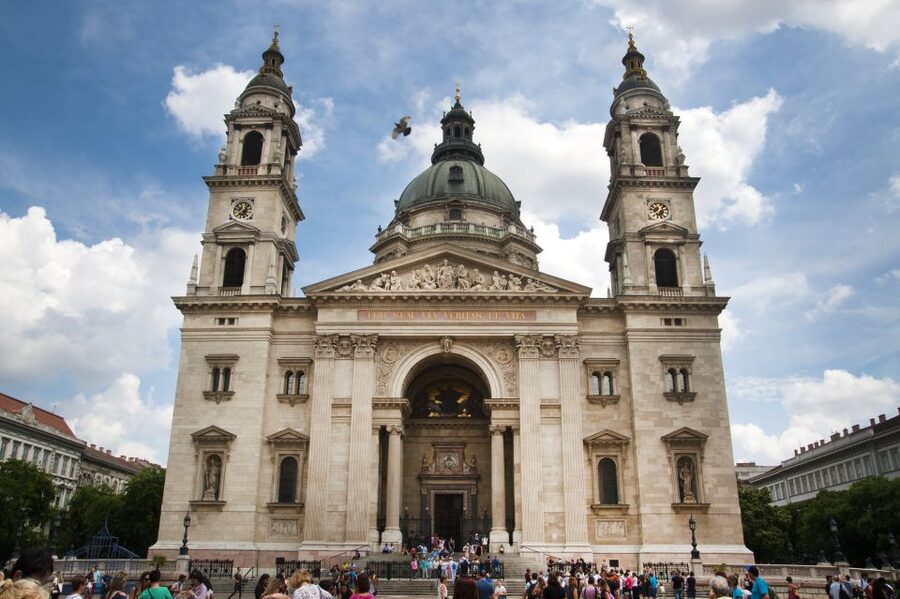
Soon after leaving the park, you reach St Stephen’s Basilica. Its enormous dome and colonnade make it one of the tour’s strongest visual moments.
The basilica is important not only because of its size. It helps you read the scale and confidence of Budapest’s 19th-century development. The surrounding streets feel formal and urban, while the church gives the area a strong central focus.
Your guide will explain the building and its place in Budapest rather than simply pointing out the dome. This is where a private tour can be especially useful. You can ask about the architecture, the name of the basilica, or the way the church fits into the city’s story.
The tour is an outdoor walking experience, so seeing the basilica from the route is not the same as taking a full interior visit. If you want to go inside, attend a service, or climb to a viewpoint, ask your guide how to fit that into your own Budapest plans. The listed experience focuses on the city walk, not on a dedicated basilica admission.
Pedestrian streets, local details, and Mr. Safe
After the basilica, the route continues through traditional pedestrian streets in the city center. This part of the walk is less about one giant monument and more about how central Budapest feels at street level.
You will see shops, cafes, building fronts, and the steady flow of people moving through the center. Your guide can point out details that are easy to miss when you are walking alone, especially if you are focused on getting from one major sight to another.
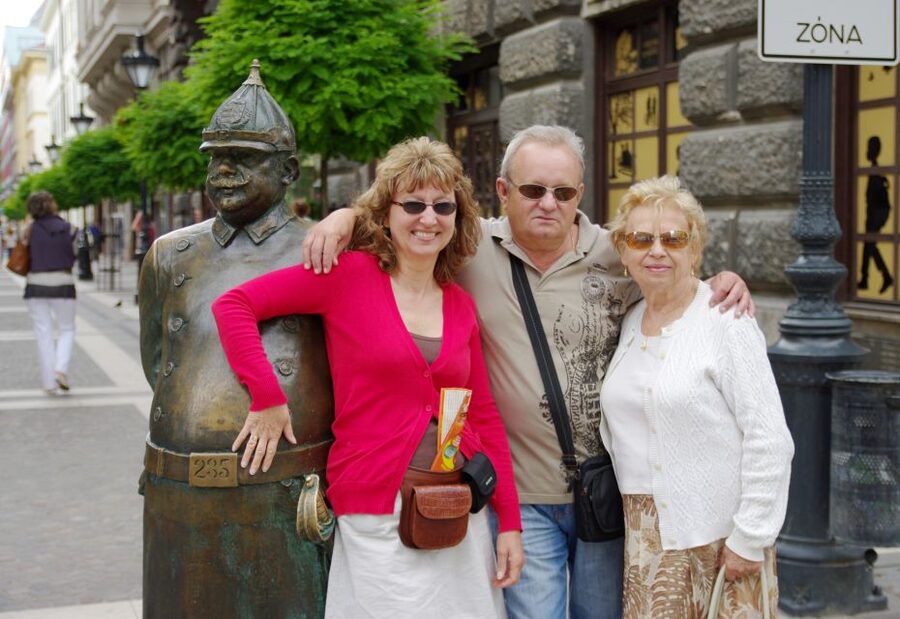
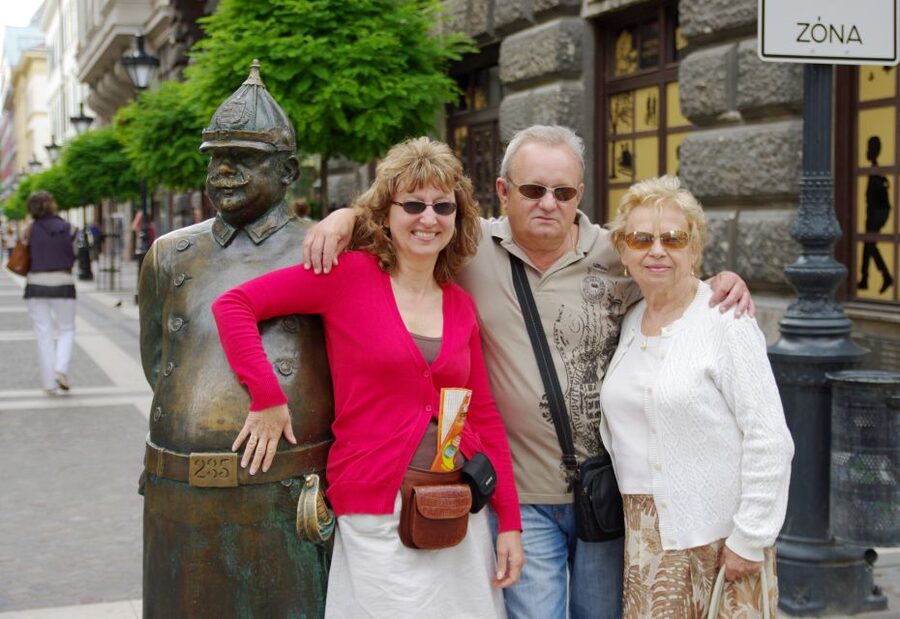
A small but memorable stop is the statue of Mr. Safe. It offers a welcome change of mood. After hearing about churches, politics, occupation, and revolution, a statue designed to make you smile keeps the tour from becoming too solemn.
This mix is one of the route’s strengths. Budapest is not only a city of grand domes and national monuments. It also has odd, friendly, and playful details tucked into ordinary streets. A short walking tour works best when it includes both kinds of sight.
Liberty Square and Budapest’s difficult 20th century
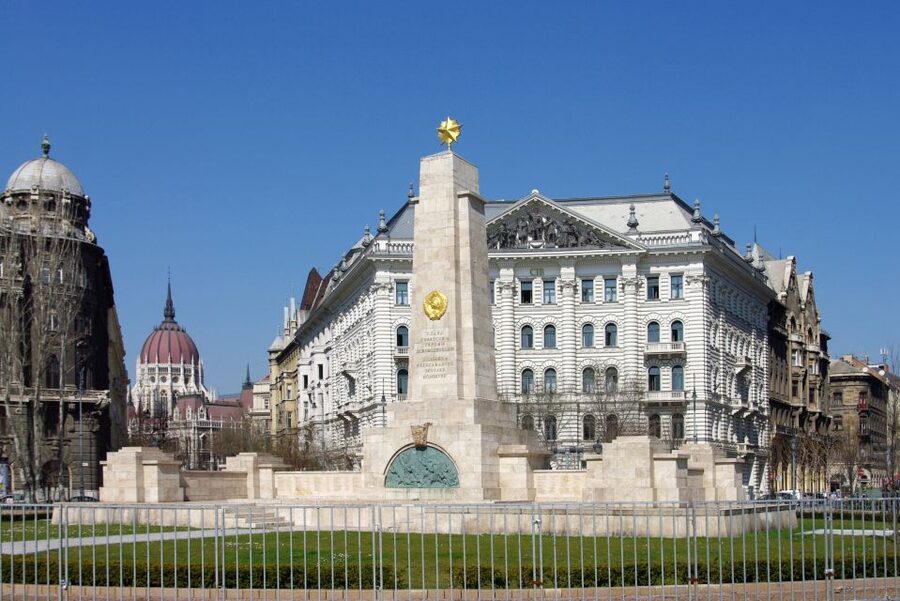
Liberty Square is where the tour takes a more serious turn. Here, the guide explains Budapest’s experience under Nazi occupation and Communist oppression.
That context gives the square more weight than its open layout might suggest. You are not just looking at a public space. You are hearing about the political forces that shaped Hungary and the pressures that affected daily life in the capital.
The tour also covers dictatorship and the 1956 revolution. These subjects can be difficult to compress into a short walk, but they are essential if you want to understand why Budapest’s monuments and public spaces carry such strong meaning.
A good guide makes the difference here. The purpose is not to bury you in dates. It is to connect the square to the city’s past in a way you can remember as you continue walking. The German language option is useful if you prefer to discuss sensitive historical subjects in your strongest language.
Expect this section to be thoughtful rather than cheerful. If you want only architecture and photo stops, the political content may feel heavier than expected. For most visitors, though, it adds the substance that a sightseeing stroll often lacks.
Same city, a completely different sort of day:
- Budapest: City Highlights Cruise with Welcome Drink
★ 4.6 · 35,610 reviews - Budapest: Unlimited Prosecco, Beer and Aperol Spritz Cruise
★ 4.8 · 25,310 reviews - Budapest: Széchenyi Spa Day Ticket with Optional Upgrades
★ 4.3 · 23,911 reviews - Budapest: Nighttime or Daytime Sightseeing Cruise
★ 4.2 · 21,062 reviews
Kossuth Square and the Hungarian Parliament
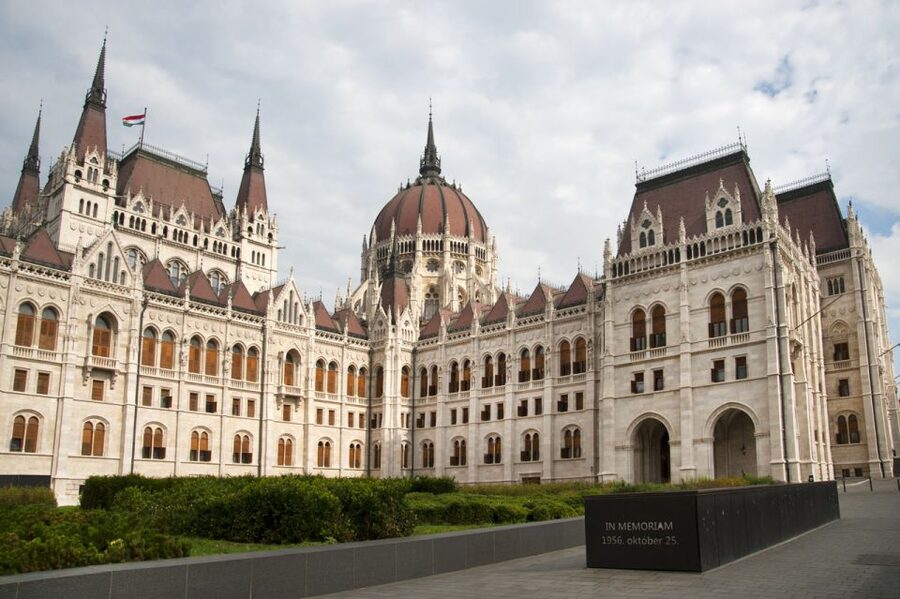
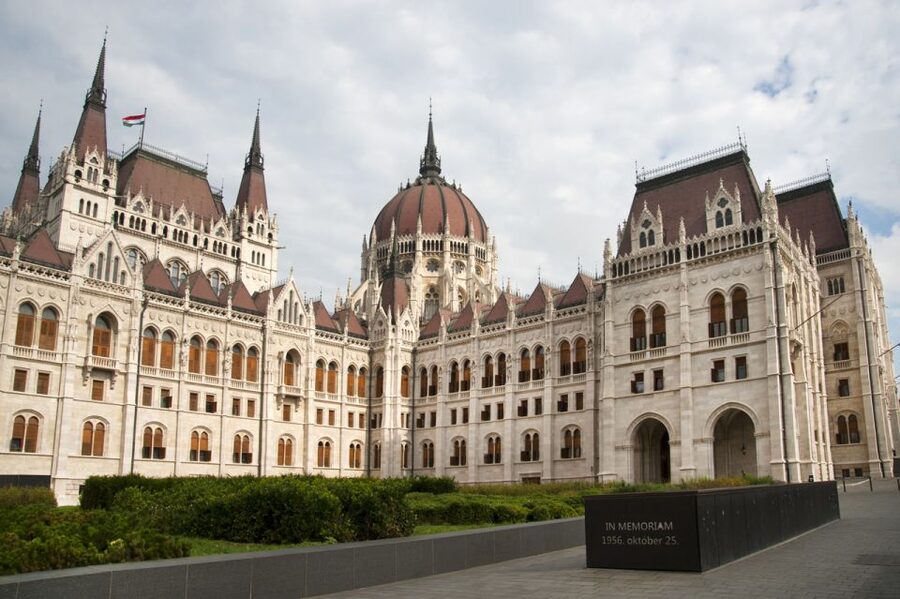
The final major stop is Kossuth Square, directly associated with the Hungarian Parliament building. This is one of Budapest’s most impressive public spaces, and it provides a fitting end to a walk through central Pest.
The Parliament building gives the tour its grandest view. Its scale and formal design make clear why it is one of the city’s defining sights. The surrounding square also connects neatly to the earlier discussion of politics, dictatorship, national identity, and the 1956 revolution.
Here, your guide can help you read the square as more than a postcard setting. You will hear stories tied to Hungary’s political past while looking at the building where national power is concentrated.
The tour does not list an interior Parliament visit. That is worth noting if entering the building is a top priority. You are coming for the outdoor setting, the surrounding monuments, and the guide’s explanation of their meaning.
The Shoes on the Danube Bank option
After Kossuth Square, you can pay a visit to the Shoes on the Danube Bank monument or continue with a walk along the riverbank. The monument is poignant and asks for a quiet moment rather than a quick photograph.
Its position near the Danube makes the ending feel connected to the city’s geography. You have moved through streets and squares, and now the river opens the view. The route closes with a choice between a specific memorial stop and a more relaxed riverside walk.
This flexibility is useful in a private group. You may want the memorial, especially if you are interested in Budapest’s wartime history. You may instead prefer time beside the water after two hours of architecture and political stories.
The exact balance depends on your guide and your group’s pace. The experience description places this visit after the main tour, so you should treat it as the final option rather than assume a long separate stop.
What the private format changes
The tour is listed as a private group experience, which is one of its strongest practical features. You are not simply following a large crowd from one landmark to the next. You can ask for clarification, slow down for a photograph, or request more attention to architecture, food, or history.
The private format also explains why this tour may work well for families, couples, and small groups with different interests. One person may want historical context, another may want restaurant tips, and another may mainly want to see Parliament and St Stephen’s Basilica. A good guide can adjust the conversation.
The two-hour length keeps the outing manageable. You get a compact introduction without giving up half a day. The tradeoff is that the route cannot cover every neighborhood or allow long visits at each stop.
Wheelchair access is listed, which makes the tour worth considering if step-free access is important to you. Since this is a walking route through city streets and squares, it is still sensible to confirm the precise conditions for your group when booking.
German guidance and the human touch
The tour is conducted in German by a live professional guide. That is more than a translation detail. Historical subjects are easier to discuss when you can ask questions naturally and catch small distinctions in the explanation.
The guiding style described by the available feedback is personal, clear, and easy to follow. Zsóka is named for adding local history, food suggestions, and useful sightseeing information. Uschi is described as charming and effective at bringing Hungarian history close to the listener.
Another guide praised in the feedback was willing to answer questions fully and even let the scheduled time run over. You should not assume every tour will exceed two hours, but the detail suggests that the experience can feel generous when the conversation is flowing.
The best reason to choose this tour in German is not simply comfort. It is the chance to discuss Budapest’s complicated past without language getting in the way. If you are comfortable with English, you may still prefer a German tour if that is the language you use for detailed questions.
Is $23 a fair price?
At $23 per person, this is a reasonable price for a two-hour private walking tour, especially if the group includes several people. You are paying for a live guide, a focused central route, and the ability to ask questions rather than only follow an audio track.
The value is strongest if you are new to Budapest. A good orientation tour can save time later by showing you where the main sights sit in relation to one another. It can also help you decide which places deserve a longer return visit.
The price does not include a meal, attraction admission, or a dedicated interior visit to Parliament or the basilica. That keeps the tour simple and helps explain the modest cost, but you should budget separately for any sites you plan to enter.
For a solo visitor, $23 is still fair, though the private format becomes better value when shared by a small party. You are paying for context and access to a guide’s attention, not a long list of inclusions.
Who should book this Budapest walk?
I would choose this tour if you want a first look at Budapest from the Pest side, prefer German, and care about the story behind the monuments. It suits you especially well if you have only a short stay or want an introduction before exploring alone.
It is also a good fit for anyone who likes a balanced route. You get the basilica and Parliament, but also Mr. Safe, Liberty Square, political history, and the river. The experience does not treat Budapest as a collection of beautiful facades with no difficult past.
You may want something else if you are looking for a full-day city tour, a dedicated Buda Castle visit, an interior tour of Parliament, or a food-focused walk. Those are not part of this compact Pest itinerary.
Book this experience if you want a clear route, German-speaking guidance, and a personal introduction to central Budapest. Skip it only if you already know the inner city well or need a tour with longer visits inside the major buildings.
FAQ
What language is the tour conducted in?
The live tour guide speaks German, and German is the listed tour language.
How long does the walking tour last?
The tour lasts two hours.
How much does the tour cost?
The listed price is $23 per person.
Where does the tour meet?
Meet the guide in front of Molnar’s Kürtöskalacs cafe and pastry shop.
Is this a private tour?
Yes. The experience is listed as a private group tour.
Is the tour wheelchair accessible?
Yes. The activity is listed as wheelchair accessible.
What sights are included on the route?
The route includes Elizabeth Park, Budapest Eye, St Stephen’s Basilica, central pedestrian streets, the Mr. Safe statue, Liberty Square, Kossuth Square, and the area around the Hungarian Parliament.
Does the tour include the Shoes on the Danube Bank monument?
The tour can finish with a visit to the Shoes on the Danube Bank monument, or you can choose a walk along the riverbank.
Can I cancel the booking?
You can cancel up to 24 hours in advance for a full refund. A reserve now and pay later option is also available.
Just added around Budapest
- Budapest: Danube River Views Bike Ride★ 4.8 · 23 reviews
- Budapest: City Bike Tour with Coffee Stop★ 5.0 · 37 reviews
- Budapest: Private Walking Tour with a Local Guide★ 3.6 · 6 reviews
- Budapest: Vacation Photographer to collect great memories★ 5.0 · 49 reviews
- Walk to recent and aged spiritual sanctuaries near Budapest★ 5.0 · 5 reviews
- From Budapest: Guided Tour of Eger with Wine Tasting★ 4.5 · 6 reviews
- Audio visual multi-sensory chefs journey dinner experience★ 5.0 · 3 reviews
- Budapest: 3-Hour Trabant Sightseeing Tour★ 4.7 · 28 reviews
Budapest Walking Tours, compared.
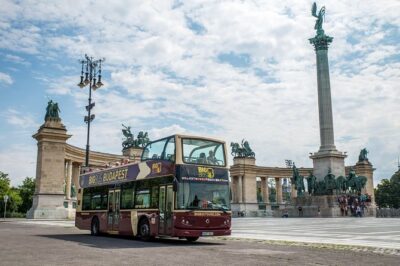
Big Bus Budapest Hop-On Hop-Off Bus and Walking Tour
Read our review →
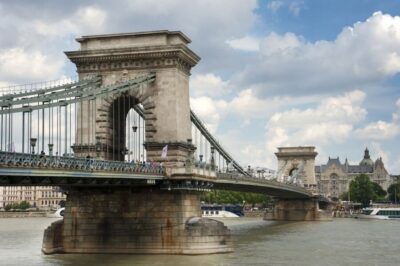
3-Hour Orientation Walking Tour of Buda and Pest
Read our review →
Budapest Historical Sightseeing – Free Walking Tour
Read our review →
Budapest All in One Small Group Walking Tour with Strudel Stop
Read our review →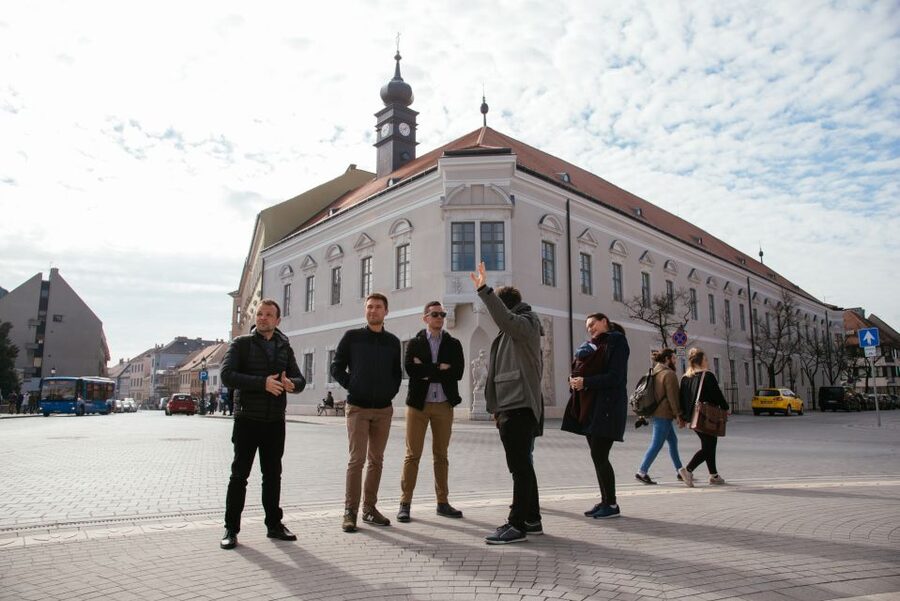
Buda Castle District Walking Tour with a Historian
Read our review →Browse the lists this tour appears in