
Reviewed · BUDAPEST JEWISH QUARTER TOURS
Jewish Heritage / Full tour
Budapest’s Jewish heritage is not confined to one museum or memorial. This three-hour walk links the Dohány Street Synagogue, the Shoes on the Danube, and two very different views of Hungary’s wartime past. The most valuable part is the conversation between these places, especially when guide Edith connects public history with personal stories of Jewish life in Budapest.
I like the small-group format, which allows time for questions and a pace that can be adjusted. I also like that the tour does not stop in 1945. It discusses Jewish life in Hungary today, points out the district’s street art and nightlife, and may include practical help with public transport and nearby places to eat.
The main drawback is cost. At $80.86 per person, you still pay the €26 synagogue admission separately, and transportation is not included. The tour is short enough to fit into a busy day, but its three hours are emotionally serious and may feel concentrated for anyone hoping for a broad general walk around Budapest.
Key points to know before booking
- Dohány Street Synagogue is the centerpiece: Your visit includes the synagogue complex, the Jewish cemetery, the Raoul Wallenberg Memorial Garden, and the Emmanuel Tree memorial.
- The route covers more than architecture: You also visit the Shoes on the Danube and the disputed Memorial to the Victims of the German Invasion.
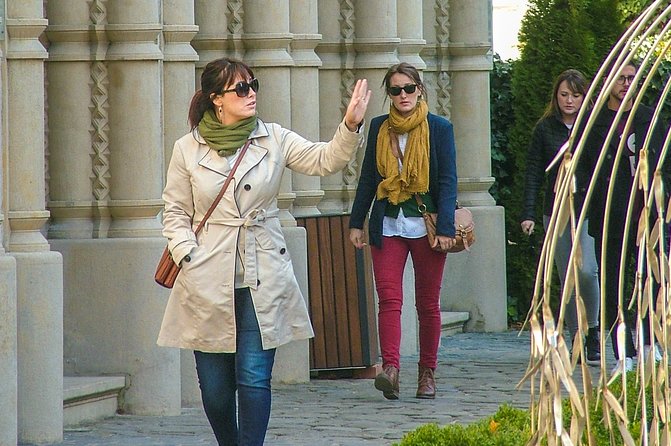
- Edith is a major part of the experience: She is praised for clear English, strong subject knowledge, personal stories, and her ability to shape the walk around your interests.
- The group is intended to be small: The experience is described as limited to ten people, while the booking information also gives a maximum of 13. Confirm the exact group size if that matters to you.
- The synagogue ticket costs extra: Allow €26 per person in addition to the tour price.
- You finish at Dohány Street Synagogue: The meeting point is Deák Ferenc tér, so plan your morning around a walk between the starting area and the Jewish Quarter.
Why this walk matters in Budapest
Budapest’s Jewish Quarter can look, at first glance, like a district of cafés, ruin bars, painted walls, and busy evening streets. That modern energy is real, but it sits beside the remains of a community shaped by prosperity, persecution, war, communism, and renewal.
This tour helps you read the area in layers. You see a grand synagogue, a cemetery built into the city, memorials to murder, and a district still used for worship and daily life. That mix makes the route more useful than a simple list of monuments.
The discussion also reaches Jewish life in Hungary today. That is important because the Jewish Quarter is not only a place of remembrance. A tour that treats it as a frozen Holocaust site would miss part of what makes the neighborhood meaningful now.
The guide’s role is central. Edith is repeatedly praised for speaking clear English, answering questions patiently, and adding personal reflections about Hungary and Budapest over the past 70 years. Her family story gives the subject a human scale, though the emotional weight may not suit anyone looking for a light sightseeing stroll.
More Jewish Quarter tours in Budapest:
- Budapest Jewish Heritage Memorial Walking Tour & Synagogue Entry
★ 5.0 · 568 reviews - Budapest: Jewish Heritage Guided Tour with Synagogue Ticket
★ 4.8 · 533 reviews - Jewish Quarter of Budapest Walking Tour
★ 4.7 · 369 reviews
Starting at Deák Ferenc tér
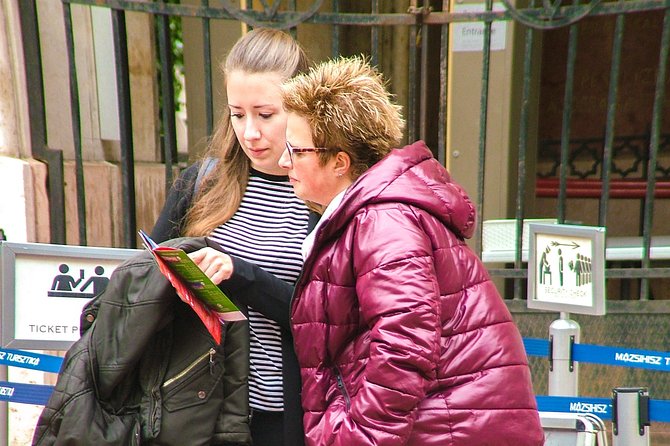
The walk begins at Deák Ferenc tér, a central Budapest meeting point near public transportation. Clear meeting instructions matter here, and Edith has been particularly careful about communicating the time and location.
From there, the route may use walking and public transit to connect the sites. Transportation is not included in the price, so you should be prepared for any local transit costs. The route is mainly urban and practical, not a coach excursion.
Starting away from the synagogue gives the walk a useful shape. You do not simply arrive at the grandest building first, take photographs, and leave. Instead, the route builds a setting before you reach the main complex.
The exact order can vary. Some accounts describe beginning at the Shoes on the Danube and ending at Dohány Street Synagogue, while the formal meeting information also lists the synagogue as the endpoint. Either way, Dohány is the main destination, and you should expect to finish there rather than return to Deák Ferenc tér.
The Shoes on the Danube Bank
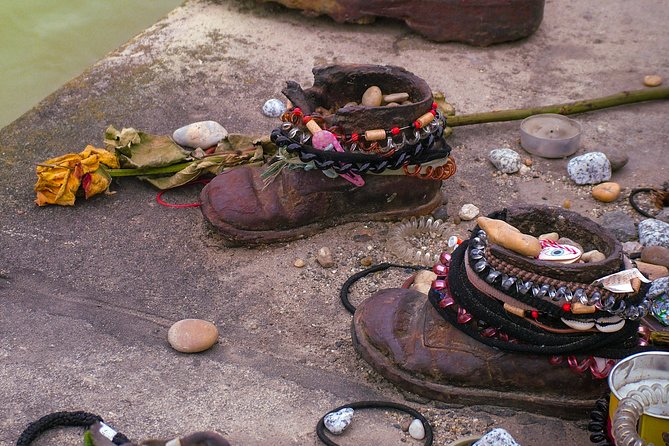
The Shoes on the Danube is one of Budapest’s most direct memorials. Metal shoes line the riverbank, recalling Jewish men, women, and children who were forced to remove their shoes before being shot into the Danube.
You have about 15 minutes here. That may sound brief, but the memorial does not need a long presentation to make its point. The empty shoes are simple, physical, and difficult to look at without imagining the people who wore them.
A guide adds context that a quick independent visit may not provide. Edith explains the memorial and gives you time to ask questions, while also placing it within the wider story of Hungarian Jews during the Second World War.
This is one of the most emotionally demanding parts of the tour. You should not schedule it as a casual photo stop between shopping and lunch. The pace remains manageable, but the subject is direct and upsetting.
The Memorial to the Victims of the German Invasion
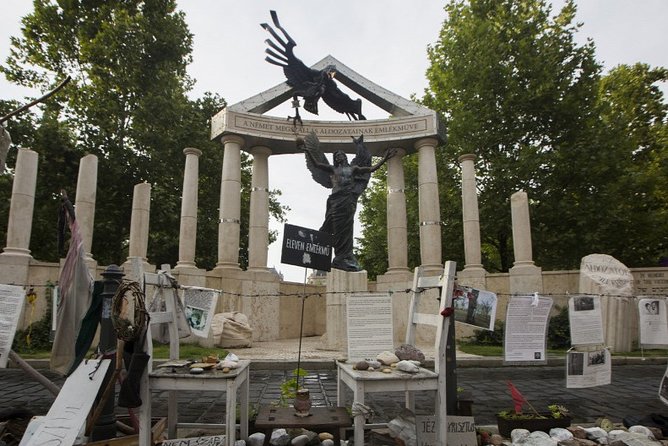
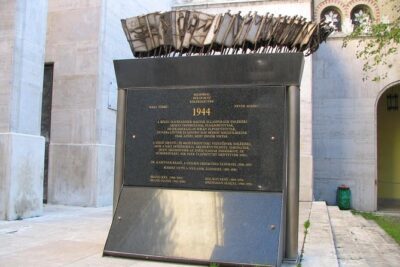
The next memorial offers a different kind of historical problem. The Monument to the Victims of the German Invasion presents Hungary as a victim of German aggression. Many people object to that framing because it can minimize the role of Hungarian authorities and institutions in the persecution of Hungarian Jews.
The memorial has been protested since its installation, and the area has become a place of public argument. The tour includes about 15 minutes here, enough to explain why the monument remains controversial and why the surrounding protest material matters.
This stop is valuable because it shows that history in Budapest is not settled simply because a monument has been built. Public memory is still argued over. You see how a memorial can honor suffering while also being criticized for leaving out responsibility.
For me, this is one of the strongest reasons to take a guided visit. Without context, the monument may appear to be a straightforward tribute. With context, you can understand why its message has caused such lasting anger.
More history tours in Budapest:
- Budapest: Historic Cruise with Welcome Drink
★ 4.7 · 6,512 reviews - Budapest Historical Sightseeing – Free Walking Tour
★ 5.0 · 1,302 reviews - Buda Castle District Dark History, Legends and Vampire Night Tour
★ 4.5 · 1,240 reviews - BloodThirsty Hungary: Walking tour & Dark Historical Stories
★ 4.9 · 633 reviews
Entering the Dohány Street Synagogue complex
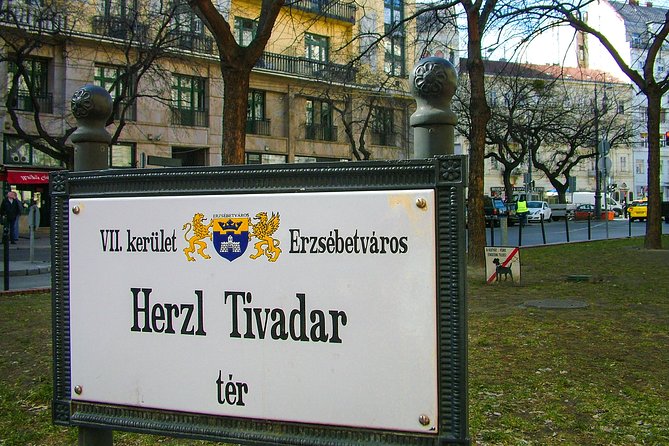
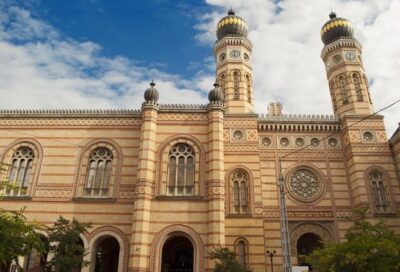
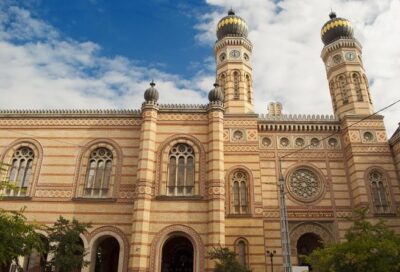
Dohány Street Synagogue is the centerpiece of the experience and one of the most important Jewish sites in Budapest. It is described as the largest synagogue in Europe and among the largest in the world.
The paid visit includes the synagogue building, the Jewish cemetery, the Raoul Wallenberg Memorial Garden, the Emmanuel Tree, and the surrounding memorial area. The synagogue admission is not included in the tour price, and the listed cost is €26 per person.
That extra charge is significant. At $80.86 for the guide, you are paying for interpretation and the walking route, then adding the entrance fee. Still, the price can make sense if you want the buildings and memorials explained in one connected visit rather than seeing each place without context.
The synagogue itself provides the grand architectural focus. Its scale and formal design contrast with the smaller memorials along the river. You are not only visiting a religious building, but also a place tied to the long public story of Budapest’s Jewish community.
Dress and entry rules are not detailed in the supplied information, so check the current synagogue requirements before you go. The important practical point is simple: admission is separate, and the synagogue visit is not optional if you want the full experience described here.
The cemetery, Wallenberg Garden, and Emmanuel Tree
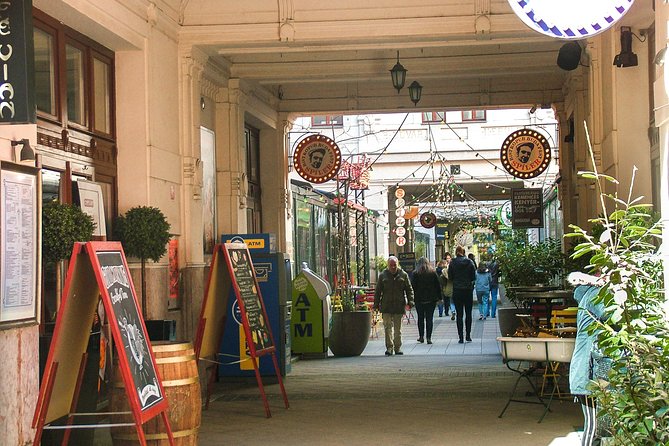
The cemetery inside the synagogue complex adds a more intimate note. It is not merely a historic corner attached to a grand building. It is part of the memory of the Jewish community and the wartime suffering connected to this site.
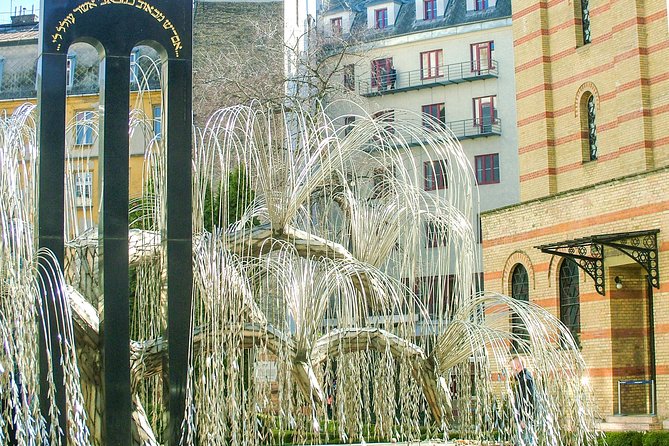
The Raoul Wallenberg Memorial Garden honors the Swedish diplomat who helped save Jewish lives in Budapest during the war. The Emmanuel Tree, associated with Tony Curtis, is another major memorial. Its leaves carry names of victims, turning a large historical loss into a collection of individual identities.
These spaces reward a slower pace. You may find the cemetery and garden more affecting than the synagogue interior because the setting is quieter and the memorials ask you to look closely.
A guide can also explain how the synagogue complex connects religious practice, community life, and remembrance. That is where the tour moves beyond sightseeing. You are shown not just what each feature is, but why it was placed there and how it fits into the larger story.
Walking through the Jewish Quarter today
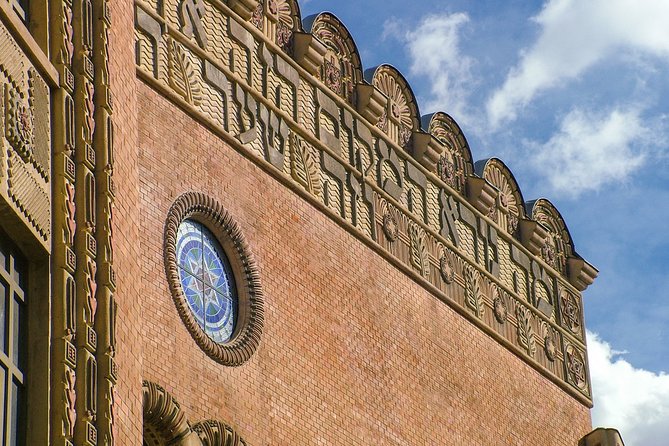
The route also includes historic streets and former community areas. The neighborhood has changed dramatically, and the tour points out that it now contains much of Budapest’s street art and nightlife.
That contrast is useful. You might pass a ruin bar or a colorful mural close to a site of wartime memory. The district can feel young and social in one block, then solemn in the next. The experience encourages you to notice both sides instead of treating the quarter as either a memorial zone or a nightlife district.
The tour also visits or discusses another functioning synagogue from the outside. Since the itinerary specifies an exterior visit, do not assume you will enter every synagogue on the route.
The discussion of Jewish life today is one of the most distinctive features here. Edith has been praised for connecting history with present-day Budapest, including the impact of the Soviet period and the ways the community continues to live in the city.
Edith’s guiding style and the value of a small group
The strongest praise centers on Edith. She is described as warm, articulate, punctual, and able to explain difficult subjects without turning the tour into a lecture. Her English is repeatedly singled out as easy to understand.
She also appears willing to adapt. The walk has been adjusted around specific interests, mobility limits, and the time available. Some participants received help with public transportation, restaurant ideas, and ruin bars. Those additions are useful, but they depend on the guide and the needs of your group, so treat them as possible extras rather than fixed inclusions.
The advertised format is a maximum of ten people, while the additional booking information lists a maximum of 13. That is still a relatively small group compared with a large city tour, but the difference matters if you are choosing this mainly for personal attention.
A small group is especially helpful at the Shoes on the Danube and the controversial invasion memorial. You can ask why a monument was built, how people respond to it, and how Hungarian Jewish history connects with current life. In a large group, those questions can be difficult to fit in.
Is three hours enough?
Three hours is enough for the main sites, but not for every aspect of Budapest’s Jewish history. The schedule gives the synagogue complex about two hours, with roughly 15 minutes at each riverside memorial.
That makes this a focused introduction rather than a full-day study tour. You can fit it into a morning or afternoon and still have time for other Budapest sights.
The pace is described as comfortable, with walking and some public transit. You should still expect time on your feet and several emotionally serious discussions. Most people can participate, and service animals are allowed, but the tour is not presented as a private vehicle experience.
I like the length for a first visit. You leave with a clear sense of the major places without spending an entire day on one subject. If you have a strong academic interest or want extended time in museums and archives, you will need to continue exploring independently.
What the $80.86 price buys you
The price is easiest to justify if you value a guide who can connect the sites and answer questions. You are not paying for transportation, and you still need to add €26 for the synagogue entrance.
For two people, the combined cost becomes noticeable. A self-guided visit would be cheaper, especially if you already plan to read about the sites in advance. The tradeoff is that you would need to work out the route, interpret the disputed memorial, and understand the relationship between the synagogue, cemetery, gardens, and river memorial.
The personal element also affects value. Edith’s family stories and reflections on Budapest give the tour a human voice that an audio guide may not provide. If that kind of conversation matters to you, the cost is easier to defend.
The high rating and 98 percent recommendation suggest strong satisfaction, but the best choice still depends on your travel style. If you prefer to move independently and spend a long time at one site, book the synagogue separately. If you want a guided framework and a chance to ask questions, this tour offers more than admission alone.
Who should take this tour?
I would recommend it to you if you want to understand Budapest’s Jewish Quarter beyond its cafés and nightlife. It is also a good choice if you are interested in Holocaust remembrance, contested public memory, or the survival of Jewish life in Hungary today.
It suits first-time visitors because the route introduces several major sites in a single short outing. Repeat visitors may also find value in Edith’s personal perspective and the discussion of places they may have missed on an earlier trip.
Families and younger participants can take part, but the material is serious. Anyone seeking a cheerful introduction to Budapest should choose a different walk for their first activity.
The experience is also a good fit for people who appreciate conversation. Questions are encouraged, and the guide has been praised for making room for individual interests rather than delivering a fixed speech.
Booking and practical details
Book ahead if your dates are fixed. The experience is booked, on average, about 75 days in advance, which suggests that popular dates can fill well before arrival.
Confirmation is provided within 48 hours, subject to availability. The tour is offered in English and uses a mobile ticket.
Free cancellation is available up to 24 hours before the start time for a full refund. Cancellations or changes made less than 24 hours before the start are not accepted for a refund. Poor weather can also cancel the activity, in which case you are offered another date or a full refund.
The meeting point is Deák Ferenc tér in Budapest. The tour ends at Dohány Street Synagogue, Dohány u. 2, 1074 Budapest. That makes it easy to continue exploring the Jewish Quarter afterward, but it also means you should not assume you will return to the starting point.
Should you book it?
Book this tour if you want a personal, focused look at Jewish Budapest and are comfortable paying extra for synagogue admission. The strongest reasons are the carefully connected route, the small-group setting, and Edith’s clear, personal approach to a difficult subject.
Skip it if you want a broad Budapest overview, dislike emotionally heavy history, or prefer to visit the synagogue at your own pace. For most people who want to understand why these sites matter, three hours with a strong guide is time well spent.
FAQ
How long does the Jewish Heritage tour last?
The tour lasts approximately three hours.
What language is the tour offered in?
The tour is offered in English.
Where does the tour begin?
The meeting point is Deák Ferenc tér in Budapest.
Where does the tour end?
The listed endpoint is Dohány Street Synagogue at Dohány u. 2, 1074 Budapest.
Is admission to Dohány Street Synagogue included?
No. The entrance fee is listed separately at €26 per person.
Is transportation included?
No. Transportation is not included, although the route may use walking and public transportation.
What is the cancellation policy?
You can cancel at least 24 hours before the start time for a full refund. Cancellations or changes made less than 24 hours before the start are not accepted for a refund. If poor weather cancels the tour, you are offered another date or a full refund.
Just added around Budapest
- Budapest: Danube River Views Bike Ride★ 4.8 · 23 reviews
- Budapest: City Bike Tour with Coffee Stop★ 5.0 · 37 reviews
- Budapest: Private Walking Tour with a Local Guide★ 3.6 · 6 reviews
- Budapest: Vacation Photographer to collect great memories★ 5.0 · 49 reviews
- Walk to recent and aged spiritual sanctuaries near Budapest★ 5.0 · 5 reviews
- From Budapest: Guided Tour of Eger with Wine Tasting★ 4.5 · 6 reviews
- Audio visual multi-sensory chefs journey dinner experience★ 5.0 · 3 reviews
- Budapest: 3-Hour Trabant Sightseeing Tour★ 4.7 · 28 reviews
Budapest Jewish Quarter Tours, compared.
Budapest Jewish Heritage Memorial Walking Tour & Synagogue Entry
Read our review →
Jewish Heritage Guided Tour with Synagogue Ticket
Read our review →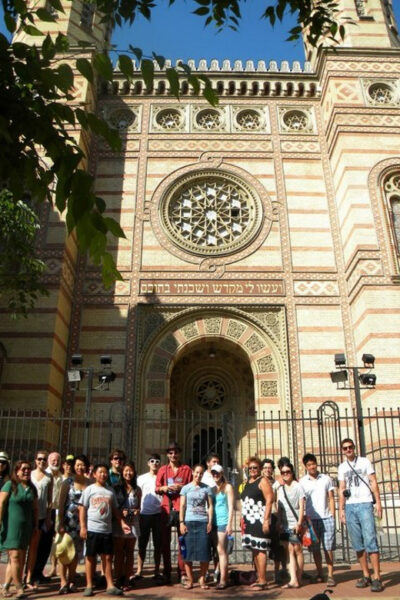
Past and Present of Budapest Jewish District Tour
Read our review →
Budapest Dohany Synagogue & Hungarian Jewish Museum & free extras
Read our review →
Jewish History Guided Walking Tour with Historian
Read our review →Browse the lists this tour appears in