
Reviewed · BUDAPEST
Pest side stories with a Historian
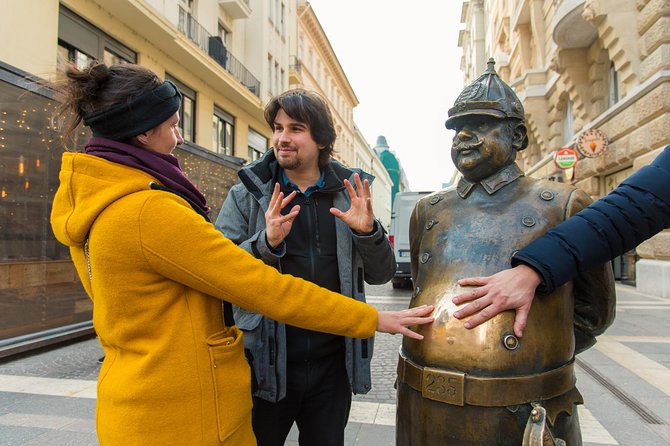
Pest reveals itself best on foot, where grand avenues, old markets, political scars, and everyday city life sit close together. This three-hour tour links Heroes’ Square, Vajdahunyad Castle, and St. Stephen’s Basilica with the stories that explain why Budapest looks the way it does.
I like the small maximum of 10 people, which gives you a fair chance to hear the guide and ask questions. I also like the practical inclusions: refreshments and metro tickets are covered, so the tour can move across Pest without turning into a lesson in Budapest transit.
The trade-off is simple: you will walk a lot. The route covers a large part of central Pest, and the pace is described as easy, but a hot afternoon can make three hours feel longer. Comfortable shoes, water, and a little stamina matter.
Key points to know before booking
- A history-first walk: The tour uses Budapest’s streets, statues, churches, and public squares to explain more than 1,100 years of Hungarian history.
- Small groups capped at 10: This is a quieter alternative to a large bus tour, with a better chance to speak directly with your guide.
- Several major sights in one afternoon: You visit Elizabeth Square, St. Stephen’s Basilica, Heroes’ Square, Vajdahunyad Castle, Andrassy Avenue, Vorosmarty Square, and the Millennium Underground.
- A good mix of famous and less obvious places: Heroes’ Square and Andrassy Avenue are essential Budapest sights, while Vajdahunyad Castle offers a more unusual story.
- Metro tickets and refreshments included: The underground ride is part of the experience, not an extra cost.
- Best for walkers who want context: The value comes from connecting the sights, rather than simply stopping for photographs.
Why this Pest walk works
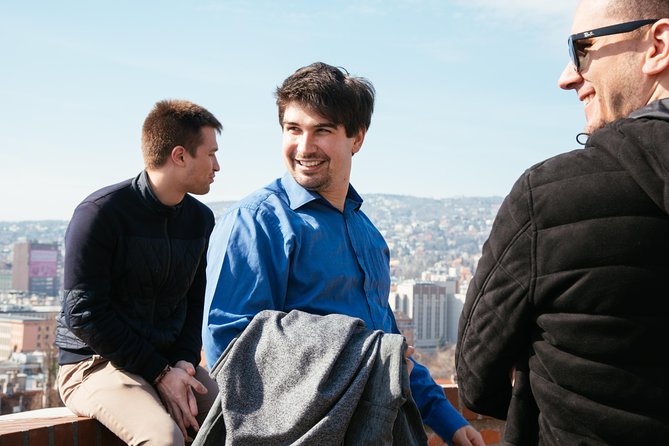
Budapest is often treated as a city of two halves: hilly Buda on one side of the Danube and flatter Pest on the other. This tour stays on the Pest side and shows how much variety fits into that half of the city.
You begin near Kempinski Hotel Corvinus Budapest at Elizabeth Square, then cover central squares, a major basilica, the ceremonial Andrassy Avenue, Heroes’ Square, the City Park area, and the Millennium Underground. The route is not just a greatest-hits checklist. It moves between royal-looking architecture, commercial streets, political memory, and modern city life.
That matters because Budapest’s story is not confined to a museum. It is visible in statues, building facades, public spaces, and even the way a former square has changed use over time. Guides named in the experience include Andrew, Greg, and Steven, also called Stephen. Your actual guide may be someone else from the Budapest Explorers team, but the format is built around a historian rather than a driver reading facts from a bus.
The small group makes a real difference. With no more than 10 people, you can usually stay close enough to follow the explanation and ask about details that catch your eye. It also keeps the walk more personal than a large group moving behind a raised umbrella.
Other Budapest days people book alongside this one:
- Budapest: City Highlights Cruise with Welcome Drink
★ 4.6 · 35,610 reviews - Budapest: Unlimited Prosecco, Beer and Aperol Spritz Cruise
★ 4.8 · 25,310 reviews - Budapest: Széchenyi Spa Day Ticket with Optional Upgrades
★ 4.3 · 23,911 reviews
Elizabeth Square, from market ground to city hangout
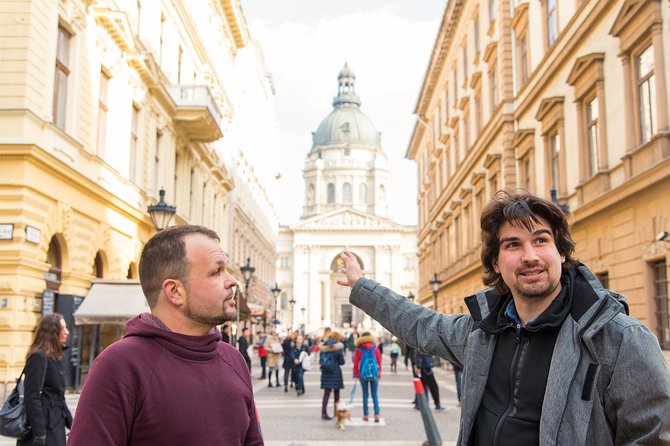
Elizabeth Square, or Erzsebet ter, is a useful starting point because it shows Budapest changing in plain sight. The square has served as a market area, a Stalin-era public space, and a bus station. Today it is associated with younger city life, food, nightlife, and public art.
You get about 20 minutes here. That is enough for an introduction to the square’s changing role, along with its statues and other points of interest. I like this as a first stop because it avoids beginning with a dry list of dates. You start with a place that has been reshaped by politics, transport, commerce, and ordinary urban life.
The stop is free, and the location is central. If you arrive early, the meeting point at Kempinski Hotel Corvinus gives you a clear landmark near the square.
St. Stephen’s Basilica and the question of going inside
St. Stephen’s Basilica is one of Pest’s major landmarks and the largest church in Budapest. The tour allows time for about 20 minutes, and the group may enter if there is enough interest.
That wording is worth noting. Entry is not presented as a guaranteed interior visit, so you should treat the basilica as an exterior stop with a possible look inside, rather than booking specifically for a full church tour. The basilica’s broad square also gives the guide room to explain its place in the city without rushing you through a narrow doorway.
The tour is listed as ending at St. Stephen’s Basilica, although it may finish at another central Pest location near the starting point. This is convenient if you plan to continue sightseeing in the city center afterward.
Heroes’ Square and more than 1,100 years of Hungary
Heroes’ Square is the tour’s main history lesson. Its statues provide a visual route through more than 1,100 years of Hungarian history, making it an effective place to sort out names, rulers, national symbols, and the events that shaped the country.
You spend roughly 30 minutes here. That is a useful amount of time because the square can look straightforward at first glance: a wide open space, a tall central column, and monumental figures. The value comes from understanding who those figures are and why they were placed there.
This is also where a historian guide can earn the tour fee. Hungary’s past includes shifting borders, foreign rule, wars, and major political changes. A short explanation on location can help you make sense of later sights around Budapest. The goal is not to turn the afternoon into a university lecture. It is to give you a working map of the country’s past.
Expect an exposed public square with little shade. Since the start time is 2:00 pm, weather can affect your comfort, particularly in summer.
Same city, a completely different sort of day:
- Budapest: Nighttime or Daytime Sightseeing Cruise
★ 4.2 · 21,062 reviews - Budapest: 1-Hour Evening Sightseeing Cruise with Drink
★ 4.5 · 8,330 reviews - Budapest Danube Cruise and Dinner Options, Live Music and Dance
★ 4.5 · 7,428 reviews - Budapest: Historic Cruise with Welcome Drink
★ 4.7 · 6,512 reviews
Vajdahunyad Castle, a fake medieval castle with a real story
Vajdahunyad Castle is one of the more unusual stops. It looks medieval, but it was built in 1896. That contrast is exactly why it deserves time on the route.
You get about 30 minutes here, and the guide explains why the castle was created and how its design came together. The point is not simply that the building is photogenic. It reflects the way Budapest presented its national identity around the millennium celebrations of 1896.
This stop adds welcome variety. After the formal scale of Heroes’ Square, the castle’s towers and architectural references feel more playful. It is also described as less visited than some of the city’s headline sights, so it can give your afternoon a change of pace.
Do not expect a full castle museum visit from the tour description. The experience focuses on the site and its story. You will also be in the City Park area, where the route may feel more open and spread out than the compact central streets.
Andrassy Avenue, Budapest’s ceremonial spine
Andrassy Avenue is one of Budapest’s grandest streets and has been a UNESCO World Heritage Site since 2002. The tour allows about 30 minutes to discuss it.
The avenue matters because it ties together architecture, transport, civic pride, and city planning. It is not merely a pleasant street for a stroll. It was designed as a major urban axis, and its scale helps explain the ambitions of Budapest during a period of rapid growth.
This is a good section for looking up. Details in the buildings and the width of the avenue tell part of the story before the guide adds the political and cultural background. The walk also helps connect Heroes’ Square and the central districts, so you are not seeing isolated sights without a sense of how they fit together.
The practical drawback is distance. The tour covers a lot of ground, and Andrassy Avenue is one of the reasons why. You should be ready to walk steadily rather than expect a stop-and-start sightseeing outing.
The Millennium Underground beneath the city
The Millennium Underground is the oldest underground railway on the European continent. The tour includes about 30 minutes focused on this part of Budapest, with metro tickets provided.
That inclusion is valuable in two ways. First, you do not have to buy a separate ticket or work out the system during the tour. Second, you experience a piece of city history that is easy to overlook when you are above ground admiring buildings.
The underground also breaks up the walking. After several long stretches on foot, a short metro ride gives your legs a pause while adding another layer to the city’s development. Since the route crosses a broad section of Pest, using public transport helps the tour cover more without making every connection a long pavement walk.
This is one of the tour’s strongest details because it feels practical and historical at the same time.
Vorosmarty Square and the commercial heart of Pest
Vorosmarty Square is a central Pest landmark associated with commerce, high-end products, and the city center’s polished public face. You spend about 15 minutes here.
Compared with Heroes’ Square or the basilica, this may seem like a shorter, less monumental stop. That is part of its value. It shows you the commercial side of Pest, where shopping, cafés, central-city movement, and historic surroundings meet.
The square can help you orient yourself after the wider route. It is also a useful place to continue exploring on your own, since the tour may end nearby or at another central Pest location. The guide’s explanation gives the square more meaning than you would get by passing through it on a shopping walk.
The pace, group size, and physical demands
The advertised duration is about three hours, and the route covers a large area. Several sections involve substantial walking, although the pace is described as easy. One guide kept the pace manageable despite the distance, which is encouraging, but you should still plan for a serious afternoon on foot.
This tour suits you if you enjoy walking between sights and prefer explanations along the way. It is less suitable if you want a short orientation stroll, a seated bus tour, or long visits inside each attraction.
The maximum group size of 10 is one of the clearest advantages. A smaller group usually means fewer delays at crossings, better access to the guide, and a more relaxed chance to ask about Hungarian people and history. It also avoids the awkwardness of trying to hear a guide from the back of a large crowd.
Refreshments are included, though the exact type is not specified. Service animals are allowed, and the activity is near public transport. Most people can take part, but the long walking distance remains the main practical concern.
Is the $58.94 price good value?
At $58.94 per person, this is not the cheapest way to see Pest. You are paying for a three-hour guided experience rather than a simple walk through public spaces.
The value is strongest if you want a guide who can connect the sites. Elizabeth Square, Heroes’ Square, Andrassy Avenue, Vajdahunyad Castle, and the Millennium Underground each have a story, but without context they can feel like separate photo stops. Here, the price includes the guide, refreshments, and metro tickets, with a group capped at 10.
The tour also avoids the weaker parts of a large bus excursion. You walk into the city rather than viewing it through glass, and the route includes less obvious material such as the history of Vajdahunyad Castle and the changes to Elizabeth Square.
You should compare it with your own plans. If you already have a detailed Budapest history tour booked, the overlap may not justify the cost. If you are visiting for a short stay and want a structured introduction to Pest, the combination of famous sights, public transport, and a historian guide makes the fee easier to defend.
What kind of afternoon should you expect?
The start time is 2:00 pm, so this works well on a first full day when you want a guided orientation without giving up your morning. It can also fit after lunch, provided you allow enough time to reach the meeting point.
You will move between open squares, major streets, historic buildings, and the underground. Some stops receive 30 minutes, while others get 15 or 20. That tells you what kind of tour this is: broad coverage with useful explanations, not a long interior visit at one attraction.
Plan to wear shoes you can walk in for three hours. On a hot day, carry water even though refreshments are included, because the route includes exposed streets and large squares. The tour is offered in English.
Free cancellation is available if you cancel at least 24 hours before the 2:00 pm start time. Changes or cancellations inside that window are not accepted for a refund.
Should you book this Pest history tour?
I would book it if you want to understand Budapest while seeing a substantial portion of central Pest in one afternoon. The best reasons are the small group, the historian-led storytelling, the mix of major sights and less obvious places, and the included metro ride.
I would skip it if you dislike long walks, need guaranteed interior access to St. Stephen’s Basilica, or prefer to spend most of your time inside museums and churches. For an active visitor who wants the city explained in place, this is a well-planned introduction to Pest and a stronger choice than a large bus circuit.
FAQ
Where does the tour start?
It starts at Kempinski Hotel Corvinus Budapest, at Erzsébet tér 7-8, 1051 Budapest, Hungary.
What time does the tour begin?
The stated start time is 2:00 pm.
How long does the tour last?
The tour lasts approximately three hours.
Where does the tour end?
The listed end point is St. Stephen’s Basilica. It may also finish at another central Pest location close to the starting point.
How many people can join?
The group has a maximum of 10 participants.
Is the tour offered in English?
Yes. The tour is offered in English.
Are metro tickets included?
Yes. Metro tickets are provided as part of the experience.
Are refreshments included?
Yes. Refreshments are included, although the specific type is not stated.
Will the group enter St. Stephen’s Basilica?
The group may enter if there is interest. Interior entry is not presented as guaranteed.
Can I cancel for a full refund?
Yes, if you cancel at least 24 hours before the experience start time. Cancellations or changes made less than 24 hours in advance are not accepted for a refund.
Just added around Budapest
- Budapest: Danube River Views Bike Ride★ 4.8 · 23 reviews
- Budapest: City Bike Tour with Coffee Stop★ 5.0 · 37 reviews
- Budapest: Private Walking Tour with a Local Guide★ 3.6 · 6 reviews
- Budapest: Vacation Photographer to collect great memories★ 5.0 · 49 reviews
- Walk to recent and aged spiritual sanctuaries near Budapest★ 5.0 · 5 reviews
- From Budapest: Guided Tour of Eger with Wine Tasting★ 4.5 · 6 reviews
- True Crime Walking Tour in the Buda Castle district★ 5.0 · 26 reviews
- Audio visual multi-sensory chefs journey dinner experience★ 5.0 · 3 reviews