
Reviewed · BUDAPEST
Hungary today: a no-taboo conversation
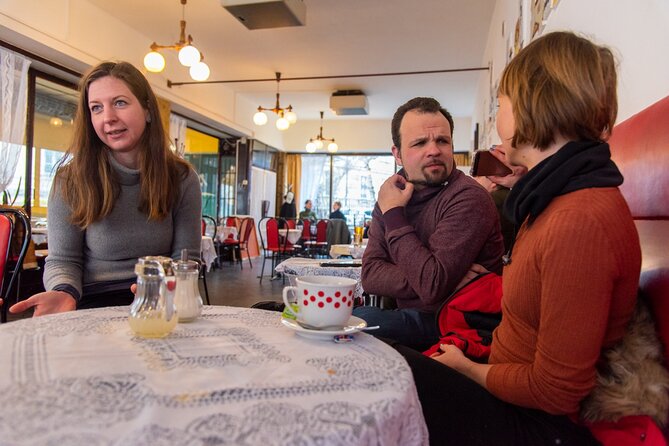
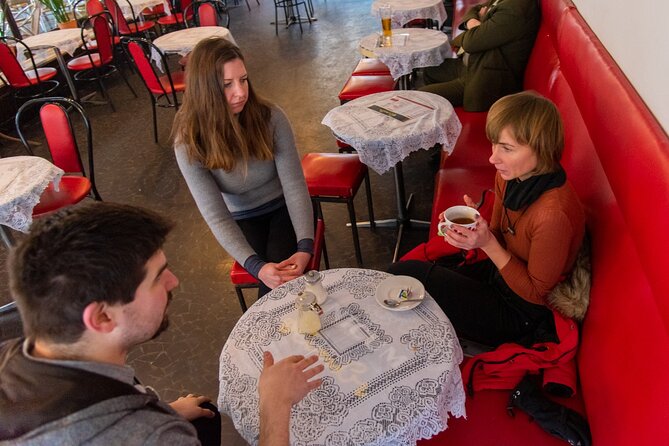
Hungary’s recent story is complicated, and this experience skips the usual postcard version. At Bambi Café, a Budapest institution little changed since the 1970s, you spend 90 minutes discussing the fall of Communism, the move to democracy, the rise of illiberal democracy, and the country’s current direction. I like the small maximum of six people and the promise of a frank, open conversation rather than a fixed speech.
I also like the flexible format. Daniel has been praised for being friendly and well informed, while Raymond and another host have also led thoughtful conversations. The main drawback is clear: this is not a sightseeing tour. You will remain at one café, and the value depends on your interest in politics, economics, and asking questions.
Key points to know before booking

- Bambi Café is part of the experience: You meet at a cult café that has changed very little since the 1970s.
- The focus is modern Hungary: Expect discussion of the past 30 years, especially the transition from Communism to democracy.
- The format is flexible: The host begins with an introduction, then gives you room to ask about politics, economics, society, and the future.
- The group is capped at six: That makes a real exchange more likely than a one-way lecture.
- Daniel and Raymond are named hosts: Daniel has received especially warm praise for his clear, friendly approach.
- The price buys conversation, not monuments: At $40.52 per person, you are paying for access to local perspective and an intimate setting.
Why this conversation fills a gap in Budapest
Most first visits to Budapest revolve around the Parliament, Buda Castle, thermal baths, the Danube, and grand cafés. Those sights matter, but they do not always explain how Hungary works today. This experience aims at the harder questions: What changed after Communism? How did democracy develop? Why is the phrase illiberal democracy used in Hungary? What might happen next?
I find that focus useful because Hungary can be easy to misread from the outside. Its buildings and public spaces tell one story. Its politics and economic choices tell another. A conversation gives you room to connect the two without rushing from one sight to the next.
The first part is designed as an introduction to Hungary’s modern era. The emphasis is on the last 30 years, with attention to historical, economic, and political issues. That gives you a basic framework before the discussion becomes more personal and open.
You are not simply handed a list of dates or party names. The format is meant to explain how the country moved from a Communist system toward democracy, then how its political life changed in more recent years. The hosts also invite questions about their own views, ideas for change, and Hungary’s uncertain future.
That last point is important. This is presented as a conversation, not a neutral audio guide. The hosts intend to give their opinions and answer honestly. If you want a carefully balanced lecture with every position treated at equal length, this may not be the right choice. If you want to hear how local hosts interpret the country they live in, the direct approach is the point.
Other Budapest days people book alongside this one:
- Budapest: City Highlights Cruise with Welcome Drink
★ 4.6 · 35,610 reviews - Budapest: Unlimited Prosecco, Beer and Aperol Spritz Cruise
★ 4.8 · 25,310 reviews - Budapest: Széchenyi Spa Day Ticket with Optional Upgrades
★ 4.3 · 23,911 reviews
Bambi Café, where the setting does some of the explaining
The meeting point is Bambi Café at Frankel Leó út 2-4 in Budapest’s District II. The café is described as a cult place that has changed little since the 1970s. That detail gives the meeting a useful sense of place before the discussion even begins.
A café with roots in the Communist era is more than a convenient table. It offers a physical reminder of the period being discussed. You are not sitting in a modern conference room or a hotel lounge. You are meeting in a place associated with an older Budapest, one that helps ground the conversation in everyday life.
The café is also the only stop, so you should set your expectations accordingly. There is no walking route through the city, no series of monuments, and no planned visit to a museum. You meet there at 2:00 pm and finish back at the same location after roughly an hour and a half.
For me, that simplicity is both a strength and a limitation. It keeps the experience focused and avoids wasting time on transfers. On the other hand, you will not see different parts of Budapest while you talk. Book it for the conversation and the setting, not for sightseeing.
The meeting point is near public transportation, and the activity ends where it starts. Confirmation is provided when you book, so you can plan around the 2:00 pm start without guessing about a later drop-off.
What happens during the 90-minute format
The experience has two broad parts. First comes an introduction to Hungary’s modern period, with the main attention placed on the past three decades. The host may cover political change, economics, and the transition from Communism to democracy.
The second part opens into a question-led discussion. You can ask about controversial politics, Hungary’s past, the country’s future, economic conditions, or the host’s personal opinions. You can also bring up subjects that do not fit neatly into a standard city tour.
That structure works well for different levels of preparation. If you arrive with a short list of questions, the format gives you a chance to use it. If you know little about modern Hungary, the opening section gives you a starting point before you speak up.
The experience does not require you to arrive with a perfect set of questions. The hosts can provide the opening context. Still, I would prepare two or three things you genuinely want to understand. Small groups are most useful when the people at the table help shape the discussion.
The maximum group size is six. That is a meaningful detail at $40.52 per person. In a large group, controversial subjects can become a lecture with a few questions at the end. With six people or fewer, you have a better chance of asking follow-up questions and steering the discussion toward topics that matter to you.
The trade-off is that the exact content can vary. One group may spend more time on politics. Another may ask about economics, personal life, or recent events. That flexibility is part of the appeal, but it also means you should not expect an identical script every day.
The hosts: Daniel, Raymond, and an open style
Daniel is one of the named hosts, and his approach has been described as friendly and informative. His conversations can continue well beyond the scheduled 90 minutes in spirit, since the format encourages questions rather than rushing through a checklist.
Raymond is also connected with Budapest Explorers and has responded warmly to participants after their conversations. Another host, a Hungarian woman, has been praised for combining strong knowledge of Hungary with a broad understanding of international affairs. Her name is not provided, so you should not assume which host will lead your session.
That uncertainty is worth noting. You may have a particular interest in meeting Daniel or Raymond, but the available information does not promise a specific host for every booking. What is consistent is the intended style: personal, candid, and willing to discuss difficult subjects.
The hosts’ own views are part of the product. You will not get a detached script that avoids every sensitive topic. The description makes clear that you can ask about controversial politics and personal opinions. That can make the exchange more revealing, but it also means you should listen critically and remember that one host’s perspective is not the whole country.
I see that as a healthy way to approach the experience. Ask for examples. Separate personal opinion from established fact. If a subject matters to you, ask how the host reached that view and whether other Hungarians see it differently. The small setting should make that kind of follow-up possible.
Same city, a completely different sort of day:
- Budapest: Nighttime or Daytime Sightseeing Cruise
★ 4.2 · 21,062 reviews - Budapest: 1-Hour Evening Sightseeing Cruise with Drink
★ 4.5 · 8,330 reviews - Budapest Danube Cruise and Dinner Options, Live Music and Dance
★ 4.5 · 7,428 reviews - Budapest: Historic Cruise with Welcome Drink
★ 4.7 · 6,512 reviews
How much value do you get for $40.52?
At $40.52 per person, this costs more than buying a coffee and reading about Hungary on your own. You are paying for time, preparation, a local voice, and the chance to ask questions in a group capped at six.
The value depends heavily on your interests. If you want a conventional tour that takes you to major sights, the price will feel high because the experience remains in one café. If you already know Budapest’s main attractions and want help making sense of present-day Hungary, the cost is easier to justify.
A 90-minute private-style discussion can also save you time. Books and articles may give you background, but they cannot answer your specific questions in the moment. You can ask how the transition from Communism affected ordinary life, how economic issues connect to politics, or how the host views Hungary’s future.
The small group improves the calculation. You are not paying for a crowd experience where your questions disappear. Even if the group is full, six people allows more direct contact with the host than a standard city excursion.
Still, the value is not guaranteed by the subject alone. You should be comfortable with discussion rather than entertainment. There is no promise of food, a café credit, transport, or entry to another attraction. The free admission at Bambi Café means the fee is for the hosted conversation itself.
Who will get the most from this experience?
I would recommend it most strongly to someone who has already seen some of Budapest or has a basic interest in modern Hungarian history. The discussion will have more impact if you know a little about the city and want to understand what lies behind the public image.
It also suits people who prefer questions to checklists. You can ask about topics that standard tours often avoid, including controversial politics, the uncertain future, economic concerns, and the hosts’ own ideas for change.
It may be a good fit for students, politically curious visitors, journalists, teachers, or anyone trying to place Hungary’s present situation in a wider European context. You do not need to share the host’s opinions. In fact, an open mind and a willingness to ask polite follow-up questions may matter more than agreement.
I would be less likely to recommend it to young children or to someone who wants a light, purely entertaining afternoon. The material can be serious, and the experience depends on discussion. It is also not ideal for anyone who measures a tour by the number of sights visited.
If you are visiting Budapest for only one day and have not yet seen the city’s major landmarks, I would put those first. If you have several days, this can add context that a monument-by-monument schedule will not provide.
Practical details that affect your choice
The experience begins at 2:00 pm and lasts about 90 minutes. That makes it easy to place between morning sightseeing and an evening meal, though the exact rhythm of your day will depend on how long it takes you to reach District II.
You meet and finish at Bambi Café, at Frankel Leó út 2-4, 1027 Budapest. The location is near public transportation. Since the activity does not include a route through the city, allow time to reach the café before the start rather than expecting to join from a central monument.
A mobile ticket is provided, and confirmation arrives at booking. Service animals are allowed, and most people can participate. The group has a maximum of six people, which is one of the most important practical details to check when deciding if the price suits you.
Cancellation is free up to 24 hours before the local start time. Canceling or changing the booking less than 24 hours before the experience does not qualify for a refund, so keep that deadline in mind when planning a tightly scheduled Budapest stay.
Questions worth bringing to the table
You can make the conversation better by arriving with focused questions instead of trying to cover all of Hungary in 90 minutes. Ask what changed most after the end of Communism. Ask which economic issues affect daily life. Ask how the host understands the term illiberal democracy and how it differs from the country’s earlier democratic period.
You might also ask about the gap between Hungary’s public image and local experience. Ask what outsiders misunderstand. Ask what the host would change. Ask how personal views differ within Hungary, rather than assuming one answer represents everyone.
The point is not to win an argument. A respectful question can reveal more than a prepared speech. Since the format is built around honesty and personal opinion, the best use of your time is to listen closely and then ask for clarification.
Should you book Hungary Today: A No-Taboo Conversation?
Book it if you want a candid, small-group discussion about modern Hungary and are willing to trade sightseeing for context. The strongest reasons are the six-person limit, the flexible question period, the distinctive Bambi Café setting, and the chance to speak with hosts such as Daniel or Raymond.
Skip it if you want a walking tour, monuments, food, or a tightly scripted lesson. The $40.52 price is fair only if you value direct conversation and local interpretation. For the right audience, this can become one of the more useful hours and a half in Budapest, especially if you want to understand the country beyond its beautiful streets and famous buildings.
FAQ
Where does the experience begin?
It begins at Bambi Café, Budapest, Frankel Leó út 2-4, 1027 Hungary.
What time does it start?
The scheduled start time is 2:00 pm.
How long does the conversation last?
The experience lasts approximately 1 hour and 30 minutes.
How many people can join?
The maximum group size is six participants.
What subjects are discussed?
The conversation can cover Hungary’s transition from Communism to democracy, recent politics, economics, the idea of illiberal democracy, Hungary’s past and future, and the hosts’ personal opinions.
Can I cancel for a full refund?
Yes. You can cancel at least 24 hours before the local start time for a full refund. Cancellations or changes made less than 24 hours before the start time are not accepted for a refund.
Just added around Budapest
- Budapest: Private Walking Tour with a Local Guide★ 3.6 · 6 reviews
- Budapest: Danube River Views Bike Ride★ 4.8 · 23 reviews
- Budapest: City Bike Tour with Coffee Stop★ 5.0 · 37 reviews
- Budapest: Vacation Photographer to collect great memories★ 5.0 · 49 reviews
- Walk to recent and aged spiritual sanctuaries near Budapest★ 5.0 · 5 reviews
- From Budapest: Guided Tour of Eger with Wine Tasting★ 4.5 · 6 reviews
- Audio visual multi-sensory chefs journey dinner experience★ 5.0 · 3 reviews
- Budapest: 3-Hour Trabant Sightseeing Tour★ 4.7 · 28 reviews