
Reviewed · SZENTENDRE TOURS
Hungary: Szentendre Retro Design Center Entry Ticket
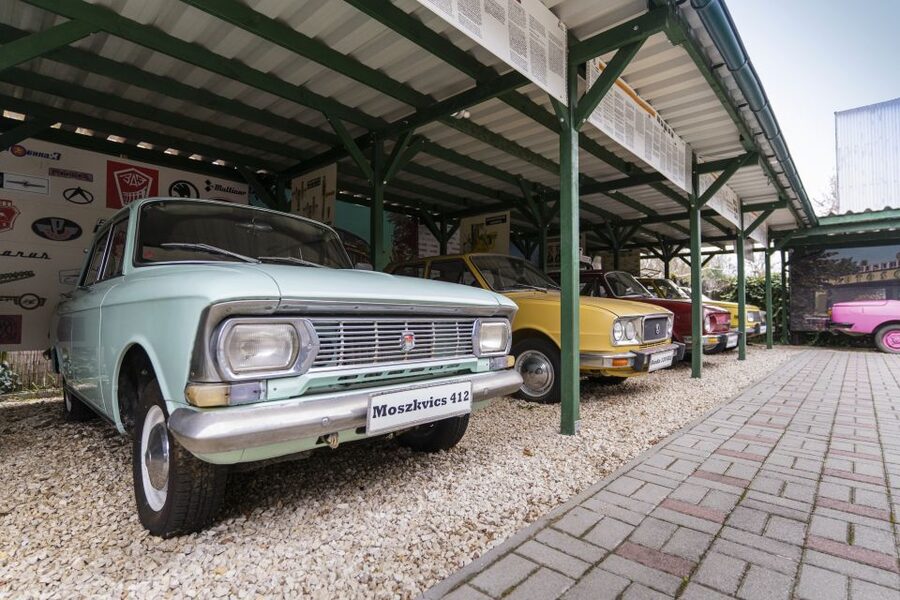
Szentendre’s Retro Design Center is a compact time capsule, packed with 30 vintage cars, a pink Cabriolet Wartburg, a Trabant, and the famous Hungarian Ikarus bus. A friendly hippie girl greets you at the door, setting the playful tone before you enter a 1970s Eastern European world of radios, LPs, toys, kitchen gear, and old television commercials.
I like the chance to climb into several vehicles for photos, and I like the furnished apartment because it turns a car collection into a picture of daily life. The main drawback is location: Szentendre is outside Budapest, so this one-hour museum works best as part of a day in town, not as a quick stop from central Budapest.
Key details at a glance
- Thirty period vehicles: See Trabant, Moskvitch, Zhighuli, Barkas Furgon, and the much-loved Ikarus bus.
- Photo-friendly displays: Sit in a pink Cabriolet Wartburg, Trabant, and other vehicles.
- A full 1970s setting: Walk through a furnished living room and kitchen, not just a garage.
- Eastern Bloc everyday life: Browse toys, televisions, radios, appliances, LP records, and a Polish Market diorama.
- Short but busy visit: Allow about one hour, or up to 90 minutes if you read the text and take lots of photos.
- Easy value at $11: Admission is modest, especially for families, car fans, and anyone interested in life behind the Iron Curtain.
Entering a 1970s Eastern European time capsule
The first impression is not polished or solemn. It is cheerful, colorful, and a little odd in the best way. A hippie girl welcomes you, and the exhibits quickly move you into the visual world of the 1970s.
That welcome matters because the museum is designed for curiosity and recognition. You are not simply looking at cars behind barriers. You are encouraged to inspect the objects closely, sit in selected vehicles, and take pictures. The result feels more like a hands-on collection than a formal national museum.
You will see almost 1,000 square meters of exhibits. That is enough room for a varied visit, but not so much that you need half a day. If you move quickly, one hour is enough. If you stop to read the signs and examine the smaller displays, plan closer to an hour and a half.
The written information is available in English, German, and Russian, which makes the visit easier for international visitors. An English-speaking host or greeter is listed for the experience, but you should pay attention to the timing of any guided tour. One important practical point is that the museum may stay open later while the guided tour runs only in the morning, so check the available time before booking if a guided explanation is important to you.
More tours around the old town of Szentendre:
- From Budapest: Danube Bend & Szentendre Tour with Lunch
★ 4.1 · 824 reviews - From Budapest: Szentendre Half-Day Tour
★ 4.2 · 338 reviews - Szentendre Daytrip (Artists’ Village) small group
★ 4.5 · 151 reviews
The cars that make the visit worthwhile
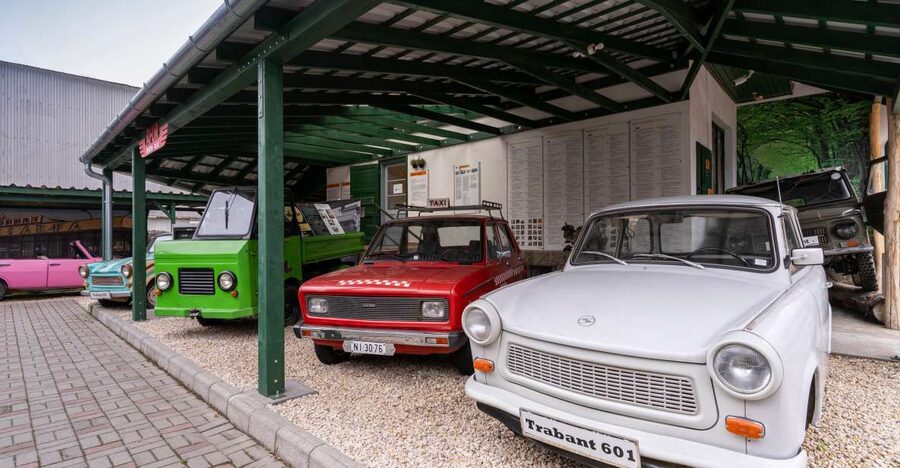
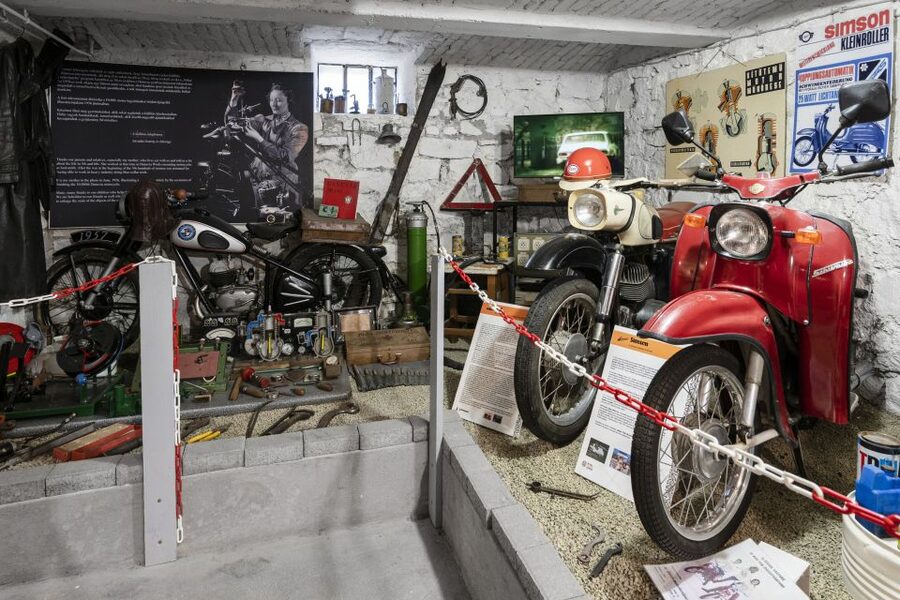
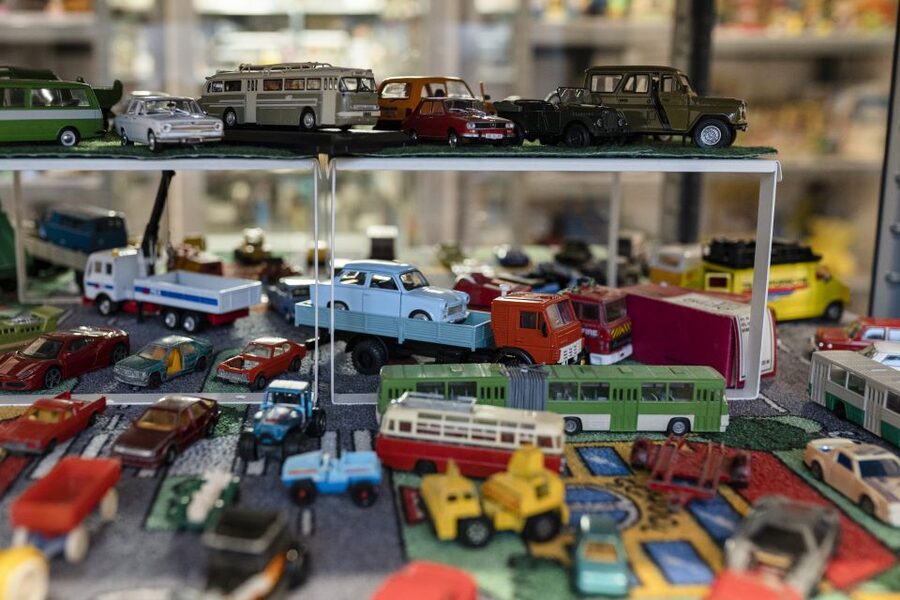
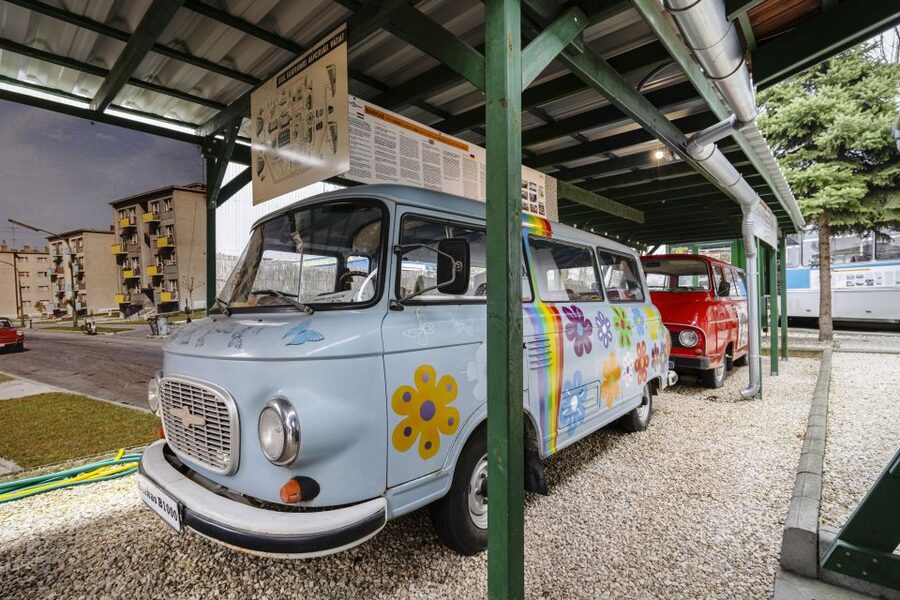
The vehicle collection is the museum’s main pull. You will see about 30 cars and vans connected with everyday motoring in Eastern Europe, including Trabants, Moskvitches, Zhighulis, and a Barkas Furgon van.
These are not just generic old cars. Each one helps explain the visual character of the period. The boxy shapes, simple interiors, and familiar colors recall an era when car ownership was less about choice and more about making do with what was available.
The pink Cabriolet Wartburg is especially good for photographs. It adds a splash of fun to a collection otherwise filled with practical sedans and utility vehicles. The Trabant gives you a close look at one of the best-known cars associated with East Germany, while the Moskvitch and Zhighuli broaden the picture beyond Hungary.
The Barkas Furgon van adds another useful detail. It shows that the collection is not limited to private cars. Commercial and utility vehicles also shaped daily life, work, holidays, and family outings.
The Ikarus bus is one of the largest and most memorable displays. Ikarus buses were a familiar part of public transport across Hungary and other parts of Eastern Europe, so this vehicle gives the collection a strong local connection. You can appreciate its scale in a way that is difficult when seeing a bus only from the street.
For car enthusiasts, the variety is the main value. For everyone else, the vehicles offer an easy way into the subject. You do not need to know the difference between every model. The shapes, colors, and interiors tell enough of the story on their own.
The Polish Market diorama and camping scene
The smaller scenes help prevent the museum from becoming only a parade of cars. Look for the Polish Market diorama, which gives you a miniature view of trade and shopping in the period.
A diorama can make a broad subject easier to understand. Instead of reading a general statement about consumer life, you see a carefully arranged scene that suggests how goods, shoppers, and public spaces looked. It is a small display, but it adds social context to the vehicles.
The camping scene works in a similar way. It connects the cars to leisure and travel. A vehicle was not only a means of getting to work or moving goods. It could also carry a family toward a campsite or a short holiday, even when travel required more planning than it does today.
These scenes are worth slowing down for because they show how objects fit together. A car, a tent, a market, and a radio become part of the same everyday world. That is more useful than seeing each item as a separate antique.
Inside the apartment, kitchen, and living room
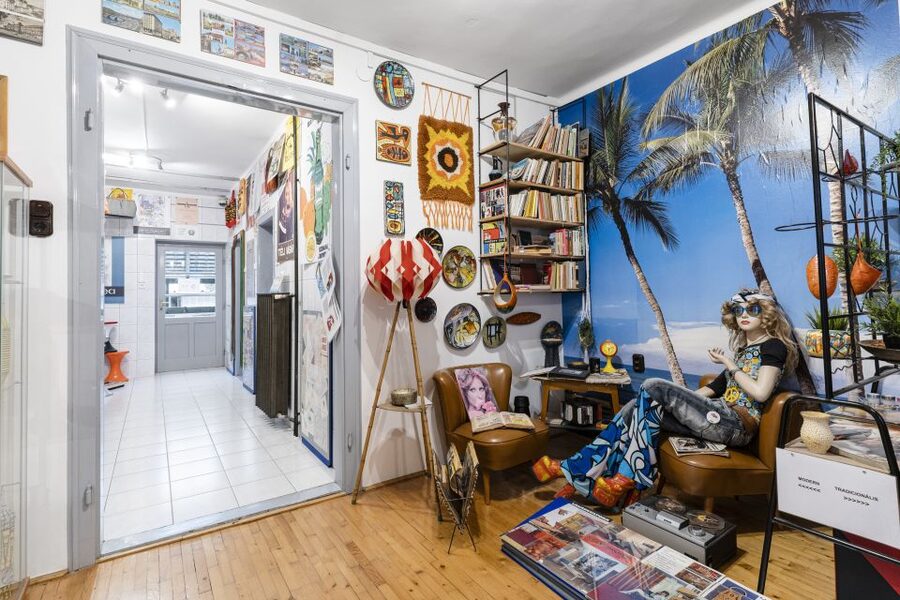
The furnished apartment is among the most effective parts of the visit. You will see a living room and kitchen arranged in a 1970s style, surrounded by the household objects that made the period recognizable.
This is where the museum shifts from public life to private life. The cars tell you how people moved around. The apartment suggests how they spent time at home.
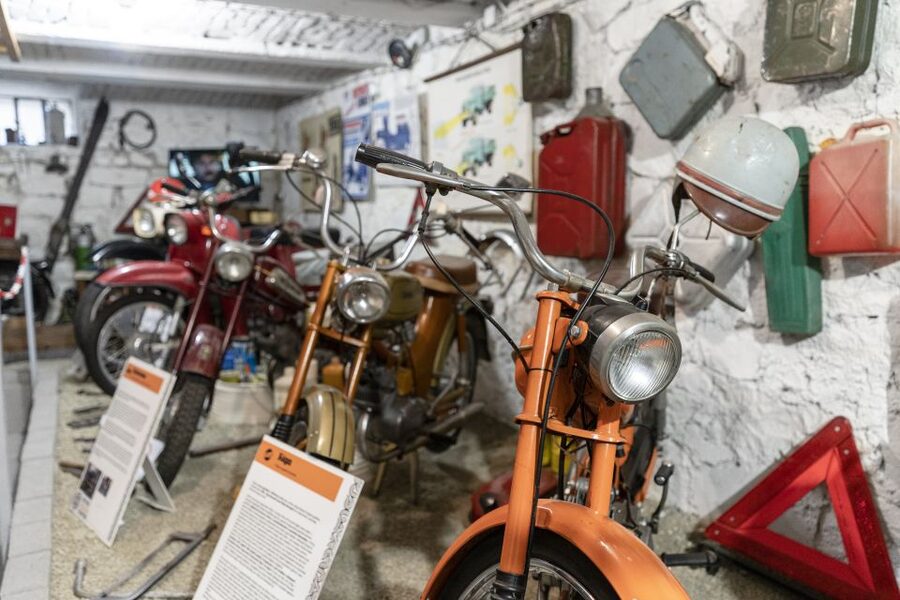
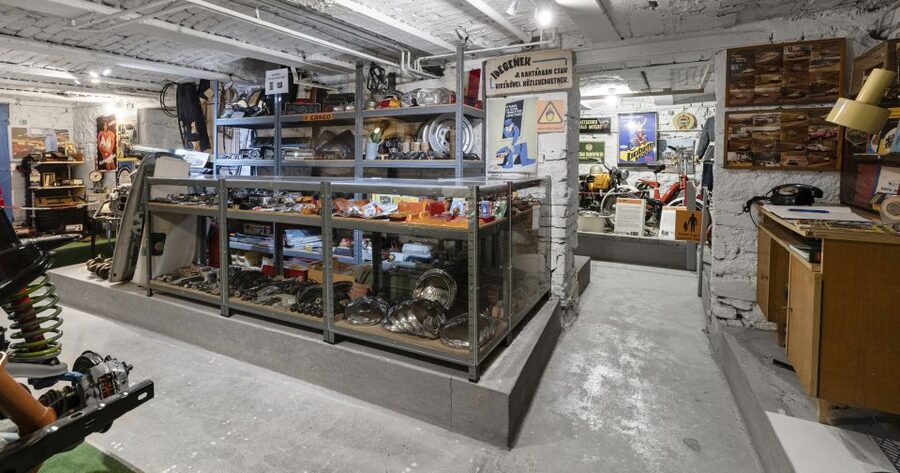
Look closely at the television sets, radios, appliances, and other domestic equipment. Some pieces may trigger memories for people who grew up in the 1970s or 1980s. For younger visitors, the displays provide a direct look at technology before flat screens, smartphones, and compact digital appliances changed the look of a home.
One particularly entertaining detail is the television advertising. The screens show period commercials, adding movement and sound to what could otherwise be a still display. This was one of the most unexpected pleasures of the museum for me because it makes the apartment feel active rather than staged.
The walls covered with 1970s LP records add another layer. Music is often the quickest route into a past decade, and the record display helps set the mood even if you do not recognize every album.
The apartment also gives parents and children an easy way to compare household life across generations. You can point out the old televisions, radios, and kitchen appliances without needing a long lecture. The objects do the explaining.
A handful more Szentendre trips to weigh up
- Budapest: Széchenyi Spa Day Ticket with Optional Upgrades
★ 4.3 · 23,911 reviews - Budapest: Parliament Building Entry Ticket and Audio Guide
★ 4.5 · 3,844 reviews - Budapest: Full-Day Gellért Spa Ticket
★ 4.2 · 3,340 reviews - Budapest: Cinema Mystica Entry Ticket
★ 4.3 · 3,103 reviews
Toys, radios, and the details worth your time
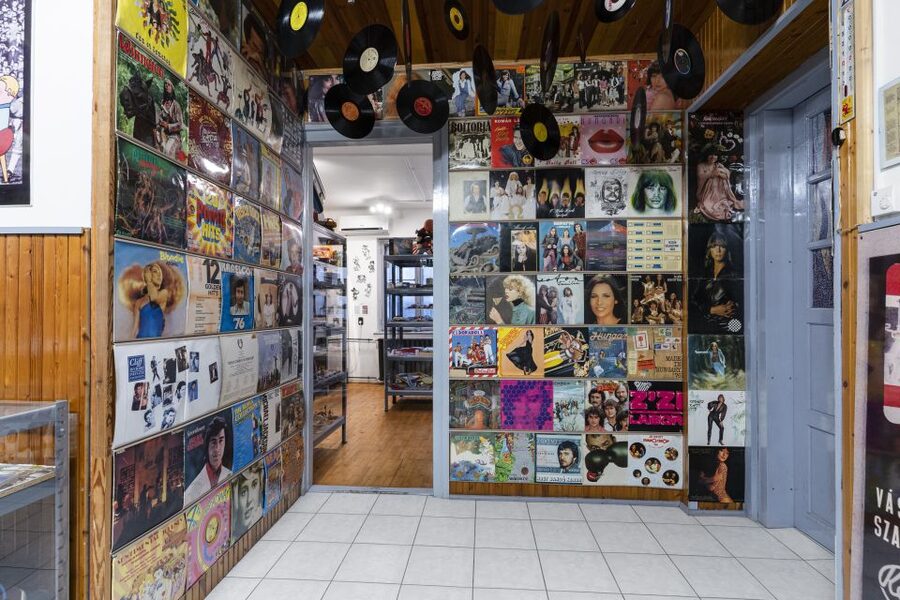
Do not rush past the smaller collections. The retro toys are a key part of the experience, especially for anyone interested in childhood in Eastern Europe.
The toy display has a different emotional effect from the car collection. Cars tend to attract attention through size and design. Toys connect with memory. You might recognize a shape, game, or character from your own childhood, or you might notice how different children’s entertainment looked before modern electronic devices.
The household appliances and radios are also useful because they show the practical side of the decade. They are not glamorous items, but they explain what people saw and used every day.
I recommend taking a slow second look at the walls and shelves after you have seen the major vehicles. The museum rewards small discoveries. A first pass gives you the big attractions. A second pass lets you notice the advertising, labels, toys, and domestic objects that create the period atmosphere.
The English text is helpful here. You can read at your own pace rather than depending entirely on a guide. German and Russian are also available, making the museum practical for a broad range of visitors.
How long the visit takes
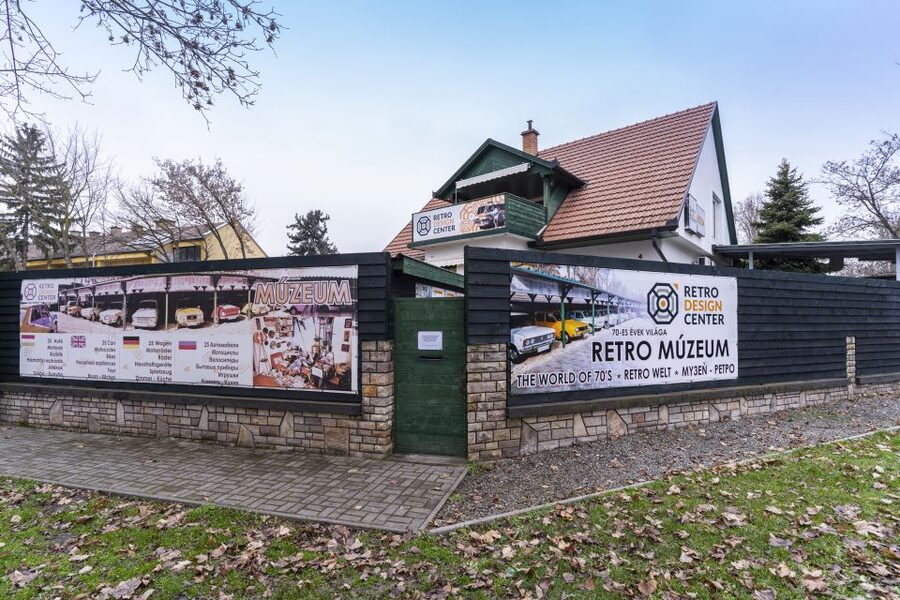
The advertised duration is one hour, and that is realistic for a focused visit. You can see the major cars, the Ikarus bus, the apartment, the toys, and the dioramas in that time.
If you enjoy taking photographs, sitting in the vehicles, or reading every text panel, allow 60 to 90 minutes. The museum is small enough to fit into a larger day without exhausting you.
The short length is a benefit if you are visiting Szentendre with several other plans. You can have lunch, walk through town, and add this museum without giving up an entire afternoon.
It is less suitable if you want a long, guided history lesson. The experience is built around objects and written information. If a guided tour is offered at your chosen time, it may add more context, but morning availability is an important detail to check.
Why Szentendre changes the value of the ticket
The admission costs about $11 per person. On its own, that is fair for a one-hour museum with 30 vehicles and a large collection of domestic objects.
The stronger value comes from pairing the visit with time in Szentendre. The town is outside Budapest and works better as a day trip than as a quick detour. If you are already planning to visit Szentendre, the museum gives you a focused indoor activity with a clear theme.
If you travel from central Budapest only for this museum, the transport time becomes a bigger part of the cost. One visitor specifically found the location farther from Budapest than expected and stressed that it is in a smaller town outside the capital. That is not a reason to skip it, but you should plan the day around the distance.
Szentendre itself adds appeal as a change from Budapest. The museum can serve as a short historical stop during a broader outing, particularly if you want something different from churches, galleries, and streets lined with shops.
Parking is not included, so drivers should account for that separately. The ticket covers admission only.
Who will enjoy the Retro Design Center most
I would recommend this museum to several kinds of visitors:
- People who lived through the 1970s or 1980s: The toys, television adverts, LPs, and appliances may bring back strong memories.
- Car fans: The Trabant, Moskvitch, Zhighuli, Wartburg, Barkas, and Ikarus provide plenty to inspect.
- History-minded visitors: The objects offer a practical look at everyday life in Eastern Europe.
- Families: The vehicles and hands-on photo opportunities give children something to do while adults read the displays.
- Photographers: The pink Cabriolet Wartburg, Ikarus bus, apartment, and colorful period objects create varied pictures.
- Szentendre day trippers: The museum fits neatly into a longer visit to the town.
I would be less likely to recommend it to someone who wants a large art museum, a long formal tour, or a detailed political history of communism. The center gives useful context, but its strength is everyday objects, atmosphere, and visual memory.
Practical planning advice before you go
Check the tour timing carefully. The museum can be open beyond the time of the guided tour, and the guided option may be limited to the morning. If you arrive later, you may have the written English information rather than a guided explanation.
Plan the museum as part of a Szentendre day rather than squeezing it between Budapest attractions. The distance from Budapest is the main planning issue, not the museum itself.
Give yourself enough time for photos. The chance to sit in selected cars is one of the more distinctive parts of the visit, and rushing through will reduce the value of the admission.
If you are visiting with someone who remembers the period, allow time for stories. A radio, toy, or kitchen appliance may prompt more conversation than the larger exhibits. That personal connection is part of what makes the museum feel warm rather than purely technical.
The experience is listed with free cancellation up to 24 hours before the visit, and you can reserve while paying later. Those policies are useful if your Budapest plans depend on weather, transport, or a changing day-trip schedule.
Should you book the Retro Design Center?
Book it if you want a short, affordable, highly visual museum and already plan to visit Szentendre. The vehicle collection is the main draw, but the apartment, television adverts, toys, Polish Market diorama, and LP-covered walls give the visit more depth.
Skip it if you have no interest in cars, household objects, or 1970s life, or if your Budapest schedule leaves no room for the trip outside the city. The museum itself is compact, and the journey matters.
For the right visitor, $11 buys a cheerful and unusual hour. You get a close look at Eastern European design, transport, and home life, with plenty of opportunities to take photos and compare one generation’s everyday world with your own.
FAQ
Where is the Retro Design Center located?
It is in Szentendre, in Central Hungary, outside Budapest. It is best treated as part of a day trip to Szentendre.
How long does the visit take?
The stated duration is one hour. If you read the display text and take photographs, you might spend up to 90 minutes.
How much does admission cost?
The listed price is $11 per person.
What vehicles can I see inside?
The collection includes about 30 vintage vehicles, including Trabants, Moskvitches, Zhighulis, a Barkas Furgon van, and an Ikarus bus.
Can I sit inside the cars?
You can sit in selected vehicles, including a pink Cabriolet Wartburg and a Trabant, and take photographs.
Is there an Ikarus bus on display?
Yes. A well-known Hungarian Ikarus bus is part of the collection.
What languages are used in the museum?
The written text is available in English, German, and Russian. The listed host or greeter language is English.
Is parking included in the ticket?
No. Parking is not included.
Can I cancel the booking?
Yes. You can cancel up to 24 hours in advance for a full refund. A reserve-now-and-pay-later option is also available.
Just added around Szentendre
- SzentEndre-SaintAndrew City Privately Shopping and Picturesque★ 4.5 · 3 reviews
- Budapest to Szentendre bike & boat tour★ 5.0 · 25 reviews
- Private Danube Bend Visegrad and Szentendre Tour With Transport★ 5.0 · 3 reviews
- Private day trip: Budapest to Szentendre, Visegrad and Esztergom★ 5.0 · 6 reviews
- Private Szentendre & Visegrád tour★ 4.5 · 8 reviews
- Szentendre: Self-guided Bicycle Tour with optional boat transfer★ 5.0 · 6 reviews
- PRIVATE (7 hours) Budapest and Szentendre city tour with lunch and winetasting★ 5.0 · 4 reviews
- Luxurious, private day cruise with a waterlimousine to Szentendre★ 4.0 · 10 reviews
Szentendre Tours, compared.

Szentendre Daytrip (Artists’ Village) small group
Read our review →
Private Guided Tour to Szentendre & Visegrád Castle (Danube Bend)
Read our review →
Szentendre the Artists Village Half-Day Tour from Budapest
Read our review →

Szentendre and Visegrad Private Danube bend Tour With Wine Tasting and Lunch
Read our review →
Szentendre, Visegrád & Esztergom Private Danube Bend Tour
Read our review →Browse the lists this tour appears in