
Reviewed · BUDA CASTLE DISTRICT TOURS
Budapest: The WWII Siege of Buda Castle & Bomb Shelter Tour
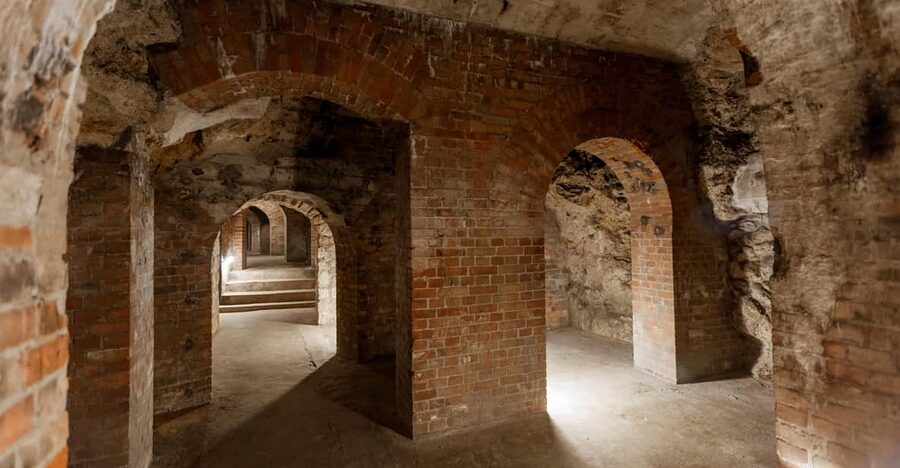
The most powerful part of this Buda Castle tour is not the grand palace above you. It is the underground world below it, where civilians, wounded soldiers, and German and Hungarian troops spent 52 days during the Siege of Budapest. In the cave and cellar, cold, hunger, darkness, disease, and overcrowding stop feeling like distant wartime facts.
I like the way the tour joins survivor accounts with physical places, and I like that it does not stay underground for the whole 90 minutes. Above ground, your guide points out traces such as bullet holes, hidden doorways, and ventilation shafts. The main drawback is the footing: steep stairs, narrow corridors, cobbled streets, and sometimes wet surfaces make this a poor choice if you have mobility problems or dislike enclosed spaces.
Key points to know before you book
- A 52-day siege brought tens of thousands into Buda Castle’s shelters, including civilians, wounded people, and soldiers.
- The Buda Castle Cave includes an authentic WWII bomb shelter, not just a museum display.
- Guides such as Rita, Jonas, Kopp, and Balazs bring strong historical detail, with some guides adding context before and after the war.
- The tour mixes Castle Hill streets with roughly 35 minutes in the cave system, so you get both city views and underground history.
- Personal headphones may be provided, helping you follow the guide in a small group or busy surroundings.
- The cellar and cave stay around 12°C, or 54°F, all year, so layers and solid walking shoes matter.
Why the Siege of Budapest feels different underground
Budapest’s siege began on Christmas Eve in 1944, when the Soviet Red Army encircled the German-occupied capital. The fighting lasted 52 days. Buda Castle became one of the main places of refuge, with civilians sheltering alongside soldiers and the wounded.
The scale of the suffering is hard to grasp from a city street. Underground, the details become more direct. People had little water and food. They endured cold, darkness, illness, and packed conditions while trying to protect family members, belongings, and objects connected with the Royal Palace.
I value this tour because it keeps the story human. It does not treat the siege as a list of dates and military movements. Diaries and memoirs help explain what it felt like to wait in the dark, listen to fighting above, and wonder if food, medicine, or help would arrive.
Your guide also places the siege in the wider story of Budapest before and after WWII. That extra context matters. It helps explain why the Castle district was so important and why the battle is often compared with Stalingrad, another brutal encirclement battle.
This is serious material. You should expect stories of death, fear, hunger, and disease, not a light sightseeing walk. One person found the subject emotionally difficult but still worthwhile. That is a fair warning, especially if you are visiting with older teenagers.
More ways up to the Castle District in Budapest:
- Budapest: Buda Castle Cave Tour
★ 4.7 · 5,677 reviews - Budapest: Buda Castle District Vampires and Myths Night Tour
★ 4.6 · 3,830 reviews - Budapest: Buda Castle Walk with Saint Stephen’s Hall
★ 4.5 · 3,012 reviews
Meeting at Dísz Square and starting through Castle Hill
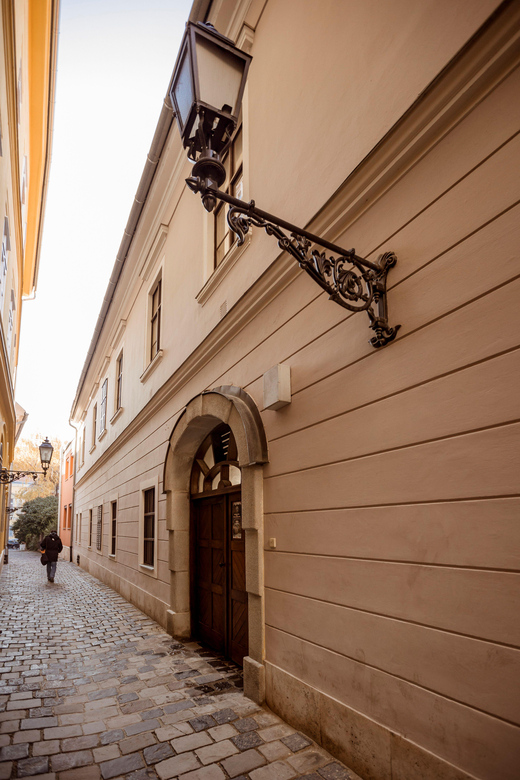
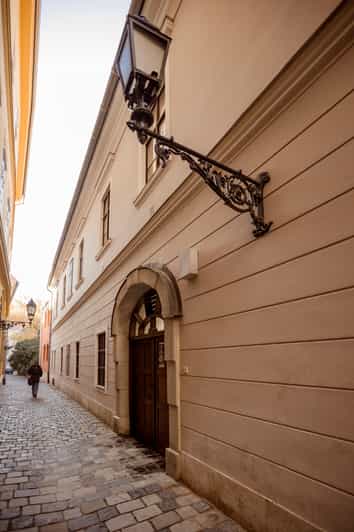
The tour begins at De la Motte B. Palace, also called Beer-palota, at Dísz tér 15. Look for the large green gate beside the Posta building and a staff member carrying a turquoise Buda Castle Walks umbrella.
This meeting point can be harder to spot when construction affects the square, so arrive early. The tour starts promptly and cannot wait for late arrivals. I would allow extra time to find the green gate, particularly if you are arriving directly from another part of Budapest.
The first part leads through the Palace District and along Úri Street. This is more than a walk to fill time. The streets and buildings provide the setting for the siege, while the guide explains how the residential quarter and royal complex were used during the fighting.
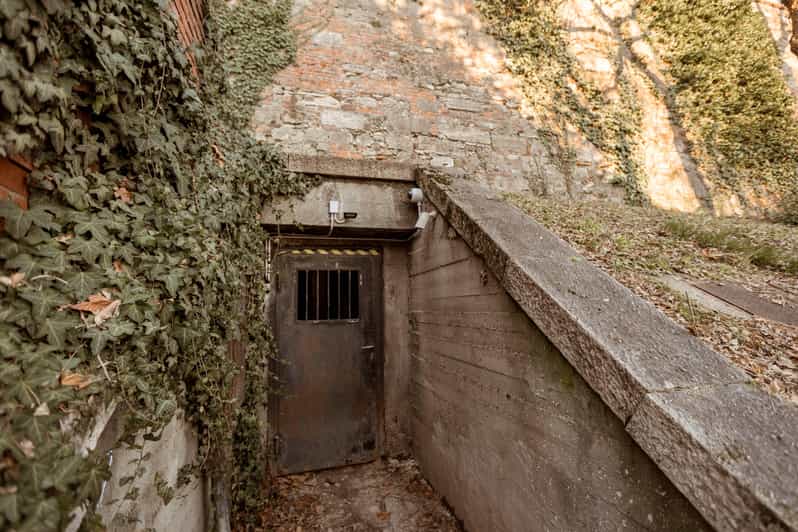
The outdoor section also gives you a chance to see traces that are easy to miss on your own. Guides have pointed out bullet holes, concealed doors, and ventilation shafts rising from the underground shelters. These small details help connect the polished Castle district you see today with the damaged wartime city beneath it.
The streets are cobbled, and the route includes walking between outdoor stops. Comfortable shoes are essential. The tour is held in rain and other weather, so bring a coat or rain layer rather than assuming the underground portion will protect you from the elements.
Entering the Buda Castle Cave and old cellar
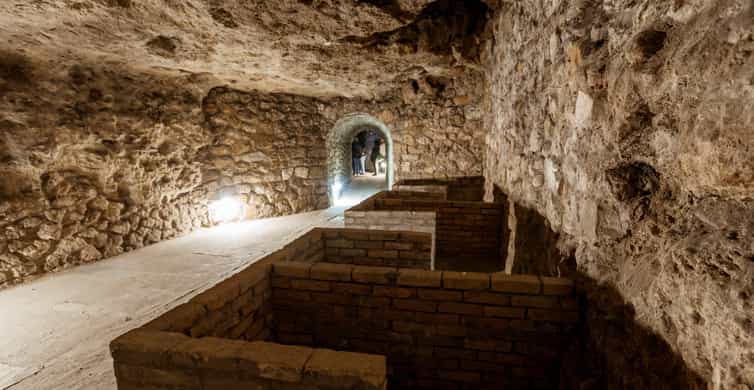
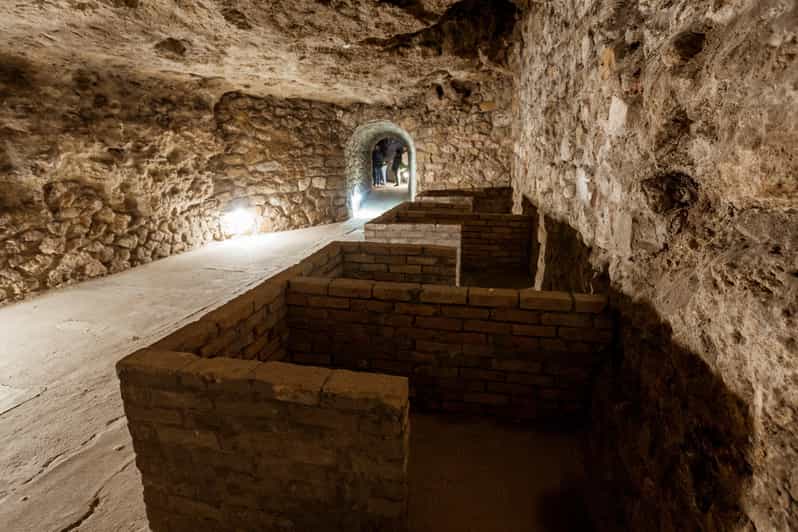
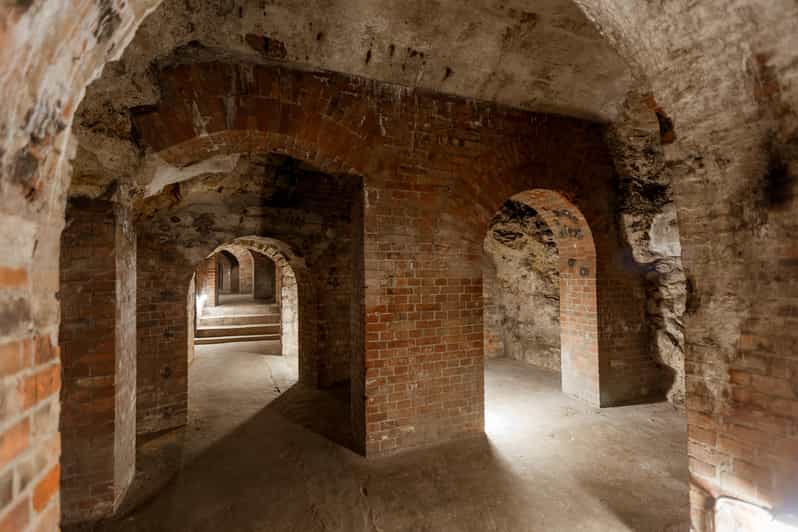
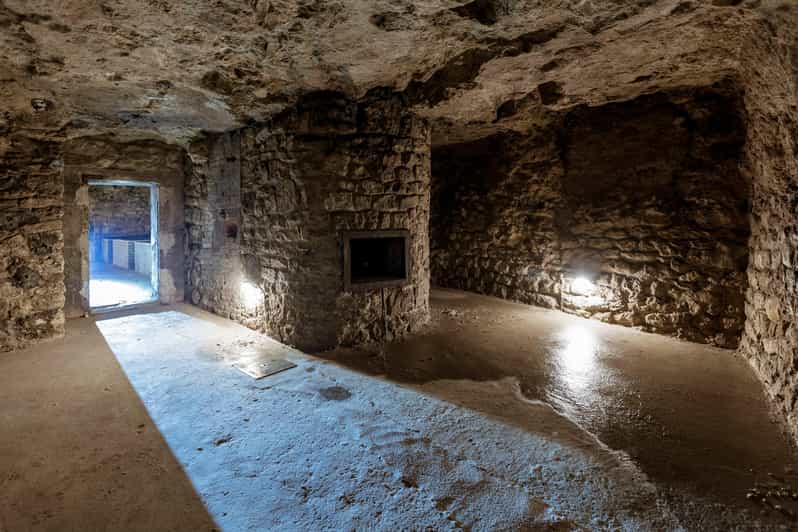
The central part of the experience takes place in the Buda Castle Cave, a connected underground system beneath the historic residential quarter. The cave visit lasts about 35 minutes, though the whole tour includes additional cellar and outdoor walking.
You first visit the cellar of an old dwelling house. This setting is useful because it shows how ordinary residents were affected. The siege was not confined to soldiers around the palace. Families and local residents had to make decisions about shelter, food, possessions, and survival as the fighting closed in.
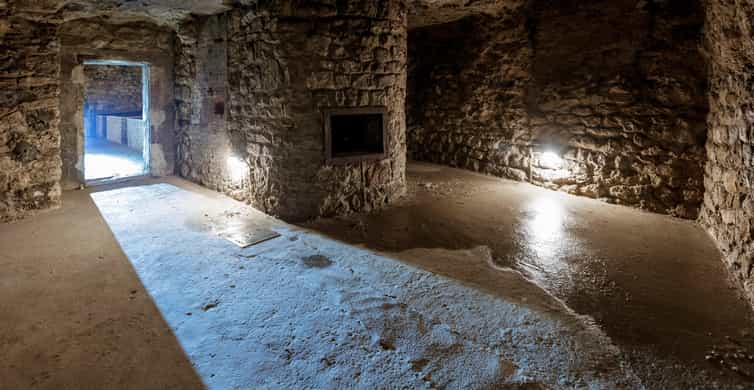
From there, the route continues into an original WWII bomb shelter. This is the point where the tour becomes especially vivid. You are not simply looking at a panel describing an air raid. You are walking through an actual underground space designed to protect people from the violence above.
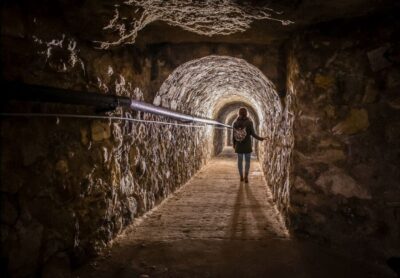
The cave is dark but illuminated, and the passages can be narrow. Some areas have steep stairs and firm surfaces that may be damp. The temperature is about 12°C throughout the year, even when Budapest is hot, so bring a light sweater or jacket.
If you are claustrophobic, think carefully before booking. The route includes underground corridors and enclosed rooms, and you may find the atmosphere intense even if you usually enjoy historic sites. The tour is not suitable for wheelchair users or people with mobility impairments.
What the guides add to the experience
The guide is a major part of this tour. Different departures may feature guides including Rita, Jonas, Kopp, or Balazs. The strongest guides bring more than dates. They explain the military events, civilian experience, and political setting in a way that stays connected to the places around you.
Rita has been praised for giving a detailed account of Budapest before, during, and after WWII. Kopp is especially good for people who like to ask broader questions about history, politics, or philosophy. Jonas is described as lively and easy to follow, though pronunciation may occasionally be difficult for some non-native English speakers.
Balazs has a strong passion for the period and gives the underground section emotional weight. That matters here because the setting can do only so much on its own. A guide must explain what happened in these spaces and why the conditions were so harsh.
Some departures use personal headphones. I see this as a real benefit. Underground acoustics can be uneven, and headphones help you catch the details while the guide speaks from a short distance away. Small groups are also easier to hear and follow, though group size can vary.
The subject is detailed, but the tour is not designed as a university lecture. It lasts 90 minutes and keeps moving. One of its strengths is the balance between explanation and place: listen for a while, walk a little, enter a new room, then connect the next story to what is in front of you.
Same city, a completely different sort of day:
- Budapest: City Highlights Cruise with Welcome Drink
★ 4.6 · 35,610 reviews - Budapest: Unlimited Prosecco, Beer and Aperol Spritz Cruise
★ 4.8 · 25,310 reviews - Budapest: Széchenyi Spa Day Ticket with Optional Upgrades
★ 4.3 · 23,911 reviews - Budapest: Nighttime or Daytime Sightseeing Cruise
★ 4.2 · 21,062 reviews
Why the above-ground section matters
It would be easy to focus only on the cave, but the outdoor portion gives the underground story its scale. Castle Hill is not just a shelter. It was a living district, a military position, and a target during the siege.
On Úri Street and around the Palace District, you can see how narrow streets, old buildings, and hidden entrances shaped daily life. The guide may point to marks left by the fighting and features that helped air move through public shelters.
These details reward a slower look. After the tour, you may want to walk around the Castle district again and search for the kinds of traces the guide showed you. The experience changes the way you read the buildings. A doorway becomes a possible escape route. A ventilation shaft becomes evidence of the people below. A damaged wall becomes more than an old surface.
The tour finishes at Szentháromság Square. Because the route ends in a different place from the meeting point, it fits well into a wider Castle Hill visit. You can continue sightseeing from the square rather than retracing the full route to Dísz Square.
Price, timing, and what the 90 minutes deliver
At $24 per person, this is good value if you want focused historical interpretation rather than a general walking tour. You get an English-speaking guide, outdoor sightseeing in the Castle district, and entry into the Buda Castle Cave and bomb shelter.
The tour is not a full visit to every major Buda Castle attraction. It is a concentrated WWII experience. If your main goal is palace art, royal rooms, or panoramic views, choose a different tour or add those sites separately.
For $24, the cave access is the key value. You also avoid having to piece together the siege story from signs or scattered museums. The guide brings the military events, personal accounts, and visible traces together in one route.
Ninety minutes is about right for this subject. It is long enough to build a clear picture of the siege without turning into a half-day commitment. The pace does mean you should arrive ready to walk. This is not a sit-down shelter visit with a short guided talk.
The tour runs in all weather. In summer, the cave will feel cool compared with the streets. In winter, you may appreciate the shelter from the wind, but the cave still requires warm layers because 12°C is a steady temperature, not a seasonal one.
Free cancellation up to 24 hours before the start and the option to reserve now and pay later make the booking less risky. The more important planning point is punctuality. Latecomers cannot be held up, so do not cut it close at the meeting point.
Who will get the most from this tour
I would choose this for anyone who wants the human side of WWII in Budapest. It suits history enthusiasts, students interested in war and politics, and anyone who prefers a focused story to a broad city overview.
It is recommended for ages 14 and above. Younger teenagers may find the subject too grim, and the dark corridors and steep stairs add another reason not to treat this as a family stroll.
You should also book it if you enjoy unusual historical spaces. The cave is not a grand monument. Its value comes from its function and the people who depended on it. You will get more from the tour if you pay attention to the practical details: cold, water, food, crowding, ventilation, and disease.
I would skip it if you want a cheerful introduction to Budapest or if enclosed spaces make you uncomfortable. The subject is heavy, and some passages may feel tight. Mobility is another firm limit. The route is not suitable for wheelchair users or people who struggle with stairs, narrow corridors, cobbles, or wet surfaces.
Bring water and a snack, since the activity involves continuous walking. Wear shoes with a secure sole, and dress in layers. A guide may provide headphones, but you should not rely on them as a substitute for arriving prepared.
Should you book the Buda Castle siege tour?
Book it if you want to understand what happened to civilians and soldiers trapped in Buda during the 52-day siege. The combination of survivor accounts, Castle Hill streets, an old cellar, and an authentic bomb shelter gives the subject a force that a standard city walk cannot match.
The strongest part is the guide-led interpretation. Rita, Jonas, Kopp, and Balazs are among the guides associated with especially detailed and engaging departures, though the exact guide depends on the date. Headphones can help, and a small group makes the experience easier to follow.
Skip it if you need step-free access, dislike underground passages, or are looking for a light sightseeing activity. For everyone else, $24 buys a compact, serious, and unusually grounded look at one of Budapest’s darkest chapters.
FAQ
Where does the tour start?
It starts at De la Motte B. Palace, also called Beer-palota, at 1014 Budapest, Dísz tér 15. Meet beside the Posta building at the large green gate, where you should look for the turquoise Buda Castle Walks umbrella.
Where does the tour finish?
The tour ends at Szentháromság Square, also known as Szentháromság tér.
How long does the experience last?
The tour lasts 90 minutes. The Buda Castle Cave portion takes about 35 minutes, with the rest covering outdoor walking and other underground spaces.
What language is the tour in?
The live guided tour is held in English.
Is the tour suitable for children?
The activity is recommended for ages 14 and older. Children under 14 are not admitted.
Is the tour suitable for people with mobility challenges?
No. The route includes cobbled streets, steep stairs, narrow corridors, dark illuminated areas, and sometimes wet surfaces. It is not suitable for people with mobility impairments or wheelchair users.
What should I wear and bring?
Wear comfortable walking shoes and dress in layers. The cellar and cave remain around 12°C, or 54°F, all year. Bring warm clothing, water, and snacks. The tour operates in all weather conditions.
Just added around Budapest
- Budapest: Private Walking Tour with a Local Guide★ 3.6 · 6 reviews
- Budapest: Danube River Views Bike Ride★ 4.8 · 23 reviews
- Budapest: City Bike Tour with Coffee Stop★ 5.0 · 37 reviews
- Budapest: Vacation Photographer to collect great memories★ 5.0 · 49 reviews
- Walk to recent and aged spiritual sanctuaries near Budapest★ 5.0 · 5 reviews
- From Budapest: Guided Tour of Eger with Wine Tasting★ 4.5 · 6 reviews
- Audio visual multi-sensory chefs journey dinner experience★ 5.0 · 3 reviews
- Budapest: 3-Hour Trabant Sightseeing Tour★ 4.7 · 28 reviews
Buda Castle District Tours, compared.
Buda Castle District Vampires and Myths Night Tour
Read our review →
Buda Castle District Dark History, Legends and Vampire Night Tour
Read our review →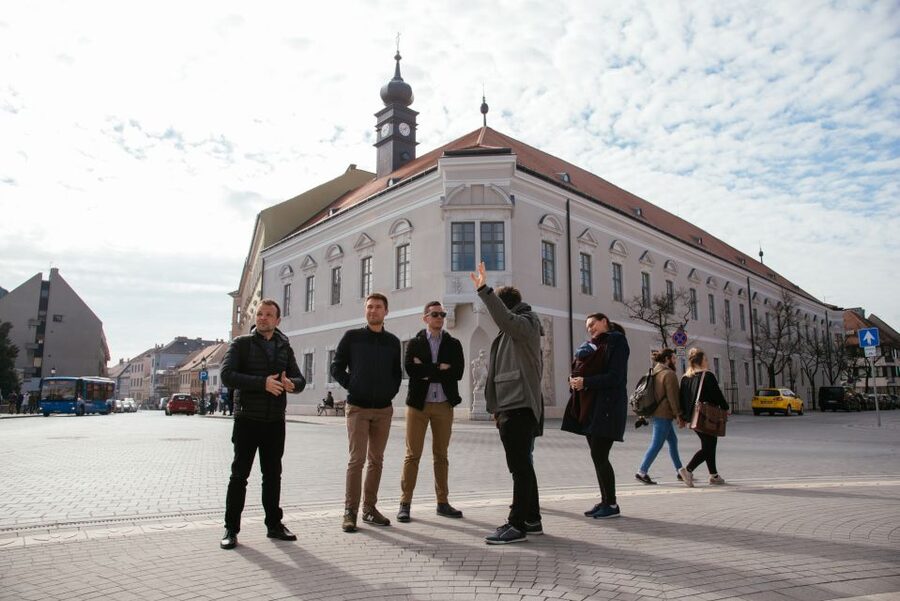
Buda Castle District Walking Tour with a Historian
Read our review →
Browse the lists this tour appears in