
Reviewed · BUDAPEST FOOD TOURS
Budapest: Private Food Tour – 10 Tastings with Locals
Budapest’s best introduction may come on a plate. This private three-hour food walk takes you from the Great Market Hall through central neighborhoods for 10 tastings, mixing hearty Hungarian dishes, sweets, drinks, and short city stops. Lángos, chimney cake, paprika, sour cream, sausage, and goulash all get their turn.
I like the way the tour joins food with place. You are not simply handed samples at random, you hear why paprika matters, why sour cream appears so often, and how Budapest’s food culture connects with its Jewish quarter and old market life. I also like the private format, since guides such as Nick, Beata, Gabor, Tibi, and Emoke have adapted routes around interests and dietary needs.
The main catch is the price: $206 per person is a serious bill for three hours, even with 10 tastings and a private guide. Sundays can also limit the route, since the Great Market Hall and many restaurants close, so choose your day with care.
Key points at a glance
- Ten tastings in three hours: Expect a useful cross-section of savory food, sweets, and local drinks rather than one long restaurant meal.
- The Great Market Hall sets the scene: The meeting point gives you an immediate look at Budapest’s produce, paprika, sausage, and food stalls.
- Lángos and chimney cake are essential stops: These two Hungarian favorites show the contrast between salty street food and sweet, freshly prepared pastry.
- City sights are part of the route: Szimpla Kert, the Great Synagogue, and other central landmarks give the food a cultural setting.
- Private guiding brings flexibility: Vegetarian alternatives are available, and guides have adjusted the experience around food restrictions and personal interests.
- Sunday requires caution: The market and several food businesses may be closed, making the route more limited than on other days.
Starting at the Great Market Hall
Your guide meets you outside the entrance of the Great Market Hall, Budapest’s famous indoor market near the Danube. This is a sensible starting point: you begin among the ingredients and displays that explain much of what you will taste later.
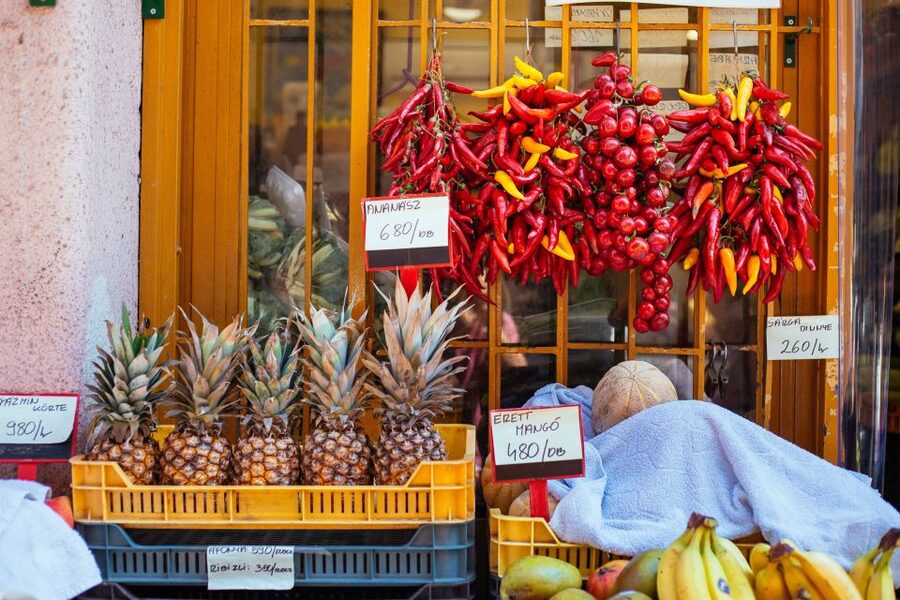
Inside, you might encounter paprika in several forms, cured meats, sausage, bread, pickled foods, and sweet goods. One particularly useful lesson is that paprika is not simply hot. Hungarian varieties can be sweet, smoky, or fiery, and the difference matters in dishes that may otherwise look quite similar.
The market is also a practical place to ask questions about what to take home. The tour is not described as a shopping excursion, but you may have time at a stall to look around or buy something. Keep your expectations in check, since the main purpose is tasting and learning, not a full market-shopping session.
A small issue is the meeting point itself. One past participant had trouble identifying the guide outside the hall. Have your confirmation and contact number ready, and arrive a few minutes early. Since the guide may not be holding a large sign, clear communication helps.
More food tours in Budapest:
- Budapest: Guided Foodie Walking Tour with Food and Drinks
★ 4.9 · 453 reviews - Budapest Food Tour: Market to Tavern with 14+ Tasters & Wines
★ 5.0 · 434 reviews - Budapest Culinary & Wine Walk
★ 5.0 · 397 reviews
What the ten tastings really give you
Ten tastings sounds substantial, and the experience is designed to leave you full. The food is spread across several stops, so you sample rather than sit down for one large course at a single restaurant.
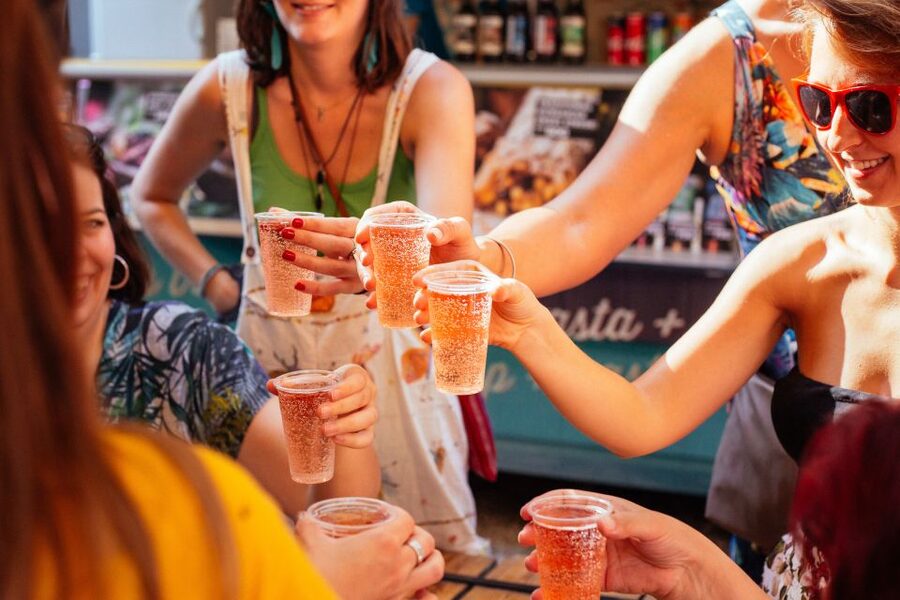
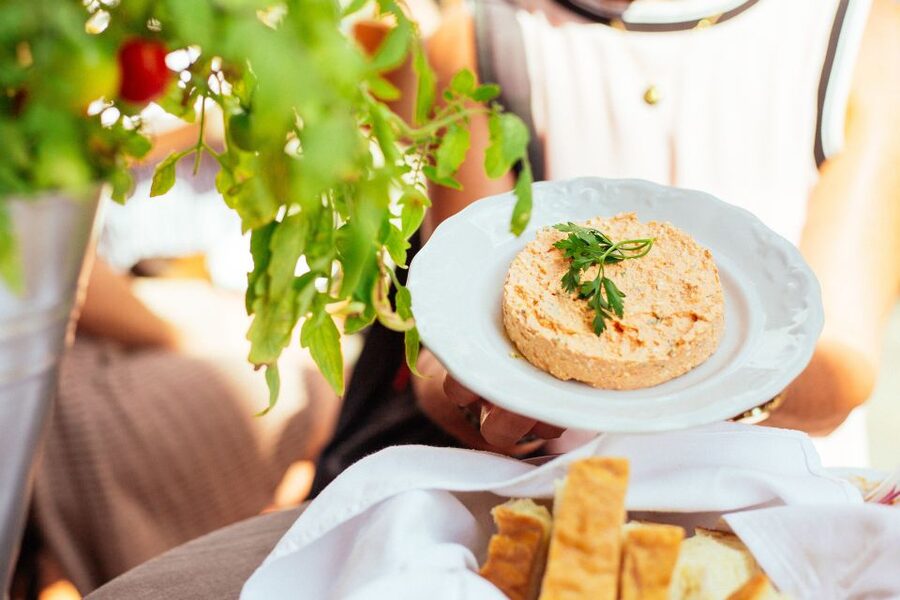
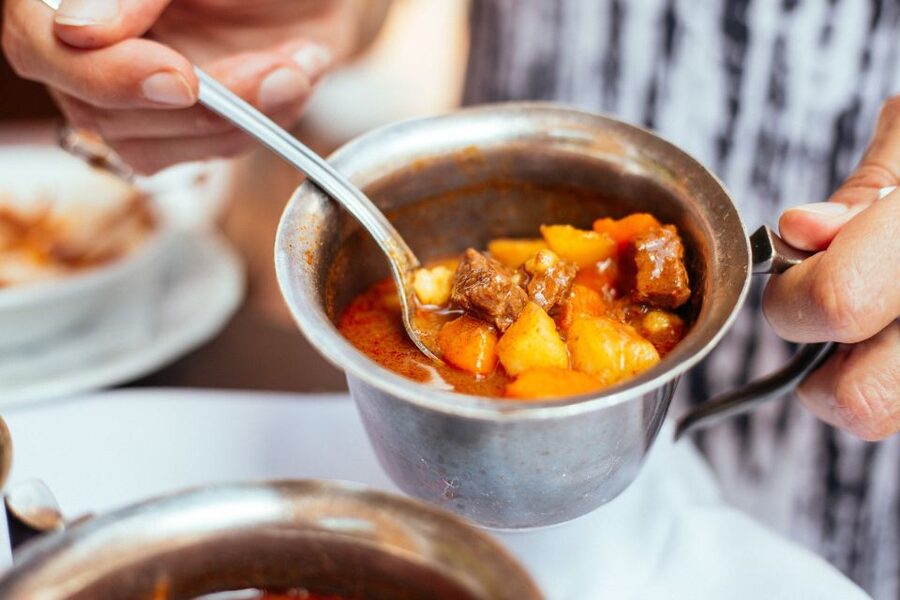
The exact menu can change with the route, opening hours, and your dietary needs. Still, the stated focus is clear: Hungarian classics, local drinks, savory bites, and sweets. You may find sausage with bread, a hearty goulash soup, small portions at a traditional restaurant, a pastry, and drinks along the way.
The value here is variety. A first-time visitor can quickly learn the broad shape of Hungarian cooking: paprika and sour cream, substantial soups, fried dough, meat-based dishes, and sweet pastries. You also avoid the common problem of ordering one unfamiliar dish and hoping it represents an entire national cuisine.
Do not expect 10 full meals. The portions are tastings, but the combination can still be filling. Several people have finished the tour feeling very well fed, so plan a light breakfast and avoid booking an elaborate lunch immediately afterward.
Lángos, chimney cake, and the street-food contrast
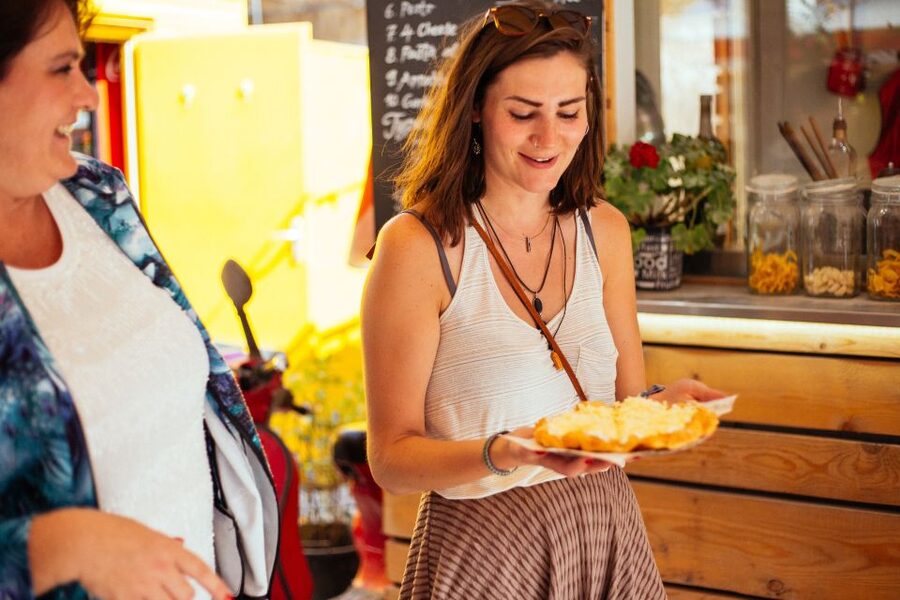
Lángos is one of the stops you should care about most. This deep-fried flatbread is commonly topped with ingredients such as sour cream and cheese, though the precise version depends on the food stop. It is rich, salty, and satisfying, with a crisp surface and soft center.
The guide can explain why sour cream is so common in Hungarian cooking. That detail helps place lángos within the wider food culture rather than treating it as a novelty snack.
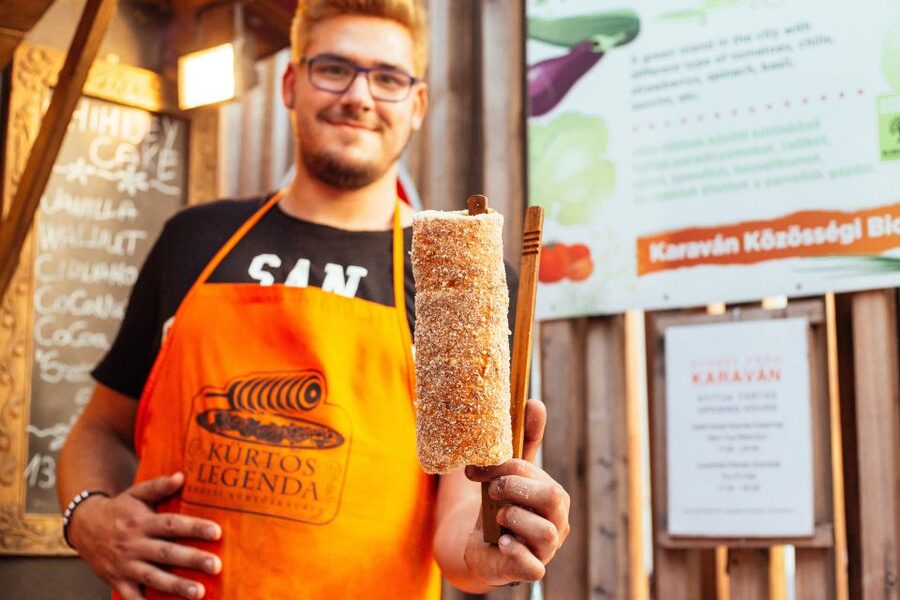
Chimney cake offers the opposite experience. Known in Hungarian as kürtőskalács, it is a sweet pastry cooked around a cylinder, producing a hollow shape with a browned, sugary coating. It is best understood as a fresh street treat, not a delicate dessert.
Having both in one short tour works well. Lángos gives you the savory side of Budapest’s casual food, while chimney cake supplies the sweet finish. If you have a small appetite, pace yourself. These foods are heavier than their snack-sized appearance suggests.
Goulash, sausage, paprika, and sour cream
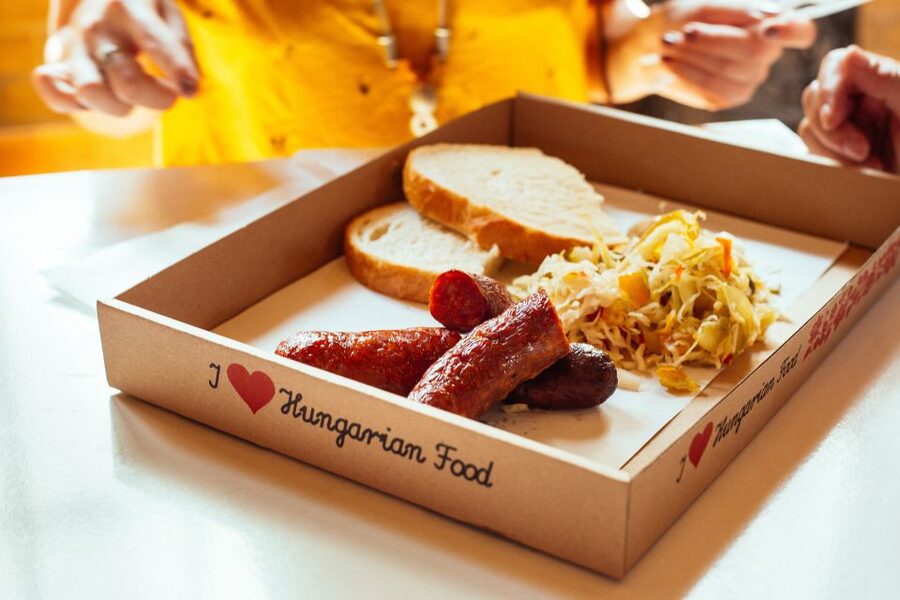
Goulash can be misunderstood outside Hungary. Here, you may encounter it as a hearty soup rather than the thick stew many people expect. The distinction is useful, especially because a tasting portion can still feel like a real meal.
Sausage and bread may appear at the market or another food stop. This is simple food, but it helps you notice how much Hungarian eating depends on good seasoning and sturdy basics. The guide can connect the ingredients on your plate with the market stalls around you.
Paprika deserves its own attention. You may learn about several types, from sweet to smoky to hot. This is one of the strongest educational parts of the tour because it gives you a tool for understanding later meals in Hungary. A red powder on the table does not tell you enough by itself.
The food is not presented as a museum display. You taste it, ask questions, and move on through the city. That pace suits you if you want a first orientation rather than a long, formal culinary class.
Same city, a completely different sort of day:
- Budapest: City Highlights Cruise with Welcome Drink
★ 4.6 · 35,610 reviews - Budapest: Unlimited Prosecco, Beer and Aperol Spritz Cruise
★ 4.8 · 25,310 reviews - Budapest: Széchenyi Spa Day Ticket with Optional Upgrades
★ 4.3 · 23,911 reviews - Budapest: Nighttime or Daytime Sightseeing Cruise
★ 4.2 · 21,062 reviews
From the market to the Jewish quarter
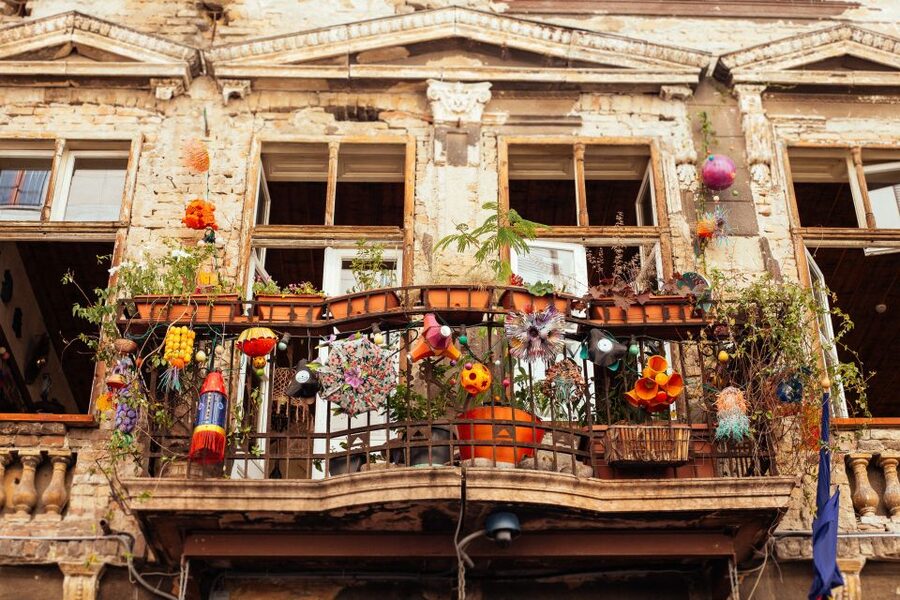
The route also includes central city highlights, with the Jewish quarter and the Great Synagogue among the important stops. You should not expect a full guided visit inside every landmark. The attraction here is the connection between Budapest’s streets, communities, history, and food.
A route through the Jewish quarter can include a stop at a casual outdoor food court. One reported tasting there was mici, a grilled meat dish associated with the wider region. That kind of stop shows that Budapest’s food scene is shaped not only by a single national menu, but also by neighboring traditions and the city’s mixed past.
The Great Synagogue gives the neighborhood a major point of reference. Your guide can explain its cultural importance while keeping the visit moving toward the next food stop. This balance is useful if you want context but do not want a three-hour lecture.
Some routes have used public transport, including a tram, to connect the market with the Jewish quarter. Treat this as part of the city walk rather than a sightseeing ride in its own right. Wear comfortable shoes, as the tour involves walking between stops and is not designed for wheelchair users or people with mobility impairments.
Szimpla Kert and Budapest after dark
Szimpla Kert is one of Budapest’s best-known ruin bars, and it adds a very different note to the tour. Its unusual rooms and mismatched decorations show a side of the city that does not look like the grand avenues or formal market halls.
The visit is about atmosphere and cultural setting as much as the drink. You may stop for a beer or another local beverage, rest for a few minutes, and hear how ruin bars fit into Budapest’s modern social life.
Timing matters here. On Sundays, Szimpla Kert can operate as a farmers market during the day before returning to its bar setting later. That makes Sunday’s version of the tour different from an evening route. If you specifically want the full ruin-bar mood, ask about the start time when you book.
This stop also helps break up the food. Ten tastings in three hours could feel like a continuous eating contest, but short walks and a drink give you time to reset.
The private guide is the main value
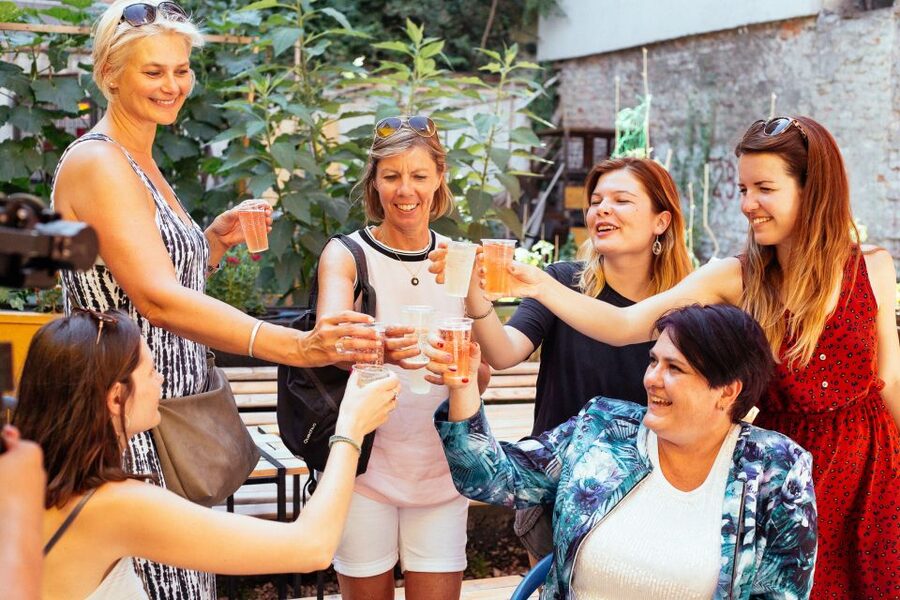
The strongest reason to choose this tour over a cheaper group food walk is the private guide. The experience is built for a private group, and that gives you room to ask about the foods that interest you instead of following a fixed script for a large crowd.
Several guides have received particularly warm feedback. Nick has been praised for combining Hungarian cultural knowledge with an easy conversation style. Gabor has asked about interests and food issues at the start, then adjusted the afternoon around them. Beata has been described as enthusiastic about food and skilled at moving through the market without losing time.
Tibi, Nelli, Emoke, and other guides have also led the route. You cannot choose a particular guide based on the information provided, but you can expect the quality of the experience to depend partly on who is assigned and how well you communicate your interests.
The best use of the private format is to tell your guide what you want early. Mention if you care more about traditional dishes, drinks, market ingredients, history, or current food culture. Vegetarian alternatives are available, and the menu can be adapted if you tell the guide at the beginning.
How the $206 price measures up
At $206 per person, this is not a budget way to eat in Budapest. You could spend far less on lángos, market food, and pastries by yourself.
The price makes more sense if you value the guide, the private arrangement, the convenience of several stops, and the chance to taste a broad set of foods without planning each one. You are paying for an organized introduction to Budapest, not simply for the cost of the ingredients.
For a couple or small private group, the price may feel worthwhile on the first day in town. You get a food orientation, neighborhood context, and a list of dishes and places to explore later. It can also replace a separate introductory city walk and one substantial meal.
I would not book it if your main goal is maximum food quantity for minimum cost. I would consider it if you have only a short stay, want direct attention from a local guide, or feel unsure about ordering Hungarian food on your own.
Timing, comfort, and Sunday planning
The tour lasts three hours, and starting times vary by date. Comfortable shoes are important because the route combines walking, market floors, city streets, and possibly public transport.
There is no hotel pickup or drop-off. You need to reach the Great Market Hall entrance yourself, so allow time to get there and identify the guide.
Sunday deserves special attention. The Great Market Hall and many restaurants may be closed, which can reduce the number of traditional stops. The guide can still find open places, and Szimpla Kert’s daytime farmers market may provide an interesting alternative, but the route will not be identical to a weekday or Saturday tour.
The activity is not suitable for wheelchair users or people with mobility impairments. If you have a food restriction, vegetarian alternatives are available, but tell the guide at the start rather than waiting until the first tasting.
Who should book this food tour?
I would recommend it most strongly to first-time visitors who want a fast, friendly introduction to Budapest’s food and central neighborhoods. It is also a good fit for couples, families with adventurous eaters, and small private groups who prefer conversation over a large shared tour.
Food-focused visitors should like the range, especially if you want both classic dishes and everyday local context. The tour is less suitable for anyone seeking a long sit-down meal, a formal cooking class, or a cheap way to fill up.
If you are visiting on a Sunday, ask about the exact route before committing. If the Great Market Hall is a priority, choose another day if possible.
Should you book it?
Book this tour if you want ten guided tastings, a private English-speaking host, and a useful first look at Budapest’s food culture. The combination of lángos, chimney cake, paprika, goulash, drinks, the market, the Jewish quarter, and Szimpla Kert gives you a broad introduction in only three hours.
Skip it if $206 feels too high for a short food walk or if you prefer to eat slowly at a few restaurants. For the right visitor, the real value is not the number of bites. It is the local explanation, the route through central Budapest, and the confidence you gain for ordering food on your own afterward.
FAQ
How long does the Budapest private food tour last?
The tour lasts three hours.
How many tastings are included?
The experience includes 10 food and drink tastings.
What types of food will I taste?
You can expect savory food, sweets, local drinks, and Hungarian classics such as lángos and chimney cake. Other tastings may include goulash, sausage, bread, and pastries, depending on the route.
Where does the tour begin?
Your host meets you outside the entrance of the Great Market Hall.
Is hotel pickup included?
No. Hotel pickup and drop-off are not included.
Is the tour private?
Yes. The experience is for a private group.
What language does the guide speak?
The live tour guide speaks English.
Are vegetarian alternatives available?
Yes. Vegetarian alternatives are available. Tell your guide at the beginning so the menu can be adapted.
Does the tour visit major Budapest sights?
Yes. The route includes the Great Market Hall, Szimpla Kert, the Great Synagogue, and other central city highlights.
Is the tour accessible for wheelchair users?
No. The activity is not suitable for wheelchair users or people with mobility impairments.
What should I bring?
Wear comfortable shoes. The tour includes walking between food stops and city sights.
Can I cancel the booking?
You can cancel up to 24 hours in advance for a full refund. A reserve-now, pay-later option is also available.
Just added around Budapest
- Budapest: Private Walking Tour with a Local Guide★ 3.6 · 6 reviews
- Budapest: Danube River Views Bike Ride★ 4.8 · 23 reviews
- Budapest: City Bike Tour with Coffee Stop★ 5.0 · 37 reviews
- Budapest: Vacation Photographer to collect great memories★ 5.0 · 49 reviews
- Walk to recent and aged spiritual sanctuaries near Budapest★ 5.0 · 5 reviews
- From Budapest: Guided Tour of Eger with Wine Tasting★ 4.5 · 6 reviews
- Audio visual multi-sensory chefs journey dinner experience★ 5.0 · 3 reviews
- Budapest: 3-Hour Trabant Sightseeing Tour★ 4.7 · 28 reviews
Budapest Food Tours, compared.

Guided Foodie Walking Tour with Food and Drinks
Read our review →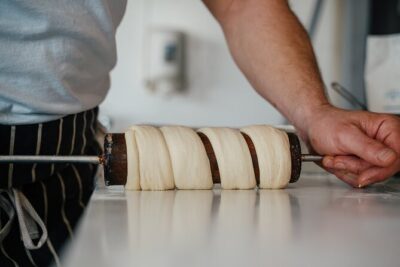
Budapest Food Tour: Market to Tavern with 14+ Tasters & Wines
Read our review →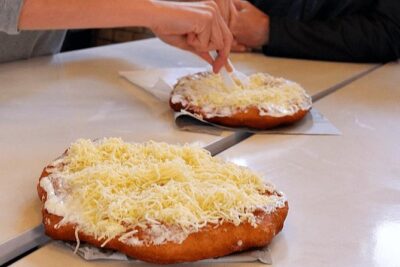


10PM Budapest Danube Cruise with Live Music & Food or Drinks
Read our review →

Budapest Food Tasting Tour with Nelli & her local guides
Read our review →Browse the lists this tour appears in