Reviewed · GUIDED
Budapest: Guided Tour of the House of Music, Hungary
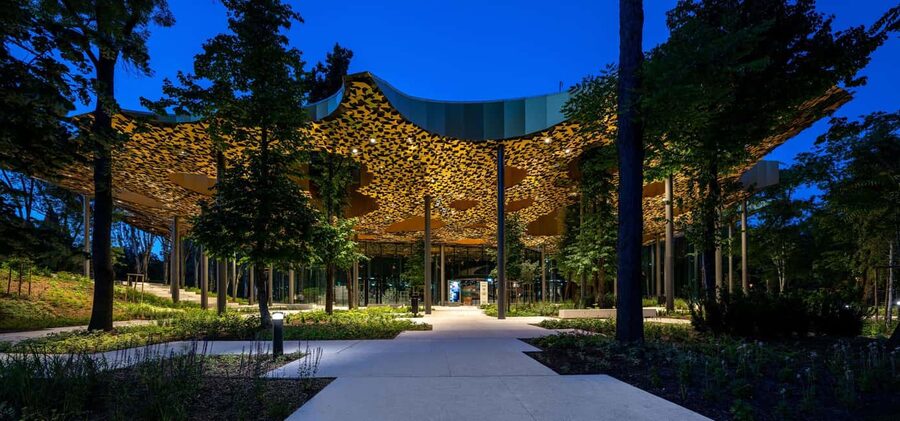
The House of Music Hungary is less a box for exhibitions than a building that seems to grow out of Budapest’s City Park. Its floating roof, punched with circular openings, hangs above broad glass walls and leaf-like metal elements. You begin in the foyer, then follow a guide through a cultural building designed to make music, nature, and public space feel closely linked. The architecture is the main event.
I like the way the tour explains practical design rather than asking you to admire the building from a distance. You learn how the roof helps with sound and daylight, and how geothermal energy and rainwater collection support the building’s greener aims. I also like the English-speaking guides, especially Dora, who has earned warm praise for her energy and clear explanations. The main limitation is simple: exhibitions, the Sound Dome, and the Creative Sound Space are not included, so this is an architecture tour, not a full House of Music ticket.
Key points at a glance
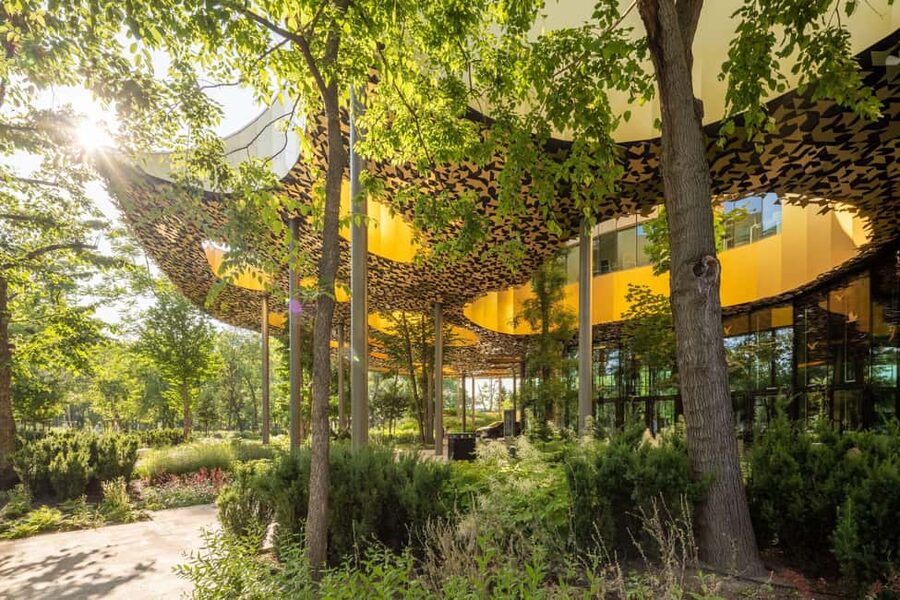
- A floating roof made of leaf-like metal elements creates shade, daylight openings, and a strong visual link with the park.
- Japanese architect Sou Fujimoto’s organic design blurs the boundary between the building and City Park.
- The spiral staircase is one of the tour’s most memorable interior features and works as a piece of public art.
- The concert hall, library, archives, foyer, outdoor areas, and gift shop are included in the guided visit.
- The tour lasts one hour, costs $13 per person, and is conducted in English.
- The experience suits visitors aged 15 and over, and the building is wheelchair accessible.
Why the House of Music is worth an hour
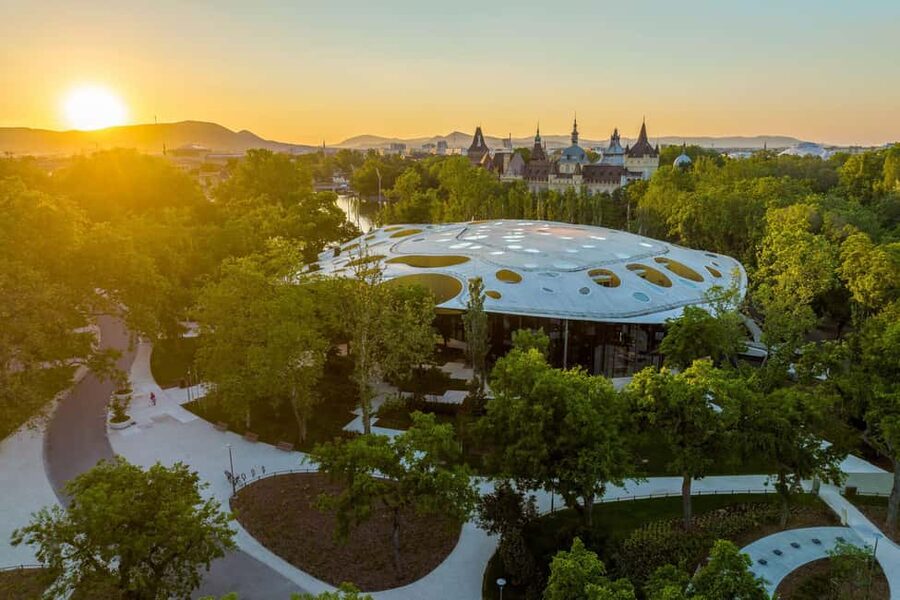
Budapest has no shortage of grand historic buildings, but the House of Music offers a different kind of sightseeing. Here, the interest lies in how a modern cultural building handles light, sound, movement, and its setting in the park.
I find that useful because the building can be easy to misunderstand from the outside. The roof looks dramatic, even playful, but it is not just a sculptural cap. The guide explains how its openings bring daylight down into the building and how its materials and shape contribute to the acoustic plan. That turns a quick photo stop into a lesson in how architecture works.
The building was designed by Japanese architect Sou Fujimoto. His approach treats the House of Music as a continuation of City Park rather than an object dropped into it. The extensive glass walls help create that effect. From inside, you can keep sight of the trees and open space, while people outside can see activity in the foyer and public areas.
At $13 per person, the tour is reasonably priced for a one-hour guided look at a major modern building. The value is strongest if you care about architecture, urban design, music spaces, or the way public buildings serve a community. If you mainly want interactive music displays, allow extra time and budget for a separate ticket to the exhibitions and sound-based attractions.
A handful more Budapest trips to weigh up
- Budapest: Parliament Building Entry Ticket and Audio Guide
★ 4.5 · 3,844 reviews - Budapest: Opera House Guided Tour
★ 4.6 · 1,533 reviews - Budapest Small-Group Guided Tour on MonsteRoller e-Scooter
★ 5.0 · 1,517 reviews
Starting beneath the undulating roof
The tour begins inside the foyer, but your guide’s explanation centers first on what you have just entered beneath. The roof is the building’s most obvious calling card, with an uneven, floating form and thousands of leaf-like metal elements.
Take a moment to look up before the tour gets moving. The roof’s irregular surface gives the building a softer profile than the straight lines used in many modern cultural centers. Circular openings break through it, allowing shafts of daylight to reach the interior and creating changing views of the sky.
The guide helps connect this visual effect with function. The roof is part of the building’s acoustic strategy, not decoration added after the fact. You will hear how the building’s form, materials, and layout were considered together to support good sound in performance spaces and public areas.
That explanation is especially useful if you are not an architecture specialist. You do not need to know technical terms beforehand. The tour focuses on what you can see, then shows how those visible choices affect comfort, sound, and movement.
The foyer itself is spacious and makes a good starting point. It gives you room to take in the glass, concrete, wood, and open sightlines before moving into more specific parts of the building. A café is also located in this public area, giving you a practical place to pause before or after the tour.
Glass walls and the City Park connection
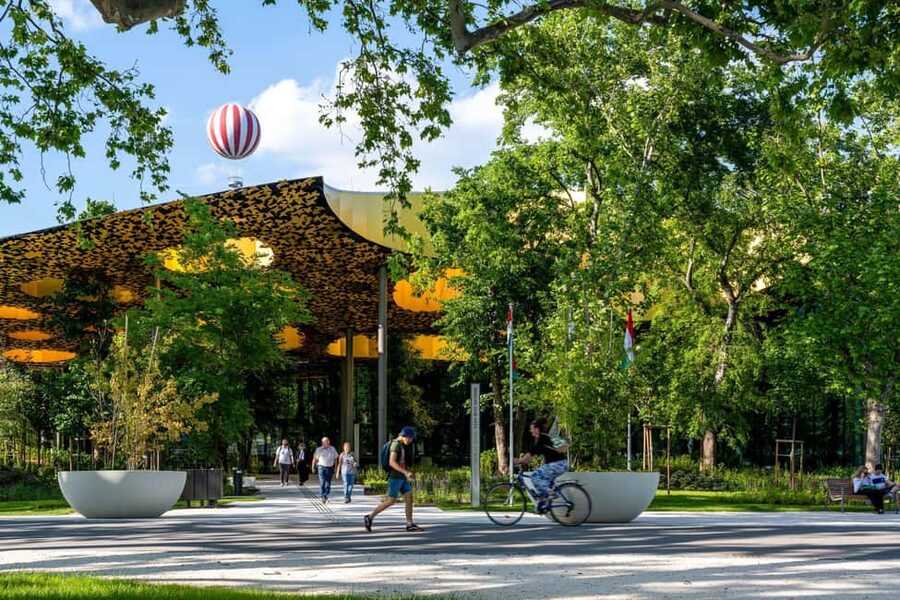
The House of Music sits in Budapest’s City Park, and the setting is not a minor backdrop. It is central to the building’s idea.
As you move through the foyer and other public areas, the extensive glass keeps the park in view. This makes the interior feel open and connected to the trees rather than shut off from them. The building’s design encourages you to notice both sides at once: the cultural activity inside and the natural setting outside.
I like this part of the tour because it gives the building a sense of place. You are not simply looking at an imported piece of modern design. You are seeing how the architects used the park to shape the experience, with transparent walls, open areas, and levels arranged for public use.
The guide also points out how the House of Music was planned for community engagement and music education. Even without entering the exhibitions, you can see that the building is meant to support more than formal performances. The foyer, circulation spaces, outdoor areas, and educational facilities all contribute to that wider purpose.
The park views are one reason to avoid rushing. The tour lasts only an hour, but you should keep your attention on the windows and changing angles inside. The roof, trees, and glass look different as you move through the building.
The spiral staircase as a piece of public art
The spiral staircase is one of the clearest moments where practical movement becomes visual drama. It is not simply a way to get from one level to another. Its curved form gives the interior a strong central feature and shows how circulation can become part of the building’s character.
Your guide explains the various levels and open spaces as part of the House of Music’s public design. The stairway helps connect these areas while giving you a changing view of the foyer and surrounding structure.
This is a good place to slow down for photographs, although you should follow the guide’s directions and avoid blocking the route. The staircase may appeal most to visitors who enjoy modern interiors, but it also gives non-specialists a simple way to understand the building’s design language. Straight corridors would have been functional. A spiral route makes the journey part of the experience.
The exposed concrete surfaces provide a firm, structural counterpoint to the warm wooden details. Glass brings in daylight, wood softens the public rooms, and concrete shows the building’s bones. The contrast keeps the interior from feeling either cold and industrial or overly decorated.
You may find that the guide spends more time discussing ideas than displaying objects. That is important to understand before booking. The staircase, roof, and interior materials are the subjects here, while the museum’s interactive and exhibition-based experiences require separate access.
Same city, a completely different sort of day:
- Budapest: City Highlights Cruise with Welcome Drink
★ 4.6 · 35,610 reviews - Budapest: Unlimited Prosecco, Beer and Aperol Spritz Cruise
★ 4.8 · 25,310 reviews - Budapest: Széchenyi Spa Day Ticket with Optional Upgrades
★ 4.3 · 23,911 reviews - Budapest: Nighttime or Daytime Sightseeing Cruise
★ 4.2 · 21,062 reviews
Concert hall, library, and archives
The included visit covers the concert hall, library and archives, along with public areas and the outdoor spaces. These parts add depth to the tour because they show how the House of Music supports music in several forms.
The concert hall is the place where the building’s acoustic goals become easiest to understand. You will not necessarily hear a performance during this tour, but the guide explains how the room’s design and the building’s materials help manage sound.
That is a useful distinction. A guided look at a performance space cannot replace attending a concert, but it can help you notice why concert halls are shaped and finished differently from ordinary rooms. You get the design story without paying for a performance ticket.
The library and archives point to a quieter side of the institution. They show that the building is not only a venue for public events. It also supports study, research, and the preservation of musical material.
The supplied information does not promise entry into every restricted area, so you should expect a guided architectural look rather than unlimited independent access. The tour’s purpose is to explain how the parts fit together, not to turn you loose in every room.
The gift shop is included among the places covered. It is a small but useful final stop if you want a reminder of the building or its musical theme. The tour ends back at the foyer, so you can return to the café or gift shop without having to find your way to a different exit.
Sustainability built into the design
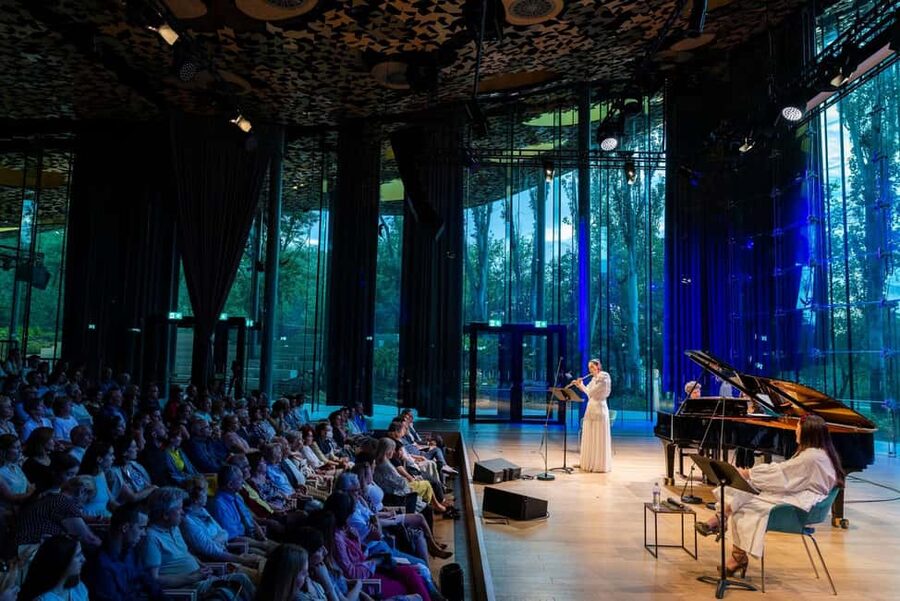
The House of Music also uses the tour to explain environmental features. Geothermal energy and rainwater harvesting are part of the building’s sustainability plan.
I appreciate this section because it connects the grand visual gestures with less visible systems. A spectacular roof can attract attention, but a public building also has to manage energy and water. These features show that the design is not only about making a memorable shape.
The guide may relate those systems to the building’s broader relationship with the park. The aim is to create a cultural center that works with its setting rather than ignoring it. Glass, daylight, natural views, water management, and energy use all form part of that discussion.
You should not expect a technical engineering seminar. The tour remains accessible and focused on the visitor experience. Still, the sustainability information gives you another way to judge the building. You are not just looking at a roof that photographs well. You are learning how design choices affect daily use.
How the one-hour visit unfolds
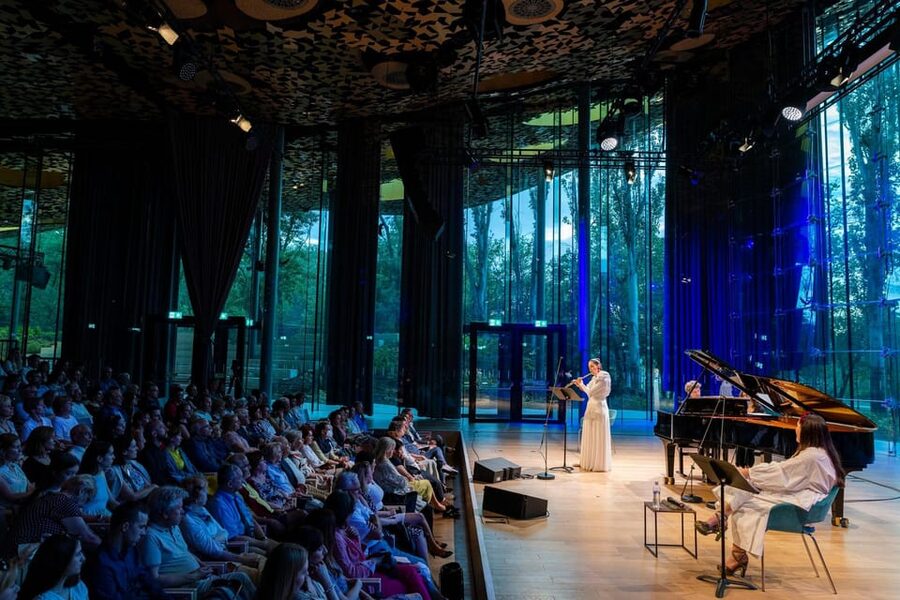
The meeting point is inside the foyer. After gathering there, the tour focuses on the building’s exterior form and roof, then moves through the glass-lined public areas and interior features.
A typical sequence includes:
- An introduction to the undulating roof, circular openings, and leaf-like metal canopy
- Discussion of the building’s connection with City Park
- A look at the foyer, open spaces, glass walls, wood, and exposed concrete
- Attention to the spiral staircase and the building’s multiple levels
- Explanations of the concert hall’s acoustic design
- Access or guided viewing related to the library and archives
- Time in the outdoor spaces and a look at the gift shop
- A return to the foyer at the end
The exact order can depend on building operations, but the tour is compact. At one hour, it works well as part of a City Park day rather than as a full afternoon activity.
The English-speaking guide matters because the building’s details are not always obvious. Dora has been singled out for her clear explanations, friendly manner, and positive energy. Another guide, described as a white-haired woman with colorful highlights, was also remembered for being kind, professional, and highly informed. You cannot request a particular guide based on the available information, but the guide’s role is clearly important to the experience.
What the $13 price really includes
The $13 price is modest for a guided visit to a major contemporary building, especially when the tour includes more than the foyer. You get an explanation of the architecture, a look at the concert hall, library and archives, outdoor areas, and gift shop.
The value depends on what you want from the House of Music. If you want to see the building and understand its design, the price is strong. A self-guided visit might show you the roof and glass walls, but it would not explain the acoustic choices, sustainability systems, or the concept of the building as an extension of the park.
If you want hands-on sound activities or museum displays, the price does not cover everything. Entry to the exhibitions, Sound Dome, and Creative Sound Space is excluded. I would treat this guided tour as one part of a House of Music visit, not as a substitute for all other admission options.
The reserve-now-and-pay-later option also helps if you are arranging a busy Budapest schedule. You can hold a place without paying immediately, and cancellation is available up to 24 hours before the tour for a full refund.
Who should book this tour
I would recommend the tour to:
- Adults and older teenagers interested in architecture
- Visitors who enjoy modern cultural buildings and public spaces
- Music lovers curious about concert hall design
- People already planning time in City Park
- Anyone who prefers a short, guided experience with clear structure
- Visitors who want an accessible introduction to the House of Music before choosing extra admission
The activity is not suitable for children under 15, according to the stated conditions. Pets are not allowed, although assistance dogs are permitted.
The building is wheelchair accessible, which makes this a practical choice for visitors who need an accessible cultural attraction. The tour is conducted in English, and no other language is listed.
The main limitation to keep in mind
The biggest drawback is the narrow focus. You see and learn about the building, but the tour does not include the exhibitions, Sound Dome, or Creative Sound Space.
That is not a problem if architecture is your main reason for coming. In fact, excluding the exhibition areas keeps the hour focused on materials, structure, sound, and the park setting.
It could disappoint you if you expect an interactive museum visit. Check the available admission options before booking if your priority is listening stations, digital displays, or hands-on sound activities. The guided architectural tour and the exhibition experience are separate parts of the House of Music.
Should you book the House of Music tour?
Book it if you want to understand why this unusual building looks and feels the way it does. For $13, the one-hour English tour gives you access to the key public areas and a guide who can explain the roof, glass walls, spiral staircase, acoustics, sustainability systems, and connection with City Park.
Skip it if you only want interactive music exhibits, since those are not included. If you have limited time in Budapest and already plan to visit City Park, this is an easy addition, especially for architecture fans. The tour is short, accessible, reasonably priced, and more useful than a quick exterior photograph. Just remember that the House of Music has another side, the exhibitions and sound spaces, which require separate entry.
FAQ
How long is the guided tour of the House of Music?
The tour lasts one hour. Starting times vary, so check availability when choosing your date.
What language is the tour conducted in?
The tour is conducted in English with a live guide. Dora is one of the guides associated with the experience, though a specific guide cannot be guaranteed.
What areas are included?
The guided visit includes the building’s architectural features, concert hall, library and archives, outdoor spaces, foyer, and gift shop. It ends back at the foyer.
Are the exhibitions and Sound Dome included?
No. Entry to the exhibitions, Sound Dome, and Creative Sound Space is not included in this guided tour.
Is the House of Music tour wheelchair accessible?
Yes. The activity is listed as wheelchair accessible.
Can children join the tour?
The activity is not suitable for children under 15 years old. Pets are not allowed, but assistance dogs are permitted.
Just added around Budapest
- Budapest: City Bike Tour with Coffee Stop★ 5.0 · 37 reviews
- Budapest: Private Walking Tour with a Local Guide★ 3.6 · 6 reviews
- Budapest: Danube River Views Bike Ride★ 4.8 · 23 reviews
- Budapest: Vacation Photographer to collect great memories★ 5.0 · 49 reviews
- Walk to recent and aged spiritual sanctuaries near Budapest★ 5.0 · 5 reviews
- From Budapest: Guided Tour of Eger with Wine Tasting★ 4.5 · 6 reviews
- Audio visual multi-sensory chefs journey dinner experience★ 5.0 · 3 reviews
- Budapest: 3-Hour Trabant Sightseeing Tour★ 4.7 · 28 reviews
Guided, compared.
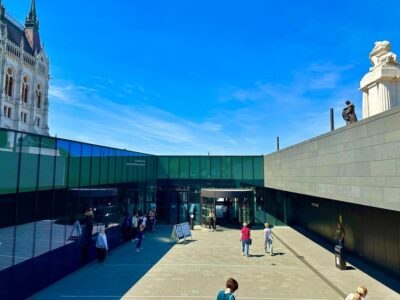
Parliament Building Entry Ticket and Audio Guide
Read our review →

Budapest Small-Group Guided Tour on MonsteRoller e-Scooter
Read our review →
Guided Tour of the Parliament Building in Spanish
Read our review →

Budapest Danube Cruise with Drink, Audio Guide, Margaret Island
Read our review →