
Reviewed · BUDAPEST FOOD TOURS
Budapest Guided Food Tour with Drinks Included
Budapest’s food story begins in an unexpected place: Kazinczy Street Synagogue. From there, this 2.5-hour walk connects the city’s former Jewish neighborhood with the plates and drinks that shaped it. You move from fried street food and soup to sit-down dishes, then finish with pastry and Hungarian alcohol.
I like the mix of food and local history, rather than a simple crawl from one restaurant to the next. I also like the generous tasting menu, with four eateries, langos, nokedli, flódni, wine, beer, and shots included. The main thing to consider is group size: one outing had 22 people, which can make a walking food tour feel less personal.
Key points at a glance
- Start at a synagogue: Kazinczy Street Synagogue sets up the connection between Budapest’s Jewish community and Hungarian cooking.
- Four food stops: You get street food, a sit-down meal, dumplings, pastry, and drinks rather than one large restaurant meal.
- District 7 on foot: The route shows both the rough-edged former Jewish Quarter and its current nightlife scene.
- Three alcoholic drinks included: Expect a mix of beer, wine, and shots, with Hungarian specialties such as Pálinka and Tokaji.
- Guides make the difference: Agnes, Laura Horváth, Peter, Kitti, Kelly, Rae, and others are praised for warmth, clear explanations, and useful Budapest tips.
- Dietary limits matter: Vegetarian choices are available, but gluten-free and vegan menus cannot currently be accommodated.
Why start at Kazinczy Street Synagogue?
A synagogue may seem like an odd place to begin a food tour, but here it makes sense. Hungarian food has strong links to the Jewish community, and District 7 was once the center of Budapest’s Jewish life. Your guide uses the meeting point to explain that connection before the group starts walking.
Look for a guide holding a yellow Carpe Diem Tours flag in front of the synagogue. The tour is in English, and you need to bring a passport or ID card.
This opening is useful because it gives the food some context. Flódni, for example, is not just a sweet finish. It is a Jewish-Hungarian pastry, and tasting it later in the tour makes more sense after you have heard about the district’s people and traditions.
The starting point also puts you in District 7, now one of Budapest’s main nightlife areas. You will see the contrast between its older buildings and its younger, louder identity. That mix of worn facades, nightlife venues, food shops, and busy streets is part of the experience.
More food tours in Budapest:
- Budapest: Guided Foodie Walking Tour with Food and Drinks
★ 4.9 · 453 reviews - Budapest Food Tour: Market to Tavern with 14+ Tasters & Wines
★ 5.0 · 434 reviews - Budapest Culinary & Wine Walk
★ 5.0 · 397 reviews
Walking through Budapest’s former Jewish Quarter
The first guided section through the Jewish Quarter lasts about 30 minutes. It is not a long formal sightseeing tour, but the walking gives your guide room to explain how the neighborhood changed and how food fits into the story.
You should expect a fair amount of standing and walking between tastings. That is helpful after the first bites, since the tour is designed to build an appetite between stops. Wear comfortable shoes, but this is not a demanding hike.
District 7 brings the tour to life because you are not eating in isolation. The streets provide the setting, and the guide connects the places you pass with Hungarian culture and city life. The atmosphere can shift quickly from gritty to polished, which gives you a more honest sense of central Budapest than a restaurant meal alone.
The size of your group will affect this section. A small group makes it easier to hear every explanation and ask questions. Groups may be larger, with one reported at 22 people, so stay near the guide when moving through crowded streets.
Hungarian street food first: soup and langos
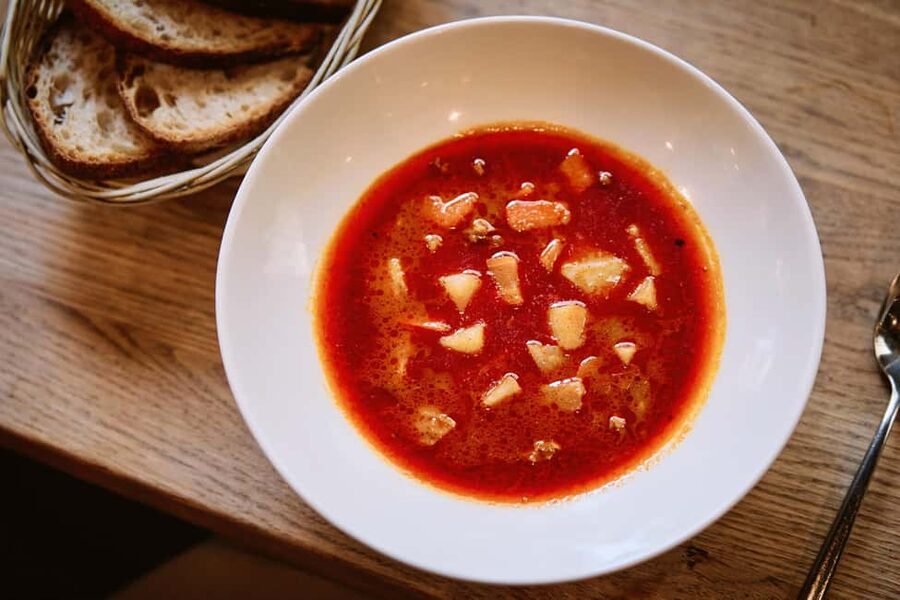
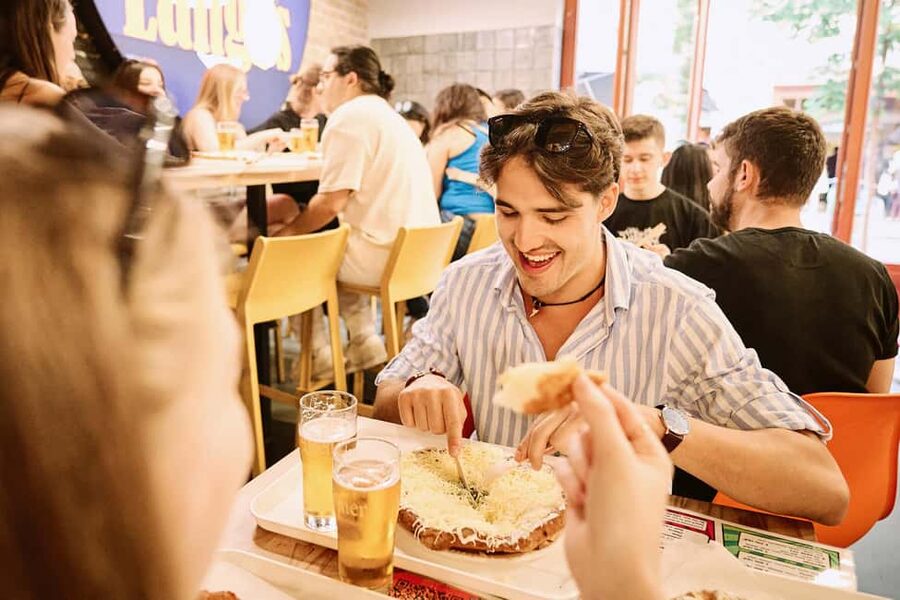
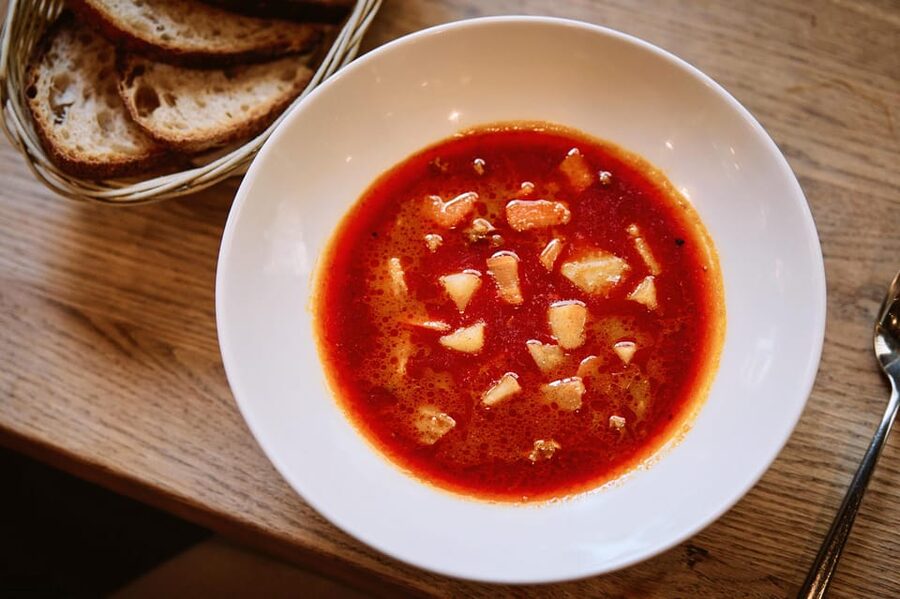
The early food stops focus on traditional Hungarian street food. You may begin with soup, followed by langos, a deep-fried flatbread that is usually eaten by hand.
Langos is simple, filling food. It is not a delicate tasting course, and that is the point. You do not need a knife or fork. Pick it up, eat it, and accept that a little mess is part of the fun.
This is one reason to arrive hungry. The food comes in a steady stream, and the tour does not treat each taste as a tiny sample. Several people have described the portions as plentiful, so you may be closer to full than you expect before dessert.
The soup and langos also provide a useful introduction to Hungarian cooking. You get something hot and comforting, then something fried and substantial. If you prefer refined restaurant food from the start, this section may feel casual. If you want to understand what people eat beyond the famous paprika-heavy dishes, it is a strong beginning.
From casual bites to a sit-down Hungarian meal

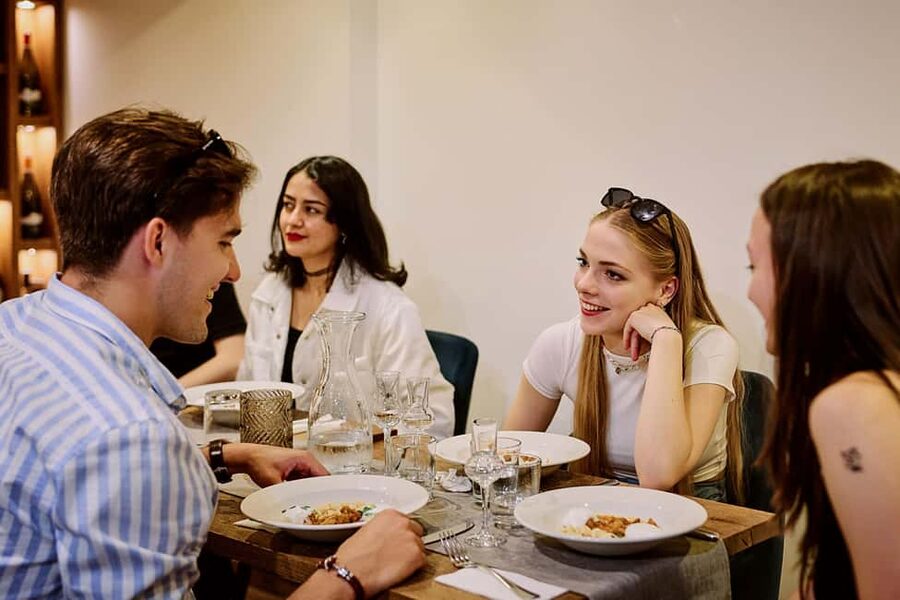
After the street food, the tour moves to fancier stops for a sit-down meal. This change in setting helps show the range of Hungarian cooking. You are not limited to market snacks, and you are not confined to a formal dining room either.
One of the featured dishes is nokedli, a Hungarian dumpling. It is a hearty classic and gives you a better sense of the country’s everyday comfort food than a small decorative plate would. The guide explains the food and its place in Hungarian culture while you eat.
I like this progression because it keeps the tour from becoming repetitive. You start with food eaten quickly in the street, then slow down for dishes that need a table and conversation. The walking between locations gives you time to ask questions and compare what you have tasted.
Your guide is important here. Agnes is praised for combining food information with city stories. Laura is repeatedly described as friendly, detailed, and proud of Hungary. Peter is noted for giving historical information in short sections as the group moves along. That approach works well for a food tour because you learn without sitting through a long lecture.
Same city, a completely different sort of day:
- Budapest: City Highlights Cruise with Welcome Drink
★ 4.6 · 35,610 reviews - Budapest: Unlimited Prosecco, Beer and Aperol Spritz Cruise
★ 4.8 · 25,310 reviews - Budapest: Széchenyi Spa Day Ticket with Optional Upgrades
★ 4.3 · 23,911 reviews - Budapest: Nighttime or Daytime Sightseeing Cruise
★ 4.2 · 21,062 reviews
Three drinks, from beer to Tokaji

The price includes three alcoholic beverages, including wine, beer, and shots. The drinks are not an optional add-on, so the $67 price covers more than the food and guiding.
The alcoholic element gives the tour a clearer sense of place. You may taste Pálinka, a fruity Hungarian fruit brandy, and Tokaji, the sweet wine associated with Hungary’s Tokaj region. These are distinctive local drinks, and trying them with food is more useful than ordering an unfamiliar bottle without explanation.
Pálinka can be strong, so pace yourself. The tour includes shots, and the food is plentiful, but you should still treat the drinks as tastings rather than a race. If you do not drink alcohol, the supplied details do not promise a nonalcoholic replacement, so ask before booking.
Beer and wine also help keep the tasting varied. The drinks break up the heavier dishes and give you another way to compare Hungarian food traditions. The exact order of food and drinks may depend on the group and the venues, but the included package is built around three alcoholic servings.
Flódni makes a memorable finish
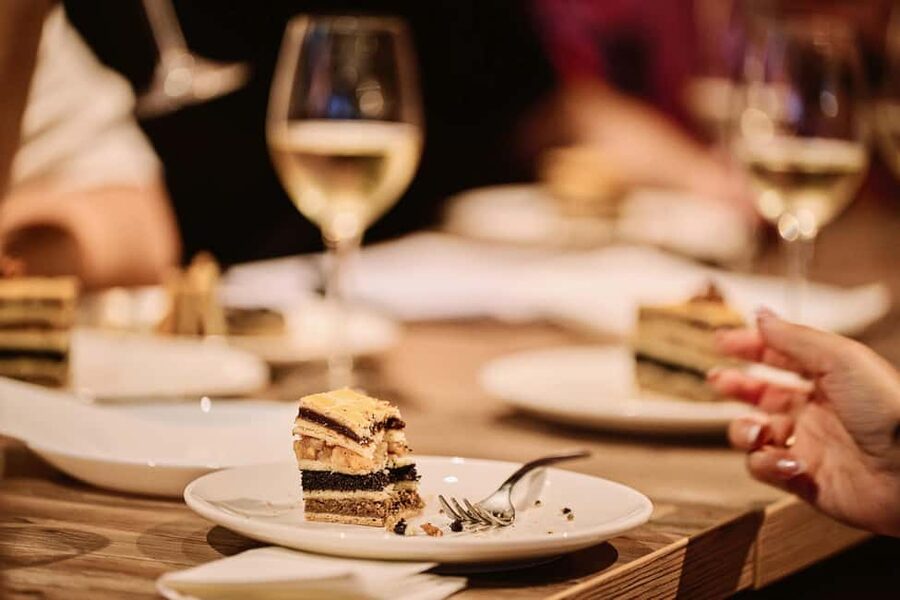
Dessert is flódni, a Jewish-Hungarian pastry. It is one of the most distinctive items on the route and often leaves the strongest impression because many visitors have never tried it before.
The pastry is a fitting ending. The tour began by explaining the Jewish connection to Hungarian cuisine, and flódni brings that idea back to the plate. It also gives you a sweet finish after the soup, fried bread, dumplings, and drinks.
If you have a sweet tooth, save room. The portions across the tour are generous, and the dessert is not merely a token bite. A guide may also point you toward other places to find Hungarian food after the tour, which is useful if you want to repeat a favorite dish later in your trip.
Andrássy Avenue adds a second Budapest

The itinerary includes about an hour of guided exploration along Andrássy Avenue. This gives the tour a broader reach than the Jewish Quarter alone and helps you see a more polished side of Budapest.
Andrássy Avenue contrasts with District 7’s rougher, nightlife-focused streets. The route gives you a taste of Budapest’s architectural and cultural range while keeping the focus on food and city life.
Do not expect a full sightseeing tour of every major Budapest landmark. The food stops remain the priority, and the guide gives history in manageable pieces as you walk. That is a good format if you want orientation on your first day without spending several hours in a museum or on a bus.
Several guides are praised for offering practical advice after the formal tour ends. Peter, Kelly, Laura, and others are noted for suggestions about places to eat, bars, attractions, and less touristy options. Take a phone note during the walk, since these recommendations may be as useful as the planned stops.
What the $67 price gets you
At $67 per person, this is not the cheapest way to eat in Budapest. You could buy langos, soup, dumplings, and dessert separately for less, especially if you skip the drinks and history.
The value comes from combining four local eateries, an English-speaking guide, a walking tour, and three alcoholic beverages in one booking. You are also paying for a clear introduction to dishes that may be unfamiliar. That matters if you would otherwise spend your first two days guessing at menus.
The amount of food is another reason the price can make sense. This is not a few decorative tastes followed by dinner elsewhere. The stops are substantial enough that you should plan this as a meal, not as a light snack before one.
It is especially good value for a first night in Budapest. You get an early sense of what to order, which neighborhoods suit you, and where to look for more food later. It can also save you from paying for a separate dinner on the same evening.
The guides shape the experience

The guide assignment changes, but the names associated with the tour include Agnes, Laura Horváth, Peter, Kitti, Kelly, KT, Rae, and Ray. The strongest praise focuses on guides who explain clearly, include everyone in the conversation, and add useful tips beyond the fixed route.
Agnes is described as warm and strong on both food and city information. Laura Horváth is praised for her detailed explanations of food, drinks, and Budapest’s past. Peter is noted for his easygoing manner and for giving practical advice about what to do next.
Kitti is singled out for looking after the group and making the evening comfortable. Kelly is praised for involving everyone, which matters if you arrive alone. Rae and Ray are described as friendly guides who create a social atmosphere around the food.
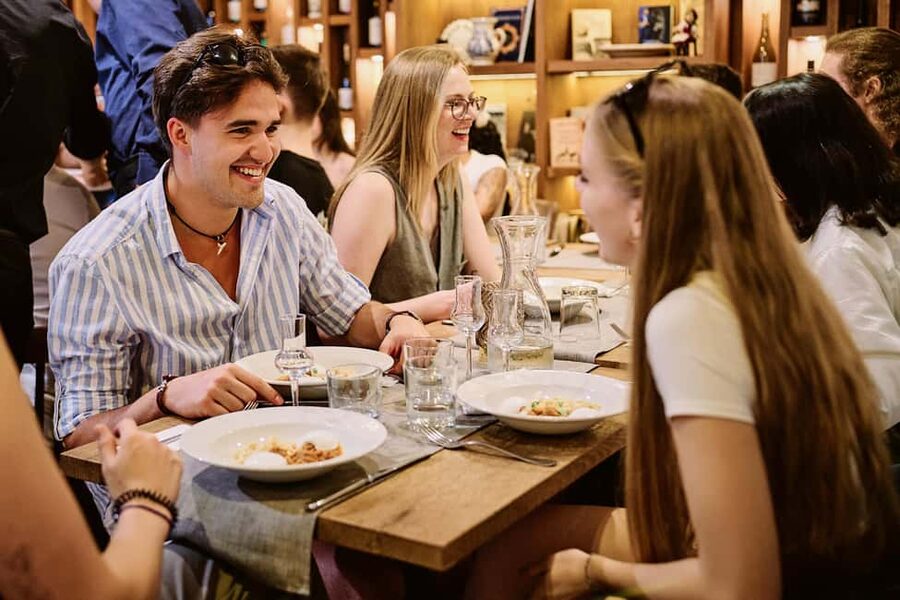
That last point is worth noting. This is a group tour, not a private guide service. The experience works best if you enjoy meeting other people at shared tables. Solo visitors can fit in easily, but a large group may make one-on-one questions harder.
Dietary limits and practical details
Vegetarian options are available, but there may be fewer vegetarian dishes than on the regular menu. You should tell the operator about dietary restrictions in advance so the team can plan the available choices.
Gluten-free and vegan diets cannot currently be accommodated. If either is essential for you, this is not the right food tour.
The route begins and ends at Kazinczy Street Synagogue, so you do not need to arrange transport between stops. The full activity lasts 2.5 hours, and you should check the available starting times when booking.
Cancellation is free up to 24 hours before the tour for a full refund. You can also reserve and pay later, which is helpful when your Budapest schedule is still changing.
Who should book this food tour?
I would choose this tour if you want a friendly introduction to Hungarian food without spending a full day on a formal culinary program. It suits first-time visitors, solo visitors, couples, and anyone who likes to learn the story behind a dish.
It is also a good choice for people who want Budapest recommendations early in their stay. Booking it near the start of your trip lets you use the guide’s suggestions for later meals and evenings out.
You should think twice if you need a strictly controlled diet, dislike alcohol, or prefer quiet private dining. The tour is social, the food is plentiful, and group size can be larger than some people expect.
Should you book the Budapest food tour?
Book it if you want to eat a full range of Hungarian food while walking through District 7 and hearing how Jewish culture shaped the city’s cuisine. The combination of langos, nokedli, flódni, Pálinka, and Tokaji gives you a much broader introduction than a single restaurant meal.
The best strategy is to book it early in your Budapest visit, arrive hungry, wear comfortable shoes, and tell the operator about vegetarian needs ahead of time. If you are happy in a group and can drink alcohol, the $67 price offers a practical way to get oriented, eat generously, and leave with a short list of places to try next.
FAQ
Where does the Budapest food tour begin?
The tour begins in front of Kazinczy Street Synagogue in Budapest’s District 7. Look for a guide holding a yellow Carpe Diem Tours flag.
Where does the tour end?
The activity ends back at Kazinczy Street Synagogue, the same place where it begins.
How long does the food tour last?
The tour lasts 2.5 hours. Starting times vary, so check availability when booking.
What language is the tour conducted in?
The live tour guide speaks English.
How many food stops are included?
Traditional Hungarian food is served at four local eateries during the tour.
Which drinks are included?
Three alcoholic beverages are included, including wine, beer, and shots. The experience also features Hungarian drinks such as Pálinka and Tokaji.
Are vegetarian options available?
Yes, vegetarian options are available, although there may be fewer choices than on the regular menu. Tell the operator about your dietary needs in advance.
Can the tour accommodate vegan or gluten-free diets?
No. Vegan and gluten-free diets cannot currently be accommodated.
Just added around Budapest
- Budapest: Danube River Views Bike Ride★ 4.8 · 23 reviews
- Budapest: City Bike Tour with Coffee Stop★ 5.0 · 37 reviews
- Budapest: Private Walking Tour with a Local Guide★ 3.6 · 6 reviews
- Budapest: Vacation Photographer to collect great memories★ 5.0 · 49 reviews
- Walk to recent and aged spiritual sanctuaries near Budapest★ 5.0 · 5 reviews
- From Budapest: Guided Tour of Eger with Wine Tasting★ 4.5 · 6 reviews
- Audio visual multi-sensory chefs journey dinner experience★ 5.0 · 3 reviews
- Budapest: 3-Hour Trabant Sightseeing Tour★ 4.7 · 28 reviews
Budapest Food Tours, compared.

Guided Foodie Walking Tour with Food and Drinks
Read our review →
Budapest Food Tour: Market to Tavern with 14+ Tasters & Wines
Read our review →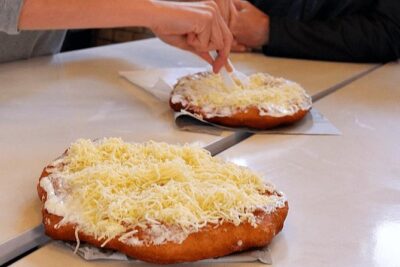
10PM Budapest Danube Cruise with Live Music & Food or Drinks
Read our review →

Budapest Food Tasting Tour with Nelli & her local guides
Read our review →
The Award-Winning Private Food Tour of Budapest: 6 or 10 Tastings
Read our review →Browse the lists this tour appears in