
Reviewed · BUDAPEST BIKE TOURS
Budapest Historic Downtown Bicycle Tour in small groups
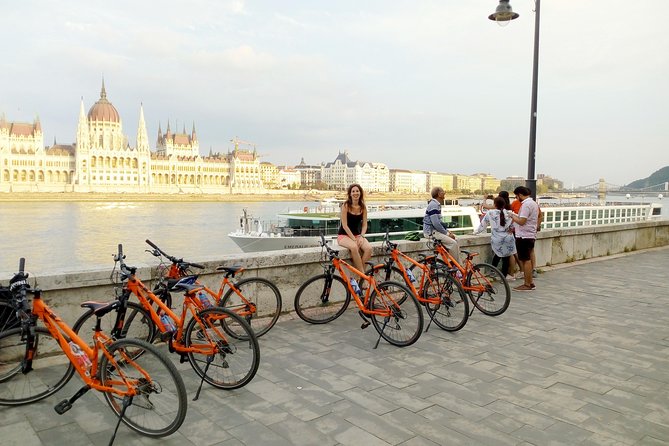
Budapest reveals itself quickly from a bicycle. In about three and a half hours, you ride from the Jewish Quarter to Heroes’ Square, through City Park, along the Danube, and past Parliament, the Chain Bridge, and the Great Synagogue. The route gives you a useful first look at both Pest and the Buda riverfront, rather than keeping you in one small district.
I like the small-group format, which makes it easier for guides such as Oliver, Thomas, Dori, Katalin, and Balint to keep the pace together and answer questions. I also like the mix of grand landmarks and less obvious details, from the ironic memorials of Szabadsag ter to the curious statue of Anonymous at Vajdahunyad Castle. The main caution is traffic: this is not aimed at complete beginners, and some bike lanes share space with cars.
Key points to know before you book
- A three-and-a-half-hour city overview: You cover a remarkable amount of Budapest without spending the whole day on foot.
- Small groups: The tour is advertised for up to 14 people, while the additional booking information lists a maximum of 10. Confirm the group size when booking.
- Mostly flat riding: The route suits confident casual cyclists, but busy streets and shared lanes require attention.
- Landmarks without interior visits: You see the Opera, Parliament, synagogues, baths, and museums from outside. Entrance tickets are not part of the ride.
- Useful first-day activity: The route helps you decide where to return later for a museum visit, a bath, food, or a longer look.
- Good guide support: The strongest praise goes to the guides’ historical explanations, safe pacing, and practical Budapest suggestions.
Why a bicycle is a smart way to meet Budapest
Budapest is spread across a broad river and several distinct districts. Walking between the Opera, Heroes’ Square, Parliament, the Central Market, and the Jewish Quarter would take much of a day, and public transport can make the route feel disjointed.
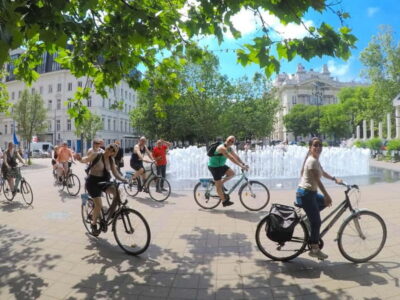
A bicycle connects these places neatly. You see the city change as you ride: the busy streets around the Jewish Quarter give way to Andrassy Avenue, then to the open spaces of City Park and the broad Danube panorama. You get enough time at each major stop for an explanation and a few photos, but not enough for a full museum visit.
That tradeoff is important. I would treat this as a guided orientation rather than a series of deep visits. You will not enter the House of Terror, Opera, Parliament, either synagogue, or the churches and museums along the way. The value comes from seeing the city’s layout and learning what deserves more of your time later.
The price is about $41.13 per person. For a live guide, bicycle, helmet, water, luggage storage, and several hours of sightseeing, that is a fair half-day cost. It is especially good value if this is your first time in Budapest and you want to cover ground quickly. It is less useful if you already know the central sights or prefer to spend long stretches inside museums.
More bike tours in Budapest:
- Budapest: Grand Sightseeing Bike Tour
★ 4.8 · 984 reviews - Budapest Highlights Bike Tour
★ 5.0 · 770 reviews - Budapest: Guided City Discovery Bike Tour
★ 4.7 · 702 reviews
Starting at Madách Imre út in the Jewish Quarter
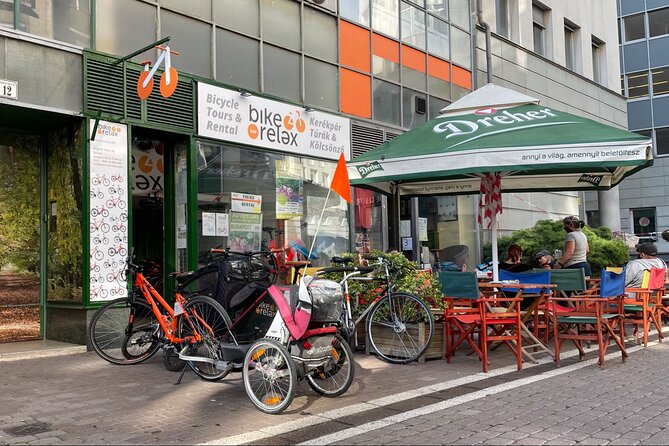
The tour begins at Budapest, Madách Imre út 12, at 10:30 a.m. The starting point is near public transportation and in a central part of Pest, so you can reach it without crossing the city first.
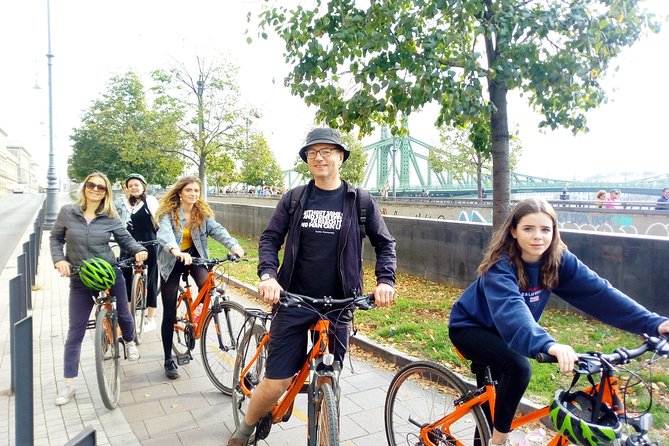
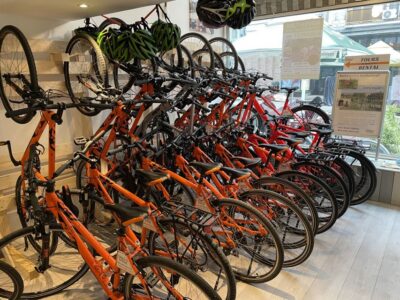
The opening stop at Bike & Relax is brief. You collect your bicycle, receive your helmet, and get settled before riding out. Bottled water and free luggage storage are included, which is handy if you are carrying day bags rather than traveling light.
The bikes are part of the practical appeal. Standard bicycles are provided, and several riders have also received an e-bike upgrade when numbers were low. E-bikes are not guaranteed from the information provided, so do not book a standard bicycle assuming you will automatically receive one. If you are worried about hills or stamina, ask about the upgrade before setting out.
The first sights include Rumbach Street Synagogue and the nearby Liszt Academy. The Rumbach building brings art deco design and the street art of Budapest into the same short stop. The Liszt Academy is still a working music school, with students studying classical music and two concert halls used for performances. You see the buildings from outside, but the guide’s explanation helps you notice more than the facade.
Andrassy Avenue and the difficult 20th century
The ride follows Andrassy Avenue, Budapest’s grand boulevard connecting the city center with Heroes’ Square and City Park. Along the way, you pass Liszt Square, Nagymező Street, often called the Broadway of Budapest, and sections of the Ring Roads.
This is a strong part of the route because the avenue ties together architecture, culture, transport, and politics. The Hungarian State Opera appears later as its major architectural prize, while the historic M1 subway runs beneath the avenue. The entire ensemble is protected as a UNESCO World Heritage site.
The House of Terror is an important stop, but you do not go inside. The building served first as a Gestapo headquarters and later as a communist prison. Today it holds a museum about those periods, with a section of the Berlin Wall outside. Ten minutes is enough for the guide to explain the site and for you to take in the exterior, but anyone wanting the full presentation should return separately with an admission ticket.
That limitation is common throughout the tour. You receive context, not a museum visit. I see this as a benefit for a first overview, but you should plan another day if places such as the House of Terror are high on your list.
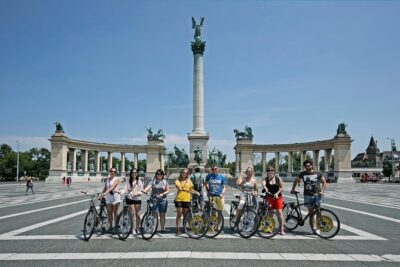
Heroes’ Square puts Hungary’s past on a grand stage
Heroes’ Square was designed for Hungary’s 1,000-year anniversary in 1896. Its statues and formal layout present rulers and national figures from King Stephen to revolutionary leader Lajos Kossuth.
The square offers a compact lesson in Central European politics. It is not a simple list of kings. The arrangement reflects changing ideas about national identity, power, and Hungary’s place in the region. Your guide can give you the basic framework in a short stop, then you can return later if you want more detail.
This is also one of the better photo stops because the space is broad and open. The tour allows about 15 minutes here, longer than at several other points. That extra time matters. You are not simply slowing down for a quick glance, but you still need to keep moving to cover the rest of the route.
More history tours in Budapest:
- Budapest: Historic Cruise with Welcome Drink
★ 4.7 · 6,512 reviews - Budapest Historical Sightseeing – Free Walking Tour
★ 5.0 · 1,302 reviews - Buda Castle District Dark History, Legends and Vampire Night Tour
★ 4.5 · 1,240 reviews - BloodThirsty Hungary: Walking tour & Dark Historical Stories
★ 4.9 · 633 reviews
City Park, Vajdahunyad Castle, and modern Budapest
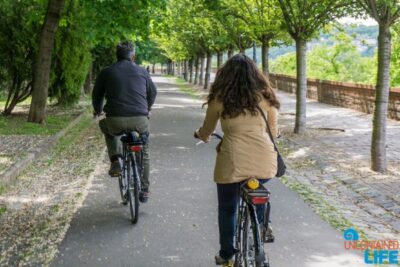
From Heroes’ Square, you ride into Városliget, or City Park, a large recreational area in the middle of Budapest. The park is undergoing redesign work, so some sections may look temporary or incomplete. Even so, it gives you a welcome change from traffic and dense city streets.
You pass the City Park ice rink in winter and an artificial lake used for boating in warmer months. The tour does not include skating, boating, or other activities, but the guide can point out how the space changes with the season.
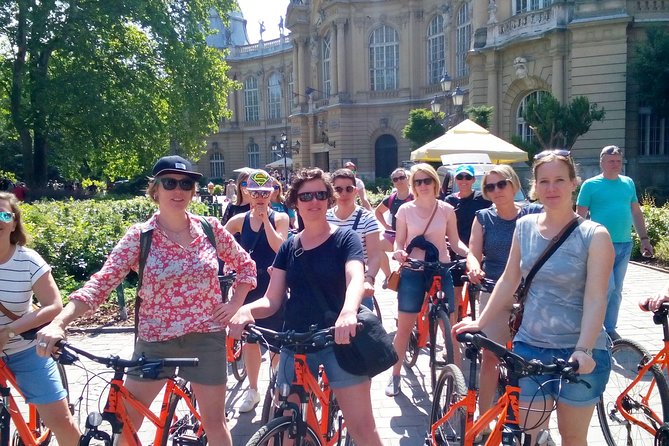
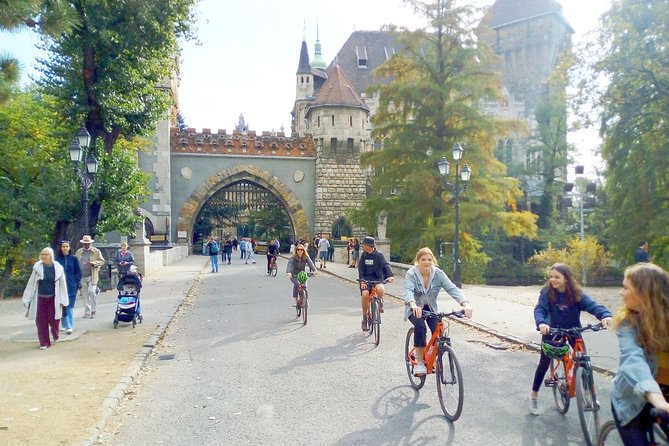
Vajdahunyad Castle is one of the most entertaining stops because it is deliberately unusual. It looks medieval, but it was created as a historical architectural display. Its design combines elements from different parts of Hungary, which explains why it seems to shift style as you look around it. The statue of Anonymous nearby adds another small curiosity.
The route then brings you to two newer buildings. The House of Music Hungary uses striking contemporary design for concerts and music exhibitions. The Museum of Ethnography, at the edge of the park, has a distinctive form and provides wide views from its setting. You will not go inside either building, but together they show that Budapest is not only about imperial-era facades.
The Opera, Basilica, and the city’s central squares
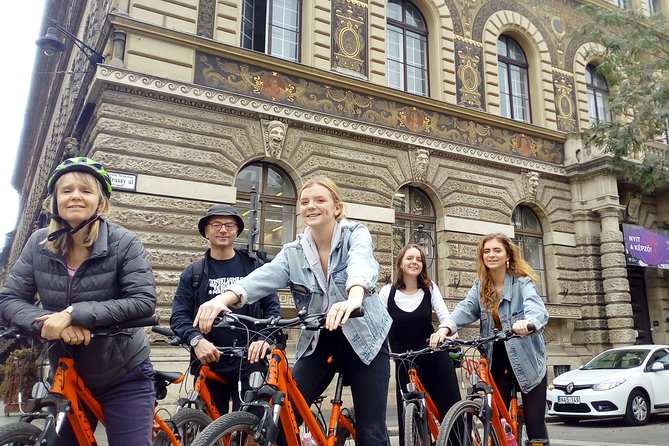
Riding back toward central Pest, you pass the Hungarian State Opera on Andrassy Avenue. Designed by architect Miklós Ybl, it is one of Budapest’s great late nineteenth-century buildings and remains a center for music and performances.
The guide explains the architectural styles and the role of Andrassy Avenue, as well as the M1 subway below. There is no Opera admission on this tour, so consider returning for a performance or a separate visit if you want to see the interior.
St. Stephen’s Basilica is the largest Catholic church in Budapest. The tour stops outside rather than entering, so you will not see the preserved right hand of St. Stephen under glass unless you return on your own. The renovated exterior and broad square make it an easy landmark for understanding central Pest.
Next comes Szabadság tér, or Liberty Square. This is one of the more thought-provoking parts of the ride. The area combines financial offices, national memorials, reminders of the Holocaust and Second World War, and at least one controversial monument. Some details are deliberately ironic, so listen closely to the guide rather than treating the square as a quick photo stop.
Parliament and the Danube riverfront
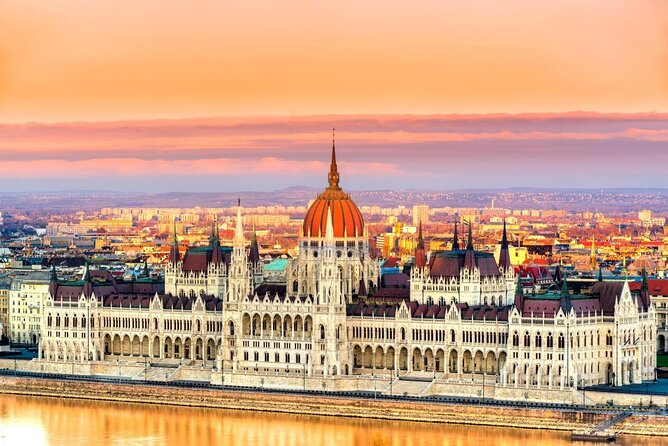
The Hungarian Parliament Building is the visual high point for many people. Its ornate exterior sits beside the Danube, and riding around the building gives you changing views of the river and Buda’s hills beyond.
The tour does not include Parliament entry. That is worth knowing because interior visits require separate planning, but even from outside you get a strong sense of the building’s scale and position. The stop lasts about ten minutes, enough for an explanation and photographs.
The Shoes on the Danube Bank memorial is nearby. The simple metal shoes honor Jewish people who were ordered to remove their shoes before being killed beside the river during the Second World War. The tour passes this memorial, but direct access is not always possible because of traffic and street conditions. Treat it as a possible stop, not a guaranteed close approach.
You also pass the Chain Bridge, the oldest bridge across the Danube in Budapest. Its lions and stone towers are easy to recognize, but the real value here is geographical. The bridge helps you understand the connection between historic Pest and Buda, and why the river is central to the city’s shape.
Rudas Baths, Gellert Baths, and Liberty Bridge
The route continues along the river toward Rudas Baths, one of Budapest’s oldest Turkish baths. You see it from outside. If you plan to bathe there later, check the opening schedule carefully because some hammam hours are separated into men’s and women’s days.
Farther along, Gellert Baths appears on the Buda side. Its Art Nouveau design makes it one of the city’s most recognizable bath buildings. Again, admission is not included, but the bicycle tour gives you a useful look at two major bath options without using time for a full spa visit.
Liberty Bridge is the last major Buda-side landmark. It was originally named for Emperor Franz Joseph and took its current name after the end of the monarchy. The bridge is popular with students and young people because of its views over the river and its open, central position.
You also pass the Central Market, the National Museum, and the Great Synagogue. The market is a good place to return for Hungarian food and a closer look at everyday city life. The National Museum suits you if you want to study the history of Hungary and the many peoples who have lived in the region.
The Great Synagogue sits at the edge of the Jewish Quarter and is notable for its Moorish-style design. You do not enter during the ride. From there, you return to the Bike & Relax meeting point.
How hard is the riding?
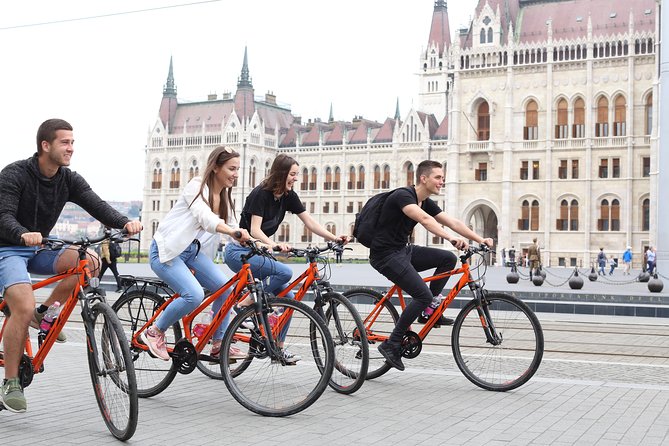
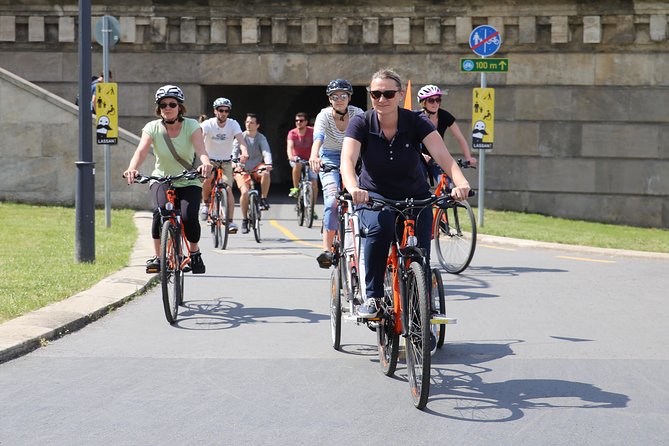
The route is described as mostly flat, and several riders have found the pace comfortable even when they were not expert cyclists. That does not mean the ride is effortless. Budapest traffic can be intense, and some bicycle lanes overlap with car lanes.
You should be comfortable starting, stopping, steering, and riding near other people. The tour is specifically not recommended for beginners, and one rider noted that a less capable cyclist slowed the group. Guides do make an effort to wait for the group and keep nobody behind, but the experience works best when everyone can maintain a steady city-riding pace.
The weight limit is 110 kilograms. Children must be accompanied by an adult, and the activity is not recommended for people with visual impairment. Bring layers, since you warm up while riding but can feel wind on open bridges and along the river. Gloves and a hat are useful in cooler weather.
The guide makes the difference
The strongest part of this experience is the guide commentary. Oliver receives repeated praise for clear historical explanations, safe riding, and useful restaurant suggestions. Thomas is also noted for bringing strong historical background to the ride, while Dori, Katalin, Balint, Valentin, Karoly, and others are praised for patience, good pacing, and care with the group.
Traffic noise can make it difficult to hear every word, especially near busy roads. Stay close enough to the guide to catch the explanations, and do not hesitate to ask for a point to be repeated during a stop.
The guide can also adjust the experience when practical. One ride included a free upgrade to a longer route toward Buda, while other guides adjusted the pace or responded to requests. Such changes are not guaranteed, but the small-group format makes personal attention more likely than on a large coach tour.
The experience has a 4.9 rating from 288 ratings, with 99 percent recommending it. Those numbers fit the main pattern: the guides, amount of ground covered, safety, and historical context receive the most praise. The recurring cautions are also clear: shared traffic lanes, no interior admissions, limited food or restroom stops, and the need for confident riding.
Who should book this Budapest bike tour?
I would book it early in a Budapest visit, especially if you have only a few days. The tour gives you a mental map of the city, introduces the main sights, and helps you choose where to spend more time afterward.
It suits couples, solo visitors, and small groups who want history with movement rather than a slow walking tour. It also works well in warm weather, when cycling is more comfortable than walking long distances through the city.
I would skip it if you are a complete beginner, dislike riding near traffic, need regular food or restroom breaks, or want to enter several major buildings. In that case, use public transport and visit fewer places at greater length.
The $41.13 price is reasonable for the bicycle, live guide, helmet, water, storage, and broad route. Free cancellation is available up to 24 hours before the start, and bad weather may lead to a new date or full refund. Book only after checking the weather and your cycling comfort.
FAQ
How long does the Budapest Historic Downtown Bicycle Tour last?
The ride lasts approximately 3 hours and 30 minutes, though some participants have described their experience as closer to four hours.
Where does the tour begin and end?
It begins and ends at Bike & Relax, Budapest, Madách Imre út 12, 1075 Hungary. The start time is 10:30 a.m.
Are entrance tickets included?
No. The tour shows buildings and landmarks from outside. Entry to Parliament, the Opera, the House of Terror, the synagogues, the baths, museums, and other interiors is not included.
Is the tour suitable for beginner cyclists?
It is not recommended for beginners. The route is mostly flat, but Budapest traffic can be busy and some bicycle lanes share space with cars.
What does the tour provide?
The price includes use of a bicycle, a live English-speaking guide, a helmet, bottled water, and free luggage storage during the ride.
What happens if the weather is poor?
The activity requires good weather. If it is canceled because of poor conditions, you will be offered another date or a full refund. You can also cancel for a full refund up to 24 hours before the start time.
Just added around Budapest
- Budapest: Danube River Views Bike Ride★ 4.8 · 23 reviews
- Budapest: City Bike Tour with Coffee Stop★ 5.0 · 37 reviews
- Budapest: Private Walking Tour with a Local Guide★ 3.6 · 6 reviews
- Budapest: Vacation Photographer to collect great memories★ 5.0 · 49 reviews
- Walk to recent and aged spiritual sanctuaries near Budapest★ 5.0 · 5 reviews
- From Budapest: Guided Tour of Eger with Wine Tasting★ 4.5 · 6 reviews
- Audio visual multi-sensory chefs journey dinner experience★ 5.0 · 3 reviews
- Budapest: 3-Hour Trabant Sightseeing Tour★ 4.7 · 28 reviews
Budapest Bike Tours, compared.

Browse the lists this tour appears in