
Reviewed · HISTORICAL TOURS
7 Days Balkan tour to historic Croatia and Bosnia Herzegovina
This seven-day route packs a remarkable amount into one trip: Croatia’s Adriatic towns, Bosnia’s Ottoman-era cities, and southern Hungary all appear in a single loop from Budapest. You move quickly, but the reward is a broad look at the Balkans without arranging several hotels, border crossings, and long coach rides yourself.
I especially like two things here. First, Plitvice Lakes and Dubrovnik give you two very different kinds of beauty, one natural and one built by centuries of human hands. Second, Mostar, Blagaj, Počitelj, and Sarajevo bring more than postcard views. They help you understand the meeting of Ottoman, Austro-Hungarian, Christian, and Muslim traditions in this part of Europe.
The main drawback is the pace. Seven days means several long driving days, and many stops allow about an hour or two. You’ll see the highlights, but you will not have much spare time for museums, slow meals, or independent wandering. Also, the group may combine English and Chinese speakers, so ask how the guiding will work before you book.
Six details that shape the experience
- Plitvice Lakes gets four hours, giving you more time than most city stops for walkways, waterfalls, and forest trails.
- Dubrovnik includes the Old Town, Rector’s Palace, and Franciscan Monastery, with a cable car available as an optional extra.
- Mostar, Blagaj, and Počitelj fill one strong Bosnia day, but expect border formalities and a full day on the road.
- Guide Kenny speaks fluent English and Mandarin, and some cities may include local guides as well.
- Hotels are at least three-star, with six breakfasts included, but exact properties arrive only 24 to 48 hours before check-in.
- The $1,160.11 price covers transport, hotels, breakfast, and tour management, while tips and attraction tickets are extra.
From Budapest to Zagreb: a useful first taste
The tour begins at Budapest-Keleti station at 8:30 a.m. That early meeting time is practical, but you should arrive with enough time to find the correct station entrance and organize your luggage. The coach returns to the same meeting point at the end of the trip.
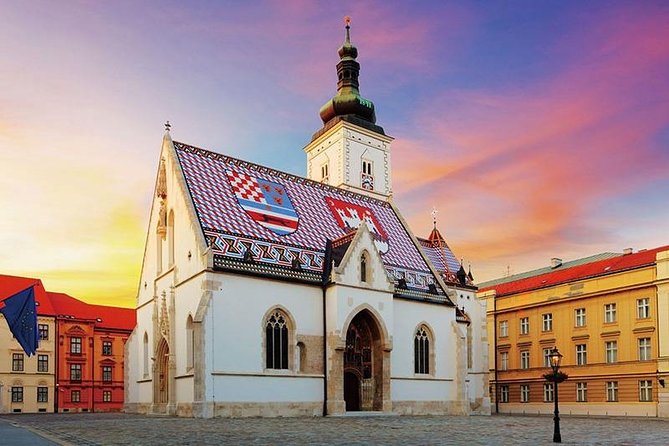
The first stop is Zagreb, Croatia’s capital. The planned sights include Zagreb Cathedral, Ban Jelačić Square, and St. Mark’s Church. These are close enough in the city center to give you a quick sense of Zagreb’s older districts, even though the listed time for each stop is about one hour.
Ban Jelačić Square is the natural point for getting your bearings. It is the city’s main meeting place and a useful starting point for understanding how Zagreb links its older upper town with the newer center. St. Mark’s Church is especially memorable for its colorful tiled roof, while the cathedral gives you a look at the city’s major religious architecture.
Admission tickets are not included at these Zagreb stops. That matters less here than it would at a major museum, since the tour is mainly built around exterior sightseeing and guided city walks. Still, bring some local currency or a payment card for optional entries, food, and small purchases.
You spend the night in Zagreb or a nearby town at a minimum three-star hotel. The exact property is not given until shortly before arrival, so you should choose this trip for the route and included transport rather than a specific hotel.
More history tours in Budapest:
- Budapest: Historic Cruise with Welcome Drink
★ 4.7 · 6,512 reviews - Budapest Historical Sightseeing – Free Walking Tour
★ 5.0 · 1,302 reviews - Buda Castle District Dark History, Legends and Vampire Night Tour
★ 4.5 · 1,240 reviews
Plitvice Lakes gives you the trip’s best nature stop
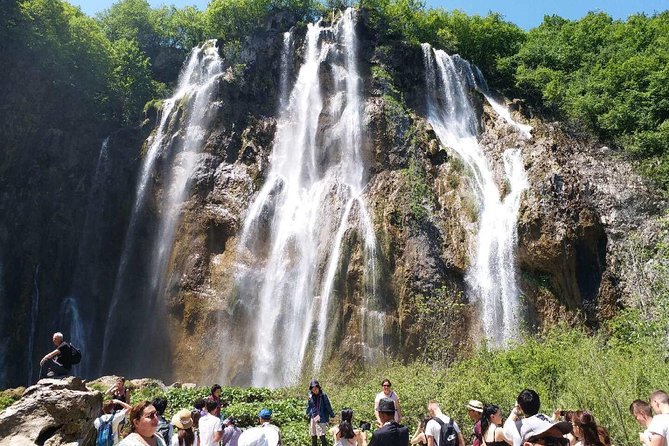
Day two focuses on Plitvice Lakes National Park, and this is one of the strongest parts of the route. The park is known for its 16 connected lakes, waterfalls, travertine barriers, wooden walkways, and forest paths. The water can appear silvery because of its mineral content, reflecting the trees and sky as it moves from one lake to the next.
You have about four hours here with a guided visit. That is a useful amount of time for a first look, though the park is large and conditions on the paths can affect how much you cover. Wear shoes with a good grip and keep your camera ready. The appeal is not one single viewpoint. It is the changing rhythm of water, forest, bridges, and small cascades.
The park ticket is listed as included, which improves the value of this day. Plitvice is also the point where the tour feels less rushed. Compared with the one-hour city visits, four hours gives you time to walk at a more natural pace and enjoy the setting instead of simply checking off a sight.
You spend the night in Zadar or nearby. Breakfast is included each morning, so the six included breakfasts cover the nights on tour, but you will need to budget separately for lunches, dinners, drinks, and snacks.
Zadar and Split connect sea views with Roman stone
Day three begins in Zadar, an old coastal city with narrow medieval streets and a strong religious character. The modern waterfront adds a different note. The Sea Organ uses the movement of the water to create sound, while the nearby Sun Salutation installation produces a solar light display.
The listed time in Zadar is about one hour. That is enough to see the waterfront and get a taste of the old center, but not enough for a long museum visit or a leisurely meal. The Sea Organ is free to see, while an admission ticket is not included for any paid attraction.
From Zadar, the coach continues to Split. The Peristyle of Diocletian’s Palace is the key stop. This Roman complex dates from the fourth century and still shapes the center of modern Split. You are not looking at an isolated ruin behind a fence. Ancient walls, columns, streets, and later buildings form part of the living city.
That makes Split especially rewarding, but the short stop also limits what you can do. You will get the main historical setting and a chance to walk through the palace area, but you should not expect time for the cathedral, museums, or a long exploration of the waterfront unless the day’s schedule changes.
The overnight stay is in Neum or nearby. Neum is in Bosnia and Herzegovina, so this part of the trip introduces an important practical point: you cross international borders several times. Carry your passport with you, not in your checked luggage, and make sure it is valid for at least six months.
Dubrovnik delivers the grandest city stop
Day four belongs to Dubrovnik, and this is likely to be the visual high point of the tour. The Old Town, defensive walls, Rector’s Palace, Franciscan Monastery, and sea views give you a concentrated lesson in Adriatic history and architecture.
The schedule allows about two hours in Dubrovnik, followed by shorter visits to the Old Town, Rector’s Palace, and Franciscan Church and Monastery. That is enough for an organized introduction, but Dubrovnik rewards more time than this. If walking the city walls or taking the cable car matters to you, check whether the schedule leaves room and plan to pay for those options separately.
The Old Town is compact, polished, and easy to walk, though the stone streets and steps can be tiring. The Rector’s Palace shows the former seat of government, while the Franciscan complex adds religious history and one of the city’s best-known old pharmacies. Only the general Dubrovnik visit is listed as free. Tickets for the walls, palace, monastery, or cable car are not included.
The Game of Thrones connection and animated-film references may add fun, but the city does not need either one to be worthwhile. I would focus first on the real place: a fortified port with layered Venetian, Slavic, and Mediterranean influences. With this tour, you get a sharp first impression rather than a slow, complete visit.
Same city, a completely different sort of day:
- Budapest: City Highlights Cruise with Welcome Drink
★ 4.6 · 35,610 reviews - Budapest: Unlimited Prosecco, Beer and Aperol Spritz Cruise
★ 4.8 · 25,310 reviews - Budapest: Széchenyi Spa Day Ticket with Optional Upgrades
★ 4.3 · 23,911 reviews - Budapest: Nighttime or Daytime Sightseeing Cruise
★ 4.2 · 21,062 reviews
Počitelj, Blagaj, and Mostar show Bosnia at its best
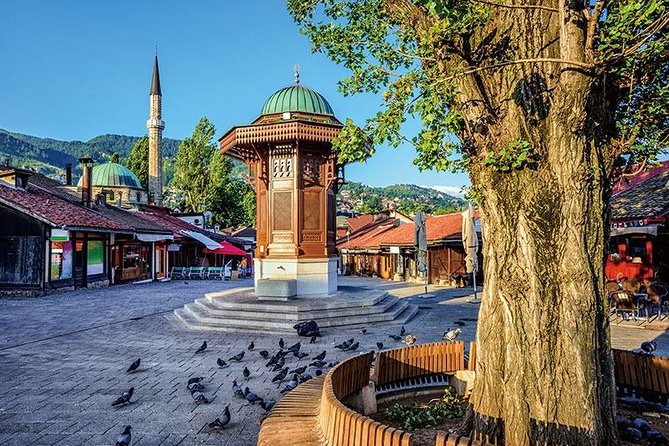
Day five is a strong reason to choose this route instead of a Croatia-only coach trip. Počitelj is a stepped medieval fortress village with stone buildings rising toward the fort. Its position gives you a clear sense of how defensive settlements used the terrain.
Blagaj brings a different mood. The Dervish Monastery sits beside clear streams and beneath a high cliff. The stop connects architecture, Islamic tradition, and water in a way that feels very different from the coastal cities earlier in the week.
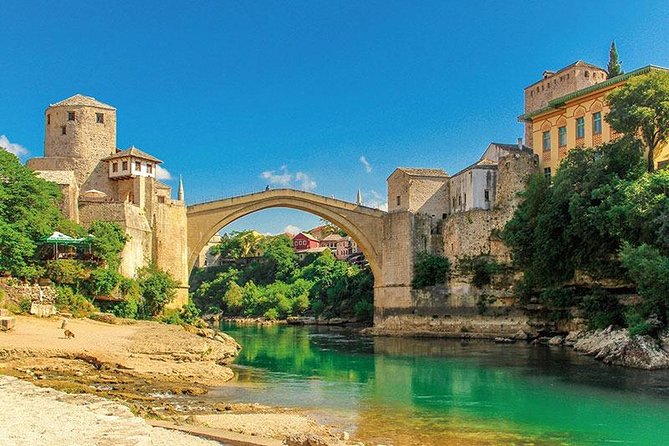
Mostar is the main event. The Old Bridge arches over the river, linking the two sides of the old city. The surrounding streets are filled with stone buildings, small shops, and views back toward the bridge. You should take a moment to look at the bridge from several angles rather than rushing across it once.
The Old Bridge Area is listed as a separate stop, but the overall time in Mostar is about one hour. That is brief for a place with so much to absorb. The area can also involve uneven stone surfaces and slopes, so comfortable shoes are useful.
Some admission tickets are not included, including the listed entry for the Old Bridge Area. Počitelj and Blagaj are shown without an admission charge. Bring cash for small purchases and optional entries, since personal expenses are not covered.
You sleep in Sarajevo or nearby. This will be one of the longer movement days, with three Bosnia stops before reaching the capital. It is a busy schedule, but the sequence works well because each place offers something different.
Sarajevo adds the tour’s strongest historical context
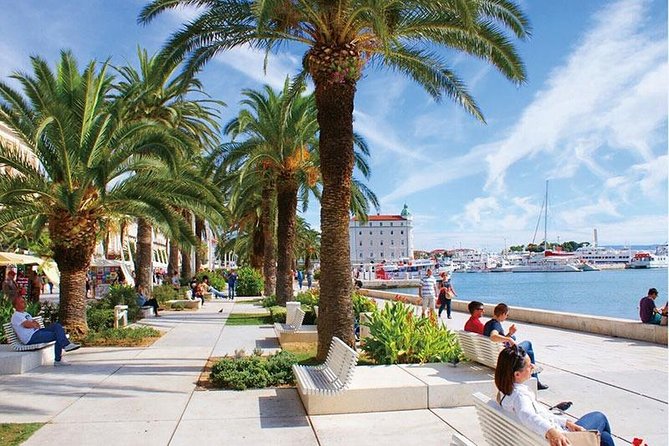
Sarajevo is not simply another old city stop. It is a place where several religious and cultural traditions meet, and the route points you toward that mix in the Old Town. You’ll see the Latin Bridge, associated with the 1914 assassination that helped trigger the First World War, and the Meeting of Cultures Line marked on the pavement.
The city’s story also includes the destruction and rebuilding of the late twentieth century. The planned visit gives you a short introduction to both the older center and the newer architecture. If you care about modern European history, Sarajevo deserves more than the listed hour, but the stop still adds depth to the journey.
One helpful feature is that some city visits may include a local guide as well as the main tour manager. Kenny, who speaks fluent English and Mandarin, has been specifically associated with this route. His role can be especially useful when the group includes both language communities, and the tour may combine English and Chinese participants if numbers are low.
After Sarajevo, you cross back into Croatia and overnight in Vinkovci or nearby. This creates another long transfer before the final day. It is efficient for returning to Budapest, but you should be ready for several hours on the coach and another border crossing.
Pécs closes the loop in southern Hungary
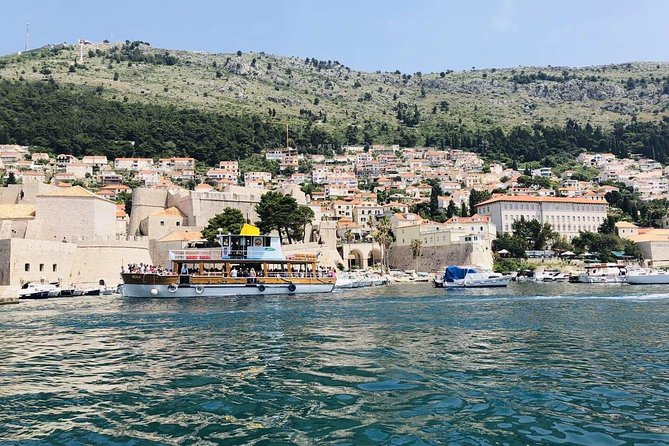
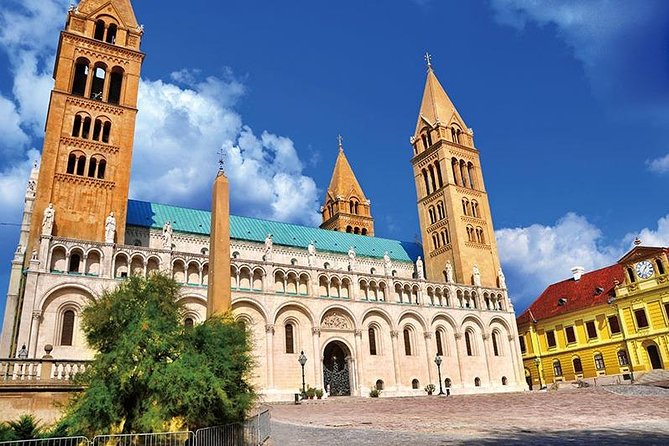
The last day takes you from Croatia back into Hungary, with a stop in Pécs before returning to Budapest. Pécs is known for its long past, Turkish remains, museums, music, opera, ballet, and Pécs Cathedral on Szent István Square.
The scheduled visit lasts about an hour. That gives you time to see the cathedral and square, but not to explore the city’s museums in detail. Admission to Pécs Cathedral is not included, so treat this as a final walking stop rather than a full cultural visit.
The return to Budapest is scheduled for the afternoon, and the activity ends at the original Budapest-Keleti meeting point. If you need a hotel in Budapest after the tour, that must be arranged separately, though an optional post-tour hotel may be available.
What the $1,160.11 price really covers
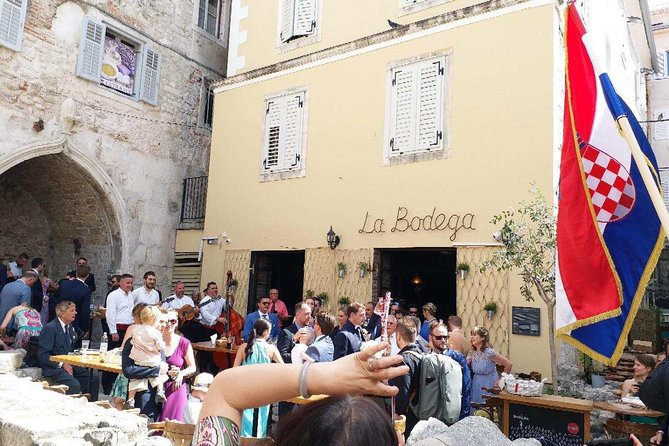
At $1,160.11 per person, the price is reasonable if you value convenience over independence. You receive six nights in minimum three-star hotels, six breakfasts, modern air-conditioned coach transport, a professional driver, and an experienced tour manager.
The route covers several countries and includes multiple border crossings. Booking that combination independently would require careful planning, especially for one-way hotel arrangements and transport between Plitvice, the Dalmatian coast, Bosnia, and Hungary. The group format saves time and removes much of that planning work.
The price is not all-inclusive. You must add the required gratuity of €10 per person per day, collected in cash during the tour. You also pay for attraction tickets not listed as included, all lunches and dinners, drinks, personal purchases, and any optional cable car or city-wall visits.
The maximum group size is 30. That is small enough for a manageable coach experience, but not intimate. If your ideal trip means choosing your own restaurant, lingering at a museum, or changing the day’s order, this will feel restrictive.
Who should choose this Balkan tour
I would choose this tour if you want a first look at Croatia and Bosnia without renting a car. It suits you if major landmarks matter more than long free periods, and if you are comfortable with early starts, changing hotels, and several hours on the road.
It also works well for solo participants who prefer a planned group setting. The English and Mandarin arrangement can create an unusual group mix, but the presence of an English-speaking tour leader makes the route accessible to English speakers.
I would think twice if you want a beach holiday, extensive nightlife, or slow city stays. Dubrovnik, Split, Mostar, and Sarajevo all deserve more time than this schedule gives them. Families should also note the room rules: one twin room can hold two adults and one child aged two to eleven without a separate bed, while groups of three adults will not receive a triple room.
Bring one piece of luggage weighing no more than 30 kilograms and one small carry-on. Have your passport details, nationality, date of birth, gender, and contact information ready for booking, and check visa, insurance, health, and border requirements before departure.
Should you book it?
Book this tour if your priority is range. In one week, you see Zagreb, Plitvice Lakes, Zadar, Split, Dubrovnik, Mostar, Sarajevo, and Pécs, with the practical support of a coach, hotels, breakfast, and a tour manager.
Do not book it expecting a relaxed study of each city. This is a fast, useful introduction to the western Balkans, with its best moments found in the contrasts: waterfalls after city streets, Roman stone after medieval lanes, and Bosnia’s layered culture after Croatia’s coast.
The cancellation deadline is three full days before departure for a full refund. Confirmation is normally issued at booking, but bookings made within seven days of travel may take up to 48 hours, and the operator requires its official voucher rather than relying only on a downloadable booking ticket.
FAQ
Where does the tour start and finish?
It starts at Budapest-Keleti, Budapest, Kerepesi út 2-4, at 8:30 a.m. The tour ends back at the same meeting point in Budapest.
How many people can join the tour?
The maximum group size is 30 people.
What type of accommodation is included?
Accommodation is provided in a comfortable hotel rated at least three stars. Rooms have private facilities, and twin, double, or single arrangements are available according to the booking.
Are meals included?
Six breakfasts are included. Lunches, dinners, drinks, and personal food purchases are not included.
Are attraction tickets included?
Some are included, such as admission to Plitvice Lakes National Park. Many other tickets are not included, including listed entries in Zagreb, Zadar, Split, Dubrovnik, Mostar, and Pécs.
Is the tour available in English?
Yes. The tour is offered in English. If group numbers are low, English and Chinese participants may travel on the same coach, with one tour leader able to speak both languages.
What luggage can I bring?
You may bring one piece of luggage weighing up to 30 kilograms and one small hand-carry item, such as a purse, backpack, or camera bag.
Just added around Budapest
- Budapest: Private Walking Tour with a Local Guide★ 3.6 · 6 reviews
- Budapest: Danube River Views Bike Ride★ 4.8 · 23 reviews
- Budapest: City Bike Tour with Coffee Stop★ 5.0 · 37 reviews
- Budapest: Vacation Photographer to collect great memories★ 5.0 · 49 reviews
- Walk to recent and aged spiritual sanctuaries near Budapest★ 5.0 · 5 reviews
- From Budapest: Guided Tour of Eger with Wine Tasting★ 4.5 · 6 reviews
- Audio visual multi-sensory chefs journey dinner experience★ 5.0 · 3 reviews
- Budapest: 3-Hour Trabant Sightseeing Tour★ 4.7 · 28 reviews
Historical Tours, compared.
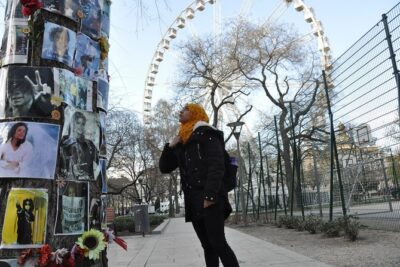
Budapest Historical Sightseeing – Free Walking Tour
Read our review →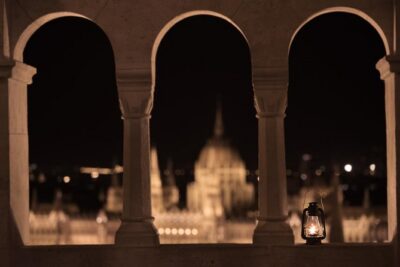
Buda Castle District Dark History, Legends and Vampire Night Tour
Read our review →
BloodThirsty Hungary: Walking tour & Dark Historical Stories
Read our review →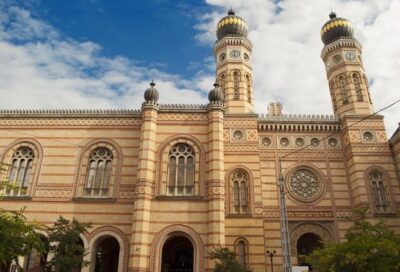
Budapest Jewish Heritage Memorial Walking Tour & Synagogue Entry
Read our review →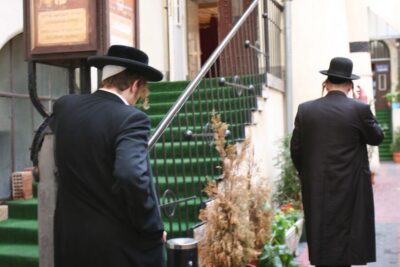
Jewish Heritage Guided Tour with Synagogue Ticket
Read our review →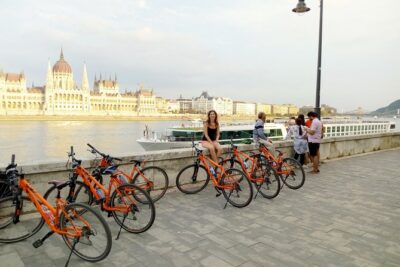
Budapest Historic Downtown Bicycle Tour in small groups
Read our review →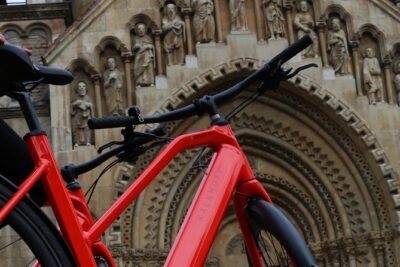
Historic Downtown ride on E-Bicycles Buda & Pest
Read our review →Browse the lists this tour appears in